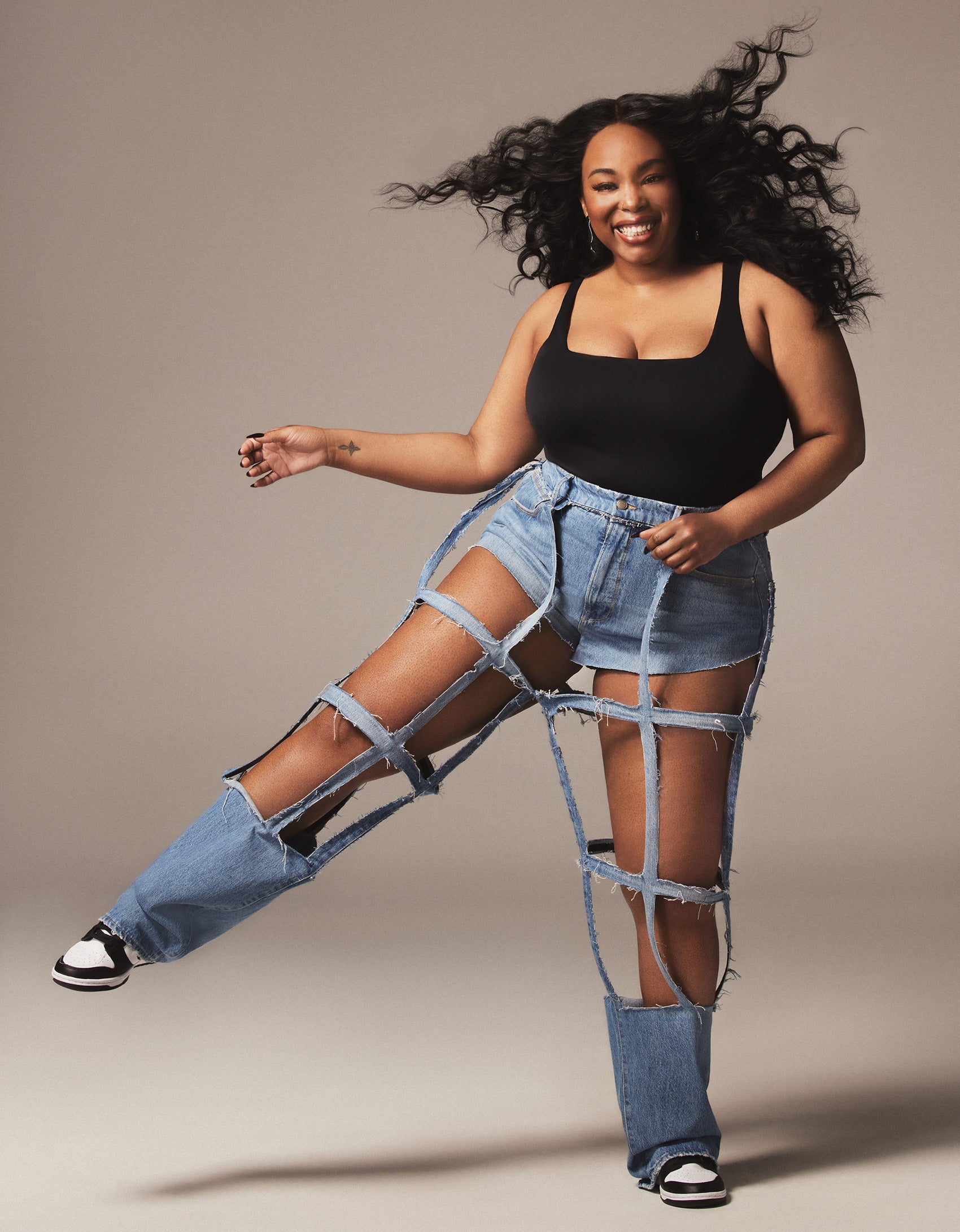

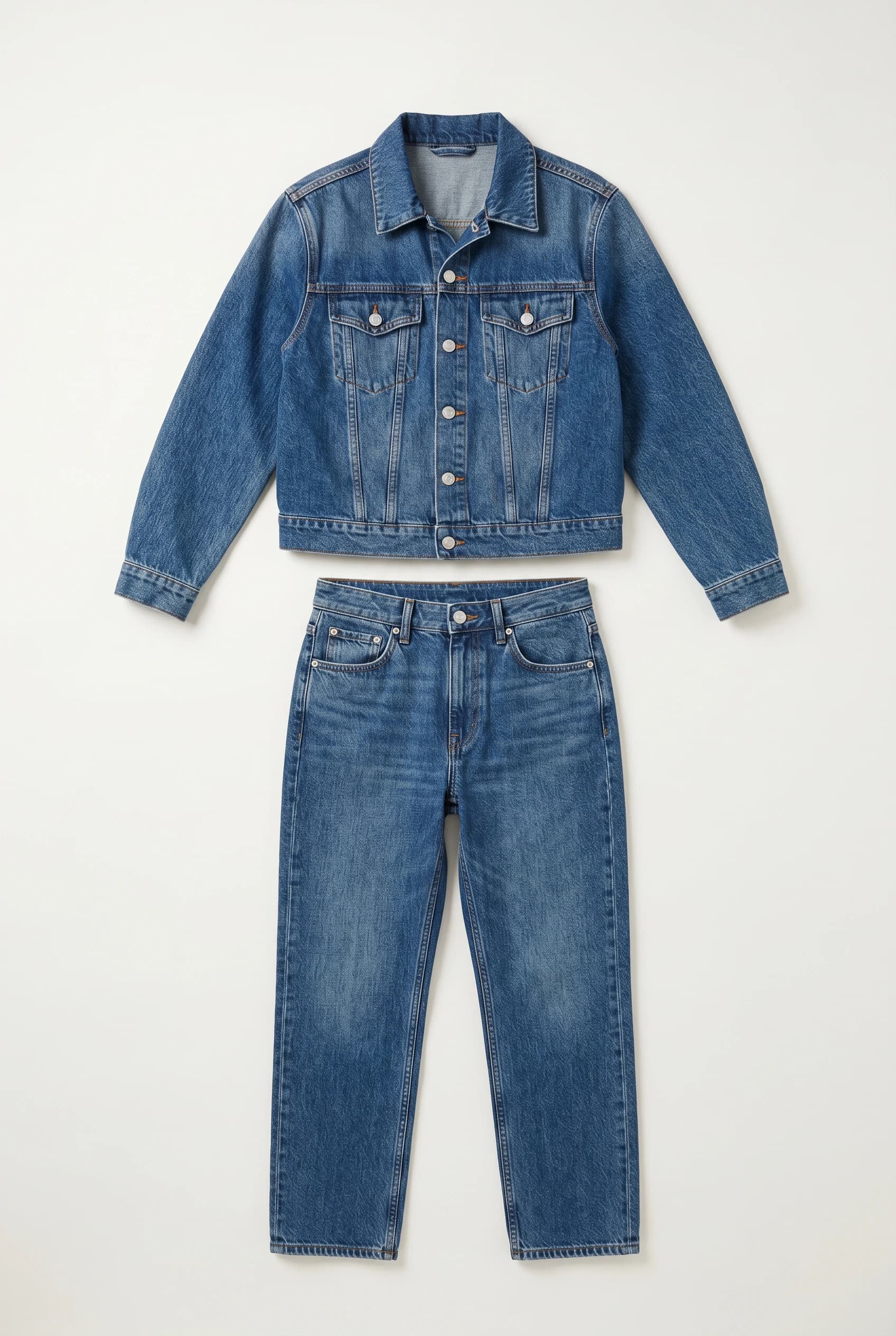
Walk into the Nordstrom denim hall on the third floor in 2026 and the geography of the room tells you something. The wall closest to the fitting rooms used to belong to the heritage names, the Frame and Mother and Citizens of Humanity tower. That wall is still there. But the run of mannequins facing the escalator, the ones merchandised in sizes 00 through 24 on bodies that are not all the same body, those are wearing Good American. Ten years after Emma Grede and Khloe Kardashian launched the brand in October 2016 with a single denim collection, Good American occupies the floor space that signals what a major retailer believes about where the category is going.
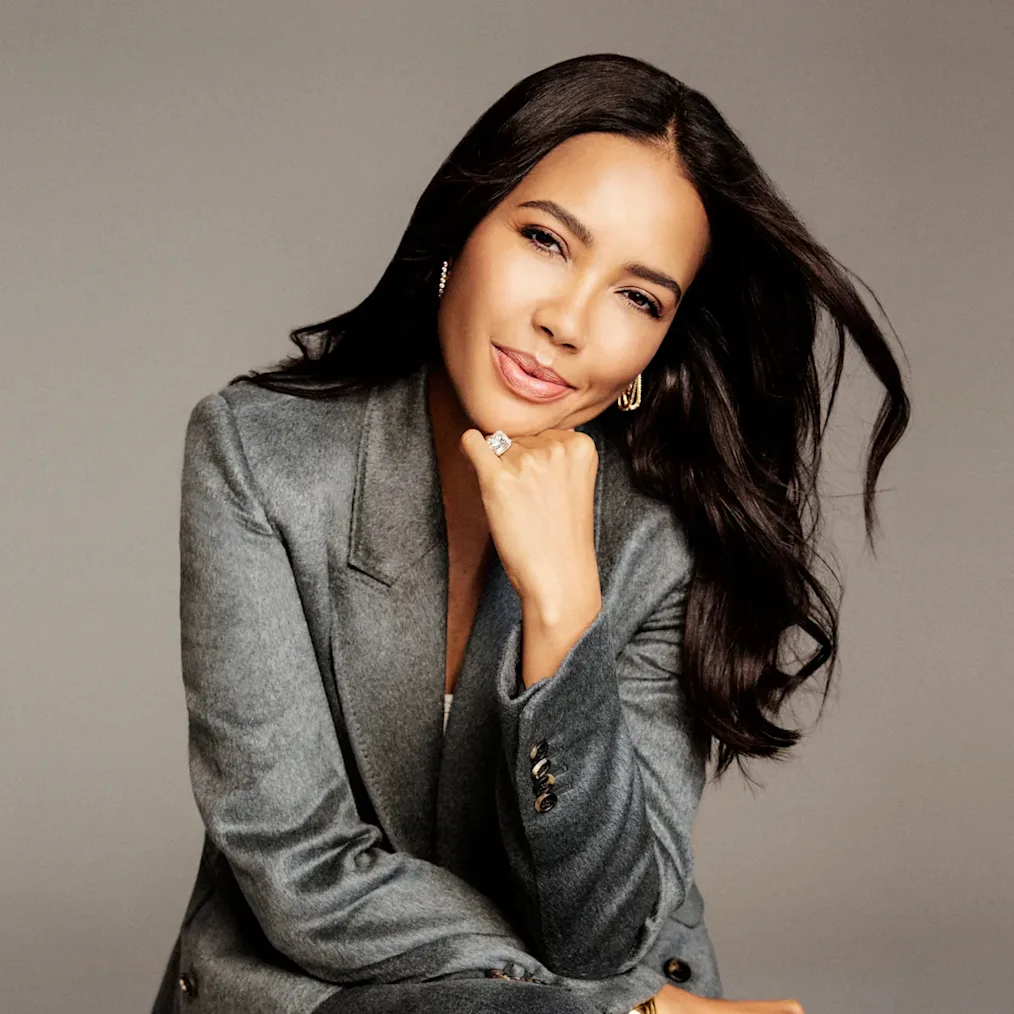
This is a piece about how that happened. Specifically about Grede, because the founder story on this brand has been blurred for a decade by the Kardashian half of the partnership, and the operating-founder half is the half that built the company. Khloe is the public face and a real co-founder. Emma Grede is the CEO who designed the size-inclusive launch model, ran the wholesale strategy that put the brand into Nordstrom and Saks at scale, and has since built two more brands on the same playbook. The trajectory matters because Good American was the first size-inclusive premium denim brand to launch at full retail distribution and not get filed under “niche.” The rest of the category is still catching up.
Who Emma Grede actually is
Grede is British, born in East London in 1982, the eldest of four daughters raised by a single mother. She left school at 16 and started in fashion event production, eventually founding ITB Worldwide, a talent and entertainment marketing agency that produced runway shows and brand partnerships across London, New York, and Los Angeles. By the early 2010s she was running point on celebrity dressing for major fashion weeks and building relationships with the stylist class that would later matter for Good American’s launch.
She met Khloe Kardashian through that work in 2015. The pitch she brought to Kardashian was specific: launch a premium denim brand that sold every size at every price point at the same time, on the same shelf, in the same campaign imagery. Not a “core” range with a “plus” extension launched eighteen months later. Every size from 00 to 24 on day one, priced the same. That single structural decision is what made Good American different from every premium denim brand that came before it, and it is Grede’s idea.
The launch in October 2016 reportedly did one million dollars in sales on day one through the brand’s site, with Nordstrom as the wholesale partner. Grede has been CEO across the full ten-year run. In 2020 she co-founded Skims with Kim Kardashian, where she is also a founding partner and was on the executive team through the brand’s early scaling. In 2021 she launched Safely, a cleaning brand, with Kris Jenner. She was the first Black woman to appear as a guest investor on Shark Tank in 2021. She sits on multiple boards including the Fifteen Percent Pledge. The point is that she is an operator, not a celebrity-adjacent name on a cap table, and Good American is the brand where her operating thesis was first proven.
What the brand actually does
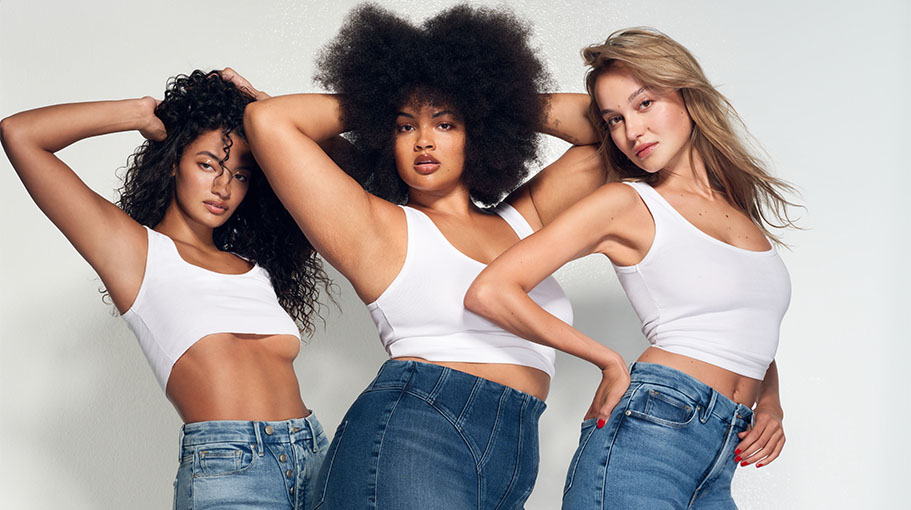
Good American makes denim, ready-to-wear, activewear, swim, and shoes in sizes 00 through 24 (with some categories extending to 32 in select pieces). Denim is still the anchor category and the deepest part of the line. The brand operates from a denim-first lens that the apparel category was built around, not an afterthought to the apparel program.
The denim philosophy is sculpting power-stretch fabrications cut for proportional grading - meaning a size 18 is not just a size 8 enlarged on a flat pattern, it is regraded so the rise sits at the natural waist, the hip room is real, and the inseam doesn’t shorten as you go up. That regrading is the boring technical detail that most premium denim brands skip when they extend sizes. It is the reason Good American jeans actually fit on a size 16-to-20 body without the waistband gapping or the thigh pinching at the inseam.
Price tier is mid-premium - most jeans land at $145 to $195, with the dressier styles and the leather pieces going higher. That puts the brand between contemporary denim like Levi’s premium ranges and luxury denim like Frame and Mother. Distribution is Nordstrom and Saks at full price across all sizes, Bloomingdale’s and Revolve in narrower assortments, plus the brand’s own site and a handful of standalone stores in LA, New York, and Aventura. Notably not at Walmart or Target. The positioning has held at mid-premium for the full decade.
Where the brand gets it right
The first thing Good American got right was the same-size, same-shelf launch principle. Every campaign image since 2016 has included a body that is not a sample size, and the brand’s e-commerce shows the product on at least three different size models per style. This sounds like a marketing detail. It is actually a merchandising detail, because it forces the brand to actually grade and produce the larger sizes in volume rather than as a token gesture. Most premium denim brands that “extended sizing” between 2018 and 2024 did it as a separate website tab with thin inventory. Good American did not.
The second is the denim engineering. The Always Fits line uses a power-stretch fabric that holds the hip and waist without giving out by hour eight. The Good Legs and Good Curve cuts are pattern-graded for hourglass and pear proportions respectively. The Good Waist is the high-rise cut for shorter-torso bodies and the brand explicitly markets it that way. These are real pattern distinctions, not just style names. The way the size 18 Good Curve sits at the natural waist without the back gap is the kind of detail that comes from a brand that actually hires pattern-makers who fit on a curve model, not a size 8 fit form scaled up.
The third is the wholesale credibility. Nordstrom committed shelf space at launch and has expanded the assortment every year since, which is the retail signal that says the sell-through is real. Wholesale buyers at Nordstrom and Saks do not give floor space to brands that don’t move product at full margin. Good American has held both relationships at full pricing for ten years, which in the denim category is a meaningful track record.
The fourth is the brand expansion discipline. Good American has launched into adjacent categories - activewear, swim, ready-to-wear, shoes - on a roughly two-year cadence rather than chasing every trend cycle. Each category extension has carried the same size-range commitment from launch, not as a phase-two extension. The brand could easily have run a faster, more chaotic expansion. The decision to scale slowly with the size principle intact is a Grede decision, and it is one of the reasons the brand has not diluted.
Where there is room
Honest critique. The price is the first place readers push back. A pair of Good American jeans at $165 is a real spend, and the value-per-wear math depends on the cut being a near-perfect fit for your body. If the Good Waist works on you, the cost-per-wear over four years is reasonable. If you are between cuts and have to keep two pairs in rotation because neither is quite right, the math is worse. The brand could do more in the under-$120 tier and has chosen not to, which is a positioning decision but a real friction point for the size 18-and-up shopper who is often the customer with the least disposable income to spend on a single pair of jeans.
The size range claim is also worth pressure-testing. Good American advertises 00 to 24 across denim, but the deepest assortment by far is the 4 to 18 range. Sizes 20, 22, and 24 are routinely the first to sell out and the slowest to restock, and the brand’s standalone stores carry less of the 20+ range than the wholesale partners do. If you wear a 22 or 24, the Nordstrom site is a more reliable place to shop the line than the Good American site itself, which is a strange inversion for a brand whose entire identity is built on size inclusion.
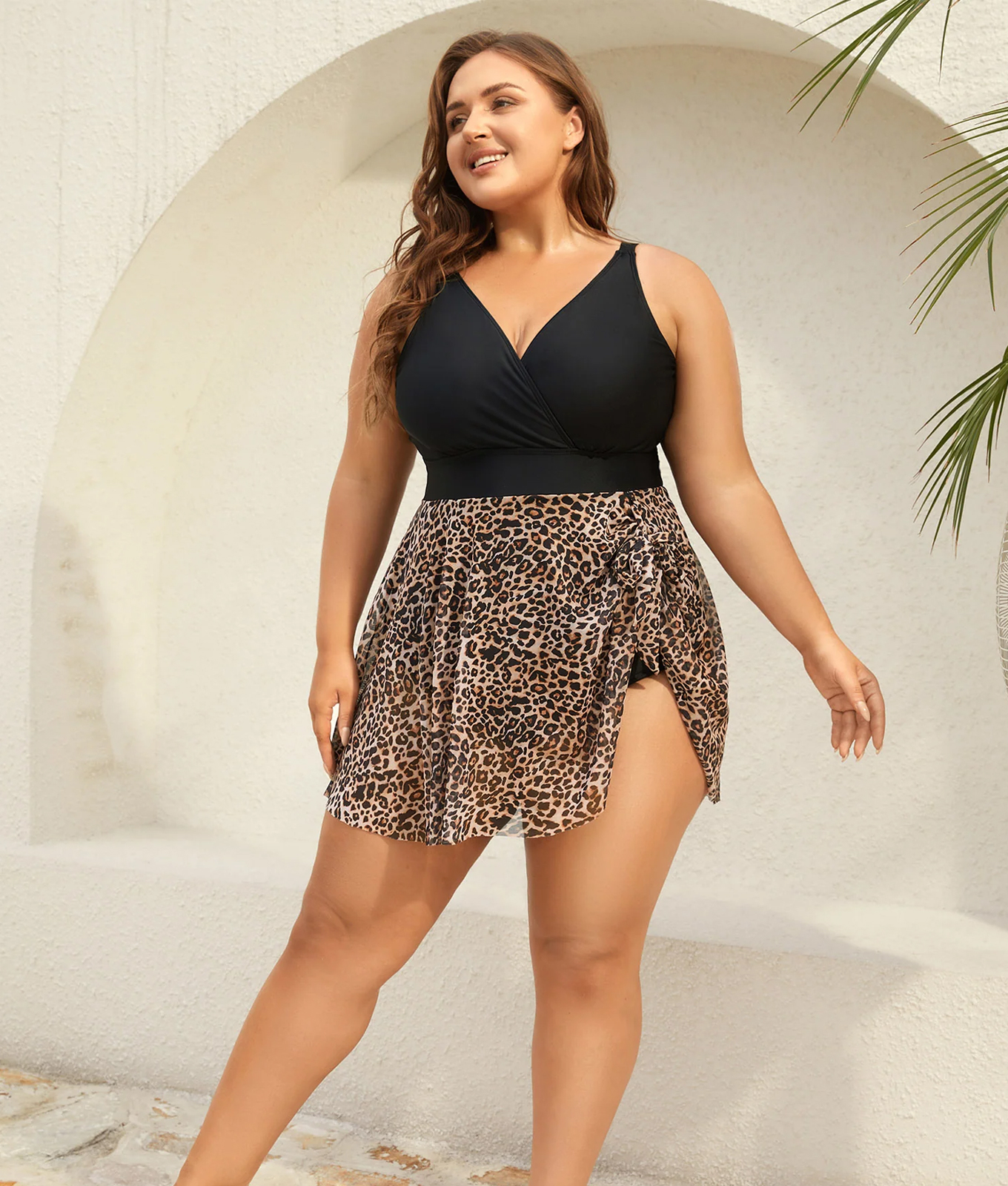
The activewear and swim extensions are not as cleanly engineered as the denim. The activewear leggings run thinner than the denim power-stretch fabric and the compression at the larger sizes is less reliable. The swim cups in the over-DD range are not as supportive as what you can get from Curvy Couture or Cuup. These are extension categories that benefited from the brand halo but have not yet matched the denim’s technical standard. The brand has time to close this gap, but the gap is real today.
How Good American compares to the category
Good American does not exist in a vacuum and it is not the only credible size-inclusive denim option in 2026. Two reference points worth knowing if you are deciding whether to invest in the line.
Universal Standard is the closest direct competitor. Founded in 2015 by Polina Veksler and Alexandra Waldman, Universal Standard launched a year before Good American with a wider size range (00 to 40) and a similar size-inclusive-at-launch principle. The denim is good, the wide-leg trouser is a category-defining piece, and the price is mostly lower than Good American at $120 to $160 for most jeans. The trade-off: the cuts are more relaxed and less sculpting than Good American, the brand leans editorial-minimalist where Good American leans body-conscious-glam, and the wholesale presence is narrower (mostly direct-to-consumer with a Nordstrom partnership that did not stick at the same scale). Universal Standard is the brand to buy if you want a wider size range and a quieter aesthetic. Good American is the brand to buy if you want a high-rise sculpting cut and a polished body-conscious silhouette.
Eloquii sits in the mid-tier comparison. Founded in 2011, acquired by Walmart in 2018, and operating in sizes 14 to 28, Eloquii is the brand most contemporary plus-size shoppers cite as the workwear and event-dressing default. The denim is solid, the dress assortment is broader than Good American’s, and the price is consistently lower at $80 to $140 for most jeans. The trade-off: the denim fabrications are less engineered, the rise grading is less consistent across cuts, and the brand has been through enough merchandising transitions under Walmart ownership that the quality across categories varies more than it used to. Eloquii is the right pick for occasion dressing and a workwear capsule at a more accessible price. Good American is the precision denim choice when you can justify the spend.
What to buy from them
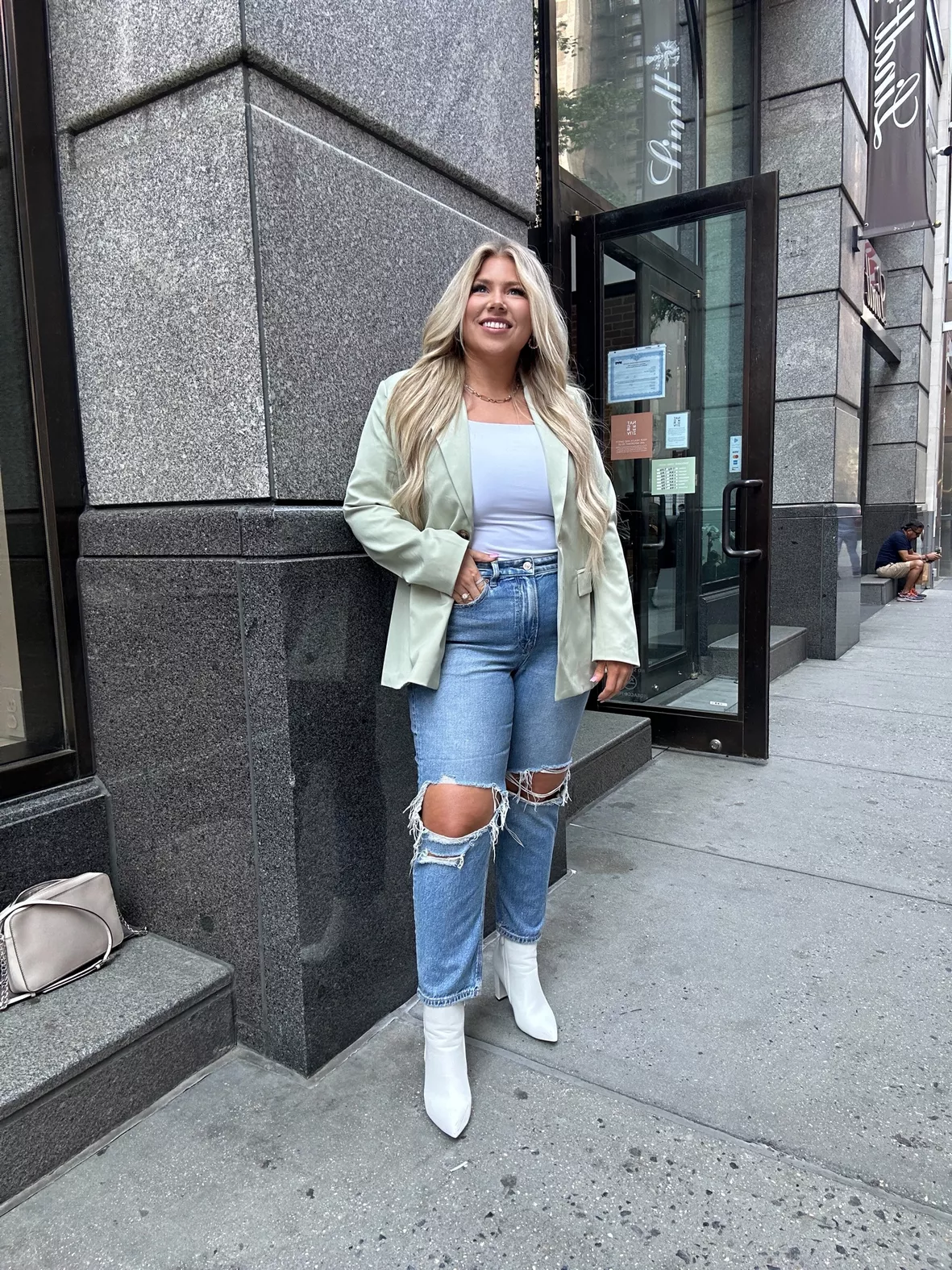
If you are buying Good American for the first time, do not order three styles at once. The cuts vary enough that you want to figure out which one suits your proportions before committing to a wardrobe of them. The five pieces that have earned their permanent rotation place across plus-size editors I trust, and across my own closet at a 16 on top and 18 on the bottom:
The Good Waist high-rise jeans at around $165 are the cut to start with if you have a shorter torso or a defined waist-to-hip ratio. The rise sits at the natural waist without rolling, and the hip room is graded to actual proportions. I own them in two washes and have rotated them weekly for two years.
The Good Curve jeans at around $165 are the pear-proportion answer. The waist sits smaller relative to the hip than the Good Waist cut, which solves the back-gap problem that almost every other premium denim brand has when you go above a size 16. Size up if you are between, the cut runs slightly flat through the thigh.
The Always Fits power-stretch jeans at around $155 are the all-day travel jean. The fabric holds through an eight-hour workday and a flight without giving out, and they recover overnight without losing the shape. The fabric blend is heavy on elastane so they read more polished-stretch than vintage-denim, which is the trade-off.
The Good Legs skinny jeans at around $155 are still in the line for the reader who has not moved on from the skinny silhouette. The cut is sculpting through the calf without pinching at the ankle, which is the failure point of most plus-size skinny denim.
The Good American bodysuit at around $95 is the under-blazer layering piece that holds without rolling at the waist. The cut is long-torso friendly and the cotton-modal fabric is heavier than the Skims equivalent, which is what you want under structured tailoring.
The bigger picture on Good American and Grede
Good American matters as a brand case study because it is the first premium denim brand to prove that size inclusion is a launch principle, not a retrofit. The brand did not extend sizes after it was successful. It launched in 00 to 24, at full wholesale distribution, at premium pricing, and held that structure for ten years through one of the most volatile decades the denim category has ever had. Most of the brands that tried to follow the same model after 2018 quietly walked the size range back when the inventory math got hard. Good American did not.
Emma Grede is the operator who built that model and who has now repeated the size-inclusive-at-launch playbook at Skims, with similar results. The pattern is clear enough at this point that the rest of the contemporary denim category is going to spend the next five years trying to figure out how to compete on it. Khloe Kardashian opened the door at retail and at brand recognition. Grede built the operating engine that walks through it. Both halves of the founding partnership are real, and the brand would not work without either of them, but the half that gets written about less is the half that built the business.
The piece I am wearing as I file this: the Good Waist in a dark indigo, size 18, picked up at the Soho Nordstrom in March. They were $165. The link is below.