
Getting fitted for a bra when you have a large bust is a different exercise from getting fitted when you do not, and most general fitting advice quietly assumes you do not. The standard guidance tends to collapse the moment your cup size runs past a D. Measuring methods that work fine for smaller busts produce nonsense numbers on larger ones, the shops with the widest size range are rarely the ones on the high street, and the single most useful piece of information, which is that your band should be doing almost all the lifting, is usually mentioned in passing if at all.
So this is fitting written the other way round, starting from a large bust rather than adapting to one. What the measurements actually mean, why sister sizing matters more the bigger you get, how to read a fit in the mirror, and which shapes hold up when there is real weight to support. It is worth saying plainly at the start: if bras have never felt right, that is a fit problem and a sizing-system problem, not a body problem.
Why standard fitting advice breaks down on a larger bust
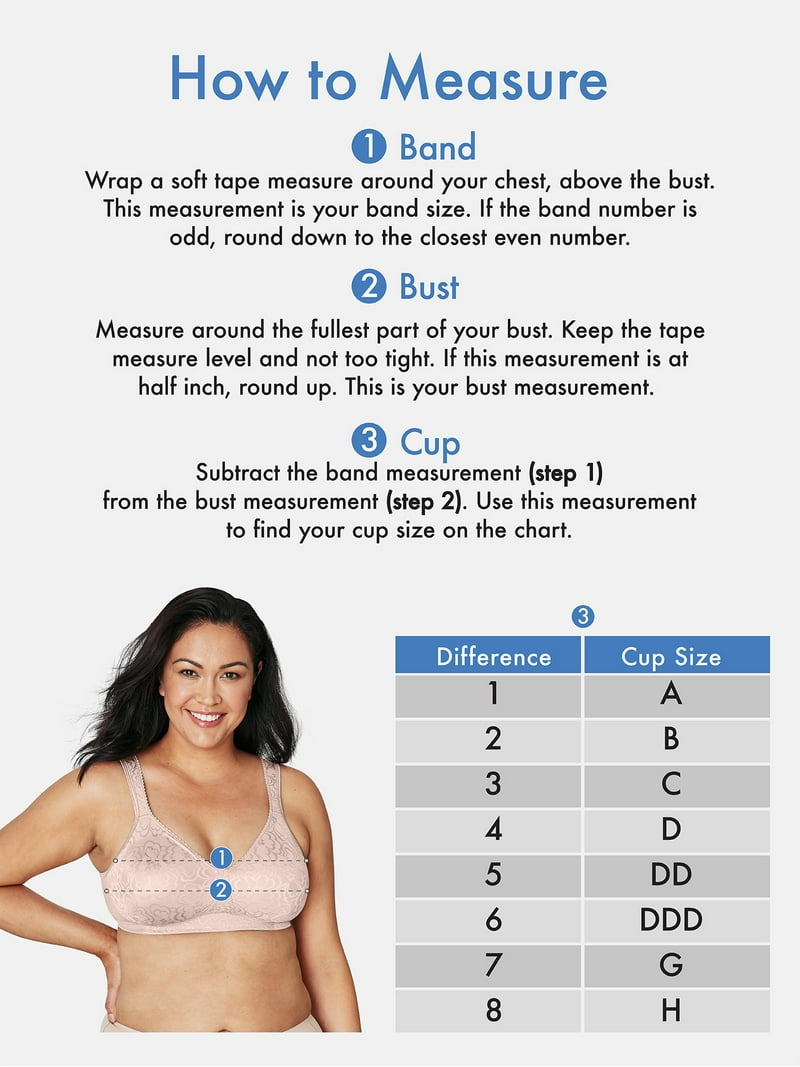
Two things go wrong. The first is the old habit of adding four or five inches to your underbust measurement to find a band size, a rule invented for the stiff fabrics of decades ago. Applied to a modern bra it produces a band several sizes too big, which then rides up your back and hands all the support to the straps. That is where the shoulder grooves, the neck ache and the constant hoisting come from. Measure your underbust snugly and use that number, or the size immediately up if you land between, rather than adding anything to it.
The second problem is that most retailers simply stop stocking around a DD, so people get told they are that size because the shop has nothing beyond it. Cup volume grows fast, and the difference between a DD and a G is substantial. Being fitted from a limited range is how someone ends up in a band too loose and a cup too small at once, which is the single most common bad fit on a large bust. If you want the broader fundamentals of finding a bra that works, our full guide on how to find a bra that actually fits when you are plus-size covers the groundwork this article builds on.
The band does the work, not the straps
This is the principle everything else follows from. A correctly fitted bra takes the large majority of its support from the band, and the straps only balance and position. If you loosen your straps completely and the bra still holds you up, the band is doing its job. If everything drops, the band is too big and no amount of strap tightening will fix it, because tightening straps only transfers weight onto your shoulders and pulls the band further up your back.
A well-fitted band sits level all the way around, parallel with the floor, and should feel firm on the loosest hook when new. Bras stretch, so starting on the loosest hook gives you months of usable life as you move inward. You should be able to slide two fingers under it with some resistance and no more. If the back of your band is riding up toward your shoulder blades, that is the clearest possible signal to go down a band size, and because band and cup are linked you will need to go up a cup size at the same time to keep the volume you had.
Sister sizing, and why it matters more here
Cup letters are not fixed volumes. They describe the difference between your bust and your band, which means a 38D and a 36DD hold roughly the same amount, just on different band lengths. Moving down a band size and up a cup letter, or the reverse, keeps volume constant while changing the fit of the frame. That relationship is called sister sizing, and on a large bust it is the single most practical tool you have, because it lets you fix a band problem without losing cup volume.
In practice this is how you solve the classic complaint of a band that rides up but cups that already feel full. You do not need a bigger everything. You need one band size down and one cup letter up, which usually feels dramatic when you read it and correct the moment you put it on. Keeping your two nearest sister sizes in mind also widens what you can buy considerably, which matters when stock in larger cups is limited and you are working with whatever a retailer actually has.
Reading the fit in the mirror
Do the checks in order, because each one depends on the last. Start with the band: level, firm, not riding up. Then the centre panel between the cups, which should sit flat against your breastbone. If it floats away from your body, the cups are too small and the tissue is pushing it off. That one check catches more bad fits than any other, and it is quick.
Then the cup edges. Any spillage at the top or the underarm means more volume is needed, and so does the opposite problem of wrinkling or gaping fabric, which means less. Underwires should follow your natural crease and fully enclose the breast tissue, sitting on your ribcage rather than on breast tissue itself. Wires resting on tissue are the usual cause of that specific ache under the arm at the end of a long day. Finally, do a scoop and swoop: lean forward, reach into each cup and bring all the tissue from your underarm and back forward into it, then stand up and reassess. A great many bras that appear to fit badly are simply not filled properly.
Styles that hold up when there is weight to support
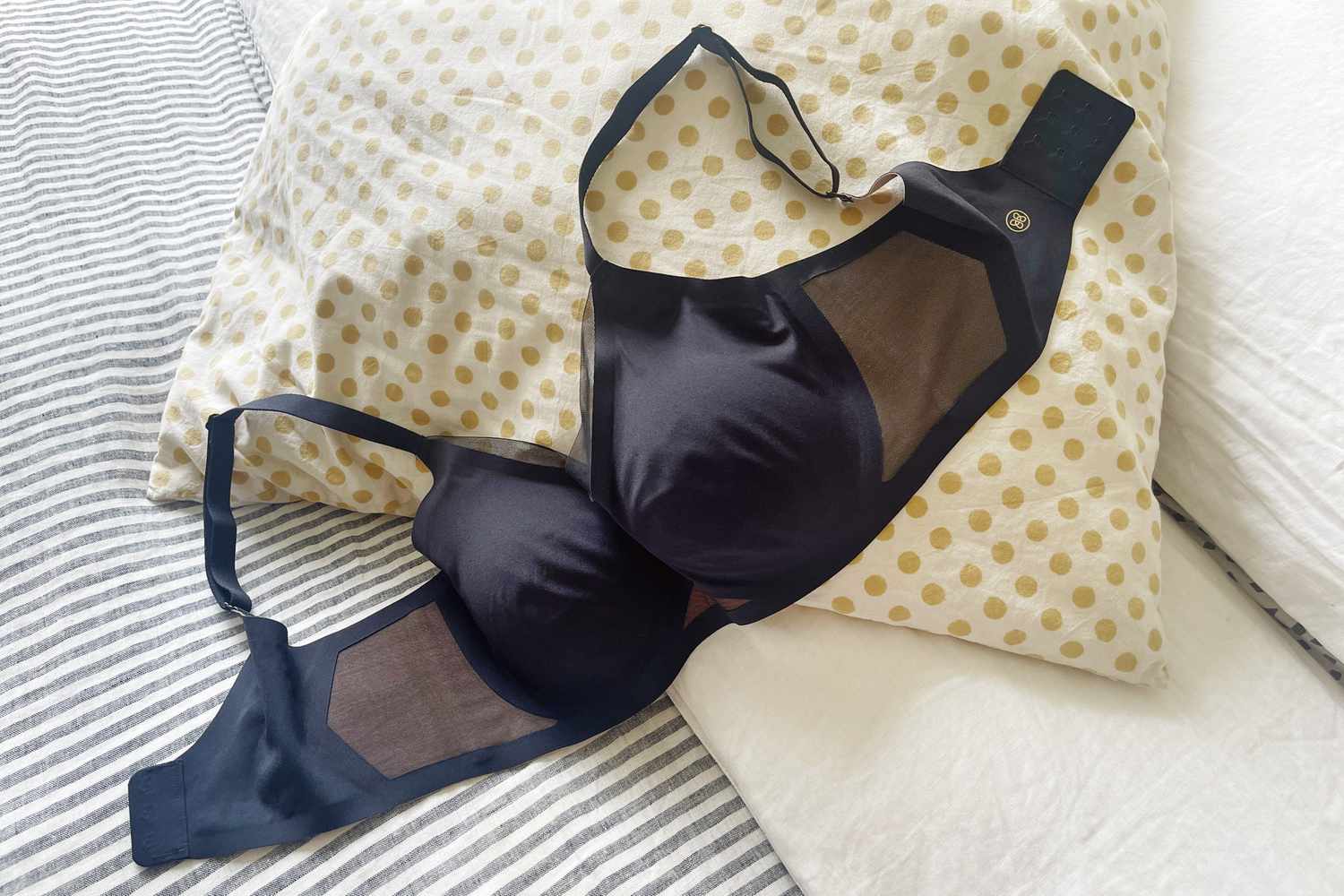
Construction matters more as bust size increases, and some shapes simply cannot deliver support at scale. Full-cup and balconette styles with side support panels, three-part cup construction and wider set straps all distribute weight far better than a plunge or a lightly lined triangle. Wider straps spread the load and stop the digging that thin straps cause once there is real weight above them. A well-built full-cup bra with side support panels from a brand that designs in larger cups rather than grading up from a C will fit the shape as well as the volume.
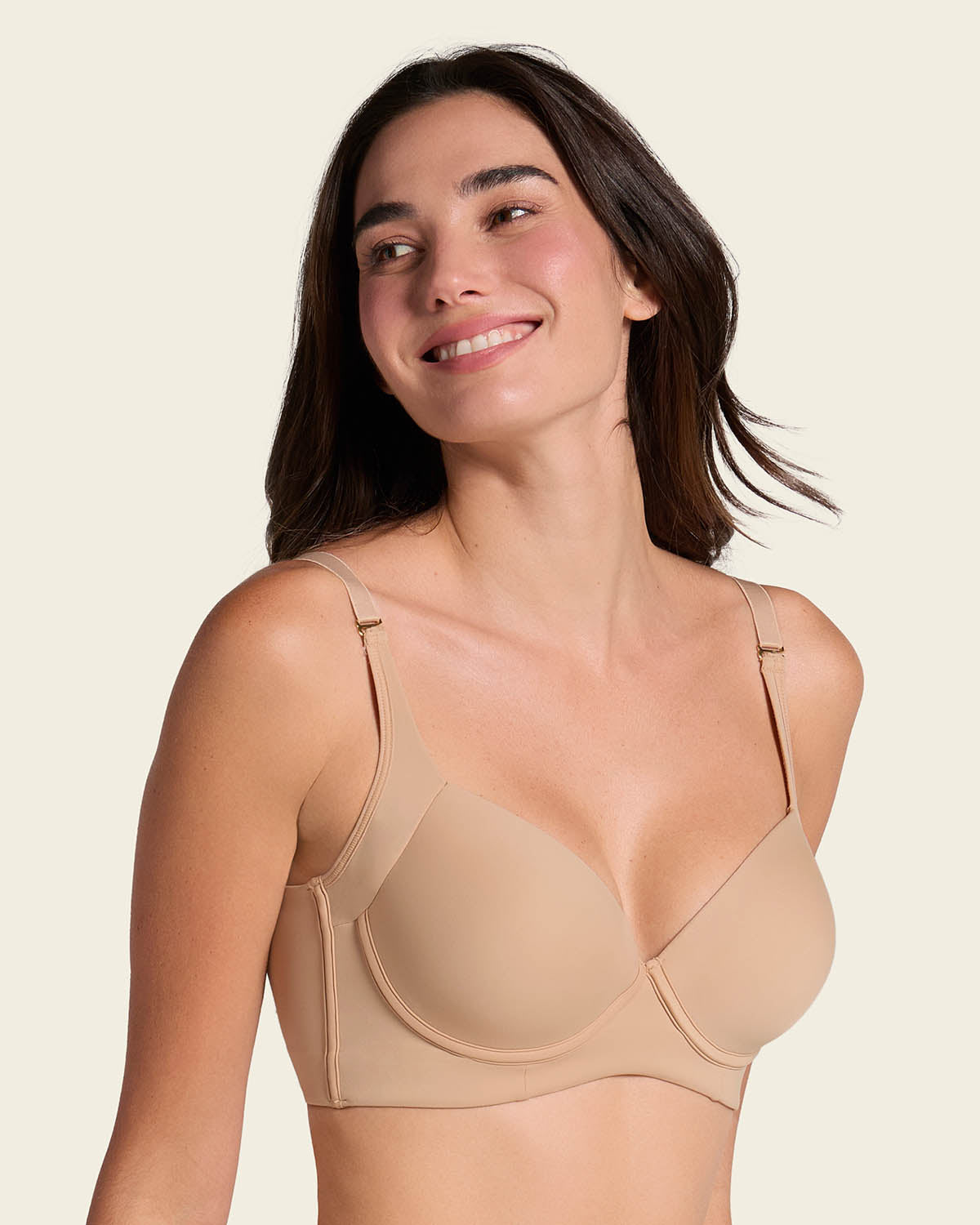
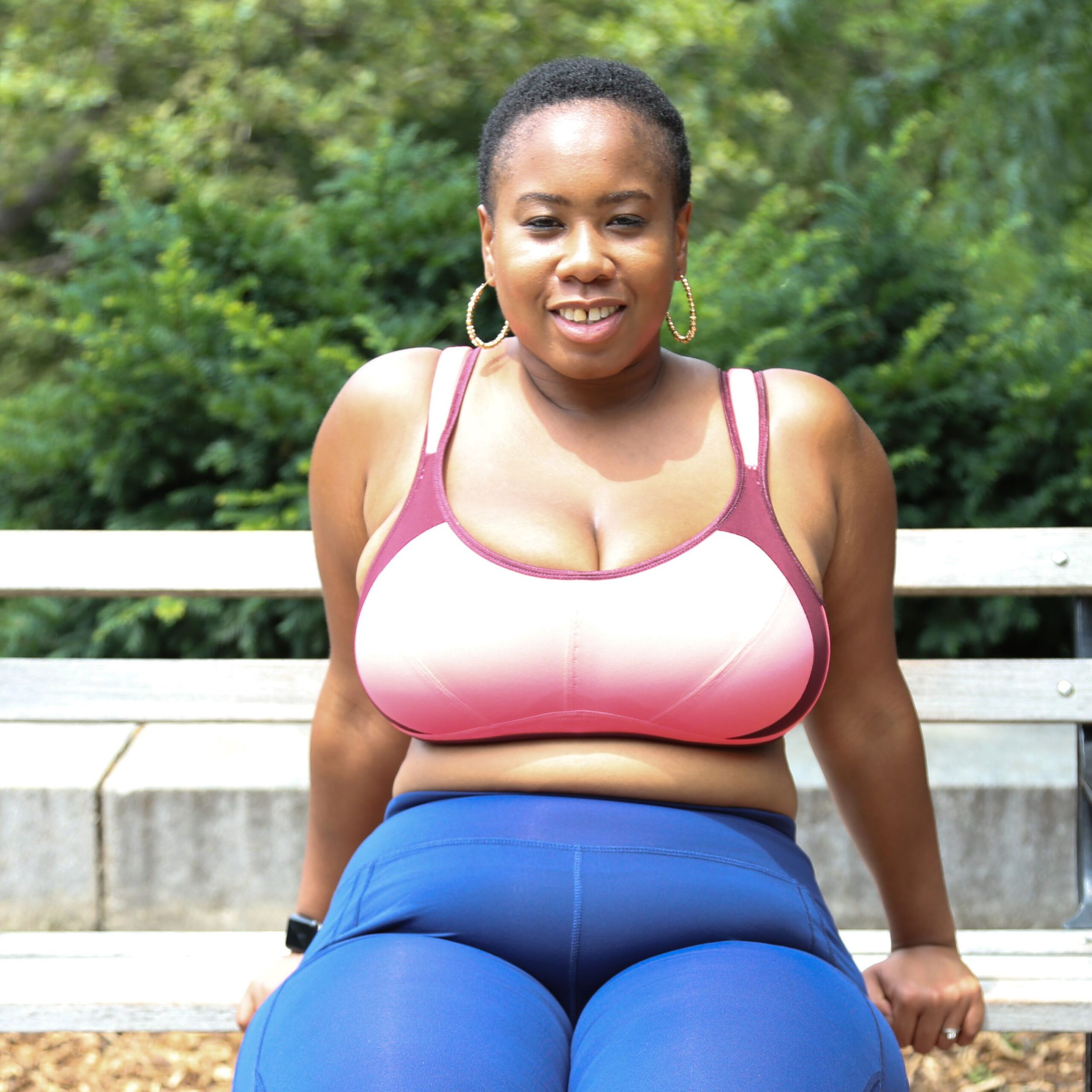
Seamed cups are worth considering even though moulded ones look smoother under clothes, because seams shape and lift structurally while a moulded cup relies on the mould matching your shape exactly. For sport, the support requirement roughly doubles, and an encapsulation-style high-impact sports bra that supports each breast separately will always outperform a compression crop top that simply flattens. Compression styles are the most common reason people conclude that exercise is uncomfortable for them when the actual problem is the garment.
Getting fitted without wasting a Saturday
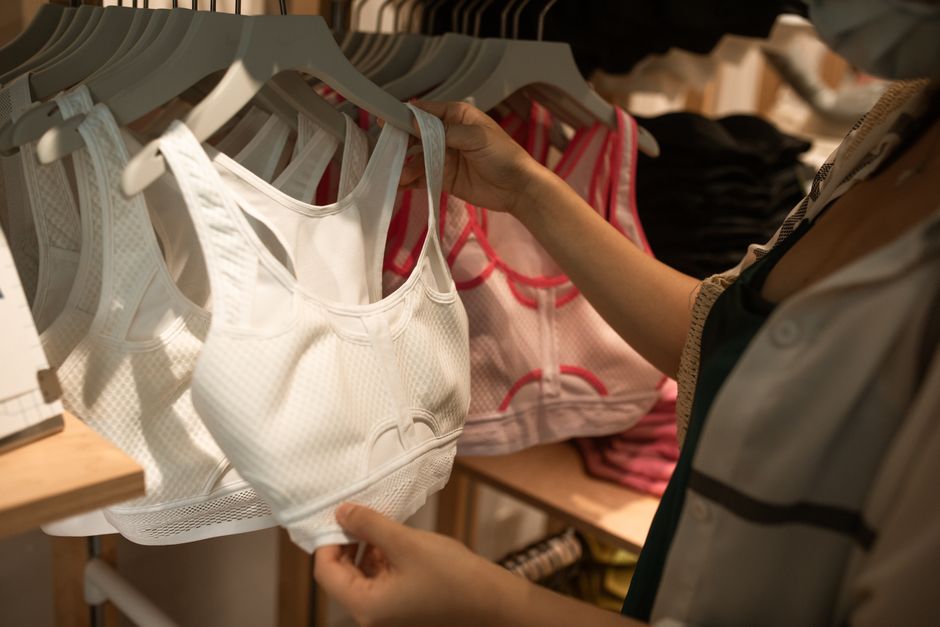
Go to a specialist rather than a department store if you possibly can, because a shop that stocks a genuinely deep size range has staff who fit those sizes daily. Wear an unpadded bra you can easily change out of, and be ready to try a spread of sizes rather than one, since cup shape varies enough between brands that your size is really a starting point rather than an answer. Expect to try several and do not read that as a bad sign.
If you are fitting yourself at home, measure your underbust snugly and your bust at the fullest point while wearing a non-padded bra, take the difference to get a starting cup, then work through the mirror checks above and adjust using sister sizing. Order two or three sizes around your estimate, keep the one that passes every check, and return the rest. That is a far more reliable process than one measurement and one guess, particularly given how much sizing varies between labels.
Quick answers to the questions everyone asks
How should a bra fit if I have large breasts? The band should sit level and firm and carry most of the support, the centre panel should lie flat against your breastbone, the wires should enclose all breast tissue and rest on your ribcage, and there should be no spilling or gaping at the cup edges. Straps only balance, they should never carry the weight.
Why does my bra band ride up my back? The band is too big, so the weight has shifted onto your straps and pulled the back upward. Go down a band size and up one cup letter to keep the same volume. Tightening the straps feels like a fix but makes the shoulder pain worse.
What is sister sizing? Cup letters describe the difference between bust and band, not a fixed volume, so a 38D and a 36DD hold roughly the same. Moving down a band and up a cup keeps volume the same while tightening the frame. It is the quickest way to fix a loose band without losing cup room.
Should I wear a wired or wire-free bra with a large bust? Either can work, but wires generally give more lift and separation at larger sizes, provided they sit on your ribcage and fully enclose the tissue. A well-constructed wire-free bra with side support panels and wide straps is a genuine alternative. Comfort tends to come from correct fit rather than from the wire itself.
How often should I be refitted? Whenever your weight changes noticeably, after pregnancy, and otherwise roughly once a year, since bands stretch with wear. If you are wearing a bra on its tightest hook and it still feels loose, that bra is finished and it is time to remeasure rather than keep going.
Fit is a system, not a size
The most useful shift is to stop thinking of your bra size as a single fixed label you were assigned and start treating it as a working range. Your band size, your two nearest sister sizes and the specific shapes that suit you together make up a system, and once you know all three you can walk into any shop or open any website and evaluate what is in front of you rather than hoping a number works. Check the band first, the centre panel second, the cup edges third, and let those checks overrule whatever the tag says. Bras that fit a large bust properly do exist in far more sizes than most high streets suggest, and the discomfort that so many people accept as unavoidable is nearly always a fitting failure rather than an inevitability.