There is a specific kind of low-grade misery that comes from a bra that does not fit, and if you are plus-size you probably know every flavor of it. The band that creeps up your back until it is sitting between your shoulder blades by lunchtime. The straps you tighten and tighten until they carve red trenches into your shoulders. The underwire that sits on breast tissue instead of against your ribs. You have probably decided, at some point, that this is just what having a fuller bust feels like. It is not. Almost all of it comes down to fit, and fit is fixable once you know what you are actually looking at.
I spent years in the wrong size, buying whatever the big chain stores stocked in the back corner, assuming the discomfort was the price of admission. Then I got measured properly and the whole thing turned out to be a solvable problem hiding behind a few stubborn myths. This is the guide I wish someone had handed me a decade ago, written for real plus-size bodies rather than the narrow range most fitting advice quietly assumes.
Fitting a bra at home: start by measuring your real size
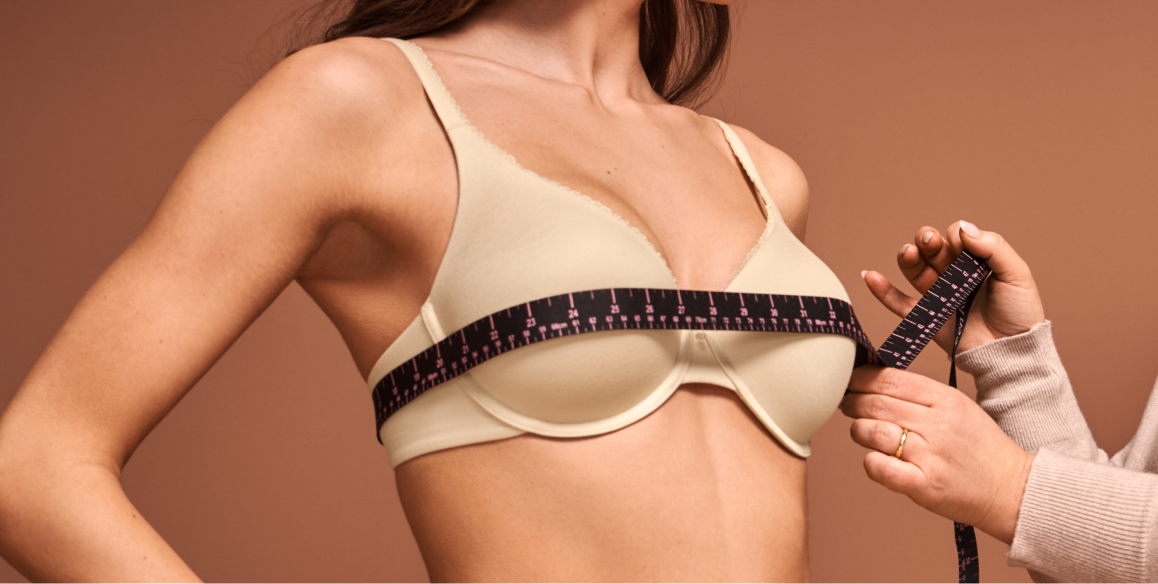
You do not need a fitting room to get close. Take a soft measuring tape and wrap it snugly around your ribcage, directly under your bust, keeping it level all the way around. Round to the nearest whole inch. That number is your band size. Then measure around the fullest part of your bust, usually across the nipples, keeping the tape comfortable and level rather than pulled tight. The difference between those two numbers is your cup. Roughly speaking, each inch of difference is one cup size, so a one-inch gap is an A, four inches is a D, five is a DD, and it keeps climbing from there.
Here is the part that trips up most plus-size women. The cup letter is not a fixed volume. A D cup on a 44 band holds far more than a D on a 34 band, because the cup is scaled to the band. So chasing a letter across brands is pointless, and being a G or an H or a J is not some extreme outlier, it is just math describing the difference between your ribcage and your bust. The goal is the pair of numbers together, not the letter alone.
If your band rides up, it is too big, not too small
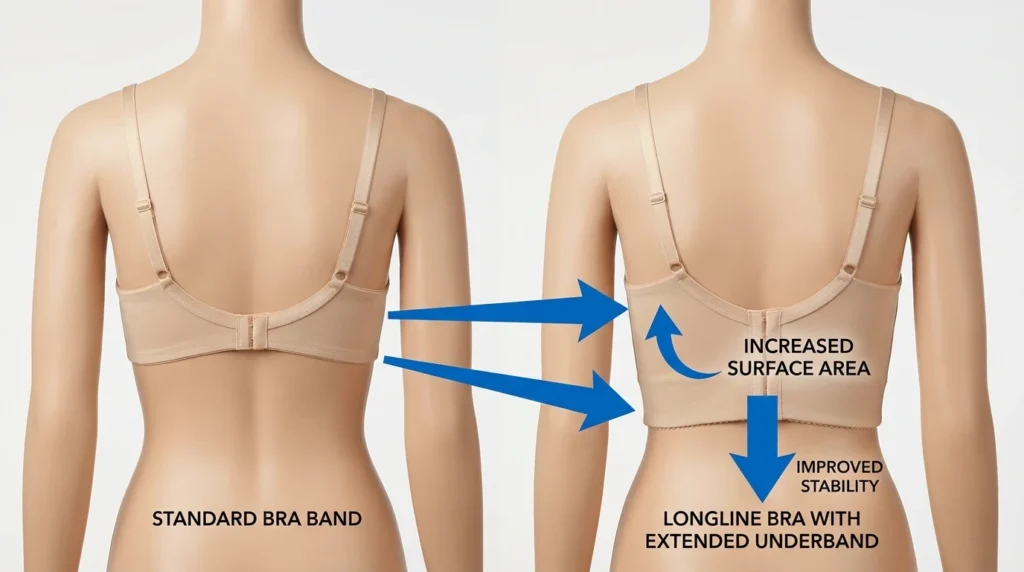
This is the single most useful thing I can tell you, and it feels backwards the first time you hear it. When your band rides up your back, the instinct is to think it is too tight and you need to size up. The opposite is true. A band that climbs is a band that is too loose to stay put, so it slides up to the path of least resistance. Around 85 to 90 percent of a bra’s support comes from the band, not the straps, so if the band is not firm and level it cannot hold your bust and everything migrates upward.
Test it yourself. With the bra on, reach back and pull the band away from your body. If it stretches more than about two inches off your back, it is too big and you should try the next band size down. When you go down a band, you usually need to go up a cup to keep the same volume, which brings us to the trick that makes brand-hopping bearable. The band should feel firm, almost surprisingly so if you are used to loose ones, and it should stay put when you raise your arms.
“Back fat” is almost always the wrong size, not your body
Let me say this plainly, because the lingerie industry rarely will. The bulges and spillover that a lot of us have learned to call back fat are, the vast majority of the time, a fit problem rather than a body problem. When a band is too tight in the wrong way, or a cup is too small, the tissue has to go somewhere and it pushes out over the edges. Change the size and much of it simply disappears, because there was never anything wrong with your body, only with the garment trying to contain it.
That does not mean a well-fitting bra makes you disappear into some smaller shape, and it should not have to. Bodies have soft edges, folds, and rolls, and that is completely normal at every size. What a properly fitted bra does is stop creating extra bulges through sheer bad engineering. A wide, firm band that sits flat spreads its hold across more surface, so it supports without carving a line that pushes tissue up and over. If a bra is giving you quadboob or deep back grooves, that is the bra failing, and you are allowed to be annoyed at the bra rather than at yourself.
Sister sizing, the trick that saves you across brands
Once you know your starting size, sister sizing lets you flex when a brand runs small, runs large, or is simply out of stock in your exact number. The idea is that cup volume stays roughly the same if you move band and cup in opposite directions. Go down one band size and up one cup size, or up one band and down one cup, and you keep almost the same cup capacity while changing how the band fits. So if a 40DD band feels too loose, its sister size 38E gives you a firmer band with the same cup volume.
This is genuinely liberating once it clicks, because it means you are not locked to a single label that half of brands do not even make. If your ideal is a 42G and a brand stops at 40, a 40H is your sister size and worth trying. Keep your two or three closest sister sizes in your head when you shop, and a lot more of the market suddenly opens up to you instead of the sad little plus-size endcap.
Stop cranking the straps, that is not where support lives
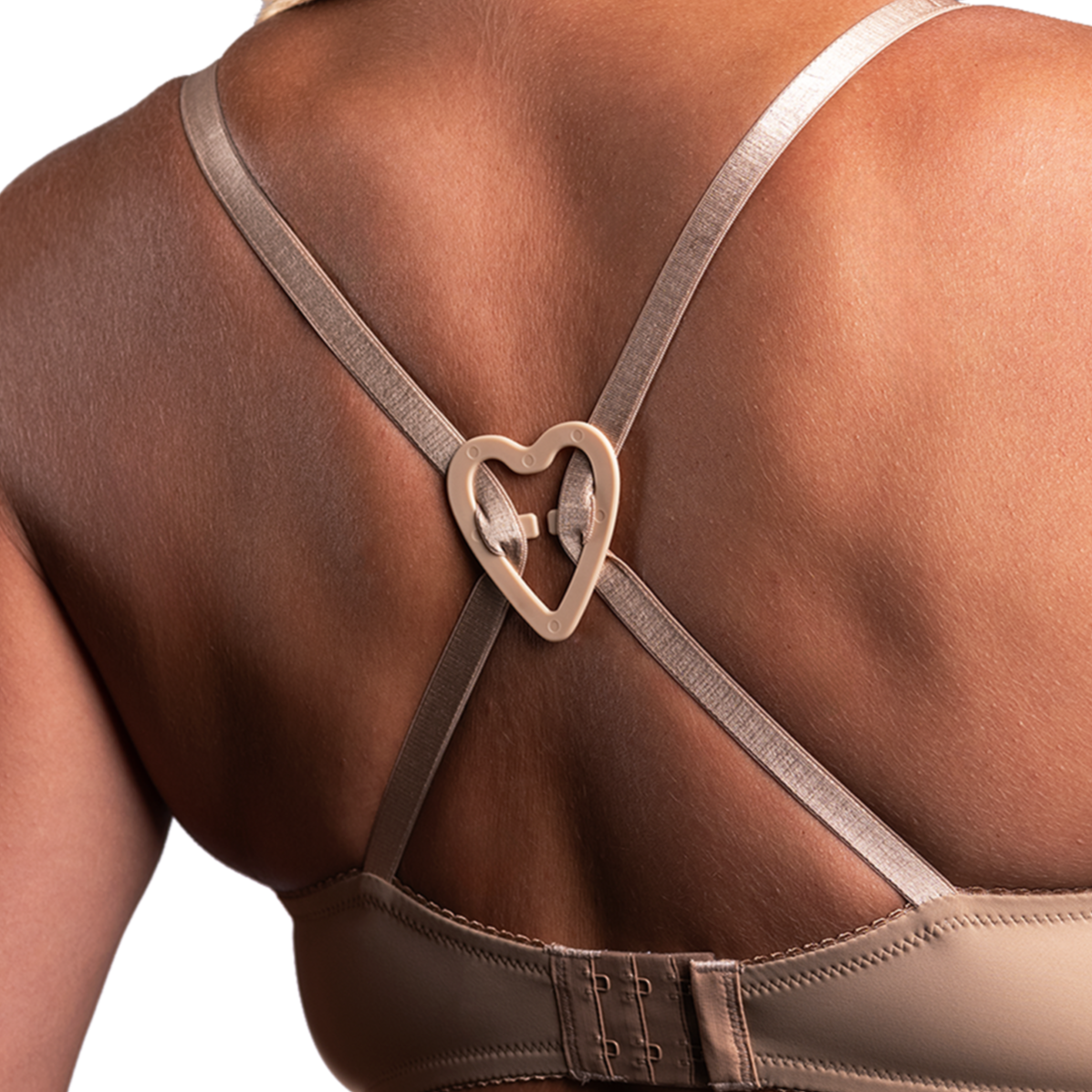
If you take one bad habit away from reading this, make it the strap-tightening reflex. When a bra is not holding you up, most of us yank the straps shorter to compensate, which drags the band up at the back, digs the straps into your shoulders, and fixes nothing because the straps were never meant to carry the load. The band does that job. Straps exist mostly to position the cups, and they should carry only a small share of the weight, adjusted so you can slip a couple of fingers under them without strain.
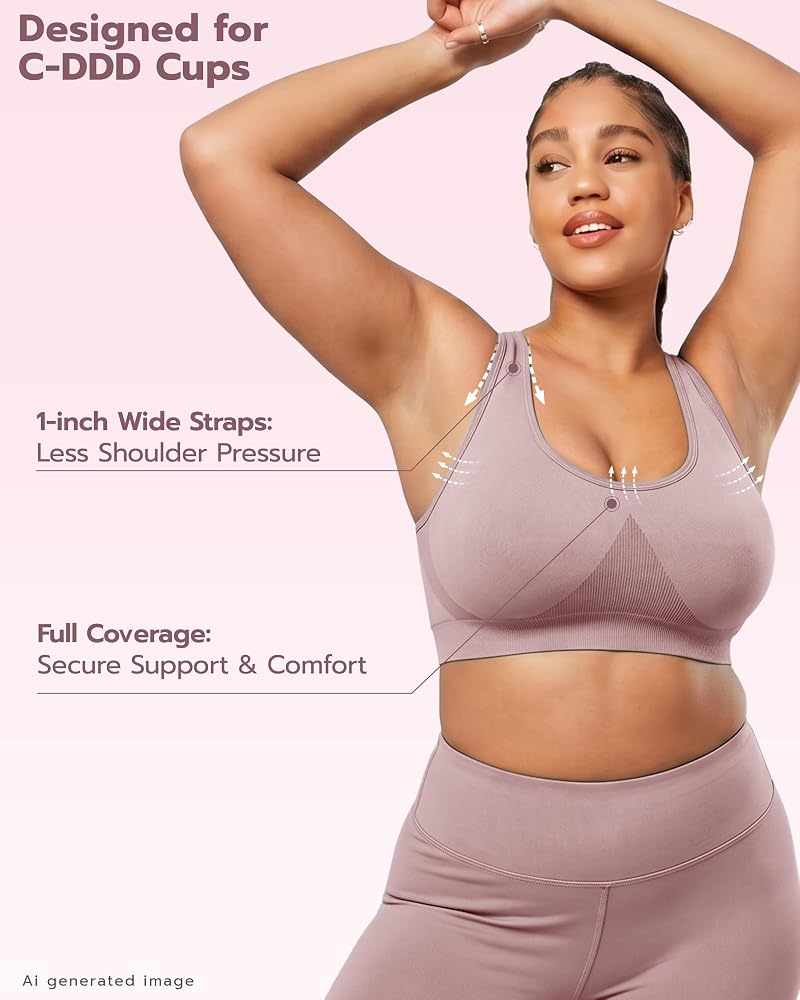
If you find yourself constantly tightening straps and still feeling unsupported, that is your cue that the band is too big, not that you need to pull harder. Fix the band and the shoulder pain that you have quietly lived with for years often just goes away. Wide-set, cushioned straps help too, especially for a fuller bust, but they are the finishing touch, not the foundation.
What to actually try on for a fuller bust
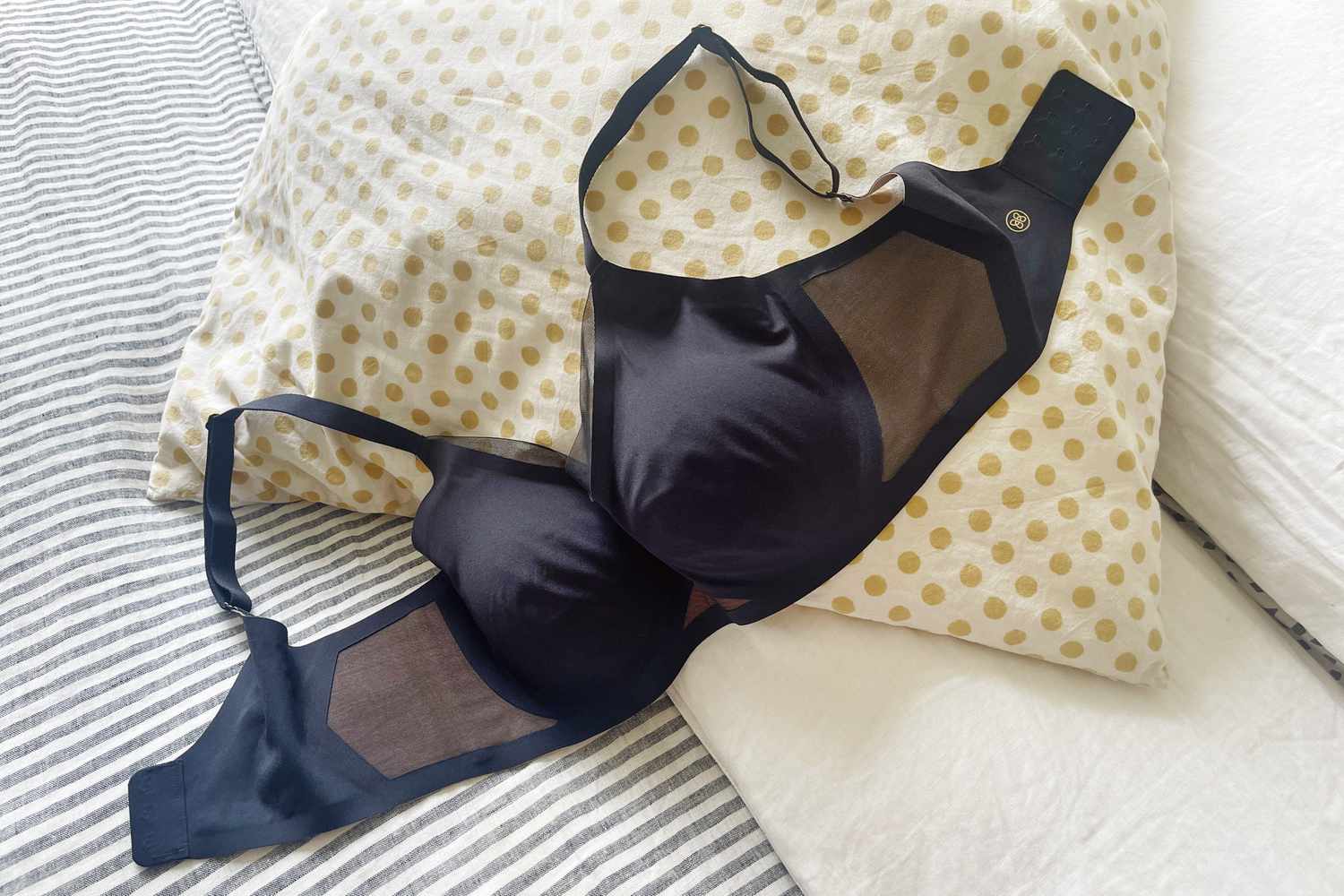
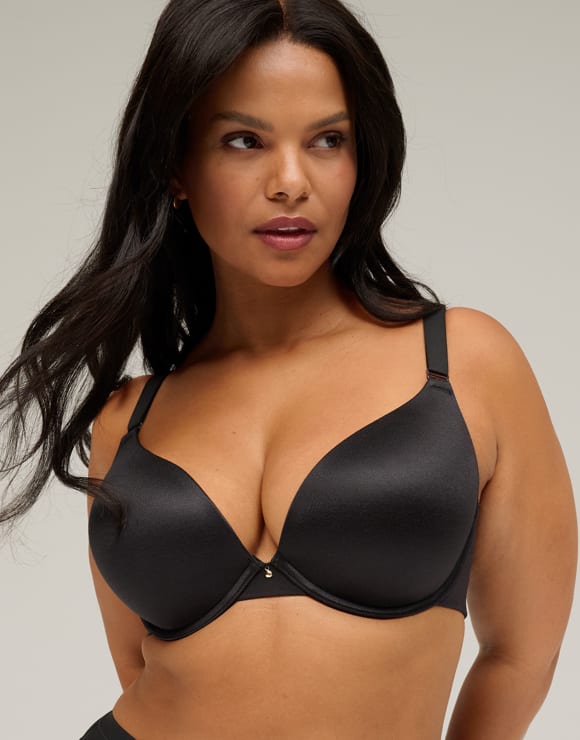
If your cup size runs past a D, fitting a bra involves a few extra considerations that general advice tends to skip, and we walk through those in detail in our guide to bra fitting for large breasts. The short version is that a well-fitting bra on a fuller bust depends even more heavily on the band and on cup construction than it does at smaller sizes. Once the fit logic makes sense, a few features tell you a bra is built to support real weight rather than just look pretty on a hanger. Look for a wide band with several rows of hooks, side support panels or boning that keep tissue from migrating toward your armpit, full-coverage cups that contain rather than slice, and slightly wider straps. Brands that specialize in full busts do this well, and it is worth buying from one rather than settling for the largest size a general retailer happens to carry.
Glamorise and Elomi both cut genuinely supportive bras in extended band and cup ranges, and a well-made full-figure support bra from a brand that designs for our proportions feels different the moment you put it on. If you struggle with dexterity or just hate the back-reach, a front-closure bra with a wide band is a small revelation. And for everyday wear, Torrid and Cacique cut their bands and cups for plus-size bodies rather than grading a straight-size pattern upward, so a plus-size full-coverage bra from either tends to fit at the band and the cup at the same time, which is the whole game.
Quick answers to the questions everyone asks
How do I measure my bra size at home if I’m plus-size? Wrap a soft tape snugly and level around your ribcage under your bust for the band, then around the fullest part of your bust for the cup, and take the difference. Each inch of difference is about one cup size. Measure the band firm, because the band does the supporting.
Why does my bra band ride up in the back? Because the band is too big. A loose band slides up to where there is less resistance. Try the next band size down, and go up a cup to keep the same volume. The band should sit firm and level, parallel to the floor, and stay put when you raise your arms.
How do I get rid of bra bulge and back fat? Most of it is a fit issue, not a body issue. A cup that is too small or a band that binds pushes tissue over the edges. Size up the cup, get a wide firm band that sits flat, and a lot of the bulge simply stops being created. Soft edges are normal regardless.
Do minimizer bras actually work? They can reduce your projection by redistributing tissue, so you look a little smaller under a buttoned shirt, but they do not shrink you and a poorly fitted one just creates its own bulges. A well-fitted full-coverage bra in your true size often gives a smoother line than a minimizer in the wrong size.
What’s the best bra for a large bust? One with a wide multi-hook band, side support panels, full-coverage cups, and wider straps, from a brand that makes your actual size rather than stopping at DD. The specific style matters less than getting those support features in a band that fits firm and level.
How often should I get refitted? Any time your body changes noticeably, so after weight shifts, pregnancy, or a year or two of wear as bands stretch out. A band that used to be firm and now rides up has simply worn out, and it is worth remeasuring rather than tightening the straps to compensate.
Your simple starting point
You do not have to solve all of this at once. Measure yourself tonight, firm band, honest tape, and write down the two numbers plus your two closest sister sizes. Next time you shop, ignore the letter, try a firmer band than feels natural, and judge the bra by whether it sits flat and level without you touching the straps. The first time you find one that actually fits, you will wonder why you spent so long believing the discomfort was just your body. It was not. It was the bra, and now you know how to fix it.