
You take the bra off at the end of the day and there they are: two red channels carved across the tops of your shoulders, deep enough that you can still see them an hour later. Maybe they ache when you press them. Maybe you have had them so long you assume they are just part of having a big chest. They are not. Grooved shoulders are a symptom, and almost every time the culprit is not the straps at all. It is the band. Once you understand why, the fix stops being about hunting for a magically softer strap and becomes about changing what is actually holding your bust up, which is a much shorter and much more satisfying project.
Straps position, bands support
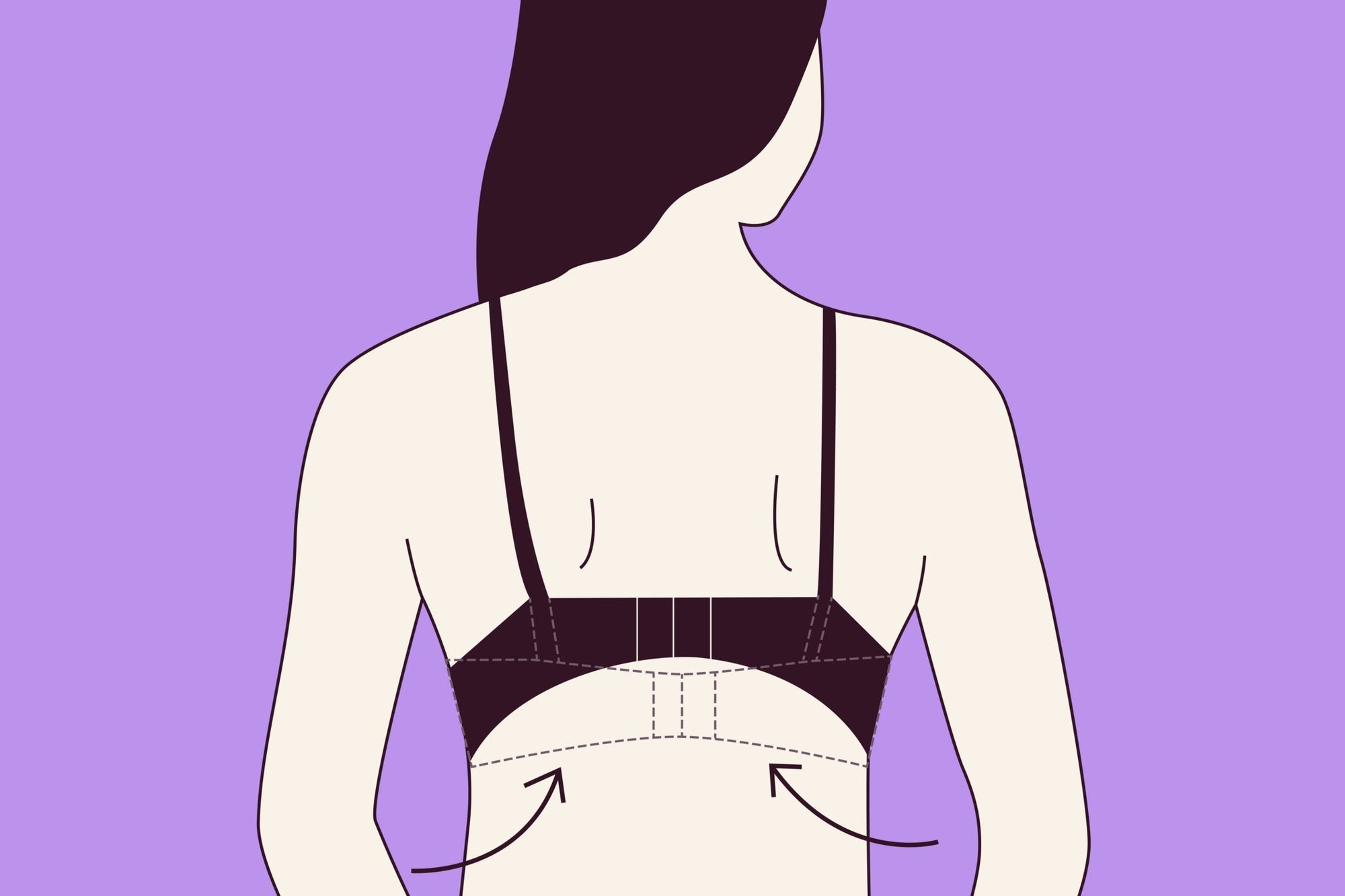
Here is the piece of information that reframes everything. In a properly fitted bra, the band does roughly eighty percent of the lifting. It is the firm horizontal ring around your ribcage, and because it is anchored against bone and muscle it can carry weight without pain. The straps exist to hold the cups against your body and keep the whole thing sitting where you put it. They are positioners. When the band is too loose, it rides up your back instead of staying level, and everything it was supposed to be carrying transfers straight onto two narrow bits of elastic resting on soft tissue over your collarbones. That is what a groove is: your body being asked to carry your entire bust on a surface area of about an inch. No amount of strap padding changes the physics of that. You have to give the load back to the band.
The band-first diagnosis you can do right now
Stand in front of a mirror in the bra you wear most, sideways first, then facing away. The band should run parallel to the floor all the way around. If it curves up toward your shoulder blades at the back, it is too big, full stop. Next, slide two fingers under the band at your sternum and pull forward. If it lifts more than about two inches away from your body, it is loose. Then do the strap test: slip both straps off your shoulders and let them hang at your elbows. If your bust drops noticeably, your straps were doing the support work. In a well fitted bra you can shed the straps and the cups stay more or less where they were, held by the band alone. Finally, check which hook you are on. If you have lived on the tightest hook since the day you bought it, that bra was too big when you bought it and there is nowhere left to go.
Sister sizing, the fix nobody explains properly
Once you know the band is too big, the instinct is to just buy the same bra one band size down. That is half right. Bra sizing is proportional, so if you drop the band and keep the same cup letter you also shrink the actual cup volume, which is why a 42D down to a 40D suddenly spills. Sister sizing keeps the volume constant while changing the band: go down one band size and up one cup letter, or up one band size and down one cup letter. A 42D and a 40DD hold the same amount of breast tissue. Write your current size down, then write both sister sizes either side of it, and take all three into the fitting room. Most people who have lived with grooved shoulders for years are wearing a band two sizes too large and a cup two letters too small, and the corrected size looks alarming on paper right up until they put it on.
How the numbers move when you sister size
| If you currently wear | Tighter band, same volume | Two bands tighter, same volume |
|---|---|---|
| 44C | 42D | 40DD |
| 42D | 40DD | 38F |
| 40DD | 38F | 36G |
| 38DDD | 36G | 34H |
| 46B | 44C | 42D |
Cup letter conventions differ between American and British sizing, so treat that table as a direction of travel rather than a fixed conversion chart. What matters is the fit test, not the label. Try the size on and judge it by whether the band stays level all the way around your back, whether the cups contain everything without gaping at the top edge or cutting in at the side, and whether the underwire sits flat against your ribcage behind the breast tissue rather than on top of it. If two of those three are right and one is off, adjust that one variable and try again. Bring a friend or a fitter if you can, because the back view is the part you cannot see and the part that gives the answer away.
Cup construction matters more than strap padding
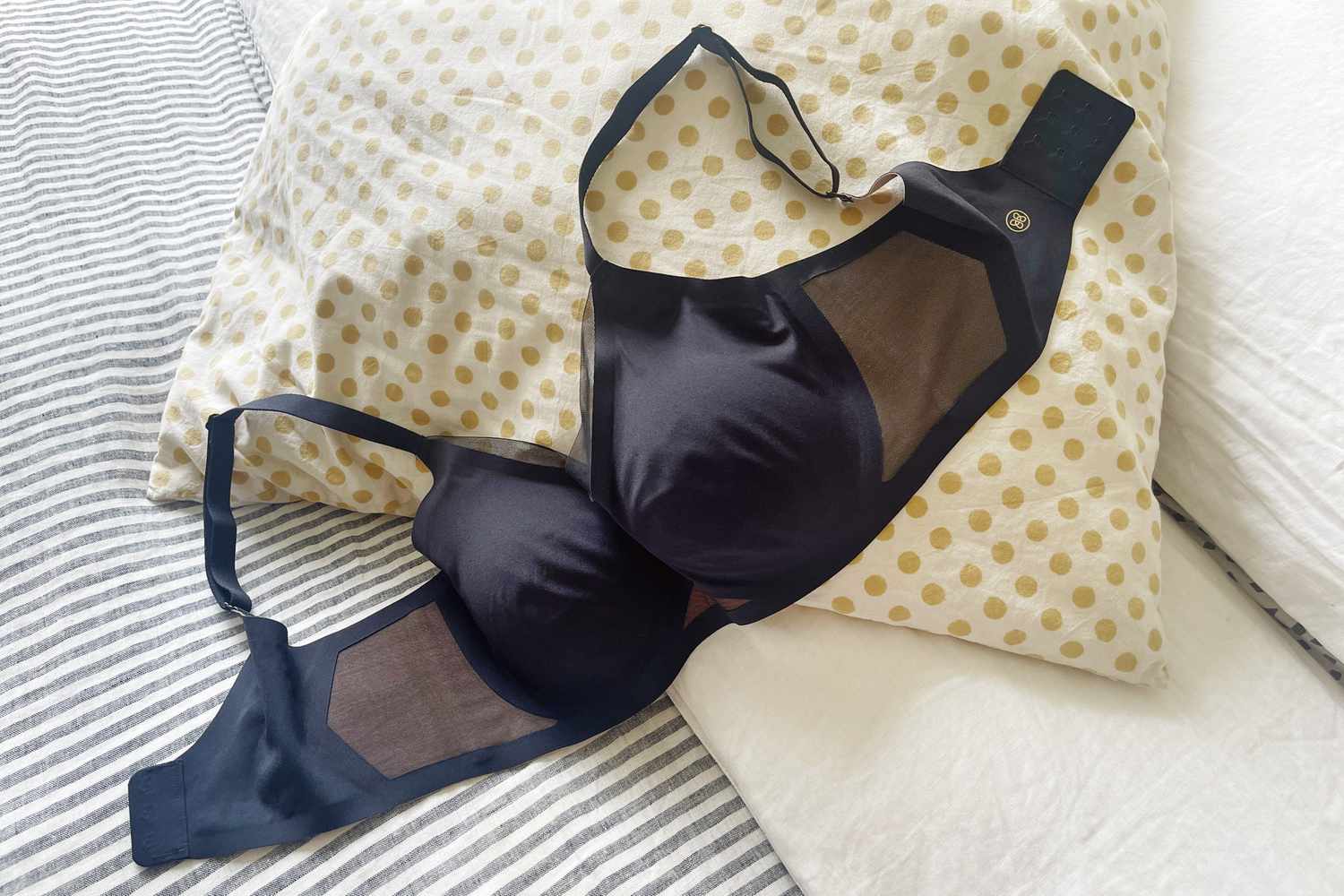
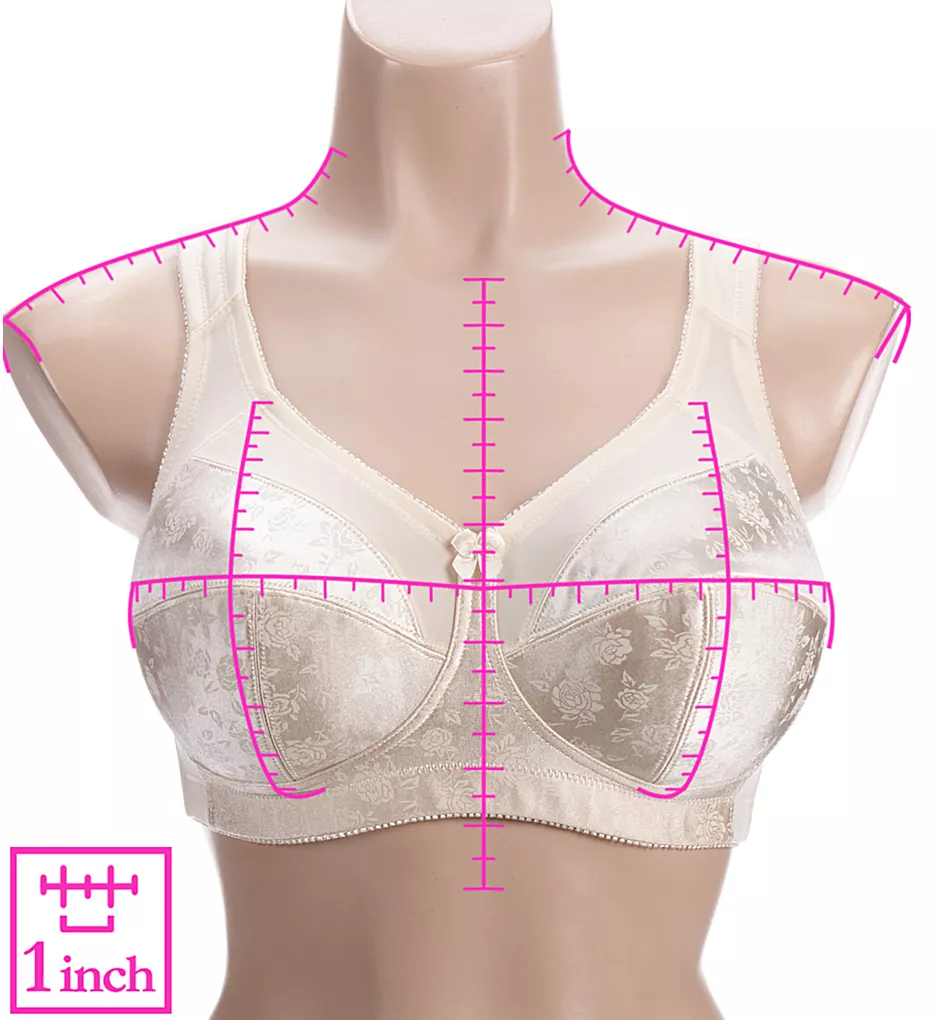
A band can only carry the load if the cup actually holds your breast tissue in place. This is where full-cup and side-support construction earns its keep. A full-cup bra covers the whole breast rather than cutting across it, which stops tissue from being pushed upward and out over the top edge, and a bra with a separate side sling or side panel pushes tissue forward and inward instead of letting it migrate toward your armpit. Both of those things keep the weight closer to your centre of gravity, and weight held close to the body pulls down on the straps far less than weight allowed to swing forward. Three-part or four-part cup construction, seamed rather than molded, is generally better at this in larger sizes than a smooth foam cup, which is drafted to one fixed shape. If you have been buying molded T-shirt bras and fighting grooves, a seamed full-cup style in your corrected sister size is the single biggest change you can make.
Wide straps and cushioning: helpful, but not the cure
Wider straps spread the same load across more surface area, so the pressure per square inch drops and the groove is shallower. Cushioned or padded straps do the same thing with a softer interface. Leotard-back and racerback styles pull the straps inward so they sit on a flatter part of the shoulder instead of sliding toward the slope. All of these genuinely help, and if you are on your feet all day they are worth having. What they do not do is fix a loose band, and this is where a lot of shopping money gets wasted. Padding a strap that is carrying eighty percent of your bust just gives you a softer version of the same problem. Use these as mitigation on top of a correct band, not as a substitute for one. A set of cushioned bra strap pads is a reasonable few dollars once your band is right, and a waste of money before that.
Posture, and when a groove needs more than a new bra
Time to be honest about the part that gets glossed over. Persistent deep grooves are associated with real symptoms in people with large breasts: aching across the trapezius, tension headaches, and a habit of rounding the shoulders forward that eventually becomes the resting posture. Some of that unwinds once the load moves to your band, because you stop bracing against the pull. Some of it needs actual attention. If the grooves are still visible hours after you undress, if you have numbness or tingling down your arms, or if the skin in the groove is broken or discoloured, that is not a shopping problem. Get a professional refit from someone who fits above a DD as routine, and if symptoms persist in a correctly fitted bra, raise it with your doctor. Strengthening the upper back helps too, but it is support, not a substitute for a bra that fits. Our full guide to bra fitting for large breasts walks through the measuring process in detail.
Sports bras have their own version of this problem
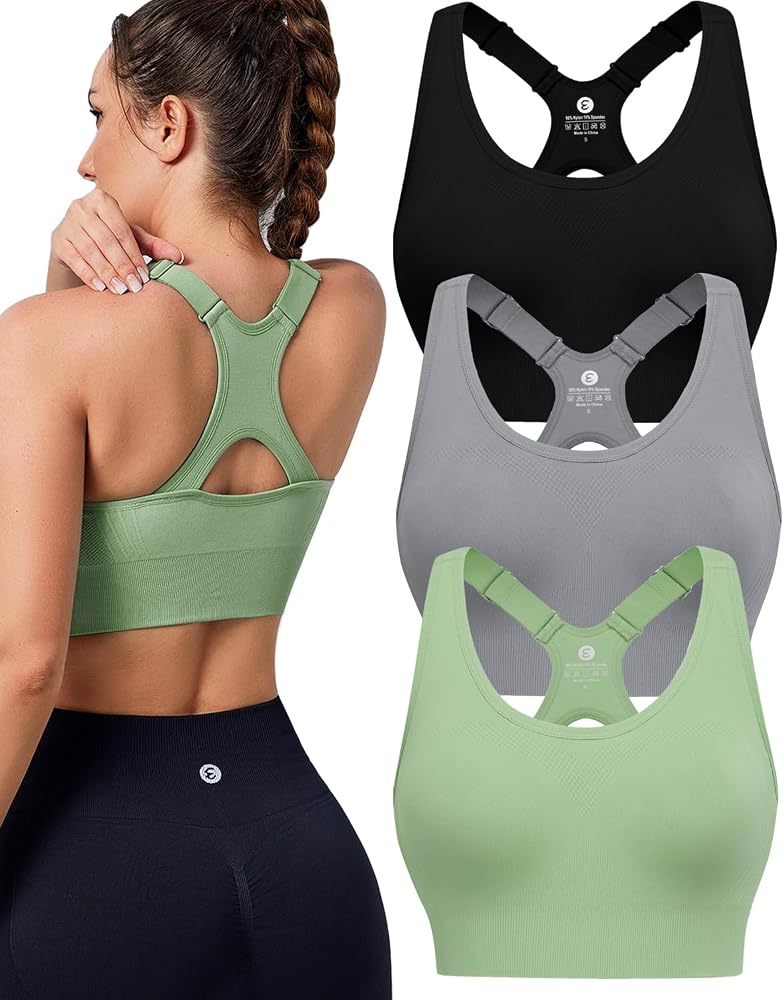
Sports bras dig for a slightly different reason. Compression styles work by flattening tissue against the chest, which spreads pressure across the whole garment, but they are often sized in vague small to extra large ranges that ignore the band and cup relationship entirely. On a larger bust that usually means the band is not firm enough and the straps end up taking impact loads, which are far higher than static weight because your bust is accelerating and decelerating with every step. Look for encapsulation styles, meaning separate cups rather than a single compression tube, and buy them in real band and cup sizing. Adjustable straps matter more here than anywhere else, because you want them snug enough to control bounce without hanging your weight from them. If the band lets you get two fingers under it easily while you are standing still, it will not hold under running. A properly sized high impact encapsulation sports bra is worth the extra spend if you train more than occasionally.
Quick answers to the questions everyone asks
Why do my straps dig even when I loosen them? Because loosening a strap on a loose band just lets your bust drop lower without removing the weight from your shoulders. The strap still carries the load, it simply carries it at a lower position. Tighten the band or drop a band size using sister sizing, then reset the strap length afterward.
Will wide straps fix grooving on their own? They reduce it rather than fix it. A wider strap spreads the same weight over more skin, so the mark is shallower and less painful. The underlying load is unchanged, so if your band is riding up your back you will still ache by evening. Correct the band first, then choose wide straps as well.
Is a tighter band supposed to feel uncomfortable? Snug is normal, painful is not. A correct band feels firm and noticeable for the first few wears, especially if you have worn loose bands for years. It should not restrict breathing, roll, or leave deep marks around your ribs. Fasten new bras on the loosest hook so there is room to tighten later.
Do my straps need to be off my shoulders entirely? No. Straps should be snug enough to keep the cups against your body, roughly two fingers of give. The test is diagnostic only: if dropping both straps makes your bust fall noticeably, the band is not doing its job. In a good fit, the cups barely move without the straps.
Should I see a doctor about shoulder grooving? Consider it if grooves stay visible hours after undressing, if the skin is broken or discoloured, or if you have numbness or tingling in your arms. Those signs go beyond a fit issue. Try a professional refit first, and if symptoms continue in a correctly fitted bra, bring it up at your next appointment.
Start with the band tonight
Pick up the bra you wore today and check the back in a mirror. If the band arcs up between your shoulder blades, or if you are living on the tightest hook, you already have your answer and you do not need a measuring tape to confirm it. Write down your current size, write the two sister sizes either side of it, and order or try on all three in a seamed full-cup style. Give the tighter band a few wears before you judge it, because a firm band feels strange when your body is used to hanging from its shoulders. The grooves fade over a week or two once the weight moves off them, and the day you notice they are gone is usually the day you realise how much the ache had become background noise.