
The phrase does most of the damage. Minimizer sounds like a promise to make you smaller, and that is not what the garment is or has ever been. What a minimizer actually does is move volume around, and the people who love theirs are almost always the people who understood that before they bought it. If you are shopping because a button down shirt keeps gaping, or because a blazer will not close over your chest without straining, a minimizer is a genuinely useful tool. If you are shopping because you want to look like you have a smaller bust from every angle, you are about to be let down by a perfectly good bra. It is worth being clear about which of those two shoppers you are before you spend anything.
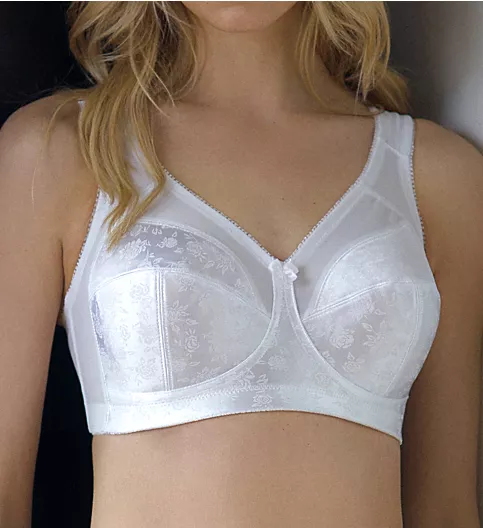
What a minimizer bra actually does
A minimizer redistributes breast tissue rather than reducing it. The cup is shaped to spread volume outward toward the side seam and slightly downward, instead of pushing it forward and up the way a standard moulded or push up cup does. Because your profile from the side is what people register as size, moving that same volume sideways makes the chest read as less prominent from the front and in a photograph. Manufacturers commonly describe the effect as reducing apparent projection by roughly an inch, and that figure is best treated as an approximation rather than a measurement you can hold anyone to. It depends heavily on your tissue, your starting shape, and how well the band fits. Some people see a clear difference the moment they put a shirt on over it, some see very little, and neither response means the bra is defective.
What it cannot do, no matter what the packaging says
It cannot make your breasts smaller. Nothing you put on top of tissue removes tissue, and any product implying otherwise is selling you a feeling rather than a function. It also cannot compensate for a band that is the wrong size. This is the single most common disappointment in the category. A minimizer worn on a band that rides up your back is doing almost nothing, because the shaping depends on the garment being anchored, and an unanchored garment simply travels with you. It will not fix straps digging into your shoulders either, since that is a symptom of the band failing to carry the weight. And it will not make a shirt fit that was cut too narrow across the chest to begin with. Those are all separate problems with separate fixes, and buying a minimizer to solve them is how people end up with a drawer of bras they never wear.
Who this actually helps
Three groups get real value here. The first is anyone who lives in button front shirts and is tired of the gap that opens between buttons at the fullest point, because reducing projection is exactly what closes that gap. The second is anyone who wears tailored jackets, blazers, or structured coats and finds that the garment strains at the front and hangs wrong at the shoulder as a result, since a flatter front profile lets the lapel sit closer to the body and the whole line of the jacket improves. The third, and the one people mention least, is anyone who simply wants less bounce and less forward weight during a normal day of walking, commuting, and reaching. Full coverage minimizers tend to be built solidly, and that solidity produces a steadier, calmer feeling that has nothing to do with appearance at all.
The construction that actually matters
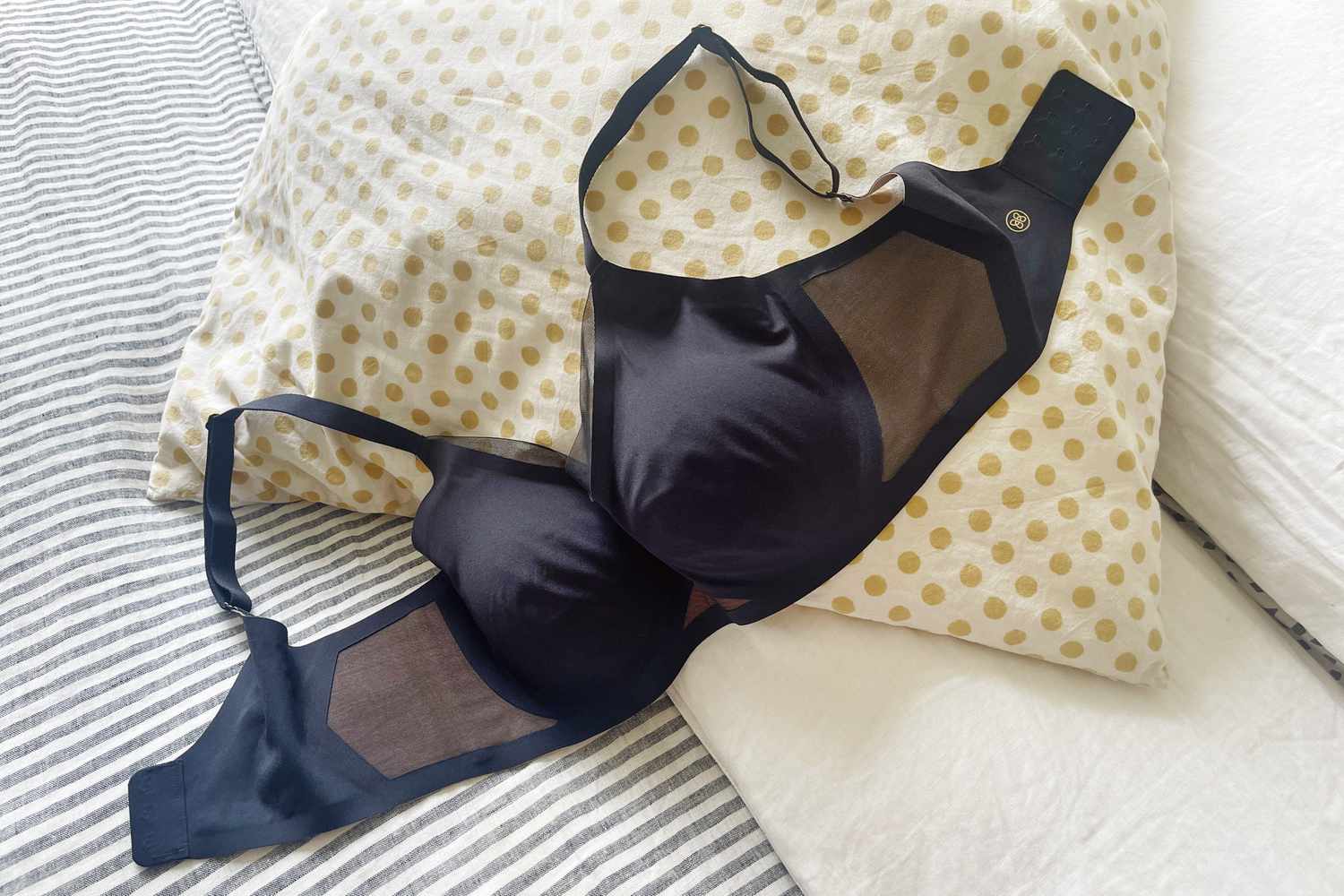
Ignore the word minimizer on the tag and look at how the bra is built, because the mechanism is entirely structural. You want a full cup that covers the whole breast, since a demi or balconette cup cannot redistribute what it does not enclose. You want seamed cups rather than a smooth moulded shell, because seams are what shape fabric in three dimensions and a moulded cup can only ever hold the shape it was pressed into. Two or three part cups with a horizontal or diagonal seam across the front are the classic construction and still the most effective. You also want a wide, firm band with several hook rows and side panels tall enough to contain tissue that migrates toward the underarm. A wide, slightly angled strap helps with comfort but does not contribute to the shaping. If a bra has all of that and does not use the word minimizer anywhere, it will still minimize.

The honest trade off nobody mentions in the ad
Volume moved sideways is still volume. A minimizer trades a smaller front to back profile for a wider silhouette across the chest, and depending on your frame that can read as broader through the shoulders and rib area rather than smaller overall. There is usually some flattening too, meaning less separation and a rounder, softer shape than a supportive everyday bra gives you. Under a crisp shirt that is precisely the point, and it looks tidy. Under a fine knit or a fitted dress, where a defined shape is doing half the work of the outfit, that same flattening can look heavy and slightly shapeless. This is why almost nobody who wears minimizers wears them exclusively. They are a tool for specific clothes, not a replacement for the bra you reach for by default.
Band fit still does all of the work
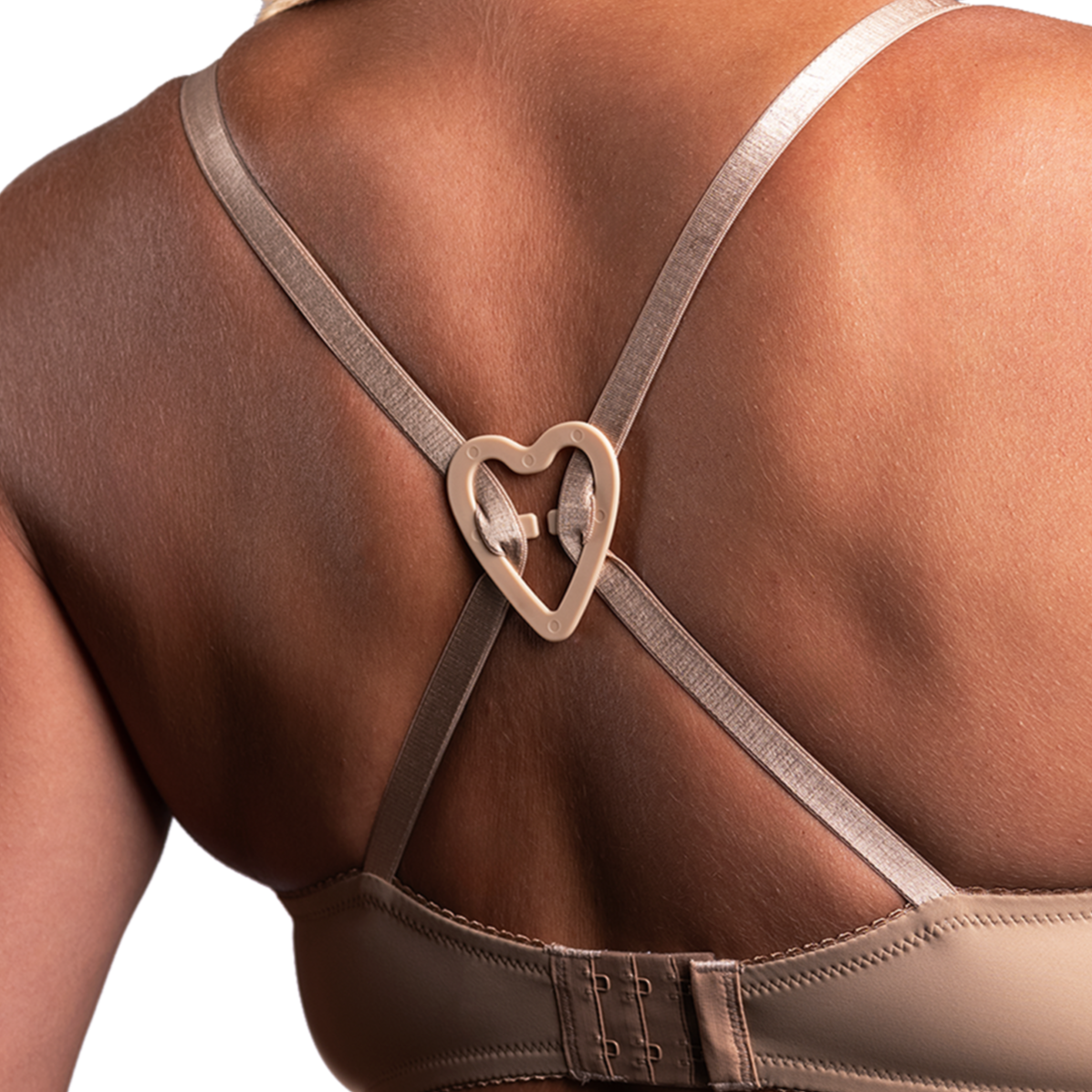
Everything above depends on the band, so it is worth stating plainly: a minimizer in the wrong size is not a weaker minimizer, it is just an uncomfortable bra. The band should be firm and level around your body, sitting horizontally rather than riding up at the back, and it should feel snug on the loosest hook when the bra is new so you have somewhere to go as it relaxes. If you can pull it more than about an inch away from your back, it is too big and the shaping is compromised before you have even done up the buttons on your shirt. Cup volume then has to be genuinely sufficient, because tissue squeezed out at the top or the underarm creates the exact bulge you were trying to avoid. If you have never had a proper measurement, that is the thing to fix first, and our guide to bra fitting for large breasts walks through the method in detail. A well fitted band in a full coverage minimizer with seamed cups will outperform an expensive bra in the wrong size every single time.
What it looks like under clothes
Seamed cups show under thin fabric. That is the practical cost of the construction that makes the bra work, and there is no clever way around it. Under a cotton shirt, a blouse, a jacket, or anything with body, the seams are invisible and irrelevant. Under a thin white tee or a clingy jersey, you will see the lines, so that is the day for a smooth moulded bra instead. Colour matters more than most people expect as well. A shade close to your own skin disappears under pale fabric far better than white does, which still surprises people who grew up being told to wear white under white. If your main use case is workwear, buying the same style in two shades and treating it as a uniform piece is the least fussy way to handle it, and a wide band style in a neutral close to your skin tone covers most of what a working wardrobe demands.
When a well fitted regular bra beats a minimizer
Often, honestly. A large share of the people who go looking for a minimizer are wearing a band too loose and a cup too small, and what they are actually experiencing is a bust that sits low and spreads forward because nothing is supporting it. Correct the fit and the profile improves on its own, sometimes dramatically, because lifted tissue takes up less horizontal space across the front of the body. A properly fitted full coverage bra with a firm band frequently delivers most of what people hoped a minimizer would deliver, while keeping shape and separation that the minimizer flattens away. So the sensible order is to get the fit right first and only then decide whether you still have a projection problem to solve. If the shirt still gapes after your band and cup are correct, that is when the minimizer earns its place in the drawer.

Quick answers to the questions everyone asks
Do minimizer bras really work? They work at the job they were designed for, which is reducing how far the bust projects forward. Brands often describe that as roughly an inch, and it varies a lot by body. They do not make you smaller and they do not change your cup size. Judge them by whether your shirt closes, not by the number on the label.
Will a minimizer make my chest look wider? Sometimes, yes. The volume has to go somewhere, and a minimizer sends it sideways and slightly down. Under a structured shirt or jacket that reads as neat. On a narrow frame, or under a fitted knit, the broader line can be more noticeable than the reduced projection, which is worth checking in a mirror.
Are minimizer bras uncomfortable? Not inherently. They tend to be firmly constructed, so a poorly fitting one feels worse than a poorly fitting soft bra, and that is where the reputation comes from. In the correct band and cup, a full coverage minimizer is usually more comfortable than a smaller bra, because the weight is properly carried by the band.
Can I wear a minimizer every day? You can, and many people do for work. The thing to watch is that seamed cups show under thin fabric and the shaping flattens rather than defines. Most people end up rotating, using the minimizer for shirts and tailoring and a smoother, more supportive bra for knits and casual days.
What size should I buy in a minimizer? The same size you wear in a well fitted regular bra, assuming that size is genuinely correct. Do not size the cup down to encourage the effect, because that pushes tissue into the underarm and creates bulges. If you are unsure, measure first and treat the band as the priority.
The shirt test that settles it
Put the bra on, put your most difficult button front shirt over it, and sit down at a table. If the gap between buttons stays closed while you reach for something, the bra is doing its job and the money was well spent. If the gap still opens, look at the band before you blame the style, because a band that rides up cannot shape anything. That one test tells you more than a fitting room mirror and far more than the copy on the packaging, and it takes about a minute. Buy for the clothes that are currently annoying you, keep a smooth bra in the rotation for everything else, and stop expecting a label to do a job that only fit can do.