Every plus size wardrobe has a boring layer underneath the good stuff. The tank you wear under everything, the leggings you pull on for school runs, the cardigan that lives on the back of a chair. Nobody photographs that layer, and it is the layer that decides whether getting dressed feels easy or exhausting. Amazon Essentials is aimed squarely at it, and the honest verdict is that the line is excellent at some of those jobs and genuinely bad at others. The trouble is that everything sits under one brand name at one broad price tier, so the tank that works beautifully and the blazer that fits nobody look like equal bets on the same search results page. Sorting one from the other is the whole skill.
What Amazon Essentials actually is
Amazon Essentials is Amazon’s own house label for everyday clothing, built to be cheap, always in stock, and searchable rather than aspirational. It is not a boutique plus brand and it does not pretend to be. The line runs across women’s, men’s, and kids, and the women’s assortment carries extended sizes on a large share of styles, typically listed alongside straight sizes on the same product page with a single size dropdown. That single dropdown is important, because it means the plus sizes are graded from the same base pattern as the straight sizes rather than designed separately. Sometimes that works fine, particularly on knits with stretch. On anything with structure it is exactly the reason the fit goes sideways. Knowing which side of that line a product sits on tells you most of what you need before you read a single review.
Where house basics genuinely earn their place
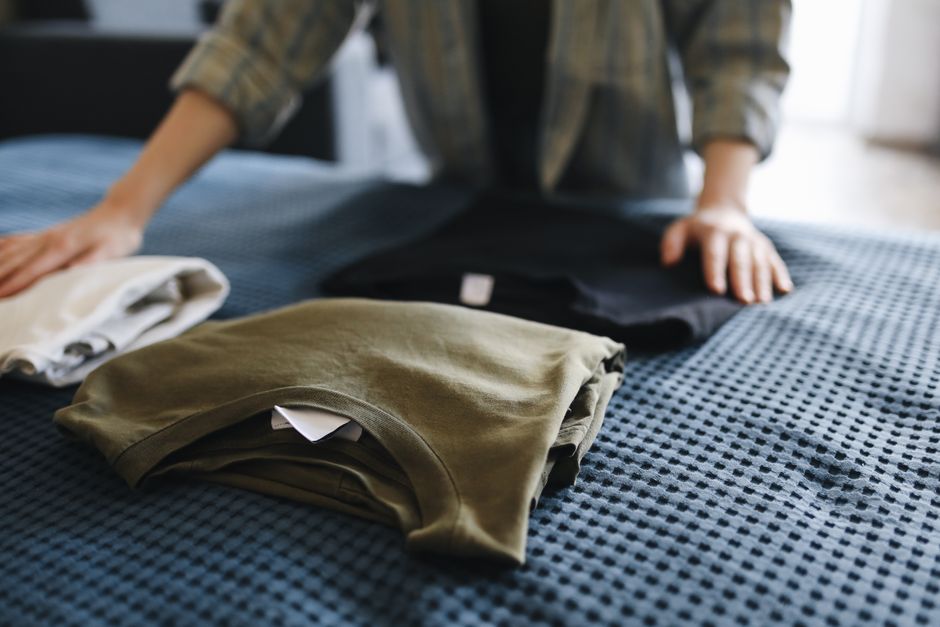
Tees, tanks, and camisoles are the strongest part of the range. The classic short sleeve crewneck and the fitted tank both come in the kind of long body length that plus shoppers rarely get at this price, which means they stay tucked and do not ride up over the midsection when you reach. Shoppers commonly describe them as true to size with a relaxed rather than clingy drape, and the multipacks make it painless to buy the same shape in four colors once you know it works. These are the pieces to stock deeply, because the failure mode is mild: a slightly thin fabric in the palest colors. Buy them in navy, black, olive, and burgundy and that complaint mostly disappears. If you want a starting point, the plus size tank tops in a multipack are the piece most people end up reordering.
Leggings and lounge: the quiet win
Leggings are the second reliable category, and they surprise people. The plus size leggings are cut with a high rise that actually sits at the natural waist rather than under the belly, the waistband is wide enough not to fold over on itself, and the knit has enough recovery to survive a full day without bagging at the knee. Shoppers generally report the fit runs true to size with a compression level closer to lounge than workout, which is the right expectation to set. They are not a substitute for a technical legging on a long run, and they are entirely adequate for errands, work from home, travel days, and layering under a dress in winter. The same fabric logic applies to the joggers and the lounge sets, which fit predictably because there is nothing structural to get wrong.
The one failure to watch for is sheerness on the lighter colors when the fabric stretches across the seat and thigh. That is a density problem, not a sizing problem, and sizing up makes it worse rather than better, because the same amount of yarn gets pulled across more surface. Stay with the darker shades and it stops being an issue almost entirely. The other habit worth adopting is the bend test in a mirror at home before you cut the tags, since a pair that reads opaque standing still can behave differently in a squat. Doing that once tells you whether a color is safe for the school run or strictly a layering piece under a longer tunic, and it takes about ten seconds.
Layering pieces that hold up better than expected
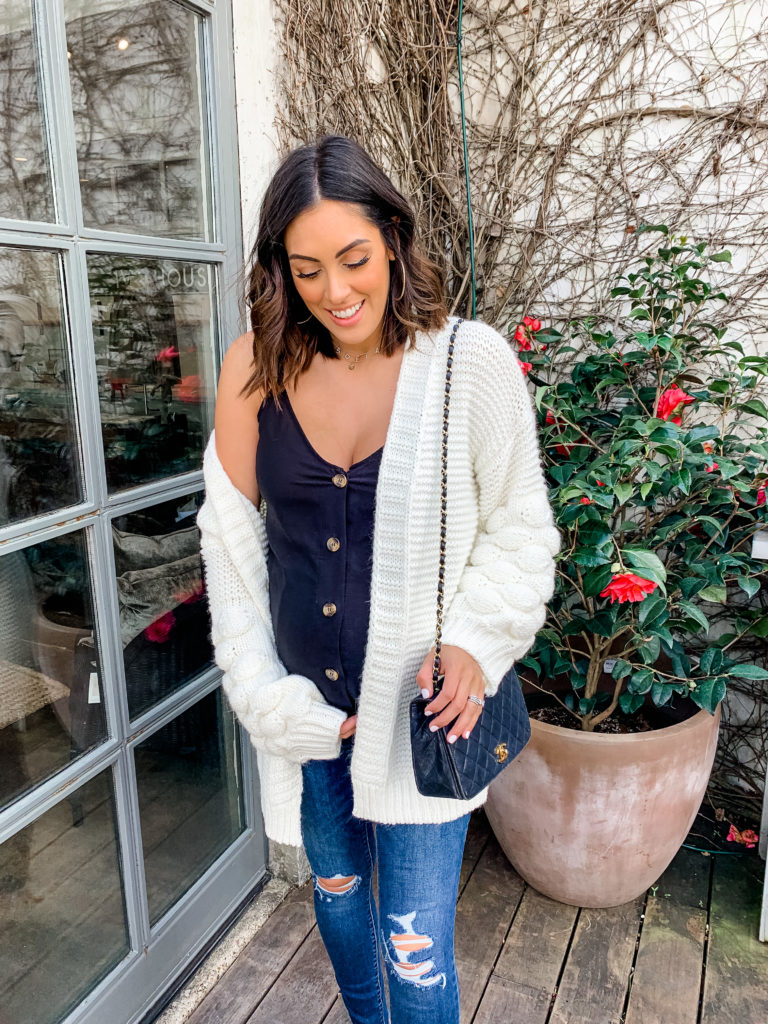
Open front cardigans, lightweight fleece pullovers, and the quilted or puffer style jackets are the third category worth trusting. All three succeed for the same reason: they have no fitted waist, no bust darts, and no fastening that has to close across your widest point. An open cardigan cannot gape. A pullover fleece has nowhere to pull. The plus sizing on these tends to run generous through the body with sleeves that are cut a touch narrow, which is the usual pattern when a garment is graded up without adjusting the arm circumference. If your upper arms are fuller, sizing up one is the standard fix and costs you very little in overall fit because the silhouette is loose anyway. These are the pieces that make a wardrobe feel finished for very little money.
Where it falls apart: structure, wovens, and tailoring
Anything with a defined shape is where the line stops being a bargain and starts being a return. Button front shirts gape at the bust, because the placket spacing is graded evenly rather than redistributed where the strain actually is. Blazers and structured jackets have shoulder seams that land wrong and armholes cut too high, which makes the whole garment pull the moment you move. Woven dresses with a waist seam place that seam by a straight size proportion, so it rides up above the natural waist on a longer or fuller torso. Trousers with a flat front and no stretch fit one measurement and ignore the other. None of this is a manufacturing defect. It is what happens when a plus size is a scaled copy of a smaller pattern rather than its own draft, and no price point makes that invisible.
Fabric weight is the whole story
If you only take one filter away from this review, make it fabric weight. Amazon Essentials products land in an under premium tier, and at that tier the design work is usually fine while the material is where money gets saved. The pieces people love are the ones where thin fabric does not matter much: a tank worn under something, a legging where stretch is the point, a fleece where the loft does the work. The pieces people hate are the ones where the fabric was supposed to hold a shape and cannot. A crisp poplin shirt made in a limp cotton blend reads cheap immediately, and a lined blazer in a thin suiting fabric wrinkles into a shape it never leaves. Read the fabric composition and the item weight on the listing before you read anything else, because it predicts satisfaction better than any other single field.
How consistent is the sizing across the line?
Reasonably consistent within a category, unreliable across categories. A 2X in the tank and a 2X in the legging will generally behave the way you expect, and shoppers who find their size in one knit usually keep it in the next. Move to a woven and that stops being true, because a different manufacturer and a different base pattern sit behind the same brand name. Amazon Essentials is a label applied across many production sources rather than a single design house with one fit block, which is exactly why the same shopper can call it true to size on one product page and two sizes off on another. Both reviews are accurate. If you are cross referencing against brands you already know, our size conversion chart for Torrid, Lane Bryant, and Eloquii gives you a stable reference point to translate from.
Category by category, at a glance
| Category | Fit read | Quality at the tier | Verdict |
|---|---|---|---|
| Tees and tanks | True to size, long body | Thin in pale colors | Stock up in dark shades |
| Camisoles and layering tops | True to size, generous | Adequate | Buy in multipacks |
| Leggings | True to size, high rise sits well | Good recovery, lounge level compression | Buy with confidence |
| Joggers and lounge sets | Relaxed, true to size | Soft, holds shape | Safe online order |
| Open front cardigans | Generous body, narrow sleeve | Better than expected | Size up for fuller arms |
| Fleece and puffer layers | Roomy, true to size | Strong for the price | Buy with confidence |
| Button front shirts | Gaping at bust, short body | Limp fabric, wrinkles | Skip |
| Blazers and structured jackets | High armhole, wrong shoulder | Thin suiting | Skip |
| Woven waist seam dresses | Waist sits high | Inconsistent | Skip unless unstructured |
| Flat front trousers | Fits waist or hip, rarely both | Little stretch | Skip |
Using size charts and reviews properly when you buy plus online
Buying plus size online without a fitting room is a skill, and most of it comes down to refusing to guess. Measure your bust, waist, hip, and inseam once, write them down, and keep them in your notes app so the number is never a memory. Then open the specific size chart on the product page rather than the brand’s general chart, because the two often disagree. When your measurements straddle two sizes, let the fabric decide: go smaller in a stretch knit that needs to hug, go larger in a woven that has to accommodate. Ignore the overall star average entirely, since it blends every size in one number. Filter reviews to your own size instead, sort by most recent because production changes over time, and read the photo reviews from bodies shaped like yours before you read anything written by a shopper four sizes away.
Returns, reordering, and building a real basics stack
The return process is genuinely the strongest argument for buying basics this way. Returns are free and label free at most drop off points for eligible items, and the window is wide enough that you can wear a piece around the house before deciding. That changes the maths on ordering two sizes of something uncertain, since the cost of being wrong is a short trip rather than a lost payment. Where people go wrong is treating a good result as a one off. When a tee or a legging works, note the exact product name and the size, then reorder the same one instead of clicking whatever appears in search next season. Listings change, sellers change, and the visually identical item two rows down is often a different product entirely. Building a stack means reordering a known quantity. The plus size high rise leggings are the piece most worth locking in that way.
Quick answers to the questions everyone asks
Does Amazon Essentials run true to size in plus? Within knits, generally yes. Tanks, tees, leggings, and lounge pieces behave predictably and shoppers usually keep the same size across them. Wovens and structured items are far less reliable, because different production sources sit behind the same label. Check the size chart on each individual listing rather than assuming consistency.
Is the quality good enough to be worth it? For basics, yes. The line sits in an under premium tier where the fabric is the compromise, so it performs well when thinness does not matter and poorly when a garment has to hold a shape. Judge each item by its fabric composition rather than by the brand name as a whole.
What should I avoid buying from the line? Button front shirts, blazers, structured jackets, flat front trousers, and woven dresses with a waist seam. All of these depend on a pattern drafted for a plus body, and this line grades up from a straight size block instead. Unstructured knit versions of the same categories are much safer.
Why do the reviews contradict each other so much? Because the star average blends every size, every colorway, and sometimes multiple production runs into one number. A shopper two sizes below you had a different garment experience than you will. Filter to your size, sort by most recent, and weight photo reviews far above text only ones.
How does it compare to dedicated plus size brands? Dedicated brands draft for a plus body and charge for it, which shows up immediately in anything structured. Amazon Essentials competes on price and availability in the basics layer, where design complexity is low. Use it for the foundation pieces and spend your budget where fit engineering actually matters.
The basics stack I keep reordering
What survives in my drawer is narrow and repetitive, and that is the point. Four tanks in dark colors, two pairs of high rise leggings, a fleece pullover I wear more than anything I paid real money for, and a black cardigan that has been through enough washes to earn its keep. Nothing structured made the cut, and nothing structured ever has. That is a fair deal for a house label built to be cheap and reliably in stock rather than beautifully cut. Treat Amazon Essentials as the foundation layer of a plus size wardrobe, hold your budget for the pieces where fit engineering earns its price, and reorder the exact listing that already worked instead of gambling on a new one.