Here is the moment a lot of plus-size women hit in a good bra shop: the fitter confirms a size well above what you came in wearing, and then writes a brand name on a slip of paper because she knows you have never seen it on a rack. Polish, custom cup, mail order, lead time measured in months. If you have shopped the plus-size bra aisle in the United States for years, that name will be new to you, and that is the whole problem in one fitting room.
The plus-size bra category in the US runs on three names: Cacique, Torrid, Lane Bryant. They are at the mall, they are in every body-inclusivity campaign, and they cover band sizes roughly 38 through 44 in cups DD through G the way American shoppers have been taught to expect. Then the band sizes keep going. The cup sizes keep going. And the brands you have heard of stop engineering. Specialist fitters have spent two decades calling Polish workrooms, Canadian seamstresses and small UK houses to fill that gap, which is why the useful shopping list almost never matches the sales floor.
This guide is that list, organized by what each brand actually builds: who the fit suits, what the construction does, what the price band looks like at the time of writing, and where the logistics will bite. Prices and lead times move, so treat every figure here as a starting point to check rather than a quote.
Why “Big Name” plus bras (Cacique, Torrid, Lane Bryant) plateau at H cup
Cacique tops out at a 44H. Torrid stops at a 50DDD on most of its core range, which sounds bigger but uses the American habit of treating DDD as a stand-in for F rather than continuing the alphabet up through G, H, I and J. Lane Bryant’s house Cacique line carries the same H ceiling. If your true cup is a J or K on the UK scale, none of the Big Three carry a bra engineered for you. They carry a bra with the band you need and a cup two to three sizes too small, which is what creates the underwire-in-the-tissue, strap-cutting, four-boob silhouette that so many women have been told is just how plus-size bras feel.
The American plus-size lingerie market was built around an assumption that the average customer sits at a 38 or 40 band with a D to G cup. Everything larger gets routed through what fitters call the international back room. Most US shops do not stock the Polish or smaller UK brands on the floor because they cannot reorder them in two weeks. They keep a binder instead. Customers in the H-plus range get fitted in a generic stretch sample and sent home with a list. The Big Three sit on the sales floor for everyone H and below. The list is where the actual engineering lives.
The reason the gap matters structurally is cup volume. Each cup size up in the UK system represents roughly an additional inch of breast projection from the chest wall, so the step from a G to a J on a 38 band is not a small one. A bra designed for a G cup has a wire that is shorter at the side and shallower at the bottom than one designed for a J. Stretching that same wire across more tissue is how you get rib bruising and a band that climbs your back by lunchtime. The mass market has not closed that gap. Smaller brands stepped in.
Comexim and the Polish custom-cup pipeline
Comexim is often the name on that slip of paper. Family-owned, based in central Poland, in business since 2004, and the engine of the cup-size conversation in UK and US online lingerie communities for well over a decade. The defining feature is custom cup depth. You order a band size and a cup size, then specify the cup variant: standard, plus one, plus two, plus three. A 38H plus one is essentially a 38HH. A 38H plus three is a 38J.
The catch is the conversion. Band sizes are Polish, so a Polish 80 is a UK 36, an 85 is a UK 38, and a 90 is a UK 40. Measure, convert, then double-check against the brand’s own chart before ordering. Expect a basic bra to land somewhere in the $75 to $100 range once shipping to the US is included, with a lead time of around twelve to fourteen weeks. Returns are possible, but you pay postage back to Poland, which is the single biggest reason to get the size right before you order rather than after.
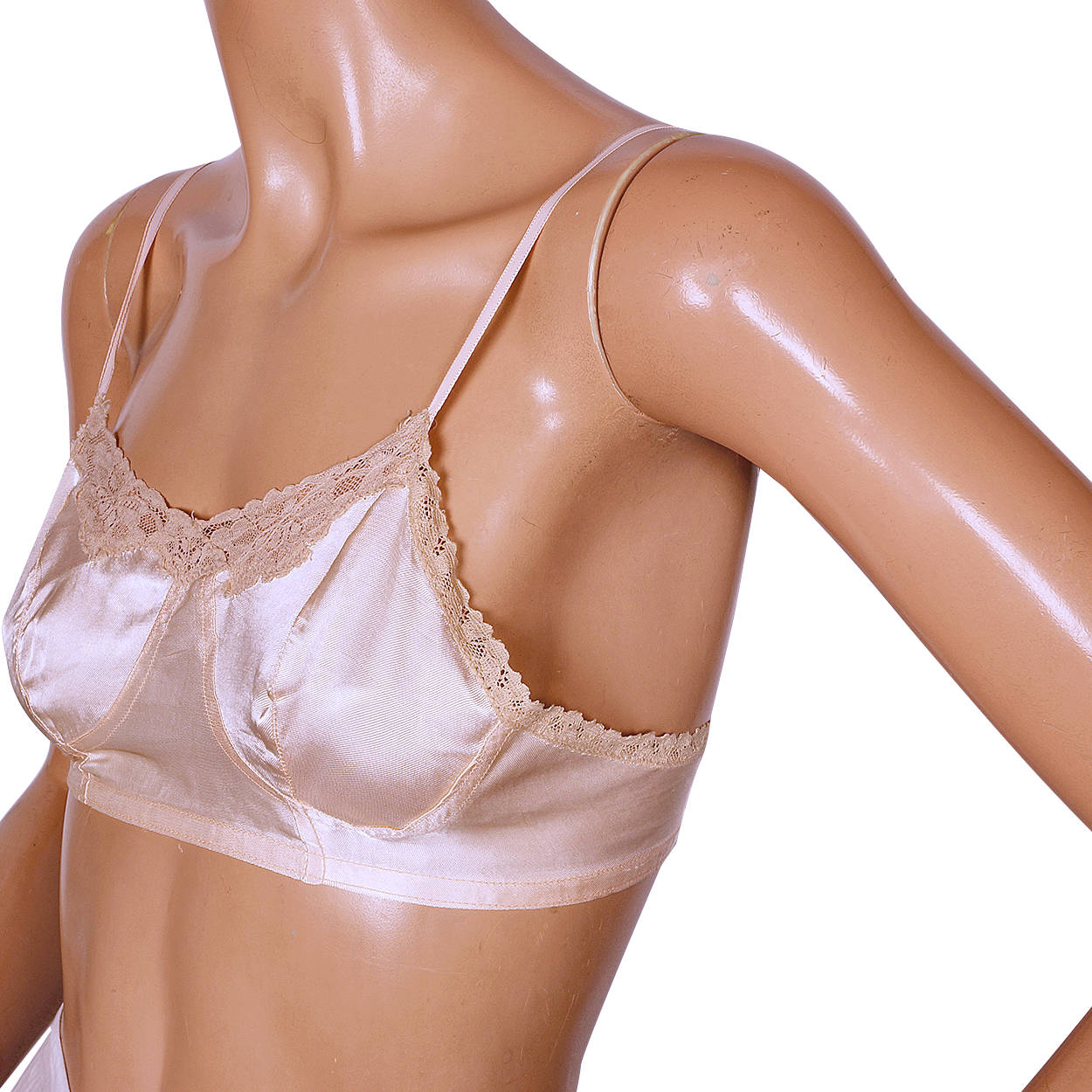
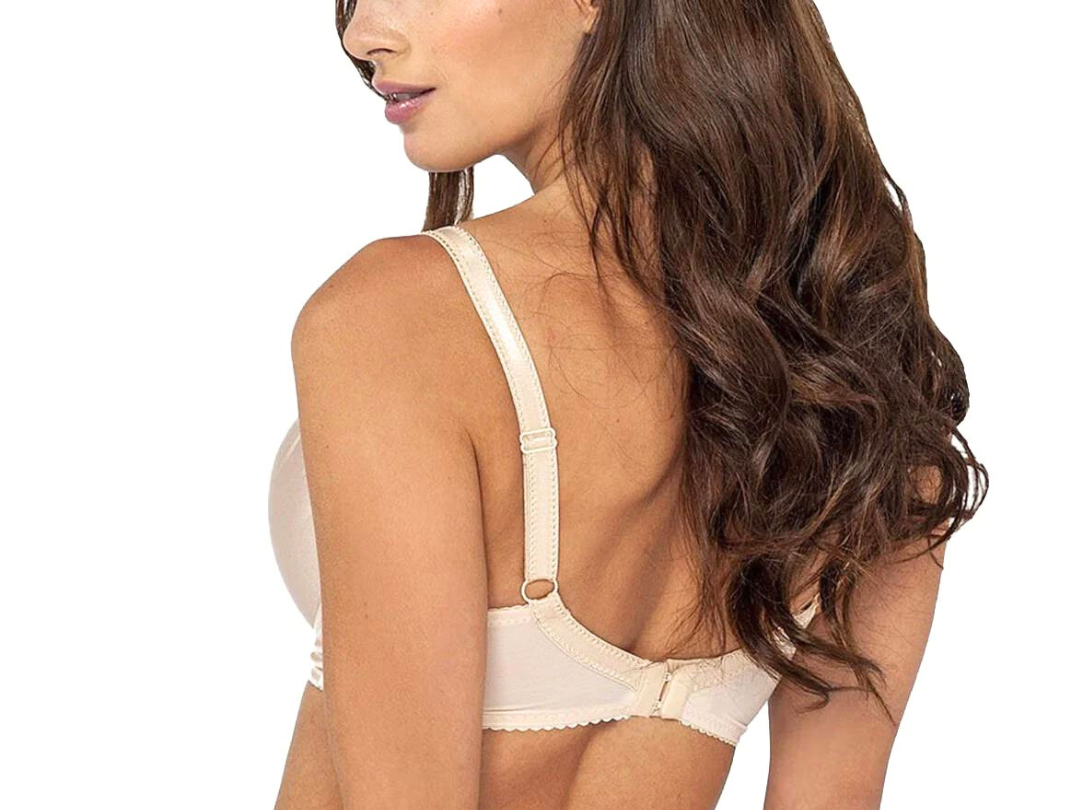
What the construction does is the reason to bother with all of that. The cups have real depth, so the wire sits under the breast tissue on the rib rather than on top of it, and the straps are noticeably wider than mall-brand straps, which spreads weight instead of cutting a trench across the trapezius. The Aiisha is the style most often recommended as a first order. The honest summary: Comexim is the strongest option for projected, full-on-bottom tissue in band sizes roughly 32 through 42, and nothing sold at an American mall is engineered to compete with it at that shape.
Ewa Michalak: the band-width story
The second Polish brand that drives the online plus-size bra conversation is Ewa Michalak, founded in 2008 and run out of Lodz. The brand is known for two things: extreme depth at the upper cup, which suits full-on-top tissue rather than full-on-bottom, and a band significantly wider front to back than almost anything else on the market. The CHP series sits roughly two and a half inches deep across the back, which is the kind of structure that anchors a heavy cup instead of rolling up the spine. If a mall-brand band has ever ridden up your back by lunchtime, band width is the reason.
Three cup styles carry the line: the PL padded half cup, the S semi-padded, and the CHP full-coverage padded. Expect roughly $55 to $70 a bra at the time of writing, with shipping included over a spend threshold, which is why most US customers order two or three at once.
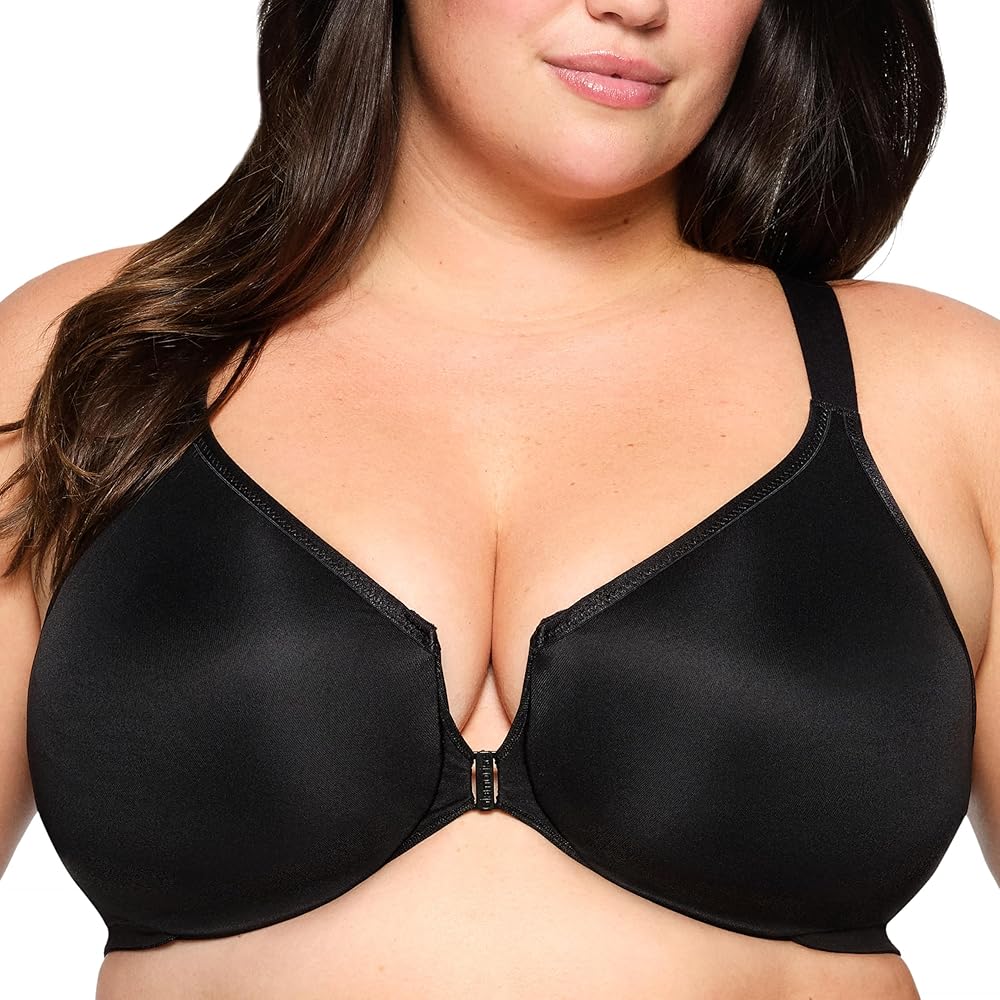
The catch is that the fit philosophy is opinionated. The brand recommends a band one size smaller than you would order in any UK or US brand, and the cups run shallower front to back than Comexim’s. A first-time order often feels tighter at the band than you expect, and the elastic relaxes over the first few wears, so do not judge it on day one. For full-on-top shapes the structure is hard to beat, especially under fitted dresses and work shirts. For full-on-bottom shapes it tends to hold up for daytime structure and gap at the bottom of the cup when you lie down, which makes it a work-wardrobe brand rather than an everything brand.
Curvy Kate and Panache (UK, sister brands)
Curvy Kate is the likeliest gateway out of Cacique for an American shopper in the H-plus range, because the company runs a real US-facing site, ships from the UK to American addresses for a modest flat rate, and discounts aggressively. Pricing sits closer to American mall expectations than the Polish brands, roughly $48 to $68 at full price and lower on clearance. The engineering feature that matters is a four-part cup with side support: the seamed construction lifts and centers tissue toward the front of the body instead of letting it fall out to the side under the arm, which is the silhouette most mall bras fail to create at larger cup sizes.
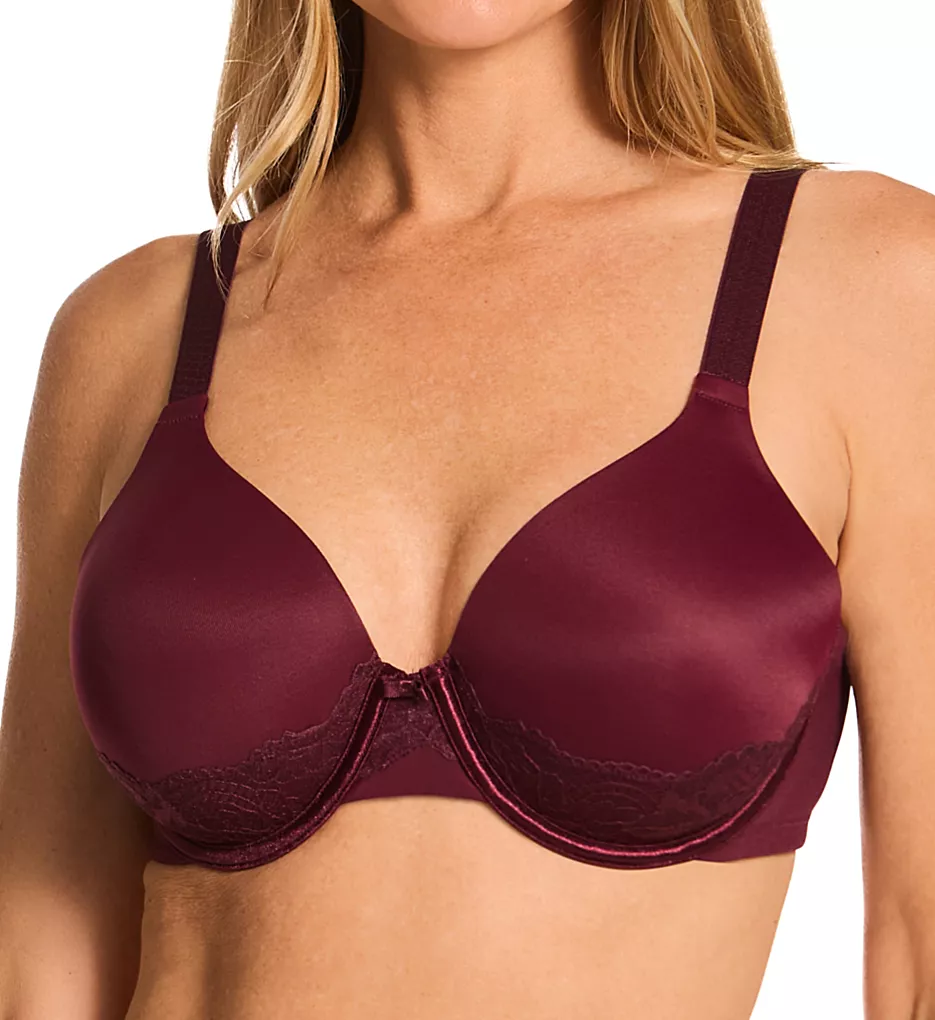
The Daily Boost and Lifestyle styles are the workhorses, and they wash well. What they do not have is Comexim-level cup depth, so the practical ceiling is around a 38HH. The Lifestyle balcony cut is the one to recommend to anyone trying her first non-American plus-size bra, because it is the lowest-friction switch available: the site prices in dollars, the size chart is in US notation, and returns accept US addresses for a flat fee. If you are a 38 or 40 band and a G to HH cup, Curvy Kate is the cheapest exit from Cacique with the least logistics pain.
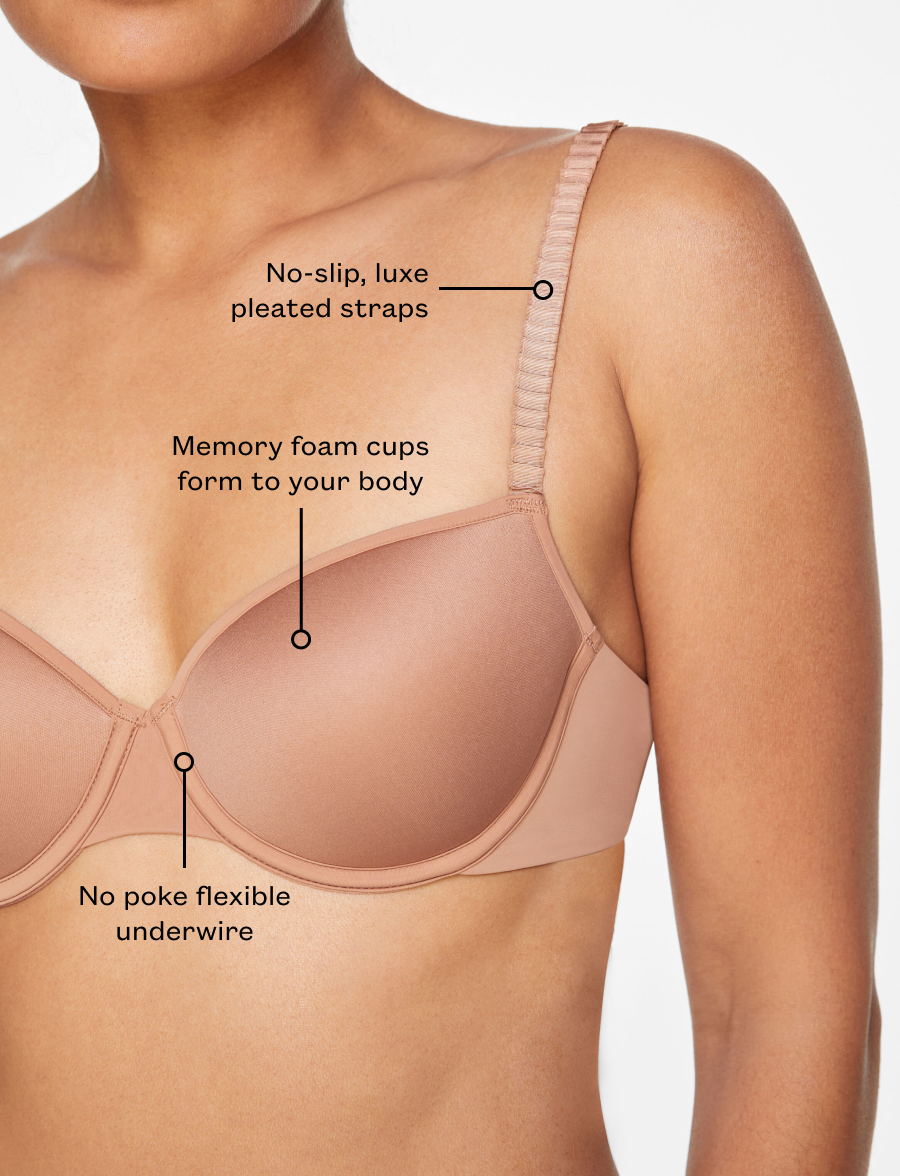
Panache is the parent house Curvy Kate spun out of in 2009, and the two still share design DNA. Panache is the more conservative, structured, T-shirt-bra-focused sister, with Sculptresse as its plus-size-dedicated line. The core Panache range tops out at a 40J on the UK scale, reaches the US through retailers like Bare Necessities and HerRoom, and runs roughly $58 to $78. The Tango balconette is widely treated as the benchmark everyday wire bra in the F to J cup range. Precise and predictable rather than exciting: if Curvy Kate is the Saturday night bra, Panache is the Tuesday morning meeting bra.
Sculptresse and Elomi: same parent, different fits
Sculptresse and Elomi are both owned by the UK lingerie group that also owns Freya, Fantasie and Goddess, which makes them corporate cousins. They share warehouses and design resources. They do not share a fit, and that is the part that confuses American shoppers, because the two brands look interchangeable on a US retailer site.
Sculptresse is built for fuller-on-top shapes and runs from a 36G to a 46K. The Chi Chi balconette is the flagship, usually around $62. The cup is shallower at the bottom than Comexim’s, so it pushes tissue forward rather than cradling underneath, which creates a high, round silhouette. On a full-on-top shape that is exactly right. On a full-on-bottom shape it is a dress-specific bra at best, and you are better off skipping the brand entirely. If you are full-on-top, the Sculptresse Pure is the one to order first.
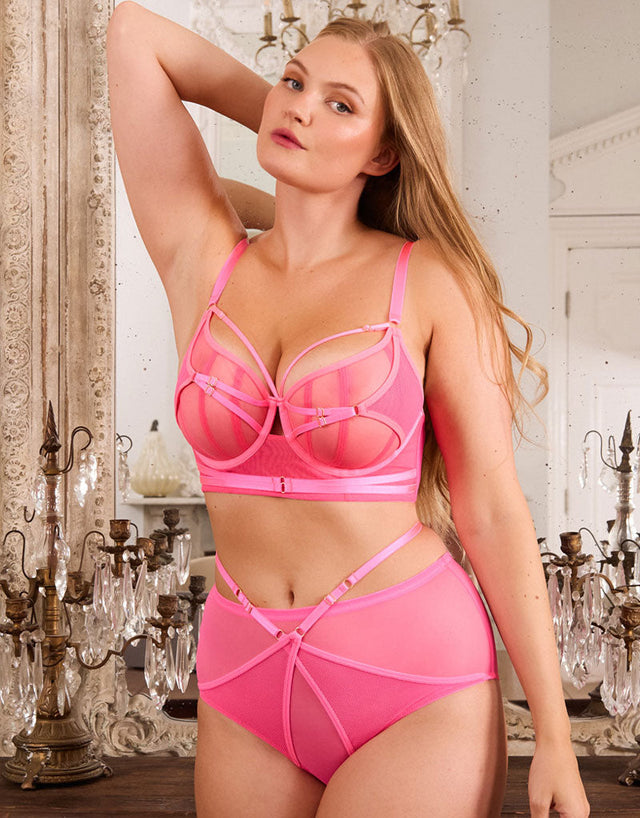
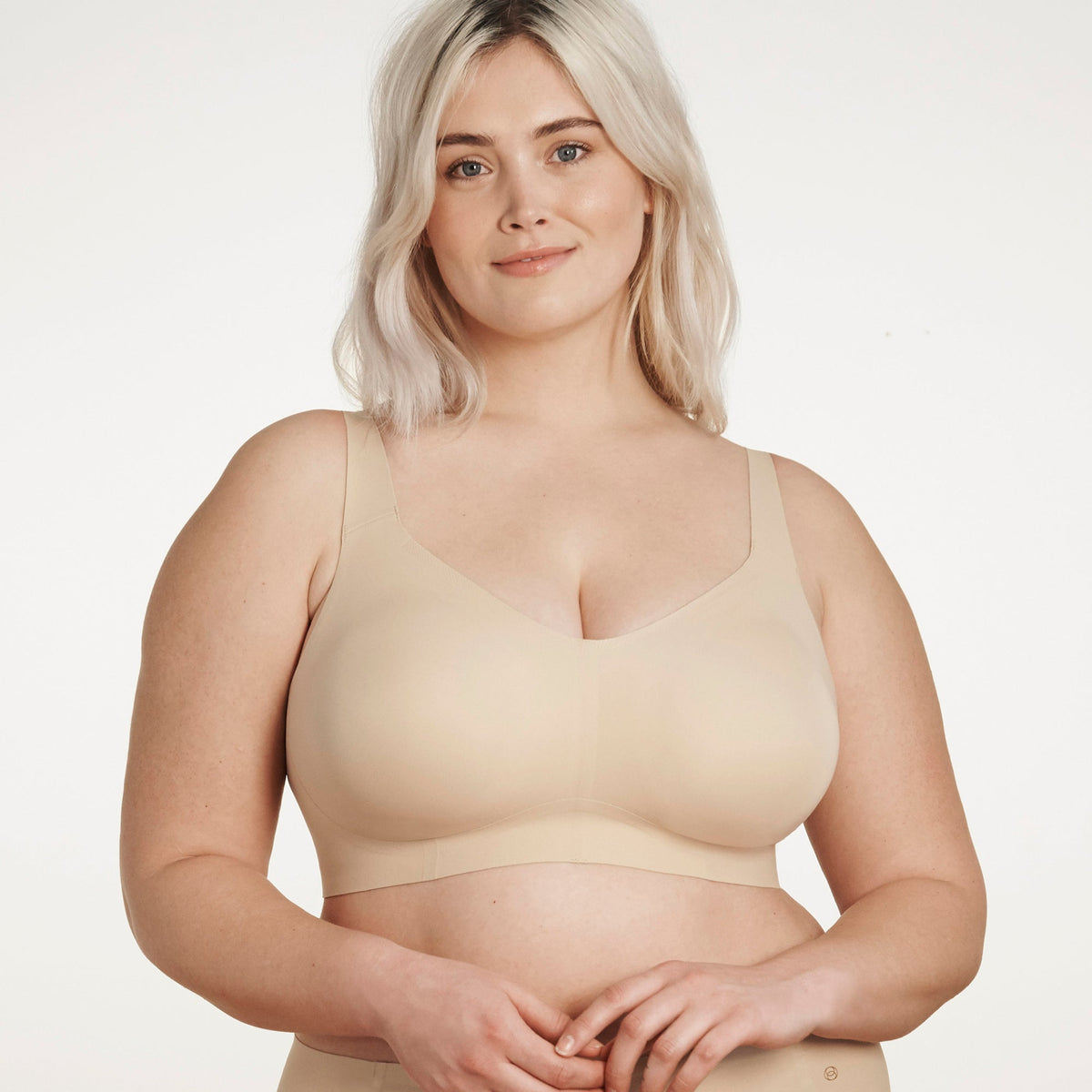
Elomi is the workhorse of the group, covering band sizes 34 through 46 and cups DD through JJ, with a fit philosophy that favors stretch lace and rounded coverage over structured push-up. The Cate is the signature, a four-part cup similar in principle to Curvy Kate’s with a softer aesthetic that is easy to dismiss on looks and genuinely well engineered underneath. Pricing runs roughly $58 to $72. The Smoothing Bra in nude is the closest thing in the H-plus range to a Cacique Cooling Lightly Lined, so if you want a one-for-one replacement of your everyday mall t-shirt bra with a cup that actually fits, start there.
Glamorise: the bounce-control engineering
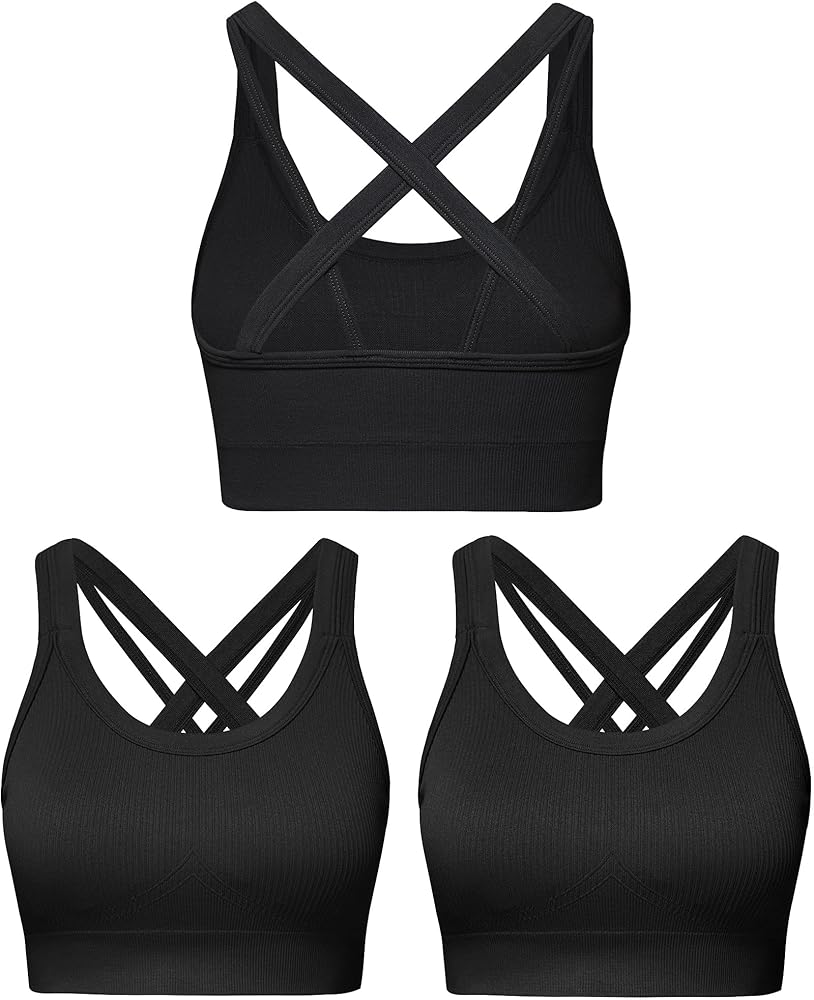
Glamorise is a New York family company that has been making wirefree and high-impact bras since 1957, and it is the main US brand engineering a genuine high-impact sports bra in the H-plus range. The No-Bounce Camisole Sports Bra has been the reference point in plus-size running and lifting communities for decades, usually $52 to $68 depending on color. The fit philosophy is utilitarian. Nobody buys a Glamorise to feel glamorous. You buy one so you can run without thinking about your chest.
Three styles cover most needs: the Custom Control wirefree for sleeping and lounging, the MagicLift posture-back for wearing under sweatshirts and on flights, and the No-Bounce Camisole for the gym. If you are sized H-plus and have never found a sports bra that compresses without flattening your chest into your sternum, this is the brand that solved that problem long before the mall brands noticed it existed.
Goddess: the H-K cup story
Goddess is the other brand in the group aimed squarely at the H through K cup range, carrying band sizes 32 through 46 with cups up to K on the larger bands. Keira and Kayla are the staples, pricing runs roughly $58 to $74, and the US pipeline goes through Bare Necessities, HerRoom and Amazon third-party sellers, so delivery is days rather than months.
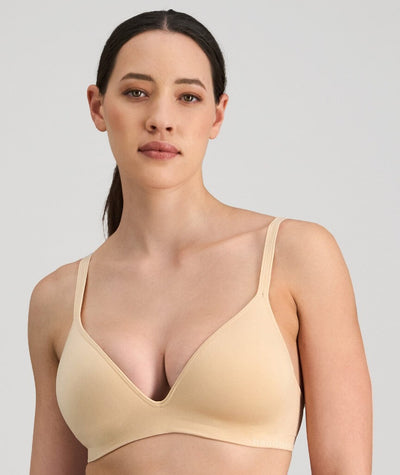
The Keira is the standout for wearing under a button-down shirt. The cup is a three-part seamed construction with a power bar at the side, which lifts outer tissue toward the front of the chest the way a balconette does without the cleavage push of a true balconette, and the plain stretch microfiber does not show through thin fabric. This is the brand to point to for anyone in the J or K cup range who feels like she has aged out of pretty lingerie. Goddess looks like a bra your aunt would wear, and the engineering is some of the best available in that size range.
Cuup at the largest sizes (where it stops)
Cuup is the New York direct-to-consumer brand that launched in 2018 pitching expanded plus-size access. It runs from a 30 band to a 46 band and from an A cup to an H cup. The H is where it stops. There is no I, J or K. The Plunge sits around $72 and the Balconette around $78 at full retail, with free US shipping.
Credit where it is due: inside the range it serves, Cuup is a good product, and the direct-to-consumer model makes it the lowest-risk order in this guide. You can return up to two bras per order with a prepaid label, the fit is consistent, the site assigns a size from a short survey, and the bras arrive in days. The flat, modern aesthetic is also something the European brands do not really offer, and the Plunge sits well under a low-cut sweater. The problem is the ceiling, and the way the brand’s marketing implies an H is the upper limit of plus-size demand. It is not. Cuup is excellent up to the point where it stops, and the point where it stops is the point where the rest of this guide starts.
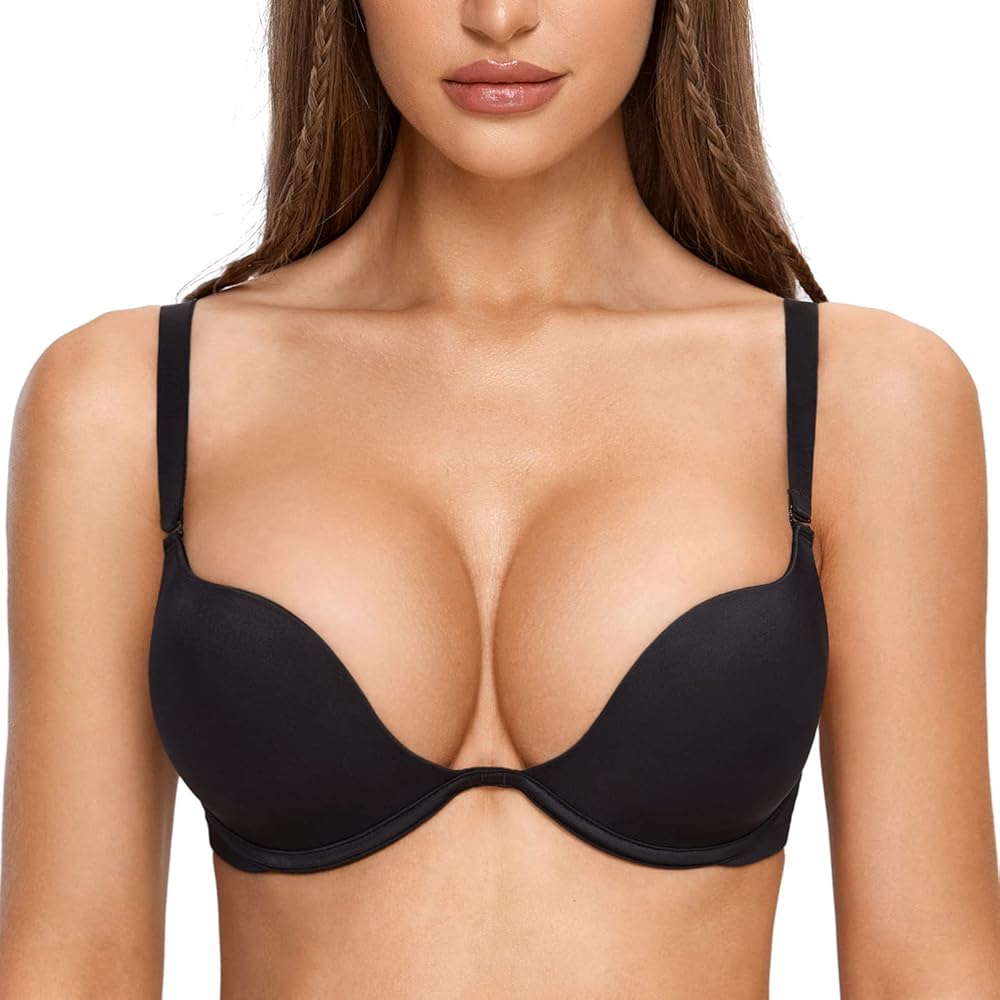
Practical read: at a 38H or below, Cuup is worth trying for the convenience alone. Above an H, file it under the right concept and the wrong size range, and spend the money on Elomi or Comexim instead.
Rubies Bras: custom North American (and the wait time)
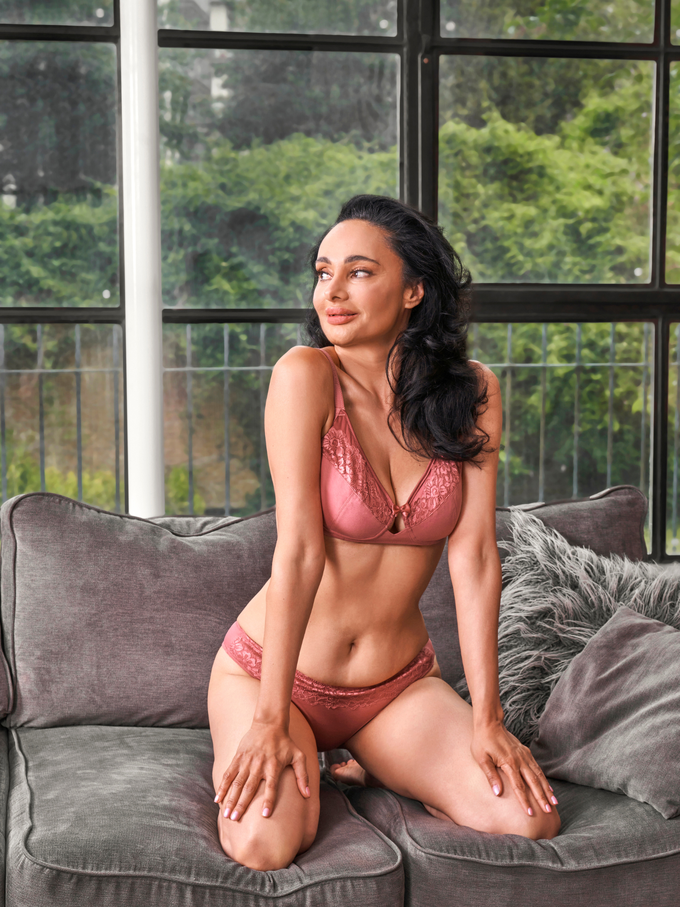
Rubies Bras is the closest thing to a North American answer to Comexim. Founded in 2015, based in Toronto, with virtual fittings into the US, the brand makes fully custom bras to your measurements. The base price starts in the low hundreds and climbs with fabric and style options, the lead time runs roughly three to twelve weeks depending on style and the number of fittings, and shipping is on the customer with no customs charge under the USMCA.
What you are buying is a cup cut to your own measurements rather than to a house pattern, which is why a custom bra tends to make the rest of a wardrobe sit better: your bra stops being the limiting factor on how a shirt drapes. The wait is the wait and the price is the price. For most readers this is a once-a-year purchase to save for, the bra you wear with the dress that matters. It is not a drawer-filler. It is a wardrobe anchor.
Forever Yours Lingerie: Canadian, what they do right
Forever Yours Lingerie is a fit-curator rather than a manufacturer: based in Langley, British Columbia, with a second location in Burnaby, in business since 1996, and staffed by professional fitters. The shop carries Comexim, Ewa Michalak, Panache, Sculptresse, Elomi, Goddess and several smaller European labels under one US-shipping-friendly roof. The advantage over ordering direct from Poland is the return policy: virtual fitting consultations plus returns inside a published window, which takes most of the logistics risk out of a first order in an unfamiliar brand.
The case for a curator shop is straightforward. One fitter who knows a dozen brands deeply is more useful in the H-plus range than a department store with a fragmented inventory of mall labels. Specialty fit shops that stock the European brands are where H-plus customers actually get matched to a pattern that suits their shape, and a good fitter will talk you out of an order as readily as into one. If you live within driving distance of a shop like this, the appointment is worth more than the price of three mall bras.
Cost reality: the dollar-per-wear question
The objection this category always raises is the price: a $100 bra is a lot of money, and three mall bras for the price of one feels like the friendlier math. It is worth doing the arithmetic properly before you accept that, because the number that matters is not the sticker. It is cost per wear.
Run it on your own drawer. Take what you paid for a bra, divide by the number of times you wore it before the band rolled, the wire poked through or the elastic gave out, and write the number down. Then do the same for a correctly sized bra from one of the brands above, using its realistic replacement cycle rather than its best case. A wrong-size bra in heavy rotation often needs replacing two or three times a year, and that replacement cycle is what quietly erases the saving on the sticker price.
Two things tend to fall out of that calculation. A well-engineered bra in your actual size usually lasts long enough that its cost per wear lands at or below the cheap bra it replaced. And a custom bra, even at several hundred dollars, can compete on cost per wear if it stays in rotation for years. None of which makes the up-front cost easier to find. It does mean that “I cannot afford a $100 bra” and “a $100 bra costs me more” are two different claims, and only the first one is usually true.
The verdict and the fit appointment checklist
Here is the short list, in the order worth buying if you have just walked out of a professional fitting at an H cup or above:
First everyday bra: Elomi Smoothing in nude, around $64, with free US returns at the major retailers. The closest thing to a Cacique replacement with a cup that actually fits.
First “something special” bra: Comexim Aiisha in a custom cup, usually $75 to $100 landed, roughly a twelve-week wait. Order through a curator shop like Forever Yours Lingerie if the direct-to-Poland logistics put you off.
First sports bra: Glamorise No-Bounce Camisole , around $58, widely stocked for fast delivery. The reference point in the H-plus impact category.
First “I made it” bra: Rubies Bras custom , a few hundred dollars and a wait measured in months. Save for it, then wear it for years.
The fit appointment checklist, if you have never been to one: arrive in a bra you wear regularly rather than your best one. Bring a fitted t-shirt you actually own. Tell the fitter if your weight has fluctuated in the last year, because tissue distribution shifts and a fitter who knows that will steer you differently. Ask about cup depth specifically, not just cup size. Ask which brand she would put on her sister if her sister had your shape. Pay the fitting fee gladly, usually somewhere around $25 to $50 at a city shop. The appointment is most of the work. The brand name on the slip of paper at the end is the easy part.
The big names stop at H cup because H is where the engineering challenge multiplies. A bra at H needs different wire geometry, a different strap-to-band ratio, a different cup-depth ratio, a different cradle architecture, and a parent company willing to fund a cut grade that serves a smaller share of the market. Cacique, Torrid and Lane Bryant do not fund that work, because the return does not pencil out for a mass retailer. The small brands do, because the H-plus customer is their entire business. Comexim was founded to serve her. Ewa Michalak was founded to serve her. Rubies was founded to serve her. That is why the brand on the slip of paper is never one you have seen at the mall, and why it is usually the one that fits.
A note on money information. This article is general information and not financial advice. It is not written by a licensed adviser and it cannot account for your own circumstances. Consider speaking to a qualified financial professional before making decisions about debt, credit, investing or retirement.