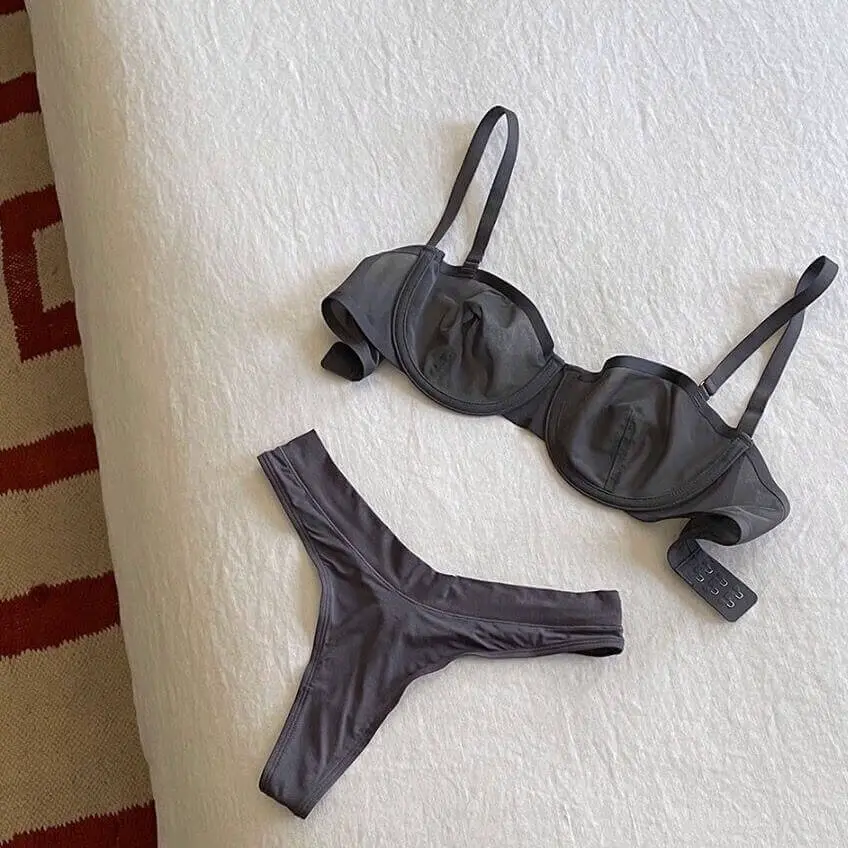
Cuup gets written about as a quiet plus-size win, and the brand’s own published specifications tell a more precise story than the newsletter coverage does. Two numbers matter most before you buy. First, Cuup splits its range in two: the main unlined collection is listed on the brand’s site as sizes 30 to 38 in A through H cups, and anything above that sits in a separate 40 to 50 band collection. Second, the hook-and-eye hardware is not uniform across the range. Cuup states that its wired bras carry four rows of hook-and-eye closures in sizes 38 D through H, 40 C through G, all 42 cups and all 44 and above. That is the detail most roundups leave out, and it is the one that decides whether a band will hold.
This piece is a specification review rather than a wear test. Everything attributed to Cuup below comes from the brand’s own size chart, collection pages and policy pages, checked in November 2026, and everything attributed to a competitor comes from that brand’s published range. Where we are reasoning rather than quoting, we say so. The aim is to get you to the right band and cup before you spend money, because at this end of the market the difference between a good bra and a bad one is usually sizing and hardware rather than brand.
Quick summary
Cuup is worth considering if you land inside the 30 to 38 band range in a D through H cup and you want a modern, minimal silhouette rather than the lace-and-bow aesthetic that still dominates the upper-cup market. The brand’s at-home measuring guidance, which starts from your underbust where the band will actually sit, is a more useful starting point than a style quiz. If you need a 40 band or above, go straight to the dedicated 40 to 50 band collection rather than filtering the main range, because the silhouette choice there is narrower. Bras on Cuup’s own site sat at around $68 for core styles in November 2026, with most of the range in the $60 to $80 band. Where to look first: Cuup at Nordstrom.
What Cuup publishes about its range
Cuup launched in 2018 as a direct to consumer brand built around measuring rather than guessing. The sizing instruction on its own size chart is to measure your underbust with a soft tape, wearing an unlined bra or a thin tank, which is the band-first approach that full-bust fitters generally favour over bust-only conversions. The brand says its sizing system was built on measurements taken from real bodies and that it now offers 67 sizes across the line. The core silhouettes are The Plunge, The Balconette, The Scoop and The Demi, and Cuup’s shop-all page describes the main unlined collection as sizes 30 to 38, A to H, with the 40 to 50 bands held as a separate collection alongside a smaller-band, fuller-cup grouping.
That split is the thing to understand. A brand can accurately say it goes up to a 50 band and still carry very few silhouettes there, and a brand can accurately say it reaches an H cup without that H existing in every band. Reading the collection structure rather than the headline range is how you avoid ordering a size that technically exists and practically does not. The same logic applies at the other end: Cuup also markets specifically to smaller bands with fuller cups, which is a genuinely underserved group and part of why the brand reads as a fit specialist rather than a basics label.
The hardware detail that actually matters
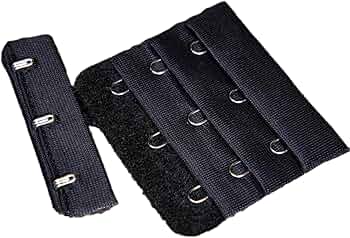
Cuup’s product pages carry a line worth copying into your notes: wired bras feature four rows of hook-and-eye closures for additional support and coverage in sizes 38 D through H, 40 C through G, all 42 cups and all 44 and above. Here is why that is the single most useful sentence the brand publishes. A bra band is under constant tension, and that tension is carried by the closure. More rows of hooks spread the load over a longer vertical span, which reduces the pressure on any one hook and reduces the tendency of a narrow closure to dig in or roll. Fewer rows concentrate the same load in a smaller area. This is mechanics, not marketing, and it is the reason specialty full-bust brands standardise on three or four columns at larger sizes.
The practical consequence is that the published size thresholds tell you where Cuup itself thinks the extra structure becomes necessary. If you sit just below one of those thresholds and you have previously had bands roll or ride up, that is a reason to check the closure on the exact style and size before ordering rather than assuming the whole line is built the same way. It is also a fair reason to compare against a specialty brand, where four-column closures are standard across the upper range rather than threshold-dependent.
Measuring yourself without a fitting room
At-home sizing works better when you follow the order Cuup’s own guidance uses. Measure the underbust first, snug and level, where the band will sit, and do it wearing an unlined bra or a thin tank rather than nothing at all. Measure twice on different days, because a tape pulled tight on a first attempt is the most common source of a band that arrives too small. Then take the bust measurement standing relaxed, not leaning forward. The band number drives everything, because cup volume is defined relative to the band: the same bust measurement produces a different cup letter at a 36 than at a 40. If your two attempts disagree by more than an inch, size the band on the looser reading and let the cup absorb the difference.
Two signs tell you a band is wrong once it is on. If the band rides up your back while the straps stay put, the band is too loose for the load. If you cannot fit two fingers flat under the band at the sides, it is too tight. Neither is a cup problem, and sizing the cup to fix a band problem is the loop most people get stuck in. Cuup’s own return and exchange process is built around this, with free exchanges offered and standard shipping free over $75 at the time of checking, which makes an exchange a reasonable part of the plan rather than a failure.
What the aesthetic and construction give you
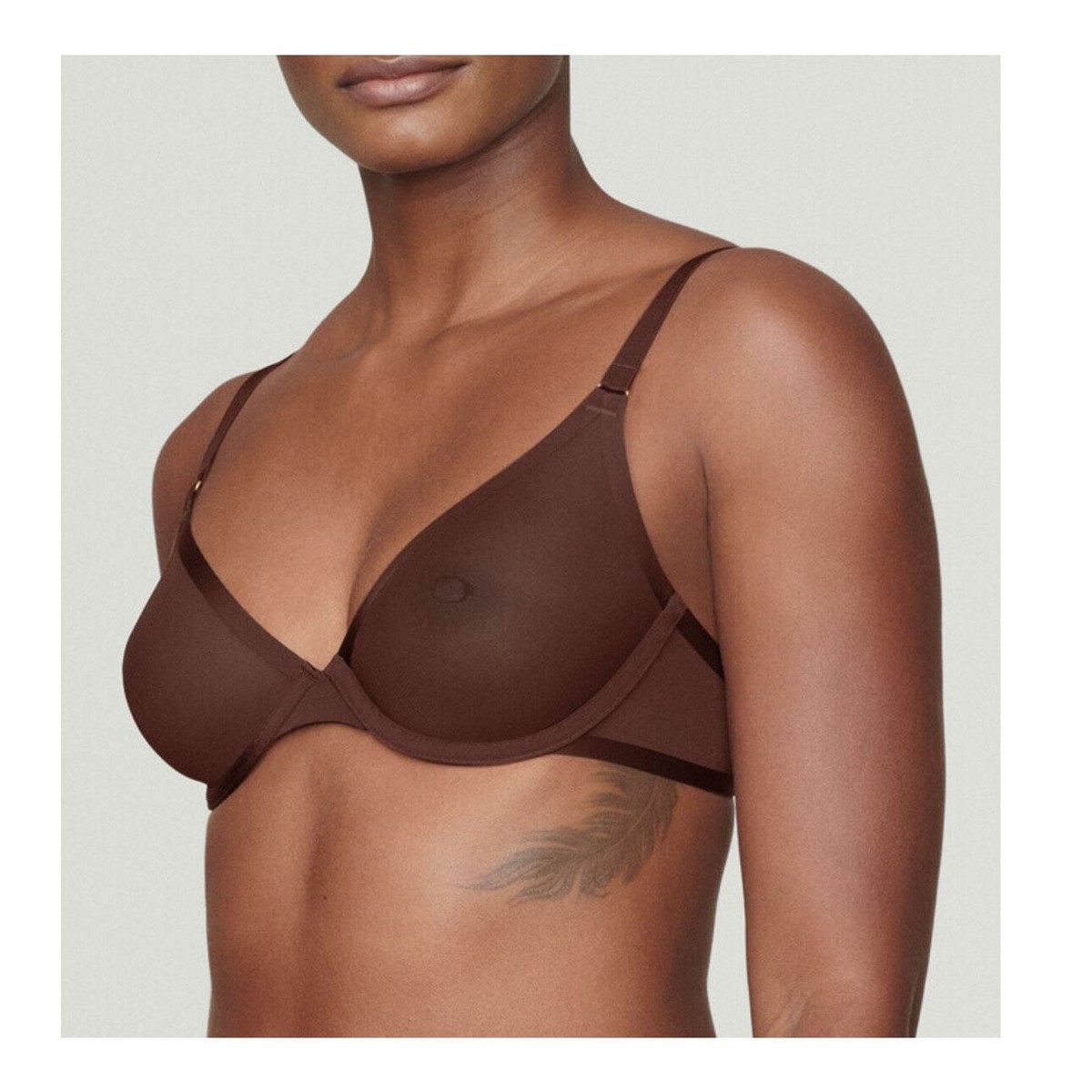
Cuup’s core proposition is unlined, mesh-forward construction in a tight neutral palette, which is a genuinely different offer from most of the upper-cup market. Unlined cups shape rather than pad, so they sit flatter under thin fabric and read as less bulky under a knit, and the trade-off is that they do nothing to disguise texture or seam lines. The Balconette’s wider-set neckline and the Plunge’s deep V are structural choices rather than styling ones: a wider-set strap placement keeps hardware out of sight under most necklines, while a deep plunge removes centre-front support and relies more on the wire and the band. If you need a bra to hold shape without a visible seam, a smooth moulded cup from a specialty brand remains the more reliable pick.
How the published ranges compare
Here are the four brands most often cross-shopped at this end of the market, compared on what each publishes rather than on anyone’s impressions. Prices are the bands seen in November 2026 and will move.
| Brand | Published size range | Closure structure at upper sizes | Typical price band | Best fit for |
|---|---|---|---|---|
| Cuup | Main collection 30 to 38, A to H; separate 40 to 50 band collection | Four rows of hook and eye from 38 D to H, 40 C to G, all 42 and all 44 plus | Around $60 to $80 | Minimal unlined silhouettes, smaller bands with fuller cups |
| Elomi | Bands 34 to 46, cups DD to O | Multi-column closures standard across the full-bust range | Around $60 to $80 | Technical full-bust support, daily wear structure |
| Curvy Couture | Bands 34 to 46, wide cup range | Wide bands and multi-column closures standard | Around $50 to $65 | Lower price with heavier band engineering |
| ThirdLove | Wide band and cup range via an online fit quiz | Varies by style | Around $70 to $80 | More conservative cup shape, quiz-led sizing |
The comparison that matters is not price, which is close. It is whether the structure you need is standard or conditional. At a specialty brand like Elomi, multi-column closures and wide bands come as standard through the upper range. At Cuup they are published as applying above specific size thresholds. Neither approach is dishonest, but they suit different buyers, and if your main past complaint has been bands rather than cups, the specialty route is the lower-risk one.
Who the line suits
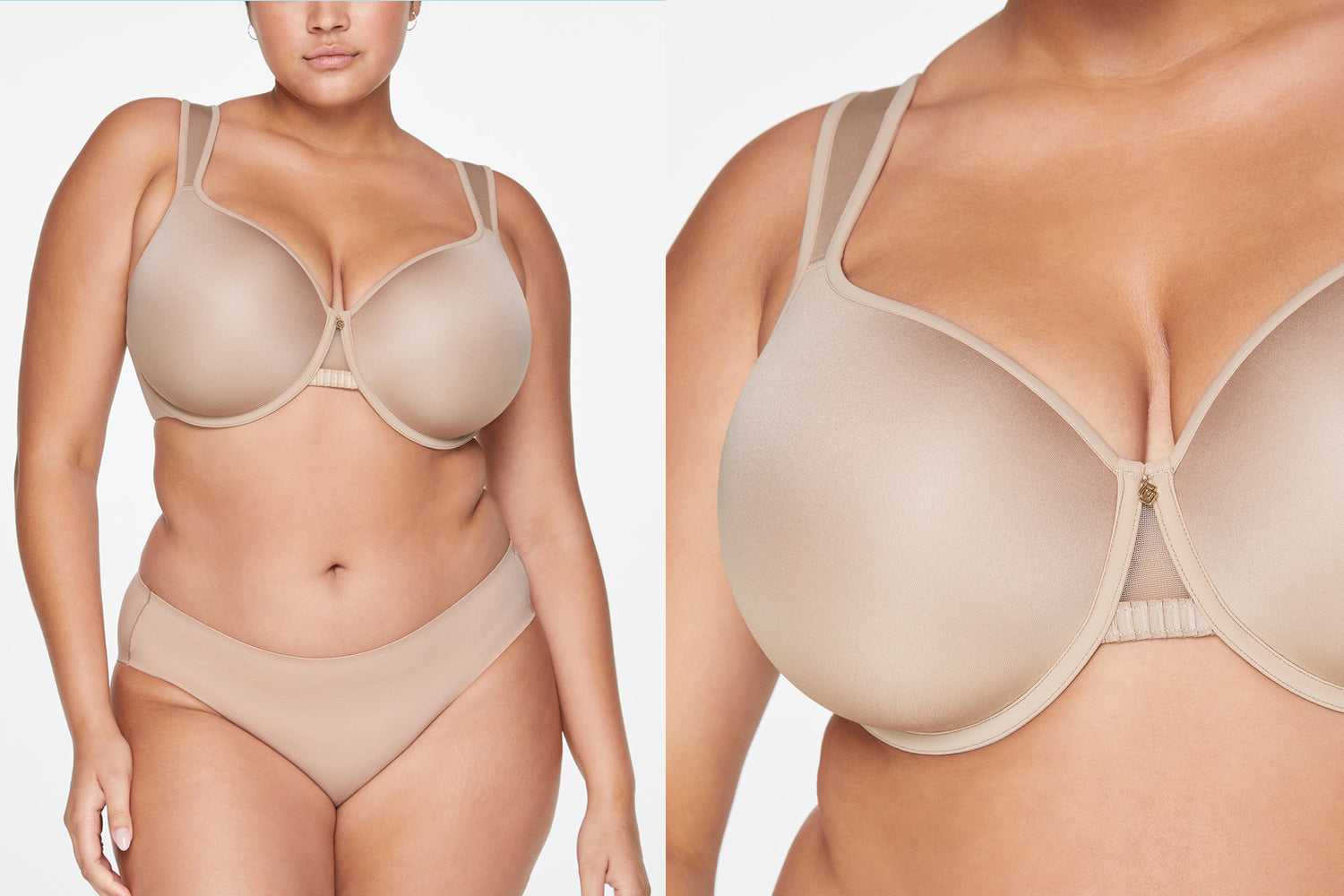
Consider Cuup if you are inside the 30 to 38 band range with a D through H cup, you want a clean unlined silhouette under knitwear, and you are comfortable treating the first order as a sizing exercise with an exchange built in. The Balconette is the sensible first try for a fuller bust, because the wider-set neckline distributes strap tension across more of the shoulder than a plunge does. If you are at a 40 band or above, start in the dedicated 40 to 50 collection and accept a narrower choice of silhouettes in exchange for the four-row closure.
Look elsewhere if you need a smooth moulded cup with no visible seam, if you need convertible or racerback strap configurations as a regular thing, or if your priority is maximum structure at the lowest price. Curvy Couture publishes a wider band range at a lower price point, and Elomi is the default recommendation among full-bust specialists for a reason. ThirdLove sits between the two with a quiz-led sizing route and a more covered cup shape.
Common questions
Does Cuup work above a 40 band?
Cuup lists a dedicated 40 to 50 band collection, and its published hardware note says all 42 cups and all 44 and above carry four rows of hook and eye. So the structure is there. What you give up is breadth of silhouette and colour, which is normal for extended bands across the whole market. Shop that collection directly rather than filtering the main range, and check the specific style page for the closure description before ordering.
Is at-home measuring as good as a professional fitting?
It gets you much closer than guessing, and a band-first method is the part that does most of the work. What a hands-on fitter adds is judgement about cup shape, projection and root width, which a tape cannot capture. If you have tried several brands at the same nominal size with different results, that is usually a cup-shape issue rather than a volume issue, and that is the point at which an in-person fitting earns its time.
How should these be washed?
Follow the care label, which for unlined mesh construction generally means hand wash or a lingerie bag on cold and lay flat to dry. The reason is mechanical rather than fussy: heat and agitation degrade elastane faster than anything else you do to a bra, and the band is the part under constant tension. Rotating two or three bras rather than wearing one daily also gives the elastic time to recover between wears, which extends the usable life of all of them.
Is an unlined bralette enough support for a fuller bust?
A wire-free, unlined style has no rigid structure to lift from, so it shapes rather than supports. That makes it a reasonable choice for lounging or under a heavy sweater and a poor one if you want the silhouette an underwire gives. If you want wire-free at a fuller cup, look for a style with a wide band, a reinforced underbust and multi-column closure rather than a soft-cup bralette.
How to place your first Cuup order
Measure your underbust twice on separate days and size the band on the looser reading. Decide which collection you belong in before you start browsing, because the 30 to 38 range and the 40 to 50 range are structured differently. Check the closure description on the exact style page, not the range page. Start with one bra rather than three, in The Balconette if you have a fuller bust, and treat the free exchange as part of the process. Then judge it on the two things that are visible in the first five minutes: whether the band sits level without riding up, and whether the wire ends sit flat against your ribs rather than on breast tissue. Everything else is preference.