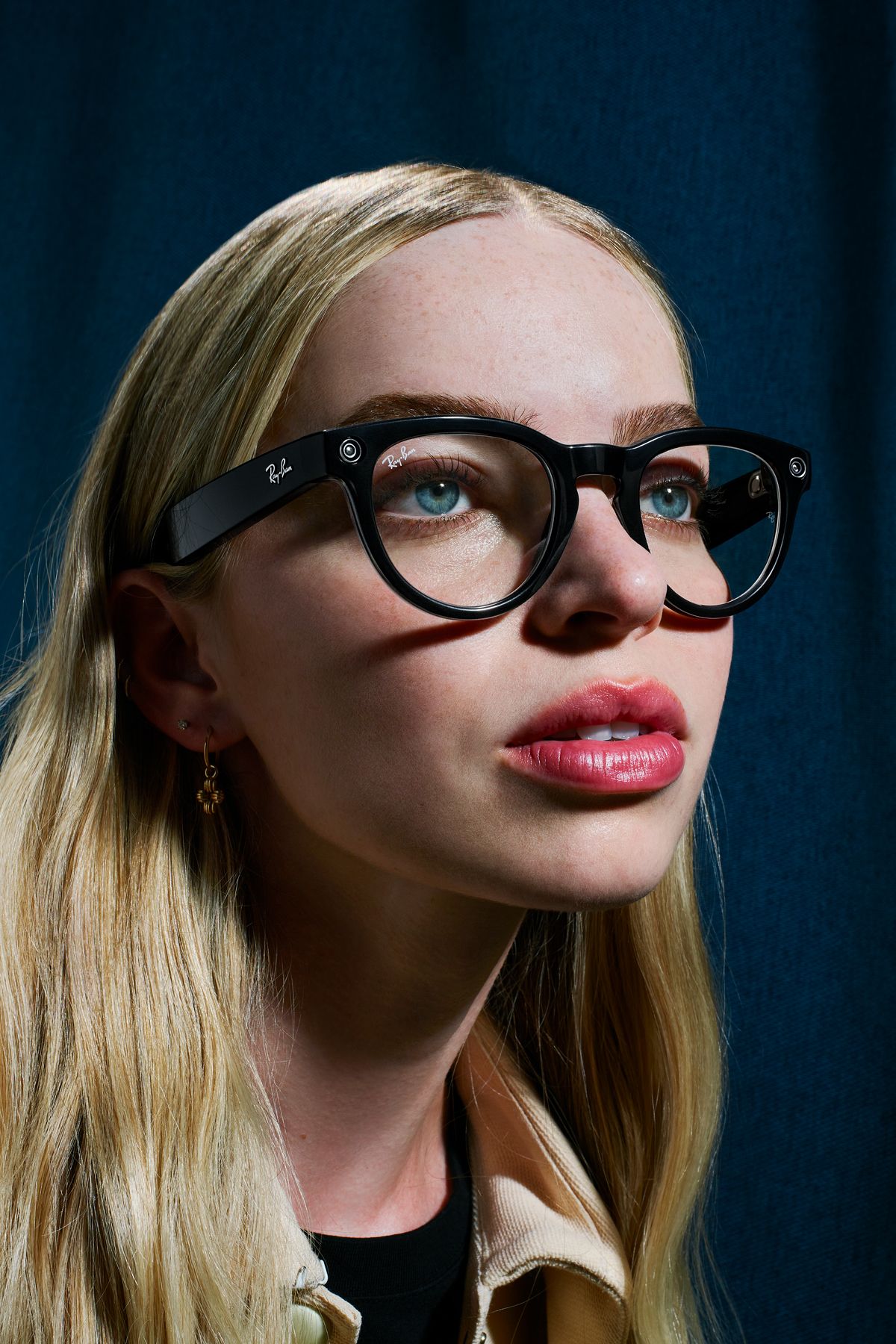

Smart glasses used to mean a chunky, tech-bro silhouette that announced itself before you said a word. That era is over. The frames coming out of the Ray-Ban, Oakley, and Meta partnership in 2026 look like glasses you would actually reach for on a regular Tuesday, and a few of them photograph genuinely well on fuller faces and softer features. That last part matters, because most “best smart glasses” roundups are written by people who have never once thought about how a frame sits on a rounder cheek or a wider jaw, and it shows.
So here is a real one. A look at what is actually in the lineup right now, what each pair costs, which shapes tend to sit beautifully on which faces, how to wear them like an accessory instead of a gadget, and an honest read on whether the tech is worth the money. Every spec and price below was verified against Meta, Ray-Ban, and Oakley listings and current 2026 reporting, and they are noted as approximate because color and lens add-ons move the number around.
What the 2026 Meta Smart Glasses Lineup Actually Looks Like
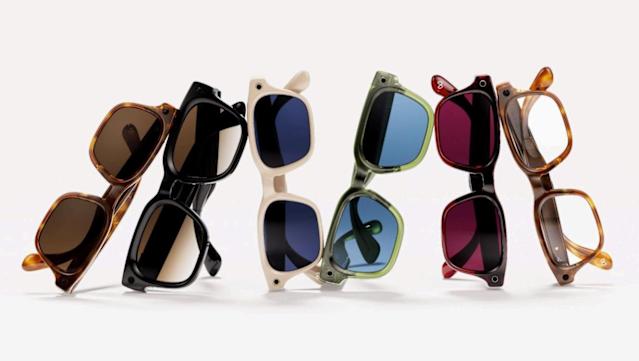
There are now four distinct families to know, and they serve very different shoppers.
The Ray-Ban Meta Gen 2 is the everyday hero and the one most women will gravitate toward. It comes in three frame shapes - the Wayfarer, the Headliner, and the Skyler - and pricing starts around $379 with lenses included, with Transitions lens upgrades pushing certain colorways to roughly $409 to $459 (prices as of mid-2026). The Gen 2 carries an ultra-wide 12MP camera that now shoots 3K video, up to eight hours of battery on a charge, a charging case that adds dozens more hours, a five-mic audio system, open-ear speakers, and hands-free Meta AI running on the Llama 4 model. A new “conversation focus” feature amplifies the voice of whoever you are talking to in a noisy cafe, which is a quietly brilliant addition.
The Ray-Ban Meta Optics styles - the Blayzer and the Scriber - landed in 2026 specifically for prescription wearers and start around $499. The Blayzer is a sleek rectangular frame offered in standard and large sizes; the Scriber is a softer, rounder shape in a single size. Both were built for all-day comfort, with overextension hinges that open about 10 degrees wider than standard for less pressure on the sides of your head, interchangeable nose pads, and optician-adjustable temple tips. They support single-vision, progressive, and Transitions lenses across a prescription range of roughly -6.00 to +4.00, which covers the vast majority of wearers. If you have always felt left out of the smart glasses conversation because you need an actual prescription, these are the pair built for you.
The Oakley Meta line is the sportier branch. The Oakley Meta HSTN starts around $399 (with a limited edition near $499) and brings the same 12MP camera and 3K video in a bolder, more athletic frame. The Oakley Meta Vanguard, around $499, is the performance pair aimed at runners and cyclists, with a wraparound shield shape, an IP67 dust-and-water rating, louder open-ear speakers, a five-mic array tuned to cut wind noise, and integration with Garmin, Strava, and Apple Health. The Vanguard is a specialist tool, not an everyday accessory, but worth knowing if your life runs on movement.
At the top sits the Meta Ray-Ban Display, starting around $799, which includes both the glasses and a Meta Neural Band. This is the only pair with an actual screen - a full-color 600×600 display built into the right lens, bright enough to read in sunlight - and the wristband reads tiny finger movements to let you scroll and tap in the air. It is remarkable and it is niche. Battery runs about six hours of mixed use on the glasses, with the wristband lasting all day. The Neural Band comes in three sizes.
And the newest wrinkle, announced in June 2026, is Meta’s first own-brand line that drops the Ray-Ban name entirely: the Adventurer and the Fury, both starting around $299, plus a Kylie Jenner co-designed edition around $399. The Adventurer leans slim and everyday; the Fury goes bigger and more rectangular. Same core camera-and-AI hardware as the Gen 2, roughly $80 cheaper, no luxury-brand premium. For a first pair, this is suddenly the value play.
Matching Frames to Your Face Shape

Every face shape is a good face shape. This is not about fixing anything, because there is nothing to fix. It is about proportion - choosing a frame that plays nicely with the lines you already have, the same way you would pick a neckline or an earring length. Here is how the current Meta shapes tend to behave on different faces, using classic eyewear-fit logic.
Round faces (soft curves, similar width and length, fuller cheeks) usually look striking in frames that introduce a little structure and angle. The Wayfarer is the natural pick here - its squarer, more defined corners add definition and length, balancing softer curves beautifully. The Blayzer rectangular Optics frame does the same job if you need a prescription. Lean toward a frame that is a touch wider than the broadest part of your face so the eye reads it as balanced.
Oval faces (gently balanced, slightly longer than wide) get to play, frankly, because most shapes cooperate. The Headliner and the Skyler both sit gorgeously, and you can go a little bolder or a little softer depending on your mood. If anything, just avoid frames so oversized they swallow your features. This is the face shape that can pull off the new Fury’s bigger silhouette without it taking over.
Square faces (strong jaw, broad forehead, defined angles - a genuinely striking bone structure) tend to glow in softer, rounder frames that contrast the angles. The Skyler, with its gentle curves, and the rounded Scriber Optics frame are your friends. They soften without hiding, and they keep the look from reading too sharp.
Heart-shaped faces (wider forehead and cheekbones narrowing to a delicate chin) are flattered by frames that add a little visual weight low and keep the top line light. The Headliner works well, as does the Skyler, since rounder or bottom-balanced shapes draw the eye downward and even out the proportions. Avoid anything too heavy or embellished across the top brow.
Diamond faces (narrower forehead and jaw, dramatic cheekbones) look wonderful in frames with some presence across the brow line and gentle curves, which is why the Headliner and Skyler flatter here too. They highlight those cheekbones rather than competing with them.
If your face is fuller or wider overall, two small things help across every shape: pick a frame whose width roughly matches or slightly exceeds your widest point so it looks intentional, and favor frames where the temples attach higher on the side, which lifts the whole look. None of this is a rule you must obey. It is a starting point. Trust the mirror over any chart.
Styling Them Like a Real Accessory, Not a Gadget
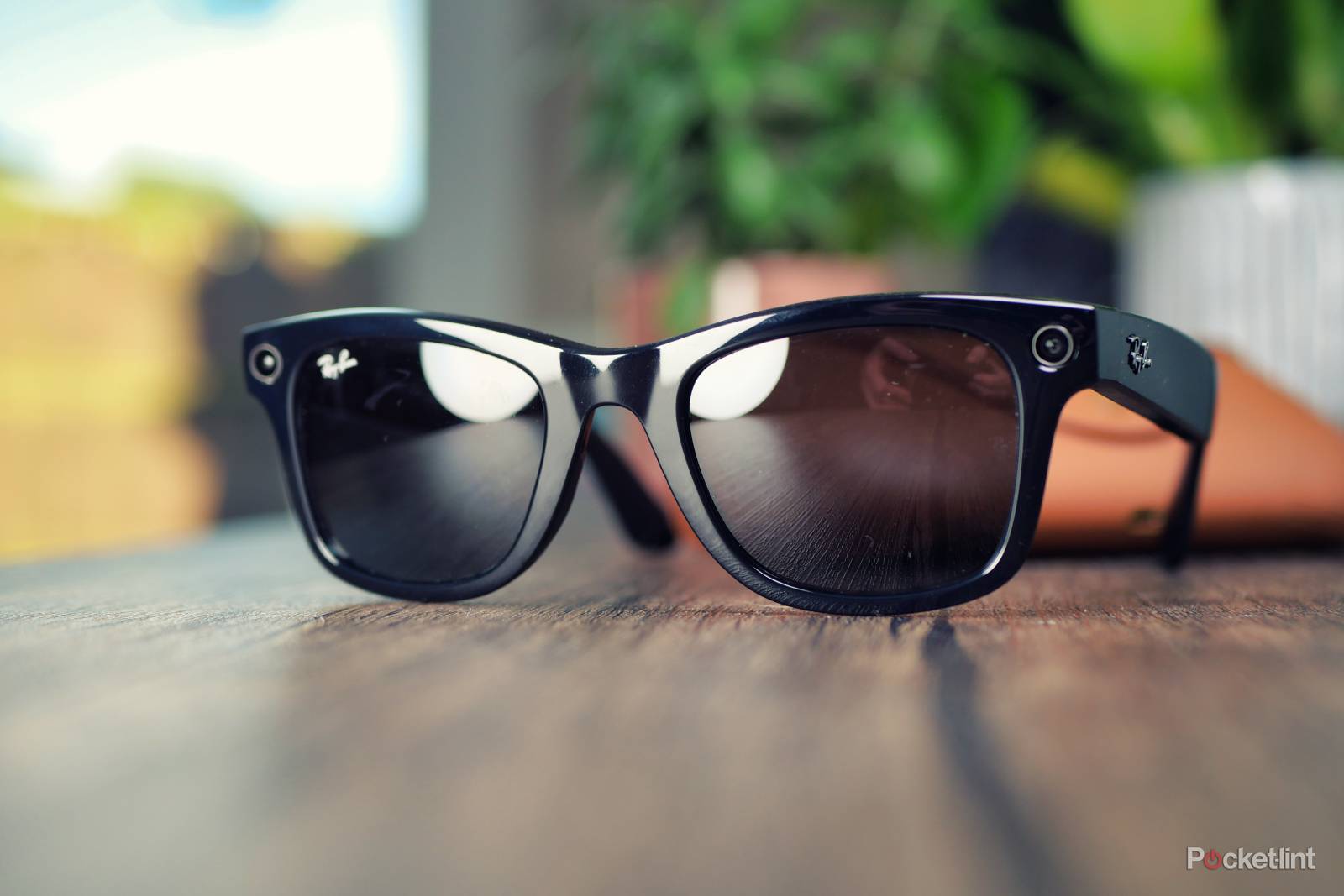
The trick to wearing smart glasses well is treating them exactly like you would treat any other pair - because, visually, that is all anyone else sees. The camera is discreet enough that these read as ordinary Ray-Bans or Oakleys to a passerby.
Color does most of the heavy lifting. The 2026 palette is genuinely fun: Skyler comes in a Shiny Mystic Violet and a Shiny Transparent Peach, the Headliner in a Matte Transparent Peach, and the Wayfarer in a Shiny Transparent Grey with Sapphire Transitions lenses, among more than 150 frame-and-lens combinations across the Gen 2 range. Transparent and tinted-translucent frames are everywhere this year, and they are wonderfully forgiving - they soften the look, catch the light, and read more like a styling choice than a tech purchase. A warm peach or honey translucent frame flatters deeper and warmer skin tones especially well.
Think about contrast. A bold dark Wayfarer is a punctuation mark against soft knits and neutral tailoring. A translucent peach Skyler disappears prettily into a monochrome look and lets your earrings or lip color lead. Match the metal or undertone loosely to your everyday jewelry so the glasses feel like part of your edit rather than a one-off.
And remember they are now a two-piece story if you go for the Display model, because the Neural Band lives on your wrist. Treat it like a slim cuff. It will sit next to your watch or your bracelets, so a clean, understated band reads best.
The Women’s-Fit Angle: Narrower Frames and Real Comfort
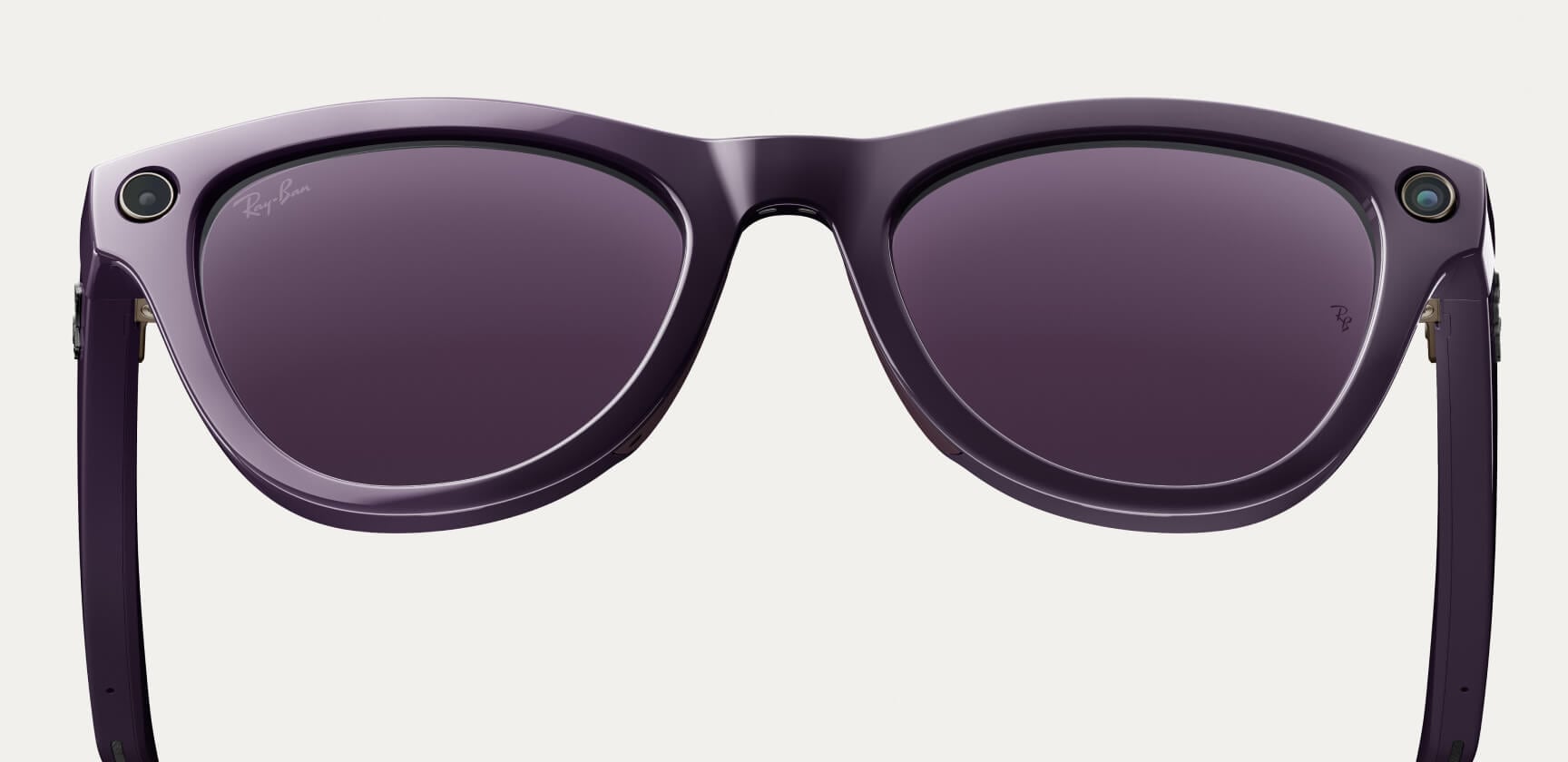
Here is where the lineup has genuinely improved, and where it still has gaps. Smart glasses have historically run large, because the electronics need somewhere to live, and that has meant a lot of women with narrower or shorter faces ending up in frames that slid, gapped at the temple, or simply overwhelmed their features.
The Skyler is the answer most often pointed to for smaller faces. Its narrower front and gentle curves were designed with that in mind, and it comes in a 52-20 size (a 52mm lens width and 20mm bridge) that suits a medium build without going oversized. It is the most petite-friendly of the three Gen 2 shapes by a clear margin.
The Optics styles are the comfort story. Because the Blayzer and Scriber were engineered for all-day prescription wear, they bring features that matter for fit far more than they sound: interchangeable nose pads let you stop a frame from sitting too low or pinching, the optician-adjustable temple tips can be shaped to your head rather than fighting it, and the overextension hinges relieve pressure if a frame has always felt like it was clamping the sides of your face. The Scriber’s single rounded size and the Blayzer’s standard option are the most realistic picks for a smaller face that also needs a prescription.
The honest gap: even the smaller options skew unisex-to-large, and there is no dedicated petite or narrow-bridge electronic frame yet the way you might find in a regular eyewear wall. If you have a very small face, try before you buy, and lean Skyler or Scriber. The Display model in particular is on the larger, heavier side and is the least petite-friendly of everything here.
What They Actually Do (and What They Don’t)

The day-to-day reality is better than the marketing in some ways and thinner in others.
What they do well: the camera is the killer feature. Capturing a photo or a 3K video of your kid, your plate, your view, completely hands-free, from your own eye level, is the thing people end up loving. The open-ear audio is genuinely good for podcasts and calls on a walk because it leaves your ears open to the world, which feels safer and less isolating than earbuds. Meta AI can answer a quick question, translate a menu or a conversation, identify what you are looking at, and set a reminder, all by voice. The conversation-focus feature on the Gen 2 is a real quality-of-life win in loud rooms. Battery comfortably covers a normal day with the case.
What they do not do: there is no screen on any model except the Display, so you are talking to them and listening, not reading texts off your lens on the standard pairs. The AI is helpful but not magic, and it stumbles on anything complicated. The camera light that signals recording is small, so be the considerate one and tell people when you are filming. And the Display’s neural-band gesture control, while genuinely futuristic, has a learning curve and adds cost and bulk most people do not need yet.
Is It Worth It?
It depends entirely on what you want from them, so here is the plain math.
If you want a beautiful everyday pair that quietly captures life hands-free and pipes audio without blocking your ears, the Ray-Ban Meta Gen 2 at around $379, or the new own-brand Adventurer or Fury at around $299, is the sweet spot. You are paying a real but not outrageous premium over normal designer sunglasses for the camera and AI, and if you would have bought nice Ray-Bans anyway, the gap shrinks fast.
If you need a prescription and have felt shut out until now, the Optics Blayzer or Scriber at around $499 is the pair that finally includes you, and the comfort engineering justifies the step up.
If you run, ride, or train, the Oakley Meta Vanguard at around $499 earns its keep with the durability and fitness integration, but it is a specialist, not a daily accessory.
If you specifically want a screen in your glasses and the sci-fi wristband, the Meta Ray-Ban Display at around $799 is the only option, and it is for early adopters who want the frontier and can carry a larger frame comfortably. For most women, it is more glasses than the moment calls for.
The pairs that are not worth it are the ones bought for the wrong reason: do not buy the Display for the camera alone when the Gen 2 does that for less than half the price, and do not buy the Vanguard’s wraparound sport shield as an everyday fashion frame.
Picking your first pair
Walk into a LensCrafters, Sunglass Hut, Best Buy, or a Ray-Ban store and put three pairs on your actual face before you spend a cent. Try a Skyler if your face is on the smaller side, a Wayfarer if you want structure against softer curves, and a Headliner if you want something easy that flatters nearly everyone. Pick the color that makes you smile in the mirror, check that the frame width looks balanced against your widest point, and make sure the arms sit without pinching. The right pair is the one that looks like it belongs on you and happens to take a great photo when you ask it to.