
High-waisted jeans with tummy control occupy an odd space in most wardrobes. They are the pair people reach for on the days they want to feel put together without thinking about it, and also the pair most likely to be quietly abandoned after a month because something about them was wrong. Usually it is one of three things: the rise was not actually high, the fabric had no recovery and bagged out by lunchtime, or the waistband dug in and rolled the moment anyone sat down. All three are avoidable, and none of them are about your size.
The category is also badly served by labels. Almost every brand now prints tummy control on a hangtag, and the phrase means anything from a genuinely engineered inner panel to a slightly thicker waistband and some optimism. Learning to tell those apart takes about two minutes once you know what to look at, and it saves a great deal of money. Here is what actually creates a smooth, comfortable high-waisted jean, followed by the picks worth your time.
What real tummy control looks like in denim
Three features do the work. The first is a true high rise, which for most plus-size bodies means somewhere around eleven inches or more from crotch seam to waistband, high enough to sit above the softest part of the stomach rather than across the middle of it. Rise is the feature brands most often exaggerate, and a jean marketed as high-waisted that lands below your navel will create a ledge no matter how good the fabric is.
The second is a proper inner panel, meaning a separate layer of power mesh or firm knit sewn inside the front, not just a doubled-over waistband facing pretending to be one. Turn the jeans inside out in the shop and look, because this takes seconds and settles the question completely. If there is no distinct panel you can see and feel, there is no meaningful control regardless of what the label says. The third is fabric recovery, meaning the denim’s ability to snap back rather than stretch out. Look for a blend with a few percent elastane plus recovery fibres, and be wary of very soft, very stretchy denim that feels wonderful for an hour and then holds the shape of whoever last sat in it.
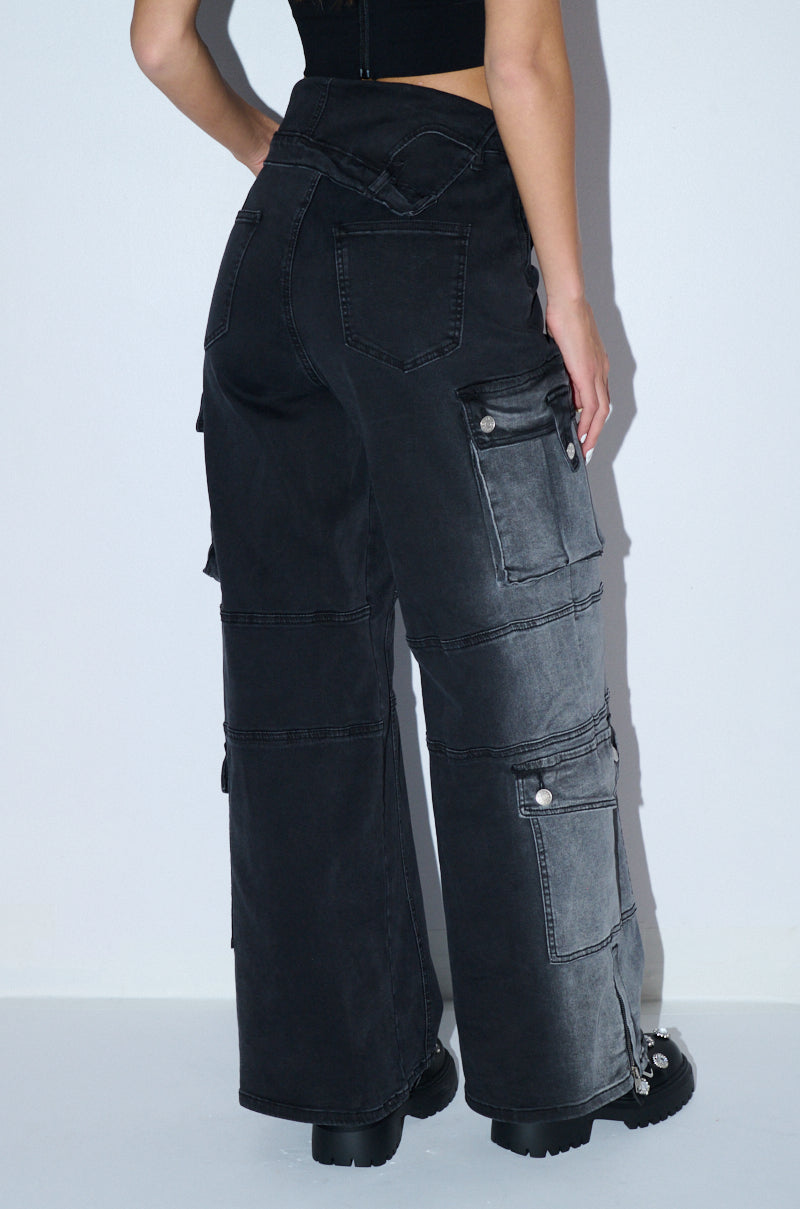
Fit at the waist and hip matters as much as any panel, because a jean that gapes at the back waist while gripping the front will roll regardless of construction. If you are fighting a persistent waist gap or thigh-to-waist ratio problem, our guide on how to find jeans that fit a curvy, plus-size body works through the tailoring and sizing side of that in detail.
Best overall: the straight-leg high rise
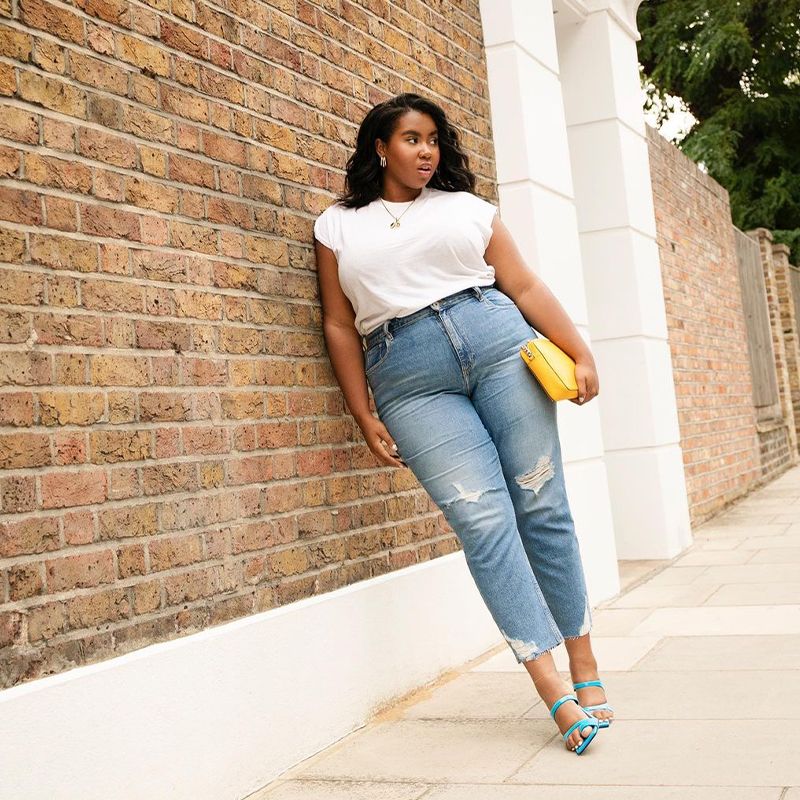
A high-rise straight leg in a firm, recovery-heavy denim is the most useful version of this jean, and the one that suits the widest range of bodies. The straight cut balances a fitted waist and hip without the visual weight of a wide leg, and because the denim needs enough structure to hold a straight line, the fabric tends to be substantial enough to actually smooth rather than cling. That combination is why this shape ages better through a day than a skinny in soft stretch denim.
A well-made high-rise straight-leg jean with a tummy-control panel also solves the sitting problem that ruins so many pairs. Structured denim with good recovery does not fold at the waistband when you bend, which is the single most common complaint about high-waisted jeans and almost always a fabric failure rather than a size one. If you are replacing a pair that dug in and rolled, this shape and this fabric weight is the change to make.
Best for a smooth line under fitted tops
If your main aim is a clean silhouette under a tucked or close-fitting top, a high-rise skinny or slim jean with a wide bonded waistband and a full front panel is what you want. The advantage over the straight leg is that there is no extra fabric anywhere to break the line, so what you get is genuinely smooth from ribcage to ankle with nothing interrupting it. The trade is real though: skinny fits in stretch denim are the most prone to bagging at the knee and seat, so fabric quality matters more here than in any other shape. A mediocre denim that would pass unnoticed in a bootcut will look tired in a skinny by mid afternoon.

Look specifically for a waistband that is wide and bonded rather than a narrow elasticated one, because width is what distributes pressure and stops the fold-over. A high-rise skinny with a wide contoured waistband in a denim with real recovery gives the smoothest result of any shape here. Just be honest with yourself about how you will wear them, because this is the shape that punishes a fabric compromise hardest.
Best comfortable everyday pair
Not every day calls for firm control, and there is a strong argument that the jean you reach for most often should prioritise comfort with light smoothing rather than maximum hold. A high-rise bootcut or relaxed straight in a mid-weight denim with a soft inner panel gives you shape without the constant sensation of being held, which is precisely what makes a pair wearable for twelve hours instead of four. The distinction matters because firm control has a time limit for most people, and a jean you take off at six is not really an everyday jean however good it looks at nine.
This is also the most forgiving category to buy in, because the fit tolerances are wider and a slightly generous pair still looks intentional rather than baggy. A high-rise bootcut with a soft tummy panel is the pair to reach for on long days, travel, and anything involving a lot of sitting. Keeping one firm pair and one comfortable pair covers almost every situation better than owning three near-identical pairs that all do the same job adequately.
Comparing the shapes
Each of these earns its place for a different reason, and the mistake most people make is expecting a single pair to do all three jobs at once. That expectation is why so many wardrobes contain one pair of high-waisted jeans that is almost right for everything and genuinely right for nothing. Here is how the three shapes compare on the factors that actually determine whether a pair stays in rotation or migrates to the back of a drawer.
| Shape | Smoothing | All-day comfort | Best for |
|---|---|---|---|
| High-rise straight | Good | Good | Everyday, widest range of bodies |
| High-rise skinny | Highest | Moderate | Tucked and fitted tops |
| High-rise bootcut | Light | Highest | Long days, travel, sitting |
Sizing them so they stay put
Buy for your hip and thigh, then deal with the waist separately, because denim can be taken in at the waist far more easily than it can be let out anywhere else. Sizing down to increase the squeeze is the mistake that causes almost every problem people blame on the design: an overstretched waistband loses its recovery and rolls faster, the panel stops sitting flat, and the front pockets gape open. A pair that fits properly at the hip and needs a small waist adjustment will outperform a smaller pair every time.
Then run the sit test before you commit, ideally in the fitting room and definitely before removing tags at home. Sit down fully, stay there for a minute, then stand and look. If the waistband has folded over, dug in hard enough to leave a deep mark, or slid down at the back, the fabric lacks recovery or the rise is wrong for your torso. Neither is fixable, and it is far better to learn that in a shop than three weeks later. A good pair looks essentially the same after sitting as it did before.
Quick answers to the questions everyone asks
Do tummy control jeans actually work? Yes, when the control comes from a genuine inner panel of power mesh or firm knit combined with a true high rise and denim with real recovery. A thicker waistband alone does very little. Turn a pair inside out and look for a distinct sewn-in panel before believing the hangtag.
What rise counts as high-waisted for a plus-size body? Roughly eleven inches or more from the crotch seam to the top of the waistband, though the real test is whether it sits above the softest part of your stomach rather than across it. Many jeans marketed as high-waisted sit below the navel and create a ledge instead of smoothing.
Why do my high-waisted jeans roll down at the waist? Usually a fabric with poor recovery, a waistband that is too narrow, or a pair bought a size too small. A wide bonded waistband in denim with recovery fibres solves it. Sizing down to hold tighter reliably makes the rolling worse rather than better.
What size tummy control jeans should I buy? Buy for your hip and thigh measurements and adjust the waist afterwards, since a waist can be taken in and a hip cannot be let out. If you are between sizes, take the larger one. A correctly sized pair smooths more than a tight pair, which stretches out and stops working.
Are skinny or straight-leg better for tummy control? Straight-leg suits more bodies and usually comes in a firmer denim that holds its shape all day. Skinny gives the smoothest line under a fitted or tucked top but relies more heavily on fabric quality, so a poor stretch denim shows its weaknesses fastest in that shape.
Buying one pair you will actually keep
Skip the hangtag and check three things in order. Is the rise genuinely high enough to sit above the softest part of your stomach? Is there a real inner panel when you turn them inside out? Does the denim have recovery fibres rather than just stretch? A pair that passes all three will still be smoothing in six months, and a pair that fails any of them will be in the charity bag by then regardless of what it cost. Buy for your hip, adjust the waist, run the sit test, and you end up with jeans that do quietly what they promised instead of becoming another pair you meant to love.