
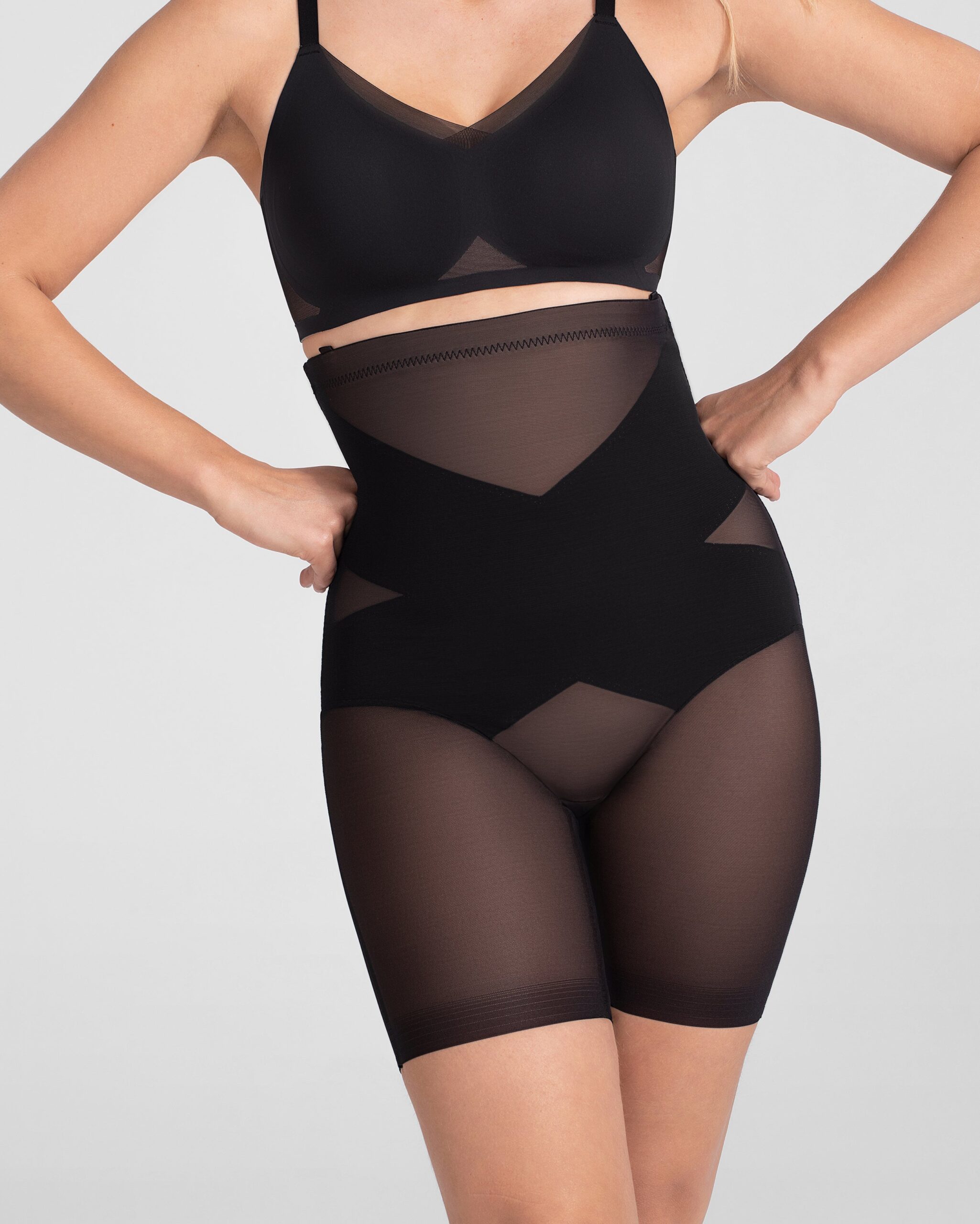
Walk into any Nordstrom intimates floor in 2026 and the shapewear wall used to be a two-name conversation. Spanx on one end, Skims on the other, and a scatter of smaller labels in between that nobody asked the associate about. That has shifted. The Honeylove section now sits at eye level between the two giants in most full-line stores, the packaging in the soft cream-and-black palette that the brand has held since launch, and the associates have actually been trained on the difference between a SuperPower short and a Skims Sculpting one. Eight years after Betsie Larkin started prototyping the first piece in her apartment, Honeylove has become the third name customers walk in asking for by brand.
This piece is about how that happened. What Larkin built, what the brand executes better than its bigger competitors, where it still falls short, and why it is worth paying attention to as a plus-size customer specifically. The shapewear category had calcified around two brands with very different theories of compression - Spanx tight enough to redistribute, Skims smoother and softer with less hold - and Honeylove arrived with a third theory. Structural, engineering-led, designed not to roll. The proposition is narrow. The execution has been disciplined. The brand has held that focus across nearly every product launch since 2018.
The founder who could not find a piece that stayed put
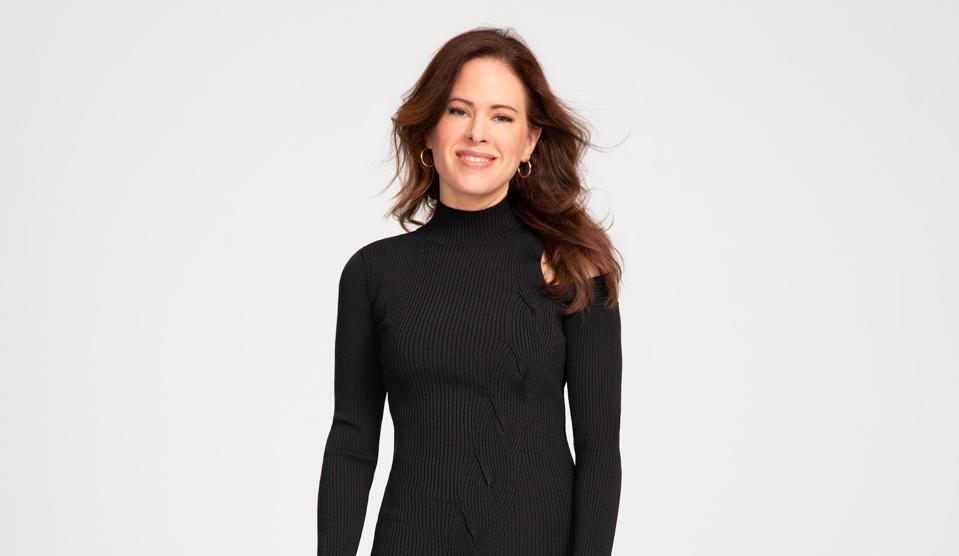
Betsie Larkin is not a celebrity founder. She does not have a styling rolodex, did not come out of a Calabasas product-development pipeline, did not have her name on a fashion-house letterhead before she launched. She was a singer-songwriter in the electronic-dance space in the mid-2010s, performing in fitted stage outfits regularly, and her actual founding story is the one shapewear customers know in their bodies. The pieces rolled down. The waistbands cut. The bodysuits dug into the shoulders. The compression that promised to smooth was actually creating a different silhouette problem two inches above the original one. She tried everything in the category that existed at the time, and the gap she experienced was the gap a lot of women experienced and accepted as the cost of wearing shapewear at all.
Larkin spent her own savings working with a patternmaker and a small contract factory to prototype a short that would not roll. The breakthrough was a bonded silicone-and-fabric waistband construction that the brand calls the Liftwear waistband - a wide, structured band that grips against the skin without the elastic memory that causes rollover. The first product launched on the Honeylove site in 2018 with no traditional retail partner, no PR push, and a marketing budget that consisted of Instagram ads and a single founder-led story. The product sold out within weeks of the early influencer pickup and the brand has been chasing its own production capacity for most of the years since.
The reason the founding story matters for the brand identity is the same reason it matters for the product: Larkin was solving a problem she had personally lived inside, and the discipline of that problem-solving shows up in every product the brand has launched since. Honeylove does not chase trend-of-the-moment ingredients or fabrics. The brand has stayed inside a narrow product corpus - shaping shorts, bodysuits, briefs, leggings, bras - and refined that corpus across iterations rather than sprawling into adjacent categories. That is unusual restraint in a venture-backed direct-to-consumer brand, and the restraint is the founder’s fingerprint.
What the brand actually sells
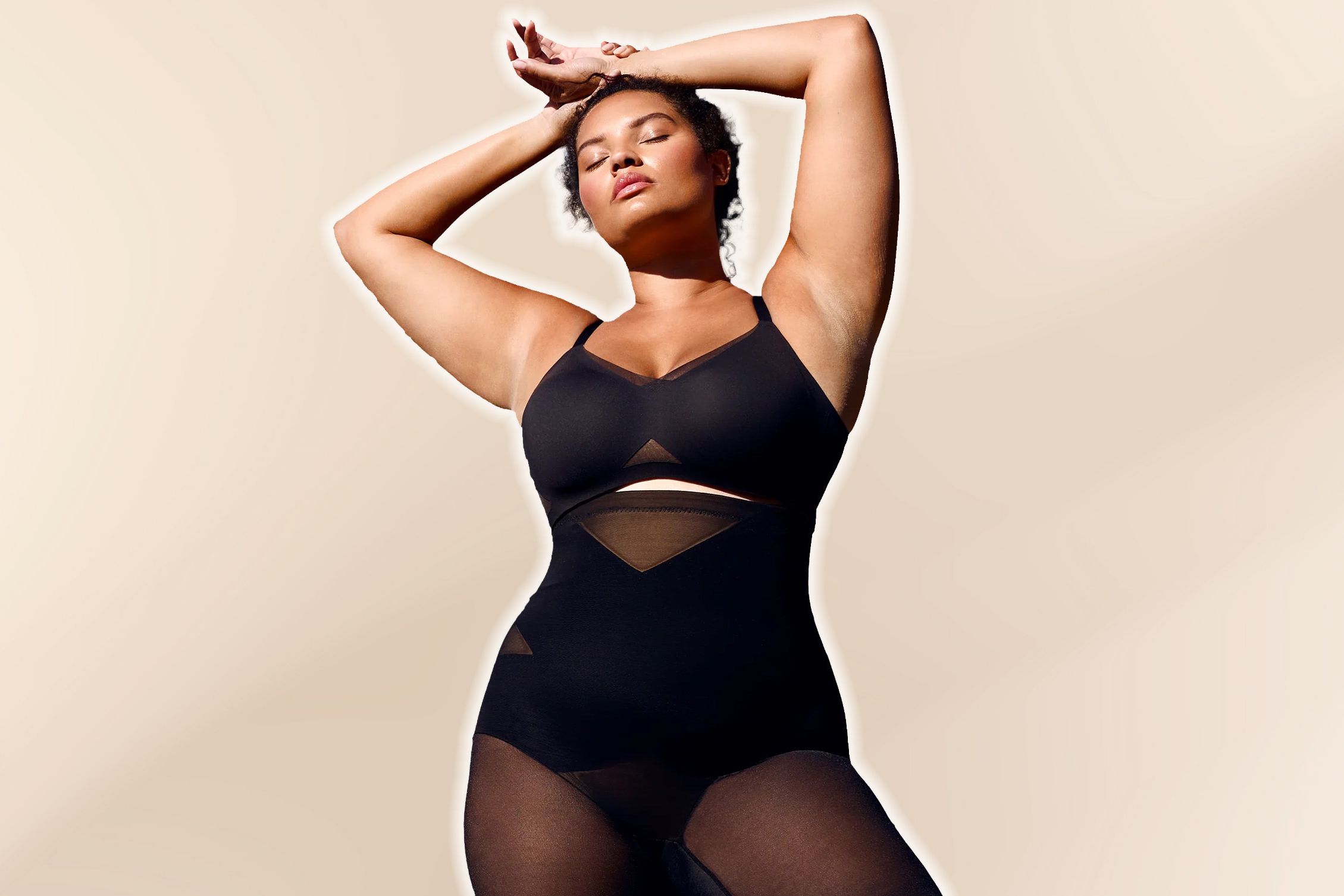
Honeylove sits squarely in the shaping category. The brand does not make outerwear, lounge, swim, or sleep. The product range is built around a core idea of structured shaping that does not roll, and every silhouette in the line is engineered around the same waistband and panel construction. The hero categories: shaping shorts and briefs, sculpting bodysuits, shaping leggings, shaping bras, and a small set of slip dresses and tank pieces.
The sizing range goes from XS through 3XL across most of the core line, which lands at roughly a US size 22 to 24 depending on the cut. That is wider than where Skims started in 2019 but narrower than Universal Standard’s full range. For plus-size customers above a 24, the brand still has work to do, and I want to flag that upfront because the marketing language sometimes implies a broader range than the actual product grading delivers. The price tier sits between Spanx and Skims for direct comparison pieces - shaping shorts at roughly $70 to $80, bodysuits at $90 to $130, the leggings at $90, the bras at $60 to $80. Distribution today: honeylove.com direct, Nordstrom in-store and online, Amazon for a curated set of styles, and Macy’s at select doors.
Where the brand gets it right
The first thing Honeylove got right is the waistband problem they originally set out to solve. The Liftwear band on the SuperPower short and the Crossover short genuinely does not roll on most body shapes through most of a wearing day. I have worn the SuperPower in a size 2X under a fitted knit dress for a six-hour event and the band sat where I put it at the start of the night. Spanx Suit Yourself in the same wearing scenario migrates downward by about an inch over the same window, in my experience, and Skims Sculpting Shorts sit lower to begin with and ride up at the thigh. The waistband is the thing the brand built itself around, and it works.
The second is the panel construction across the bodysuits. The brand uses what they call a Sculptlace or patterned-mesh panel through the torso of the sculpting bodysuits, which compresses without creating the smooth-but-stiff feeling of older-generation Spanx, and without the slipperier, softer compression of Skims that smooths more than it shapes. The panel is structured. It holds. For a plus-size body where the goal is genuine redistribution rather than just smoothing, the Honeylove construction does more actual work. The trade-off is breathability, which I will get to in the cons section.
The third is the discipline around the product line. Honeylove launches roughly three to five new silhouettes per year, with each launch building on the existing engineering rather than chasing a new fabric trend. The 2022 leggings extension, the 2023 bra range, the 2024 slip dresses - all sit inside the same construction philosophy as the original shorts. The brand has not done a beauty extension, a swim extension, or an athleisure extension despite the obvious commercial pull to do so. That focus is rare for a venture-backed DTC label past year five.
The fourth is the customer-experience layer that often gets overlooked. Honeylove offers a 100-day return window on most pieces - longer than Spanx, longer than Skims, comparable to Universal Standard’s 60-day window. The pieces are returnable worn, which matters in shapewear because the actual question is whether the silhouette works under your actual clothes, which you cannot test in the dressing room with the tags still on. The return policy is the kind of thing that signals real confidence in the product, and the brand has held it across all of its retail expansion.
Where the brand has room
Honest critique. The price ceiling is a real friction point. At $130 for the V-Neck Shaping Bodysuit, Honeylove is the most expensive of the three names in the standard shapewear conversation. Spanx Suit Yourself at $98 and Skims Sculpting at $78 both do related work for materially less money. The Honeylove construction is better-engineered, but “better-engineered at 30 to 60 percent more” is a math each customer has to do for herself. I think the bodysuits earn it for the right occasion. I am less convinced the basic shaping shorts earn it when the Spanx and Skims options are within a few percentage points of the same outcome.
The breathability is the structural trade-off I mentioned earlier. The Sculptlace and patterned-mesh panels that deliver the structured compression also retain heat more than the lighter Skims fabrications. In a sit-down setting that is fine. For a long event in a warm room or any kind of summer wedding in the South, the bodysuit gets noticeable. This is the cost of the structured panel doing real work, but it is a cost worth naming.
The sizing range above a 22 or 24 is the third gap. The brand markets itself as size-inclusive and the language sometimes implies a wider range than the grading delivers. Pieces in the 3XL grade do not always sit cleanly on bodies above a 24, and the bra range has a narrower band-and-cup matrix than specialty fit brands like Elomi or Cuup. For customers above a 26, the brand is not quite there yet, and that is worth knowing before you place an order.
How it lines up against the rest of the category
Honeylove does not exist in a vacuum. The shapewear category has three serious contenders in 2026, and the choice between them is not arbitrary.
Spanx is the original. Founded by Sara Blakely in 2000, the brand still owns the institutional retail relationships and the broader product range that Honeylove does not have. Spanx Suit Yourself is the bodysuit most associates will hand you first. The fit is consistent. The compression is firm. The cut runs slightly small through the bust on most bodies, and the leg openings can leave a visible line under thinner fabrics. Spanx is the safe choice for the customer who wants the brand the rest of her wardrobe is already paired with. The trade-off is that the product engineering has not moved as far in the last five years as the newer brands have.
Skims is the second name and the softer-feeling option. Founded by Kim Kardashian in 2019 and now sized through the broadest commercial color range in the category, Skims Sculpting and Skims Fits Everybody are the right choice for the customer whose priority is smoothing and a barely-there feel rather than structural redistribution. The pricing sits below Honeylove on most direct comparison pieces. The compression is genuinely softer. Plus-size customers above a 22 will find the Skims range more reliable than the Honeylove grading, which is the trade-off in the other direction.
The honest read: if your priority is the bodysuit that will not roll and will actually hold under a fitted dress, Honeylove is the pick. If your priority is the smoother, softer, lower-compression smoothing layer for a casual lean, Skims wins on price and feel. If your priority is buying inside an institutional brand with the widest retail footprint, Spanx is still the default. Three different problems, three different right answers.
What to buy from them
If you are buying Honeylove for the first time, do not buy the full system. The smart move is to test the brand on one piece that matches the silhouette problem you are actually trying to solve. The pieces I would put on a first order, in priority order:
The Honeylove SuperPower Short at around $72 is the foundation piece and the one I would buy first. The Liftwear waistband holds through a wearing day in a 2X, the leg openings sit at mid-thigh without rolling up, and the compression is firm without bruising. This is the piece that earned the brand its reputation and it remains the strongest item in the lineup.
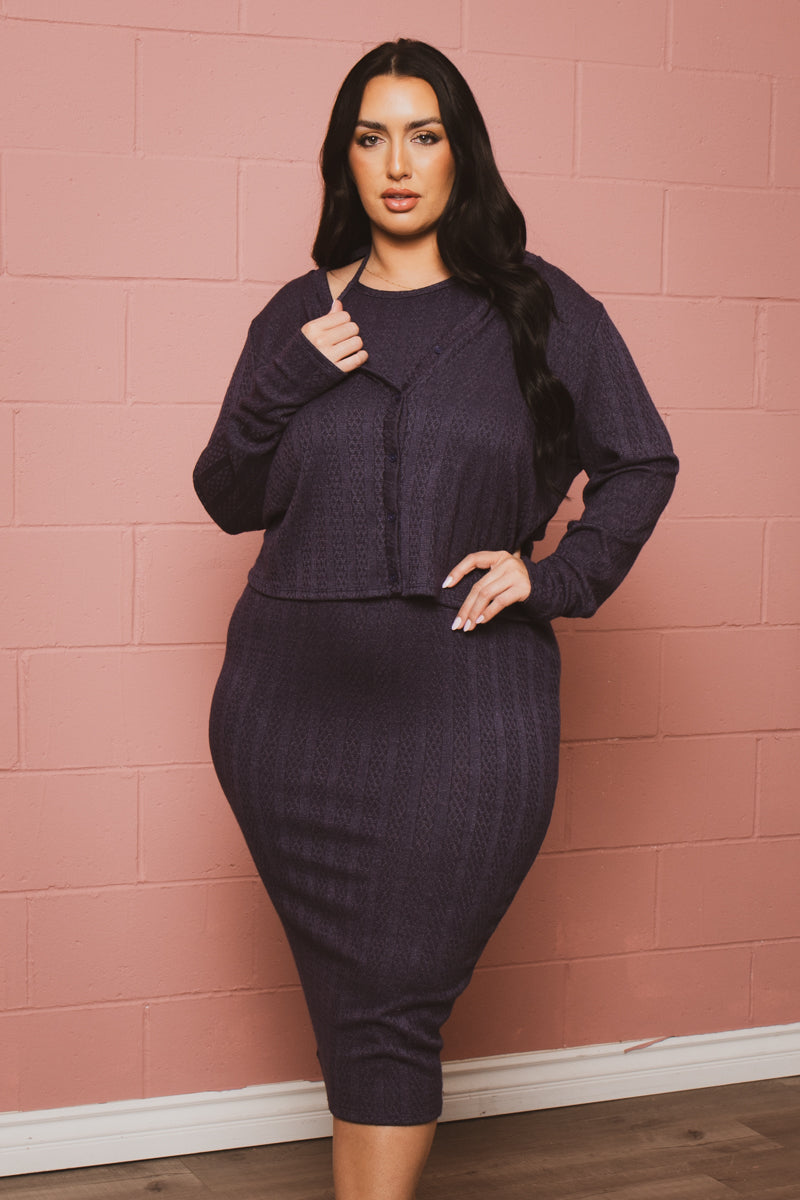
The V-Neck Shaping Bodysuit at around $128 is the bodysuit I would recommend for a fitted-dress occasion specifically. Run it under a knit midi or a silk slip and the silhouette holds without the typical bodysuit migration at the shoulder seam. Worth the price point if you have a real wear occasion. Probably not worth it as a daily basic.
The Crossover Short at around $68 is the lower-waist alternative to the SuperPower for outfits that need a piece sitting below the natural waist. The construction is the same Liftwear band in a different cut. This is the right pick for high-rise pants or skirts that sit at the hip rather than the waist.
The Silhouette Bra at around $78 is the brand’s strongest bra and works as a layering piece under bodysuits or as a smoothing layer in its own right. The band runs true to size, the cup grading is consistent up through the larger sizes the line carries, and the construction is more structured than the Skims Fits Everybody bras at a similar price point.
The Shaping Legging at around $90 is the piece I am most mixed on but the one I keep returning to in colder months. The compression sits through the leg without bunching at the knee, which is the failure most shaping leggings hit, and the waistband holds the way the brand’s shorts do. Buy this one if leggings are a real part of your rotation. Skip if not.
Why this brand matters in the broader shapewear conversation
Honeylove is worth paying attention to because of what it proved about the shapewear category. The accepted wisdom in 2018 was that the category was mature, that Spanx owned the institutional buyer and Skims would take the next-generation customer, and that there was no room for a third name to mean anything. Larkin’s brand is the counter-evidence. By holding to a narrow product corpus, solving a specific engineering problem, and refusing to sprawl into adjacent categories, Honeylove built a third position in a category that was supposed to be a two-brand race.
For the plus-size customer in particular, this matters because the rise of a third name with structural compression as its core proposition opens up a meaningful option that did not exist seven years ago. Plus-size bodies often need redistribution more than smoothing, and the brand that built its waistband around that distinction is doing real work the older two brands had not prioritized. Honeylove is not perfect, and the price ceiling and the sizing gap above 24 are both real. But the brand has earned its shelf space at Nordstrom. I am wearing the SuperPower short in a 2X under a Christopher John Rogers knit dress to a wedding in two weeks. The link is below.