Click into a Torrid jacket for the first time and the size tag says “2”. It looks like a misprint, or a straight-size listing that has wandered into the plus section. It is neither. That tag is a Torrid 2, and Torrid’s own chart calls it a US 18 or 20. The same body answers to a different number at Lane Bryant, another at Eloquii, and a letter at Universal Standard. All of those numbers can be correct at once. Nobody tells you that at checkout, and no store hands you a phrasebook for its private sizing dialect.
The question “what is a Torrid 2 at Lane Bryant” gets asked constantly, and the best answers in public circulation tend to be a forum comment and a blog post from a decade ago. So here is the chart built from the brands’ own published size guides instead, with every column dated and every unverified column labelled as unverified. The gap between what brands publish and what shoppers believe is exactly where the return fees live.
The Conversion Chart, Built From the Brands’ Own Numbers
Find your row by your tape measurements, not by whatever size you wear somewhere else. Bust is measured at the fullest point, waist at the natural waist. Every cell is what that brand’s published chart assigns to those measurements.
| Your measurements | Torrid | Lane Bryant | Eloquii | Universal Standard | Ava & Viv (Target) | Old Navy Plus |
|---|---|---|---|---|---|---|
| Bust 38-40 Waist 32-34 |
00 | 10/12 (M/L) | 10/12* | XS (10-12) | n/a | n/a |
| Bust 40-42 Waist 34-36 |
0 | 12/14 | 12* | XS/S | n/a | n/a |
| Bust 42-44 Waist 36-38 |
1 | 14/16 (1X) | 14 | S (14-16) | X (14W) | n/a |
| Bust 44-46 Waist 38-40 |
1 | 16/18 | 14/16 | S | 1X (16W) | 1X (16) |
| Bust 46-48 Waist 40-42 |
2 | 18/20 (2X) | 16/18 | M (18-20) | 1X (18W) | 1X (18) |
| Bust 48-50 Waist 42-44 |
2 | 20/22 | 18/20 | M | 2X (20W) | 2X (20) |
| Bust 50-52 Waist 44-46 |
3 | 22/24 (3X) | 20/22 | L (22-24) | 2X (22W) | 2X (22) |
| Bust 52-54 Waist 46-48 |
3 | 24/26 | 22/24 | L | 3X (24W) | 3X (24) |
| Bust 54-56 Waist 48-50 |
none** | 26/28 | 24/26 | L/XL | 3X (26W) | 3X (26) |
| Bust 56-58 Waist 50-52 |
4 | 28 | 26 | XL (26) | 4X (28W) | 4X (28) |
| Bust 58-61 Waist 52-55 |
none** | 30/32 | 28 | XL (28) | 4X (30W) | 4X (30) |
| Bust 62-65 Waist 56-59 |
5 | 34 | 30 | 2XL (30) | n/a | n/a |
| Bust 66-70 Waist 60-64 |
6 | 38/40 | 32 | 2XL/3XL | n/a | n/a |
*Eloquii’s 10 and 12 exist only through its 11 Honoré line, per a footnote on Eloquii’s own size chart. **Torrid’s published measurement table has two genuine holes near the top. Its size 24 row tops out at a 54 inch bust and its size 26 row starts at 56, and its 26 row tops out at 58 while the 28 row starts at 60. Those two-inch stretches belong to no Torrid size at all. The waist column has matching gaps at 48 to 50 inches and 52 to 54 inches. All four gaps are printed in Torrid’s own table.
Walmart’s Terra & Sky runs on a separate 0X to 5X ladder, so it gets its own table. These figures come from the Terra & Sky size guide published on Walmart’s own product pages, read on 3 November 2026. Note that Walmart publishes charts per category rather than one brand-wide chart, and the figures below are from the knits and sweaters guide, so open the chart on the exact listing before buying anything structured.
| Terra & Sky size | US | Bust | Waist | Hip |
|---|---|---|---|---|
| 0X | 14W | 44 | 39.5 | 45.5 |
| 1X | 16W | 46 | 41.5 | 47.5 |
| 1X | 18W | 48 | 43.5 | 49.5 |
| 2X | 20W | 50 | 45.5 | 51.5 |
| 2X | 22W | 52 | 47.5 | 53.5 |
| 3X | 24W | 54 | 49.5 | 55.5 |
| 3X | 26W | 56 | 51.5 | 57.5 |
| 4X | 28W | 58 | 53.5 | 59.5 |
| 4X | 30W | 60 | 55.5 | 61.5 |
| 5X | 32W | 62 | 57.5 | 63.5 |
| 5X | 34W | 64 | 59.5 | 65.5 |
And because letter sizes are where conversions really go wrong, here is what the same “1X” means at each store, straight from their charts.
| Store | What their chart says “1X” means |
|---|---|
| Torrid | Size 1, which Torrid’s chart equates to US 14/16 |
| Lane Bryant | 14/16 (not re-verified, see methodology) |
| Universal Standard | Their 1X/XL row covers US 14 and 16 |
| Old Navy | 16 and 18 |
| Terra & Sky (Walmart) | 16W and 18W |
| Ava & Viv (Target) | 16W/18W (not re-verified, see methodology) |
Same letter, up to two sizes of daylight. If you shop by the X, you are gambling.
How to Actually Use This Thing
First, measure yourself this month, not from memory. A soft tape measure costs less than the return shipping you will pay guessing. Bust at the fullest point wearing the bra you would wear with the garment, waist where you crease when you bend sideways, hip at the fullest part with your feet together. Those three numbers move between brands with you. The size on the tag does not.
Second, pick the column that matches what you are buying. For tops and dresses, follow your bust row and let the waist ride. For bottoms, waist and hip rule and bust is irrelevant. Most of these brands publish separate bottoms charts using the same waist and hip numbers as their master chart, so the rows above hold. One genuine exception: Eloquii’s dresses and jumpsuits chart starts at size 14 and drops the 10/12 row entirely, and its bottoms chart drops bust and adds a thigh measurement. If sleeves are your recurring fit failure, Eloquii is also the only brand in this comparison that publishes a biceps measurement against every size, which is a real advantage when the dress fits everywhere except the arm.
Third, respect the ranges. Eloquii and Universal Standard grade in tidy two-inch steps through the middle of their published charts and then take wider jumps near the top. Torrid does the same, more abruptly, which is where its two measurement holes come from. That is why a conversion that is dead accurate mid-chart drifts by a full size at the upper end. The tables above reproduce each brand’s own steps rather than smoothing them, so the drift is visible instead of hidden.
Same Number on the Tag, Different Body Underneath
This is the table worth screenshotting, because it shows the disagreement instead of hiding it. One size tag per row, and the bust each brand’s published chart assigns to it. Reading across a row tells you whether a brand cuts that number bigger or smaller than its neighbours. The three tables are split so they read on a phone.
Bust, in inches, by size tag:
| Tag | Torrid | Lane Bryant | Eloquii | Universal Standard | Ava & Viv | Old Navy Plus |
|---|---|---|---|---|---|---|
| 14 | 42-44 | 42 | 43-45 | 43-45 | 42.5-44.5 | n/a |
| 16 | 44-46 | 44 | 45-47 | 45-47 | 44.5-46.5 | 44.5 |
| 18 | 46-48 | 46 | 47-49 | 47-49 | 46.5-48.5 | 46 |
| 20 | 48-50 | 48 | 49-51 | 49-51 | 48.5-50.5 | 48 |
| 22 | 50-52 | 50 | 51-53 | 51-53 | 50.5-52.5 | 50.5 |
| 24 | 52-54 | 52 | 53-55 | 53-55 | 52.5-54.5 | 53 |
| 26 | 56-58 | 54 | 56-58 | 56-58 | 54.5-56.5 | 55.5 |
| 28 | 60-64 | 56 | 59-61 | 59-61 | 56.5-58.5 | 58 |
| 30 | 66-70 | 58 | 62-65 | 62-65 | 58.5-60.5 | 60.5 |
| 32 | n/a | 60 | 66-69 | 66-69 | n/a | n/a |
Natural waist, in inches, by size tag:
| Tag | Torrid | Lane Bryant | Eloquii | Universal Standard | Ava & Viv | Old Navy Plus |
|---|---|---|---|---|---|---|
| 14 | 36-38 | 36 | 37-39 | 37-39 | 37-39 | n/a |
| 16 | 38-40 | 38 | 39-41 | 39-41 | 39-41 | 36.5 |
| 18 | 40-42 | 40 | 41-43 | 41-43 | 41-43 | 38 |
| 20 | 42-44 | 42 | 43-45 | 43-45 | 43-45.5 | 40 |
| 22 | 44-46 | 44 | 45-47 | 45-47 | 45.5-47.5 | 42.5 |
| 24 | 46-48 | 46 | 47-49 | 47-49 | 47.5-50 | 45 |
| 26 | 50-52 | 48 | 50-52 | 50-52 | 50-52 | 47.5 |
| 28 | 54-58 | 50 | 53-55 | 53-55 | 52-54.5 | 50 |
| 30 | 60-64 | 52 | 56-59 | 56-59 | 54.5-56.5 | 52.5 |
| 32 | n/a | 54 | 60-63 | 60-63 | n/a | n/a |
Hip, in inches, by size tag. One comparability note: Lane Bryant and Torrid spec a low hip, Eloquii, Universal Standard and Target spec the fullest hip, and Old Navy’s plus chart labels the column hip while its pants chart calls the same figures hips and seat. Read this table directionally rather than as a like-for-like comparison.
| Tag | Torrid | Lane Bryant | Eloquii | Universal Standard | Ava & Viv | Old Navy Plus |
|---|---|---|---|---|---|---|
| 14 | 46-48 | 44.5 | 46-48 | 46-48 | 46.5-48.5 | n/a |
| 16 | 48-50 | 46.5 | 48-50 | 48-50 | 48.5-50.5 | 48 |
| 18 | 50-52 | 48.5 | 50-52 | 50-52 | 50.5-52.5 | 49.5 |
| 20 | 52-54 | 50.5 | 52-54 | 52-54 | 52.5-54.5 | 51.5 |
| 22 | 54-56 | 52.5 | 54-56 | 54-56 | 54.5-56.5 | 54 |
| 24 | 56-58 | 54.5 | 56-58 | 56-58 | 56.5-58.5 | 56.5 |
| 26 | 60-64 | 56.5 | 59-61 | 59-61 | 58.5-60.5 | 59 |
| 28 | 66-70 | 58.5 | 62-64 | 62-64 | 60.5-62.5 | 61.5 |
| 30 | 72-76 | 60.5 | 65-68 | 65-68 | 62.5-64.5 | 64 |
| 32 | n/a | 62.5 | 70-73 | 70-73 | n/a | n/a |
Sit with the 28 row for a second. At the low end of the charts these brands mostly agree within an inch or two, and the folklore conversions work fine. At the top they diverge hard, and a single size tag can mean an eight inch difference in bust between two of these columns. That is the territory where “I am always the same size” costs you two return labels a month. If you take one thing from this article, take that.
Torrid: The 00-6 System, Decoded
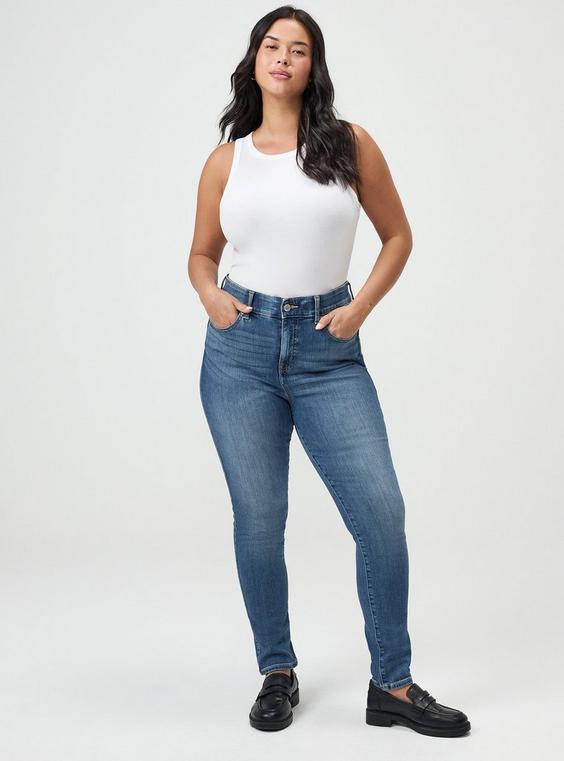
Torrid’s numbers are US sizes with the arithmetic pre-done. Its chart maps 000 to a US 8, 00 to a 10, 0 to a 12, then 1 to a 14 or 16, 2 to an 18 or 20, and 3 to a 22 or 24. Past that the pairing stops and each number takes one size: 4 is a 26, 5 is a 28, 6 is a 30. So the shorthand that has been carrying the entire conversion economy for years, that a Torrid 2 is an 18/20, holds up against Torrid’s own published chart.
Two things are worth knowing that the chart does not announce. First, Torrid publishes measurements against US numeric sizes, not against the 00 to 6 labels, so any claim that “a Torrid 2 is a 46 inch bust” is a two-step reconstruction rather than something Torrid prints. Because sizes 1, 2 and 3 each cover two US numerics, a single Torrid size spans two measurement rows, and whether you sit at the top or bottom of that range decides how a slim-cut hip behaves on you. Second, Torrid’s own site states two different smallest sizes: its homepage says sizes 10 to 30, while its jeans category and the chart itself start at an 8. That inconsistency is on Torrid’s pages, not a transcription error here. In denim, the two-sizes-per-number structure is also why the same Bombshell skinny can fit two friends a full size apart. Torrid publishes no petite or tall body chart at all, only Short, Regular and Tall inseam options on jeans.
Lane Bryant: The Straight Ruler, With a Caveat
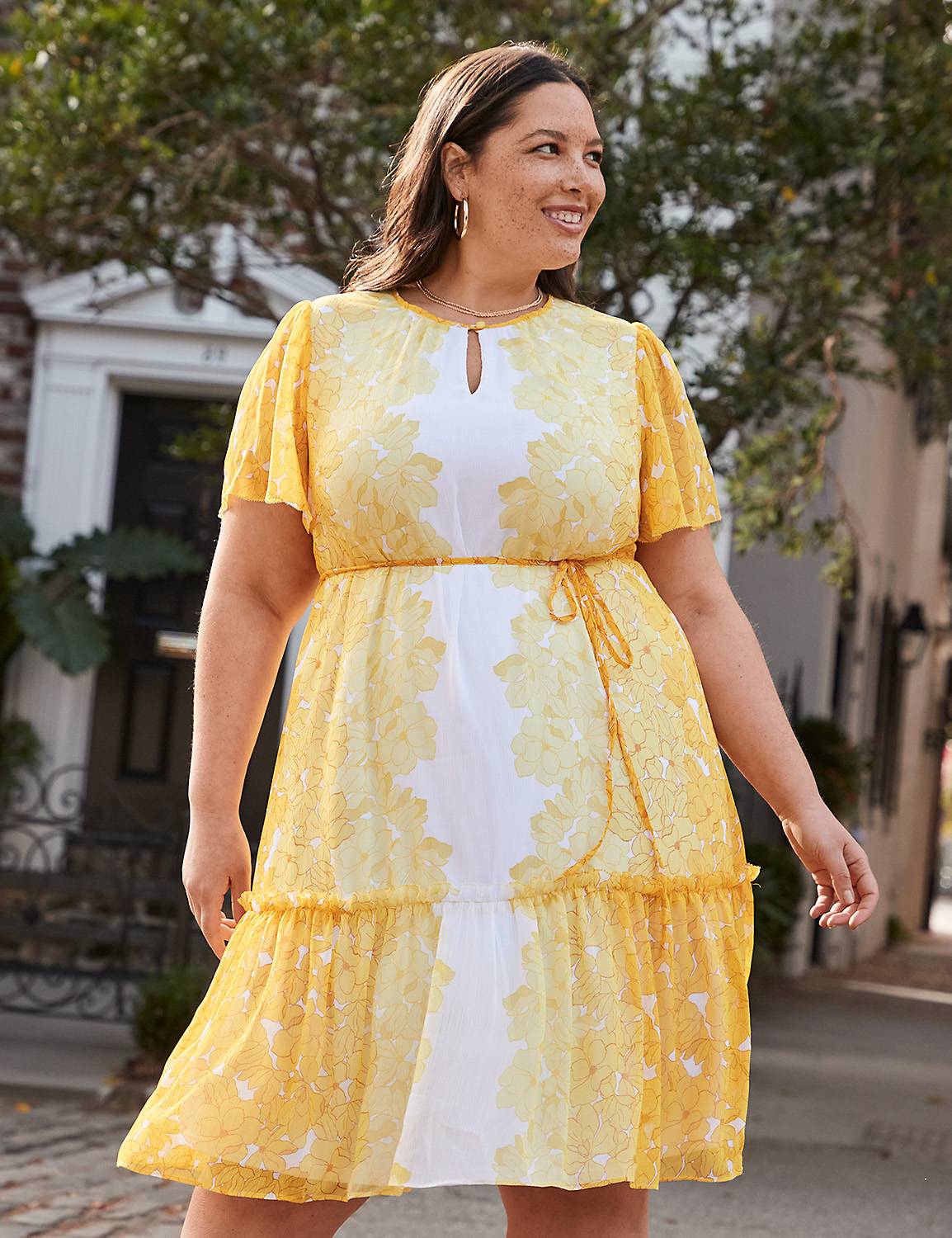
Start with the caveat, because it is the honest thing to lead with. Lane Bryant’s product and fit pages were blocking automated readers on 3 November 2026, so the Lane Bryant column in the tables above is the transcription from an earlier pull and could not be re-checked against the live chart. What is current and readable on Lane Bryant’s own site is the brand’s stated range: its site description advertises plus size clothing in sizes 10 to 40. Treat the Lane Bryant measurement cells as indicative and open the size chart on the product page before ordering.
On the chart as transcribed, Lane Bryant is the metronome of this comparison: every size adds exactly two inches everywhere, all the way up, and the letter mapping is clean. That predictability is worth real money, because “size up one” means the same thing at the bottom of its range and the top. Its published range to 40 is matched here only by Universal Standard, which publishes 00 to 40. The catch is the hip. At any given bust, the Lane Bryant chart assumes a noticeably straighter hip than Eloquii’s or Universal Standard’s. That is a drafting choice, not an error, and it is why the brand’s Curvy fit exists. If Lane Bryant pants fit your waist and pull at your seat, you are not between sizes, you are in the wrong block, and the Curvy fit in their Boost denim is the chart-correct fix in your usual number. Lane Bryant’s returns page does confirm that online orders can go back to a store for free, which lowers the cost of testing your number.
Eloquii: Graded Roomier Than Lane Bryant at the Same Number
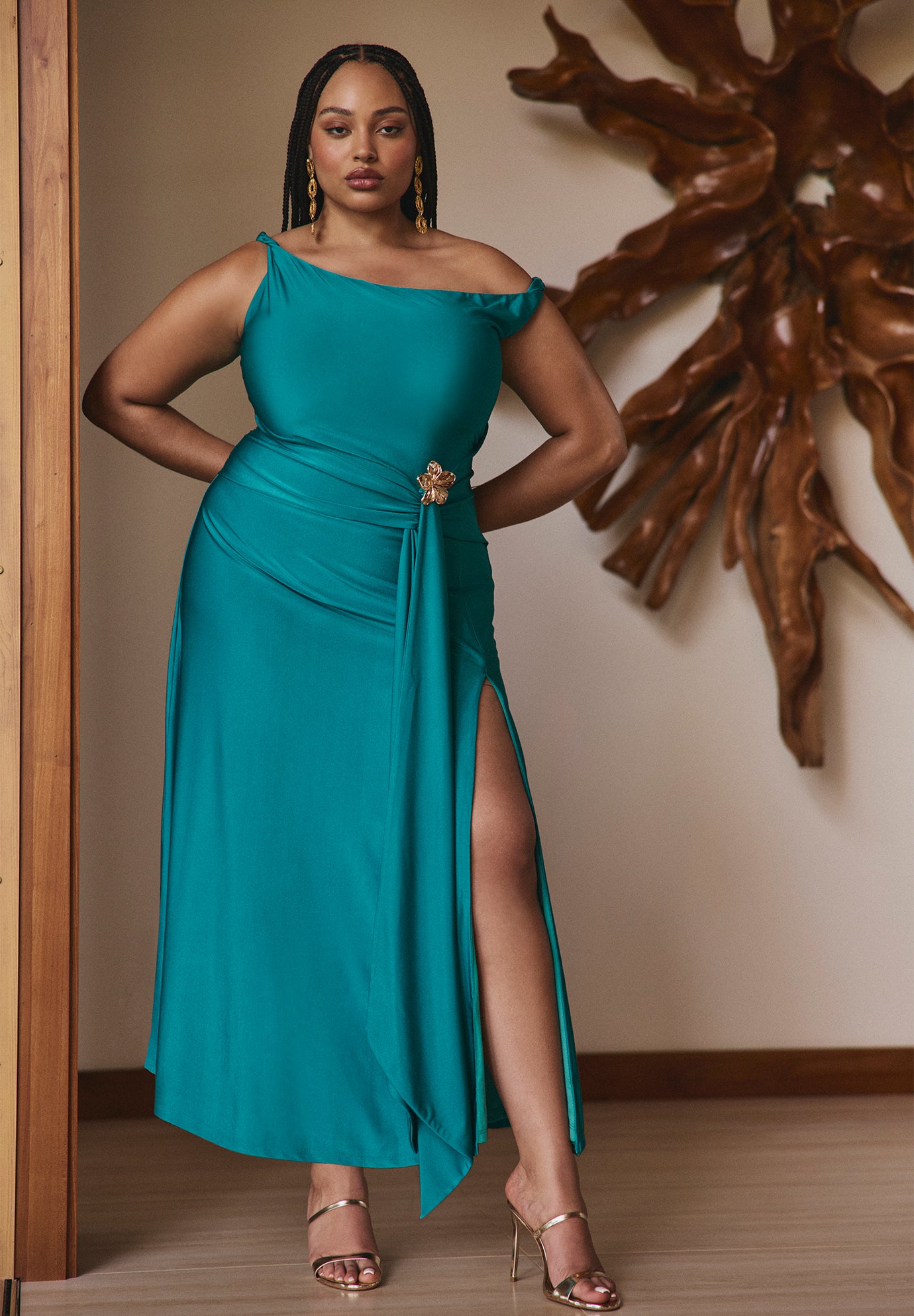
Put the two charts side by side and Eloquii assigns roughly an inch to an inch and a half more bust to the same size number than the Lane Bryant chart does. That is a comparison of two published charts, not a brand admission: Eloquii publishes no statement anywhere on its size guide about running generous, and no fit model size. The practical implication of the arithmetic, though, is clear enough. If one brand’s chart calls you a 16 and the other’s calls you a 14, both charts can be right, and in structured wovens the smaller Eloquii number is often the one that fits. The Kady fit pant is a reasonable piece to calibrate on before buying anything tailored there.
Credit where it is due. Eloquii is the only brand in this table publishing a biceps measurement per size, which matters enormously if sleeves are your recurring failure point, and its chart carries 30 and 32 with a footnote that those sizes exist on select styles. Two quirks to know. Its grading changes gear near the top, with tidy two-inch steps through the middle and wider jumps after, so conversions that work mid-chart drift at the upper end. And its dresses and jumpsuits chart starts at 14 rather than 10, so the smallest two rows of its tops chart do not exist across the whole range.
Universal Standard: Different Labels, The Same Numbers as Eloquii
Universal Standard’s letter system reads like a riddle until you see the trick: the alphabet is re-centred, so an 18 or 20 wears the M. From there the ladder is regular, each letter up or down moving you two sizes, and the published run covers 00 to 40 under letters from 4XS to 4XL. The master table above matches every letter to its numbers.
Here is the finding most worth knowing: Universal Standard’s bust, waist and hip figures are identical to Eloquii’s, digit for digit, through the entire shared range from size 10 to size 32, including the same gear change near the top. Two independent reads of both brands’ live charts on 3 November 2026 returned the same numbers. So if you know your Eloquii number, you already know your Universal Standard letter. Find your row in the master table and read across. Two quirks in Universal Standard’s own chart are worth flagging because they look like errors and are not: there is a discontinuity between their 2XS and XS rows, where bust jumps from 37 to 38 inches to 39 to 41 and waist from 29 to 31 inches to 33 to 35, and their size 34 row repeats size 32’s bust range. Their denim runs on the same chart, which makes the Seine high rise jean a reasonable first order.
The Big-Box Anchors: Old Navy, Ava & Viv, Terra & Sky
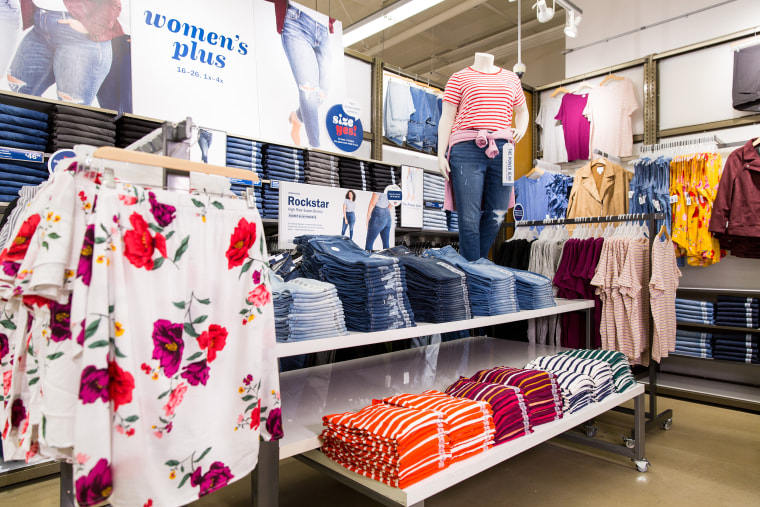
These three matter because they are where the largest number of plus-size shoppers actually buy, and their charts pull some quiet tricks. Old Navy publishes 1X to 4X across sizes 16 to 30 and labels the measurement chest rather than bust, which is a real difference from everyone else here. Its letters start a full size later than Lane Bryant’s and its published plus chart stops earlier than the dedicated brands do. Its waists also run trim for the tag, several inches leaner than Eloquii’s at the same number, which is exactly why Old Navy bottoms can fail at the waistband while the hip fits. One currency note: Old Navy’s plus chart data files carry an internal timestamp from 2021, so these are the numbers Old Navy serves today but the chart itself has not been revised recently. When the cut works for you, the High-Waisted Wow jean in plus is the cheapest way to put a chart row on your actual body.
Target’s Ava & Viv is still an active Target owned brand, with new styles listed in autumn 2026, and its product pages show 1X to 4X on tops and 16 to 30 on jeans. Its published measurement chart, however, sits behind a bot-verification wall and could not be re-read on 3 November 2026, so the Ava & Viv column above is an earlier transcription rather than a current check. What the pattern in that column shows is a line that runs bigger than the tag suggests if you are calibrated to Lane Bryant, with waist numbers close to Eloquii’s roomier ones. Fit-test the brand cheaply with a pair of Ava & Viv high rise straight jeans before trusting it for occasion wear.
Walmart’s Terra & Sky is better documented than it used to be. The brand publishes a real measurement chart inside its product pages, reproduced in full above, running 0X to 5X against US 14W to 34W with bust from 44 to 64 inches in clean two-inch steps. The limitation is that Walmart publishes these charts per category rather than brand-wide, so the chart you need is the one on the exact listing. For anything forgiving, like the Terra & Sky pull-on jeggings, the stretch covers the ambiguity. For anything structured, open the size chart on that listing first.
Where Every Number in This Article Comes From
Re-verified on 3 November 2026 against the brand’s own live published chart: Torrid (size chart modal on its product pages, both the size-equivalence table and the measurement table), Eloquii (its size chart page, tops and jackets, dresses and jumpsuits, and bottoms), Universal Standard (the chart image on its size guides page, transcribed cell by cell), Old Navy (its women’s plus tops and outerwear chart and the underlying data file its size guide loads), and Walmart’s Terra & Sky (the size guide on its own product pages).
Not re-verified on that date: Lane Bryant, whose fit and product pages blocked automated readers, and Target’s Ava & Viv, whose size guide sits behind a bot-verification wall. Those two columns are earlier transcriptions and are labelled as such wherever they appear. Open the brand’s own chart before ordering from either. Two further honest notes. Lane Bryant and Torrid spec a low hip while the others spec the fullest hip, so cross-brand hip comparisons are directional. And nothing in the tables above is interpolated, averaged or guessed: where a brand publishes a range, the range is reproduced as printed, including the discontinuities and repeats described in each brand’s section.
The Number That Travels Is the One in Inches
Five stores will give one body five different names. The names are marketing. The tape measurements are yours, and they unlock every verified chart in this article without a single guess. So do the ten-minute version: measure bust, waist and hip, write the three numbers in your notes app under “sizes”, and screenshot the conversion table at the top of this page next to them. Then spend your first calibrated order somewhere cheap and stretchy to confirm the row before you trust it with a coat.
If your two calibration sizes disagree, believe the tape over the tag, because the tape has no seasonal margin targets. And remember what the gaps in Torrid’s chart and the discontinuities in Universal Standard’s are actually telling you: these charts are drafting documents, not promises, and the brands that publish them in full are doing you a favour the brands hiding theirs behind a bot wall are not. Universal Standard’s Barely-There slip shorts follow the same chart as everything else they cut, which makes them a low-stakes way to test your letter.