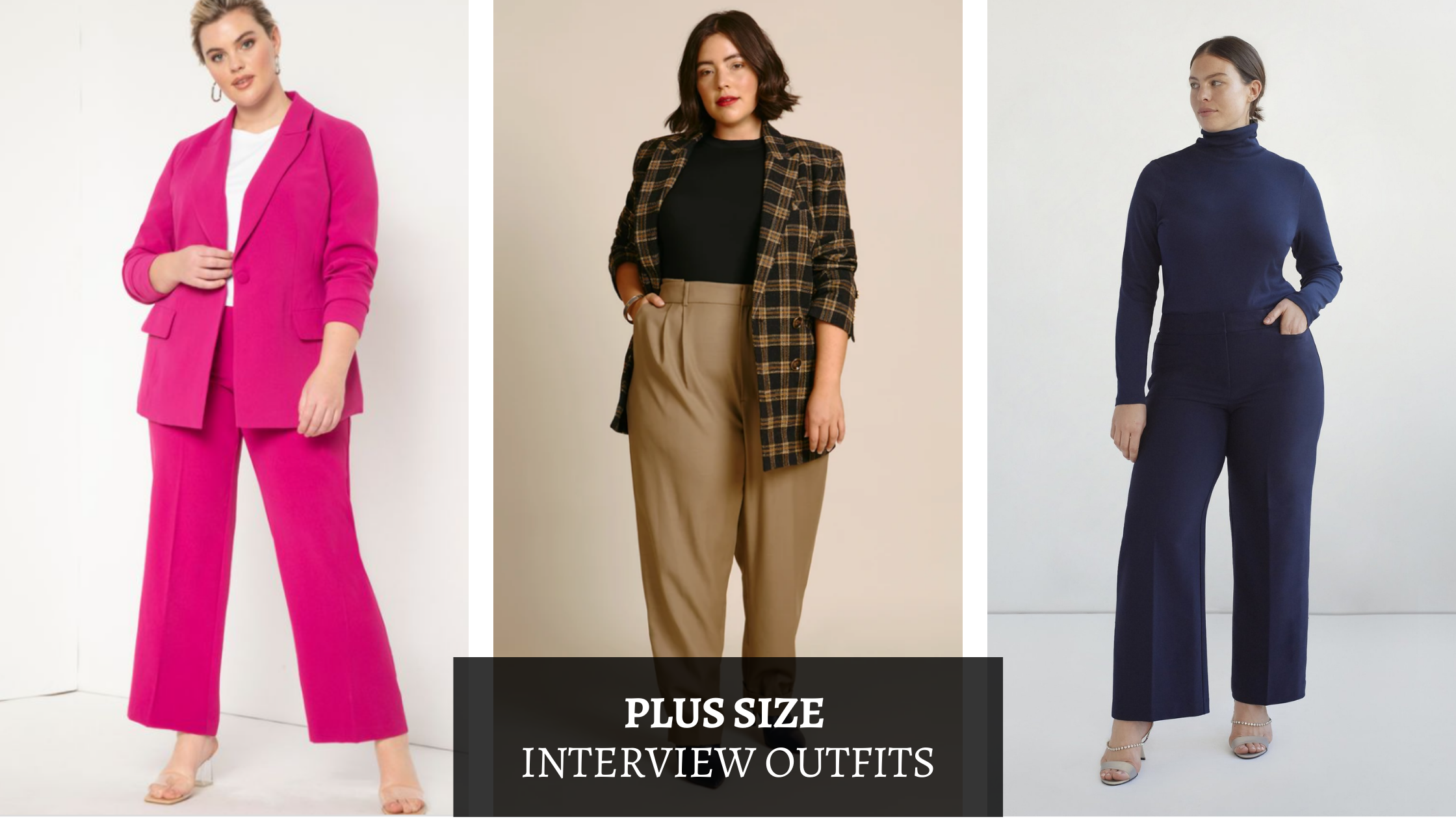
After three years of covering interview dressing for plus-size readers - and a separate decade in editorial rooms watching how candidates get read in the hallway before they open their mouths - the question I get most is not “what should I wear” but “what should I wear for this specific format.” A Zoom first-round and a four-hour onsite panel are not the same outfit problem. Neither is the lunch interview, the second-round team meeting, or the final-round conversation with a CEO who has already decided you can do the job and is checking whether you read as someone they want at the table. Industry helps, but format dictates fabric, fit, and which pieces actually do the work.
This breakdown moves through seven interview formats you will plausibly encounter between now and end of year. Each section names an anchor outfit, the specific pieces by retailer and price tier, and the styling note that separates a candidate who dressed for the format from one who dressed for “an interview, generally.” Prices are mid-2026 retail.
What to consider before the format conversation
Three variables sit above format and shape every outfit decision after them. The first is the visible self-presentation of the people already in the role. Pull the company’s LinkedIn, find three current employees at your target level, and look at the team page or any public talk footage. A team that shows up in soft knits and clean denim wants a different read than a team in structured suiting. Match the room, then add one degree of polish above it.
The second is duration. A 30-minute Zoom needs to nail the camera frame from sternum up. A six-hour onsite panel needs to hold shape through three conference rooms, a building tour, and a coffee that gets spilled by hour four. Silk crepe and structured ponte both photograph well, but only one survives a full day in a fluorescent-lit room without bagging at the seat.
The third is the camera test. Most plus-size interview dressing fails the camera test, not the in-person one. A pattern that reads subtle in the mirror photographs as visual noise under flat office light. A pastel that looks soft in daylight goes washed-out under fluorescents. Jewel tones and saturated darks photograph cleanly across lighting conditions. Photograph the outfit under your home overhead light before you wear it anywhere that matters.
1. Phone screen - the comfort outfit that primes your voice
Phone screens are the only interview format where what you wear does not directly affect the outcome. What it does affect is your posture, your breath, and the tone of voice that comes out of you. I have done phone screens in pajamas and they were worse interviews than the ones I did in tailored separates I did not need to wear. Get dressed for the call. Not formal, but deliberately.
The anchor outfit: a fitted ponte knit top and a wide-leg trouser in a fabric with structure. The Universal Standard fitted ponte crewneck in black, around $98, paired with the Eloquii High-Rise Wide-Leg Trouser in charcoal, around $129, sized through 28. Sit at a desk, feet on the floor, both hands free for notes. The ponte does not constrict the diaphragm the way a stiff button-down does, which is the actual reason phone-screen outfits matter for plus-size candidates with full busts. Constriction at the rib cage shortens your breath, which compresses your speaking range. Wear something that lets you breathe deep enough to sound calm.
2. Zoom or video first round - the sternum-up outfit
The video interview is the format where plus-size candidates are most often misadvised. The standard advice is “dress as you would in person from the waist up,” which ignores the camera framing entirely. The camera sees from mid-chest to the top of your head. Everything from the bust up needs to photograph cleanly under whatever room light you have, and nothing below the rib cage matters except your posture.
The anchor piece: the Universal Standard silk-blend blouse in sapphire or emerald, around $148, sized 00-40. A saturated jewel tone in a fabric with subtle sheen photographs as polished without picking up patterns or shadows that flatten under webcam compression. Pair with a fine gold chain that sits at the collarbone and small gold studs. Skip statement earrings on Zoom - they pull focus from your face. For the bottom half, wear whatever you can sit comfortably in for 45 minutes. Nobody is going to see it, but a too-tight waistband will make you shift, and the camera reads shifting as nervous.
3. In-office single first round - the polished one-piece
The 45-minute in-office first round is the most-common interview format in 2026, and it rewards the one-piece outfit decision. A dress carries the look on its own, removes the question of whether your separates read as cohesive, and lets you focus on the conversation instead of adjusting a tucked shell every time you sit down. For plus-size bodies, the right fabric is the entire game - a ponte knit or a structured crepe will sit cleanly through a 45-minute conversation, while a thin jersey will start to ride and bag almost immediately.
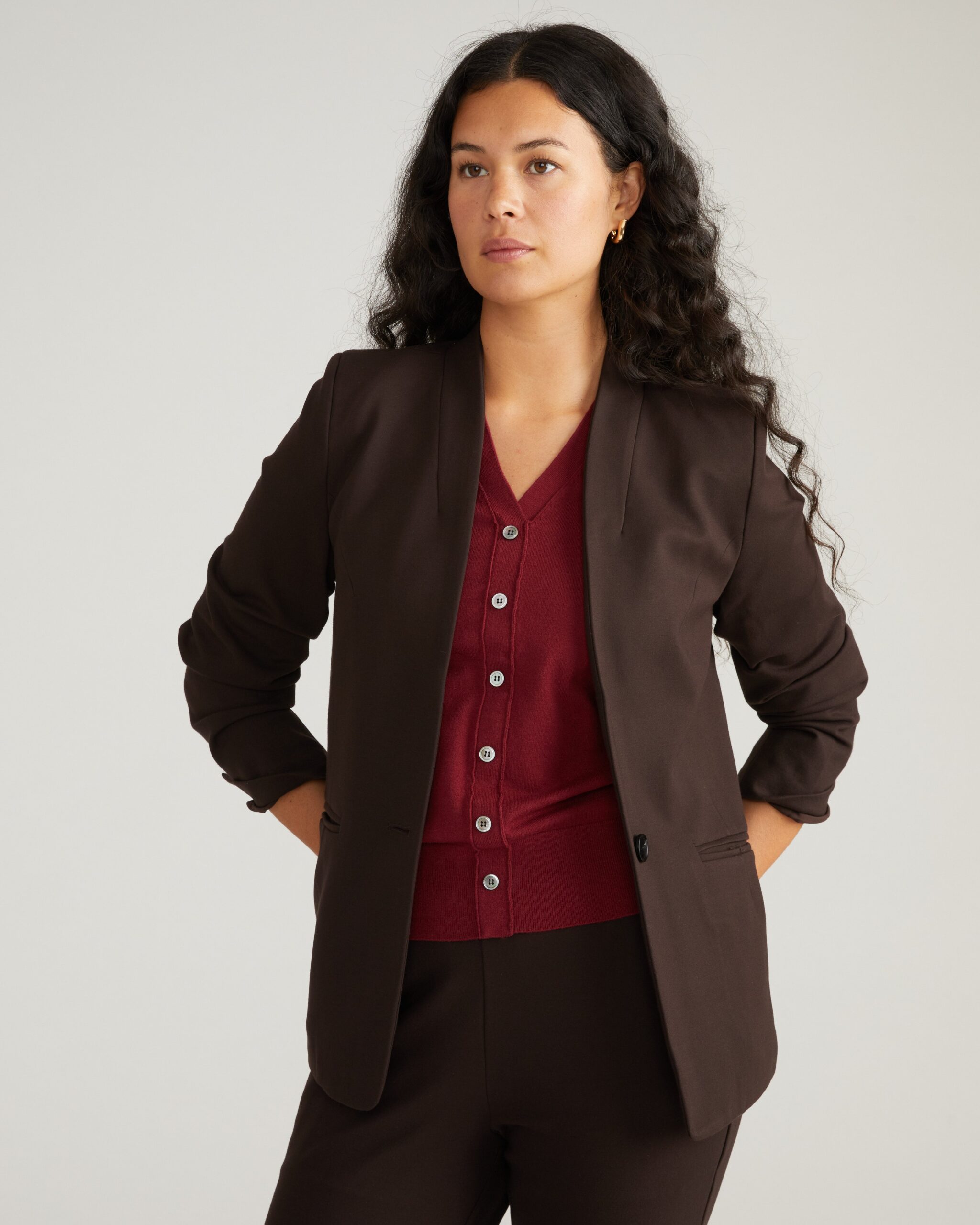
The anchor piece: the Eloquii Ponte Knit Sheath Dress in burgundy or deep teal, around $109, sized through 28. The ponte fabric has a memory that holds shape across sitting, standing, and the building walk to the conference room. Layer with an unstructured blazer in cream or camel if the season calls for it. Pair with a closed-toe block-heel pump from Naturalizer in wide width , around $110, and a structured shoulder tote in black or cognac leather. The dress does the heavy lifting; the accessories stay quiet.
4. Full panel day - the all-day endurance outfit
The four-to-six hour onsite panel is the format where most interview outfits fail. The fabric does not hold, the shoes start to ache by the second conference room, the layers that looked sharp in the morning go limp by lunch. The panel outfit is an engineering problem first and a styling problem second. Choose pieces that perform across temperature swings, three different rooms, the building tour, and the inevitable spilled water.
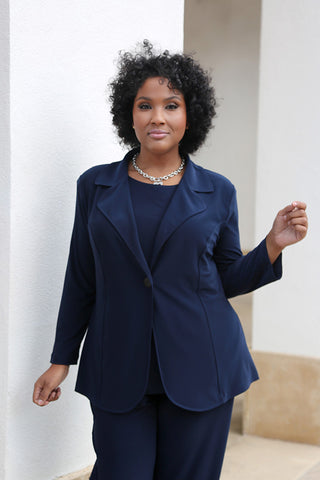
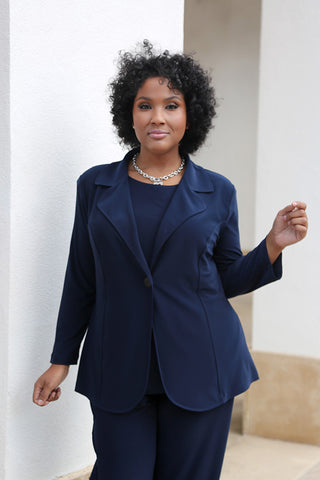
The anchor pieces: the Universal Standard Stephanie Blazer in navy, around $180, paired with a matching wide-leg trouser around $128, both sized through 40. The shoulder construction sits cleanly without padding bulk, and the ponte-adjacent fabric handles a full day without going wrinkled at the elbow. Shell underneath: a fitted silk-blend in cream or pale blue, no pattern. Shoes: a low block-heel from Cole Haan in wide width , around $150, broken in over at least four short wears before the panel. Bag: a structured leather tote large enough for a laptop, water, a backup pair of tights, and a snack you will absolutely need by hour three. The whole look is built for stamina.
5. Lunch interview - the dress that handles a fork
The lunch interview is the most-underrated trap in the format menu. You are eating in front of strangers who are evaluating you, often at a restaurant they chose specifically because the dining room is loud and you will need to lean in to be heard. The outfit needs to read polished, survive a soup spoon, and let you reach across a table without your blouse pulling at the bust. The wrong fabric here is any silk shell with a delicate hem and any white or cream piece anywhere within reach of marinara.
The anchor piece: a knit twinset, which is the most-undervalued plus-size workwear piece of the last five years. The Universal Standard merino shell and cardigan set in oxblood or charcoal, around $200 for the pair, sized 00-40. The fine-gauge merino reads polished, sits cleanly across the bust without gaping, and forgives small spills in a way silk does not. Pair with a wide-leg trouser in dark wash from Eloquii in black , around $129. Shoes: closed-toe loafers from Cole Haan in wide width , around $160. Avoid open-toe styles at lunch - they read too casual against the formality of the meal itself.
6. Second-round team meeting - the considered separates
By the second round you have been told you can do the job and are being evaluated for fit with the team. The outfit should read as one degree more personal than your first-round outfit - still polished, but with a piece that suggests you have taste outside of the interview-uniform conversation. The room will often be more casual than the first round, especially if the team meeting is in their normal working space rather than a conference room. The move is tailored separates with one piece that does the personality work.
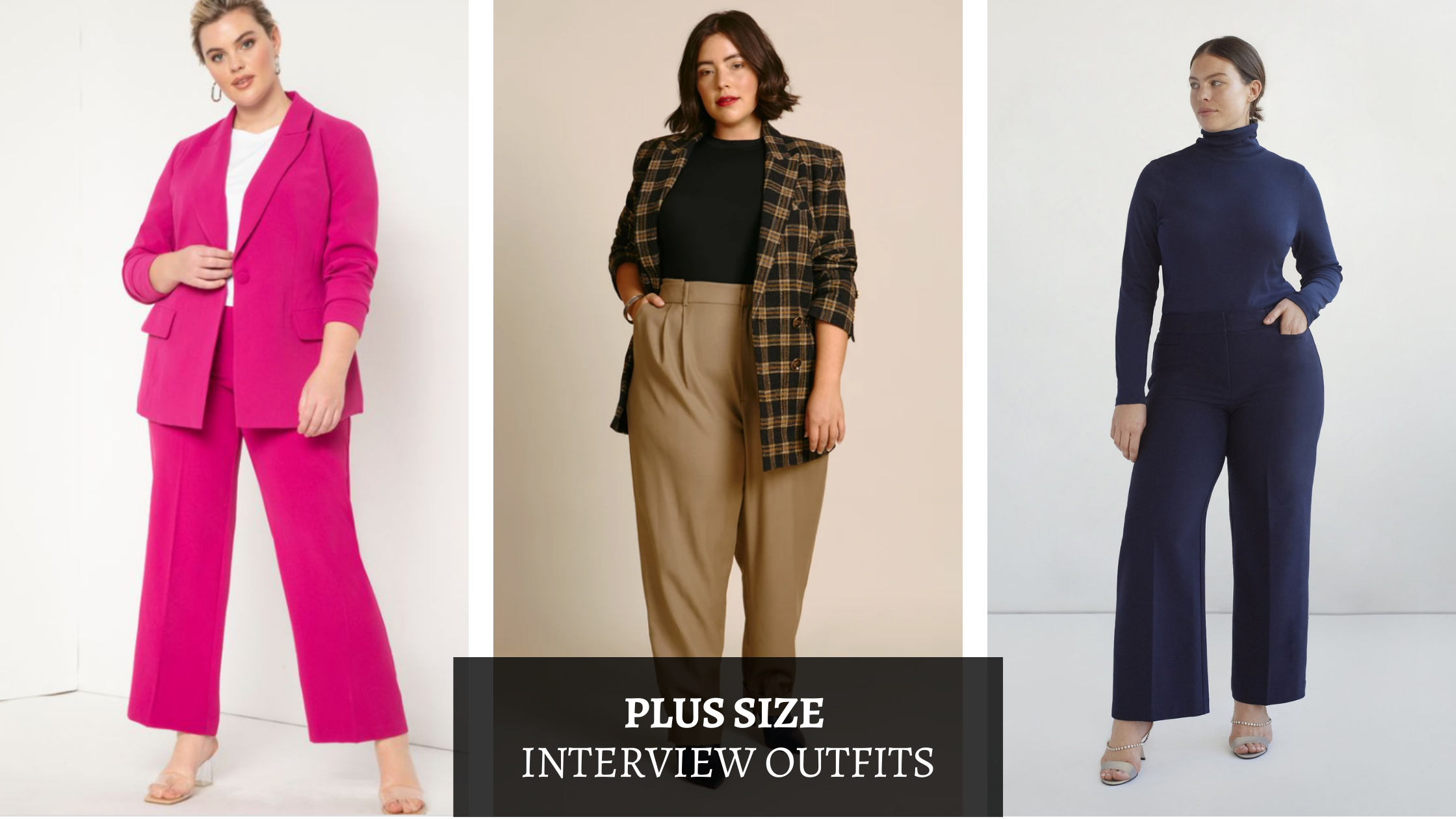
The anchor pieces: the Eloquii High-Rise Wide-Leg Trouser in cream or oxblood , around $129, paired with a fine-gauge merino crewneck from Universal Standard in black , around $98. Add one considered outerwear piece - an unstructured trench in olive or camel for a daylight meeting, or a tailored ponte blazer for an indoor afternoon session. Shoes: a leather loafer or a low block-heel mule. Jewelry: one chunky gold ring, gold hoops no larger than a quarter, nothing on the neck. This is the outfit where you can wear something that signals you read fashion editorial, the way Karla Welch or Law Roach style their clients - not as costume, just as evidence that you have a point of view.
7. Final-round executive interview - the quiet statement
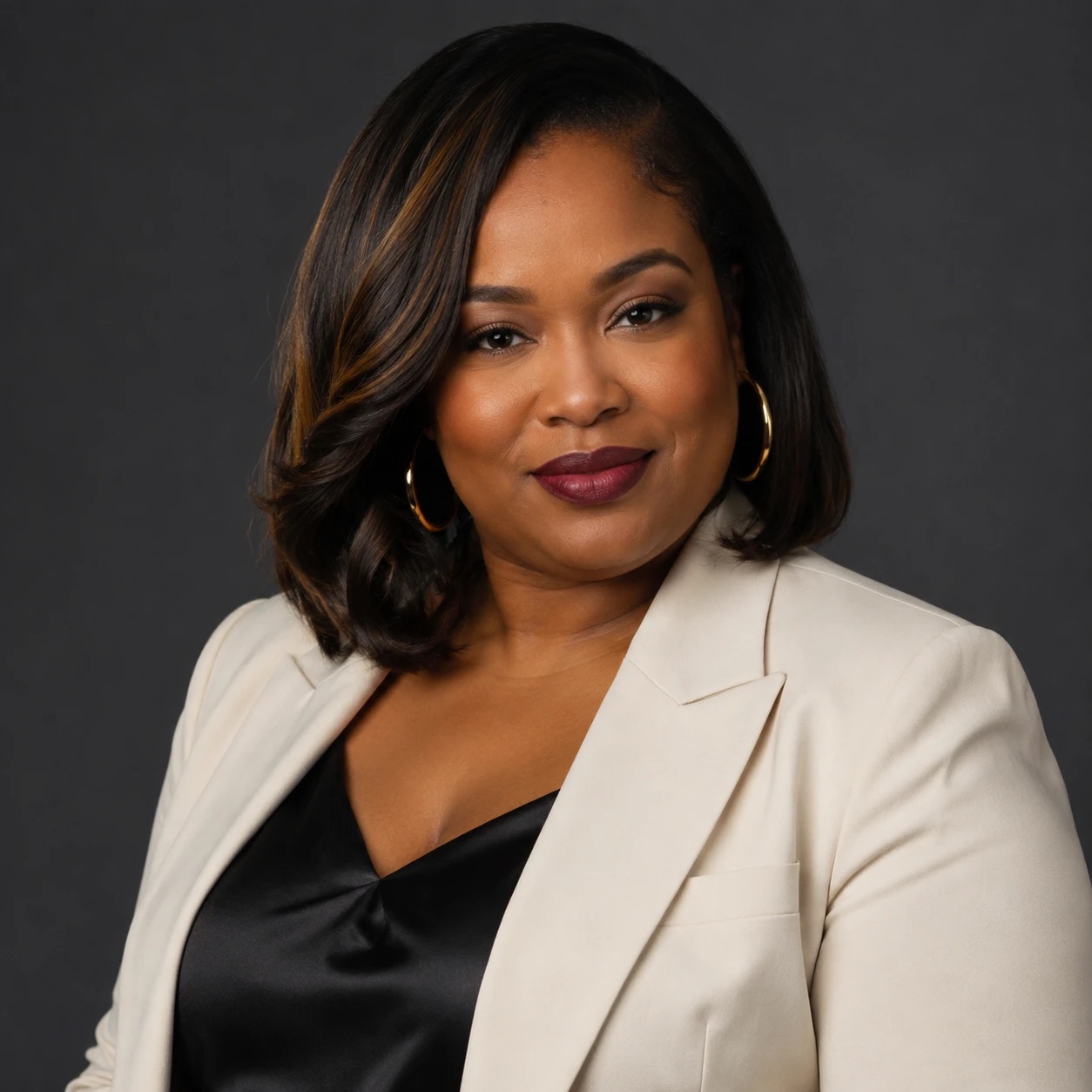
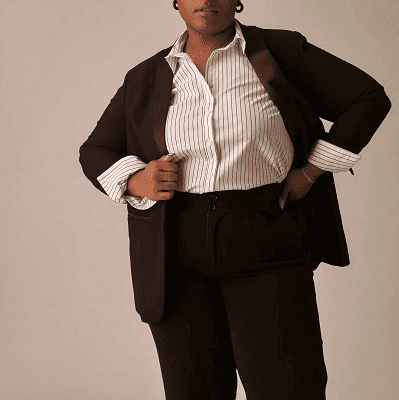
The final round with an executive is the only interview format where the outfit should explicitly announce that you understand the level of the conversation. The CEO or SVP across the table is meeting candidates who have already cleared the bar; the meeting is about whether they see you at their table. The dress code is one notch above the rest of the company’s daily uniform, and the silhouette should read as someone comfortable in their authority rather than reaching for it. For a plus-size body, the answer is a column-shaped dress or a tailored sheath in a saturated dark, with deliberate jewelry and the shoes you wear when you know you will be photographed.
The anchor piece: a column sheath in a deep saturated tone - oxblood, sapphire, or charcoal. The Adrianna Papell tailored sheath in deep navy or oxblood, around $189, sized through 24W. Layer with a structured single-breasted blazer in the same color family or a contrasting cream. Shoes: a closed-toe pointed pump from Naturalizer in wide width , around $110. Jewelry: a single statement earring or one substantial cocktail ring, never both. Bag: a small structured top-handle in black or burgundy leather, no laptop tote at this stage. The look reads as decided.
Styling moves that apply across every format
Three rules hold regardless of the format you are dressing for. First, wear actual shapewear under any unlined dress or close-cut trouser. The Honeylove SuperPower Bodysuit at $98 or the Spanx Suit Yourself at $88 will both change how a sheath or a knit dress hangs across the torso. The investment is one piece that improves every interview outfit you own.
Second, take the time to tailor at least the hem and the bust on any dress or jacket that will see more than one wear. A $25 to $40 alteration on a $129 trouser separates a look that reads like ready-to-wear from one that reads like off-the-rack. Find an alterations specialist who has worked with plus-size garments - the difference in how they handle a bust dart versus a generalist tailor is real.
Third, break in any new shoe for at least four short wears before an interview day. The fastest way to undo a carefully built outfit is shoe pain in hour two that has you shifting your weight in every chair you sit in. Wear the shoes around your apartment, around the block, to a coffee shop. Save the interview for the fifth wear minimum.
What to avoid in any interview format
Anything brand-new at the bust. A fitted top you have never worn will pull, gape, or shift in ways you will not anticipate, and you will spend the interview adjusting instead of answering. Wear the top once before the day.
Fragrance strong enough to register at three feet. Office interviews increasingly happen in small rooms with poor ventilation, and a fragrance the interviewer notices is a fragrance they will associate with you. Skip it or use a fraction of what you normally wear.
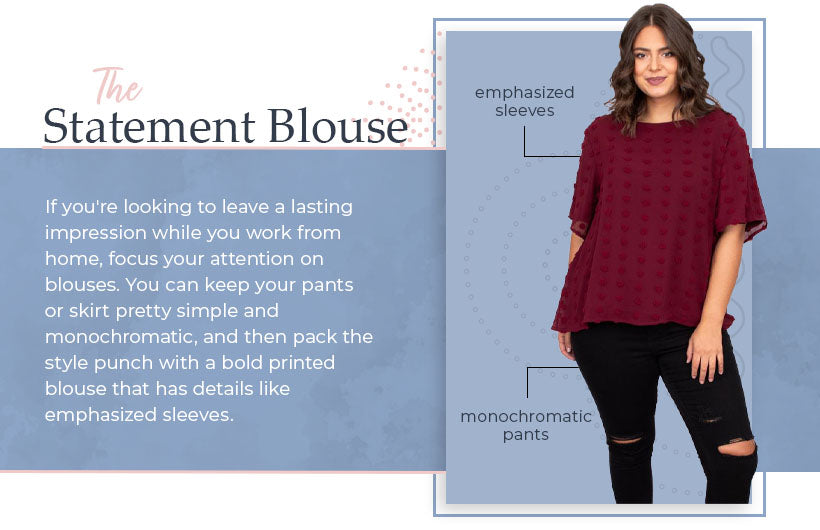
Patterns that read as visual noise on camera. Small repeating geometric prints, busy florals, and any fine pinstripe go to moire under flat office light or webcam compression. Solid jewel tones and saturated darks photograph more cleanly across every interview setting.
Shoes you are still breaking in. Any shoe with hot spots on day one will have you sitting wrong by the third room of a panel day. Break it in or wear something else.
Shop the looks
The pieces in this guide cluster around three retailers - Universal Standard, Eloquii, and Nordstrom - because those are the brands carrying the strongest plus-size workwear runs in 2026. Universal Standard sizes 00 to 40 and runs the cleanest tailored separates; Eloquii sizes through 28 and runs the strongest dress and trouser construction; Nordstrom carries the third-party pieces (Naturalizer, Cole Haan, Adrianna Papell) that round out the shoe and dress assortment. If you are building an interview rotation, start with a navy blazer and trouser from Universal Standard, a burgundy ponte sheath from Eloquii, and a pointed pump from Naturalizer in wide width. Three pieces handle five of the seven formats above.
Frequently asked questions
Can I wear the same outfit to first and second round at the same company?
Better not. The team often compares notes between rounds and the outfit gets remembered. Switch at least the shell, the jewelry, and the shoes between rounds. A burgundy sheath at first round becomes a cream wide-leg trouser plus knit shell for the second-round team meeting, and the look will read as a different point of view without requiring a second full outfit.
What if my interview spans two days - panel day one, executive day two?
Wear the navy suiting on panel day and the column sheath on executive day. The two looks read as a deliberate range without overlapping. If you can only bring one outfit, default to the navy blazer and trouser - it scales up with a sharper shell and pump for the executive meeting, down with a knit crewneck for the panel.
Are tights mandatory in 2026?
No, but they read more polished than bare legs in any in-office interview between October and April. Choose a sheer black or nude tight that matches your skin tone, not a heavy opaque, and bring a backup pair. A run in the first room with no replacement is the fastest interview-day disaster.