I bought my first real interview blazer in 2014 for an editorial assistant role I did not get, and it cost $312 at a sample sale that started at 7am on a Saturday in a SoHo loft with no air conditioning. The blazer was a size 18 navy single-breasted from a designer I will not name because the brand has since changed its sizing in ways that make it irrelevant. I wore it to six interviews over two years before I figured out something obvious - the blazer was doing about 30% of the work I thought it was doing, and the trouser, the shoes, the bag, and the choice not to wear a statement necklace were doing the other 70%. I have since interviewed for editor roles at five publications, sat on the hiring side for two of them, and helped enough friends piece together first-round outfits that I have a clear sense of what reads as “ready” in 2026 versus what reads as “tried.”
This is the breakdown by industry, because the corporate-finance interview outfit that gets you taken seriously at a midtown bank is the same outfit that gets you read as overdressed at a creative agency in Brooklyn. Six industries, one anchor outfit each, with the pieces that actually do the work.
What to consider before you pick the outfit
Three things matter before fit, fabric, or color. The first is the company’s visible dress code. Pull up the company’s LinkedIn, find three employees at your level, and look at how they show up in their profile photos and in any team photos on the company site. If the head of marketing is in a soft cardigan and the engineering lead is in a hoodie, a wool suit will read as misread-the-room. If the people in the team photo are in tailored separates with structured shoulders, your knit dress will read as underdressed.
The second is the format. A four-hour panel with five interviewers in conference rooms is a different physical experience than a 45-minute first-round in a single office. The panel outfit needs to handle sitting in three rooms, walking between them, and getting water spilled by hour three. The first-round outfit can prioritize one-impression polish over endurance.
The third is the photograph. Most companies will photograph you at offer-day onboarding in whatever you wore to the final round, and many will put a candidate photo into a Slack channel before final-round decisions. The outfit you wear should photograph as cleanly in a fluorescent-lit conference room as it does in the mirror at home. Solid jewel tones, structured shoulders, and saturated darks photograph better than fussy patterns or pastels in flat office lighting.
1. Corporate finance, law, or consulting - the tailored suit alternative
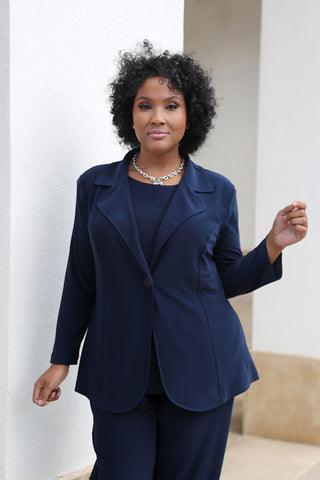
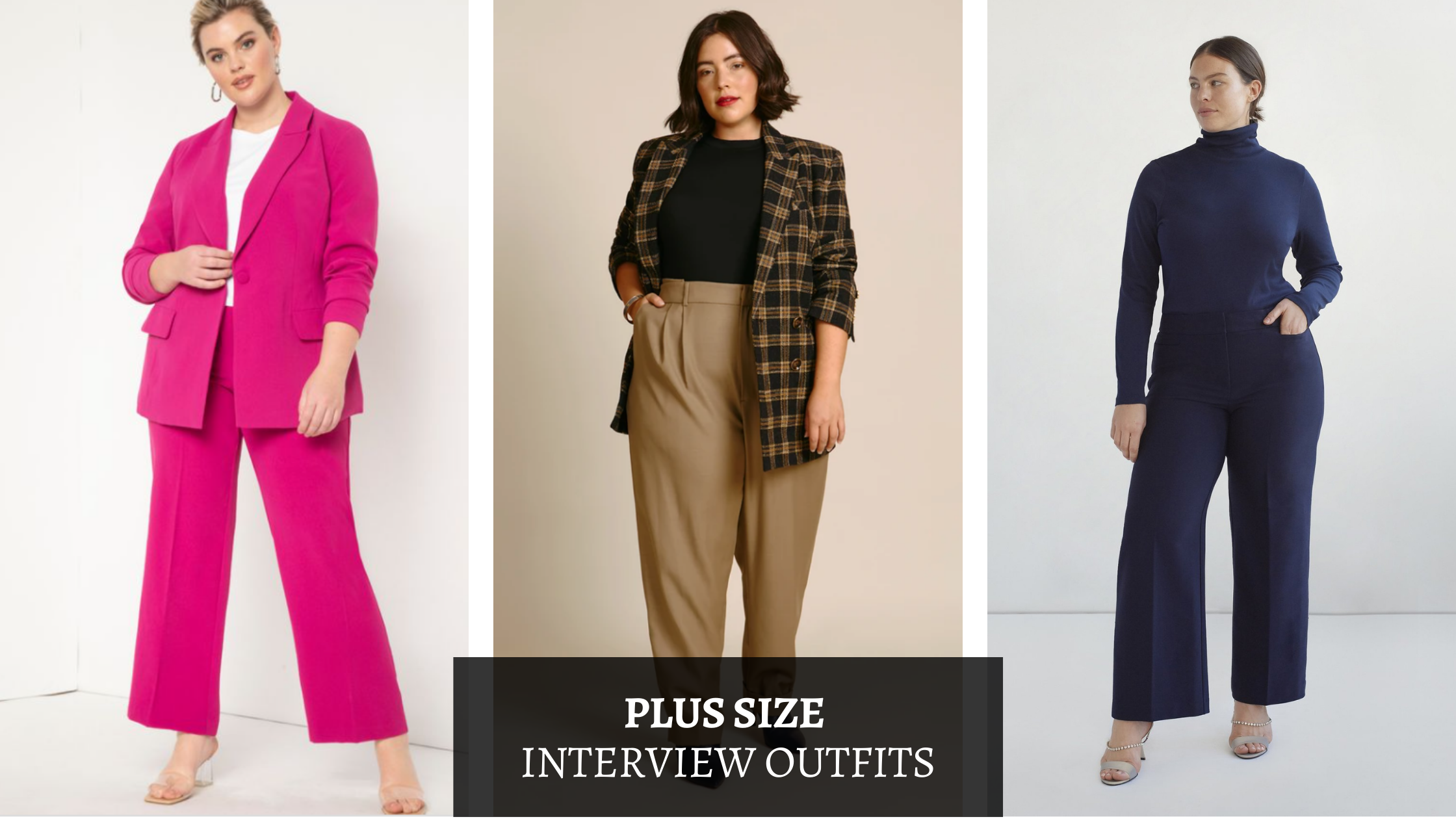
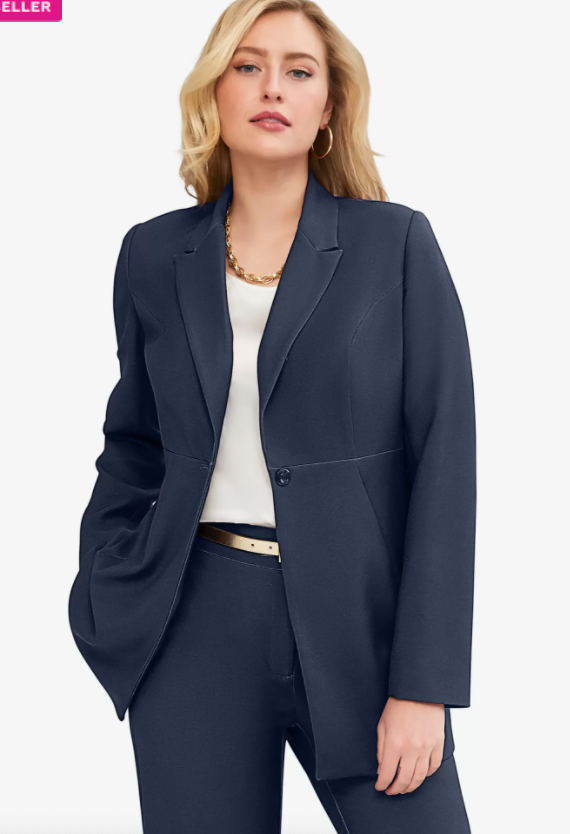
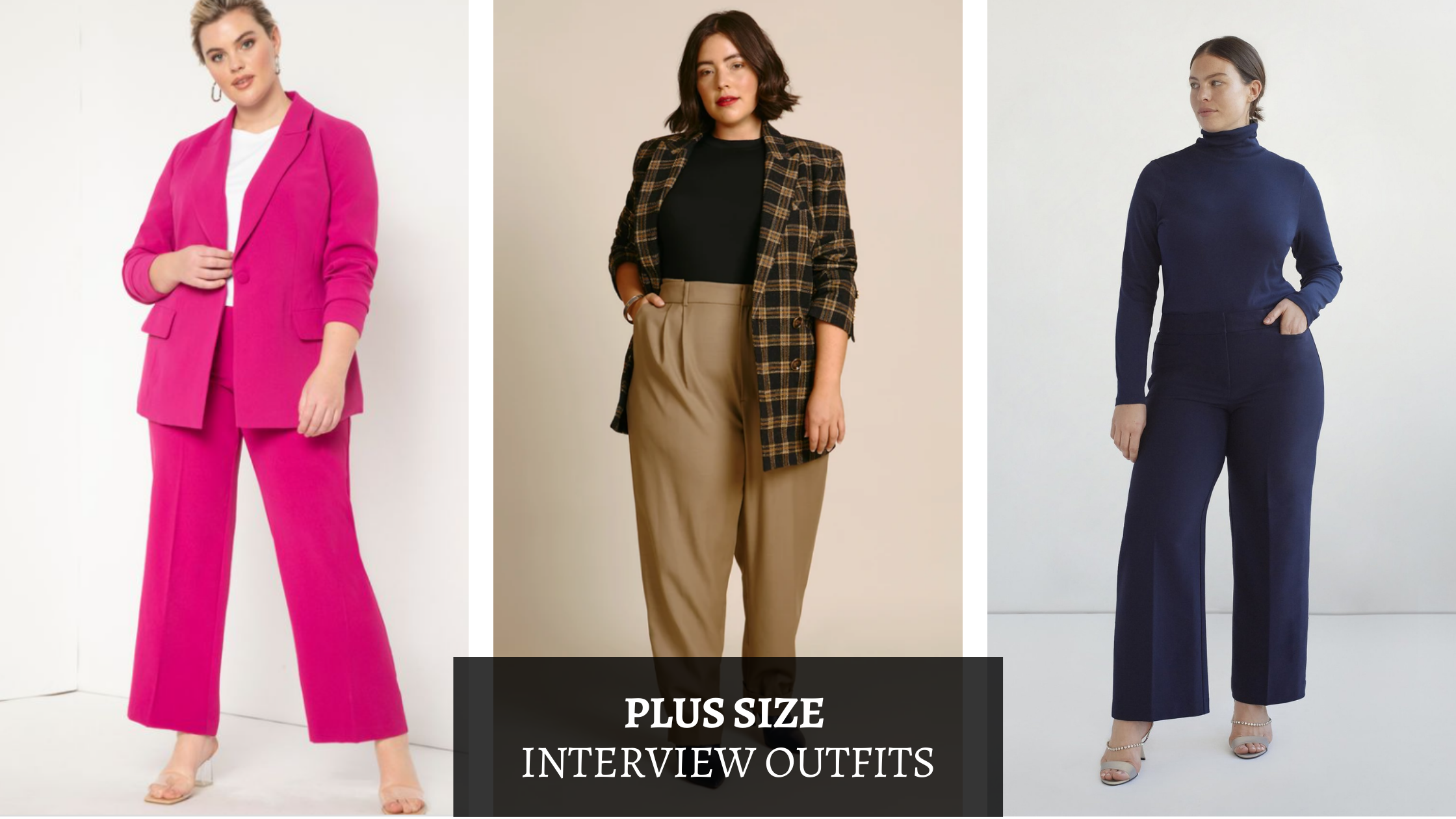
Big-firm finance, law, and consulting still default to a matched suit in navy or charcoal for in-office interviews above analyst level. The plus-size version of this dress code is hardest to source because matched suiting in extended sizes is still thin on the ground in 2026, and the most-flattering version is almost never a literal matched two-piece. The move is a structured single-breasted blazer with a tailored wide-leg trouser in the same neutral but not necessarily the same exact fabric weight.
The anchor piece: the Universal Standard Stephanie Blazer in navy , around $180, sized 00-40. The shoulder construction sits cleanly without padding bulk, and the single-button closure reads more updated than a two-button. Pair with the Universal Standard wide-leg trouser in matching navy , around $128, and a closed-toe pointed pump from Naturalizer in wide width , around $110. Shell underneath: a fitted silk or silk-blend in cream or pale blue, no pattern. Bag: a structured shoulder tote in black leather, large enough for a laptop.
2. Creative agency, editorial, or fashion - the considered separates
Creative-industry interviews want to see taste, not compliance. Showing up in a matched corporate suit at a creative agency reads as not understanding the room. The move is tailored separates that read as considered without reading as costume - a structured trouser in an unexpected color or fabric, a silk shell or fine-knit top, a sculptural shoe, and one piece of jewelry that suggests you have personal style without competing with your face for the interviewer’s attention.
The anchor piece: the Eloquii High-Rise Wide-Leg Trouser in cream or oxblood , around $129, sized through 28. Paired with a fine-gauge merino crewneck from Universal Standard in black , around $98. Shoes: a low block-heel mule or a leather loafer rather than a pump. Bag: a soft-structure shoulder bag, ideally in cognac or a deep oxblood. Jewelry: one chunky gold ring, gold hoops no larger than a quarter, nothing on the neck. The whole look reads as someone who knows what Karla Welch puts on her clients without trying to dress like a Karla Welch client.
3. Tech / product / engineering - the structured-casual outfit
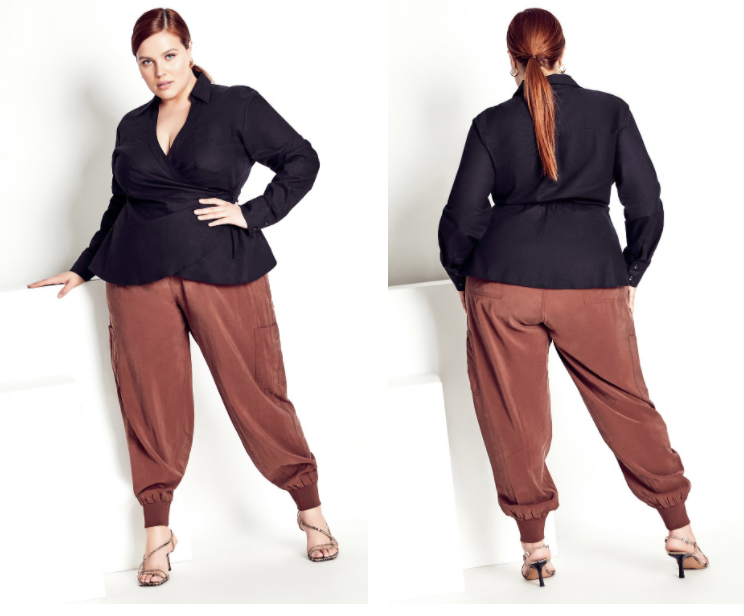
Tech interviews have one of the most-misread dress codes in 2026. The default at most major tech companies remains business casual, but the spread between Google headquarters and a Series B startup is wide, and the wrong read in either direction reads as not knowing the industry. The safe baseline is what I call structured-casual - a tailored piece on top, a relaxed piece on bottom, or vice versa, with one clearly considered element that signals intentionality.
The anchor piece: a fitted ponte knit blazer in black or navy from Universal Standard , around $148, paired with a dark-wash straight-leg jean in a clean rinse from Universal Standard’s Seine line , around $98, sized through 40. Underneath: a fitted cotton tee in white or cream, no graphic. Shoes: white leather sneakers in good condition (not running shoes) or a low ankle boot. Bag: a soft leather backpack or a structured tote. The blazer plus dark denim is the formula that reads “I take this seriously” without reading “I do not understand that you wear hoodies here.”
4. Healthcare administration, education, or nonprofit - the knit dress
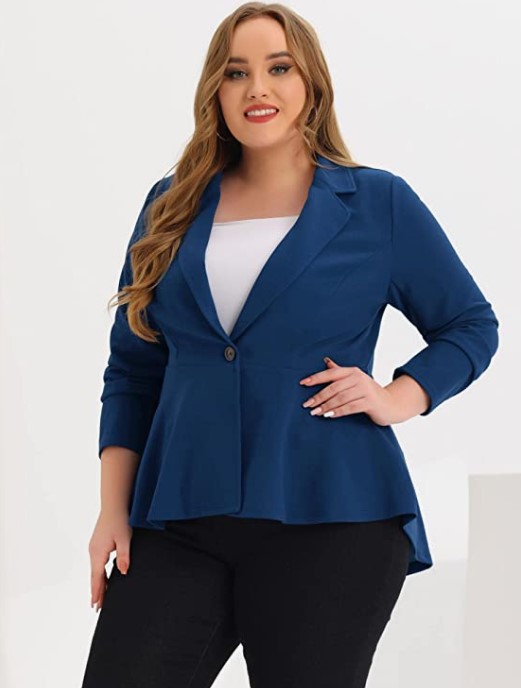
Healthcare administration, school district leadership, and large nonprofit interviews share a dress-code lane that is more formal than tech but less corporate than finance. The anchor outfit is a knit sheath or fit-and-flare dress in a solid color, layered with a cardigan or unstructured blazer, with closed-toe heels and minimal jewelry. The format is forgiving across a long day of panels and reads as professional without reading as Wall Street.
The anchor piece: the Eloquii Ponte Knit Sheath Dress in burgundy or deep teal , around $109, sized through 28. The ponte fabric holds shape through a full interview day without bagging at the seat after hour three. Layer with an unstructured cardigan in cream or camel from Universal Standard , around $128. Shoes: a closed-toe block-heel pump in nude or black, not pointed-toe, not stiletto. Jewelry: small pearl or gold studs, a thin chain, no statement pieces. Bag: a structured leather tote in black or cognac.
5. Series A or seed-stage startup - the polished founder-coded look
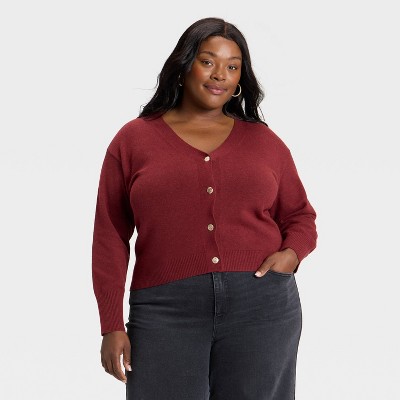
Early-stage startup interviews sit in their own category. The hiring team has probably worked together in a kitchen for the last eight months and the office is somebody’s apartment in Williamsburg. Showing up in a suit reads as misunderstanding the stage of the company. Showing up in athleisure reads as not respecting the interview. The move is the founder-coded look - clean basics, one investment piece, immaculate grooming, nothing precious.
The anchor piece: a high-rise straight-leg trouser in a soft fabric like crepe or wool-blend twill from Eloquii in black , around $109, paired with a fitted ribbed mock-neck in cream or rust from Abercrombie’s Curve Love line , around $50. Shoes: a clean low ankle boot or a leather loafer. Layer: a tailored wool coat or a long cardigan, depending on the season. Bag: a soft leather shoulder bag, not a backpack and not a tote. One leather watch, no other jewelry. The look reads as a person who would be comfortable in a pitch meeting with a partner at Sequoia or in a kitchen interview with the founder’s dog underfoot.
6. Remote / virtual first round - the on-camera outfit
Virtual interviews changed the dressing math because the camera only sees from the chest up, but the rest of you matters for how you sit, how you move, and how you feel for the 45 minutes you are on Zoom. The mistake is dressing only the top half and showing up in pajama bottoms - it changes your posture, your energy, and your read on the camera in ways that are visible to a trained interviewer.
The anchor piece on camera: a fitted silk or silk-blend blouse in a saturated solid color from Universal Standard in emerald or oxblood , around $98. Saturated jewel tones photograph better than pastels on most webcams and read as more confident in low-quality video compression. Underneath the desk: a pull-on ponte pant in the same color family, around $98, or a wide-leg trouser if you have one. Earrings: small gold or pearl studs that catch light without being noisy on a 720p webcam. Hair: pulled back if your hair has more visual texture than your face, down and styled if it does not. Background: solid wall behind you, no kitchen, no bedroom.
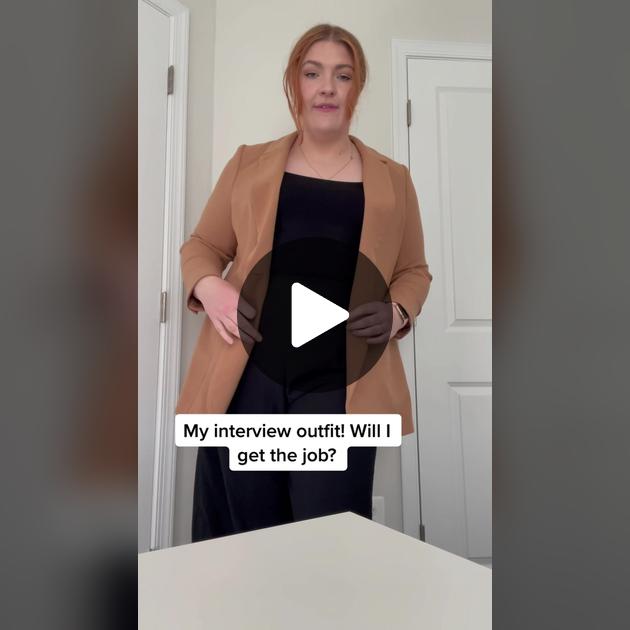
Styling tips that apply across every interview type
Three rules hold regardless of industry. The first: tailor everything. A $30 alteration on the blazer sleeves, the trouser hem, or the dress bodice will separate a $150 outfit from one that reads as $400. Find an alterations specialist with plus-size experience before you have an interview scheduled, not after. The good ones get busy and a same-week appointment is hard.
The second: wear actual shapewear under any unlined piece. The Spanx Suit Yourself bodysuit at around $88 or the Honeylove SuperPower at around $98 will transform how a knit dress or a fitted shell hangs across a four-hour panel. Skip the cheap drugstore versions - they roll, bind, and read through the fabric in ways that distract more than they help. This is a one-time investment that improves every interview outfit you own.
The third: break in the shoes. Do not wear new pumps to an interview. Even the Naturalizer wide-width pumps, which run kinder than most, need four to six short wears before they handle a full day. I learned this at an interview at a magazine I will not name when I limped into the fifth-floor walkup in shoes I had bought the day before. I did not get that job, and the shoes were part of the reason.
What to avoid regardless of industry
Anything labeled bodycon, anything in a fabric that wrinkles on contact (linen, low-grade silk, unstructured rayon), and any color that photographs as white in fluorescent office light - which includes pale blush, oyster, ivory, and cream-adjacent yellows. Test by photographing the outfit under your phone’s flash in a windowless bathroom.
Statement jewelry that competes with your face. One pair of small studs, one ring, one watch. That is the upper limit. The interviewer needs to focus on your eyes, your mouth, and your hands. Anything else in their field of vision is friction.
Perfume that announces you before you walk in. Skip it. The interviewer two doors down has migraine triggers and the HR coordinator who walks you out has allergies. Deodorant and clean hair are the right baseline. Save the perfume for the second-round dinner if there is one.
Shop the looks
The pieces in this guide cluster around three retailers - Universal Standard, Eloquii, and Nordstrom - because those carry the strongest size runs and the most reliable fit for plus-size professional wear in 2026. If you are building an interview rotation rather than dressing for a single role, start with one structured blazer and one pair of tailored trousers in a neutral, then build outward with knit dresses, shells, and shoes that work across multiple outfit combinations. The blazer is the highest-leverage purchase in the closet and the one most worth tailoring properly.
Frequently asked questions
What is the safest single outfit if I do not know the industry?
A navy or charcoal single-breasted blazer over a fitted shell in cream or pale blue, paired with a matching or near-matching tailored trouser, a closed-toe pump in black or nude, and minimal jewelry. This reads as competent in finance, professional in healthcare, and acceptable in tech. It will read as slightly overdressed at a creative agency, but slightly overdressed is a safer error than slightly underdressed in any interview context.
Can I wear pants instead of a dress to a corporate interview?
Yes, and a tailored wide-leg or straight-leg trouser in a solid neutral often photographs better than a dress for plus-size bodies in conference-room lighting. The pant suit lost its “men’s clothing” connotation about fifteen years ago and currently reads as more updated than a sheath dress in most corporate environments. The exception is healthcare administration, where knit dresses still slightly dominate the dress code.
How do I dress for a four-hour panel without looking wilted by hour three?
Fabric choice does most of the work. A ponte knit, a wool-blend crepe, or a heavier silk-blend will hold shape through a full day. Avoid pure linen, low-grade rayon, and unlined cotton. Wear shapewear under unlined pieces. Bring a small spare item in your bag - a fresh pair of sheer hosiery, a roll-on antiperspirant, a lipstick - and use the bathroom between rooms two and three for a 90-second reset.