
There is a particular half second that most plus size people know by heart. You walk into a restaurant, the host gestures toward a booth, and your brain does a fast, silent calculation about the gap between the table edge and the bench. Nobody else at the door notices it happening. You notice, and then you spend the first ten minutes of dinner managing a table edge pressing into your ribs instead of reading the menu. That calculation is not vanity and it is not anxiety. It is a reasonable response to furniture that was specified to a set of body measurements you were never included in. This guide is about doing that calculation ahead of time, in daylight, with real information, so that the seat stops being the thing that decides whether you enjoy your evening.
The seat is the problem, not your body
Almost every fixed seat you meet in public was sized from an old standard, then narrowed further because a venue wanted more seats in the same square footage. Booths get bolted at a fixed distance from the table. Stadium rows get compressed to sell an extra column. Theater armrests get welded in place because a fixed armrest is cheaper than a hinge. None of those decisions were made about you, and none of them are a verdict on you. Holding that clearly in your head changes how you ask for things, because a person who believes the furniture is at fault asks calmly for an alternative, while a person who believes their body is at fault apologizes and then accepts whatever they are given. The first version gets a better table.
Restaurants: the booth question and how to ask for a table
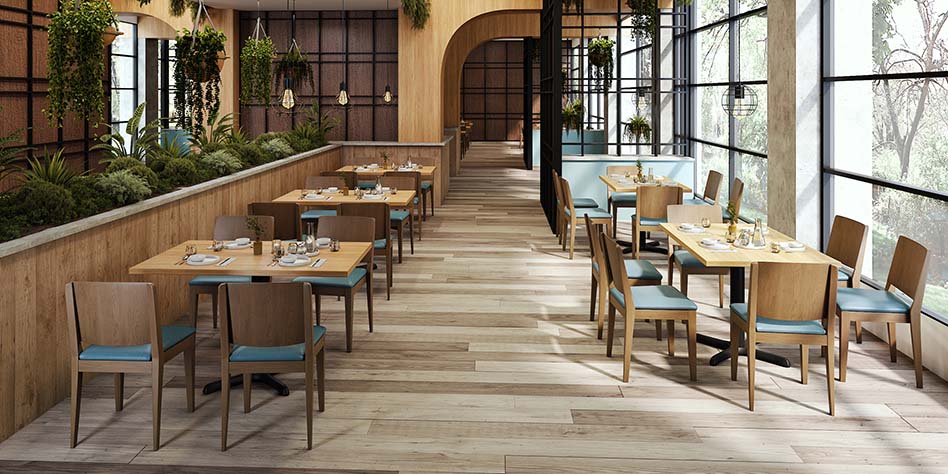
The booth is the least adjustable seat in any restaurant, because the table is anchored and the bench is anchored and neither will move for you. A table with chairs, by contrast, is entirely adjustable: you can push it away, turn a chair, or pull the chair back and sit slightly angled. So the single most useful sentence in your dining life is short and requires no explanation. “We would prefer a table rather than a booth, please.” That is a complete request. Hosts hear seating preferences all night from people with bad backs, big bags, small children, and long legs, and they do not require a reason from any of them. If the host says the booths are all that is free, ask how long the wait for a table is, then decide. You are allowed to wait.
Why the armless chair is the quiet win
Arms on a dining chair are the thing that turns a comfortable seat into a narrow one, and most restaurants own both kinds. Captain chairs with arms usually go at the head of a table, while the side chairs are frequently armless, so simply choosing the side seat solves the problem without a word to anybody. When you sit down, check what is under you as much as beside you: a chair with a wide, flat seat pan and four straight legs takes weight far more comfortably than a tapered seat perched on a narrow pedestal or a wobbly bistro frame. Outdoor patios are worth extra attention, because folding metal and thin plastic stacking chairs are the least sturdy seats most venues own and they tend to be the ones set out for overflow.
Stadiums and arenas: what seat width really means
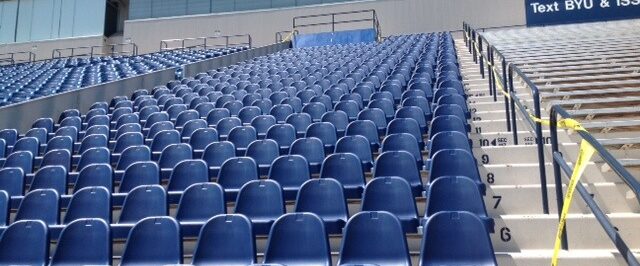
Stadium seats are sold with a listed width, and that number is measured differently from venue to venue, which is why two seats described identically can feel nothing alike. Newer builds tend to be more generous while older ballparks and legacy arenas often run notably narrower, and the fixed armrest between seats is usually what limits you rather than the seat pan itself. Two things help. First, look for seats sold as club, box, loge, or premium level, because those are frequently wider and sometimes have movable or absent armrests. Second, buying two adjacent seats is a completely legitimate solution that plenty of people quietly use, and it needs no justification at the gate. Aisle seats also give you one side with no neighbor, which is often the difference that matters most over three hours.
Accessible and companion seating, and who it is for
Accessible seating sections exist for people with a range of mobility and access needs, and many venues sell them with a companion seat alongside. These areas usually have movable chairs rather than fixed ones, wider spacing, and shorter distances to walk from the entrance, which can matter as much as the seat itself. Policies vary widely on who may book them and whether documentation is requested, so the honest answer is that you should call the venue’s accessibility line and ask directly rather than guess from a forum post. Ask what the seating actually consists of, whether chairs are fixed or loose, and whether a companion ticket is available. Plenty of venues will simply help. Some will not, and knowing which one you are dealing with before you buy is the entire point of calling.
Theaters: recliners, fixed armrests, and reading a seat map
Cinemas have quietly split into two very different experiences. Recliner houses have wide, individually mounted seats, usually with a hinged or removable armrest and a footrest, and they are far and away the more comfortable option for most bigger bodies. Traditional houses have narrow seats in a continuous row with armrests that do not move at all. The seat map on the booking site rarely tells you which you are getting, but the ticket price and the words “luxury,” “recliner,” or “premium” in the auditorium name usually do. Live theaters are a harder case, since historic buildings often have the tightest rows in town and very little that can be changed about them. For those, call the box office and ask about the widest seats in the house, which are typically at the end of a row or in a box.
Rollercoasters: restraints, test seats, and what to check first
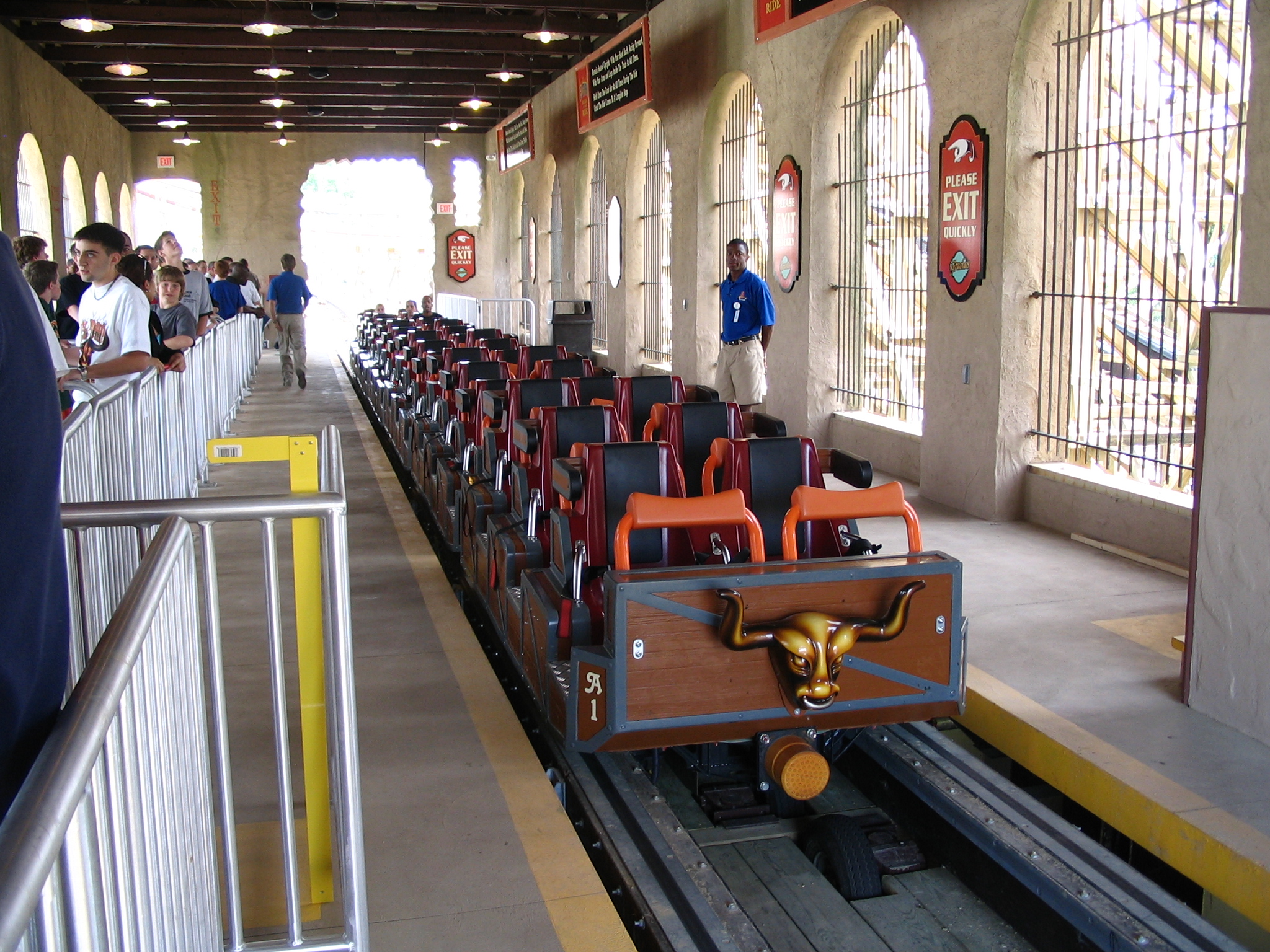
Rides are the one category where the fit question is a genuine safety mechanism rather than a comfort preference, and it is worth treating it that way. The restraint style determines nearly everything. Lap bars generally accommodate a wider range of bodies than over the shoulder harnesses, and rides with belts that must click into a fixed buckle are usually the strictest of all. Most large parks place a test seat at the entrance to each major ride precisely so you can check privately before joining a queue, and using it is completely normal. Modern coasters increasingly offer a modified seat with an extended belt, sometimes marked on the ride or on the park map. Our detailed walkthrough of ride fit at Cedar Point shows exactly how to work through a park ride by ride.
Scripts that get you a real answer
Vague questions get vague answers, and “is it plus size friendly?” is the vaguest question of all, because the person answering has no idea what you mean and will usually say yes to be kind. Ask about the furniture instead. Every question below is neutral, specific, and answerable by whoever picks up the phone, and none of them requires you to describe your body to a stranger. Phrase it as logistics, the same way somebody planning around a wheelchair, a stroller, or a large group would, because that is genuinely what it is. Email works just as well if calling feels like too much, and it has the advantage of giving you the answer in writing to show at the door.
| Venue | What to ask | What the answer tells you |
|---|---|---|
| Restaurant | Do you have tables with movable chairs, or is it all booth seating? | Whether you can adjust anything once seated |
| Restaurant | Are your dining chairs armless? | The real width of the seat |
| Arena or stadium | Do any sections have seats without fixed armrests? | Where the wider seating actually is |
| Cinema | Which auditoriums have recliner seating? | Wide seats with a movable armrest |
| Live theater | Which seats in the house are the widest, and where are the boxes? | Your best option in an old building |
| Theme park | Which rides have test seats at the entrance? | Where you can check privately |
The plan-ahead checklist
Doing this in advance takes about ten minutes and removes nearly all of the doorway math. Before you book, check the venue’s own accessibility page, because it is often more detailed than the ticket site and it frequently lists seat dimensions or seating types outright. Look at recent photos rather than the marketing gallery, since customer photos show the actual chairs. Book an aisle or end of row seat where one is available. If it is a long event, a portable cushion earns its place in a bag, and a slim wide stadium seat cushion takes the edge off a hard bench without adding width. For outdoor events where you bring your own chair, an extra wide folding chair with a high weight rating is the one purchase that reliably pays for itself.
Quick answers to the questions everyone asks
How do I ask for a table instead of a booth without explaining myself? Say it as a preference at the host stand: “We would prefer a table rather than a booth, please.” Hosts take seating preferences constantly and rarely ask why. If only booths are free, ask about the wait for a table. Choosing to wait is a normal thing that customers do.
Is it acceptable to buy two stadium seats for one person? Yes, and plenty of people do it without ever being questioned. You have paid for both seats, so the space is yours. Nobody at the gate needs an explanation. If the row is tight, an aisle pair gives you a free side as well, which usually helps more than the extra seat alone.
Can I use accessible seating as a plus size person? Policies differ by venue, so call the accessibility line and ask rather than assuming either way. Some venues welcome any patron whose access needs are met by that seating, others apply narrower criteria. Ask what the seating physically consists of too, since movable chairs matter more than the label.
Which cinema seats are best for a bigger body? Recliner auditoriums, almost always. The seats are wider, individually mounted, and the armrest usually lifts or slides away, which is the part that makes the difference. Look for the words recliner, luxury, or premium in the auditorium name when you book, since the seat map rarely says outright.
How do I know if I will fit on a rollercoaster before queueing? Use the test seat at the ride entrance, which most large parks provide for exactly this reason. Check the restraint style first, because lap bars generally suit a wider range of bodies than over the shoulder harnesses. Park apps and ride pages sometimes list modified seats with extended belts.
Walking in already knowing where you are sitting
The good version of a night out starts before you leave the house, with a two minute phone call and a booking made on purpose. You know the restaurant has tables with real chairs. You know your row has an aisle end. You know which auditorium has the recliners and which coaster has a test seat by the gate. What that planning buys you is not just comfort, it is attention: the whole evening spent on the food, the game, the film, the person across from you, rather than on a table edge in your ribs. Venues get this right slowly and unevenly, so until they do, the information is the tool. Ask the specific question, take the seat that works, and let the furniture carry the blame it has always deserved.