
Most tummy control swimsuits are sold on a promise borrowed from shapewear, which is that squeezing harder gives you a smoother stomach. In swimwear that logic mostly falls apart, and it falls apart the moment the fabric gets wet. Water changes how a suit behaves. Cheap fabric relaxes, thin linings go transparent and cling to every ripple, and a suit that looked smoothing in the changing room turns into something you are tugging at all afternoon. The suits that genuinely work do it through construction rather than compression, and once you can spot that construction, the whole category gets much easier to shop.
What follows is a plus-size-first look at what actually creates a smooth midsection in a swimsuit, then the styles worth buying depending on what you are doing in the water. None of it is about hiding, and none of it assumes you owe anyone a flatter stomach. A swimsuit exists so you can get in the water. The best tummy control suit is simply the one you stop thinking about once you are in it, which is a much more useful standard than whatever the packaging claims. Judge every suit below on that: does it let you forget about it, or does it make you manage it all day?
What creates tummy control in a swimsuit
Four things do the real work, and a suit that has three of them will beat a suit that just calls itself slimming. The first is a full front lining, ideally power mesh, running the whole torso rather than a token panel behind the belly. The second is fabric weight, because a heavier knit with a high elastane content holds its shape wet, while a thin one surrenders. The third is ruching, which sounds decorative but is structural: gathered fabric across the midsection breaks up the light and disguises contour far more effectively than flat fabric pulled tight. The fourth is seam placement, specifically princess seams or side panels that shape the suit to a curve instead of relying on stretch alone.
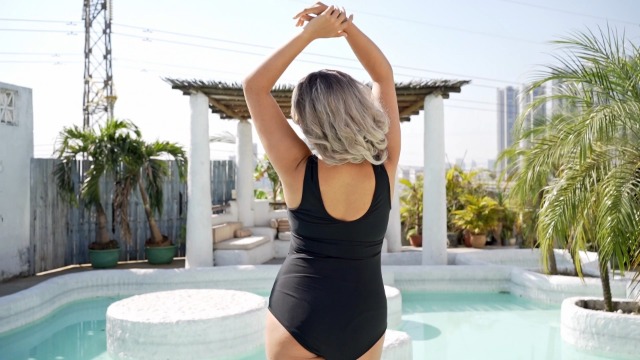
Notice what is missing from that list: aggressive compression. A swimsuit that relies on squeezing is the one that rolls at the leg opening, digs at the shoulder, and leaves you adjusting. Compression also fights you in water, where you want to move. If you want the fuller explanation of fit, coverage and cut across every swimsuit style, we walk through it in our guide on how to choose a plus-size swimsuit you feel good in. For this roundup, those four construction features are the checklist that separates the picks below from the disappointments.
Best overall: the ruched one-piece
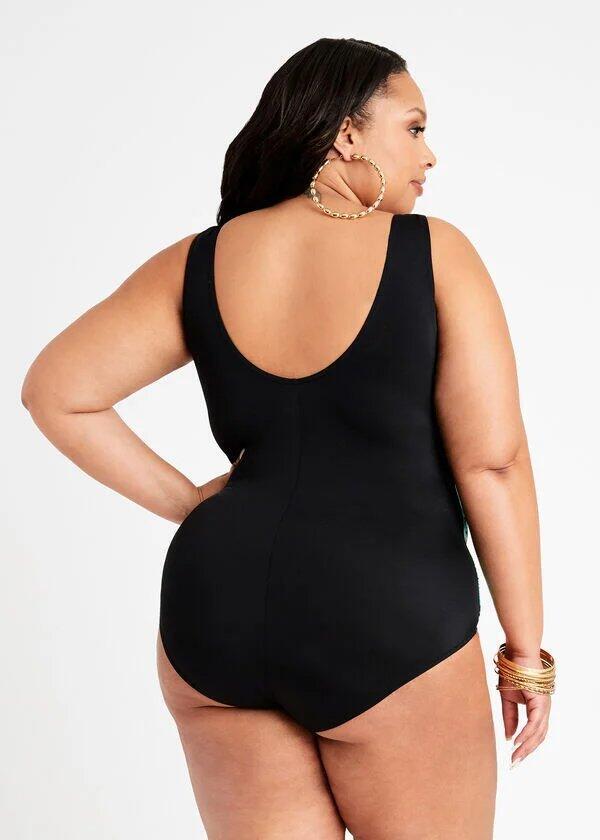
If you buy one tummy control swimsuit, buy a ruched one-piece with a lined front. It is the most reliable performer in the category and it is not close. The ruching does the visual smoothing, the full lining does the physical smoothing, and because it is a single garment there is no waistband sitting on the softest part of your stomach waiting to roll. A well-made ruched tummy-control one-piece from a brand that actually cuts for plus sizes will fit at the bust, the torso and the hip together, which is the part cheap suits get wrong.
The detail worth paying for here is torso length. Plus-size bodies are often longer through the torso, and a one-piece that is too short pulls down at the shoulders and up at the leg, which creates exactly the horizontal line across the stomach you were trying to avoid. Brands that offer a long-torso option are telling you they understand the fit problem. If you have ever felt like a one-piece was trying to fold you in half, torso length was almost certainly the culprit rather than your size.
Best for actually swimming
There is a real difference between a suit designed for photographs and a suit designed for swimming, and most tummy control marketing is aimed squarely at the former. If you plan to swim laps, play with your kids, or spend hours in and out of water, prioritise a heavier fabric, a racerback or wide-strap shoulder, and a lining that stays opaque when wet. Thin decorative straps fail under the weight of wet fabric, and that failure is what drags a neckline down.
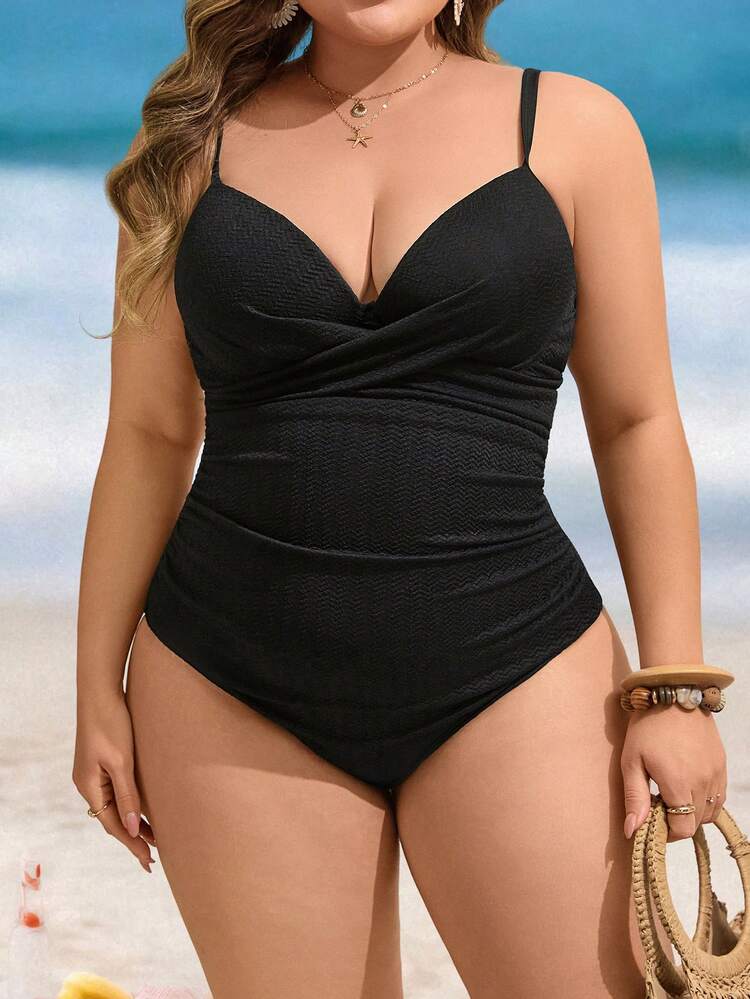
An active tummy-control one-piece with wide straps gives you smoothing that survives movement, which is the only kind that matters if you are genuinely using the pool rather than sitting beside it. The trade is real and worth naming: you give up a little of the dramatic smoothing a heavily ruched suit delivers, and in exchange you get something that does not need rearranging every time you climb out of the water. For anyone who swims regularly that is not a compromise at all, because a suit you constantly adjust is a suit you eventually stop wearing. Comfort in motion is what determines whether it earns its place in the drawer.
Best two-piece option: the tankini
Plenty of people want the bathroom convenience and the mix-and-match sizing of a two-piece without giving up midsection coverage, and that is exactly what a tankini is for. The catch is that a badly cut tankini rides up and creates a gap, which defeats the point entirely. The fix is length and grip: look for a top long enough to overlap the bottom by several inches even when you raise your arms, and a bottom with a wide, bonded waistband rather than a thin elastic edge.
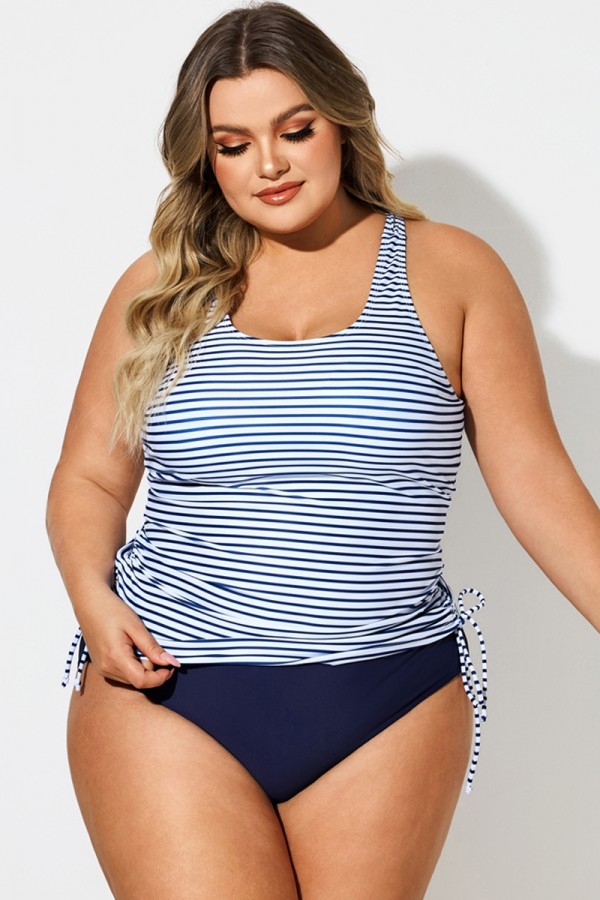
A long-line tankini with a lined front panel gives you close to one-piece smoothing with two-piece practicality, which is a genuinely good trade for a lot of people. The quiet advantage is split sizing. If your bust and your hips want different numbers, no single garment can serve both without compromising somewhere, and a tankini simply removes that problem instead of asking you to live with it. That alone sinks a lot of otherwise decent one-pieces, and it is the reason plenty of people who assumed they needed a one-piece end up preferring this.
Best high-waisted set
The high-waisted two-piece has earned its popularity because it works on exactly the principle that makes tummy control effective anywhere: it starts below the fullest part of the stomach and extends well above the navel, so it cradles the whole area rather than cutting across the middle of it. A high-waisted bottom in a substantial fabric with a wide waistband smooths about as much as many one-pieces do, and it does it without inheriting any of the torso-length problems that make one-pieces so hit and miss. It is also the most forgiving style to shop for, because you are only judging fit on one half of your body at a time.
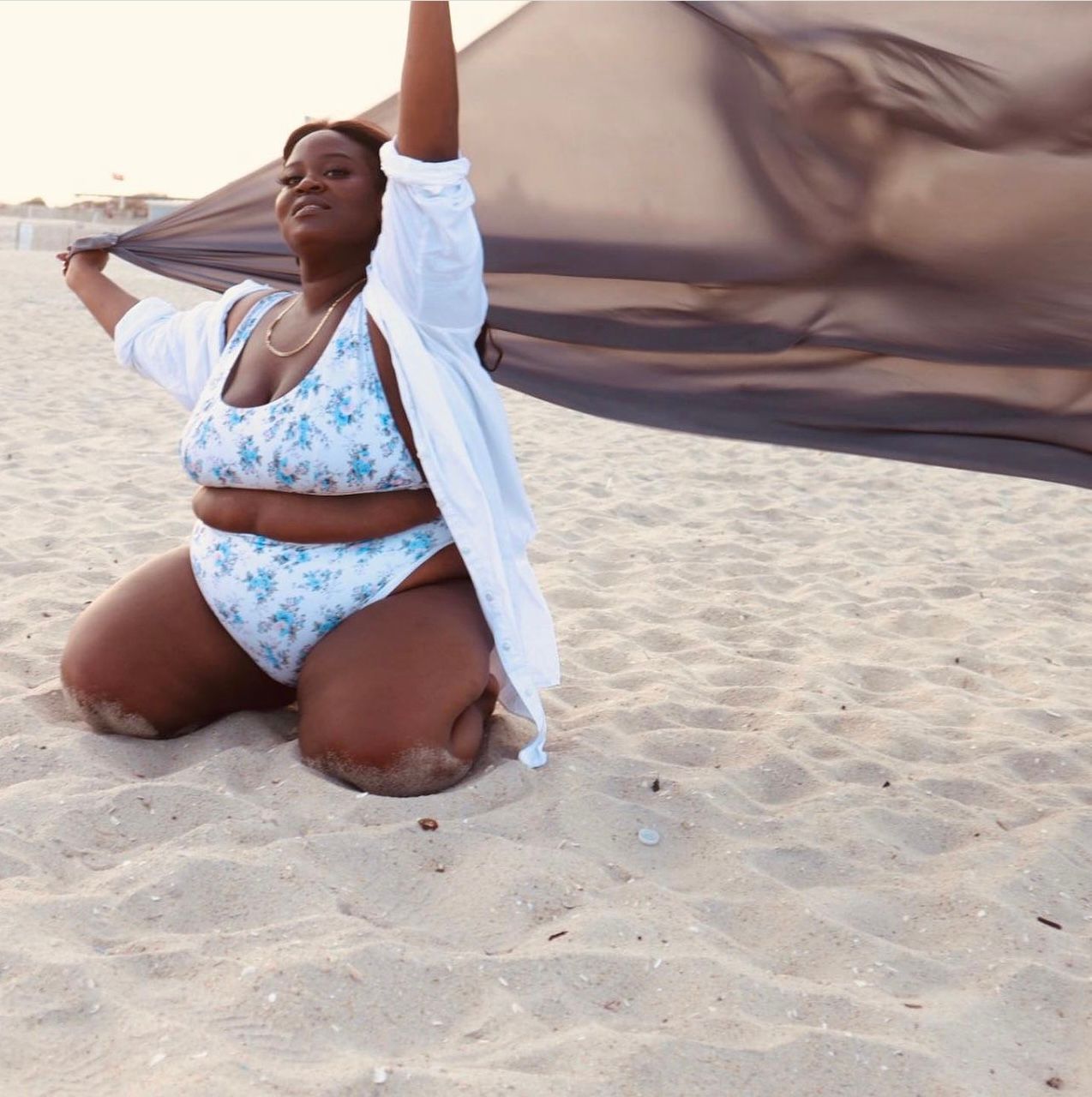
Where people go wrong is buying a high-waisted bottom in a flimsy fabric, which folds over at the top edge the first time they sit down. Weight and waistband width are what prevent that, not a smaller size, and reaching for a smaller size is the instinct that makes it worse. A high-waisted swim bottom with a wide bonded waistband paired with whatever top you like gives you a genuinely flexible setup. It is also usually cheaper than replacing an entire one-piece when only half of it stopped working, which over a few seasons adds up to a real difference in what you spend.
Comparing the styles at a glance
Each of these does something the others cannot, so the honest answer to which one is best depends entirely on what you plan to do while wearing it. Anyone who tells you a single style wins outright is selling that style. Here is how they compare on the things that actually decide whether you keep wearing a suit or quietly retire it after one holiday.
| Style | Smoothing | Holds up while swimming | Best for |
|---|---|---|---|
| Ruched one-piece | Highest | Good | All-round, most bodies |
| Active one-piece | Moderate | Excellent | Laps, kids, long days |
| Long tankini | Good | Moderate | Split sizing, bathroom ease |
| High-waisted set | Good | Good | Mixing sizes and tops |
Sizing it right, and what to skip
Size to your largest measurement and adjust from there, because a suit that is too small stops smoothing and starts sectioning. This is the mistake that ruins more tummy control suits than any design flaw. Overstretched fabric goes thin and semi-transparent exactly where you wanted it dense, the leg openings cut in, and the lining loses its grip on the fabric above it. Going up a size very often looks smoother than going down one, which feels counterintuitive until you have seen it happen.
Two things worth skipping. First, any suit whose only tummy control claim is a small tummy panel with no full lining, since that panel is doing almost nothing once the surrounding fabric relaxes in water. Second, thin ties at the shoulder or hip on a suit you intend to swim in, because wet fabric is heavy and those ties will not hold it. Do the honest test at home: put the suit on, sit down, raise both arms, and bend forward. If it stays put through all three, it will stay put at the pool.
Quick answers to the questions everyone asks
Do tummy control swimsuits actually work? Yes, when the control comes from a full power-mesh lining, ruching, a substantial fabric and shaped seams rather than from tight elastic. Suits relying on compression alone tend to roll and dig once wet. Construction is what holds up in water, not squeeze.
What is the best tummy control swimsuit? For most plus-size bodies a ruched one-piece with a full front lining is the strongest all-round choice, because it smooths visually and physically with no waistband to roll. For swimming, choose an active one-piece with wide straps. For two-piece convenience, a long-line tankini.
Is a one-piece or a two-piece better for tummy control? A one-piece usually smooths more because it has no horizontal break at the stomach. A high-waisted two-piece comes close and lets you buy your top and bottom in different sizes, which fits many bodies better than any single garment can.
What size tummy control swimsuit should I buy? Buy for your largest measurement using the brand’s chart, then check torso length if you are choosing a one-piece. Sizing down to squeeze harder backfires: the fabric thins, the lining loses grip and the leg openings cut in. Sizing up usually looks smoother.
Why does my swimsuit roll down at the waist? Almost always a thin waistband, a fabric too light to hold its shape, or a suit that is a size too small. A wide bonded waistband in a heavier knit solves it. On a one-piece, rolling at the leg is usually a torso-length problem rather than a width problem.
Choosing yours without the guesswork
Work backwards from what you will actually do in the suit. If it is mostly pools, holidays and photographs, the ruched one-piece is the safest money you can spend. If you swim properly, take the active suit and accept marginally less drama in exchange for something that never needs adjusting. If your bust and hips want different sizes, go two-piece and stop trying to force one number to fit both. Then check the four construction points, buy your measured size rather than a smaller one, and run the sit-reach-bend test at home before the tags come off. That is the whole method, and it turns a category built on vague promises into a straightforward purchase.