

In October 2025, I watched a woman named Iyabo walk into a 9:30 AM meeting with the VP of operations at a Charlotte-based financial services firm. She is 31, a senior analyst, four years on the team, and she had a one-page document in her hand. She walked out at 9:54. By Friday of that same week, she had two days a week of work-from-home locked in, written into a formal six-month trial agreement, signed by her direct manager and counter-signed by the VP.
Three other women on her team had been asking for the same thing for months. They had been asking in 1:1s, in casual hallway conversations, in Slack DMs to their manager that started with “hey, totally fine if not, but…” None of them had gotten anywhere. One of them had been asking, in some form, since February.
The difference was not seniority. Iyabo was not the most senior of the four. The difference was not performance. All four were rated in the top quartile in the most recent review cycle. The difference was not relationship with the manager. Two of the other three had stronger personal rapport with him than Iyabo did.
The difference was the document. Iyabo brought a document. The rest brought a request.
What follows is what was in that document, why each section was there, and the negotiation logic that produced a yes inside 24 minutes when months of informal asks had produced silence. This is not a script for getting your manager to like you. This is the operational structure that converts “I want to work from home” into a proposal a manager can sign without exposing themselves to risk.

Why Most Remote Work Asks Fail

The reason the other three women on Iyabo’s team got nowhere is not mysterious. They framed their ask as a personal preference. Personal preference is the weakest possible frame inside a workplace. It puts the manager in the position of granting a favor, which makes the manager personally responsible if anything goes wrong, which is a position no manager wants to be in twice.
When you frame a remote work request as “I would really love to work from home two days a week because of my commute, my dog, my focus, my childcare,” you are asking your manager to absorb the political risk of saying yes. If your output dips even slightly, the manager looks like the person who let you do whatever you wanted and got burned. The default answer to “let me do something different because I prefer it” is no, because the upside is yours and the downside is theirs.
The proposal frame inverts this. When you walk in with a document that says here’s the deliverable structure that produces equal or better output, here’s how we’ll measure that it’s working, here’s the trial period that snaps back to the current arrangement if it fails, you’re no longer asking for a favor. You’re presenting an operational change with a built-in safety mechanism. The manager isn’t absorbing risk. The manager’s approving a controlled experiment with a clear exit ramp.
This is the entire game. Everything else in this article is mechanics on top of that one shift.
The 2026 RTO Context You Are Negotiating Inside
You need to understand the market you are walking into before you walk in. The numbers matter, because your proposal will work better or worse depending on what your industry is doing right now and what your specific company has said publicly.
Amazon went to a five-day in-office mandate starting January 2025. JPMorgan followed with a five-day mandate in March 2025. Salesforce and Disney walked back from earlier fully-flexible policies to formal three-day hybrid requirements in 2024 and held those positions through 2025. The trend at the executive layer is real. Public RTO announcements at S&P 500 companies more than doubled between 2023 and 2025, according to tracking from Flex Index and Scoop Technologies.
And yet. Stanford economist Nicholas Bloom’s 2024 research, updated through his WFH Research project, continues to show that fully remote work reduces productivity by roughly 10 to 20 percent for most knowledge work roles, while hybrid work, two to three days remote, produces no measurable productivity loss and meaningful gains in retention and reported job satisfaction. McKinsey’s 2024 Future of Work Index found that 58 percent of American workers had the option to work remotely at least one day a week, and that figure had not meaningfully declined despite the executive-level RTO noise. The Federal Reserve’s 2023 study on the WFH wage premium found that workers value the option to work from home at roughly 8 percent of their salary, meaning a fully remote option is worth, in revealed preference terms, about the same as a 7 to 9 percent raise.
What this means for your negotiation is this. The data is on your side for hybrid. The data is mostly on the company’s side for fully remote in collaborative roles.
What Goes in the Proposal Document
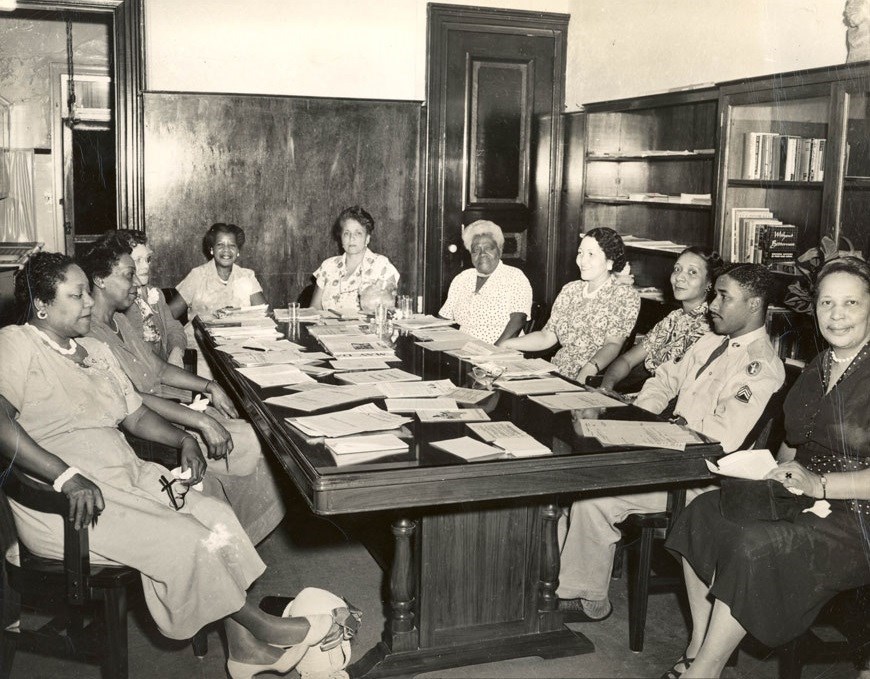
One page. Single-sided. Five sections. Iyabo printed two copies, one for her, one for the VP. She did not email it in advance. She did not send a Slack preview. She brought it into the room and put it on the table after the first sentence.
Here is what was on it.
1. The deliverable list with measurement criteria. This section is not “what I do.” It is “what I produce, how often, and how you know it is good.” Iyabo listed four recurring deliverables, each with a frequency, a quality standard, and a current baseline. For example: “Weekly portfolio variance report, delivered every Monday by 10 AM, current accuracy rate 98.4 percent over trailing 12 weeks, target maintained at 98 percent or above.” She did this for each deliverable. The point is to make the work visible, measurable, and decoupled from physical presence. If the report is correct and on time, where she was sitting when she made it is operationally irrelevant.
2. The communication SLA. This is the section that addresses the unspoken manager fear, which is “I will Slack you at 2:14 PM and you will not respond until 3:30 because you are walking your dog.” Iyabo’s document specified response times by channel. Slack DM during 9-to-5 hours: 30 minutes or less. Email: 4 hours during business hours, next morning if sent after 6 PM. Calendar: same-day acceptance or counter-offer on all meeting requests. This is the most underrated section of the document because it preempts the concern managers will not say out loud.
3. The trial period with the quit-clause. Six months. Quarterly check-in at the three-month mark with the manager. A specific written clause that says “if at any point during the trial my manager determines that output, responsiveness, or team collaboration has declined, the arrangement reverts to the prior in-office schedule with no further discussion required.” That last phrase is what makes the manager sign. It is a no-cost option for them. They can pull the cord without a conflict.
4. The office-presence carveouts. Iyabo specified that she would be in-office for all quarterly planning sessions, all client-facing presentations regardless of day, all new-hire onboarding weeks for direct reports, and any day the team had a working session scheduled. This section signals that you are not trying to disappear. You are trying to restructure where the heads-down work happens, not where the collaboration happens. Managers worry about hybrid workers becoming ghosts. This section directly addresses that worry.
5. What changes for the team. The shortest section. Three bullet points. What changes for direct reports (nothing, all 1:1s remain on existing cadence, available by Slack and Zoom).

The Timing Question
Iyabo did not pick October at random. She walked into that VP meeting eleven days after her team shipped a major client report on time and under budget, the third successful project in a row that she had been the lead analyst on. The VP had personally emailed the team praising the work. That email was nine days old when she made the ask.
This is not a coincidence. The right time to ask for a remote arrangement is in the 30-day window after a visible success that you were materially responsible for. Your leverage is highest when your recent output is freshest in the decision-maker’s mind. Tsedal Neeley, in Remote Work Revolution , makes a related point about trust being the prerequisite for distributed work, and trust is built through delivery. You are not asking for trust in the abstract. You are asking for the operational acknowledgement of trust you have already built.
The wrong times are equally specific. Do not ask in the 90 days following a public RTO announcement at your company, even an informal one from your skip-level. The political wind is against you and the manager cannot say yes without standing visibly against the executive narrative. Do not ask during your company’s budget planning cycle, typically Q4 for calendar-year companies, because every leader is in cost-management posture and any structural change reads as a complication. Do not ask within 60 days after a performance review that was anything less than strong. The manager will read the request as evasion of accountability. And do not ask right after a layoff or restructuring, no matter how well you survived it. The signal is wrong.
The best windows: 14 to 30 days after a successful project ships, 30 to 60 days after a strong review cycle, the month after your annual goals get set if you helped shape them. These are the moments when your contribution is concrete and the organization is in execution mode.
Who to Ask, and the Order You Ask Them
Your direct manager first. Always. No exceptions. Skip-level loops in after your manager is bought in, never before.
This is the rule that the most ambitious people in any office break, and it is the rule that costs them their request more often than any other single mistake. When you go to your manager’s boss before your manager has had a chance to weigh in, you have done two things that cannot be undone. You have signaled that you do not trust your manager to advocate for you, and you have made the skip-level wonder why. You have also forced your manager into a defensive crouch where saying yes now means agreeing with a process they were excluded from.
The correct sequence is: direct manager in a 1:1, document on the table, ask for their support. If they want to think about it, give them a week and a follow-up date. Once they are in agreement in principle, ask them how they would like to involve the skip-level. Some managers will say “I will handle it.” Some will say “let us go talk to them together.” Either is fine. Both protect your manager’s position and let them present the proposal as something they support, not something they were cornered into.
Adam Grant has written extensively about this kind of organizational sequencing in his work on idea adoption, particularly the finding that ideas backed by the proposer’s direct supervisor are roughly three times more likely to be adopted than ideas brought directly to senior leadership. The structural reason is obvious in hindsight. Senior leaders trust their direct reports’ judgment more than they trust a two-levels-down employee they barely know. Your manager is your strongest possible advocate, and your weakest possible adversary. Pick.
How to Handle “We Don’t Do That Here”
Sometimes the answer is no. Sometimes the answer is “our policy does not allow it.” Sometimes the answer is “you would be the first” delivered in a tone that suggests being first is not a compliment.
You have three counter-offers in your back pocket, and you should know which one you are leading with before you walk in the room.
The first counter-offer is the reduced ask. If you walked in asking for two days, your counter is one day, specifically the day of the week with the lightest meeting load. If you walked in asking for three, your counter is two. The reduced ask should still come with the same proposal document, just with the deliverable section adjusted. This frames you as a flexible negotiator, not a person walking away from the first no.
The second counter-offer is the extended trial. If the manager balks at six months, offer three. If they balk at three, offer 90 days. A shorter trial period reads as lower-risk and is much harder to refuse on policy grounds. The math here matters: a 90-day trial with a quit-clause is a smaller commitment than the manager’s average new-hire probation period, and you can point that out explicitly.
The third counter-offer is the comp-protected reduction. This is the advanced move and it works in a specific situation: when the company’s stated reason for denial is “we cannot create exceptions for individuals.” In that case, you ask whether they would consider a formal reduced-schedule arrangement, four days a week at 80 percent salary, where one of the four days happens to be remote. This shifts the conversation from “exception to policy” to “standard part-time arrangement,” which most HR systems already accommodate. You give up 20 percent of your salary and gain one fully remote day plus an extra day off. The Federal Reserve’s WFH wage premium research suggests the trade is roughly fair value, and for some workers the day off is a meaningful bonus.

The Script for the Conversation Itself
Three sentences for the open. Document hand-off. Proposed start date. Trial-end review date. That is the whole structure.
Iyabo opened with this: “I have been thinking about how to make sure I am delivering my best work, and I have put together a proposal I would like to walk you through. It is one page. Could I have ten minutes?” That is three sentences. The first establishes that this is about output, not preference. The second tells the listener exactly what is happening so they are not anxious about what is coming. The third asks for a small, bounded amount of time, which is psychologically easier to grant than open-ended attention.
Then she put the document on the table and walked through the five sections in order. She did not rush. She did not apologize. She paused after section three, the trial period with the quit-clause, and said: “This is the part I want to make sure is clear. If at any point you decide this is not working, we revert. No conversation needed. I want you to have that option in writing.”
After the walkthrough, she proposed a specific start date, the Monday after next, and a specific trial-end review date, six months out, with a calendar invite she had already drafted. She handed the document to the VP, said “you can keep that copy,” and asked: “What questions do you have?”
The question close is important. It is not “what do you think.” It is not “would this work for you.” It is “what questions do you have,” which presumes engagement with the substance, not approval of the concept.
What to Do if You Are Denied
Sometimes the answer is still no after all of this. The follow-up is more important than the original ask, because the follow-up determines whether the door is closed permanently or just for now.
The script: “I appreciate the decision. I want to understand what would change my proposal, so that if I bring this back in six months, I am bringing back something you could say yes to. Is it the duration of the trial, the deliverable structure, the days I picked, or something about the broader policy environment right now?”
Each of those four options is a different problem with a different solution. If it is the duration, you offer a shorter trial next time. If it is the deliverables, you ask which ones the manager has concerns about and you redesign that section. If it is the days, you propose different days. If it is the broader policy environment, you note the timing and ask what milestone would change that, a successful Q1, a leadership change, the completion of an RTO trial that is currently in progress. You write down whatever the manager says. You put a calendar reminder six months out. You bring it back at that time, with the document updated, and you reference the prior conversation explicitly: “When we talked in October, you mentioned X. Here is how I have addressed that.”
The persistence with documentation is what separates the people who eventually get remote arrangements from the people who do not. According to McKinsey’s 2024 data, employees who request flexible arrangements and are initially denied get those arrangements approved on the second or third structured ask at a meaningfully higher rate than employees who give up after the first no. The variable is not the manager. The variable is whether you came back with a refined proposal or whether you waited and asked the same way again.
The Frame That Converts a Wish Into a Proposal
Iyabo did not get her two days of remote work because her VP was generous, or because her company had a progressive policy, or because she caught him in a good mood. She got it because she did not walk in saying “I want to work from home.” She walked in saying: here is the deliverable structure that produces equal or better output, here is how you will measure it, here is the trial period that protects you if it fails, here is what changes for the team, here is the start date.
That is the entire shift. The case for remote work, the one that actually wins, is not a case about your life. It is a case about the operational change you are proposing, the metrics that will tell you both whether it is working, and the safety mechanism that lets your manager pull the cord at zero personal cost. Tsedal Neeley calls this “structured trust.” Adam Grant would call it the lowest-friction path to a yes. Nicholas Bloom would call it the kind of hybrid arrangement the data has supported for five years.
You can call it what it is. A wish is what you bring when you are hoping. A proposal is what you bring when you are negotiating. Three other women on Iyabo’s team brought wishes for months and got nothing. She brought a proposal and got a yes inside 24 minutes. The document is the difference, and now you have it.