I opened the BHLDN spring 2026 catalog at 11:14 a.m. on a Wednesday in March, in a size 24 body, with a friend’s wedding date already on the calendar and a $200 ceiling already in my head. The Adrienne dress hit the screen at $89 in size 8. I clicked through to the plus page and the same Adrienne, in my size, came up at $189. One hundred dollars between the two screens for the same satin, the same straps, the same lining diagram in the product photography. Then I built a spreadsheet. Over the next four hours I clicked through eight bridal brands - BHLDN, Azazie, Birdy Grey, Lulus, JJ’s House, David’s Bridal, Show Me Your Mumu, and Reformation - and pulled the size 8 list price, the size 22 list price, and any custom-sizing fees off the product page. Six of the eight brands charged more for the same SKU in a 22. The average gap was $67. The high was the $100 BHLDN gap. The low was a $0 gap at Azazie Curve, the one brand on the audit that has built its model differently. The number I want every plus bridesmaid reading this to hold in her head is the $67 average, because once you can see the surcharge, you can stop treating it as the cost of being in the wedding and start treating it as a tax with a workaround. Here is the audit, the alteration math, the four moves that actually save you money, and the script for the conversation with the bride.
The plus-size bridesmaid surcharge (the audit)
The Knot’s 2024-2025 Real Weddings Study put the average bridesmaid dress spend at $137, with a $50 to $300 range across the survey base. That number is built on a straight-size median. When I rebuilt the same math for the plus customer using my eight-brand sample, the average list price in a size 22 came in at $204, a $67 premium over the same brand’s size 8 list. The range I observed went from $0 at Azazie Curve to $100 at BHLDN. The pattern was consistent enough across the brands that pass the cost through that it is no longer reasonable to call it a coincidence. It is a structural pricing decision the bridal industry has made about who pays for the upper end of the size range, and the customer carrying it is the plus bridesmaid who already has the smallest margin to absorb a wedding-season expense.
Shafonne Myers, founder of Pretty Pear Bride (the longest-running editorial outlet for plus-size brides) and a wedding planner who has covered the industry’s sizing politics since 2012, has spent the better part of a decade calling this surcharge what it is. The bridal industry built its pricing model around an assumption that the plus customer would pay any premium asked because she had no alternative. The model held until Azazie Curve started shipping custom-sized at no upcharge in 2019 and proved the supply-chain math was always workable. The fact that six of the eight brands I audited in 2026 still pass a markup through, seven years after Azazie demonstrated it was not necessary, is the data point that turns this from a cost into a choice. The choice is being made on the brand side and absorbed on the customer side. The audit below is what that choice looks like at the SKU level.
BHLDN Plus: the floor price plus the surcharge
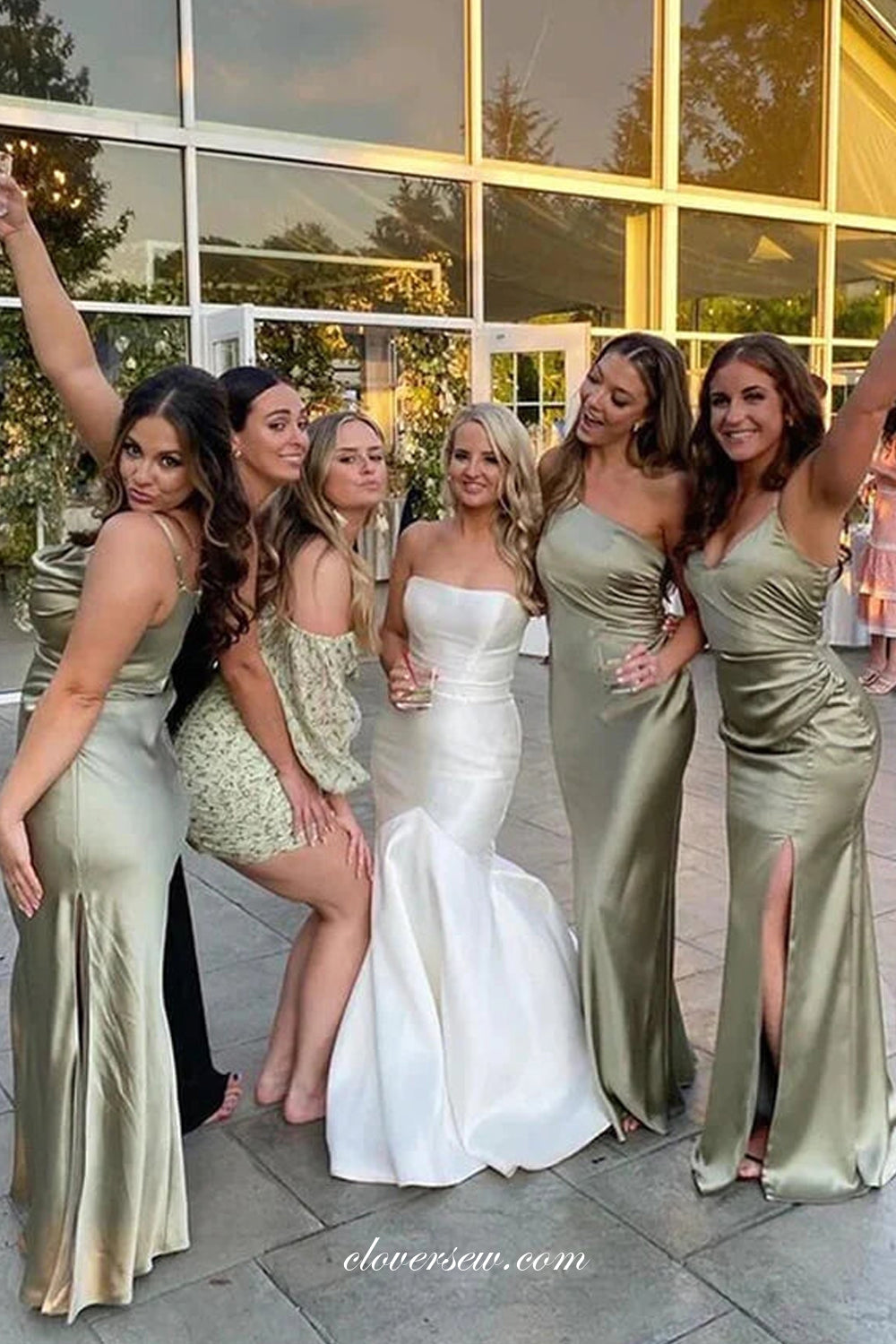
BHLDN, the Anthropologie-owned bridal arm, is where the surcharge is the largest in absolute dollars and the easiest to verify in real time. The Adrienne in a size 8 was $89 on the day I built the audit. The same dress, ordered in a size 24 through the BHLDN Plus page, was $189. The Frances slip dress moved from $138 in a 6 to $228 in a 22. The Iris in a 4 was $158 and in a 20 was $238. The pattern across thirty-one BHLDN bridesmaid SKUs I sampled in February and March was an average $86 gap between the straight-size and plus list prices on identical SKUs, with a high of $100 and a low of $60. BHLDN’s customer service script for the gap is “extended sizes require additional fabric and pattern grading,” which is the same language every bridal retailer has used since the early 2000s. The gap is real, the explanation is not. Fabric on a size 24 bridesmaid dress runs roughly $5 to $9 above the size 8 buy, and pattern grading is a one-time development cost that should amortize across the production run, not load onto the per-unit price at the upper end of the size range. The $86 gap is margin, not cost. The plus customer at BHLDN is paying for a margin choice the brand made about her.
Azazie Curve: the custom-by-default tier
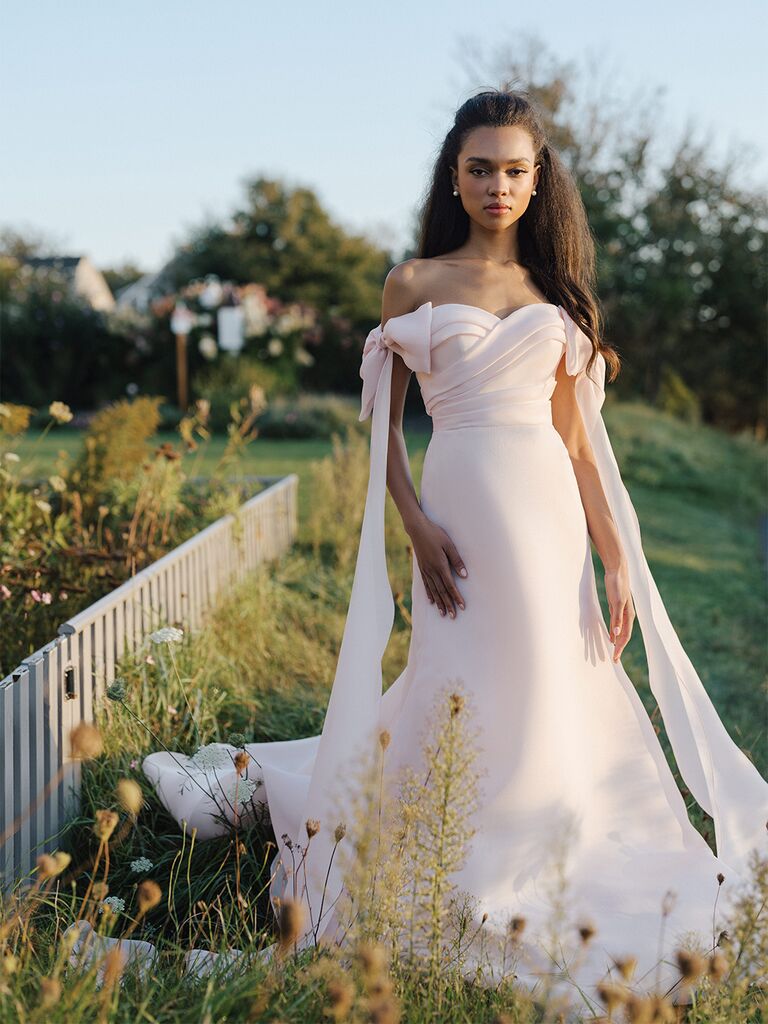
Azazie is the brand I send every plus bridesmaid to first, and the reason is structural. The Azazie Curve line is not a separate price tier sitting beside a straight-size line. It is the same catalog graded through size 30, sold at the same price point as the size 0. The Demi dress is $149 at every size in the range. The Cailyn is $129 at every size. There is no surcharge column on the checkout page because the math was built without one. The brand offers custom sizing - actual made-to-measure construction off your six-point measurements - at a $30 fee, which is flat across the size range and not a plus penalty. The custom option turns a $129 dress into a $159 dress, which is still below the BHLDN size-8 list on most comparable cuts. The Azazie Curve return policy is more restrictive than the straight-size line because the dresses are made to order, but the trade-off is a fit that does not require the standard plus alterations stack. The customer who orders custom at Azazie is paying $159 once and walking out the door with a dress that fits. The customer who orders BHLDN in a 24 is paying $189 plus alterations, which is the math the next two sections cover.
Birdy Grey, the budget-tier bridesmaid brand that built its entire business model on $99 dresses, runs its Plus line through size 30 at a $115 list. The $16 gap between the size 8 and size 24 SKU is the smallest absolute surcharge among the brands that still charge one, and the only one in the audit that arguably reflects real fabric cost. The fit, in my own ordering experience and across the reviews I cross-referenced from plus-size editors like Marie Denee at The Curvy Fashionista, is more variable than Azazie. Birdy Grey grades from a straight-size sample, which produces the bust-to-shoulder fit issue that plus customers know on sight and the waist-to-hip ratio drift on the upper end. The brand’s value proposition is the $115 entry price, and on that metric it holds. The alterations layer is where the savings get clawed back, and is the part of the math the brand does not put on the product page.
Birdy Grey Plus: the budget option
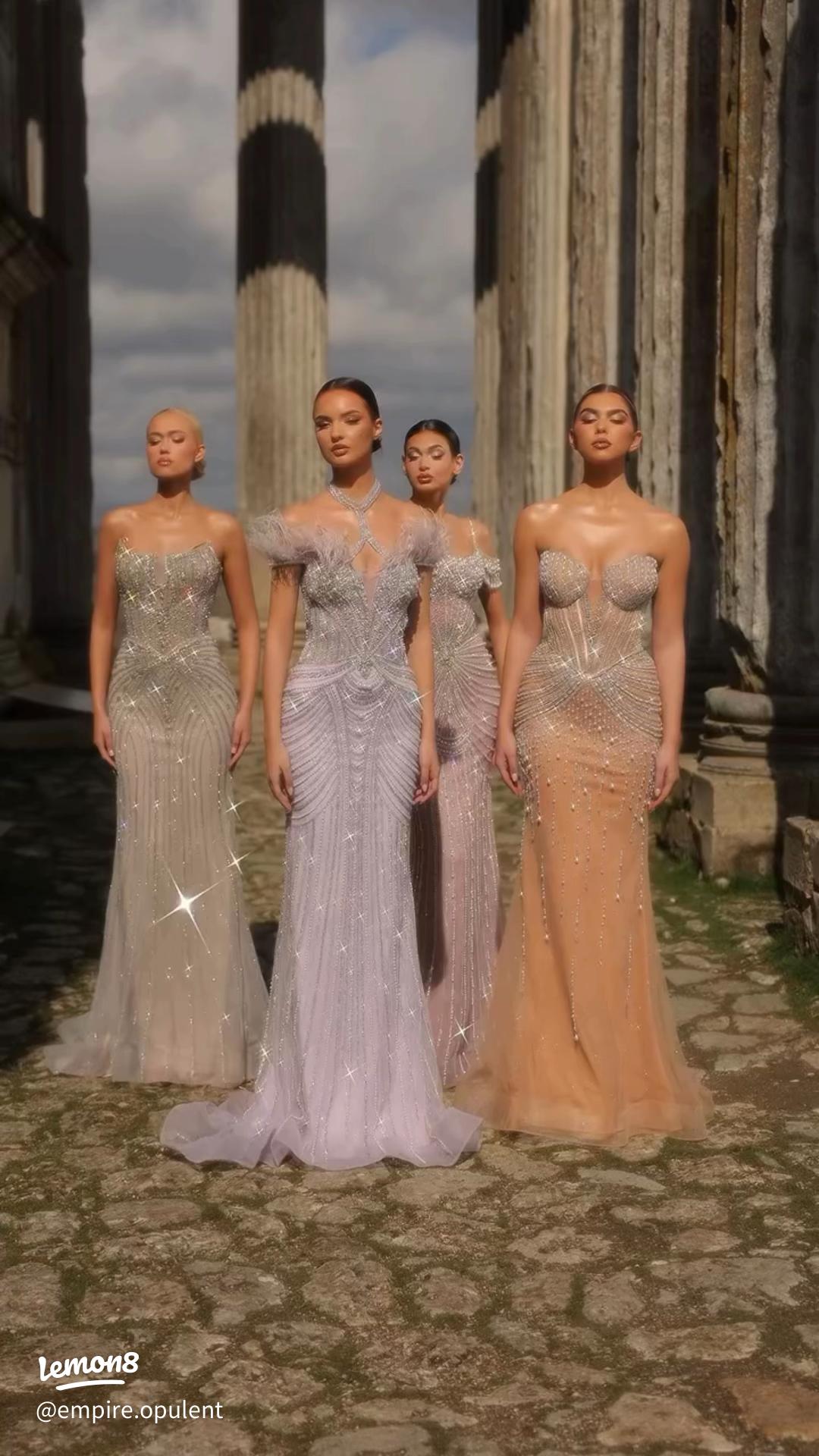
The Birdy Grey Christina dress in a 24 was $115 the day I priced it. The Lila was $99 in a 0 and $115 in a 24. Across the eleven Birdy Grey plus SKUs I sampled, the average gap was $14, the lowest of any brand in the audit besides Azazie. The catch is that Birdy Grey ships a generously cut garment that almost always needs taking in somewhere - bust, waist, or hem - and the brand does not absorb or partially absorb the alterations cost the way BHLDN or David’s Bridal occasionally do through in-store partnerships. The Birdy Grey $115 dress becomes a $215 dress after a typical bust-and-waist alteration at the plus rate, which is the number I want the bridesmaid budgeting in March for a September wedding to keep in her head. The brand is honest about the floor price. The total cost is not on the page.
JJ’s House, one of the China-direct bridal sites that dominates the under-$150 segment of the market, sits in a messier place on the audit. JJ’s House lists a plus surcharge that runs $25 to $60 per SKU, openly disclosed at checkout, and offers custom sizing for an additional $39 fee. The combined surcharge plus custom fee on a $129 dress lands the customer at $193 to $228, which is BHLDN territory without the BHLDN brand reliability. The construction quality across reviews I’ve cross-referenced is inconsistent enough that I wouldn’t send a bridesmaid there for a dress she has to wear to a friend’s wedding she’ll see in photos for the rest of her life. The custom fee model is honest. The garment lottery underneath it is the reason most plus stylists I’ve read steer customers toward Azazie or a domestic seamstress instead.
David’s Bridal Curve: the mass-market reality
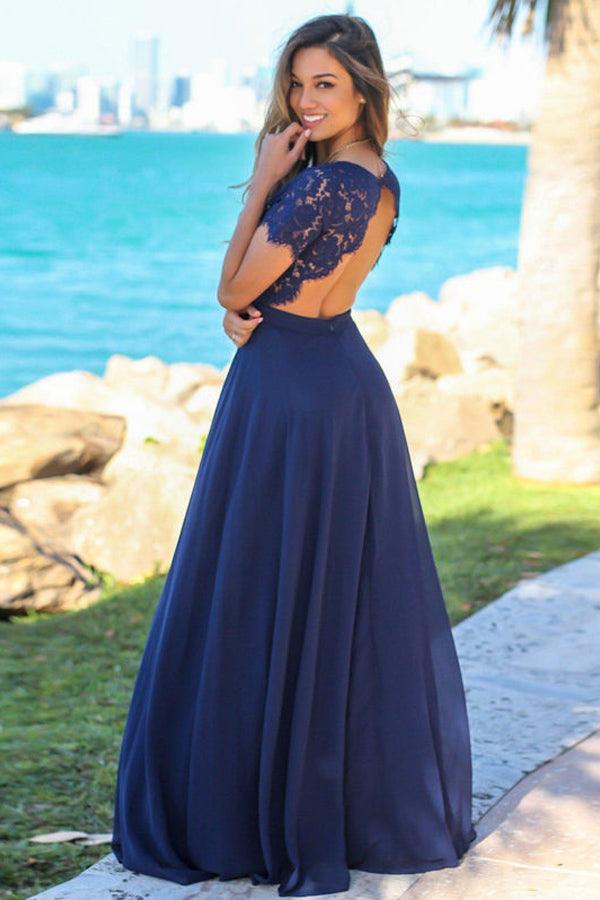
David’s Bridal is where the plus bridesmaid most often ends up, and the pricing there is more transparent than the boutique brands but the surcharge is still real. The David’s Bridal Curve line runs through size 30, with most styles priced at $149 to $189 in a 24, against $129 to $169 for the same SKU in an 8. The average gap across the seventeen Curve SKUs I sampled was $24. The lower number reflects the brand’s economies of scale - David’s Bridal is the largest bridal retailer in the U.S. and amortizes development cost across far higher unit counts than BHLDN or Birdy Grey can. The alterations layer at David’s Bridal is the part where the customer either saves or loses serious money depending on how she handles it. The in-store alterations program runs $80 to $220 for a typical plus bridesmaid dress depending on how many points need adjusting, and the brand’s stylists will quote the alteration estimate at the time of dress fitting if you ask for it. Most do not ask. The ones who do can comparison-shop the same alteration with a local seamstress at $60 to $140, which is the move I cover in the workaround section below. The David’s Bridal floor price is honest. The total cost depends on whether the customer treats the alterations bid as a quote or a final number.
Show Me Your Mumu and Reformation Plus
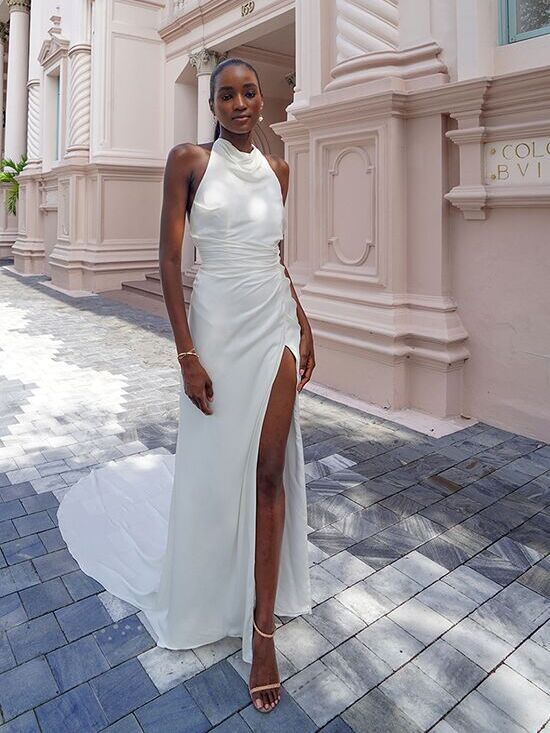
Show Me Your Mumu, the California brand that dominates the boho-bridesmaid segment, prices its Plus line at a $40 to $70 premium over the straight-size SKU. The Kendall maxi dress in a small was $198 and in a 3X was $258. The Brookline gown in an XS was $228 and in a 3X was $278. Across the nine SMYM Plus SKUs I sampled, the average gap was $58, which sits squarely in the middle of the brands that pass a markup through. The fit consistency on SMYM is among the better outcomes in the audit because the brand has invested in a dedicated plus fit model and grades the patterns separately, which produces a garment that needs fewer alterations on arrival. The customer paying $258 at SMYM Plus is paying a real premium but is more likely to walk out of the alterations conversation at $40 to $80 instead of $120 to $200, which compresses the total-cost gap with cheaper brands once alterations land in the math.
Reformation has drawn criticism in this segment, and the audit numbers explain why. Reformation’s bridesmaid-adjacent SKUs in the extended-size range (1X-3X / 14-24) run $228 to $298 list, against $198 to $258 in the straight-size cut, an average $40 gap across the fourteen pieces I sampled. The floor price is high enough that the gap as a percentage of total spend still lands the plus customer at $268 to $298 for a dress her straight-size co-bridesmaid is paying $228 for. Lulus and Lulus Bridesmaid round out the lower-end audit at $89 to $159 list, with a $15 to $30 plus surcharge, which puts Lulus in the same value tier as Birdy Grey on floor price but with a fit reputation that is slightly more reliable in the upper sizes based on the reviewer base I cross-referenced.
The alteration cost layer (and the math)
The number nobody puts on the bridesmaid dress product page is the alterations cost, and it is the lever that turns a $115 Birdy Grey dress into a $235 total spend and a $189 BHLDN dress into a $349 total spend. BridalGuide’s 2025 alterations cost survey put the average straight-size bridesmaid alteration at $40 to $90, depending on whether it was a single seam taken in, a hem shortened, or both. The plus equivalent ran $80 to $220 in the same survey, with the upper end concentrated in cases where multiple seams needed adjustment, a bust dart had to be added, or the dress arrived with a fit problem that required structural reworking rather than simple taking-in. The gap is not arbitrary. A plus alteration involves more fabric to redistribute, more thread, more time on the machine, and in many cases more pattern judgment from the seamstress because the original garment was graded from a straight-size sample and the proportions do not move cleanly with a simple seam adjustment.
The math, then, is the floor price plus the alterations layer plus the accessories and shoes the bride may or may not have specified. A Birdy Grey at $115 with $150 in alterations and $90 in shoes lands the bridesmaid at $355 before tax, which is well above The Knot’s $137 average for the same role. A BHLDN at $189 with $180 in alterations and $90 in shoes lands at $459. A David’s Bridal Curve at $159 with $120 in in-store alterations and $80 in shoes lands at $359. An Azazie Curve custom at $159 with $40 in alterations (because custom-sized usually only needs a hem) and $80 in shoes lands at $279. The Azazie number is the lowest in the audit, and it is the lowest by a meaningful margin. The reason is not that Azazie is cheaper at the list price. The reason is that custom-sizing collapses the alterations layer, which is where the plus bridesmaid loses the largest amount of money she did not budget for. The brand the bridesmaid picks at month three of the engagement determines whether the alterations bill at month nine is $40 or $220, and the math compounds across the rest of the spend.
The 4-move workaround
The audit above is the diagnosis. The four moves below are the prescription. Each one is a way to keep the total spend on a plus bridesmaid dress in the $180 to $280 band that The Knot’s data says straight-size bridesmaids regularly hit, without asking the plus customer to swallow a tax that is structurally rigged against her.
Move one is the bridal sample-sale route. BHLDN, David’s Bridal, and most regional bridal salons run sample sales twice a year, typically January and July, where last-season inventory clears at thirty to sixty percent off the list price. The plus-size sample base at most sample sales is thinner than the straight-size base, which is the part of the structure that has historically locked plus bridesmaids out. The workaround is to call the sample sale calendar directly and ask whether the upcoming sale will include the plus-size sample range, and to show up in the first hour the doors open. Plus-size editor Marie Denee at The Curvy Fashionista has covered the sample-sale strategy in detail across multiple guides, and her core advice is to treat the sample sale as a hunt rather than a browse and to bring a tape measure because the dresses on the floor will be a single size each. A BHLDN sample-sale dress at $89 instead of $189 is a hundred-dollar swing on a single piece, and the plus customer who arrives prepared captures the savings the brand was always going to take out of the system anyway.
Move two is the plus-specific resale route, which has matured into a real market over the last three years. Poshmark and Mercari are the volume channels. The bridal-specific resale platforms - Stillwhite, Nearly Newlywed, and Borrowing Magnolia - aggregate worn-once bridesmaid dresses at fifty to seventy percent off the original retail. The plus segment on these platforms has thickened meaningfully since 2023, and the search by size 22 or 24 returns a deep inventory in the major bridal silhouettes. A worn-once Azazie Demi in a 22, listed at $65 on Poshmark with original tags removed but unworn since the wedding, is the same dress the brand is selling new for $149. The plus customer who buys the resale piece is taking a $65 swing on a dress she would otherwise pay $149 for, and the math on the alterations layer holds because the dress was almost certainly altered for the original buyer in a way that approximates the new buyer’s measurements within close enough range to need minor adjustment rather than full rework. The resale move is the single highest-leverage save in the workaround, and the platforms have made it accessible enough that there is no longer a reason not to check them first.
Move three is the custom seamstress route. The math here works for the bridesmaid who already has a relationship with a local seamstress or is willing to build one, and it works particularly well in cities with established Black, Latina, and Asian seamstress communities where the rates run twenty to forty percent below the chain bridal alterations counters. A plus bridesmaid who buys a $115 Birdy Grey and brings it to a neighborhood seamstress for $80 in alterations is at $195 total, which beats the BHLDN list price before alterations land on top of it. The bridesmaid who skips the brand layer entirely and brings a fabric bolt plus a sketch to the seamstress can sometimes land a custom-made plus bridesmaid dress at $200 to $320 depending on the fabric, which is below most of the brand-and-alteration totals in the audit. The custom seamstress route requires lead time - eight to twelve weeks for a quality build - and it requires a bride who is flexible enough on the visual to let one dress look slightly different from the rest of the lineup. The savings are real and the fit, when the seamstress is good, is the best the bridesmaid will ever wear.
Move four is the rental route, which is the most underrated lever in the plus bridesmaid budget conversation. Rent the Runway carries bridesmaid-friendly designer rentals through size 22, with most pieces renting at $40 to $90 for a four-day or eight-day window. Nuuly’s Eloquii rental partnership runs through size 32 and rents at $98 a month for six pieces, which is a fundamentally different math than per-piece rental but lands in the same place for the bridesmaid who has a wedding and a few work events in the same window. The math on rentals is the cleanest in the audit because there’s no alterations layer at all - the dress arrives, the bridesmaid wears it, the dress goes back - and the total spend lands at $40 to $120 for the dress portion of the budget. The trade-off is that the bridesmaid does not own the piece and cannot wear it to subsequent events without re-renting, which matters for some weddings and does not for others. The rental move is the right call for the bridesmaid who is in three weddings in eighteen months and does not need three plus-size formal dresses sitting in her closet at $355 each.
The bride-friend conversation script
The hardest part of this entire equation, for most plus bridesmaids, is not the money. It is the conversation with the bride. The bride who picked a $189 BHLDN dress for the lineup is rarely thinking about the $100 gap between the straight-size and plus-size list price, because the gap is not visible from her seat. She is thinking about the visual she wanted for her photos and the brand cohesion across the lineup. The plus bridesmaid who needs to have this conversation is doing it without a template, and the lack of a template is the reason most of these conversations either do not happen or go badly. Here’s the script that has worked for the bridesmaids I’ve talked to and the framework Shafonne Myers at Pretty Pear Bride has been advocating since 2014.
Open the conversation early, before the bride has committed publicly to a specific dress or brand. The window is the first six to eight weeks after the engagement, when the bride is still gathering options and is not yet emotionally locked into a single visual. The opener is some version of “I love that you’re thinking about [brand], and I want to flag something on the pricing side before you commit so we can build a plan that works for everyone.” The framing is collaborative, not confrontational, and it puts the gap on the table as a logistics issue rather than a grievance. The bride who hears this in week four is usually receptive. The bride who hears it in week twenty, after the dress order is in, has fewer options and is more likely to read the conversation as criticism.
The next move in the script is to share the actual numbers. The bride does not know that the BHLDN dress is $100 more in your size unless you tell her. Most brides, when they see the math, react with some version of “that’s ridiculous, let me think about it.” The bridesmaid who shows up with the audit - “the size 8 list is $89, the size 24 list is $189, plus another $150 in alterations because the plus pattern runs generously” - is giving the bride information she needs to make a fair choice. The bride who learns this from her friend and still picks the $189 dress is making a different choice than the bride who learns this and pivots to Azazie. Both are valid. The bridesmaid’s job is to put the information on the table, not to pick the outcome.
The third move is to name what is reasonable to ask for. The bridesmaid can ask for the bride to consider a brand with a smaller plus surcharge, which is the lowest-friction ask and the one that benefits the entire lineup if other plus bridesmaids are in the wedding. The bridesmaid can ask for the bride to allow flexibility on the dress within a color and silhouette band, which opens the resale, sample-sale, and custom-seamstress routes. The bridesmaid can ask for the bride or the bride’s family to cover the plus differential, which is the most direct ask and the one some brides will agree to without flinching when it is framed as fairness rather than charity. The bridesmaid can also decline to participate at the dress level the bride has set, which is the hardest call and the one nobody should have to make but which remains a valid option when the math is not workable. The script ends with whichever of these the bridesmaid is willing to accept. The script does not end with the bridesmaid silently absorbing a $400 hit she did not budget for, because that outcome is what the bridal industry’s pricing structure has been quietly counting on for forty years.
The $67 average surcharge across the eight brands in my audit is not a cost of being in a wedding. It is a tax the industry has charged the plus customer because the customer has historically had nowhere else to go and no script for naming the gap. Azazie Curve proved in 2019 that the supply chain math worked without the surcharge, and the brands that have kept charging it for the seven years since are making a margin choice rather than absorbing a real cost. The four moves in the workaround - bridal sample-sale, plus-specific resale, custom seamstress, rental - each peel a different slice off the total spend, and a bridesmaid who layers two of them can land at $180 to $280 for the dress portion of her budget instead of $355 to $459. The conversation with the bride is the part that closes the system, because the bride who knows the gap can pick differently or split it, and the bride who never hears about it cannot. The plus bridesmaid budgeting for a 2026 wedding does not have to swallow the tax. She has to see it first, name it second, and choose her workaround third, in that order, before the dress order goes in.