

Adaeze was 39 the Wednesday afternoon in April 2026 that she sat in her car in the parking deck of the mid-cap fintech where she had spent the last six years, both hands on the steering wheel, listening to the HVAC hum through the concrete. She had just come out of a one-on-one with her director on the 14th floor. He had used the same sentence he had used the previous April, and the April before that. “The next promotion isn’t coming this cycle either.” Third time. Same office, different ficus tree in the corner. Senior manager on the platform team in Charlotte, base around $182,000, equity that had finally vested, two direct reports. She had hit a number, a title, and a wall.
What follows is the version of the next eighteen months Adaeze actually wanted, told from the other side of the wall. The parking deck Wednesday is one of the most common forty-minute crises in American work right now, and almost nobody has a script for it. The advice you get from peers is some combination of “be more visible,” “find a mentor,” and “have you thought about going to b-school.” Almost none of it is what actually moves a stuck career forward.

What a plateau actually is - and how to tell it from a dip or a stall

Most people call the situation a plateau before they diagnose it. There is a real difference between a plateau, a dip, and a stall, and the playbook for each is different. Calling a dip a plateau is how high performers panic-quit jobs they were six months from outgrowing. Calling a stall a plateau is how people stay in roles three years longer than they should.
A dip is six to twelve months where the work is harder or weirdly invisible because the business itself is in a hard cycle. The org is reorganizing, the market shifted, your top customer churned. A dip resolves if you wait and avoid large career decisions in the middle of it. A stall is the opposite: you stopped learning eighteen months ago, you know it, and you quietly stopped trying. A stall is a personal problem disguised as an org problem.
A plateau is structural. It is the moment when the role has nothing left to teach you that the market will pay you significantly more for. The work is still good. The reviews are still strong. But the upward slope flattens because the system itself can no longer reward the next inch of growth. The diagnostic question Adam Grant keeps returning to in his writing on career change is whether the role still has more to teach you than the cost of staying, and a plateau is the moment when the honest answer flips.
The diagnostic is three questions. One, if you stayed in this exact role another two years, what would you learn that the market would pay you 20% more for? Two, is your reputation still growing, or has it solidified into a fixed identity? Three, when you imagine the next promotion, can you name the specific person whose job you would be doing, and do they look like they are leaving? Two “no” answers means the next promotion is not coming and the company is not lying. There is no chair.
The four most common shapes of a plateau
Once you know it is a plateau, you have to know which shape, because the move out is different for each one.
Shape one: the title and comp ceiling at your company. The next title is held by someone who is not leaving, and the comp band for your current title has a ceiling you are at or near. This is Adaeze. There is no seat. McKinsey and LeanIn.Org’s 2024 Women in the Workplace report has documented this for nearly a decade as the “broken rung” problem. The first step from individual contributor to manager is where the pipeline narrows hardest for women, and the second step (manager to senior leader) narrows again. If the rung above you is held by someone who is not moving, that is structural, not personal.
Shape two: the skill ceiling for your role. A senior PM who has never owned P&L cannot become a VP of product by managing more sprints. The exit is a stretch project, a credential, or a deliberate role change, not visibility.
Shape three: the org headcount freeze. The company is fine, the role is fine, the performance is fine, and head count for next year is flat or down. This is the most common shape in 2026 because the post-2021 hiring boom is fully unwound. Gallup’s 2024 State of the Global Workplace report found engagement falling and “stuck” being the single most common word employees used about their growth path. The seat does not exist on the org chart yet.
Shape four: you do not actually want the next thing. You look at the VP whose job is theoretically next and you do not want her calendar, her travel, or her week. You stopped reaching but have not stopped expecting your career to keep climbing. The ladder you are on stopped pointing at a life you want.
Adaeze’s was shape one with a 30% rinse of shape four. That diagnosis ruled out half the standard advice before she wasted a year on it.
Why “more visibility” is the worst good advice in the room
When Adaeze went to her network with the wall story, every single person told her some version of the same thing. Be more visible. Volunteer for the cross-functional project. Get a sponsor at the SVP level. The advice is not wrong in a vacuum. It is wrong at a plateau.
Visibility moves you when the bottleneck is awareness. At a plateau, your VP knows exactly who you are. More visibility does not add information. It adds workload. Volunteering for the cross-functional initiative does not unlock the chair that is not opening; it just means you are doing your job and someone else’s job and now you are tired. That is how ambitious women burn out at a plateau.
The other reason it backfires is reputational. When you over-deliver in a role you have already mastered, you reinforce the identity that is keeping you stuck. You become more legibly the platform person, not less. The next director hire looks outside. What works instead is targeted visibility on work that proves the next level. Not “I led a great Q3,” but “I owned a P&L,” “I closed a customer worth more than my comp three times over,” “I shipped a product that moved a top-of-funnel number.” Anything else is rehearsing for a role you already have.
High-leverage skill investments at this stage - the 200-hour rule

If the plateau is partly a skills ceiling, the question is which skills are worth investing in. There is a rule I trust: the 200-hour rule. A credential is worth doing only if it meets three conditions. It takes at least 200 hours of real study (the floor for genuine fluency). It is something the next level of hiring manager actually screens for. And you can name three specific people whose job description listed it.
If those boxes are checked, the investment usually pays back within 18 months in a title bump or an offer. Examples that meet the bar: an executive certificate in finance for non-finance leaders from Wharton, Columbia, or your local R1; a serious data certification (Google Advanced Analytics, Snowflake or Databricks practitioner) for operators moving into roles that own a metric; an executive coaching certification for senior HR or operations people moving toward chief of staff or COO tracks.
What does not pass: a $39 LinkedIn Learning course or a one-weekend workshop. A full-time MBA at 39 rarely passes either, because the opportunity cost is roughly $450,000 net and the typical post-MBA bump at this stage is smaller than the cost. A part-time executive MBA can pass, but only if you can name the post-program role you want and the people who got it from the same program.
Adaeze chose a 14-week executive finance certificate at UNC Kenan-Flagler. About 200 hours over a quarter, $5,400, paid by her company under tuition benefits. It put “P&L fluency” on her resume in a way recruiters could screen for, and gave her vocabulary she had not previously had when talking to hiring managers at the director level.
The lateral-move conversation - when, with whom, the script
The lateral move is the most underused tool in the senior manager toolkit. People resist it because sideways feels like failure. Inside a plateau, sideways is almost always the fastest path forward. It gives you a legible new skill set the next promotion can be built on, and it resets your internal reputation.
The right window is six to eight months after a strong performance review, when you have political capital and the next review is far enough away no one feels rushed. The wrong window is two weeks before the cycle.
The person to talk to is not your manager first. It is the leader of the function you want to move into. You ask for a coffee, you say specifically you are not job-hunting and not unhappy, that you have been thinking about where you can be most useful at the company over the next five years, and that your skill set could meaningfully serve their team. Then you ask what their team is solving for in the next two quarters and where they have a gap. Listen. Do not pitch.
If the conversation goes well, you go to your manager second, with a complete pitch: here is the move, here is why it is good for the company, here is how I would transition my current responsibilities over 60 to 90 days. The mistake almost everyone makes is going to their own manager first and letting her either say no in the moment or quietly stall.
The side-project test - the six-month experiment that tells you the truth
If you cannot decide whether the plateau is the job, the company, or you, the cleanest diagnostic is the six-month side project. You pick one project, outside your day job, materially related to the skill you suspect you need next. You commit to six months, give it five to eight hours a week, and measure one outcome metric you decide in advance.
If you suspect you want to operate a P&L, the side project is consulting for two early-stage companies for six months, billing $200 an hour. If you suspect you want a creative discipline, the side project is shipping something publicly and measuring growth. If you suspect you want to start your own company, the side project is talking to fifty potential customers and getting twenty to commit a deposit on a paid prototype.
What the side project tells you is whether the energy comes back. If you spend a Saturday on it and feel more alive on Monday at the day job, the plateau is real and the path is to expand the side project until it can replace the day job. If you spend a Saturday on it and feel depleted on Monday, you are burned out and the plateau is a story your tired brain is telling about a deeper problem.
Adaeze’s side project was two paid platform-strategy advisory contracts with two Series A fintechs in the Southeast, three months each, $9,000 per contract. By month four she had clarity. The work itself energized her. The plateau was real and the company was the constraint.
The burnout signal versus the boredom signal
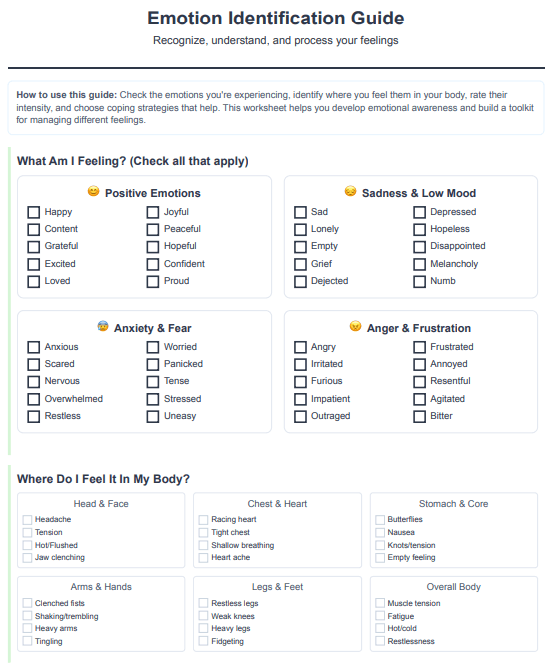
Burnout and boredom both feel like fatigue. They are not the same thing, and they require opposite responses. Brene Brown, in her work on workplace courage and showing up, has been clear that one of the deepest acts of professional honesty is naming what is actually happening to you. Most plateau conversations skip this step and prescribe the wrong cure.
The burnout signal: Sunday night dread that does not lift by Tuesday. A sense you cannot complete tasks you used to complete easily. Sleep that is full but does not restore. Cynicism that has bled into the rest of your life. Physical symptoms: tension headaches, GI issues, low-grade illness that does not clear. If three or more are present for four-plus weeks, you are burned out. The cure is rest, boundaries, and probably a therapist before any career move. Burnout makes career decisions catastrophically badly.
The boredom signal: you feel fine on Saturdays. You can complete tasks; you just no longer find them interesting. You can imagine doing more difficult work and feel excited rather than exhausted by the thought. You have a quiet sense of waste. This is boredom, and the cure for boredom is harder work, not less. A career move is the right response.
Burned-out people often hear plateau advice and try to push through with a new role, which deepens the burnout. Bored people often hear self-care advice and try to rest their way out, which deepens the boredom. The diagnosis comes first.
Months one through three: diagnose and build the runway
Months one through three are diagnostic. The goal is not a new job. The goal is a clear picture and a foundation. Complete the plateau diagnostic (which shape, dip vs stall vs plateau, burnout vs boredom). Pick the 200-hour credential and start it. Identify five people whose careers look like the next version of yours and ask each for a 30-minute call. Open the spreadsheet that tracks your runway: cash, debt, monthly burn, severance entitlement, COBRA cost if you left, the minimum number you would need to take a 30% pay cut for the right role. The runway spreadsheet is the precondition for everything else, because options require oxygen.
Adaeze used months one through three to do exactly this. She enrolled in the UNC certificate. She rebuilt her cash runway to nine months. She mapped the org charts of every fintech in Charlotte, Atlanta, and Raleigh at her stage. She did not apply to anything. She had eleven coffees.
Months four through six: test the move
Months four through six are about testing. Start the side project. Have the lateral-move conversation inside your current company. Take two stretch assignments that are legibly at the next level. Begin quiet conversations with executive recruiters. The goal is to find out which of your three or four hypothesized paths (lateral inside, vertical move at a smaller company, side-project leverage, total industry pivot) has the most pull. You will have a clear signal by month six. One path will be visibly working. Trust the signal.
Months seven through nine: execute
Months seven through nine are execution. You either take the new role, formalize the lateral move, or scale the side project into your day job. You give appropriate notice. You leave well. You take one to two weeks of clean rest between the old role and the new one. Then you start, and the plateau is behind you.
Adaeze took a director-of-platform role at a Series B fintech in Atlanta with a base of $215,000, equity that would vest into something meaningful if the company hit its milestones, and a remit that included P&L ownership for a new product line. She gave six weeks notice, took ten days off, and started in October 2026.

The argument, and the 90-day plan to test it
Here is the argument I want to leave you with. A career plateau is not a punishment for something you did wrong. It is not a sign that you peaked. It is a signal that you have outgrown the system that built you. The only three honest responses to that signal are to change the system you are inside, change your relationship to it in a way that pays you differently, or change yourself in a way that a new system will pay for. Visibility theater inside the same system is not on that list. Quiet quitting is not on that list. Waiting another cycle to see if the chair opens is not on that list.
If you are reading this in your own version of the parking deck, here is the 90-day plan to test the argument. Days 1 to 14: do the diagnostic. Which shape of plateau, dip or stall or plateau, burnout or boredom. Write the answers down. Days 15 to 30: build the runway spreadsheet. Cash, debt, burn, severance, COBRA, the minimum survivable number. Days 31 to 60: have eleven coffees with people whose work looks like the next version of yours. Start the 200-hour credential. Pick the side project and define the one outcome metric. Days 61 to 90: have the lateral move conversation, take two recruiter calls, ship the first deliverable of the side project. At the end of 90 days you will not have a new job yet. You will have a clear picture of which path actually has pull, and you will have your oxygen. The next 90 days are for the move itself.
The parking deck Wednesday is not the end of your career. It is the first honest conversation of the next one. Go have it.
Loved this story? Get more like it.
Join readers who get our weekly style and lifestyle recap - the stories worth your time, delivered every Saturday.
No spam. Unsubscribe anytime. By signing up you agree to our Privacy Policy.
More like this
All lifestyle →
The Cost of Plus-Size Bridesmaid Dresses in 2026 (And How to Actually Save)
19 min read
How to Pee in Shapewear Without Getting Undressed: Every Method, Honestly Ranked
10 min read