

It is late, the event is Friday, and there are three dresses in three browser tabs. One has rush shipping that cannot actually arrive in time. One has a “last few left” warning under the size 22 selector. You are about to buy three dresses to wear one dress to one event, and you already know it.
That is panic buying at a plus size, and it is not a personal-finance failure or a discipline gap. It is a structural problem with a four-night window attached to an under-supplied retail category. A plus-size event dress, sourced well and tailored properly, is closer to a three-week project than a three-day one. The rush-shipping math collapses around plus bodies in a way it does not collapse around straight sizes, and the cart inflation that follows is a behavior, not a character defect. What follows is the fix in six parts: the audit, the capsule, the rental math, the tailoring unlock, the borrow network, and the script for the night everything else failed.

Why the panic-buy pattern hits harder at a plus size
Start with the mechanism, because understanding it takes some of the shame out of it. Under acute time pressure, your brain stops evaluating price. When you are panicking late at night about a Friday wedding, you are not working out whether the navy crepe is worth what it costs. You are working out whether the navy crepe will make the panic stop. The relief is what gets purchased. The dress is just the delivery mechanism.
The other half of the pattern is where the money actually leaks. It is rarely the one rare big purchase that wrecks a month. It is the repeated unplanned spend made under stress, because a smaller number does not feel like it needs logging against the monthly cap, so it never gets logged. Events are the clearest example: a wedding you have known about for four months gets funded in a panic, out of the general clothing budget, with rush shipping attached, because there was never a separate line for it.
Then comes the plus-size amplifier. Because grading is inconsistent across brands above a size 18, you are not buying one dress. You are buying alternates you fully intend to return, which means you absorb more return shipping, more restocking deductions, and more admin per event than a straight-size shopper doing the same panic on the same timeline. The category is more expensive to panic-buy in, and it is more expensive to recover from. That is the problem the rest of this is built to route around.

The 14-day pre-event audit calendar
The audit is the single intervention most likely to break the cycle, and it works because it runs on a fixed calendar rather than on inspiration. Fourteen days before any event with a dress code more specific than “casual,” sit down with the calendar, the closet and a notebook, and run four passes.
The first pass is the event spec. What is the dress code on the invitation, what is the venue, what is the season, what is the daytime-versus-evening temperature swing, and what is the photograph context. A garden venue with a grass aisle and an evening reception is a different brief from a hotel ballroom, and the difference usually shows up in the shoes before it shows up in the dress.
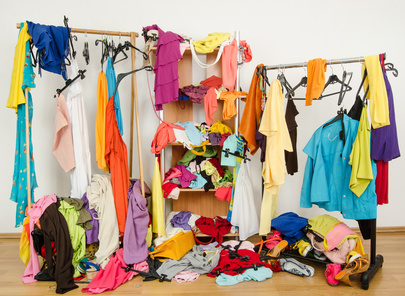
The second pass is the closet inventory, and it is the one people skip. Lay out every event-eligible piece you already own and photograph each one flat against a white wall with your phone. Seeing the pieces flat instead of jammed on a closet rod corrects a surprising amount of the panic on its own, because most panic carts are not a response to an empty closet. They are a response to visual chaos in a closet that already had an answer in it.
The third pass is the gap list. After the inventory, write down what is genuinely missing. The list is almost always shorter than the panic suggested, and often the real gap is not a dress at all. It is comfortable block heels you can walk on grass in, or a wrap for an outdoor evening, or a strapless bra that actually works. The fourth pass is the source list. For each item on the gap list, write down the realistic source, whether that is tailor, rental, borrow, resale or new, and the realistic timeline next to it.
The fourteen-day mark is the gating mechanism. If the event is fourteen days out and the gap list still includes a new piece from a brand with a slow turnaround, the audit forces the decision before the panic window opens. Fourteen days is enough lead time for standard shipping, for a tailor to take in a thrift find, for a rental loop to arrive, and for a borrow request to land. Seven days is enough for rush shipping from a brand you have ordered from before. Four days is the panic zone. The audit exists to move the decision out of that zone by design.
The 3-piece event capsule (one nice dress, one set, one elevated separate)
The capsule is the inverse of the wedding-specific wardrobe approach. Instead of buying for each event in isolation, you build three pieces once, in the right size, in versatile colors, and you stop letting the calendar dictate the cart. One nice dress, one coordinated set, one elevated separate. Built well, it carries you through most of a year’s events before any single piece starts to feel overused.
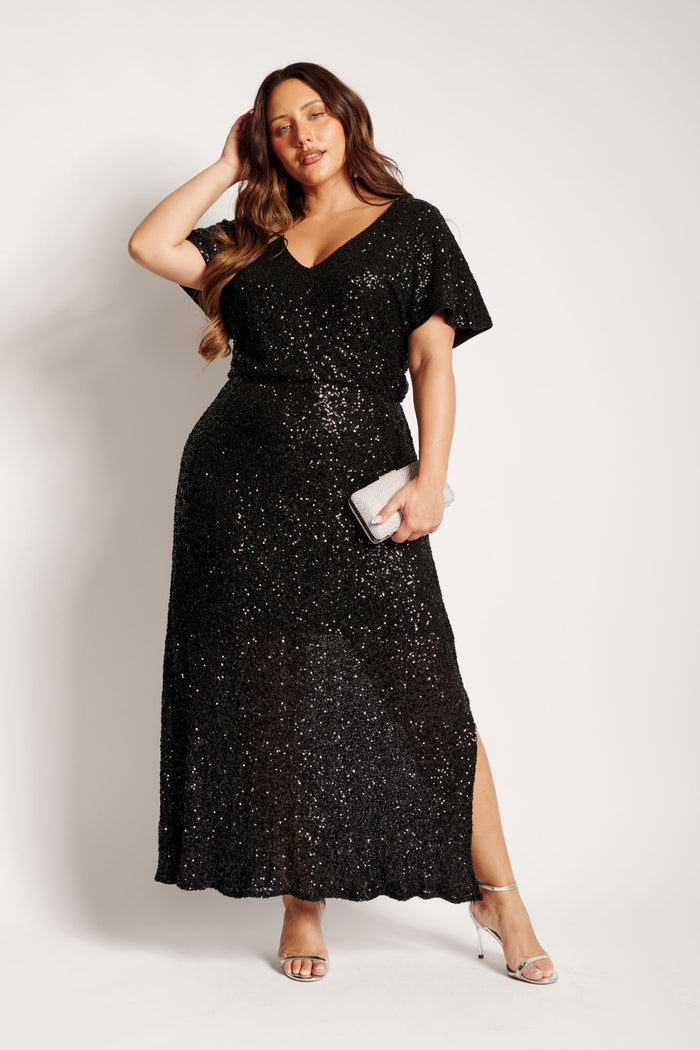
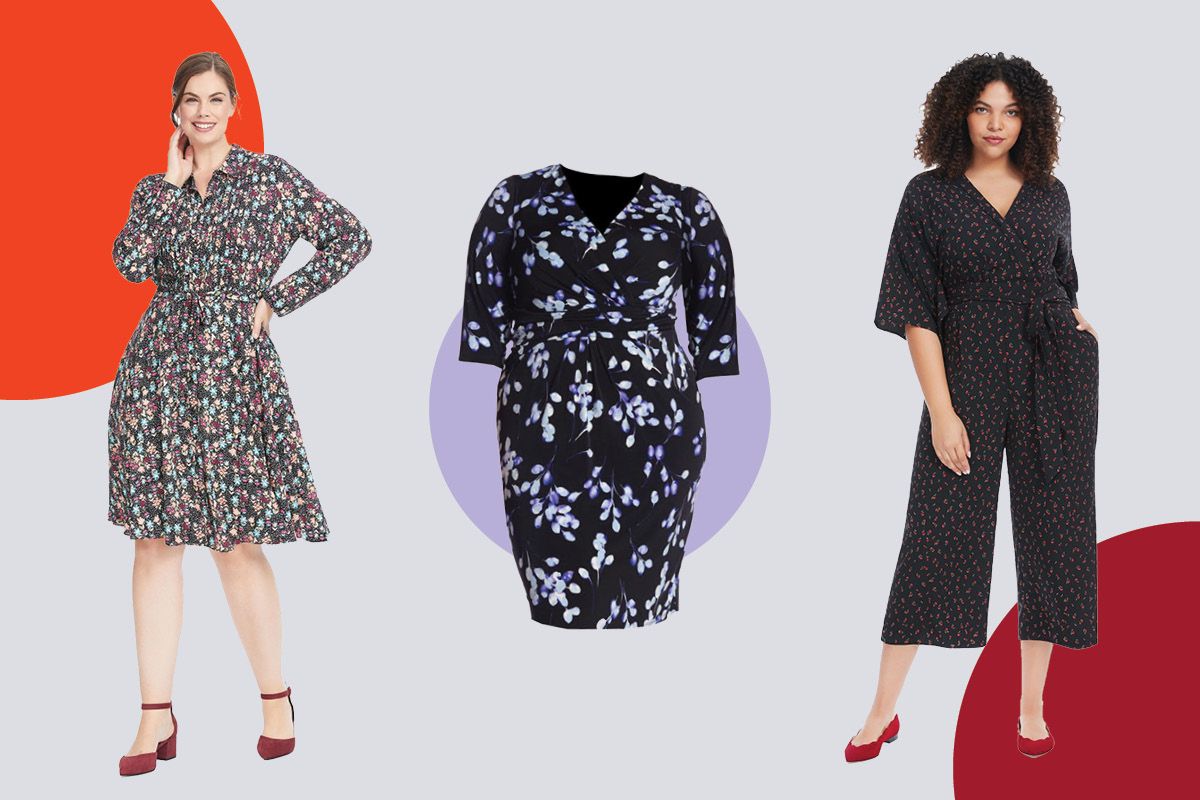
For the nice dress, the strongest option is a midi-length, surplice-neckline piece in a dark jewel tone, in a poly-spandex blend with enough recovery to drape across the bust and the hip without needing shapewear underneath. The criteria are what matter more than the brand: dark color, sleeves to at least the elbow, length to the mid-calf, and a fabric that survives a hotel suitcase. A dress meeting those four conditions reads correctly at a wedding, a christening, a wake, a corporate awards dinner and a milestone birthday, which is why it tends to become the highest-mileage piece in the closet on a per-event basis.
For the coordinated set, look for a wide-leg pant and matching button-down or wrap top in a neutral, ideally a linen blend in camel, stone or soft black. The criteria are matching fabric across both pieces, a pant that hits at the natural waist, and a top that can be tucked or worn loose without losing the line. A set like that reads as a daytime suit at a brunch, an outdoor garden wedding or a family reunion in a rented pavilion, which extends the capsule into daytime events without forcing a second dress purchase.
For the elevated separate, pick one piece that upgrades a closet basic into an event outfit. A satin midi skirt in black is the easiest version, paired with whatever knit or button-down suits the temperature. The criteria are that the piece reads as event-coded on its own and pairs with at least three basics you already own. Between those three pieces you can cover the large majority of an event calendar without opening a panic cart, which is the entire point.
The rental option math
Rental gets filed under “for thinner women” far more often than the inventory justifies, and the numbers are worth running before you dismiss it. At the time of writing, Nuuly’s subscription runs around $100 a month for six items per cycle, with sizes reaching into the 5X range across the plus inventory. Armoire sits at a broadly similar monthly price for a smaller entry-tier item count, with a plus assortment reaching size 24. Rent the Runway discontinued its old unlimited plan some years ago; its current plans are tiered by item count and shipment frequency, with plus sizing across a meaningful subset rather than the whole catalogue. Treat all of those as a band to sanity-check against the brands’ own current pages, because subscription pricing and size ranges both move.
Here is how the comparison actually works. One month of a rental subscription costs roughly what one mid-range dress plus rush shipping costs, so the break-even is about one panic purchase per month. If you attend two events a year where you would otherwise panic-buy, rental is more expensive than simply owning the capsule. If you attend four or more events a year that require event-coded dressing, meaning weddings, work conferences, family reunions, milestone birthdays, charity galas and holiday parties, the subscription math turns against the panic-buy math by a meaningful margin. Count your real event calendar before you decide, not your imagined one.
Rental also solves the alternate-cart problem, which is the actual source of the inflated total. You buy three dresses instead of one because no single dress is certain to fit at the size you wear. A six-item rental cycle is that problem solved by design: six pieces arrive, you wear the one that works, you return all six, and you are not paying return shipping on the rest. You get the same try-on volume as the multi-dress cart at a fraction of the cash outlay and a fraction of the admin.
Tailoring as the unlock (skilled alterations beat new plus-size fast fashion)
The cultural narrative around plus-size shopping is that we cannot tailor what we own and have to source something that fits off the rack. That narrative is incomplete. A skilled alterations tailor working on a piece that fits in the shoulder and the bust will outproduce a fast-fashion plus-size garment on fit, on fabric and on longevity, every time.
The threshold is the shoulder. If the shoulder seam sits where your shoulder bone sits, almost everything else is negotiable: the garment can be taken in, shortened, hemmed, raised at the waist and shaped at the bust. If the shoulder is wrong, the piece is unsalvageable regardless of what the rest of it is doing. Learn to check that one seam first and you will stop wasting money on pieces no tailor can rescue.
That threshold is what makes the consignment circuit worth learning. A well-made wool blazer or a structured dress from a quality label, found secondhand and then altered properly, routinely lands you a better garment than a new mid-market plus piece at a similar all-in cost, because you are buying the fabric and the construction and paying only for the fit. Alterations pricing varies a lot by city and by job, so get a rate sheet from a local shop before you commit to a find. A simple hem is inexpensive; bust dart work on a structured bodice is the expensive end.
Tailoring also extends the capsule’s life, which is where it quietly pays for itself. A capsule dress can go back to the tailor more than once over the years, for a sleeve shortening, for a bust adjustment after a body shift, for a hem raise for a shorter venue, and end up fitted in a way no off-the-rack purchase at any price point will replicate. Buying once and tailoring twice is both cheaper and better than buying alternates four nights out from an event. It does require a tailor relationship and a willingness to shop secondhand, and both of those are skills that compound.
The borrow network (family, work friends, plus-size resale groups)
The borrow network requires the most relational work and pays back the fastest. Think of it as three rings. The inner ring is family and chosen family in the same size range. The middle ring is work friends, neighbors and church friends within one to two sizes of your own. The outer ring is the plus-size resale groups on social platforms, which function as both a marketplace and, once trust is built, a borrow-and-return circuit.
The inner ring works because the trust already exists. The ask can be direct, the return timeline is implicit, and the dry-cleaning courtesy is understood without negotiating it. This is the ring that saves you on the event you did not plan for, and the cost of a borrow plus dry cleaning is a rounding error next to a formal gown bought in a hurry. If you have one person in your size range you can text, you already have a network.
The middle ring takes more work to build because the relational base is thinner, and the way to build it is to be the lender first. Lend out your capsule pieces, reliably and without drama, and the reciprocity establishes itself. The outer ring has its own culture, and leading with a borrow request there will not land. Buy first, sell second, build a reputation across a few transactions, and then the borrow-with-deposit asks become reasonable. Those groups also run flash sales on event pieces that have been worn once and need a second wearer, often well below retail, which makes them worth joining even if you never borrow a thing.

The late-night script (4 questions to ask before checkout)
This is the last line of defense for the night the audit did not happen, the capsule got missed, the rental window closed, the tailor was booked and the borrow request did not land. Four questions, asked out loud at the laptop, before any checkout that happens late at night within a week of an event. They are not motivational. They are decision-gates.
Question one: what is the realistic ship-by date? Not the marketing label at checkout, but the brand’s own stated processing window plus its stated transit time, counted in calendar days rather than business days. “Two-day shipping” that sits behind a one-to-two-day processing window is not a two-day delivery, and anything crossing a border adds a customs window that checkout copy rarely surfaces. Work it out on a calendar, add a day of buffer, and if the answer does not clear your event date, the cart closes. No further questions needed.
Question two: do I already own something that solves this? A piece in a different color or a different neckline that does the same job. Check the closet literally, not from memory, because memory is exactly what fails under panic. This is the question the flat-lay inventory from the audit is designed to answer in ten seconds instead of ten minutes.
Question three: what is the total cash outlay? Not the price of the dress you intend to keep. The whole cart, plus rush shipping, plus return shipping on the alternates you already know you are sending back, plus dry cleaning on the one you wear. Add it up before you click. The all-in number is reliably higher than the number you have been telling yourself, and seeing it written down is often enough on its own.
Question four: will I still want this in three months, or am I buying relief? If the piece is being bought to make the panic stop, it is the wrong piece. The test is simple: close the laptop, set a fifteen-minute timer, and go back to the cart only if the want comes back with you. Usually the panic does not survive the timer, and neither does the cart.

The 12-month event calendar build (weddings, work conferences, family reunions)
The calendar is the upstream intervention that makes everything else work. Once a year, early in the year, sit down with a planner and write out every known and probable event for the next twelve months. Weddings you have been invited to, weddings you expect to be invited to, work conferences already on the schedule, family reunions, milestone birthdays in your circle, holidays you host or attend, and any travel that lands you in a venue with a dress code. Most people’s honest list runs somewhere between twelve and eighteen entries, which is considerably more than the three or four they assumed.
For each entry, write a one-line dress-code spec and a tentative capsule pull. Something like “late September, semi-formal, garden venue with grass aisle, evening reception, pull the jewel-tone midi or borrow.” That pre-decision is what eliminates the late-night panic before it has a venue to land in. The audit, the capsule, the rental, the tailor, the borrow network and the script are all downstream of the calendar being honest in January.
The calendar also surfaces the budget, which is the part that changes the money picture. If the year contains four weddings, two work conferences and a family reunion, your event spend is not a discretionary line item. It is a known annual cost, and a known cost can be spread across twelve months into a separate, named event fund instead of ambushing one month’s clothing budget. The fund covers alterations, rentals, dry cleaning, the occasional new purchase and the thank-you bottle of wine you owe whoever lent you a dress. Work out your own monthly figure from your own list; the point is that the line exists at all.
Last, the calendar is a relational tool. Share your known event list with the people in your inner and middle rings and ask for theirs. Shared calendars surface borrow windows months out, flag the overlap weeks where two of you need the same dress code on the same weekend and have to plan around each other, and occasionally reveal the event where splitting a rental cycle is the right answer for both of you. That is what turns plus-size event dressing from a panic problem into a planning problem.
The real argument
Most financial advice treats panic buying as a discipline problem and prescribes discipline solutions. Named funds, budgeting apps, cart-abandonment timers, seven-day-rule trackers. All of them assume the panic is the variable and the supply is the constant. At a straight size, that assumption mostly holds: the size 8 event dress is two-day-shipped from any of forty brands at any price point, so the panic really is the thing to fix.
Above a size 18, the assumption breaks. The supply is the variable. The panic is a fairly rational response to a category that has not solved its own availability problem, and no amount of willpower closes a gap between a four-day window and a three-week sourcing reality. So treat the audit, the capsule, the rental, the tailor, the borrow network and the script as what they are. Not character corrections. Infrastructure the retail category never built for us, built by us, and far cheaper than another cart full of alternates four nights out.