A packable rain shell is the piece most of us leave at home because the suitcase is full, and the one we most regret leaving. Iceland in May, Lisbon in March, Edinburgh in any month, Tokyo in June, New York in anything ending in r: the weather turns inside the hour and a sweater soaks through in minutes. The alternative, when you are three blocks from anywhere, is a highlighter-colored tourist poncho from a convenience store for the equivalent of twenty dollars.
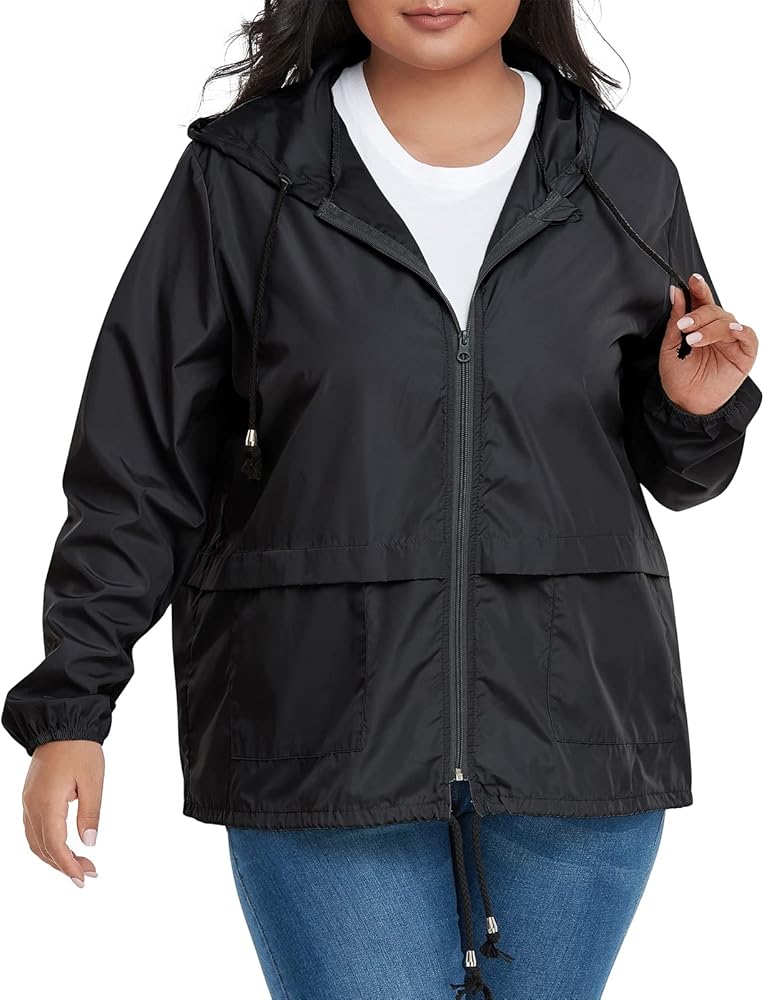
The reason so many plus-size travelers skip the shell is not laziness. It is that a lot of them do not fit through the arms, shoulders or bust without pulling, gaping or riding up, so the jacket gets returned and never replaced. The good news is that the specs that predict a good fit and good performance are published, and you can read them before you order. Here is what to look for, and which jackets actually come in extended sizes.
What to check before you buy
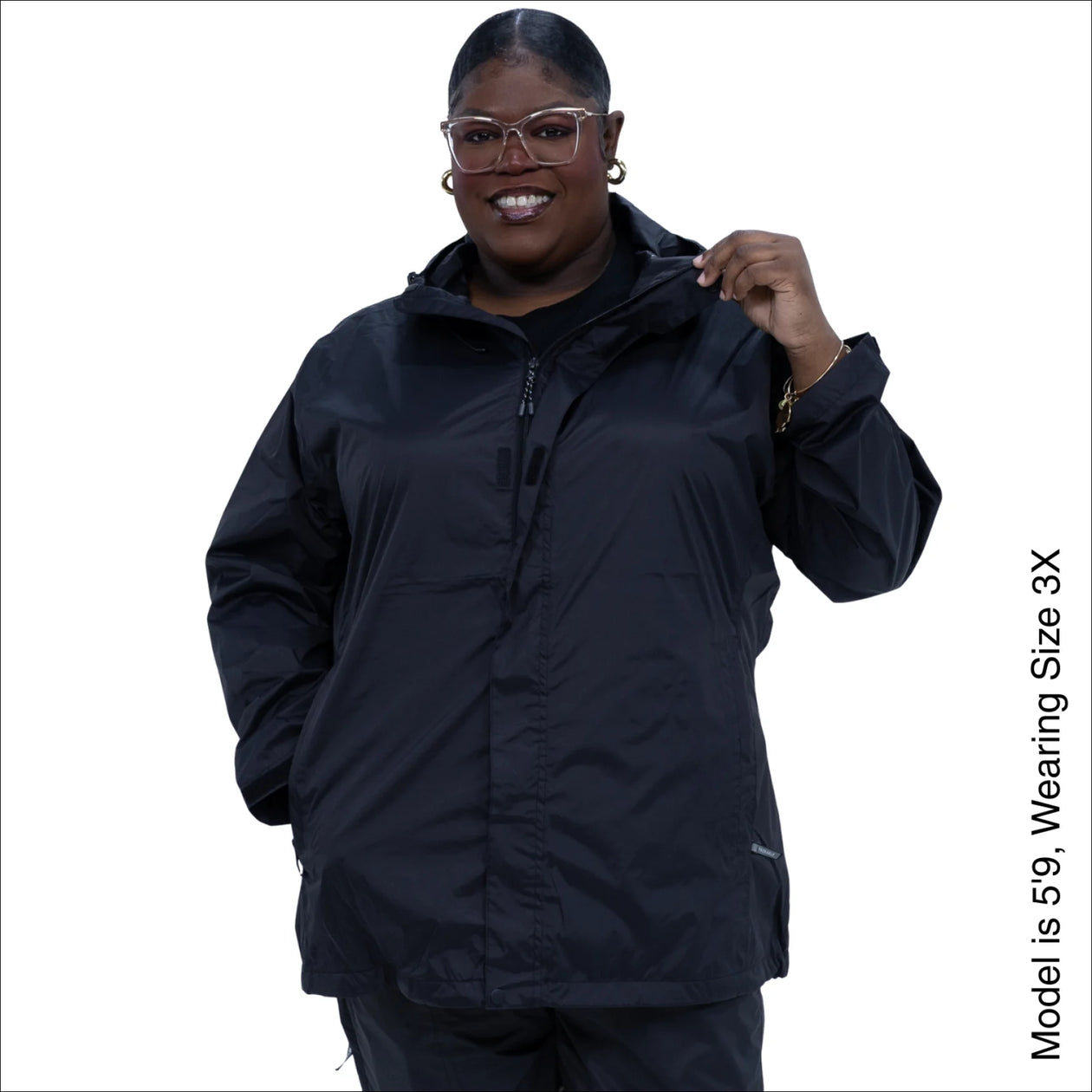
A jacket that fits in the fitting room does not always pass the travel test. Six things matter, in roughly this order.
Waterproofing rating in millimeters. This is the hydrostatic head measurement, and it tells you how much water pressure the fabric resists before it leaks. For city travel and most rainy-day sightseeing, 10,000mm to 15,000mm is plenty. For hiking in genuine downpours, look for 20,000mm. The number is not always on the tag. Some brands publish it on the technical spec page and some do not, so check there before you order, and treat its absence as a question worth asking.
Breathability. Measured in grams per square meter over 24 hours. A jacket that keeps rain out but traps every drop of sweat will soak you from the inside, which is what the cheapest rain shells do. Around 10,000g is a reasonable floor. The shell also needs vents, usually pit zips or a mesh back panel, because on a travel day you may be walking five to twelve miles with a daypack on and generating real heat.
Packed weight and packed volume. A jacket around a pound that packs into roughly an 8 by 10 by 2 inch stuff sack is genuinely packable. Heavier or bulkier than that and it tends to stay in the hotel room. If the listing gives a weight, use it; a jacket at 22 ounces can eat a third of a personal item once it is in its sack.
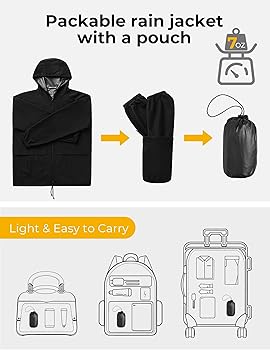
Range of motion. Test it the moment it arrives. Reach both arms straight up. Then reach across your body. Then squat. A jacket that pulls at the shoulders when you reach into an overhead bin will be miserable on a city walking day. The seams should sit on your actual shoulder rather than a few inches inside it, and the sleeves should not ride up past your wrist when you raise your arms.
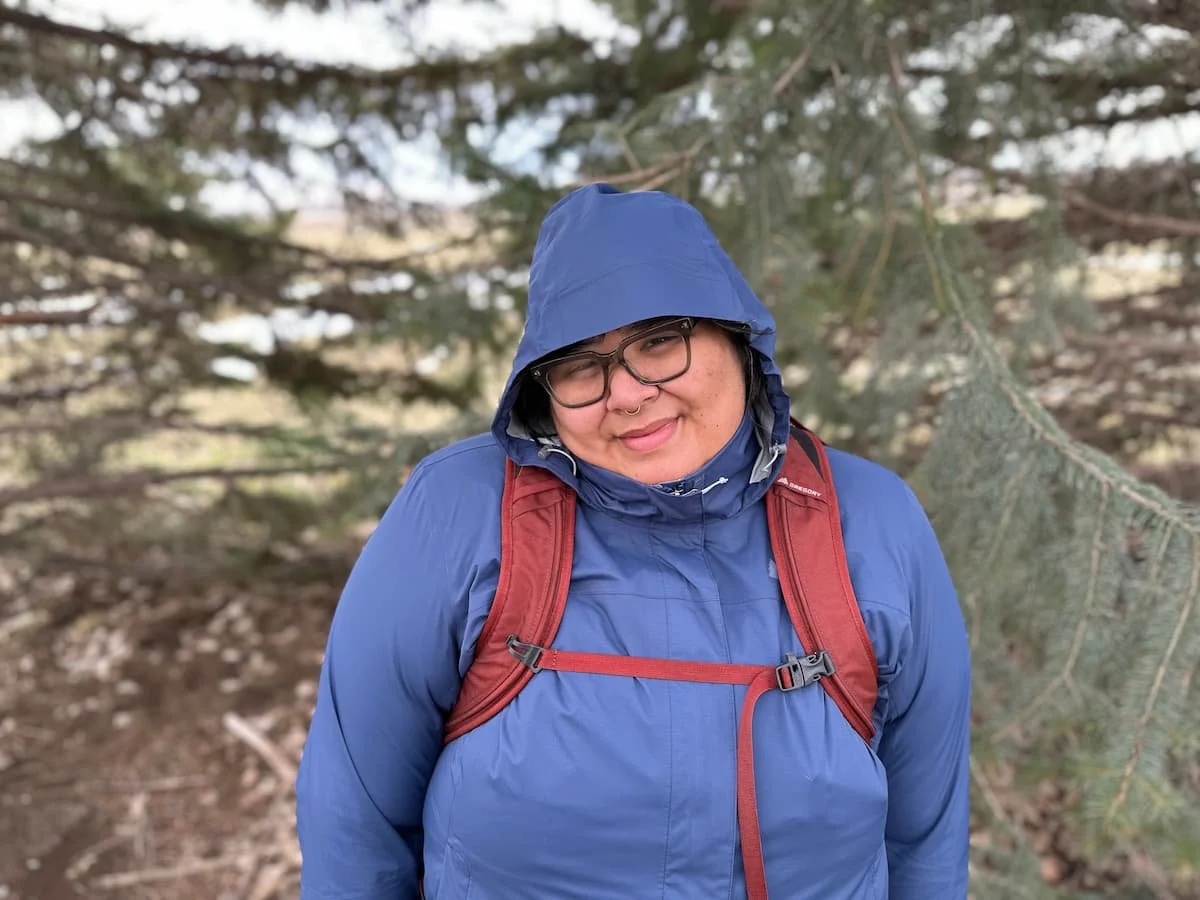
A hood that fits your actual hair. This is the most underrated test and the one brands fail most often. A hood drafted for a flat ponytail will slide off the back of your head the moment the wind picks up, and curly or voluminous hair on a humid day needs real depth. Look for depth, an adjustable drawcord at the back, and ideally a stiffened brim so the hood does not collapse onto your face. Try it on with your travel hair, not freshly straightened hair.
Pockets that close. Two zippered hand pockets, minimum. An interior chest pocket is a bonus. Open patch pockets are useless on a windy day, because everything in them ends up on the bench when you sit down.
Six options across price and use case
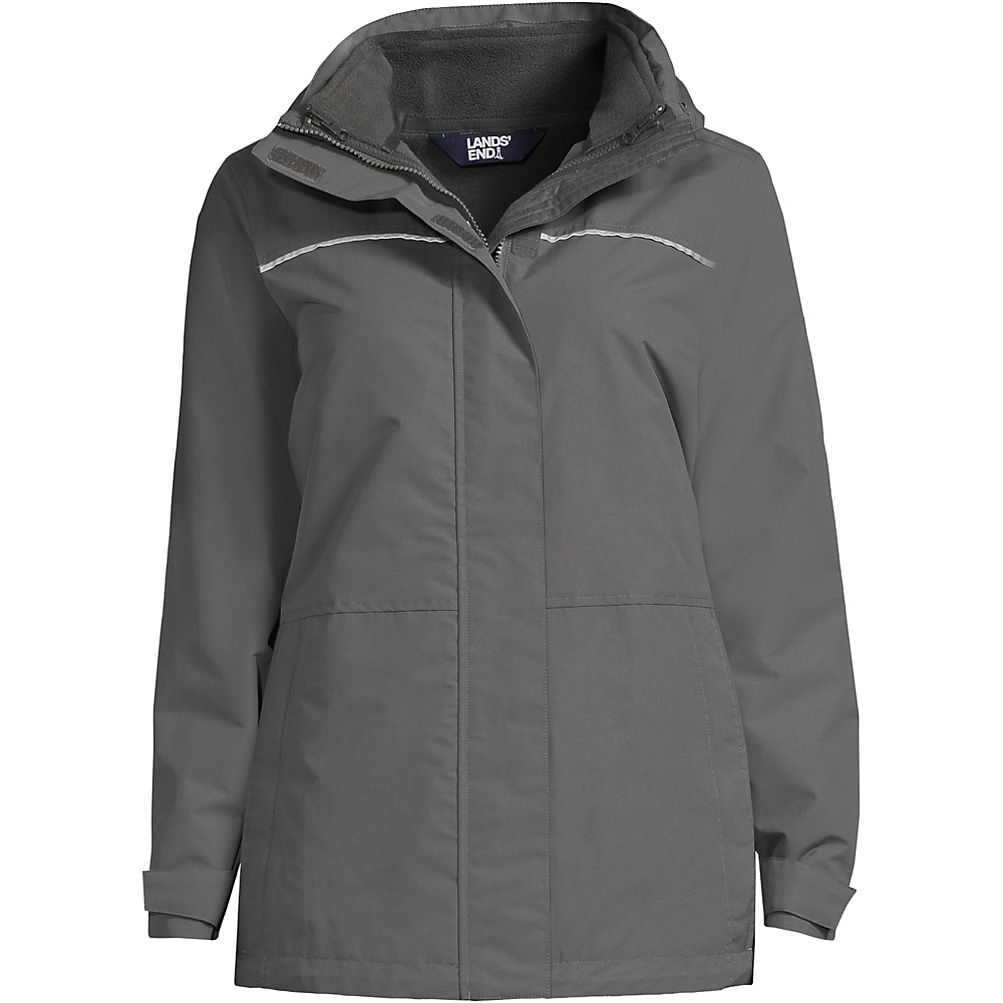
Size ranges and prices below are reference points from the time of writing. Brands change inventory often, and extended sizes are usually the first thing to go, so check the current size run and price before you order.
Universal Standard Derjon Trench, sizes 4XS to 4XL, around $278.
The upgrade option. Not technically a windbreaker, but one of the few genuinely packable rain-resistant trenches available across a wide extended size run. The cut is roomy through the bust and shoulders, the fabric is a recycled blend with a hidden stretch panel and a water-repellent coating, and the silhouette holds its shape over layers. At close to 19 ounces it is heavier than a pure shell, so this is the jacket for a trip where the rain layer is also your outerwear, not the trip where you want a shell as a backup.
Eddie Bauer Cirruslite Down Jacket, sizes XS to 3X, around $129 on sale and $179 full price. This one is not waterproof. It is a packable insulated layer, and it is here because spring travel often calls for warmth more than rain protection. It stuffs into its own pocket, sits around 11 ounces in a 2X, and gives you genuine insulation to layer under a shell. The fit runs slightly relaxed through the body and the sleeves are generous. The hood is fitted rather than deep, so if you want hood coverage over voluminous hair, size up.
Patagonia Torrentshell 3L, extended sizes XS to 3XL, around $179. The technical workhorse. Three-layer H2No fabric rated at 20,000mm, fully seam-sealed, pit zips that genuinely open, and a hood with a stiffened brim that holds its shape in wind. The shoulder draft is among the most generous of any technical shell in extended sizes, which matters if you carry width through the upper body, and there is room to layer a fleece underneath. It packs into its own pocket to roughly 8 by 10 by 3 inches. This is the spec sheet to beat for a trip with real weather.
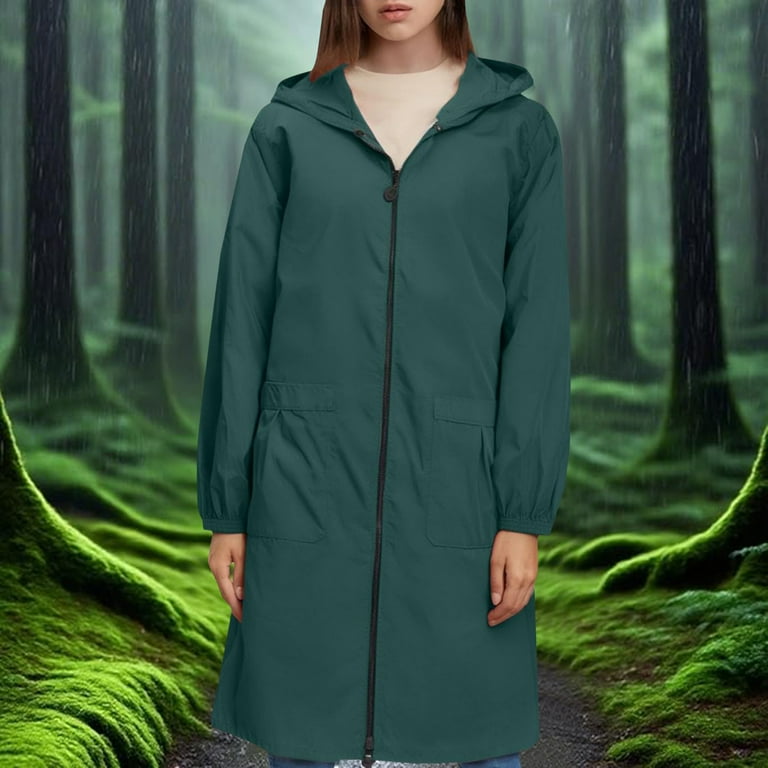
Columbia OutDry Ex Reign Jacket, sizes 1X to 3X, around $200. The construction is reversed from a normal shell: the waterproof membrane sits on the outside, so there is no face fabric to wet out and go heavy. Rated at 20,000mm. It runs slim through the waist, which is worth knowing if you carry weight there, and sizing up one is the usual move if you want to layer a fleece under it. The hood is adequate rather than excellent. It packs reasonably rather than exceptionally, around 10 by 11 inches stuffed.
Athleta Utility Rain Jacket, the brand’s sealed-seam shell in plus, sizes XS to 3X, around $228.
The most fashion-forward option here. Cut like a clean A-line trench with sealed seams, in recycled polyester, fully lined, with a magnetic snap placket over a zipper, and the brand publishes the waterproof rating on the spec page rather than burying it. The bust is generous through the larger sizes, the waist is defined, and the length hits mid-thigh. The packed size is the worst on this list, around 11 by 13 inches, because the heavier fabric and the lining add bulk. Choose it if you want one jacket that doubles as a real outerwear piece.
Marmot PreCip Eco, sizes XS to 3X, around $110. The budget option worth respecting. A 10,000mm rating, pit zips, an attached hood and recycled nylon. It is not luxurious: the fabric has a slight crinkle and the hood is on the flat side. But at this price it is honest gear that keeps you dry in a city downpour, and it packs small, around 8 by 10 inches. If this is your first plus-size rain shell and you are not sure you will use it enough to justify a technical three-layer, start here.
The packing math
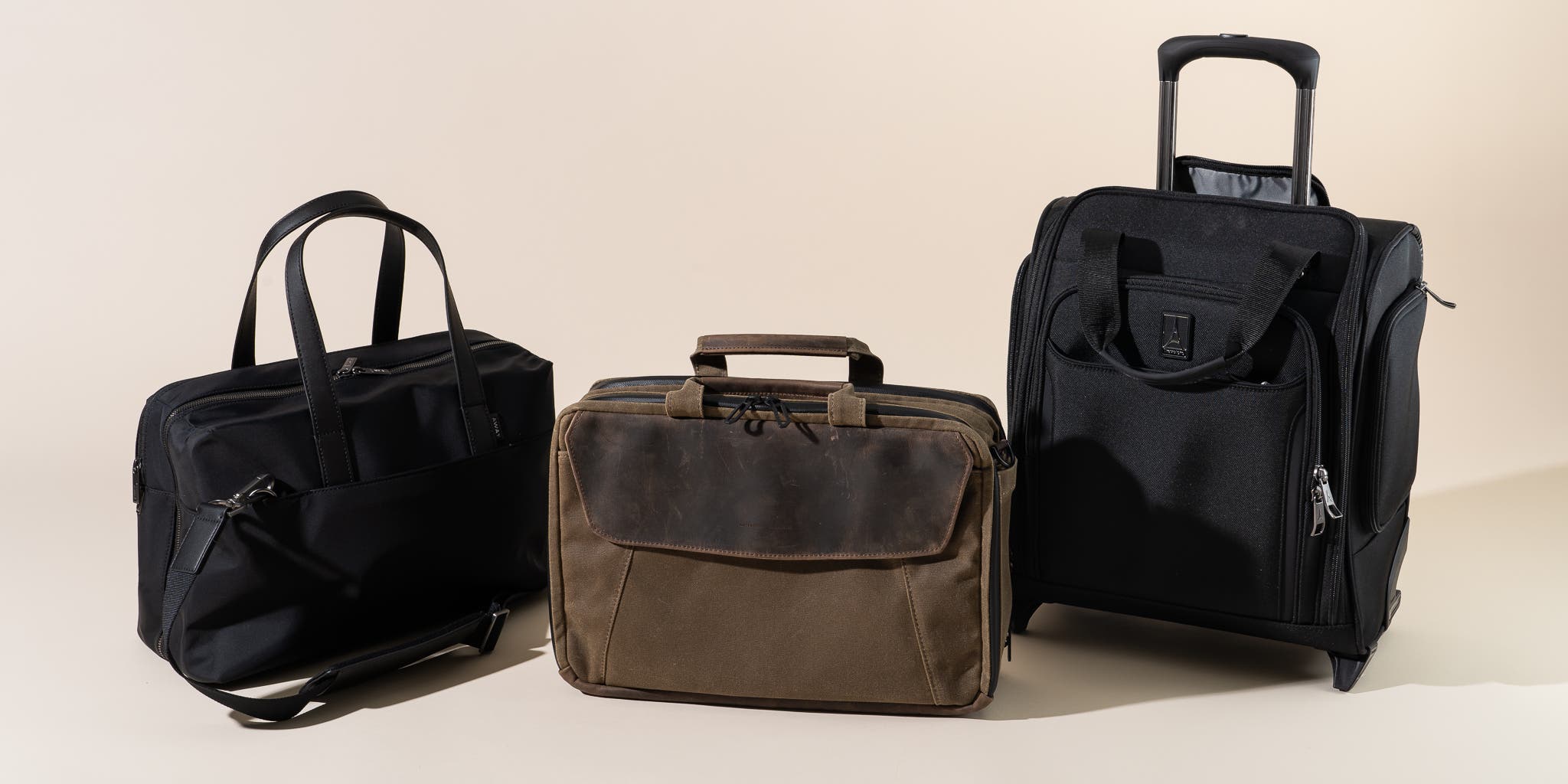
An 8 by 10 by 2 inch stuff sack is the volume that slides into the front zip pocket of most personal-item backpacks without making the bag bulge. That is the target. The Patagonia and the Marmot hit it. The Athleta does not. The Universal Standard trench does not either, but it is meant to be worn rather than packed on a travel day.
The way to decide is to work out which of two jobs the jacket is doing. If it is your outerwear, it does not need to pack small, because you are wearing it on the plane and through every transit moment. If it is a backup for a forecast that might lie, it needs to disappear into your bag. Those are different jackets, and conflating them is how you end up with the wrong one.
A worked example. For five days somewhere genuinely wet, a technical shell as the backup plus a denim jacket as your main layer covers both the rainy days and the dry ones. For a long weekend somewhere mild with one possible afternoon shower, a single trench-style shell as your outerwear and no backup is the lighter, more sensible call.
Layering with a windbreaker on a spring trip
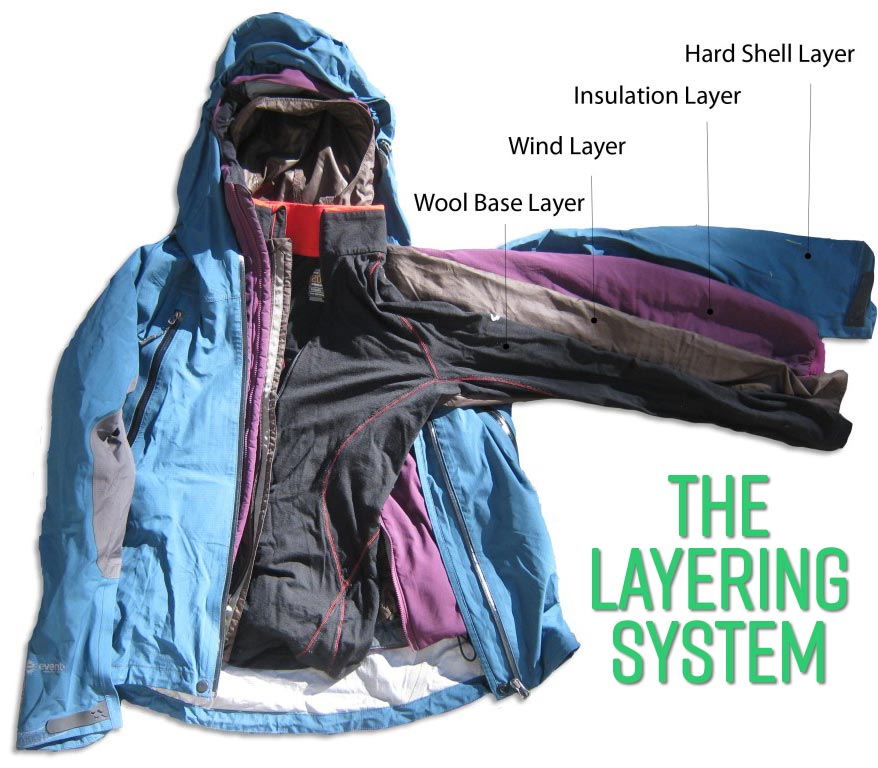
A shell on its own is just a shell. A shell with proper layers underneath is a temperature system. Spring is the hardest weather to dress for, because the spread between a seven in the morning walk to coffee and a two in the afternoon sun break can be thirty degrees, and you are not going back to the hotel in between.
Three pieces do it. A fitted merino wool base layer, long sleeve, in black or a warm neutral. A mid-layer that is either a fleece pullover or a lightweight cardigan, depending on how dressed up the trip is. The shell on top. The base layer regulates moisture, the mid-layer traps warmth, and the shell blocks wind and rain. When the sun comes out you take off the shell and stuff it in your bag. When the wind picks up later you put it back on. If it gets warmer than expected, the fleece comes off and ties through a bag strap. You are down to two pieces, comfortable, and you have not had to find a bathroom to change.
That is the real gain from a packable shell. It is not the shell itself. It is being able to add and remove warmth all day without making your itinerary about your clothes.
What you do not need
Marketing pages for rain shells get into a measuring contest over waterproof ratings, and you will see jackets advertised at 28,000mm and 30,000mm. Those are real numbers and they are also overkill for city travel. A 30,000mm rating is for mountaineering in horizontal rain at altitude. It is not what you need for a Sunday in Amsterdam.
You also do not need a hardshell that crinkles like a chip bag. The highest ratings tend to come with stiffer fabrics that pack heavier and feel worse on a long walking day, and a 15,000mm shell with good breathability and a decent hood will serve you better than a 25,000mm jacket you take off because it feels like wearing a tarp.
And you do not need a new jacket every season. If your shell still beads water, it is still working. When it stops beading, you can refresh the durable water repellent finish with a wash-in product rather than replacing the jacket.
So here is the argument. A packable jacket is not a fashion item, it is a piece of gear, and it is what lets you keep your itinerary when the weather turns instead of canceling the harbor walk or buying a poncho at a convenience store. Before you buy, run the spec. A waterproofing rating of at least 10,000mm with sealed seams. A breathability number you can actually find. Pit zips or vents. A hood with a stiffened brim and an adjustable drawcord. A packed size under 11 by 13 inches if you want it to live in your daypack. Shoulders that let you reach into an overhead bin without the hem riding up to your ribs. A jacket that clears those six in your size has earned a permanent spot in your bag.