A caffeine habit is rarely one cup. It is usually three or four small rituals stacked on top of each other until the total is invisible. The pour-over while you read the news on your phone. The iced oat milk latte on the way in. The afternoon coffee you have decided is “social” because you sometimes drink it with someone else. Count it honestly and the arithmetic is often startling: a 95 mg home brew plus two 165 mg lattes is already past 400 mg, before you add the dark chocolate at 4 p.m.
That arithmetic is why a lot of women end up curious about a caffeine break. Not as a cleanse, and not as a conversion to herbal tea evangelism, but as a way to find out what one variable is actually doing. If you are considering it, here is what the habit is really made of, what tends to be harder than people expect, and the replacement drinks that hold up when the coffee comes out of the rotation.
Start by counting what you are actually drinking
Most people underestimate their own intake, and they underestimate it in a specific direction: the cup that does not feel like a habit does not get counted. Before you change anything, write down every caffeinated thing you drink for a week, with the time and a rough milligram figure. A home-brewed cup, a cafe latte, a cold brew and a strong tea are not interchangeable, and the time of day matters as much as the total.
Two general facts are worth knowing while you count. Caffeine’s half life in a healthy adult is commonly put at roughly five to six hours, which means an afternoon cup is still pharmacologically active in the evening. And that half life is not the same for everyone: it runs longer for people on oral contraceptives, longer in pregnancy, longer with reduced liver function, and longer for people who simply clear caffeine slowly. The widely quoted 400 mg daily upper limit for adults is a population-level number, not a personal one. If an iced coffee at 2 p.m. reliably leaves you wired at 10 p.m., that is information about you, and it outranks the general guideline.
When the symptom belongs to a clinician, not an article
This matters before anything else. Heart palpitations, a racing or fluttering chest, a resting heart rate that has climbed, migraine, or a sleep problem that has gone on for weeks are all things to take to a doctor rather than to a self-experiment. Caffeine may turn out to be part of the picture. It may not be, and the only way to know is to have someone look at your actual history, medications and labs. Cutting caffeine is not a substitute for that appointment, and it is not a treatment for anything.
There is also no single right way to come off it. How fast to reduce, and whether to reduce at all, depends on your health, your medications and what else is going on, which is a conversation for a clinician rather than a protocol from a website.
What tends to be harder than people expect
Caffeine withdrawal is well documented and genuinely unpleasant for some people. Headache is the symptom most associated with it, and it is often described as sitting behind the eye or across the back of the skull rather than as ordinary head pain. Fatigue, difficulty concentrating, irritability and a flat, hard-to-name low mood also turn up in the clinical descriptions. None of that is a character flaw or a sign of weakness. It is a predictable response to removing a stimulant a nervous system has adapted to.
The practical consequence is worth planning around: the first stretch is a bad week to schedule anything demanding. Expect slower work, more forgetfulness and a short temper, and build the timing accordingly. Pick a window where a foggy afternoon costs you very little.
The flatness is its own thing. A morning latte is rarely only caffeine. It is a warm thing in your hand, a complicated flavour, a ten-minute walk, a punctuation mark in a day that otherwise runs together. Remove the chemistry and the ritual goes with it, and the gap that leaves is the single most common reason a caffeine break collapses in the first fortnight. Which is why the replacement question is not a footnote.
Caffeine, sleep and the thing you cannot self-report
One finding from sleep research deserves to be better known: caffeine measurably changes sleep architecture even when it is consumed many hours before bedtime, and the drinker generally cannot feel it happening. The subjective sense of “I slept fine” is not a reliable instrument here. People who have cut their afternoon cup and noticed nothing in the moment may still have shifted the ratio of deep to light sleep.
This is why the honest version of a caffeine break is framed as a test rather than a promise. Nobody can tell you in advance what your sleep, energy or mood will do, and anyone who guarantees a result is selling something. What you get is one variable removed and a clearer view of what was attached to it.
The replacement drinks that actually hold up
Prices below are approximate and were accurate at the time of writing. Treat them as a band rather than a quote.
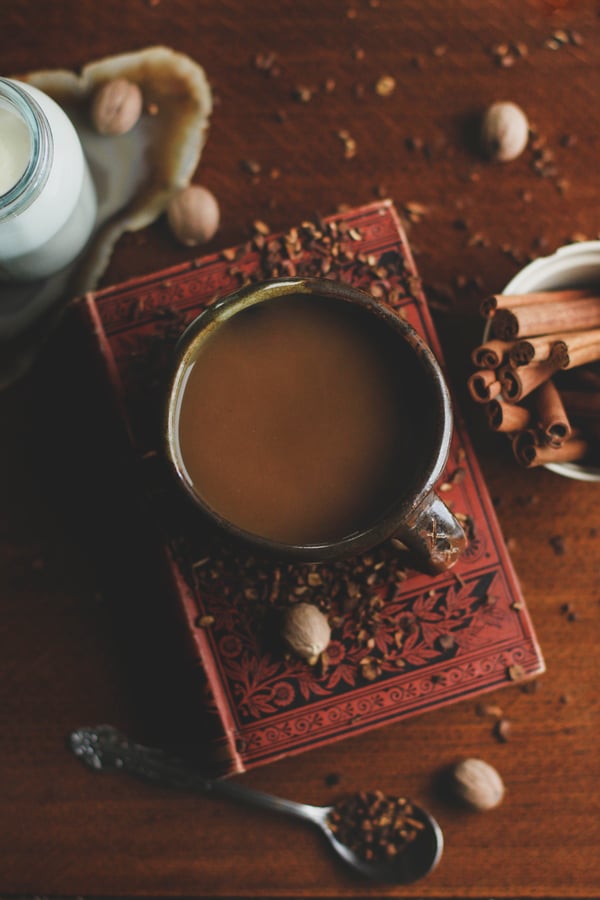
Teeccino, for the morning cup. A chicory-and-carob herbal blend with zero caffeine, sold in roast-style blends including a French Roast. Its practical advantage over most coffee alternatives is that it brews in an ordinary drip machine or French press, which removes the friction that kills most swaps. It does not taste like coffee, and pretending otherwise sets you up for disappointment: think toasted bark rather than espresso. It gets considerably better with adjustment, specifically more grounds than the package suggests, a splash of oat milk and a little maple syrup. Roughly fourteen dollars a bag, and a bag lasts a few weeks. Widely stocked in natural grocers.

Matcha, if you want to keep a little caffeine. A whisked cup of ceremonial grade matcha runs somewhere around 35 mg of caffeine, roughly a third of a home-brewed coffee, alongside a meaningful dose of L-theanine, the amino acid green tea drinkers credit for a calmer kind of alertness. Whether that shows up for you is individual. What is not individual is the ritual: whisking with a chasen and water off the boil takes five minutes, and those five minutes do a lot of the work the walk to the coffee shop used to do. A small tin of good ceremonial grade runs in the region of thirty-five dollars and lasts over a month.
Adaptogenic herbal blends, for the afternoon slot. Rasa and similar herbal blends built on roots and mushrooms are caffeine-free and brew like coffee in a French press, which makes them a workable stand-in for the 1:30 p.m. cup. They taste more medicinal than Teeccino, and some people prefer that. Treat the claims on the packaging about adaptogens and stress with scepticism; the appeal here is a bitter, warm, no-caffeine drink in the slot where you used to have a stimulant. Around twenty-five dollars a tin.
Mushroom coffee blends. These taste closer to coffee than chicory does and generally carry a reduced caffeine dose rather than none. Useful mainly as a fourth option, because the real enemy around week four is boredom with the rotation. Whether the price is worth it is a personal call.
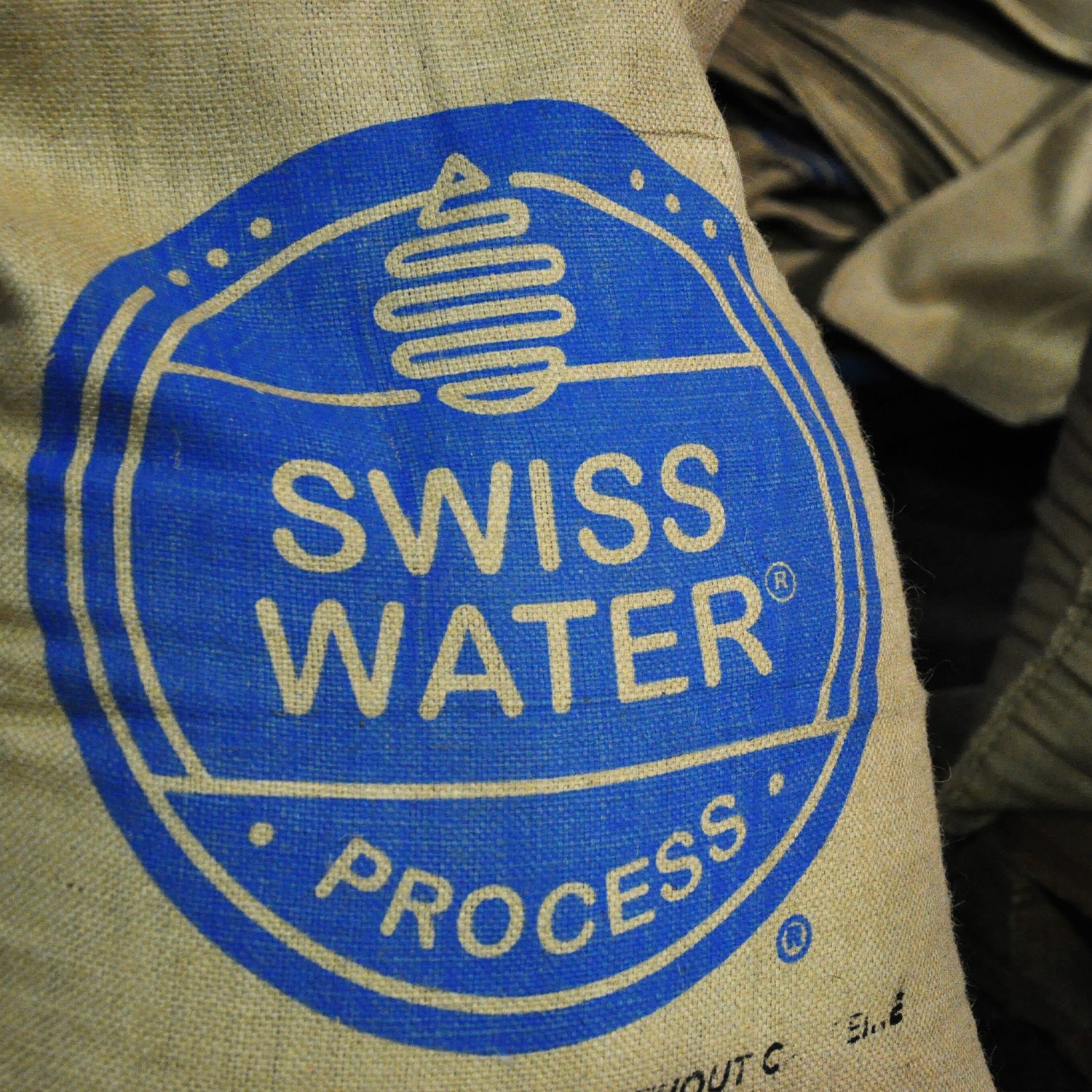
Decaf, with one caveat worth knowing. Decaf is the closest thing to the actual coffee experience, and it is the obvious answer for the weekend cup you do not want to give up. Two things to know. First, decaf is not zero caffeine; a cup carries roughly 2 to 7 mg, negligible for sleep but not nothing. Second, decaffeination method varies, and some commercial decaf is solvent-extracted. If that matters to you, look for Swiss water process on the bag, which uses only water and activated charcoal. Specialty roasters increasingly label it, at around sixteen to eighteen dollars a bag.
Two swaps that catch people out
Yerba mate is not a low-caffeine option. A lot of people reach for mate assuming it sits below coffee. A strong gourd can deliver around 180 mg, and the dose is hard to judge because it depends on how you brew and how long you keep refilling. If you are trying to reduce a total, mate is a poor instrument.
Brewed cacao is caffeine-light but not inert. Cacao husk drinks such as Crio Bru are low in caffeine but contain theobromine, a related stimulant, and some people get headaches from it. Worth trying in a small amount before you make it your daily cup.
If you do go back, go back on purpose
A break does not have to end in abstinence, and framing it that way makes it harder than it needs to be. The more useful question at the end is what you want your baseline to be, rather than whether you passed. Plenty of people land on a structure instead of a rule: coffee on weekend mornings only, or a single cup before a set hour, with the caffeine-free options covering the weekday slots. Reintroduced deliberately after a gap, caffeine tends to be noticeable again, which is the whole appeal of a smaller dose.
The thing a break is actually good for is information. You find out how much of the 9:30 a.m. latte was the caffeine and how much was the walk, the warmth and the ten minutes to yourself. The second part you can keep without the first.
A note on health information. This article is general information and not medical advice. It is not written by a clinician and it cannot account for your own history, medications or circumstances. Please speak to a qualified healthcare professional before starting, stopping or changing any treatment, medication or supplement, and seek professional support if anything here raises a concern about your own health.