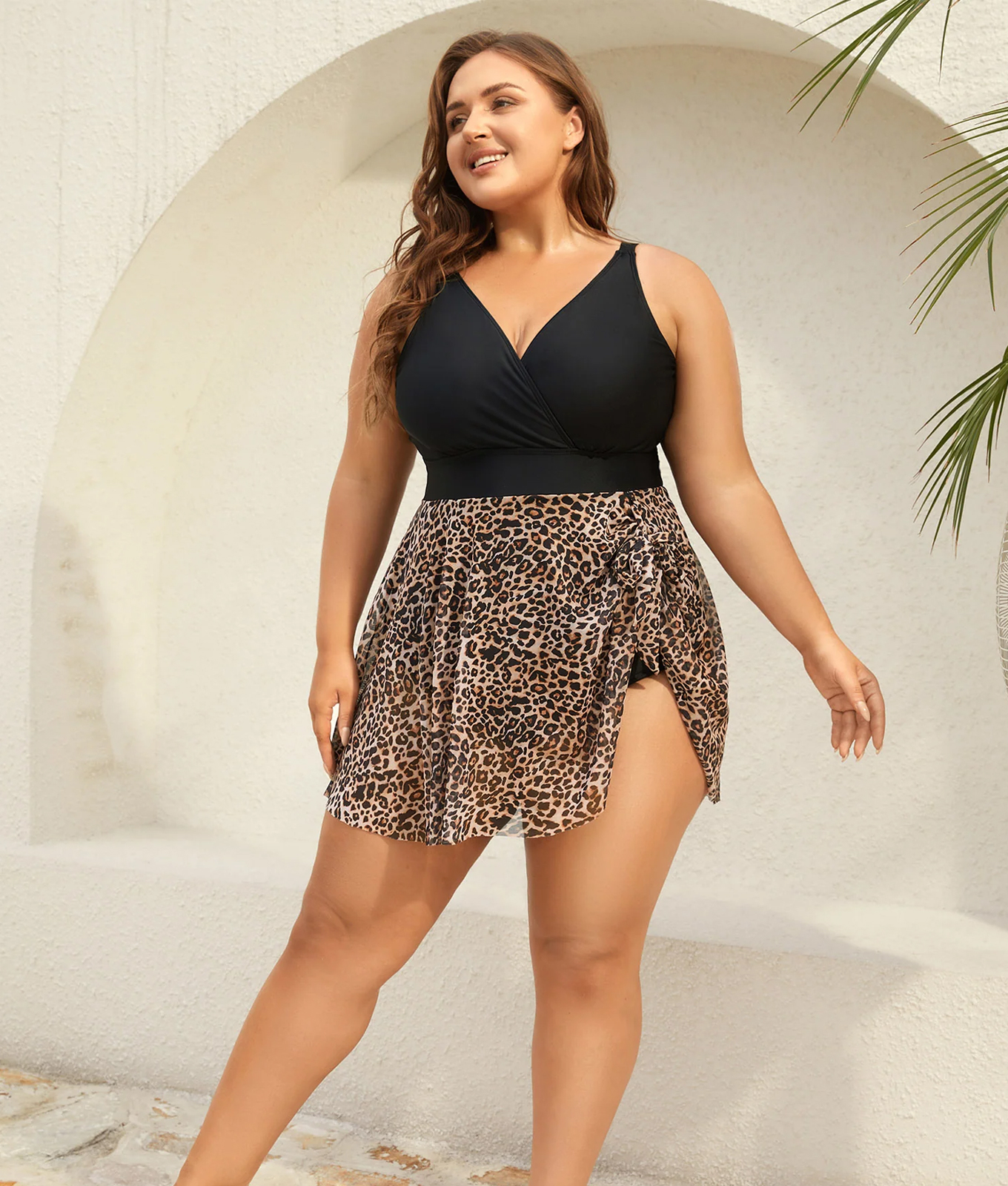

Every spring somebody asks a plus size group whether a swim dress is the “safe” choice, and the replies split down the middle inside an hour. Half the thread says swim dresses are matronly. The other half says a swim dress is the only thing standing between their thighs and a raw, stinging walk back to the car. Both groups are right, because they are describing two completely different garments that happen to share a name. A swim dress built with a weighted, well anchored skirt over a real attached brief is a piece of technical clothing that solves specific problems. A swim dress made from thin jersey with a loose flap of fabric hanging off the hip is a costume, and it will float up around your ribs the first time you walk into moving water. Learning to tell those two apart before you spend money is the whole job.
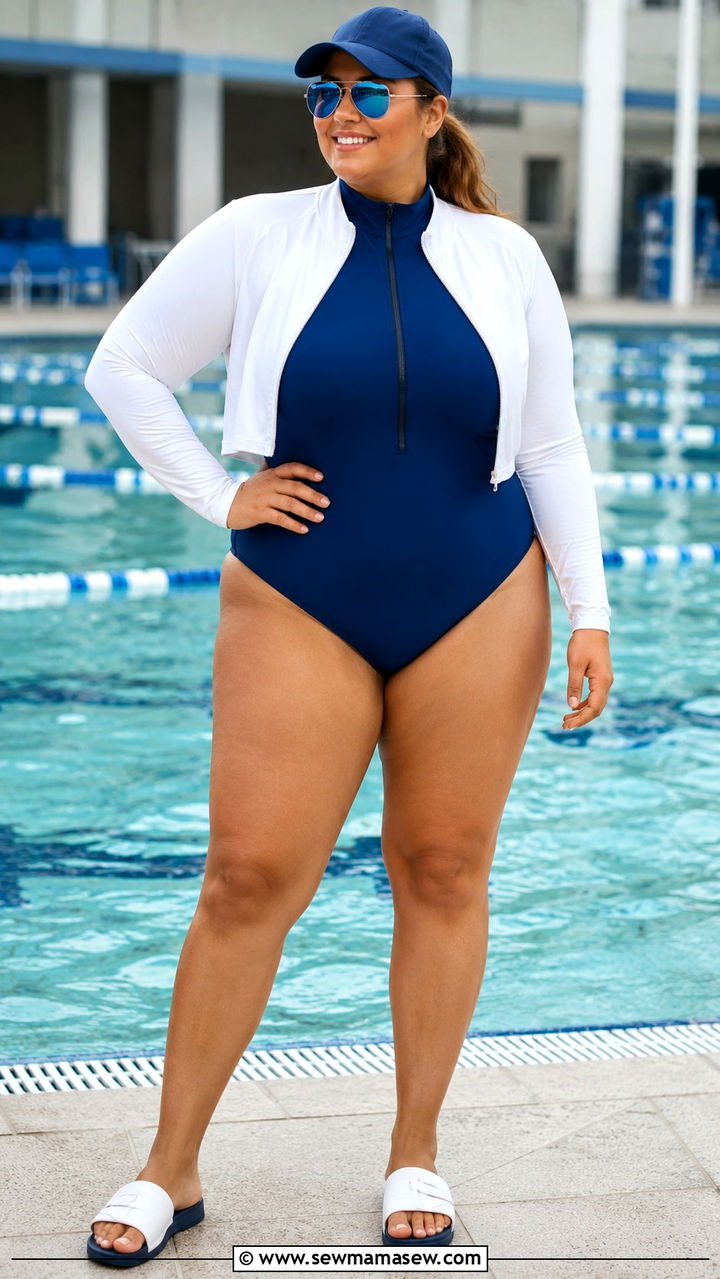
Who a swim dress genuinely serves
There are three honest reasons to reach for a swim dress, and none of them is embarrassment. The first is chafe protection. If your thighs touch, a skirt that sits over an attached short or brief gives you a soft barrier at exactly the spot where wet skin plus salt plus friction turns into a burn by hour three. The second is sun coverage. A skirt shades the upper thigh and the hip crease, which are the places people forget to reapply sunscreen and the places that blister worst. The third is simple preference. Some of us feel more like ourselves with a bit of drape at the hip, and that is a complete reason on its own. Notice that all three are about function or feeling, not about hiding.
The myth that a bigger body owes anyone coverage
The idea that swim dresses are “what bigger bodies should wear” got baked into retail so long ago that plenty of brands still bury their extended sizes behind a wall of skirted styles while the straight size page is all high cut one pieces and bikinis. That is a merchandising decision, not a rule about your body, and it has quietly taught a lot of women that the skirt is a requirement rather than an option. Coverage is a choice. If a swim dress makes your day easier, wear it because it works. If a skirt makes you feel like you are apologizing for taking up space in a pool, skip it entirely and lose nothing. The only wrong swimsuit is the one that stops you from getting in the water.
What is under the skirt matters more than the skirt
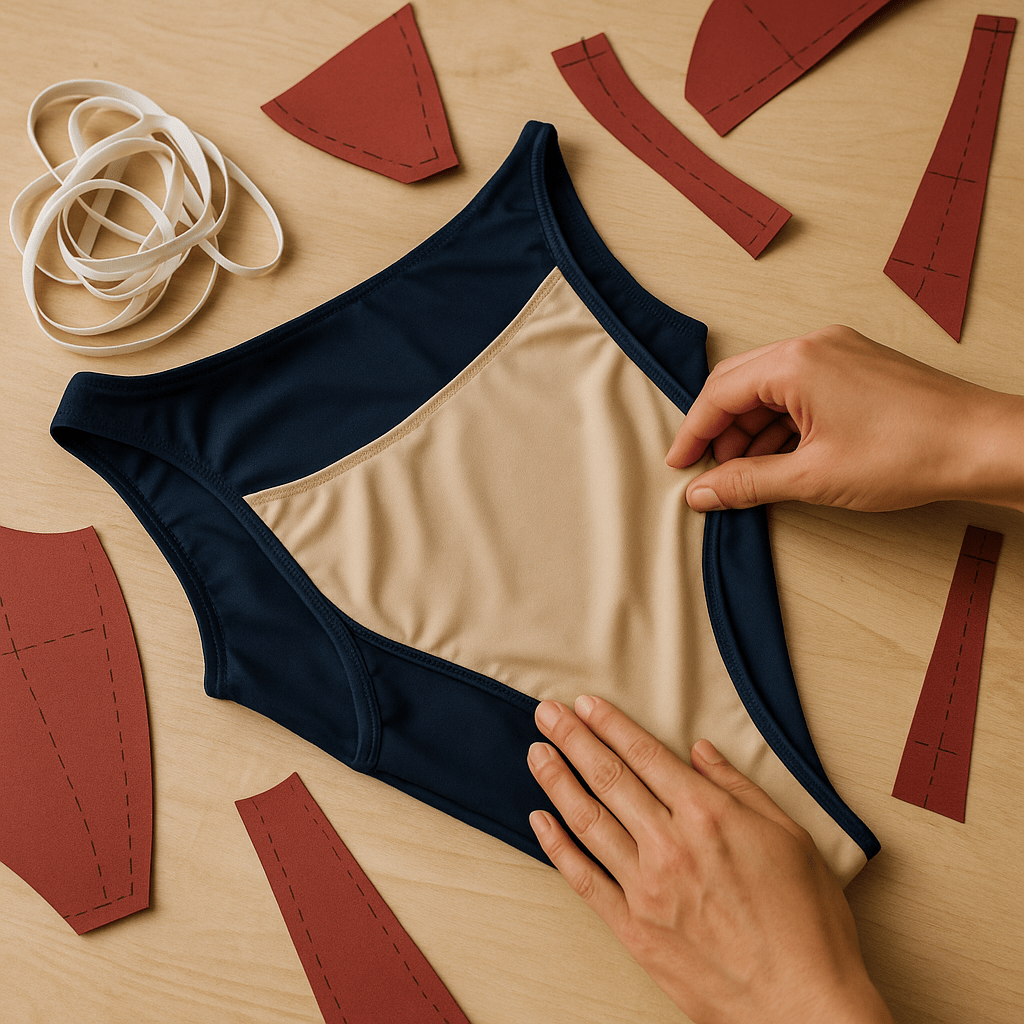
Turn the garment inside out before you look at the print. You are checking for one thing: is there an attached brief or short sewn into the body of the suit, or is the skirt simply hanging loose from a seam? A loose skirt over a bare bottom half is the single most common failure in this category. It rides, it bunches, it flips, and it leaves you tugging all afternoon. An attached brief anchors the skirt from underneath so the fabric moves with you instead of against you. Better versions use an attached short with a few inches of leg, which is the version that actually does the anti chafe job. If the product page will not tell you which one you are getting, that silence is usually the answer.
Fabric weight, and why a cheap skirt floats
Skirts float for a simple reason. Light, airy fabric traps air and then loses to buoyancy the moment you step into water deeper than your knees. What you want is a skirt cut from the same weight of swim fabric as the body of the suit, ideally with a little spandex content and a hem that is finished rather than raw. Hold the skirt up and let it fall. If it drops straight down and holds a soft line, it will behave when wet. If it drifts, it will drift in the pool too. The other failure mode is the opposite problem: very thin fabric that goes transparent and shrink wraps to every contour the second it is soaked, which defeats the entire point of choosing coverage in the first place. Weight solves both.
Built-in support, and what a shelf bra can and cannot do
Most swim dresses advertise “built-in support,” which in practice usually means a shelf bra: a band of elastic and a layer of lining. On a smaller chest that is fine. From a D cup upward it is decoration. What you want instead is a suit with real bra architecture, meaning underwire or molded cups, adjustable straps, and a hook closure or a wide, firm underband that sits level and does not ride up your back. If you already own a swimsuit that fits your bust properly, learning what its band and cup construction looks like will make you much faster at spotting the fakes. Compression through the torso is a separate question with its own tradeoffs, and if that is what you are after, our guide to tummy control swimsuits gets into which panels actually hold and which just squeeze.
Length, chafe protection, and the gap you need to close
Here is the trap. A mid thigh skirt looks like coverage but often provides no chafe protection at all, because the skirt ends above the point where your thighs touch and it is not attached to anything that reaches down there. The protection comes from the layer underneath, not the skirt. So decide what you want: if the goal is anti chafe, look for an attached short with roughly three to five inches of inseam, or plan to wear a separate pair of swim shorts under whatever you buy. If the goal is sun coverage or drape, skirt length is a style call and you can pick whatever you like the look of. A pair of quick dry swim shorts under a shorter skirt tends to outperform a long skirt with nothing underneath it.
Mixing a swim skirt with a separate top when you size split
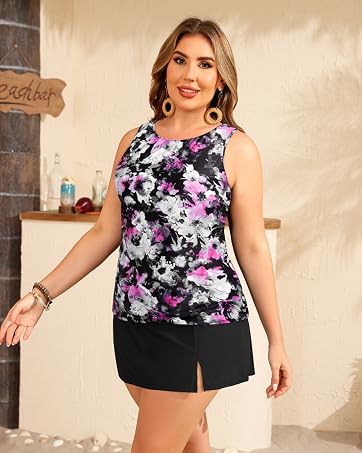
A swim dress is a one piece, which means it has to fit your bust, your torso length, and your hips using a single number. Plenty of us do not work that way. If you wear a G cup and a size 18 hip, or a 26 hip and a modest bust, the one piece will always compromise somewhere, usually by pulling the crotch upward or leaving the cups gaping. Buying a swim skirt separately fixes this cleanly. You pick the skirt for your hips, the top for your bust, and nothing has to negotiate. It also lets you replace one half when the elastic goes rather than binning the whole suit. Look for a skirt with a wide, flat waistband and an attached brief, and check that the waistband sits where you actually want it rather than at the narrowest point of a fit model.
When a one-piece plus swim shorts beats a swim dress
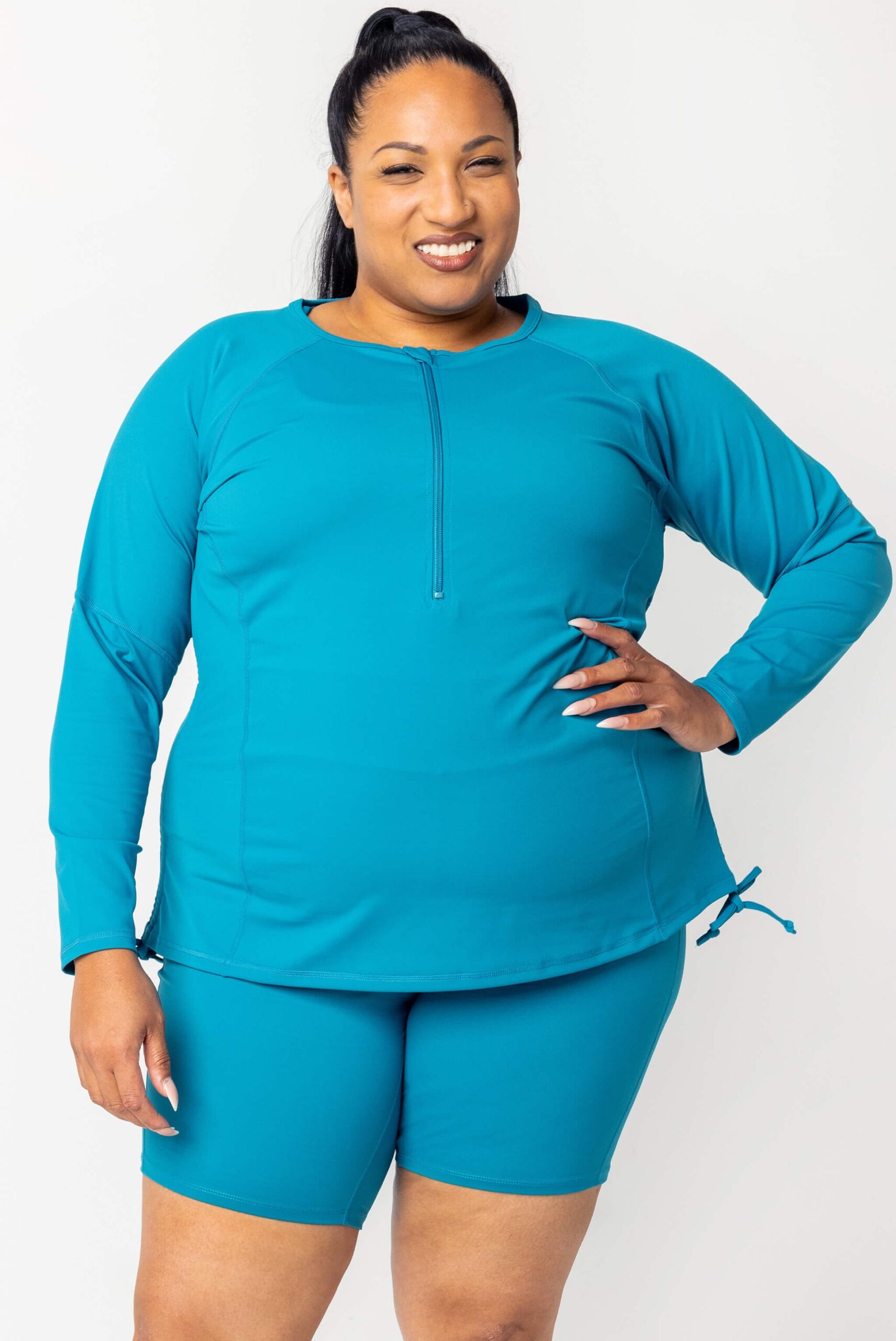
If you swim rather than wade, this combination usually wins. A skirt drags in the water, wraps around your legs mid stroke, and slows you down, which is why you will not see one on a lap swimmer. A plain one piece with a pair of fitted swim shorts pulled over the top gives you more thigh protection than most swim dresses, moves cleanly through water, dries faster, and costs less because you can buy the two halves at different times. It is also the more forgiving option for a long active day, since shorts stay put on a water slide and a loose skirt absolutely does not. The table below is roughly how I decide.
| What the day involves | Best pick | Why |
|---|---|---|
| Lounging, shallow water, long sun exposure | Swim dress with attached short | Shade at the thigh and hip, drape you like |
| Actual swimming or laps | One piece plus swim shorts | Nothing wraps your legs mid stroke |
| Bust and hip sizes far apart | Swim skirt plus separate top | Each half fits on its own terms |
| Water slides, waves, tubing | One piece plus swim shorts | A loose skirt will not stay down |
| Chafe is the main worry | Anything with a fitted leg underneath | Protection comes from the layer, not the skirt |
Quick answers to the questions everyone asks
Do swim dresses make you look bigger? A badly fitted one adds bulk at the hip because the fabric bunches, which is a fit problem rather than a size problem. A skirt cut with a slight A line and anchored to a brief reads smooth. But the more useful question is whether you like wearing it, since nobody at the pool is running an assessment on your silhouette.
Will a swim dress skirt float up? It floats if the fabric is too light or the skirt hangs loose from a seam with nothing underneath. A skirt cut from full weight swim fabric and attached to a brief or short stays down in normal pool use. Deep water and surf will lift almost any skirt, so pack shorts for those days.
Can I wear a swim dress if I actually swim? You can, but you will feel the drag and the skirt will wrap your thighs on every kick. For real swimming, most people are happier in a one piece with shorts. Save the swim dress for the days you are mostly in and out of shallow water.
How do I stop thigh chafing in swimwear? Cover the contact point with a fitted layer, meaning an attached short with a few inches of inseam or separate swim shorts. Skirt length alone will not do it. An anti chafe balm helps for short exposure, though it washes off in water faster than most labels suggest, so reapply.
Are swim skirts and swim dresses the same thing? No. A swim dress is a one piece with the skirt built in, so one size has to serve your bust and hips together. A swim skirt is a separate bottom you pair with any top, which is the better route if your top and bottom sizes are more than a step apart.
What I pack when the pool day is a whole day
My bag has a plain one piece I trust, a pair of swim shorts, and one swim dress with an attached short that I bought after checking the seam rather than the photo. The one piece and shorts go on for the water. The swim dress goes on for the long stretch on a lounger when the sun is high and my thighs have already had enough. None of that is about looking smaller. It is about a body that gets sunburned, chafed, and tired in predictable places, and clothing that answers those specific things. Buy for the day you are actually having, check what is sewn underneath before you check the print, and wear the skirt only on the days you want it.