
Every October the same thing happens in the costume aisle. You find the one you want, you check the size tab, and the run stops at XL. Then you look one rack over and there is a whole section that does go up in size, except every option there is a hot dog, an inflatable dinosaur, or something with a name that is meant to be a punchline. The message is not subtle. Cute is for one body, funny is for another, and if you want to be the witch instead of the gag, you can go home and improvise. That is not a costume problem. That is a retail problem, and it has workarounds.
This guide is about those workarounds. Some of it is knowing which retailers genuinely grade past 3X instead of relabeling a stretched-out XL. Most of it is a different approach entirely, which is building the costume from clothes rather than buying it in a bag. Once you shift to that method, the ceiling disappears, because your own wardrobe already fits you and accessories have no size at all. Add in a bit of planning about timing and comfort, and you get a night you actually enjoy instead of one you survive.
Why the costume aisle fails past XL
Seasonal costumes are made fast, cheap, and in one narrow set of patterns, then sized by stretching that pattern outward rather than redrafting it. That is why a 3X costume so often has sleeves that bind, a bodice that lands in the wrong place, and a hem that sits at an odd height. Costumes are also unlined, thin, and built to survive one night, so there is no seam allowance to let out and no structure to work with. The industry treats extended sizing as a separate novelty category rather than as part of the main range, which is exactly how you end up with rows of “funny” options at 3X while the appealing designs stop three sizes earlier.
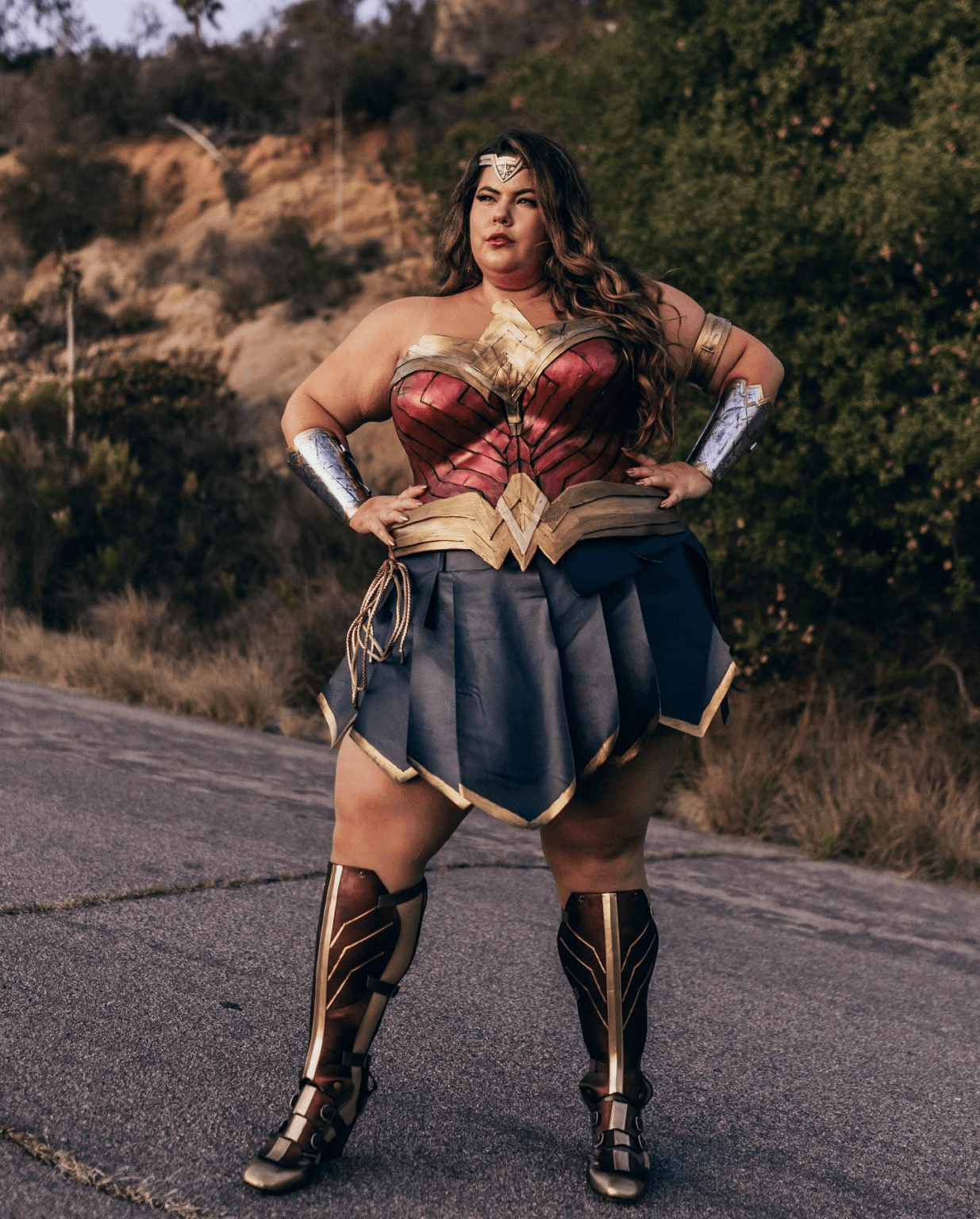
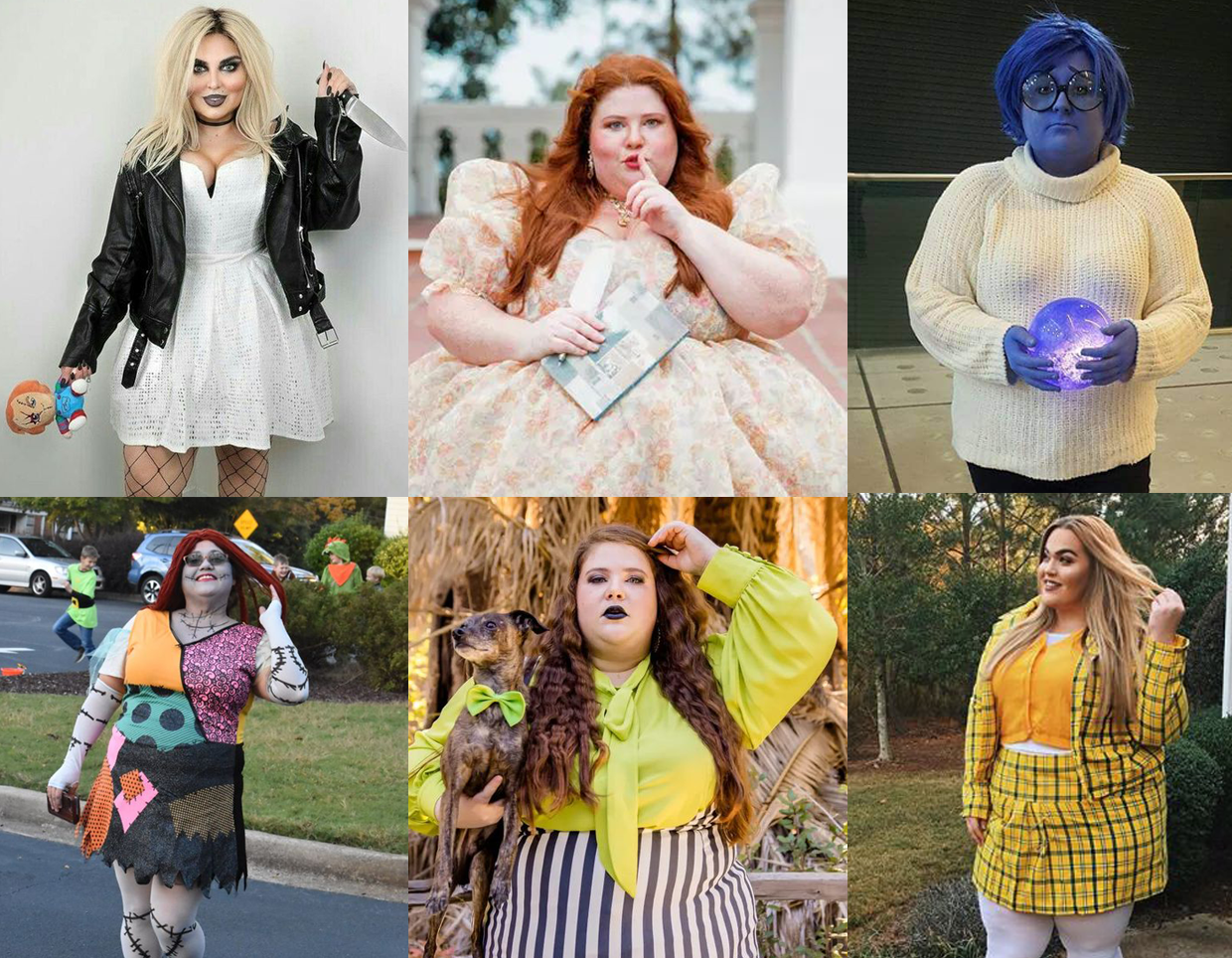
Knowing that changes how you shop. Stop expecting a bagged costume to be your whole outfit and start treating it as one component, or skip it entirely. The people who consistently look great on Halloween at 4X and 5X are almost never wearing head-to-toe packaged costumes. They are wearing real clothes, chosen for silhouette and color, with two or three sharp accessories doing the identification work. It fits properly, you can sit down in it, and it survives being worn for eight hours in a warm room. There is a second advantage too, which is that a costume built from clothing photographs like an outfit rather than like a rental, so you look like yourself in the pictures afterwards.
Where extended sizing genuinely exists
There are real options and it helps to know the three categories. First, specialty plus retailers run seasonal costume capsules, and because those brands already draft for larger bodies, the fit is on a different level from a generic costume brand’s largest size. Check the seasonal drop at Torrid and similar plus-first labels, since those pieces are often wearable clothing that happens to read as a costume. Second, large marketplaces carry independent sellers who list genuine 4X and 5X, though you have to read the seller’s own measurement chart rather than trusting the letter size.
Third, and easiest to overlook, is the regular clothing route. A black maxi dress from a plus retailer is a witch, a vampire, Morticia, or a sea witch depending on what you put with it. That is the same skill you use when hunting a formal outfit, and the sizing logic from our guide to wedding guest dresses in size 26 and up applies directly here. Whichever route you take, ignore the letter on the tag and go straight to the measurements. Costume sizing is not standardized in any meaningful way, and a costume 4X and a clothing 4X are frequently two different garments.
The closet costume method, in detail
This is the most reliable route past 4X and it deserves more than a passing mention. Start from silhouette rather than from character. Open your wardrobe and sort what you own into shapes: a long dress, a fitted dress, a slip dress, wide trousers, a jumpsuit, a blazer, a denim jacket, a long cardigan, a plain tee, a long skirt. Each of those shapes maps onto a whole family of characters. A blazer over a tee reads as a detective, an agent, a reporter, or half the cast of any workplace show. A slip dress plus long gloves reads as old Hollywood. A jumpsuit reads as a pilot, a mechanic, a spy, or an astronaut with the right patch.
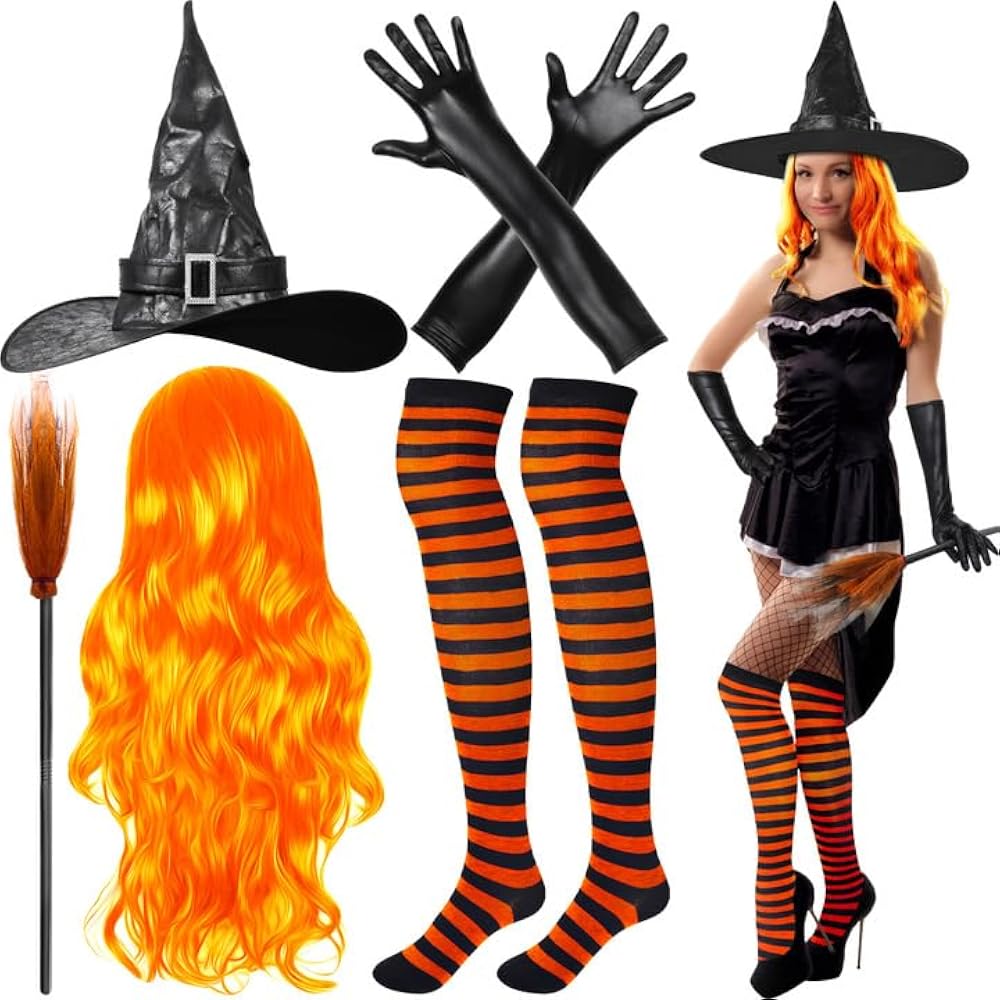
Once you have the shape, the accessories do the identifying, and this is where the sizing ceiling vanishes completely. Hats, wigs, glasses, gloves, belts, jewelry, face paint, and props are one size, cheap, and available all season, and a bundled Halloween costume accessory kit often covers three characters at once. A witch hat over a black dress is unambiguous. A pearl choker and cat-eye liner turn a black dress into a specific decade. Two or three strong signals are enough, and adding more usually makes the costume read as cluttered rather than clearer. Build the base from what fits, buy the signals, and you have spent very little for something that photographs well.
| Base piece you already own | Add these signals | Reads as |
|---|---|---|
| Black maxi dress | Pointed hat, dark lip, broom | Witch |
| Denim jacket and jeans | Bandana, work gloves, red lip | Rosie the Riveter |
| Blazer and plain tee | Badge, notebook, sunglasses | Detective or agent |
| Slip dress and long gloves | Finger wave wig, statement earrings | Old Hollywood star |
| Jumpsuit or coveralls | Patch, tool belt, aviators | Pilot or mechanic |
| All-white outfit | Wings, halo, glitter liner | Angel or celestial |
| Red dress or top | Horns, cape, dramatic liner | Devil or villain |
When to go custom or handmade
Sometimes the character you love genuinely needs a made piece, and that is a fair reason to pay for one. Independent makers on craft marketplaces will sew to your measurements, and if you order in late summer rather than October you get normal pricing and a normal turnaround. Local alterations shops are the underrated option here. Taking a thrifted dress or a cheap costume two sizes up to a tailor and having it fitted often costs less than a made-to-measure piece and produces something that fits far better than anything off the rack.
There is also the middle path of modifying rather than making. Cut and fray a hem, add a cape, sew on trim, or safety-pin panels into a garment you already own. None of that requires sewing skill beyond a straight line, and it lets you use a base that already fits your shoulders and bust, which is the part nobody can fake. If you do commission something, send actual measurements plus a photo of yourself in a fitted top, and ask the maker to confirm bust, waist, hip, and sleeve before they cut.
Group costumes without being handed the funny one
Group themes are where things get quietly unfair. The plus friend gets assigned the comic character, the sidekick, or the one whose entire joke is size, and it happens so smoothly that nobody in the group thinks they did anything. You are allowed to name it. Say early, before roles harden, which character you want, and say it in the group chat rather than waiting to be asked. Being first is most of the battle, because assignments in these groups tend to be decided by whoever speaks up rather than by any real discussion.
Themes that avoid the problem entirely are worth steering toward. Pick a concept where every role is equal: a deck of cards, a color palette, a decade, a set of tarot cards, a group of villains, a band. Nobody is the punchline when the theme has no hierarchy. If your group insists on a franchise with fixed characters, propose that everyone picks their own rather than being cast. And if a friend pushes the joke costume on you anyway, the answer is simply that you have already chosen something else. You do not owe anyone a negotiation about it.
Comfort engineering for a long night
A costume that hurts by nine o’clock ruins the night, and the fixes are boring and effective. Tights are the classic failure point, since standard tights roll down under a belly and cut in at the thigh. Buy plus-specific opaque tights sized by height and weight on the brand’s own chart, look for a wide non-elastic waistband, and consider sizing up one for length rather than width. A pair of plus size opaque tights with a wide waistband makes more difference to a night than almost any other single purchase.
Shoes are the next one. Halloween involves standing on hard floors for hours, or walking a neighborhood in the cold, so wear something you have already broken in and hide it under the costume rather than debuting heels. Chafing between the thighs matters if your costume is a dress, so wear shorts or an anti-chafe balm underneath. And plan for temperature: indoor parties run hot and outdoor trick-or-treating runs cold, so build the costume in layers you can shed, with a cardigan or coat that works with the look instead of ruining it. Pockets, or a small crossbody bag that reads as part of the outfit, save you from carrying a phone in your hand all night.
Timing: shop the seasonal drop early
This is the most actionable thing in the whole guide. Extended sizes sell out first and they do not restock. Seasonal costume ranges are produced in small quantities per size, the largest sizes get the smallest allocation, and once 4X and 5X are gone in October they are gone for the year. That is why the aisle in late October looks like it never had your size at all. It did, briefly, in September. The same pattern shows up online, where the size dropdown greys out one option at a time until only the smallest and largest ends of the run remain, and by then the restock message you are waiting for is never coming.
So shop the seasonal drop as it lands, which for most plus retailers is late August into early September. Buy the base pieces then and add accessories later, since one-size items stay available all season and often go on sale. If you are commissioning anything made to measure, contact the maker in August. Build a saved list of characters through the year so you are not deciding under pressure. Waiting until the second week of October is exactly how people end up in a hot dog suit they did not choose.
Quick answers to the questions everyone asks
Do Halloween costumes run small? Very often, yes. Costume sizing is not standardized and a costume labelled 3X can measure smaller than a 2X in regular clothing. Always find the seller’s measurement chart and compare bust, waist, and hip against a garment you own. When a listing gives no measurements at all, treat that as a warning and move on.
What is the easiest costume to build from clothes I own? A witch, and it is easy for a reason. Any black dress or black top with black trousers works as the base, and a pointed hat plus a dark lip does the rest. A detective in a blazer and a Rosie the Riveter in denim with a bandana are equally simple. Start from silhouette, then add two signals.
Where can I find genuine 5X costumes? Three places tend to deliver. Seasonal capsules from plus-first clothing retailers, independent sellers on craft and marketplace sites who list real measurements, and made-to-measure sewists. General costume brands rarely go past 3X in anything appealing. Search by measurement rather than by size label to avoid relabeled XL products.
How do I stop tights from rolling down? Buy plus-specific tights sized on the brand’s height and weight chart, not by a generic size letter. Look for a wide, flat, non-elastic waistband that sits above the belly rather than under it. Sizing up gains you length in the body, which is usually the real problem. Shorts underneath also help.
When should I start shopping? Late August into early September, as the seasonal ranges land. Extended sizes get the smallest production run and sell through first, and they generally do not restock before the holiday. Buy the fitted base pieces early, then pick up accessories later, since one-size items stay in stock and often drop in price.
Claim the costume you actually wanted
The aisle is going to keep offering you the joke. You do not have to take it. Build from a base that fits, buy the hat and the gloves and the wig, put your name on the character before anyone else assigns you one, and do the shopping in September while your size still exists. That is the whole method, and it produces the version of Halloween where you are in the photos on purpose, comfortable, in something you chose. Pick the character you have quietly wanted for years and start assembling.