
The moment a rash guard proves its worth is rarely at the beach. It is the following morning, when you get dressed and your shoulders do not scream, when the strip of skin under your bra band is not hot to the touch, and when the soft place where your upper arm meets your side has no raw patch from four hours of a wet swimsuit strap sawing at it. Sunscreen is wonderful and you should still wear it. But it has to be reapplied, it slides off in water, and reaching the middle of your own back is a task nobody has solved. Fabric does not need reapplying.
The catch is that shopping for a plus-size rash guard drops you into the worst habits of swimwear retail. Half the options are cut like a men’s surf shirt with a wider chest and no thought given to a bust. The other half are sold as “swim cover-ups” in fabrics that go transparent the second they get wet. Somewhere in the middle sit the tops that genuinely work, and finding them comes down to four or five details you can check before you spend money. Here they are in the order they matter once you are standing in the water.
What a rash guard is actually for
The name comes from surfing, where a snug shirt stopped board wax and fiberglass from scraping the chest raw. That original job still exists and it translates well to bodies of every size. A rash guard is a barrier between your skin and anything abrasive: a paddleboard deck, a pool ladder, a kayak seat, a bodyboard, wet sand, and crucially the seams and straps of your own swimsuit. If you have ever finished a long day in the water with a red line under each arm or a tender spot where a strap sat, a smooth layer between suit and skin solves that quietly.
The bigger reason most people buy one now is sun. A tightly woven, purpose-made swim top gives you continuous coverage across the shoulders, upper back, and chest, which are the three places that burn first and the three places sunscreen gets missed most. It also buys you time, because the sunscreen you do apply goes on a smaller area and lasts longer. That is not vanity or hiding. Sun protection is a maintenance decision, the same as wearing sunglasses, and covering skin at the beach is a choice you are allowed to make for any reason, including simply preferring it.
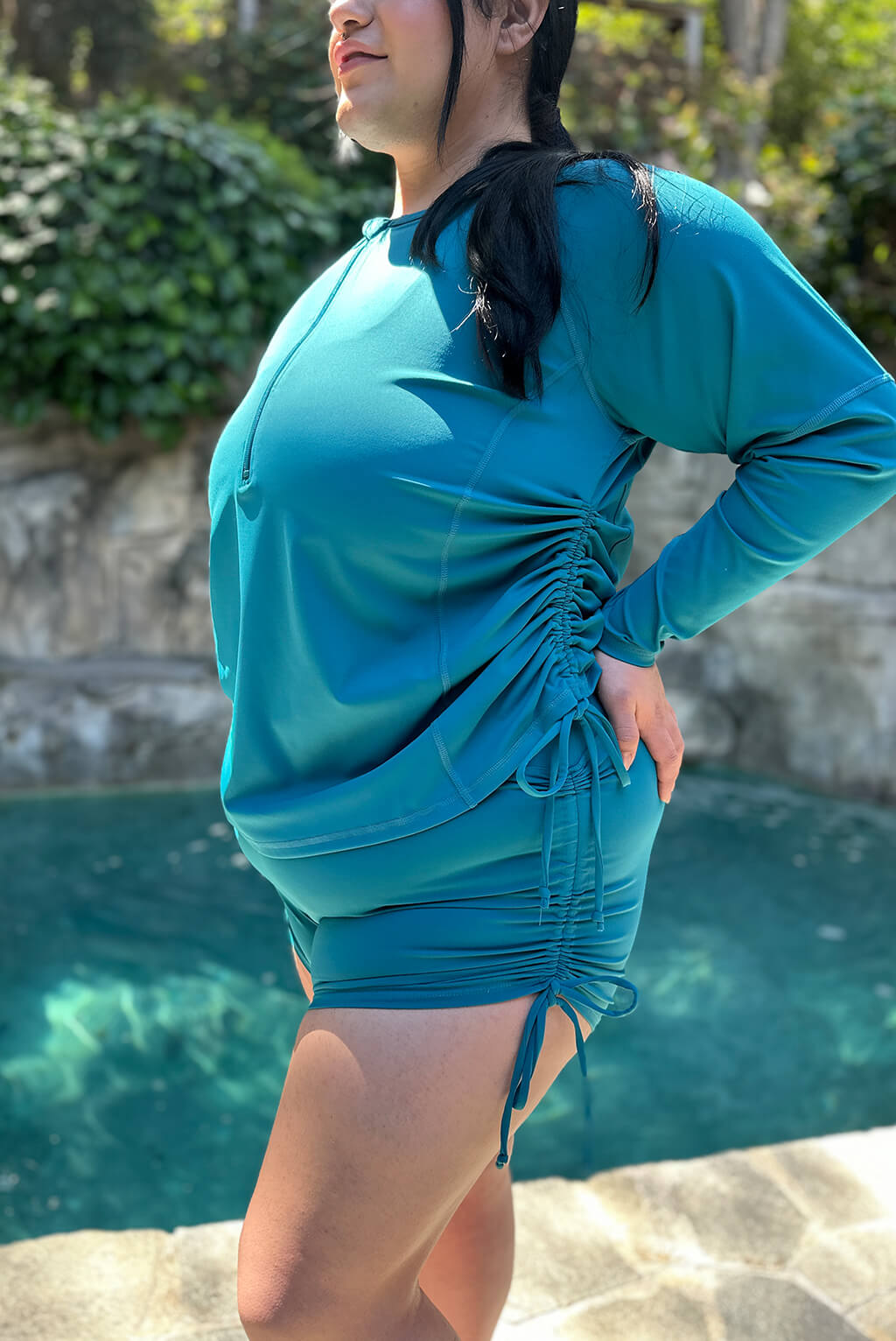
Compression or loose: two tops wearing the same name
This is the single biggest source of disappointment, because both styles get filed under “rash guard” and they behave nothing alike. A compression rash guard is cut close, made from a swim-weight blend with real spandex content, and is designed to sit against skin without moving. It will not billow when you swim, it does not float up around your ribs when you sit down in the water, and it dries fast because there is less fabric holding water. The tradeoff is that it is a snug garment, and shopping by size number rather than by measurement lands you in something uncomfortable across the bust and upper arms.
A loose swim shirt is the opposite bargain. It skims rather than grips, it is far easier to pull on over wet skin, and it feels cooler standing on the sand. In the water it will lift, drift, and wrap around you, which is fine if you are wading and chatting and irritating if you are actually swimming. My honest rule: if the water is the destination, buy compression. If the beach chair is the destination, a loose swim shirt is the more comfortable choice. There is no shame in owning one of each, since they solve different days.
The bust problem nobody puts on the hangtag
Here is the structural truth. A rash guard is a shirt. It has no shelf bra, no underwire channel, no molded cup, and no real internal support, and any support it appears to offer is just compression flattening rather than lifting. For a D cup and up that is not a small detail, because it decides whether you swim or spend the whole afternoon quietly adjusting yourself. The fix is layering, and it is genuinely easy once you stop expecting the rash guard to do a job it was never built for.
Put the support underneath. A supportive one-piece with a built-in bra, worn under the rash guard, gives you structure plus a smooth surface for the top to sit on, and it means you can peel the rash guard off for lunch without a wardrobe crisis. A swim bra or bra-sized bikini top works the same way, and our guide to the best tummy control swimsuits covers the construction worth paying for. Sizing up to accommodate a full bust usually backfires, because you gain chest room but also a gaping neckline and sleeves that slide. Fit the shoulders and buy from brands that grade the chest properly, like the extended swim range at Torrid, rather than sizing up and hoping.
Length, ride-up, and being honest about torsos
Ride-up is the number one complaint and it is almost always a torso length problem rather than a width problem. Many rash guards are graded outward as sizes increase without being graded longer, so a top that looks generous on the hanger sits inches too short on a long torso and starts creeping the moment you raise your arms. Once it creeps it stays creeped, and you spend the afternoon tugging instead of swimming. Before you buy, find the stated body length in the size chart, then measure a top you already own from shoulder seam to hem and compare. That one comparison prevents most returns.
The other half of the fix is what you pair it with. High-waisted swim bottoms or swim shorts that come up to or above your natural waist create an overlap zone, so even if the top shifts an inch there is no gap and no exposed strip getting sun. A boyshort or swim legging does the same job and adds thigh coverage, which matters if chafing is a factor. If your torso runs short, the opposite problem shows up as bunching at the waist, and a hip-length rather than tunic-length cut fixes it.
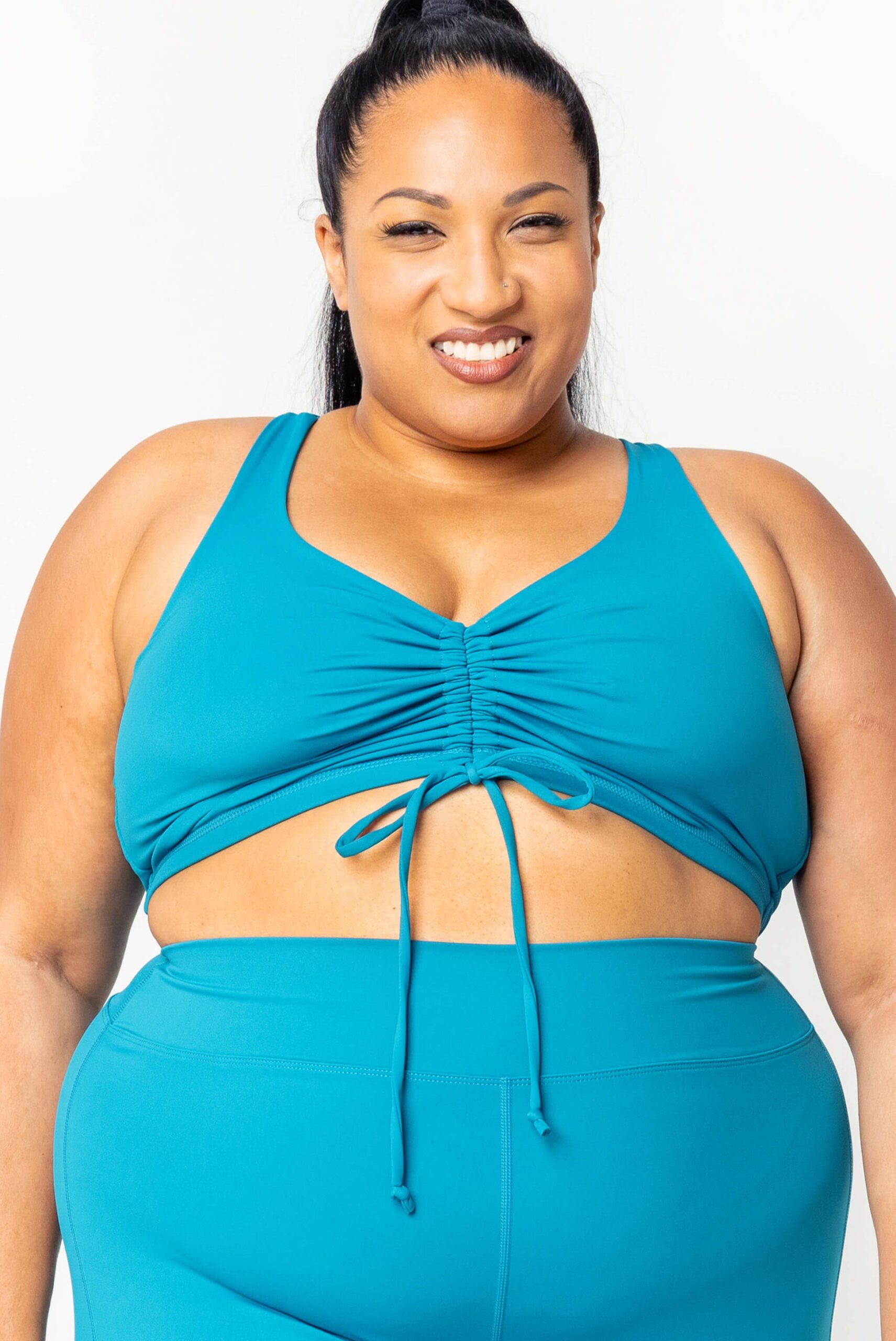
UPF, fabric weight, and reading the label properly
UPF stands for Ultraviolet Protection Factor and it describes how much UV a fabric lets through to your skin. The number is a fraction: UPF 50 means roughly one fiftieth of the ultraviolet radiation gets through, which is why UPF 50+ is treated as the practical ceiling and anything above it is marketing. Two things to know: protection comes from weave density, fiber type, and color, so a dark, tightly knit polyester or nylon blend protects better than a pale loose cotton knit, and any fabric protects less when stretched thin over the body or soaked and clinging.
Weight is the other spec worth caring about and it is almost never stated in numbers, so judge it by feel and by fiber content. A swim-weight knit with meaningful elastane feels dense, springs back when you stretch it, and does not go see-through when wet. A thin jersey top marketed for the beach will cling, sag, and stay damp for hours. Quick-dry matters more than it sounds: a fast-drying top is one you keep wearing after you leave the water, while a heavy one gets peeled off and stops protecting you.
| What the label says | What it means for you |
|---|---|
| UPF 50+ | The practical maximum. Choose this for full days outdoors and for reflective settings like open water. |
| UPF 30 to 40 | Solid everyday protection. Fine for a mixed day of shade, swimming, and cover-ups. |
| No UPF rating | Unknown. A dense dark swim knit still helps, but a thin light-colored jersey offers little. |
| Nylon or polyester with spandex | Swim-weight, chlorine-tolerant, quick-dry. The blend you want for anything active. |
| Cotton or cotton blend | Absorbs water, stretches out, protection drops sharply. Dry land only. |
Why a zip front earns its keep
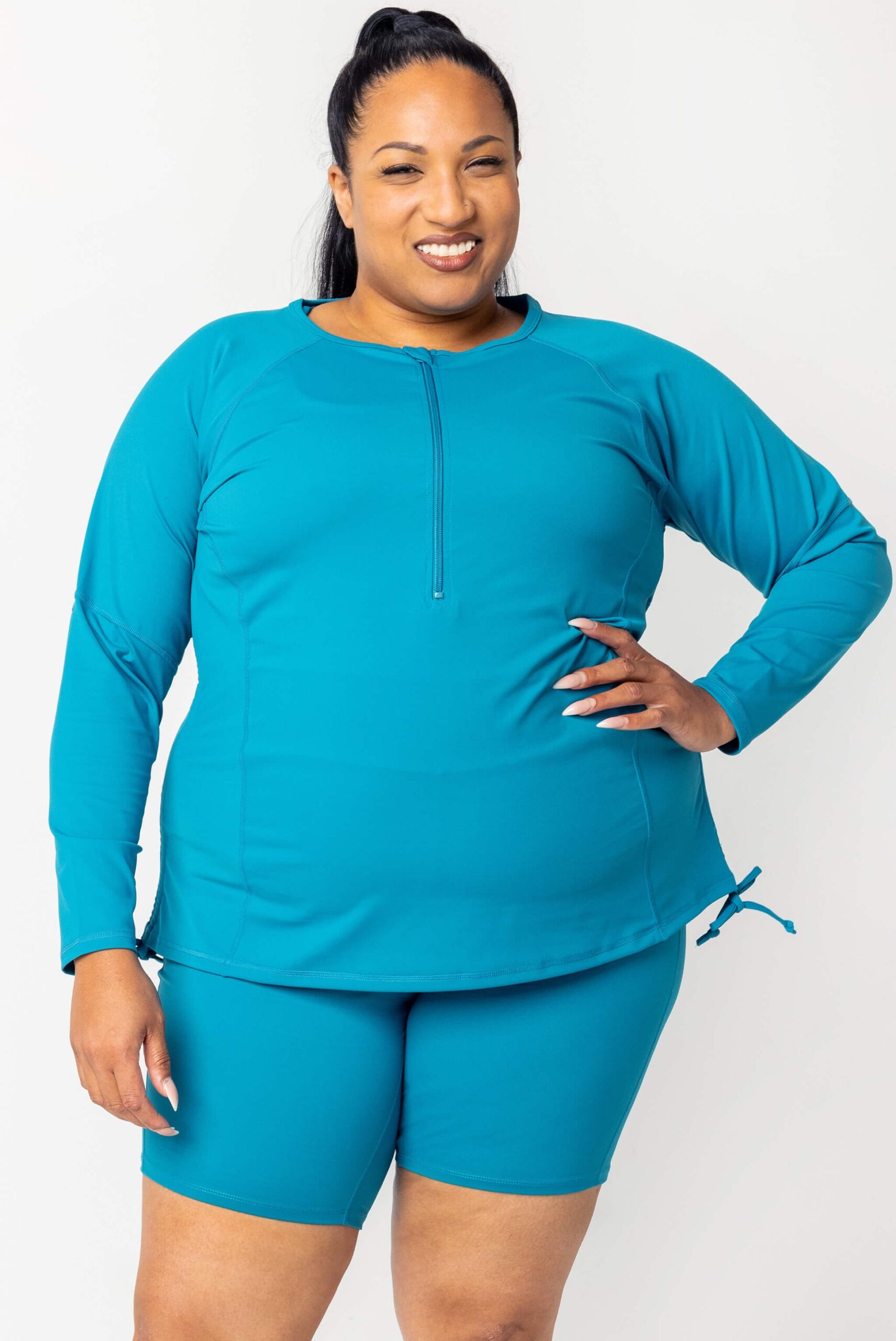
Pulling a wet compression top over your head is a genuinely miserable two-minute wrestling match, and it is worse when your arms are damp and sandy. A quarter-zip or full-zip front removes the wrestling entirely, and it is the detail most people wish they had prioritized. You get in and out without disturbing your hair or sunglasses, you can vent the neckline when you overheat, and you can adjust coverage through the day. For a full bust, a zip also gives you a way to fine-tune the fit across the chest that a fixed neckline does not offer.
The tradeoffs are real but small. Zips add a hard element that can press against you when you are lying on a board, and a cheap zip will corrode in salt water, so look for a coated or plastic-toothed zip with a fabric guard behind it. If you are swimming laps, a smooth pullover is marginally faster through the water. For every other use, the convenience wins. A well-reviewed zip-front option like a plus-size zip front UPF 50 rash guard is the version most people end up reaching for by default.
Match the top to what you are actually doing
Pool laps ask for the least fabric and the most stretch. You want a compression fit, short or long sleeves depending on whether you are outdoors, a chlorine-resistant blend, and no zip. Anything loose creates drag and rides up on every stroke. A beach day is the opposite. You are in and out of the water, sitting, walking, and eating, so a zip front and a slightly easier fit make the day pleasant, and a longer hem keeps sand and sun off your lower back while you lie down on a towel.
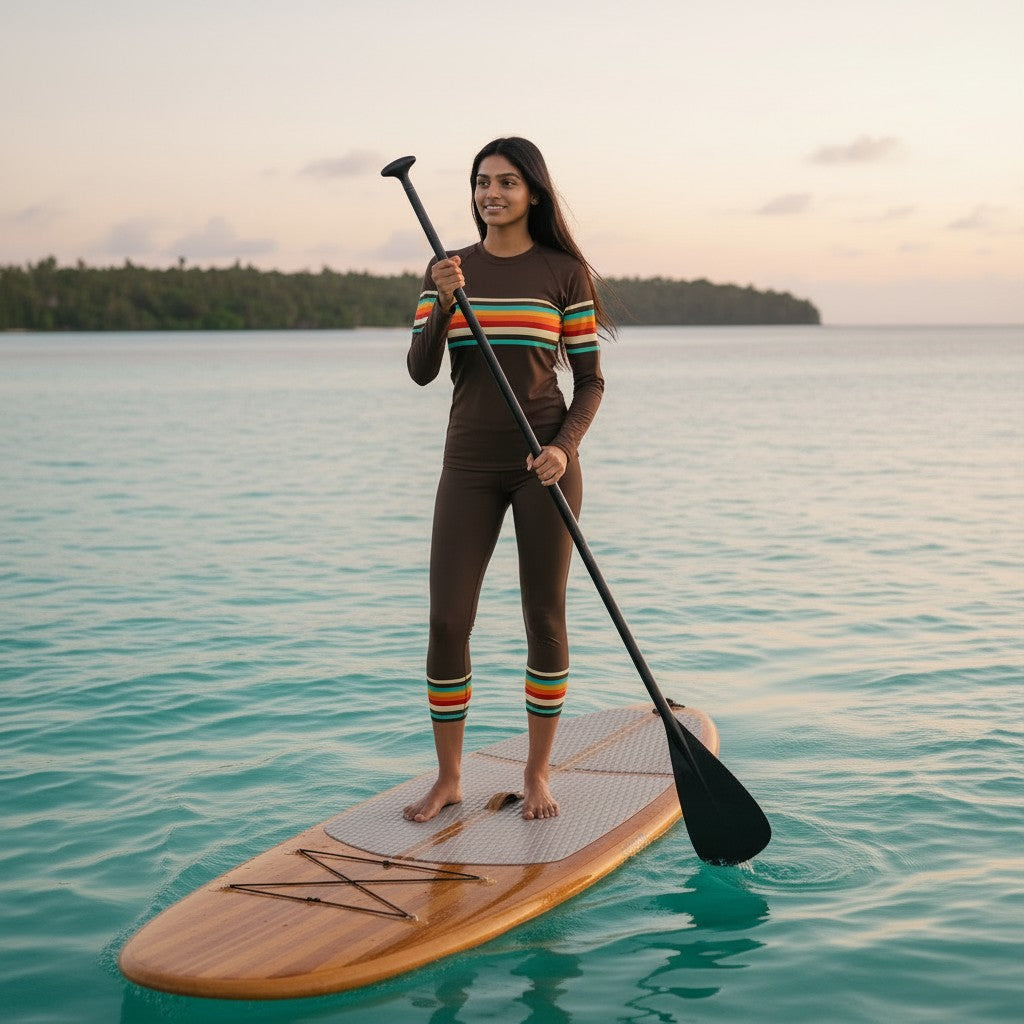
Paddleboarding, kayaking, and anything on a board sits in its own category because you are on your knees, lying on your front, and getting splashed constantly while the water reflects sun straight up at you. Long sleeves are not optional there. Neither is a hem that stays put when you are prone on a board, which usually means compression fit plus a high-waisted bottom or a pair of UPF swim leggings. Water parks deserve a mention too, since slide abrasion is real and a rash guard saves your shoulders from the friction.
Making it last past one season
Chlorine and salt are what kill swim fabric, and both are easy to manage. Rinse the top in cool fresh water before it dries, because residue keeps working on the elastane while the garment sits in a bag. Wash by hand or on a gentle cycle, skip fabric softener since it coats fibers, and never use a dryer, because heat destroys stretch. Dry it flat in shade. When a top starts looking thin or translucent when wet, its UV protection has dropped along with its shape, and it has become a gardening shirt.
Quick answers to the questions everyone asks
Do I need a bra under a rash guard? Not a regular bra, but yes to support. Rash guards are unstructured shirts with no shelf bra, so a full bust will feel unsupported. Wear a supportive one-piece, a swim bra, or a bra-sized bikini top underneath. That combination also lets you remove the rash guard for lunch without a scramble.
Is a rash guard hot to wear in summer? Less than you expect. A thin, light-colored swim-weight knit stays cooler than bare skin under direct sun once it is damp, because the wet fabric cools as it evaporates. Heavy cotton or a dark, thick top does get warm, especially on dry land. Choose light colors and a loose swim shirt for hot, dry days.
Should I size up in a rash guard? Usually no. Sizing up a compression top gives you a gaping neckline, sliding sleeves, and more ride-up, not better comfort. Fit the shoulders and chest using the brand size chart, and check the stated body length separately. If you genuinely need more room across the bust, look for a zip front instead.
Does UPF wash out over time? The rating applies to the fabric as made, and it drops as the fabric wears. Stretching, fading, thinning, and repeated hot washing all reduce protection. A top that has gone translucent or slack when wet is protecting far less than the label claims. Wash cool, dry flat, and replace when the fabric looks tired.
Can I wear a rash guard instead of sunscreen? Under the fabric, yes, that is the point. Everywhere else, no. Your face, neck, ears, hands, feet, and any skin the top does not cover still need sunscreen, and so does the back of your neck if the collar is low. Think of the top as covering the hard-to-reach areas so sunscreen handles the rest.
The swim top that keeps you in the water longer
The measure of a good rash guard is boring: you stop thinking about it. It stays where you put it, it does not need tugging, the zip works after a summer of salt, and you get out of the water without a single tender pink stripe. Pair a compression top with a high-waisted bottom, wear a supportive suit underneath it, check the body length before you buy, and pick UPF 50+ in a swim-weight blend. That is the whole formula. Everything else is color, and color is the fun part, so choose the loud one.