After three years of covering this category, sitting in on consultations with stylists across Atlanta, and pricing out installs for friends with hair types from 2A to 4C, I can tell you the number on a salon menu almost never matches the number on the final invoice. Extensions are sold as one price (the hair) and quoted as a second price (the install) and rarely include a third (the maintenance every 6-10 weeks). Most of the sticker shock people share with me on Instagram comes from missing one of those three layers, not from any one salon overcharging. This is the breakdown I wish someone had handed me when I was still wearing my first set of clip-ins in 2019.
The fast answer
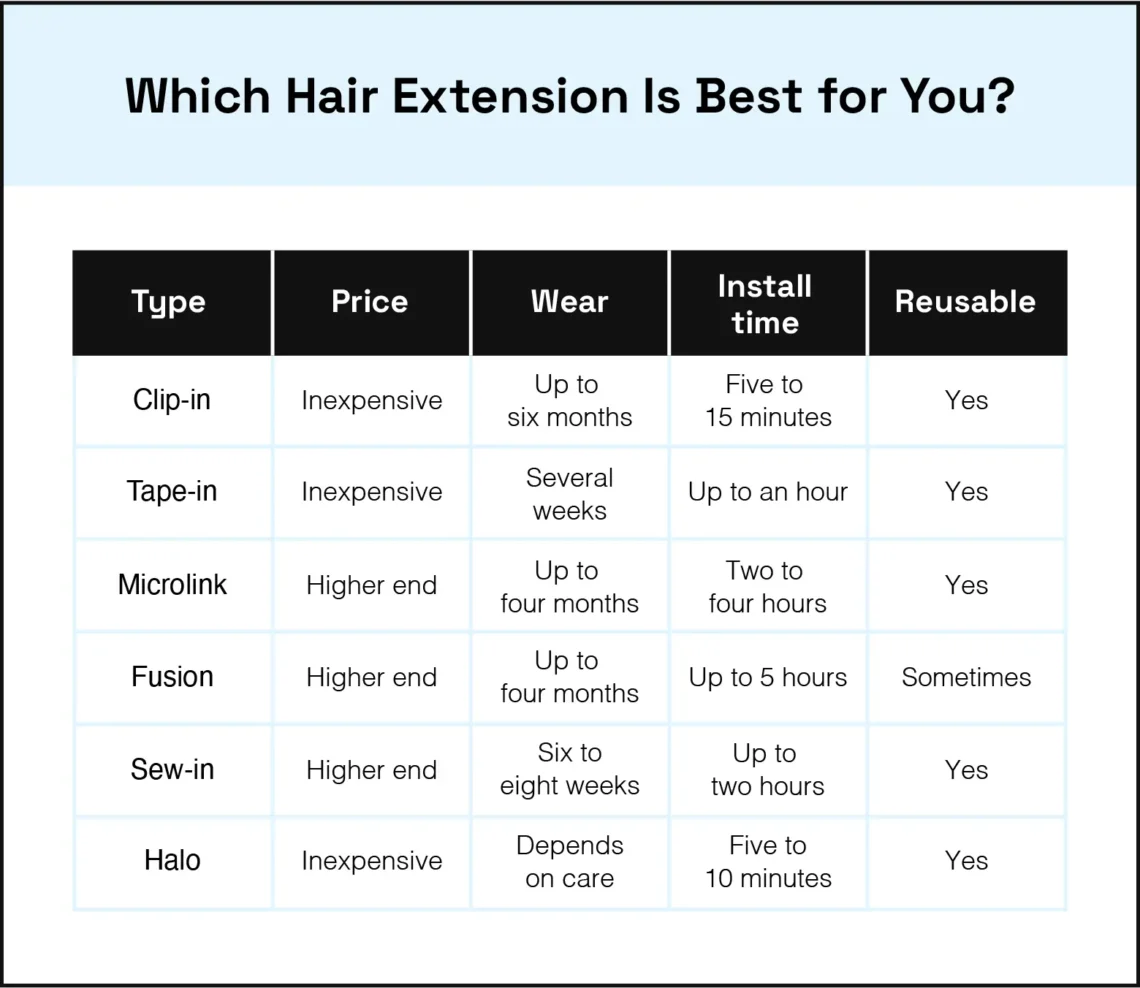
Hair extensions in 2026 range from about $40 for a synthetic clip-in set off Amazon to $3,500 for a full raw-hair sew-in install at a luxury salon. The median spend among the women I have helped shop is around $850 all-in for a quality human-hair install that lasts 3-6 months with maintenance. Clip-ins run $40 to $400 for the hair itself with zero install cost. Tape-ins run $200 to $700 for the hair plus $200 to $500 for the install. Sew-ins and hand-tied wefts run $300 to $1,500 for the hair plus $300 to $800 for the install. Maintenance every 6-10 weeks adds $100 to $300 per appointment. The realistic budget for someone who wants their extensions to look like real hair and last is $700 to $1,200 for the first install.
Hair quality - synthetic vs human vs raw
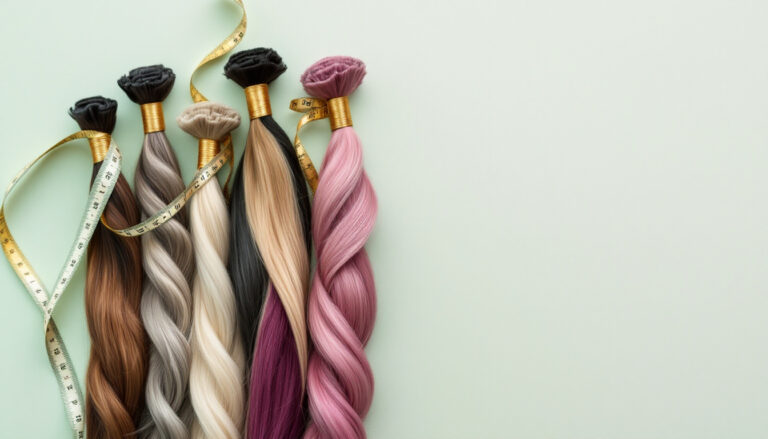
This is the line item that swings the price more than any other, and the one most first-time buyers underestimate. Synthetic hair runs $30 to $80 for a clip-in set and cannot be heat-styled past 250F or color-treated at all. It tangles fast, the fiber gets that plastic shine after a few wears, and you will replace the set within 3 months if you wear it weekly. Human hair (often labeled Remy) runs $150 to $400 for a clip-in set and can be heat-styled, colored within a couple of shades, and worn for 9-18 months with reasonable care. Raw hair - which means single-donor, no acid bath, cuticles intact and aligned - runs $600 to $1,500 for a bundle set and can last 2-4 years with proper care. The price gap between Remy and raw is real, and so is the difference. If you have low-porosity 4A hair like mine and you want texture-matched extensions that take a wash day without matting, you are realistically in the Remy-or-better range. Skip synthetic unless you specifically want a costume-level wear.
Install method
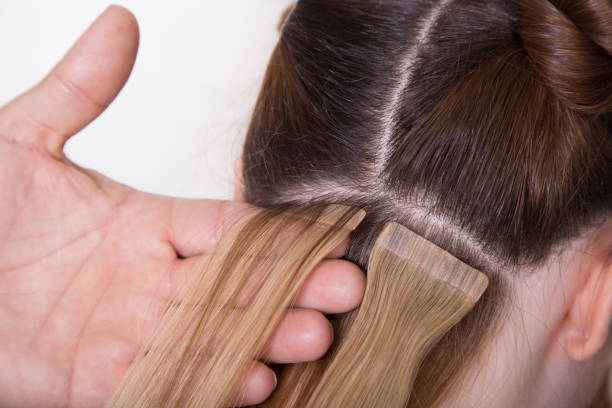
Clip-ins have zero install cost and zero salon time. You buy the set, you snap them in at home in 10 minutes. Tape-ins are installed in 60-90 minutes with adhesive tape strips and run $200-$500 for the install depending on your market - Atlanta sits in the middle of that range, NYC and LA sit at the top. Sew-ins (also called weaves) braid your natural hair into cornrows and stitch wefts onto the braids; the install runs 2-4 hours and $300-$800. Hand-tied wefts (the I-tip and K-tip family, plus newer beaded-weft methods) are the salon-favorite right now because they sit flatter and damage less than traditional sew-ins; install runs 3-5 hours and $400-$900. Fusion bonds (keratin tips melted onto small hair sections) run $500-$1,200 for the install and are the most damaging long-term because removal involves a solvent that breaks down cuticle. The install method matters less for the price than the stylist’s experience with your specific hair texture - a stylist who routinely installs on Type 4 hair is worth the premium over a generalist.
Stylist experience and market
A licensed cosmetologist with 5-plus years of extension-specific experience charges 30-50% more than a newer stylist, and it shows in the placement, the blend, and how long the install holds. The market matters too. Atlanta install pricing sits around $400-$700 for a sew-in at a mid-tier salon. NYC and LA push that to $600-$1,000 for the same service at a comparable salon. Smaller markets (Charlotte, Birmingham, Memphis) can land at $250-$500. The premium for celebrity-adjacent stylists - the people whose names show up on red carpets - runs $1,500-$3,500 for a single install. For most women, the sweet spot is a stylist with 3-7 years of texture-specific extension experience charging $400-$700, not the cheapest option and not the magazine-credit one.
Maintenance and longevity
The cost most people forget. Tape-ins need to be moved up every 6-8 weeks as your natural hair grows - that is $150-$300 per appointment, and the tape gets replaced each time at $30-$80. Sew-ins need to be taken down and reinstalled every 8-10 weeks - that runs $200-$400 per refresh if you reuse the hair. Hand-tied wefts move up every 6-10 weeks at $150-$300. Fusion bonds need removal and reinstallation every 3-4 months at $400-$700. Over a year, factor in 5-8 maintenance appointments. For a tape-in wearer that is $750-$2,400 a year on maintenance alone, on top of the original install. The hair itself, if it is quality Remy or raw, can be reused across multiple installs - which is where the long-term math starts working out compared to buying cheap hair every few months.
Color matching and customization
If your shade is standard (black, dark brown, basic blonde) you can buy off the rack and the cost is whatever the bundle price is. If your hair is colored, highlighted, balayaged, or in any way customized, you are either paying for custom-colored extensions ($100-$400 surcharge on top of the hair) or paying your stylist to color the extensions to match ($150-$350 in coloring service). Custom-colored extensions ordered through your stylist often come out cheaper than buying off-the-rack and recoloring at the salon, because the extension house already has the right base tone. Get the color consultation done before you buy the hair. The number of women who buy a $400 bundle online and then need a $300 color match because the tone is off is high enough that I now warn every friend before they click purchase.
Price tiers with examples

Budget tier: $40-$400 total. This is clip-in territory, and the right place to start if you have never worn extensions before. Synthetic sets from Amazon at $40-$80 are fine for one event - a wedding, a photo shoot, a Halloween look - but they will not survive weekly wear. Human-hair clip-in sets from mid-market brands run $150-$400 and can be worn 1-3 times a week for 9-12 months if you cowash them every few wears and store them flat. Sensationnel and Outre both make Remy clip-in sets in this range that I have personally tested on Type 4A hair with good results - the wefts are thick enough to blend without showing tracks, and the clips hold without slipping. Sensationnel Remy clip-in sets on Amazon are the strongest budget-tier human-hair option I have hands-on history with. Zero install cost, zero salon time, low commitment.
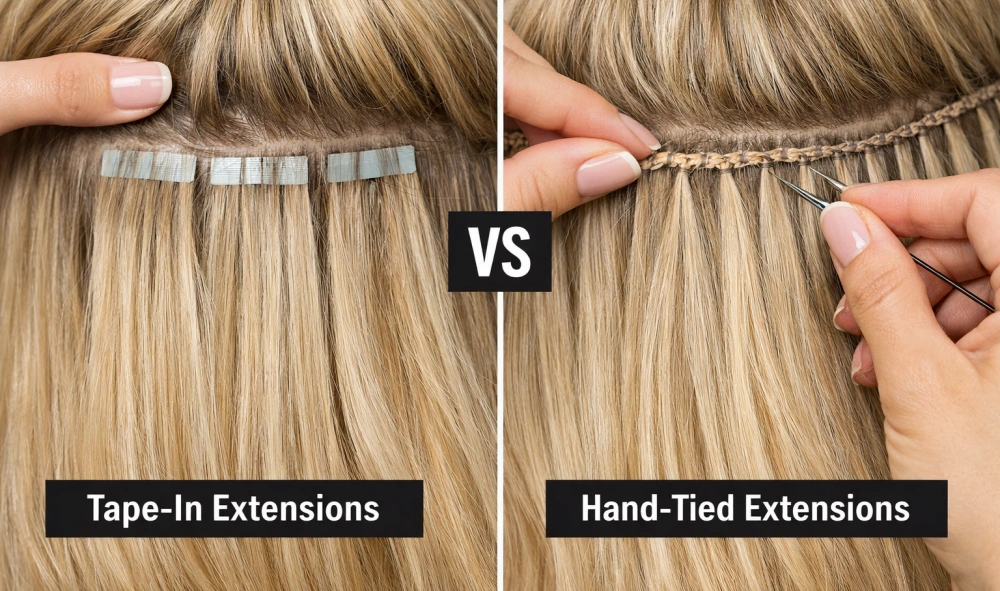
Mid-range tier: $500-$1,200 total install. This is where most women who wear extensions consistently land. Tape-ins or hand-tied wefts in Remy human hair, professionally installed at a mid-tier salon, with maintenance built into the budget. The hair runs $250-$600 for a full set; the install runs $300-$600; the first maintenance appointment 6-8 weeks later runs $150-$300. Outre and Sensationnel both make Remy weft and tape-in collections in this range that hold up across multiple installs. Bellami sits at the higher end of this tier and is the brand I see most often on stylists’ tables in Atlanta - the hair is consistently graded, the wefts are double-drawn so they do not shed at the ends, and the color range is wide enough that most clients can buy off the rack. Outre Mytresses Remy bundles on Amazon are the strongest entry point at this tier if you are buying the hair separately and bringing it to your stylist. Plan for the hair to last 18-24 months across 3-4 reinstalls.
Premium tier: $1,500-$3,500 total install. Raw hair - single-donor, cuticle-aligned, unprocessed - installed by an experienced stylist with celebrity-adjacent pricing. The hair runs $800-$1,800 for a full set; the install runs $600-$1,200; the first color customization runs $200-$400. Indique is the brand most often cited in this tier, with raw bundles that can be reused across 4-8 installs over 2-4 years. The math at this tier only works if you wear extensions year-round and reinstall the same hair multiple times - the per-wear cost drops below the mid-range tier if you actually get the full life out of the bundles. If you wear extensions for one event a year, this tier is the wrong call. Indique Pure raw bundles on Amazon represent the accessible end of this premium tier. Expect to bring this hair to a stylist; the install is not a DIY job at this level.
Where to save and where to spend
Save on the install method, not the hair. A tape-in install at $300 with quality Remy hair will look and last better than a hand-tied weft install at $700 with cheap synthetic. The hair is the part the camera sees. The install method is the part the stylist troubleshoots.
Save on maintenance frequency if your hair grows slowly. The 6-week cycle on the salon menu is a default, not a rule. If your natural hair grows half an inch a month instead of an inch, you can stretch tape-in moveups to 8-9 weeks without compromising the install. Ask your stylist to assess your specific growth pattern at the 6-week mark instead of automatically rebooking.
Spend on the stylist with proven experience in your specific hair texture. The difference between a generalist and a Type 4 specialist is not the install time, it is whether your edges are still intact 6 months later. Pay the premium. The hair grows back from a bad install slower than the credit-card statement comes due.
Spend on a quality leave-in and a satin pillowcase for the maintenance routine. Mielle Organics Pomegranate & Honey leave-in conditioner and Camille Rose Honey Hydrate leave-in are both gentle enough for extension wear and prevent the dryness that kills bundle longevity. A $30 satin pillowcase extends the life of a $500 install by months. This is the cheapest math in the entire extension category.
Frequently asked questions
Are extensions cheaper if I buy the hair myself and bring it to a stylist?
Sometimes, sometimes not. Salons that sell the hair often mark it up 30-60% over what you can find online from the same brand, so bringing your own bundle saves real money on that line. But some stylists charge a higher install fee for client-supplied hair, and some refuse to install hair they cannot verify the source of. Ask before you buy. The savings only land if your stylist is on board.
How long do extensions actually last?
Synthetic clip-ins last 2-4 months of regular wear. Remy human-hair clip-ins last 9-18 months with cowashing every 8-10 wears. Tape-ins and sew-ins in Remy hair last 3-6 months per install with the hair itself reusable for 18-24 months across multiple installs. Raw hair lasts 2-4 years across 4-8 installs. The published numbers from extension brands are optimistic; cut their estimate by 25-30% for realistic planning.
Why does the same install cost so much more in NYC than in Atlanta?
Rent, labor cost, and demand. A licensed cosmetologist in Manhattan pays substantially more for chair rent or salon space than the same stylist in Atlanta or Charlotte. That gets passed through. The skill level is not necessarily different - I have had installs in Atlanta and NYC and the Atlanta one held longer. The market premium is real but does not always correlate with quality.
Can I install tape-ins or sew-ins myself to save the install cost?
You can. Most stylists, including the ones I know personally, will tell you not to. Tape-ins require precise placement to avoid traction damage at the root. Sew-ins require cornrow braids tight enough to hold but not so tight they pull the edge. The first DIY install I tried in 2020 cost me 4 weeks of edge breakage that took 6 months of protective styling to recover from. Save the install money for the second appointment, not the first.
The number to actually budget
For a first-time extension wearer who wants a quality install that lasts and does not damage your natural hair, budget $700-$1,200 all-in for the first appointment - hair plus install plus the first maintenance visit. That covers Remy tape-ins or a hand-tied weft set installed by an experienced stylist in a mid-market city. Below $400 means clip-ins, a fine starting point but a different product. Above $2,500 means raw hair, worth it only if you wear extensions year-round and reinstall the same hair multiple times. The $850 middle is where most of my friends landed and stayed. Save your money on the cheapest synthetic option and spend it on the stylist who knows your texture. That is the layering order that pays off.