
Picture a small girl in the hills outside Sevierville, Tennessee, watching a woman walk down the main street of town. The locals called this woman the town tramp. They said cruel things. But the child saw something else entirely. As Dolly Parton would later tell it, “They called her trash, but to me she was absolutely beautiful.” The woman wore colorful patchwork skirts and pretty blouses, showed a little cleavage, kept red nails and red lipstick and piled-up blond hair and high heels. To a poor kid raised in a one-room cabin with eleven siblings and no running water, that woman was not a cautionary tale. She was a vision. And in that moment, a style philosophy was quietly born that would carry one of the most beloved women in the world across more than six decades of public life without ever once apologizing for how she looked.
That little girl grew up to become a country music legend, a businesswoman, a philanthropist, and a fashion icon whose look has never gone out of style because it was never chasing style in the first place. The lesson buried in her story is one that every woman, of every size, every age, and every budget, can borrow for herself. You do not have to wait for permission to be the most fully realized version of you. Dolly never did.
The Town Tramp, Mae West, and the Permission to Shine
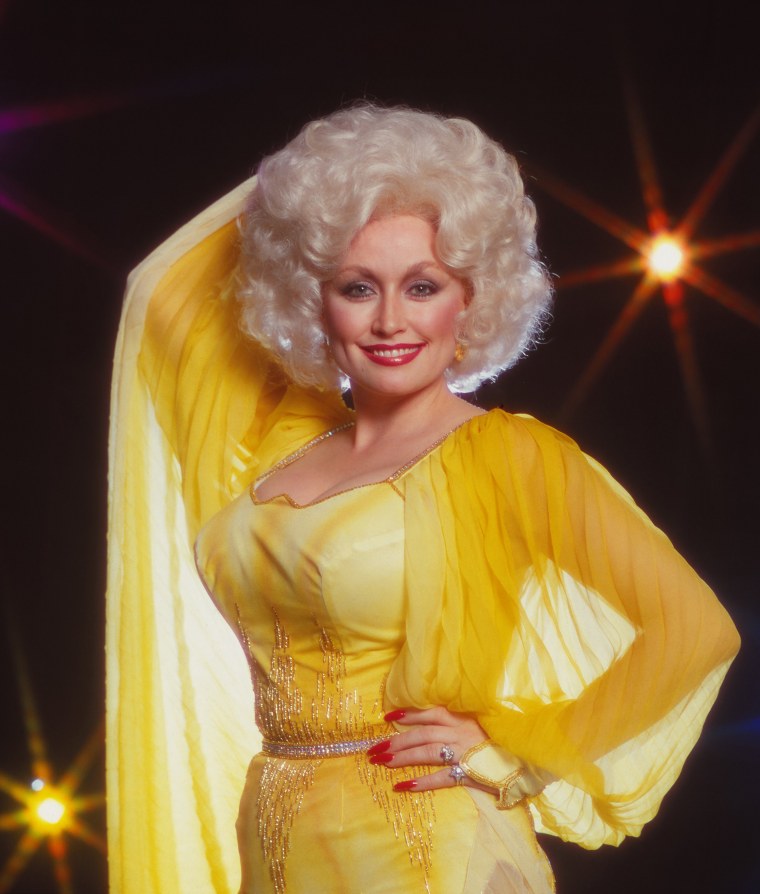
Most fashion icons borrow from designers. Dolly borrowed from a woman her whole town looked down on, and she has never hidden it. That choice tells you everything about how she sees self-expression. She did not absorb the message that bold was bad, that loud was vulgar, that a woman who took up space and asked to be looked at had done something shameful. She decided, as a child, that the woman everyone mocked had it exactly right.
Alongside that local muse, Parton has cited Mae West and Marilyn Monroe as inspirations, women known for owning their glamour and their bodies in eras that often punished women for both. Pulling the thread together, Dolly has summed up her north star simply: “I wanted anything colorful, anything sparkly. I just wanted to shine.” There is no hedging in that sentence. No “I hope it’s not too much.” No shrinking. Just a clear, joyful want.
That is the first thing every woman can take from her. So many of us dress defensively. We choose the outfit least likely to draw comment, the neutral that disappears, the silhouette that hides rather than the one that delights us. Dolly flipped the question. Instead of asking what will keep me safe from judgment, she asked what makes me feel alive. The answer was rhinestones, and she chased it for sixty years. You are allowed to want to shine. You do not need a special occasion or a smaller dress size to deserve it.
“It Costs a Lot of Money to Look This Cheap”
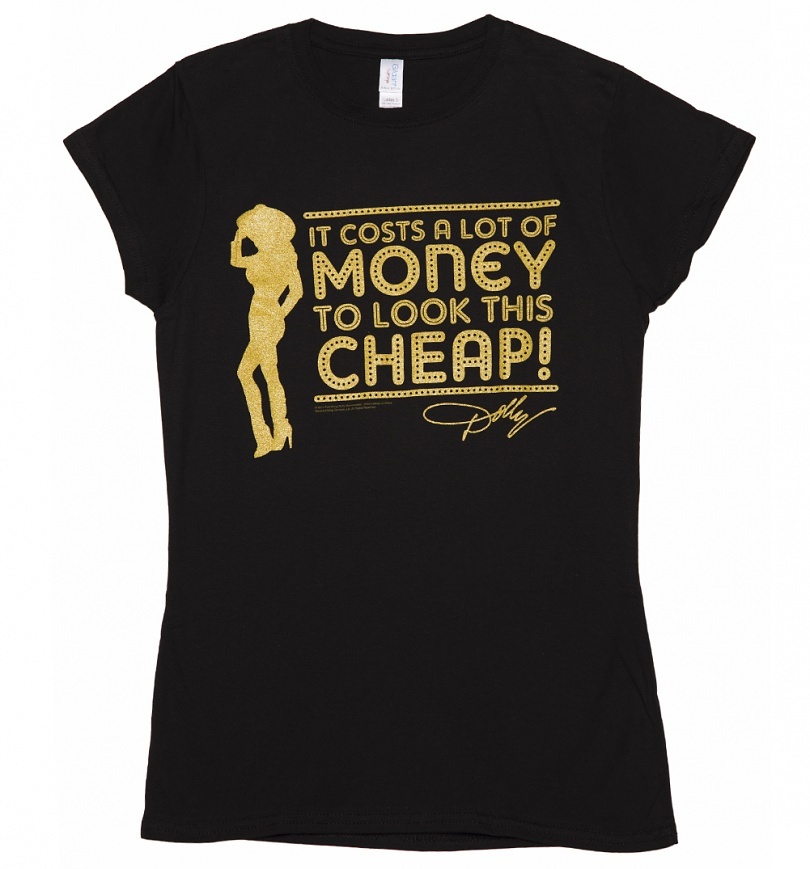
No single line captures Dolly’s relationship with her own image better than the one she has repeated, with a wink, for decades: “It costs a lot of money to look this cheap.” It is funny, and it is meant to be. But sit with it and it becomes something close to a manifesto.
What she is doing in that sentence is taking a word that has been thrown at women like a stone, cheap, and wearing it like a tiara. She is refusing to be insulted. She has said plainly, even into her late seventies, “I want to look cheap. That’s my look. I want to look a little bit, you know, trashy.” She named the thing other people meant as criticism, claimed it on purpose, and made it the whole point. You cannot wound someone with a word they have already chosen for themselves.
There is real power in that move for the rest of us. Maybe the word that gets used against you is not “cheap.” Maybe it is “too much,” or “extra,” or “trying too hard,” or one of the coded ones women hear about their bodies. Dolly’s answer is to look at the label, decide whether it actually describes something you love, and if it does, to pin it on with pride. The judgment loses its grip the moment you stop flinching from it. She turned a put-down into a brand, and that brand outlasted every critic who ever sneered.
It helps to remember that the people doing the sneering rarely have a better life to offer in exchange. They are not handing you a happier way to be. They are only asking you to be smaller and quieter so that you take up less of their attention. Dolly worked that out early and never paid the toll. She let the comments wash past her and kept her energy for the things that actually mattered to her, the songs, the businesses, the people she loved. Choosing what gets to bother you is its own kind of freedom, and she has guarded hers fiercely for a lifetime.
The Wigs, the Nails, the Rhinestones: A Costume You Choose on Purpose
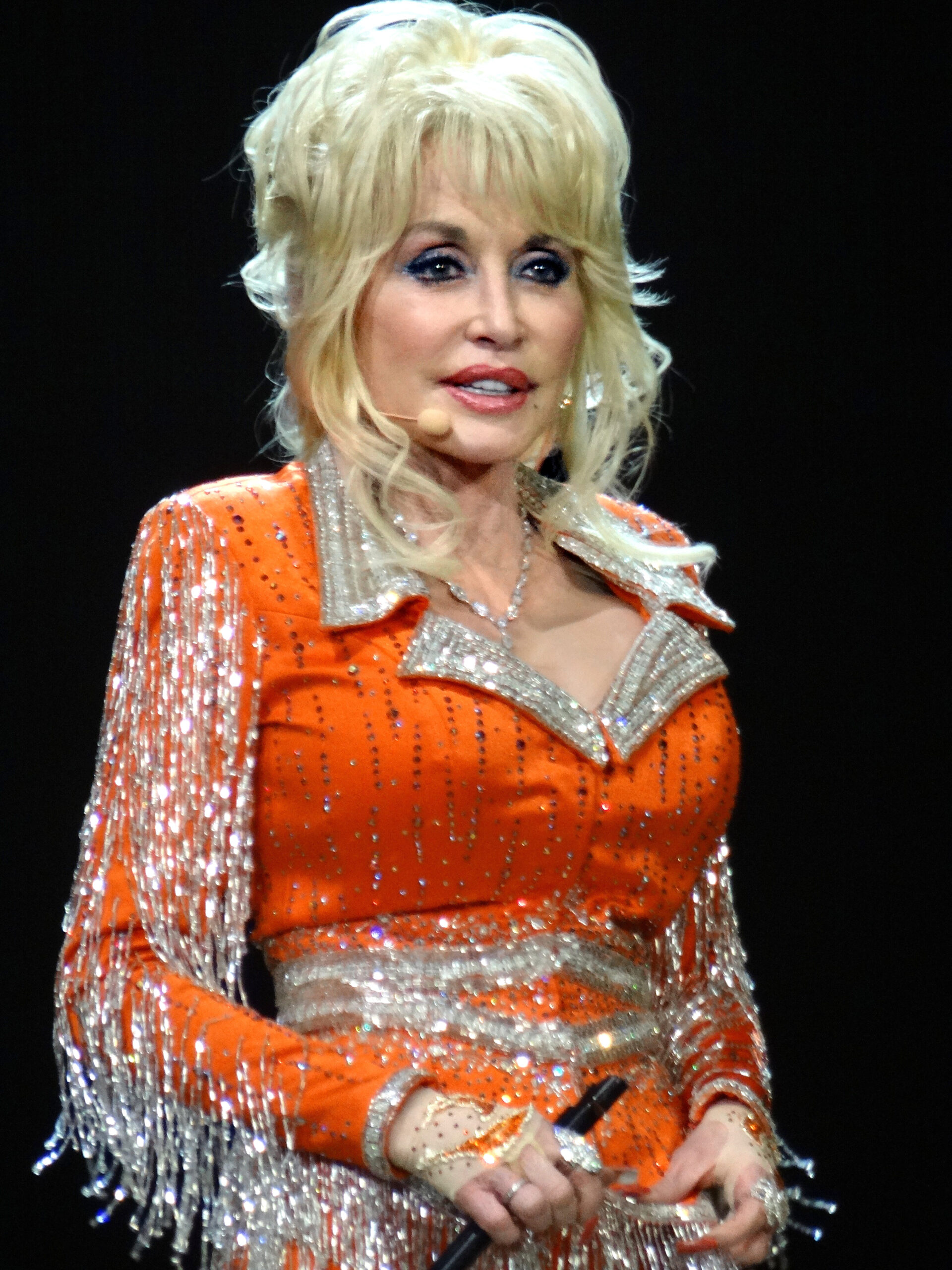
People sometimes assume Dolly’s elaborate look is about insecurity, about hiding. The truth is more practical and more freeing. She has been candid that the wigs began for a simple reason: “I started wearing wigs because I quickly realized that bleaching and teasing my hair every day would cause breakage and not look good.” What started as a fix became a signature. The wigs are not a mask. They are a tool, and she uses them the way a painter uses a favorite brush.
That is the part worth lingering on. Dolly treats her appearance as a costume in the best sense of the word, a deliberate, crafted, controllable thing she builds to present the person she wants to be. The sky-high hair, the manicured nails, the sequins and crystal beading and statement gowns are not accidents she stumbled into. They are decisions. Every single one. And because they are decisions, they belong to her completely. Nobody handed her this look. She designed it.
For everyday women, the translation is liberating. You do not have to be born photogenic or naturally striking to have a signature. You get to assemble one. The red lip you reach for on hard days. The earrings that make you feel like yourself. The print you love even though a magazine once said women over forty or above a size sixteen should avoid it. These are your rhinestones. Dolly’s genius was never that she was effortlessly beautiful. It was that she understood beauty as something you can author, and then she sat down and wrote her own.
Confidence That Does Not Bend for Age or Size
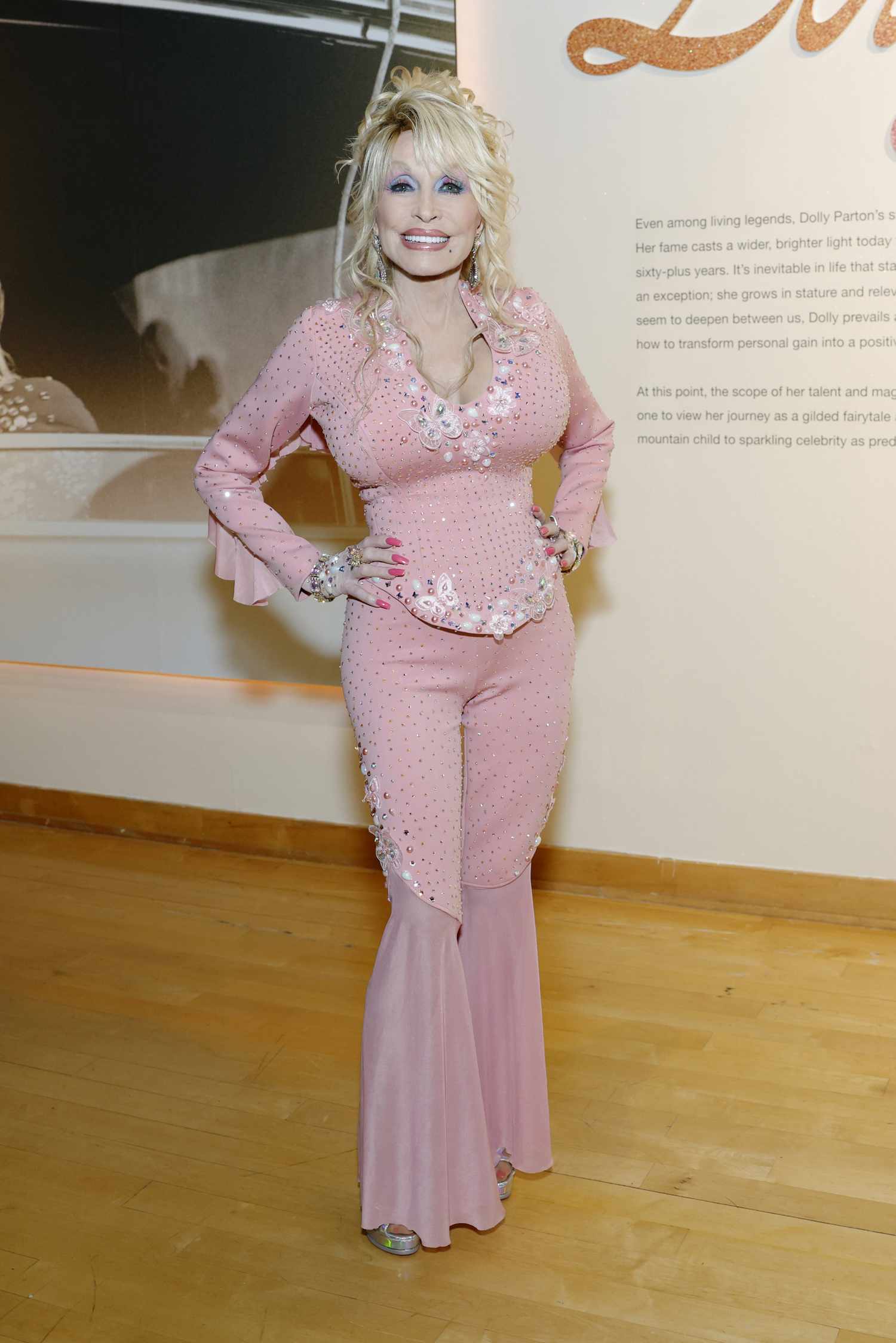
Here is the quiet revolution inside Dolly Parton’s whole career. She has never adjusted her self-presentation to satisfy anyone else’s timeline. The fashion world tells women, relentlessly, that there is a window. Be bold while you are young and thin, then graduate to tasteful restraint, then disappear gracefully. Dolly ignored every word of it. In her late seventies she was still chasing sparkle as hungrily as she did at twenty-five, still saying out loud that she wanted to look a little trashy, still piling her hair as high as ever.
Part of what protects her is a refusal to be diminished by mockery. Her response to one of the oldest insults aimed at women like her is a masterclass in self-possession: “I’m not offended by dumb blonde jokes because I know I’m not dumb. I also know I’m not blonde.” She lets the joke land on someone else. She knows who she is, so the teasing cannot reach the real her.
That sense of self did not come from a flattering mirror. It came from clarity. And that clarity is available at any age and any size. The woman who decides she will keep dressing for joy at sixty, at seventy, at eighty is not refusing to age. She is refusing to accept that aging means surrendering her delight in herself. The woman who buys the bright dress at a size twenty-two is not “getting away with” anything. She is doing exactly what Dolly did. She is dressing for the person she actually is, not the smaller, quieter person the world keeps suggesting she should become.
Find Out Who You Are and Do It on Purpose
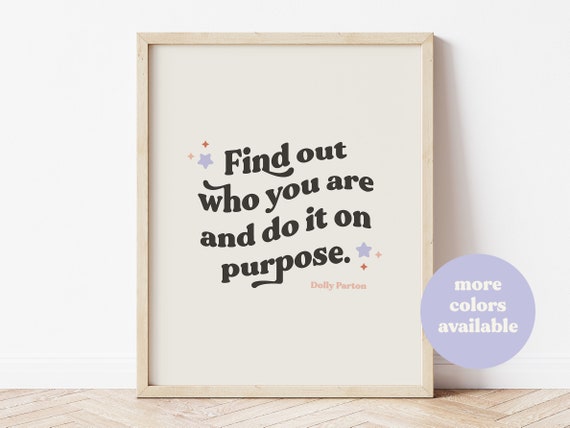
If you stripped Dolly Parton’s entire philosophy down to one instruction, it would be the line she has given as advice more than almost any other: “Find out who you are and do it on purpose.” Six words, and they hold the whole thing.
Notice the two halves. First, find out who you are. That is the work most people skip. It means getting honest about what you actually love rather than what you have been told to love, what makes you feel powerful rather than what photographs as acceptable, what feels like home on your body rather than what the rules approve. Dolly did this work as a child in the hills and never undid it. By the time she was performing on Knoxville radio and television before she was even a teenager, she already knew the answer.
Then, the harder half: do it on purpose. Not by accident. Not when you feel brave enough. On purpose, every day, as a practice. Dolly has done this with extraordinary consistency, building a body of work that includes some of the most recorded songs in history, a beloved theme park, and a childhood literacy program, Dolly Parton’s Imagination Library, that has mailed well over a hundred million free books to children. Her estimated fortune, often placed in the hundreds of millions, is real, but it has never been the point. The point was always the doing-it-on-purpose, the daily decision to be unmistakably herself in a business that would have happily smoothed her into something more conventional.
She also understood that doing it on purpose includes the hard days. “If you want the rainbow,” she has said, “you gotta put up with the rain.” The boldness was not the absence of difficulty. It was a choice she kept making through the difficulty.
How to Borrow a Little Dolly for Yourself
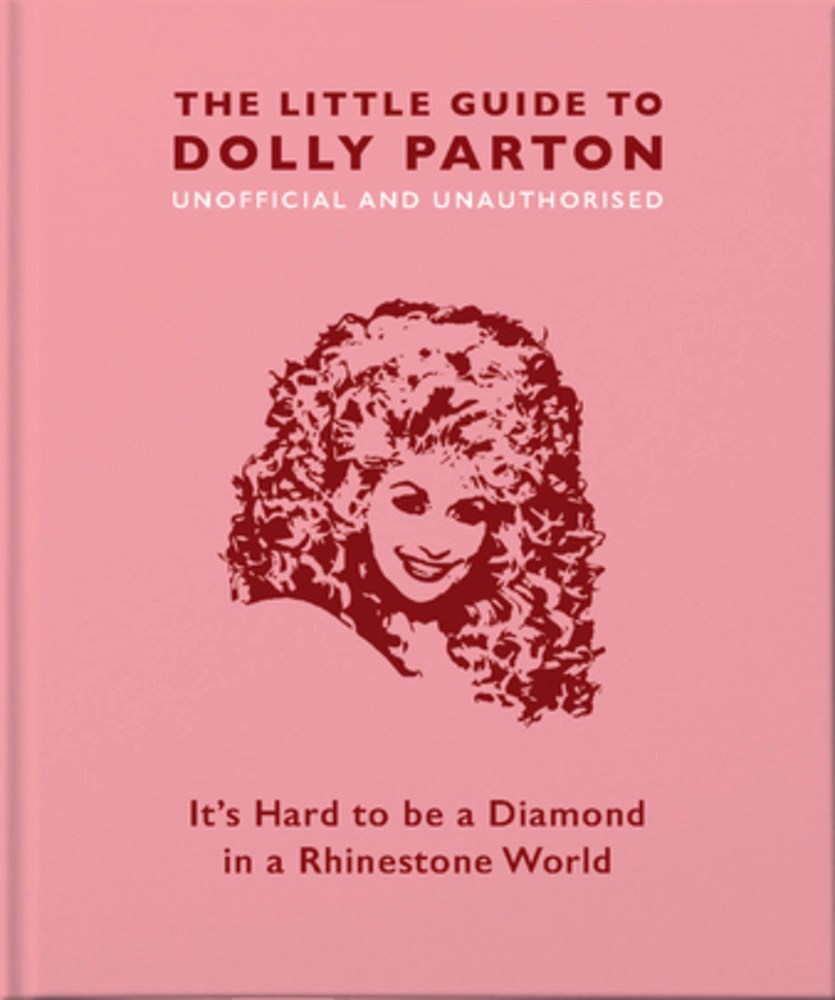
You do not need a wig wall or a recording contract to live by this. The philosophy scales down to a single closet. Start by noticing the pieces you reach past because someone once told you they were not “for you.” Pull one out. Wear it on a Tuesday for no reason. That small act of dressing for your own pleasure rather than other people’s comfort is the entire Dolly method in miniature.
The good news in 2026 is that the bold, body-confident woman has more places to shop than ever, and the rhinestones come in every size. Brands like Universal Standard build genuinely elegant, expressive pieces across an extended size range. Eloquent and joyful options come from Eloquii, which has long treated plus-size dressing as a chance for drama rather than apology. Torrid leans into exactly the kind of fun, flirty, unmistakable style Dolly would recognize, and the denim-and-confidence world of Good American keeps widening its range too. Vintage and resale racks are another rich hunting ground, full of the sparkle and color Dolly herself learned to love before any of these labels existed. The brand matters far less than the spirit. Buy the thing that makes you feel like the most-you version of you, and then, crucially, actually wear it.
And when the doubts creep in, the ones that whisper that you are too old or too big or too loud for this, remember that the most copied, most adored, most enduring style icon of her generation built her entire look on a woman her whole town called trash, claimed the word “cheap” as a compliment, and never once dimmed herself to make other people comfortable. Dolly Parton is not beloved despite her boldness. She is beloved because of it. The sequins were never the secret. The decision to wear them on purpose, every single day, regardless of who was watching, is the part you get to keep.