The Sephora at North Lenox in Atlanta has a foundation chair near the back wall that faces a north-light window, which is the kind of detail you only notice if you have spent years trying to find a foundation that does not turn orange on your jawline by 2 p.m. I sat in that chair in April 2025 and let the associate scan my face with the iPad shade-match tool. She pointed the camera at my forehead, then my cheek, then the side of my neck where the makeup-free skin actually lives. The tool processed for maybe four seconds and produced its recommendation with a confidence bar that filled most of the screen.
The shade it picked was three shades too pink and one undertone too orange for my NC45 neutral-warm skin. I knew this before the associate even reached for the bottle. I have been NC45 in MAC, 350 in Pat McGrath Skin Fetish, Y445 in Make Up Forever HD Skin, and 440 in Fenty Pro Filt’r for almost six years. The iPad was not broken. The associate was not under-trained. The tool was working exactly as designed. The brand’s foundation shade range was the problem. There was no shade in the brand’s lineup that matched me, so the tool picked the closest miss and called it a match.
I spent the next eight minutes walking my own shade chart in front of that mirror, swatching across my jawline in the north light, watching shade after shade slide pink, slide orange, slide ashy. By the end I had not bought a single foundation from that brand. I had also confirmed something I have been saying to my friends for two years. A brand’s foundation shade range is the most honest signal it sends about who it was built for. Everything else is marketing. This is the article those eight minutes earned.
The shade depth audit, which is the only audit that matters
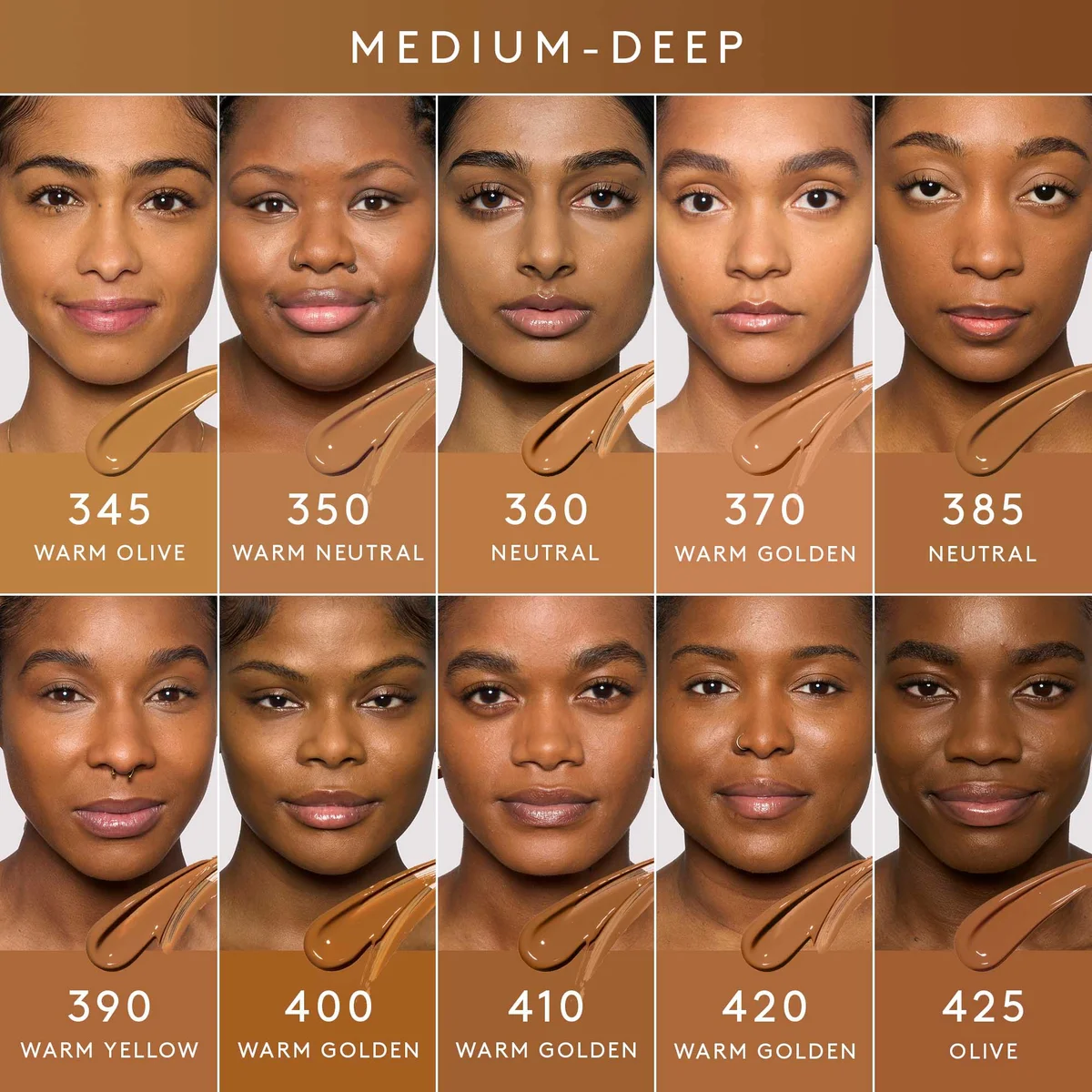
Here is the test I run on every foundation brand before I will buy from them again. Count the total shades. Count the deepest five. Then count how many of those deepest five come in more than one undertone. That third number is the entire audit. A brand can have 50 shades on its color card and still fail this test if the deepest five are all the same red-orange undertone. A brand can have 30 shades and pass it cleanly if the deepest five split across cool, neutral, warm, and olive. The total count is a marketing number. The undertone split is the math.
Most brands fail at the third number. I have stood in front of the foundation wall at three different Sephoras in the last year and counted out the deepest five shades of brand after brand, and the pattern repeats. Five shades, one undertone, usually a red-orange that flatters maybe one in four deeper-skin shoppers. The brand can claim “expanded inclusivity” all it wants. The undertone math is the truth.
The undertone problem that nobody at the counter wants to discuss
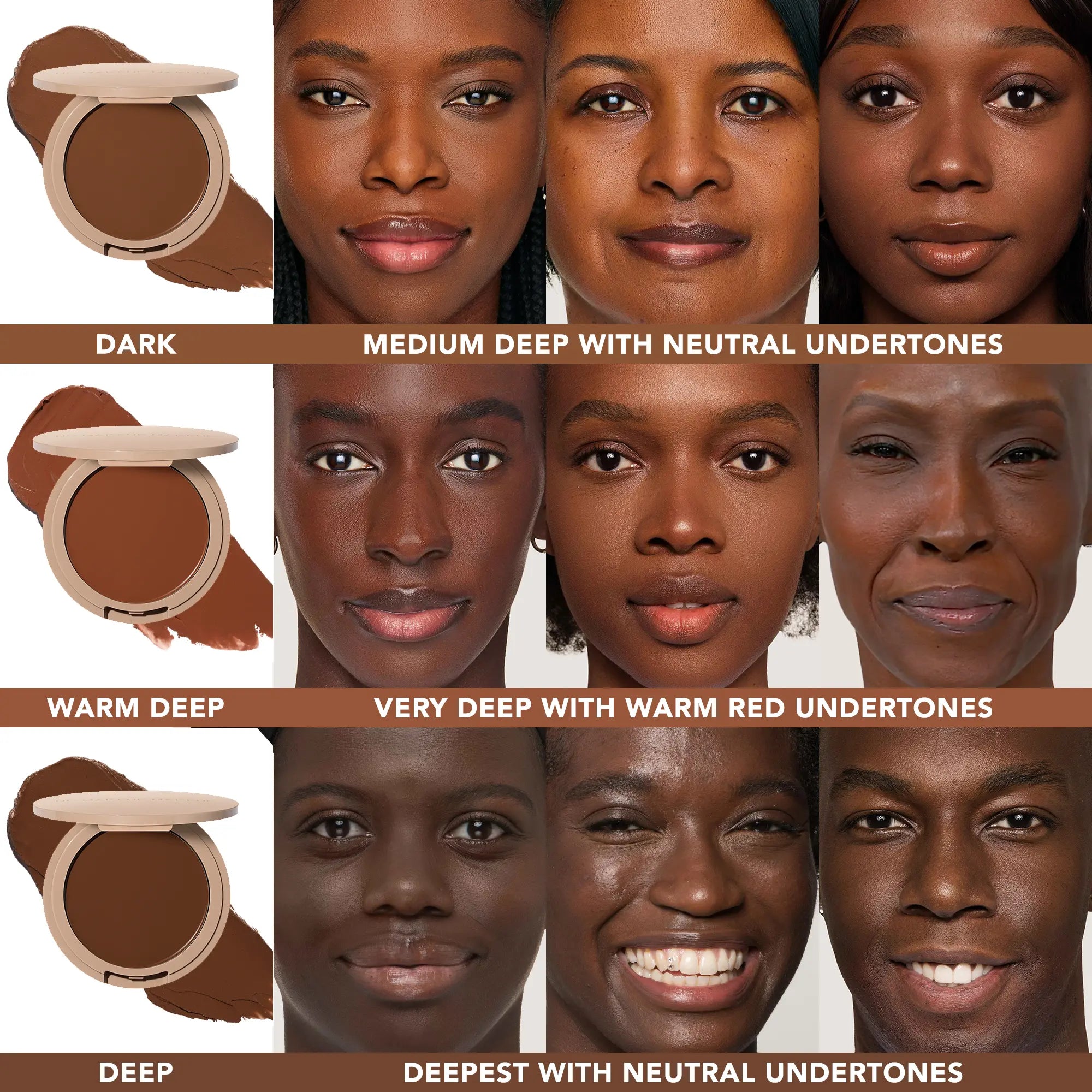
Almost every “deep” foundation on the market is deep plus orange or deep plus red. Almost none of them offer deep plus neutral or deep plus olive. This is the gap. Olive-toned deep skin reads ashy in a red-undertone foundation. Neutral-warm deep skin reads orange in a red-undertone foundation. Cool-undertone deep skin reads brassy. We are all being handed the same one or two shade options and told to be grateful.
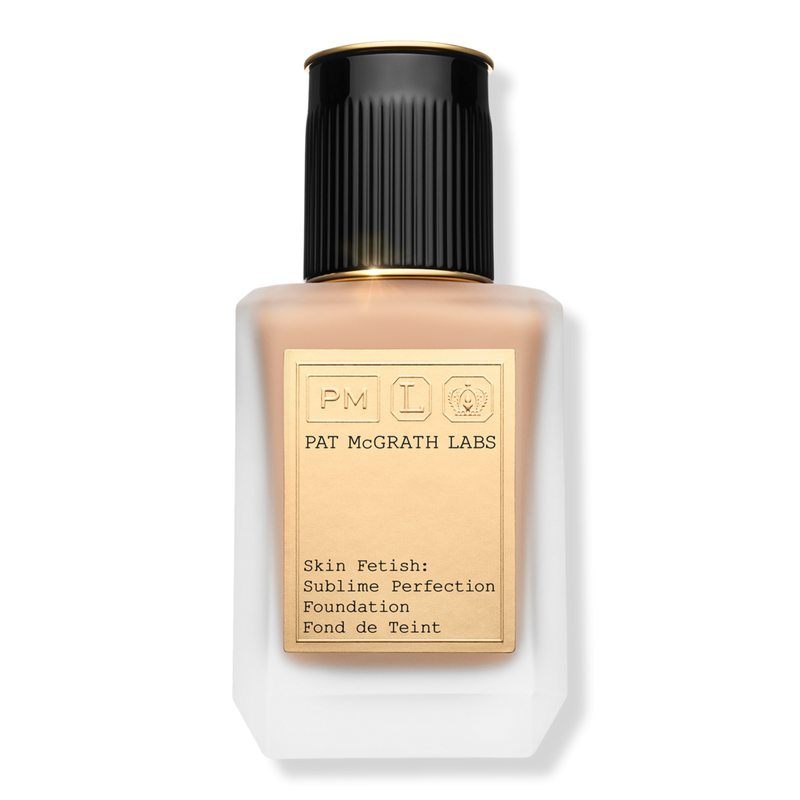
Pat McGrath is the rare exception that proves the rest of the industry is choosing not to do the work. Pat McGrath Labs Skin Fetish offers 24 deep shades across four undertone families. Twenty-four. That is more deep-undertone options than most brands have shades total. When Pat McGrath, who has been working as a makeup artist for three decades and has painted faces from Naomi Campbell to the Maison Margiela couture runway, builds a foundation line, the depth-undertone matrix is the first decision, not the last. That is what doing the work looks like.
The six brands that built FOR deeper skin, not added it after the fact
Fenty Beauty Pro Filt’r launched with 40 shades in 2017 and now sits at 50, and the depth math was there from the founding press release. The deepest 15 shades are not crammed at the end of a tail. They are evenly graded across the back half of the range with four undertone splits. This is what people meant when they said Fenty changed the industry. It was not the 40 number. It was the grading.
Pat McGrath Skin Fetish from 350 to 490 is the gold standard. The undertones split cool, neutral, warm, and olive across every depth tier. There is no “we have a 490, sorry it only comes in red.” There is a 490 in cool, a 490 in neutral, a 490 in warm. The price point is high. The execution earns it.
Make Up Forever HD Skin, which is Sephora’s own showcase brand on this front, ships in 40 shades with a clean cool, neutral, warm cross-grid. The Y series, N series, and R series mean you are picking depth AND undertone at the same time. The shade code does the literacy work most brands offload onto the shopper.
MAC Studio Fix Fluid is the original deep range. The NC and NW system, which MAC pioneered in the 90s, is still the most teachable framework in the industry. NC for neutral cool, NW for neutral warm, the number for depth. A makeup artist anywhere in the world can ask “what’s your MAC shade” and get an answer that translates. That is infrastructure.
Estée Lauder Double Wear reformulated in 2024 and added new deep shades with proper undertone splits, which I want to credit because the brand could have coasted on its legacy and did not. The new deep shades land cleanly. The legacy formula is still the longwear bench standard.
Charlotte Tilbury Hollywood Flawless Filter, which used to be a brand I would skip for deeper tones, actually launched with 12 deep tones in its 2024 expansion. Twelve. The undertone work is there. I bought one for the first time last fall and was surprised. Credit where it lands.
The six brands that capped shy of the deep range
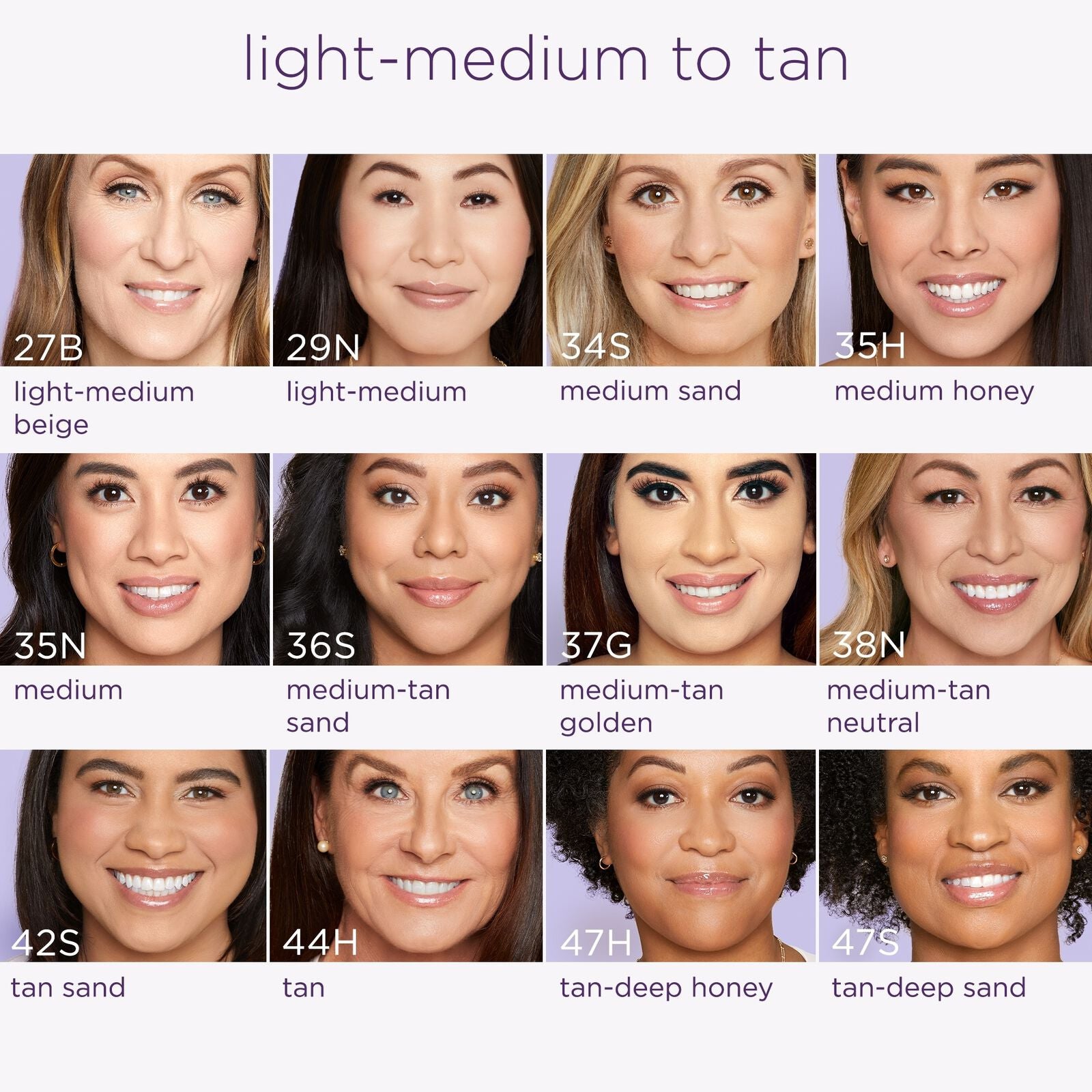
I do not have patience for “I love that you tried” praise for brands that stopped at mid-deep and called it inclusive. Tarte Shape Tape Foundation only goes to depth 60, which is mid-deep, full stop. Anyone darker than NC50 is not in that range. The brand has been told this for years. The brand has not fixed it.
Glossier Skin Tint markets itself as “for everyone” and stops at deep neutral with no cool or olive option below the equivalent of depth 50. “For everyone” is a marketing line. The shade card is the truth.
Drunk Elephant Umbra Tinte has a very limited deep range, which is strange for a brand that spends so much on skin science. If the formula chemistry is the brand’s whole identity, the shade range should not be the afterthought.
The Ordinary Serum Foundation has inconsistent grading. Two shades in the deep range can look almost identical, then there is a sudden jump to a much deeper tone with no in-between. This is what happens when the depth math is not planned across the full range from the start.
e.l.f. Halo Glow Liquid Filter has four “deep” shades and all of them carry the same red-orange undertone. Four shades, one undertone. This is exactly the audit I described above and exactly the failure pattern. The price point is friendly. The deep-undertone work is not done.
Milk Makeup Future Fluid has limited variation in the deep range and the swatches I have tested run heavy on one undertone family. I want this brand to do better because the formula is genuinely good. The shade range needs the same investment.
The foundation matching reality at the Sephora counter
The iPad scan tool at Sephora only knows the products that are physically in that store. If your actual shade is not in the brand’s lineup, the tool picks the closest miss and presents it with the same confidence bar it would use for a perfect match. There is no “we do not carry your shade” output. The tool is a sales tool, not a diagnostic tool, and once you understand that the eight minutes I spent walking my own shade chart make a lot more sense.
The at-home alternative is the jawline test in natural light. Swatch three candidate shades along the jawline where the face meets the neck, walk to a window, and look in a hand mirror. Dawn light, noon light, and evening light each tell you something different. A shade that disappears at noon can still pull orange at dawn. A shade that flatters at evening can read ashy at noon. Pat McGrath’s own shade-finder framework on the brand’s site teaches this directly, which is rare honesty from a brand that wants you to buy.
Undertone literacy, which is the work every shopper ends up doing alone
The MAC NC versus NW versus N framework is the most teachable place to start. NC means neutral with cool undertone, which on deeper skin reads more golden-yellow. NW means neutral with warm undertone, which reads more red-rose. N is true neutral. Once you know which family you are in, you can translate to almost any brand. I am NC45. That number lives in my phone notes and travels with me to every counter.
The cool-warm-neutral scale across the broader industry is messier than MAC’s. Make Up Forever uses Y for yellow and R for red. Pat McGrath uses cool, neutral, warm, olive. Fenty uses cool, neutral, warm. The numeric depth code translates relatively cleanly across brands. The undertone code does not, which is why so many shoppers end up matched to the wrong undertone even when the depth number is right.
The brands quietly doing the work without the marketing budget
Range Beauty, founded by Alicia Scott, was built explicitly for deeper skin tones and ships in 30 plus shades with the depth and undertone math handled from day one. Black-owned, indie, and doing the engineering most legacy brands are still skipping. The brand is not at every Sephora yet. It should be.
The last few years also pulled out a hard lesson on what “quietly doing the work” actually costs. Ami Colé, founded by Diarrha N’Diaye-Mbaye in 2021, did the engineering I wanted every legacy brand to do, launched at Sephora, racked up beauty awards, and then announced its shutdown in September 2025. Beauty Bakerie, founded by Cashmere Nicole and one of the original Black-owned shade-range labels, also closed in 2024 and was later picked up by a capital partner for a planned relaunch. The shade work was real at both brands. The market did not protect either one of them, which is part of why the working list I trust now skews toward Fenty, Pat McGrath, MAC, and Range Beauty, where the engineering investment is backed by a balance sheet that survives the rough years.
The 2024 industry data that the boardroom presentations buried
Fenty Beauty’s market-share effect on the prestige foundation category is now a case study in every beauty MBA curriculum. The 2024 NPD beauty industry shade-expansion analysis found a direct correlation between brands expanding their deep-shade undertone range and category growth. Brands that did the work grew. Brands that capped shy did not.
The takeaway I keep coming back to: Black consumers continue to over-index in prestige foundation purchases relative to category share, and brands without a credible depth-undertone matrix have lost shelf space and review-site traction in the years since Fenty reset the bar. The market spoke clearly. The brands that didn’t listen lost ground.
Working makeup artists have been saying this for years. Mary Phillips, who styles J.Lo and Hailey Bieber and works across editorial, has publicly refused to use brands without proper deep-shade depth on set. Sir John, who has built Beyoncé’s red-carpet looks for over a decade, talks about the shade chart as the first conversation he has with a new brand partner. Pat McGrath built her own brand because the existing ones did not give her what she needed for the runway. When the people who paint faces for a living tell you the shade range is the audit, the audit is the audit.
What to ASK at the foundation counter, in three questions
One. What is your deepest neutral undertone shade. Not your deepest shade. Your deepest NEUTRAL. If the associate has to look it up or ask another associate, the brand has not done the work.
Two. What is your deepest cool-toned shade. Same logic. If the only deep shades are warm-toned, you have learned the answer.
Three. Do you have an undertone option other than red or orange below depth 50. This is the question that ends the conversation quickly. The brands that pass it are the ones I keep buying. The brands that fail it are the ones I do not.
What to STOP doing, because we have all done it
Do not accept the “deepest match” if the undertone is wrong. A foundation that is the right depth but the wrong undertone will read worse on your face than no foundation at all. Walk away. The brand does not deserve your money for the closest miss.
Do not buy foundation online without a clear returns policy that allows used product back. Some brands will not take a swatched bottle. Read the policy before you click buy. The Fenty, Sephora, and Pat McGrath returns policies are generous. Some indie brands are not.
Do not mix two shades unless you are willing to do it every single morning for the life of the bottle. The mixed shade is a real solution only if you commit to the mix. Otherwise you end up with two half-empty bottles and a face that changes color depending on which one you reach for first.
The observation that ended my eight minutes in that chair
A brand’s foundation shade range is the most honest signal of whether the brand has actually built FOR deeper skin or simply added shades AFTER the feedback got loud enough. The depth-and-undertone matrix tells you everything you need to know in roughly thirty seconds of looking at the shade card. Total count is marketing. Deepest five with multiple undertones is the actual test.
The six brands I trust on this audit: Fenty Beauty Pro Filt’r, Pat McGrath Skin Fetish, Make Up Forever HD Skin, MAC Studio Fix Fluid, Estée Lauder Double Wear in its 2024 reformulation, and Charlotte Tilbury Hollywood Flawless Filter after the 2024 expansion. The six I have stopped buying: Tarte Shape Tape, Glossier Skin Tint, Drunk Elephant Umbra Tinte, The Ordinary Serum Foundation, e.l.f. Halo Glow Liquid Filter, and Milk Makeup Future Fluid. I am not waiting around for any of them to fix it. The audit takes thirty seconds. The receipt is on the shade card. The chair by the north-light window at the Sephora at North Lenox is still there if anyone wants to run their own.