On a Tuesday morning in November 2024, I dragged a suitcase out from under my bed in my Manhattan apartment and opened it on the rug. Seventeen garments came out. Ten countries. Four continents. Six years of buying clothes on the road at size 24, sometimes 26, depending on the country and the cut. I had not laid them out together before. When I did, the pile told a story I had been living inside of without seeing it. Some countries had cut for my body. Some had not. The pile knew which was which, even when I had spent years pretending otherwise.
This is the story of those seventeen pieces. Where each came from. What each cost. What each taught me about the gap between American plus-size and the rest of the world. I am writing it because I am tired of the polite version, and because four of those seventeen pieces are still in my weekly rotation, and the reason all four survived is the same reason.
The pile
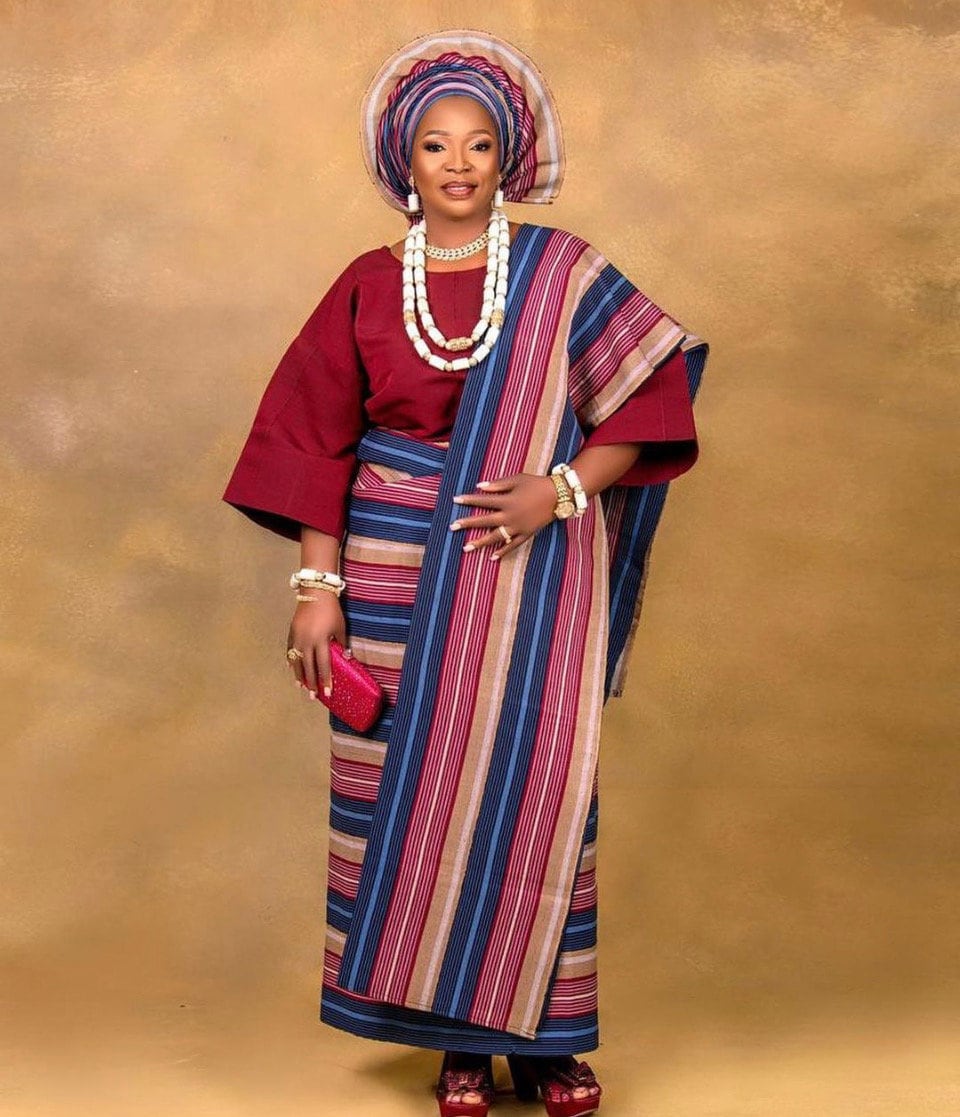
Here is what came out of the suitcase, in the order I pulled them. A custom iro-and-buba in indigo aso-oke from Lagos, 2018, around $340 with the commission. A green-and-gold kaftan from a souk tailor in Marrakech, 2019, roughly $85 after the haggle. A Yakampot cotton midi from a small atelier in Roma Norte, Mexico City, 2020, about $220. A custom blouse for my cousin’s wedding sewn in a Mumbai tailor’s shop in 2022, $48 including the cotton-silk. A Punyus oversize dress from the Marui Plus floor in Tokyo, 2023, near $130. A Maxhosa Africa knit poncho bought near the V&A Waterfront in Cape Town, 2023, around $310. A Marina Rinaldi linen blazer from the Selfridges reduction in London, 2024, $390 after the markdown. A vintage silk shirt from a Marais resale in Paris, 2024, $60. A Castaluna swing dress shipped to my Paris hotel, $95. A commissioned leather jacket from a Galata workshop in Istanbul, 2024, $260. A Carnival costume from Aura mas band in Trinidad, 2024, $1,900 with the bra recut.
I am skipping a few, but those are the ones I want to talk about. The rest were filler. The ones I named are the lessons.
Lagos, 2018
The first piece I commissioned abroad was the indigo iro-and-buba. I was in Lagos for a wedding and my aunt walked me into a workshop in Ikoyi run by a woman who measured me with a soft tape and a expression that said she had done this a thousand times. The commission took six weeks. I flew home without it and it arrived in a DHL pouch a month and a half later. The fit was the first time in my adult life a garment held my back and my shoulders the way I had read about in magazines that did not feature women my size.
What Lagos taught me was the commission cycle. Six weeks is normal. You go for the first measurement. You come back for a fitting if you can. If you cannot, you trust the seamstress and the courier. The garment is built to your body, not adapted to it. That distinction matters. Hawi Couture in Lagos and designers like Lisa Folawiyo work in this model, and so do thousands of unnamed workshops in every neighborhood. The Nige
Marrakech, 2019
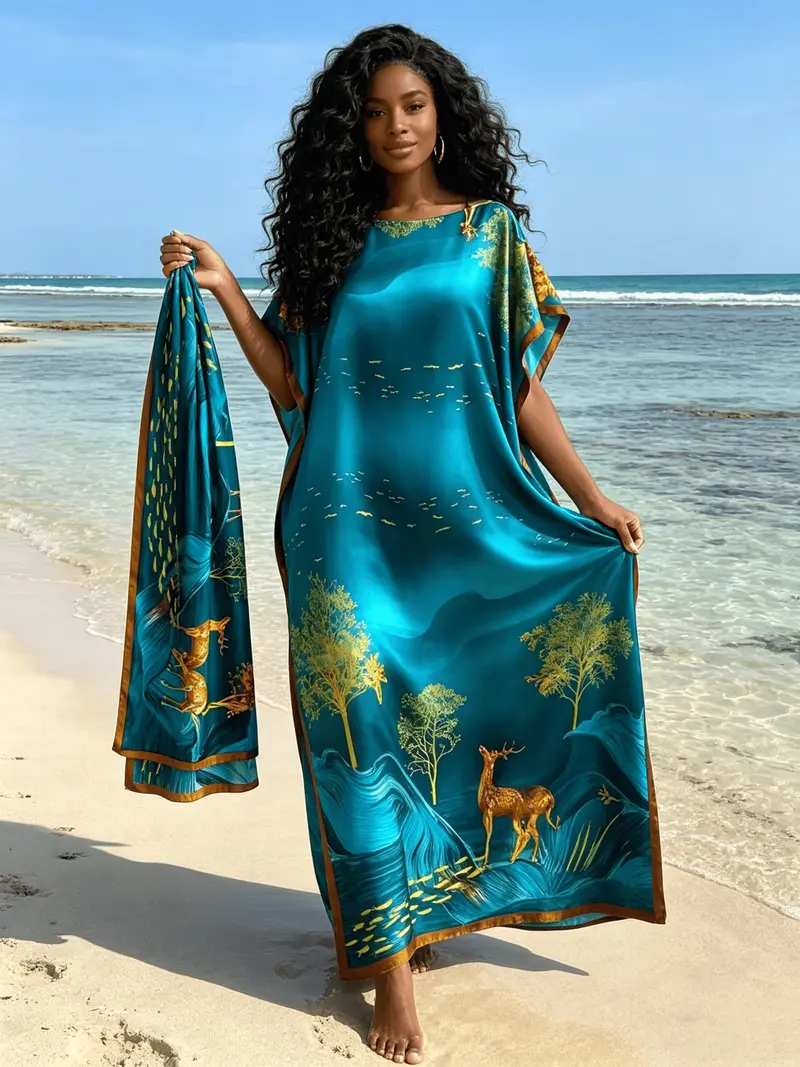
A year later I sat on a low stool in a souk tailor’s shop near Bab Doukkala while a man in his sixties measured me with chalk on the fabric itself. The kaftan was green-and-gold, lined, with a deep V neckline I would not have picked in the US because I would not have been offered it. He told me to come back in four hours. I went and got a tagine and a mint tea and walked back at the time he said. The kaftan was finished. It fit. I paid the equivalent of $85 after a respectful haggle. I have worn that kaftan at
Marrakech taught me that the speed of commissioning is a local variable. Lagos is six weeks. Marrakech can be four hours. Mumbai can be next-day. London is six weeks again, but the workflow is the same. The slow thing is not commissioning itself. The slow thing is finding an industry that knows how to do it for your body without flinching.
Mexico City, 2020
I was supposed to be on a Carnival cruise in March 2020. The world ended instead. The rebooking eventually deposited me in Mexico City for a long winter where I learned the difference between Latin American talla extra and US plus. Yakampot is a small Mexican atelier with a shop in Roma Norte, and they cut a cotton midi for me with a hand-embroidered yoke that I still wear to dinners. The price was $220, which felt right for the level of work.
Talla extra in Mexico runs smaller than US plus, sometimes by two full sizes. A Mexica

Mumbai, 2022
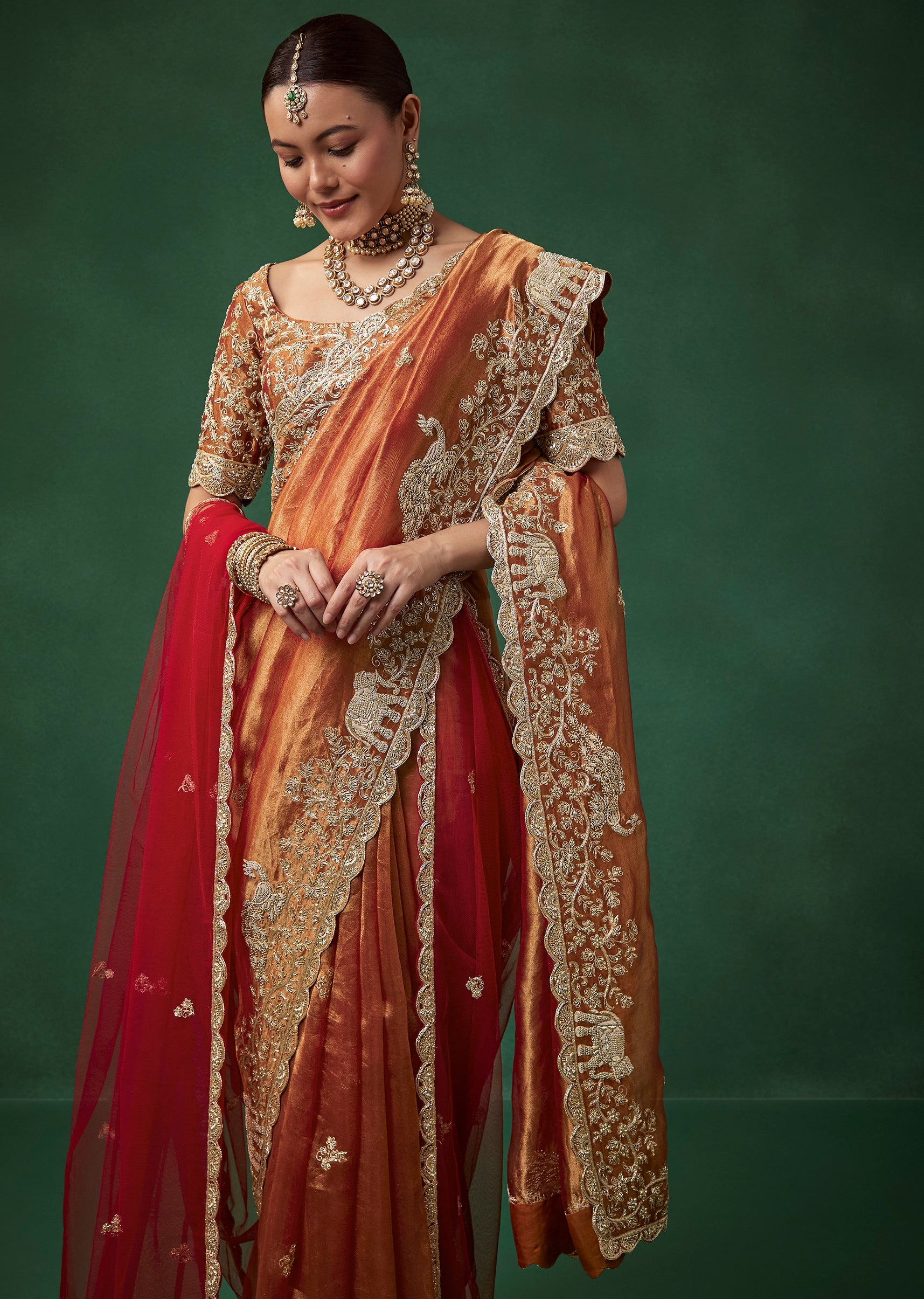
Mumbai was a cousin’s wedding and a tailor named Bhavin near Bandra West. I needed a blouse for a lehenga. He measured me at 11 in the morning. The blouse was ready by 9 the next night. It cost $48. I cried in the changing room, which embarrassed both of us. The lehenga itself was a problem because the shop I had ordered it from in advance had sized me using a chart that bore no resemblance to my body and the skirt would not zip. The blouse worked. The skirt did not. The lesson was Indian sizing math.
The math is this. Indian ready-to-wear is built off a base that assumes a small frame. The numerical sizes you see online are not a translation of US sizing. They are a separate scale that runs short in the torso and tight in the chest. The Indian solution is to commission, which is also the South Asian American solution. Saree Sea and similar US-Indian shops will work with you. The big direct-to-consumer Indian sites mostly will not. If you are going to India and you are above a US 18, plan to be measured on arrival and commission everything that is not a sari.
Tokyo, 2023
Tokyo was the surprise. I had been told Japan was hostile to my body. I went anyway. Punyus, the plus-size label founded by comedian Naomi Watanabe, has a flagship inside Shibuya 109 and a second location at Lumine Est in Shinjuku, with sizes that go up to 6L. I bought an oversize dress with a graphic print for around $130. The dress fits me better than most American mid-tier brands at the same price.
What Tokyo cost me was time. The Punyus floor at Shibuya 109 is not advertised in English. I went on a Tuesday afternoon with a translation app and a screenshot from a Japanese plus-size blog. The fitting room conversation was slow and warm. The salesperson was patient with my measurements and apologetic about the sizing scale, which still topped out below a US 26 in many cuts. The dress I wear now was at the upper edge of what they carried. The next size up did not exist. Japan made me, kind of. Japan also told me where the wall was.
Cape Town, 2023
Cape Town gave me the Maxhosa Africa knit poncho and a humbling at the same time. I went up to a small fabric house in Bo-Kaap to ask about a custom piece, and an elder seamstress who was at the cutting table looked at me, asked where I was from, then said something in Xhosa to a younger woman beside her. The younger woman laughed politely and translated. The elder had said I was asking for a “regular cut” when I clearly wanted an asoebi-quality cut, and that I should know the difference before I came back. I deserved the gentle scolding. I had been treating commissioning like ordering coffee.
The Maxhosa Africa piece I bought ready-made near the V&A Waterfront was around $310. Laduma Ngxokolo’s brand cuts up to what most US shoppers would call a 22, which in their sizing was labeled differently. The fit was generous because the silhouette is meant to be. That is a design choice, not an accommodation, and I learned the difference there. South African designers like Maxhosa do not center plus-size customers, but they do not engineer us out of the cut either. The shape welcomes the body. That is its own kind of mercy.
London, 2024
London was the European luxury reality. Marina Rinaldi is the Max Mara plus-size line, and Selfridges runs a reduction on it twice a year. I bought a linen blazer for $390, marked down from over $700. The fit was the first ready-to-wear piece in years that did not need alterations through the shoulder, which is the place American plus brands tend to fail me. I also took the blazer to Atelier Notting Hill for a minor sleeve adjustment, because European luxury at this price point expects you to alter, and the alteration shop did not blink at my measurements.
The European luxury reality is this. There are maybe four or five lines globally that cut to a US 24 with the same fabric and construction as their straight-size mainline. Marina Rinaldi is the household name. Elena Mirò is another. The prices reflect the construction. The reduction calendar matters more than the brand directory. If you are buying European plus luxury full price, you are buying it wrong.
Paris, 2024
Paris was a quieter chapter. I found a vintage silk shirt in a Marais resale for $60, which fit because vintage Paris sizing for older silk pieces runs generous through the body. I also ordered a Castaluna swing dress to my hotel. Castaluna is the La Redoute plus-size line, and the order arrived in two days for $95. Paris itself was not where I shopped well. Paris was where I learned that a hotel concierge will sign for plus-size online orders without commentary, which removed the most stressful step of the trip.
Istanbul, 2024
Galata had a leather workshop I had read about on a Turkish plus-size forum, and I walked in on a Thursday and walked out two days later with a black moto jacket built to my measurements for $260. The fabric house was off Galatasaray. The pattern maker drafted on butcher paper while I drank tea. The jacket has held up through two winters of subway commuting in Brooklyn. It is the single best price-to-fit garment I own.
Istanbul taught me that the leather and fabric houses around Galata and Beyoğlu are the closest thing in Europe to the Lagos commission model. The infrastructure exists. The workshops are still operating. The wait times are short. The prices reflect a labor cost that has not yet been swallowed by tourism markup. If I had to choose one city to send a plus-size friend for a wardrobe overhaul, I would send her to Istanbul before I sent her anywhere else.
Trinidad, 2024
Trinidad was Carnival, and Carnival was its own discipline. I played mas with Aura, one of the bands that builds custom costumes for larger bodies without pretending it is a favor. The base costume was around $1,400. The bra recut took 18 hours of work over two visits and added another $500. The body math of a feathered backpack is real. The harness sits across your shoulders. The bra has to hold a chest plus the weight of a wire frame plus eight pounds of feathers. The fitter who recut my bra was the same age as my mother and worked silently while music played in the next room.
Aura was the only band where I did not have to explain my body twice. The fitter knew what a 24 looked like on a Carnival stage because she had built for that body before. That is the asoebi-quality cut the Bo-Kaap seamstress had named. A cut for someone like you, made by someone who has done it for someone like you.
What the pile told me
Here is the structural argument the suitcase made on my rug that morning. The American plus-size industry is set up for off-the-rack at modest quality. The rest of the world, in places where commissioning culture is alive, is set up to build to a body at whatever quality level you can pay for. Those are two different operating systems, and an American plus-size woman traveling abroad is mostly running into the second one without knowing what to do with it.
The choice every plus-size US woman has, once she travels enough to see both systems, is which one she is going to organize her wardrobe around. You can keep accepting the off-the-rack mediocrity of mid-tier American brands and pretend the fit issue is your problem. Or you can learn the international commissioning model and treat your wardrobe like a build, not a shop. The commissioning model takes more time. It costs more in some cities and dramatically less in others. It produces clothes that fit. The shopping model produces clothes that you make peace with.
I am not telling anyone to fly to Lagos to get a blouse. I am saying that once you have done it once, the off-the-rack experience back home stops feeling normal, and you start asking harder questions about why the brand you have been loyal to for ten years still cannot put a sleeve on you that does not strangle your upper arm.
The four garments that stayed in the rotation
Of the seventeen pieces on the rug that November morning, four are still in my weekly rotation eighteen months later. The Marrakech kaftan. The Lagos iro-and-buba. The Cape Town Maxhosa poncho. The Mumbai blouse. Three were commissioned outright. The fourth, the Maxhosa, was ready-made from a brand whose silhouette is generous by design. The Marina Rinaldi blazer is in the closet but only comes out for work travel. The Tokyo Punyus dress is folded on a shelf because the fit is good but the print is loud and I do not wear it often. The Trinidad costume is in a storage bin because Carnival costumes only have one job.
Four out of seventeen. Three commissioned, one cut with intent. The American off-the-rack pieces I bought between trips, the ones I did not bother to lay out that morning because I knew where they would land, are mostly gone. Goodwill or the donation bin at the synagogue down the block. They wore out faster, fit worse, and never felt like mine the way the commissioned pieces do.
I zipped the suitcase back up that afternoon with the survivors inside, and the donations went into a separate bag. The pile had said what it came to say. The countries that cut for my body had names: Nigeria, Morocco, South Africa, India, Turkey, Trinidad on a good week. The countries that politely could not had names too, and I will not list them, because the seamstresses in those countries are not the problem. The industries are. And the only thing the pile asked of me was to stop pretending I did not know the difference.