Picture the moment: a 14-hour redeye boarding in forty minutes, a brand-new Trtl neck wrap out of its packaging, and a wrap-around closure that stops two inches short of the velcro. Pull it tighter and the velcro catches on the very edge of itself, the kind of grip that lasts maybe four minutes before it pops open. “One size fits most” is the phrase that did the damage, and it is the phrase that should make you check a measurement before you buy anything that fastens around your body.
That is the shape of almost every plus-size travel accessory failure. The products on “best travel accessories” lists are specced for a median body, and the lists are written by people who have apparently never had a calf wider than 14 inches or a torso that pressed flush against the lid of a hard-sided suitcase. What follows is the kit worth building instead, organised around the measurements that actually decide whether something fits.
Compression socks: measure your calf before anything else
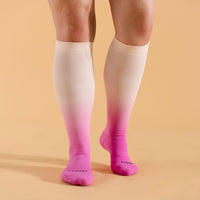
Compression socks are a health product, not a fashion accessory, so start here: whether you should wear them, and at what pressure level, is a question for your doctor or another qualified clinician who knows your history. This section is about fit and sizing only, which is the part the product pages are worst at.
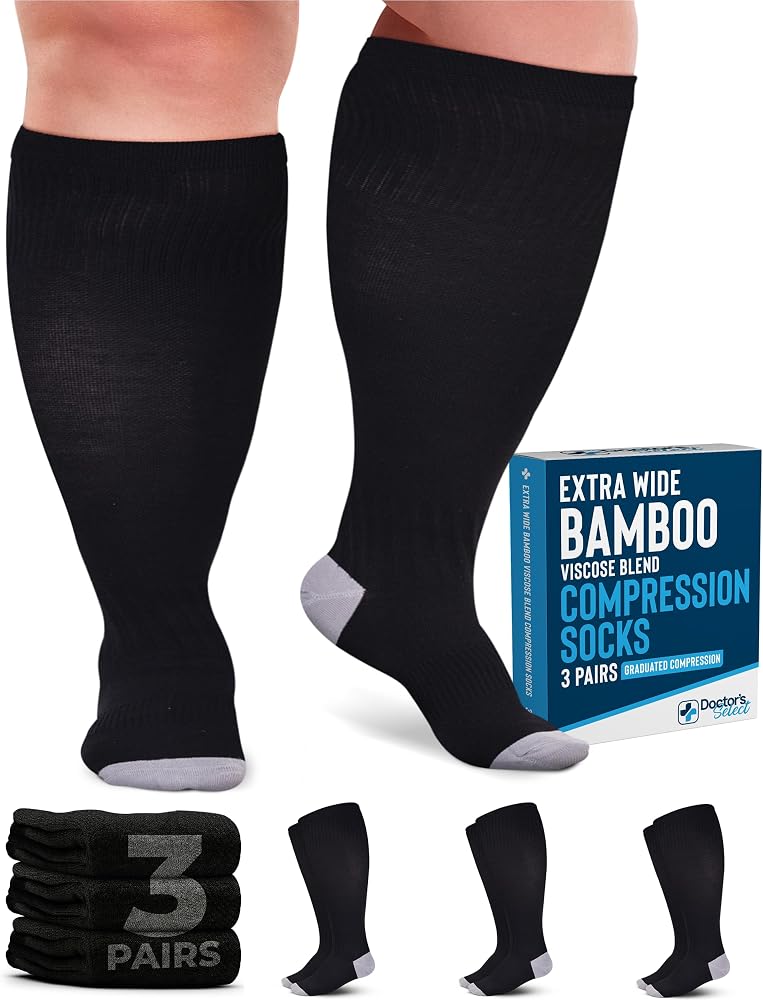
The fit problem is simple. Most knee-high compression socks are designed around a calf circumference of roughly 14 to 15 inches at the widest point, and plenty of plus-size legs run 16, 17, 18 inches or more. A sock that is too narrow rides up, rolls, and digs a band into the widest part of the calf, which is both uncomfortable and a sign the garment is not sitting the way it was designed to sit. If the band is cutting in, take it off and size up rather than pushing through the flight.
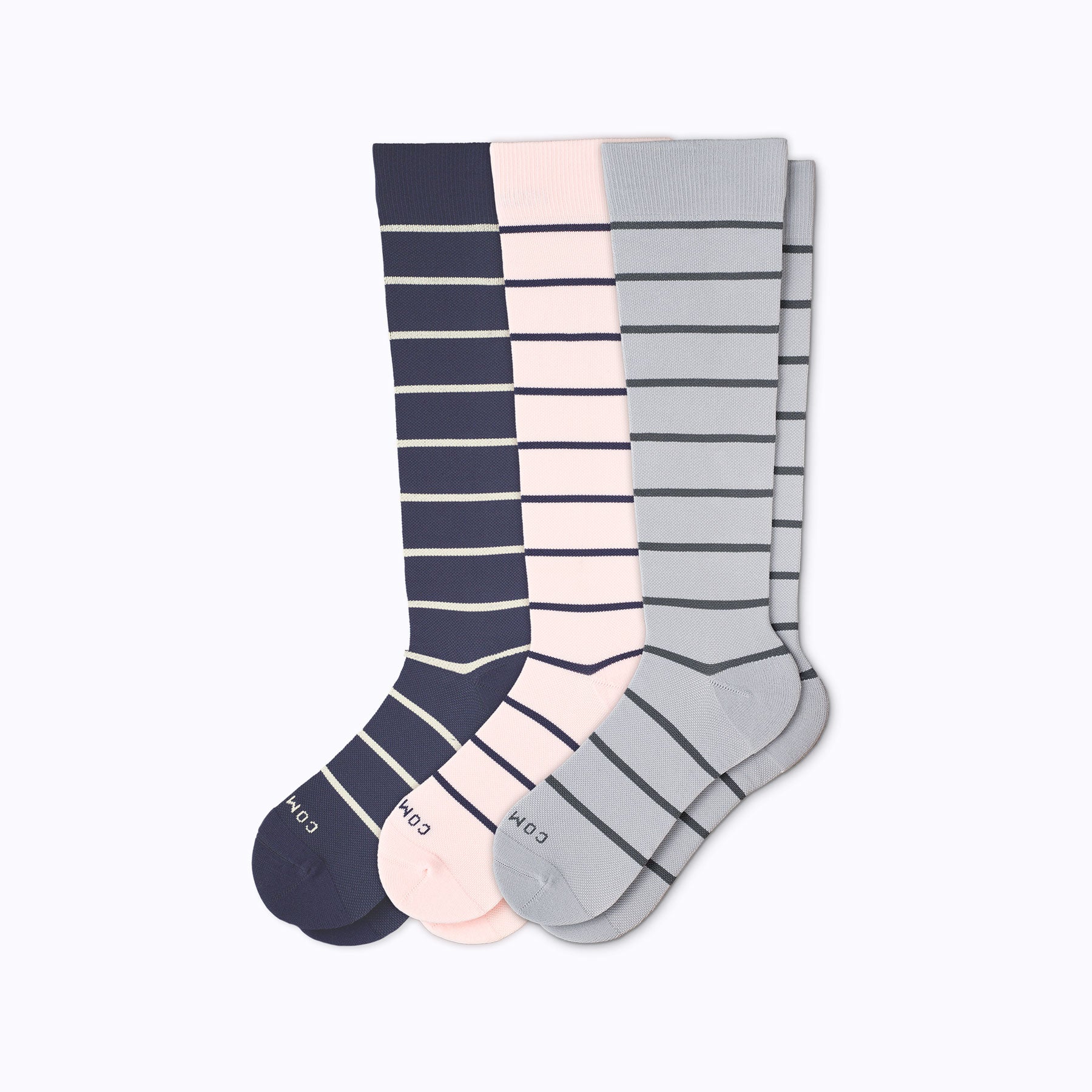
The two brands that take wide calves seriously are Comrad and Vim & Vigr.
Comrad sells a Wide Calf option fitted to larger calf circumferences, with a knee-high in classic black as the workhorse. The fabric is on the thicker side, which is comfortable on a long flight and a little warm for a summer redeye. Expect to pay around $32 a pair at the time of writing, which is at the higher end for socks and buys you a pair that holds its shape through repeated washing.
Vim & Vigr has a broader range of fits and publishes a calf circumference chart for its wide-calf line, with the widest options going well past where standard sizing stops. They also sell several compression levels. The mmHg number on the package is the pressure rating, and higher ratings are sold as medical products, so treat the choice of level as a clinical question rather than a shopping preference. Whatever brand you land on, measure the widest point of your calf with a tape measure and check it against the published chart on the day you buy, because charts change between production runs.
What not to buy: any knee-high compression sock that does not list its widest calf circumference. If the product page only says “S, M, L, XL” with no inches, assume it tops out around 15 inches at the calf and assume the top band will cut. Anything labelled “athletic compression” tends to run especially narrow. And the cotton-blend “fashion compression” socks on a discount rack look cute, but the compression rating is usually so low that the construction is rarely graduated at all.
Neck pillows: the Trtl problem and what to buy instead
The closure length is the whole story with a wrap-style neck pillow. Trtl markets to a broad audience, but the spec is built around a narrow band of necks, and travellers with larger necks have been flagging the same too-short-velcro complaint for years. If your neck is over about 14 inches, or you have a fuller jawline, the wrap-and-velcro design does not work. There is no technique that fixes a closure that does not reach.
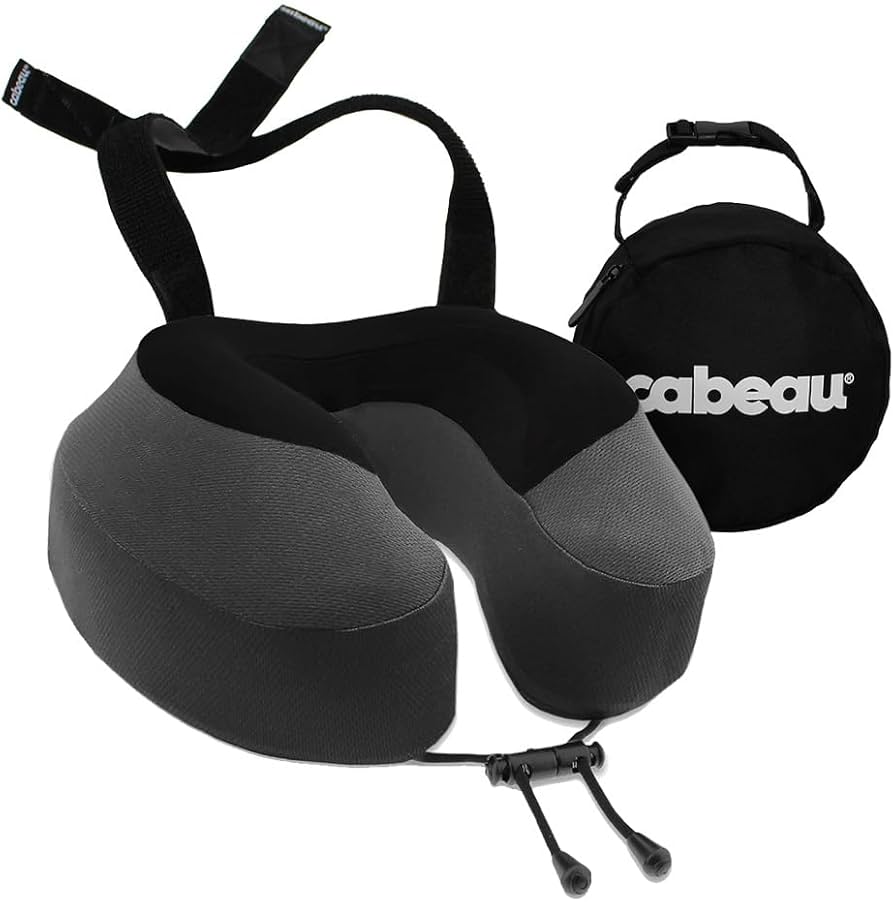
The pillow to look at instead is the Cabeau Evolution S3, and the reason is structural rather than cosmetic. It is a U-shape with a memory foam core and a flat back panel that fills the gap between your neck and the seat headrest. Because it rests on your shoulders instead of wrapping around your neck, there is no “one size” closure to run out of. Wide shoulders still fit. A shorter neck gets the jaw cradled rather than choked. It runs about $40 at the time of writing, and the cover is washable, which matters more than it sounds like it should on a pillow you sleep on in public.
If you sleep on your side on planes, and a lot of us do because back-sleeping in a coach seat is borderline impossible for a plus-size body, the Cabeau still works, but a denser foam pillow such as the Aeris Memory Foam is better suited to it. More density means that when you tip your head sideways the foam holds your head up instead of compressing flat against your shoulder. The two are priced similarly, so if you know you lean against the window, buy for that.
What to skip: any inflatable pillow promising a “custom fit.” The vinyl does not breathe, your neck sweats against it for the whole flight, and the firmness shifts as cabin pressure changes, so you end up adjusting it instead of sleeping. Also skip the cheaper dual-strap “scarf pillows” built to look like the Trtl. Same closure problem, worse velcro.
Travel wraps and shawls: the most underrated item in the bag
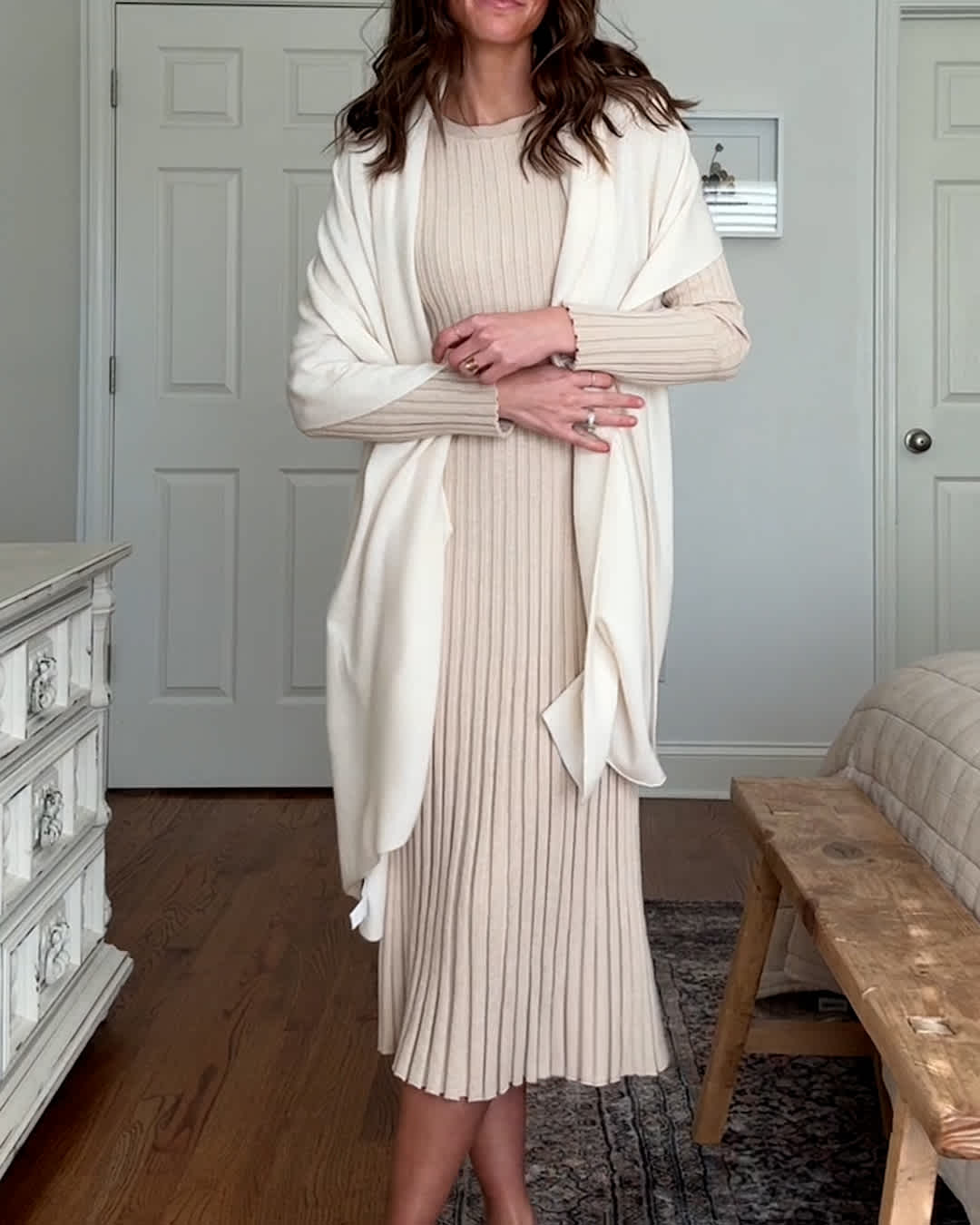
A good wrap is the single highest-value upgrade in a travel kit, because it does the work of three items. It is a blanket on the plane, where airline blankets are tiny and synthetic and do not cover a fuller body. It is a cardigan when you land somewhere with unpredictable weather. Folded up, it is a pillow for your lower back on a long bus or car ride.
Two are worth knowing about. The Quince Mongolian cashmere wrap is the lightweight option, around $80 at the time of writing, and it weighs almost nothing in a carry-on. The cashmere is thin but warm, and it resists pilling better than the price would suggest. It comes in roughly eight colours, with heather grey and camel the easiest to style against everything else you packed.
The Lou & Grey signature wrap is heavier, closer to a sweatshirt-blanket hybrid, at about $90 at the time of writing. It is the one for long-haul international flights where the cabin gets cold around hour six, and it is wide enough to actually drape over a plus-size frame and tuck under both arms, which most “travel blankets” are not. Short flights and summer, take the Quince. Winter, redeyes, and any trip where you might end up sleeping in an airport, take the heavier one.

Seat belt extenders: when to bring your own and when to ask
Experiences here vary enormously, and that is the useful thing to know going in. On many domestic flights, asking a flight attendant before takeoff gets you an extender in about thirty seconds with no fuss and no comment. On other carriers the extender is a visibly different shape, the crew is less practised, and the whole exchange is more conspicuous than it should be.
The policy part matters. On US carriers, the extenders approved for use are generally the ones the airline supplies, and whether you may use a personal extender is at the airline’s discretion. You can own one, but an airline is within its rights to decline it and hand you theirs. Buckle types differ between aircraft families, so a personal extender may not even be the right fitting for the seat you are in. Policies are not consistent between carriers, so do not assume the last airline’s answer applies to the next one.
A practical approach: carry your own in your personal item, and show it to the flight attendant as you board rather than at your seat. Ask whether you can use it or whether they would prefer to provide theirs. Either answer is fine, and the advantage is that you never have to ask in front of other passengers and never have to wait for the extender cart to reach your row.
If you are flying domestically in the US and a standard belt is right at the edge of closing, ask at the gate desk before boarding, because most airlines now train staff to handle this discreetly. If you are flying internationally, research the specific carrier’s policy first. Some European airlines are noticeably less plus-size-friendly than US ones, and a few low-cost carriers in Asia do not stock extenders at all.
The personal item: which bags actually work
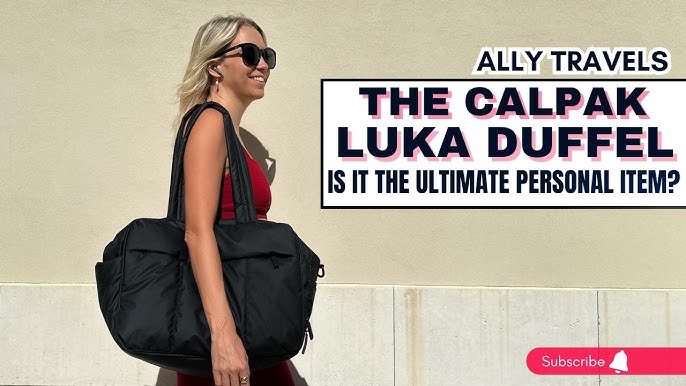
The personal item bag is where most plus-size travel guides fall apart. Every list recommends the Beis Weekender or the Calpak Carryall, and both are fine bags, but the lists never mention the part that decides it: the strap drop length, and whether the strap sits on a fuller shoulder without sliding off or digging in.
The Beis Weekender in the regular size has a strap drop of about 11 inches, which is fine crossbody but tight if you want it on one shoulder over a coat or a sweater. The handles are sturdy and wide enough not to dig, which is the real upgrade over cheaper carry-ons. It runs about $98 at the time of writing, and the construction takes more abuse than a carry-on strictly needs to.
The Calpak Carryall is the stronger pick for a fuller frame. The strap drop is around 13 inches and the strap itself is wider, so weight spreads across the shoulder instead of concentrating on a narrow line. The bag sits flatter against the body, which you notice navigating a crowded jet bridge. It is about $128 at the time of writing, more than the Beis, with better interior organisation.
Bags to approach carefully: the Away Everywhere Bag is beautiful but has a strap drop of about 9 inches, which is short for wearing over outerwear. The Dagne Dover Landon Carryall is well built, but the handles are short and the side compression straps land awkwardly when the bag is full. The Lo & Sons Catalina gets recommended widely, but it goes floppy fully packed, which makes it harder to sit neatly under an airline seat. In every case, the number to look up before you buy is the strap drop.
The small stuff: boarding pass holder, medication kit, lip balm
This part of the kit is the same for everyone, but it is worth saying anyway, because the small stuff is the difference between arriving frazzled and arriving okay.
A slim passport and boarding pass holder in the front pocket of your personal item, with slots for a passport, a vaccination card, two cards, and a folded itinerary. Bellroy makes a Travel Wallet at around $99 at the time of writing, and the zipper is the part you are paying for, because that is what fails first on cheaper versions and it always fails while you are fumbling at a customs counter.
A medication kit in a small zip pouch in the same pocket: a 7-day pill organiser with your prescriptions, plus whatever over-the-counter basics you already use at home and any motion sickness remedy your pharmacist or doctor has suggested for you. Refill it before every trip rather than the night before.
Lip balm, in a tube rather than a tin, because tins open in a bag and ruin everything around them. Cabin air is extremely dry, so this is the item to use before your lips crack rather than after.
What does NOT translate from smaller bodies
This is the section that should exist in every plus-size travel guide and never does. These are the products that work for smaller bodies and fail for ours.
Hanging toiletry organisers, the rectangular bags that fold out and hang from a hook in a hotel bathroom. Brilliant idea, thin hanging strap. The weight rating on the strap is often only a couple of pounds, and a fuller toiletry kit, which a lot of us carry because we travel with more skincare, haircare, and body care, is heavier than that. The strap tears or the hook bends. If you want one, buy a version that publishes a higher weight rating and has a reinforced strap.
Vacuum compression bags, the kind with a one-way valve that forces air out so the bag takes less space in a suitcase. These work well for thin fabrics where the clothes have give. For fuller-cut clothes, particularly anything with structured shoulders or thick fabric, the folded edges press hard against the seams and the bags are prone to splitting in transit, which puts whatever is inside at risk. Packing cubes are the lower-drama choice.
Most “travel scarves” that claim to double as a wrap. They are sized for a single-layer drape around a smaller frame, and on a fuller body they barely cover one shoulder. If you want a wrap that works, buy an actual wrap or shawl. Do not buy anything called a “travel scarf” unless the dimensions are published and the width is at least 70 inches.
Hard-sided crossbody travel bags with structured bodies. They are designed to sit flush against the hip. On a fuller hip they angle outward, and on a long walk they bump the side of your leg with every step. Soft-sided crossbody bags work far better.
The kit, assembled
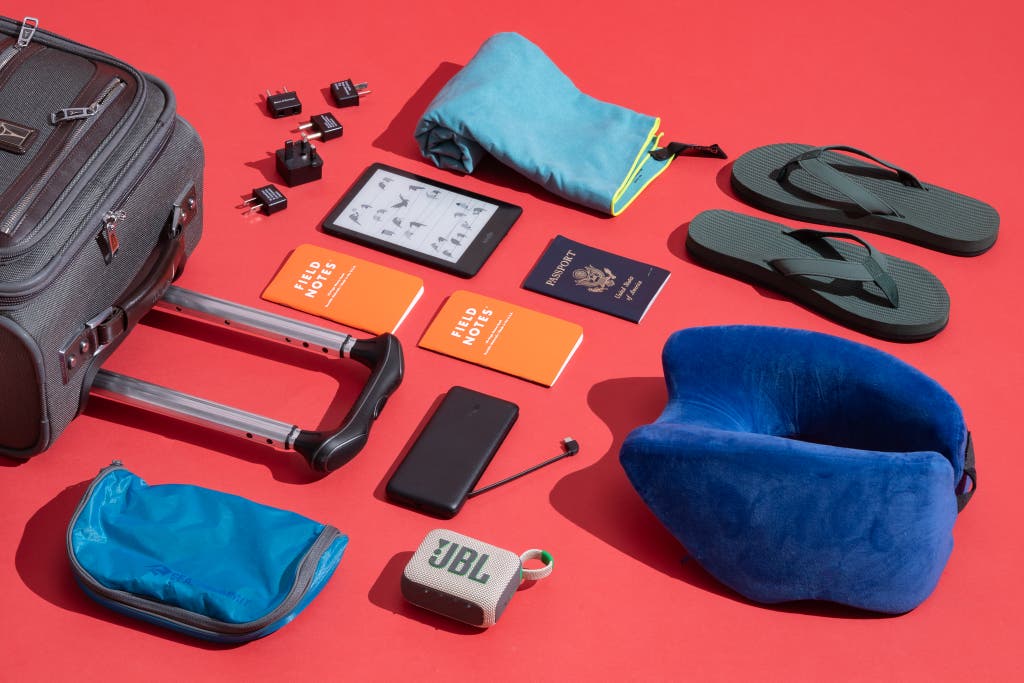
Put together, the long-haul kit looks like this. Wide-calf compression socks, at a level you have cleared with your clinician. A Cabeau Evolution S3 clipped to the outside of the personal item with its carabiner. A cashmere wrap folded into the top of the bag. A seat belt extender in the front pocket if you use one. A Calpak Carryall as the personal item. A travel wallet, a medication kit, lip balm, a book, a reusable water bottle, headphones, a charger and a battery pack. That is it.
What does not make the cut: the Trtl, a thin-strapped hanging toiletry organiser, vacuum compression bags, “travel scarves,” and any knee-high compression sock that will not tell you its calf measurement.
Here is the thing to take away. Travel accessories for plus-size bodies fail in a specific and predictable way: they fit smaller bodies, and they were never re-specced for ours. The “one size fits most” closure is the cleanest example, but it is the same problem with the thin hanging strap, the compression bag, the knee-high that cuts at the calf, and the seat belt that only just closes. Companies design for the median and call it inclusive. It is not inclusive. It is median-sized.
So build the kit from products that publish their measurements, that go up to wide-calf and larger-neck and longer-strap-drop options, and that tell you the number before you pay. Measure your calf. Measure your neck. Look up the strap drop. Those three numbers will save you more money and more misery than any best-of list.