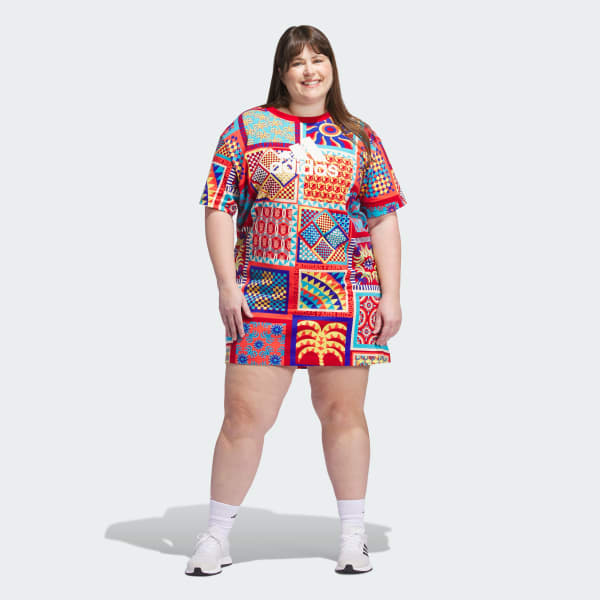

You are two minutes into a warm-up walk and the waistband has already rolled down past your belly button for the third time. If you buy activewear at a size 18, you know the rest of the arithmetic too: the returns, the leggings that rolled before the first mile was done, the sports bra engineered for a B cup that went back after one wear, the jacket you kept only because the return window closed before you got to the post office.
The context for that experience is not abstract. Adidas, a brand founded in 1949, did not carry a size 4X in its own catalog until 2022. Nike, founded in 1964 and trading at a market cap above $100 billion, did not launch a plus-size capsule until February 2017, and the launch was led by a designer named Carmen Jorda working out of the sportswear division on what the brand internally treated as a side project. Two companies that have sold athletic clothing to women for fifty and sixty years respectively decided, within the last decade, that plus-size women might also want to move their bodies. That is the backdrop for any honest read on what Adidas Plus and Nike Plus actually deliver: what works, what is theater, and what the gap between visibility and engineering looks like when you are the one in the dressing room with the waistband rolled down.
Adidas Plus: where it works (and where the size 4X is theater)
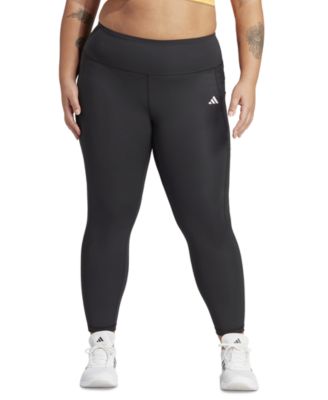
Adidas added a size 4X to its own-brand plus-size offering in 2022, expanding from a top size of 2X that had stood for nearly a decade. The expansion was framed in the brand’s press materials as a commitment to inclusive sizing across its training, running, and yoga lines. In practice the expansion is real for some SKUs and theatrical for others, and the gap between those two categories matters when you are spending $70 to $90 on a single piece.
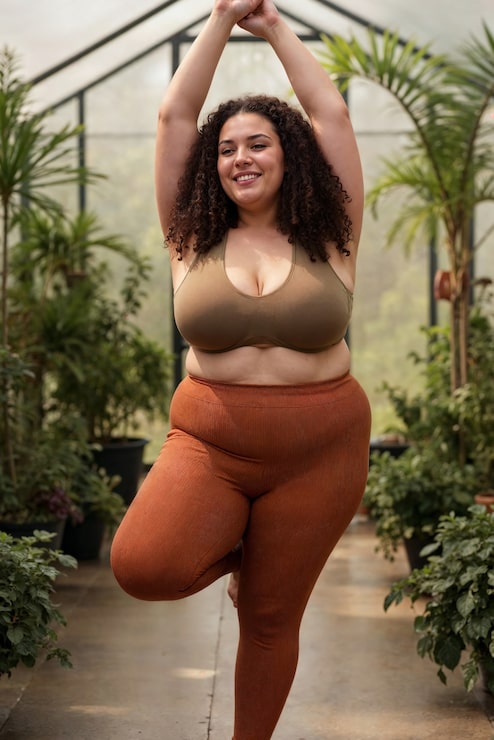
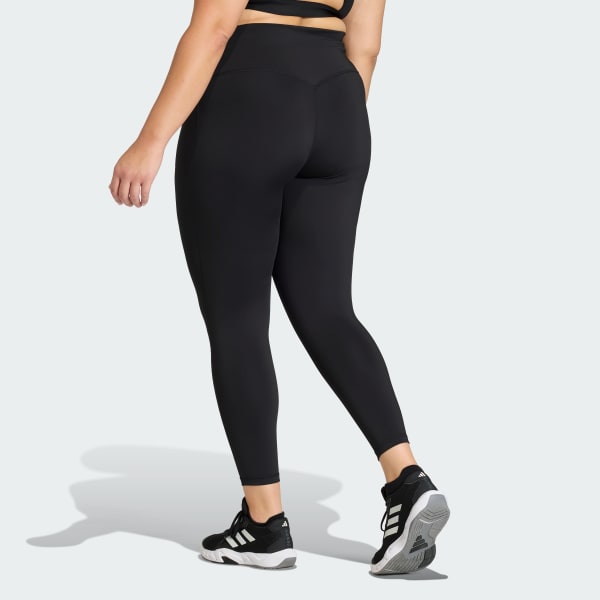
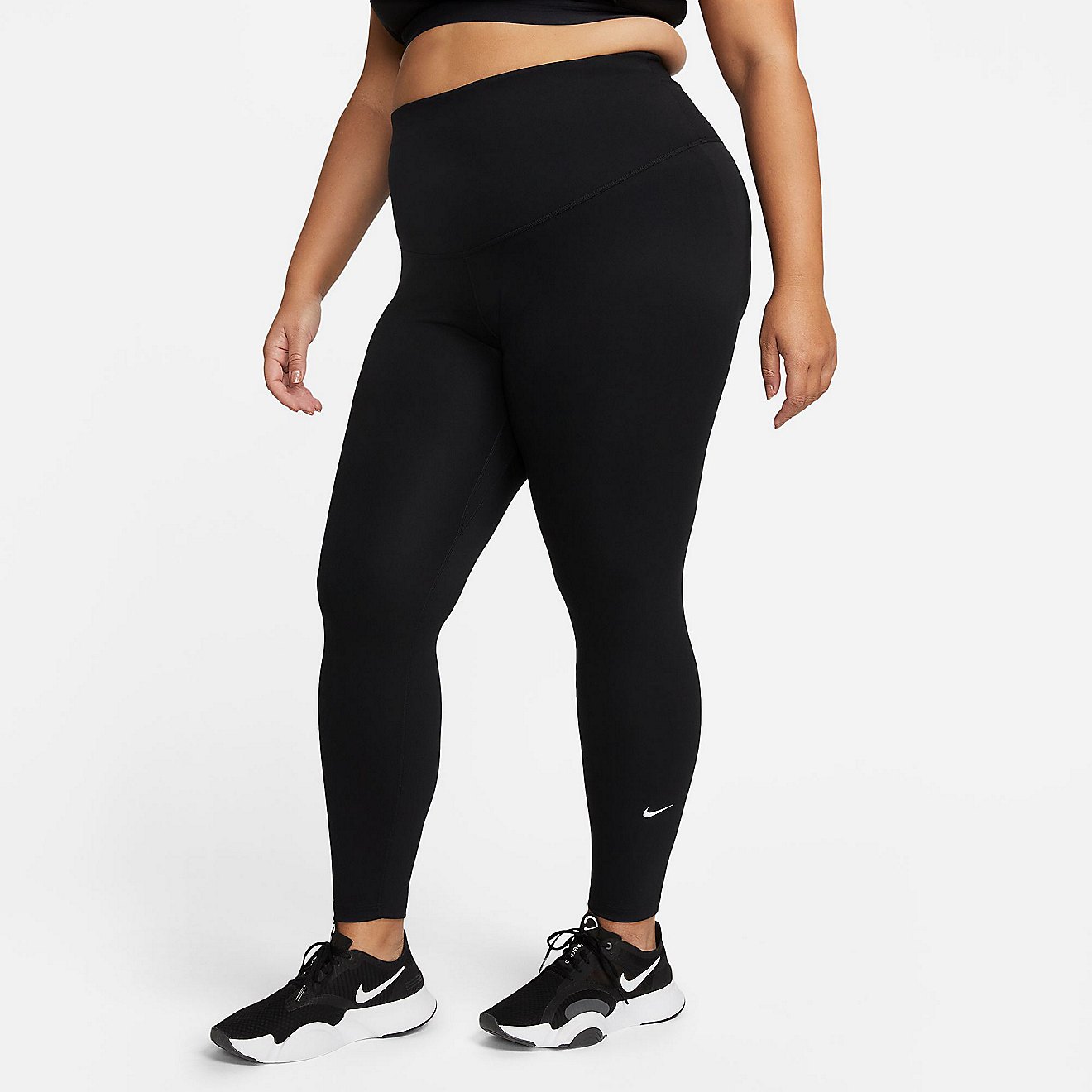
The pieces where the expansion is real are the studio and training basics. The Adidas Optime Studio Hi-Rise 7/8 Tight (Plus) at $55 to $70 at the time of writing is the legging the brand actually engineered for a plus-size body. The waistband is four inches wide, the fabric content is 81% recycled polyester and 19% elastane, and the rise sits at the natural waist rather than below the belly. That combination is the whole reason it holds: a wide band anchored above the belly’s widest point has nothing to fold over. The seam at the inner thigh is flat-locked, which is the construction that keeps the inner thigh from chafing once a walk gets long. The 7/8 length generally lands at the lower calf around 5’7″ and stays put through squats and lateral lunges. This is the SKU worth rebuying whenever the brand cycles the colors.
The pieces where the size 4X is theater are the running tights and the higher-impact training sets. The brand carries a size 4X in the catalog and the SKU technically exists, but the pattern is graded up from a sample size M, the proportions distort across the hip and thigh, and in-stock availability at the 4X tier is thin enough that the size shows as sold out for months at a time on adidas.com. A size 4X shopper looking for the running line will hit a “Notify Me” button more often than not. Carrying a size in the catalog and stocking it at parity with smaller sizes are two different commitments, and Adidas has made the first without making the second.
The note on Adidas’s plus ceiling worth naming is the comparison to celebrity-backed brands operating in the same shapewear-meets-activewear lane. Lizzo’s Yitty brand, launched in March 2022 in partnership with Fabletics, sized through 6X from the start with explicit size-inclusive framing. Adidas’s own-brand plus expansion has been steady but cautious, and the cap at 4X tells you where the brand’s actual ceiling sits when it is not operating in the same purpose-built inclusive lane that brands like Yitty occupy.
Nike Plus: the sports bra reality at H cup
Nike launched its first dedicated plus-size collection in February 2017, with sizes XL through 3X across leggings, tops, and a small sports bra range. The launch mattered because it was the first time a brand of Nike’s scale had committed sizing above XL to a dedicated line photographed on plus-size models, fronted by influencers including Grace Victory and Danielle Vanier. The collection has since expanded to a 4X on select SKUs, with the women’s plus range living on nike.com under a dedicated filter. The honest read on Nike Plus is that the leggings have improved meaningfully since 2017 and the sports bras have not.
The Nike One Mid-Rise Leggings 4X at $60 to $70 at the time of writing is the closest thing the brand has to a workhorse plus-size legging. The mid-rise sits below the natural waist, which is the cut Nike defaults to across its women’s line, and that cut is the source of the roll-down problem on most plus-size bodies. The fabric is solid, at 82% polyester and 18% spandex with a Dri-FIT moisture wicking finish, and the gusset is engineered well. The waistband is not. On a size 3X to 4X body with any belly softness, a mid-rise waistband sits at the belly’s widest point, which is exactly where a band gets pushed down by any movement that involves bending. Treat the Nike One as a walking, light yoga, and stationary cardio legging. It is not the one to buy for trail walks, running, or a class built around repeated forward folds.
The sports bras are the real failure. Nike’s plus sports bra range tops out at a 3X in most SKUs, with the Nike Pro Indy Light-Support Sports Bra (Plus) at $35 to $40 at the time of writing sitting as the brand’s entry-level offering for the plus customer. The Indy is engineered for a B to small C cup. At an H cup there is essentially nothing there to support you: the band rides up, the cups flatten the bust without containing it, and the strap is too narrow to distribute the weight without cutting into the shoulder. Nike’s higher-support plus-size sports bras exist on paper, and the Alpha and Swoosh lines have plus extensions, but the support engineering caps out around a DD cup, which is roughly where plus-size women with larger chests start needing the next tier up rather than the next size up.
This is the gap plus-size endurance athletes have spent years naming publicly. Visibility in a sponsor’s campaign is not the same thing as gear that works for the body the campaign is photographing. A brand can put a plus-size runner on a billboard and still not engineer the sports bra she would need to run an ultra. That distance between marketing visibility and product engineering is the one Nike Plus still has not closed.
Optime vs. Nike One: leggings showdown
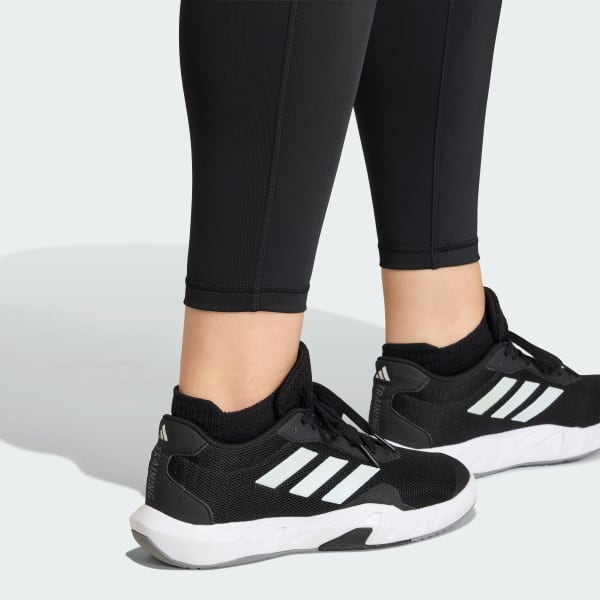
If you are deciding between the two flagship plus-size leggings, the comparison comes down to four things: waistband, fabric, seam construction, and color availability. On the first one, it is not close.
The Adidas Optime Studio Hi-Rise 7/8 Tight wins on waistband. Four inches wide, sitting at the natural waist, with nothing above it to fold the band over and no digging into the soft tissue at the belly. The Nike One Mid-Rise sits below the belly, which is the position a band gets pushed down from. For a plus-size body with any belly softness, that difference is the entire ballgame, because a legging that rolls is a legging you stop wearing.
The Nike One wins on fabric weight. Nike’s Dri-FIT recycled polyester blend has a denser hand than the Adidas Optime, so it holds its shape through more wash cycles and shows less pilling at the inner thigh. The Adidas Optime fabric is thinner, and thinner fabric is what starts to show wear at the seam stress points first if you are wearing a pair three times a week. Both leggings are opaque in their flagship black colorway. Lighter colorways are where opacity gets unreliable in both lines, so if you want one pair you can stop thinking about, buy the black.
The Adidas Optime wins on seam construction. Flat-locked seams at the inner thigh and gusset are the construction that prevents chafe on longer walks and runs. The Nike One uses a standard four-thread overlock at the inner thigh, which is fine for low-impact use but is the seam type that tends to start rubbing once the distance climbs. If you are buying one pair of leggings to walk three miles or more in regularly, that construction difference is what you are paying for.
Color availability is a wash. Both brands cycle their plus-size colorways quarterly, both default to black, charcoal, and navy as the always-available core, and both run two to three seasonal accent colors that sell out at 3X and 4X before they sell out at smaller sizes. The Adidas Optime has run in a deep wine, a forest green, and a terracotta. The Nike One has run in a coral, a mauve, and a dusty teal. Neither brand stocks a true royal blue or a true red in plus sizing on a regular basis, which is the color gap Athleta Plus fills more reliably.
Sports bras for running: the specific failure modes
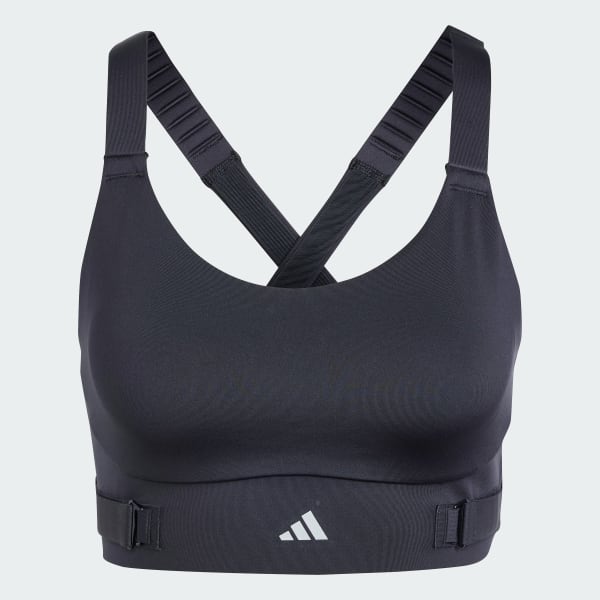
The sports bra is the single piece of activewear that determines whether a plus-size woman with a larger chest can move comfortably, and it is the piece both Adidas and Nike are weakest on. The failure modes are worth naming specifically, because the marketing on both brands obscures them.
Failure mode one is band sizing. A plus-size body at an H cup needs a band in the 38 to 44 range with cup sizing engineered to that band. Both Adidas and Nike use generic XS through 3X sizing for sports bras rather than band-and-cup sizing, which means one 3X bra has to cover a 38H, a 40DDD, and a 44C in the same garment. None of those three women get a bra that actually fits. The engineering that brands like Panache Sport, Shock Absorber, and Brooks Moving Comfort do, where the bra is sized by band and cup, is the engineering Nike and Adidas have not committed to in their plus lines.
Failure mode two is strap width. A larger chest needs a strap of at least an inch and a half to spread the weight instead of concentrating it on a narrow line across the shoulder. The Nike Pro Indy straps are seven-eighths of an inch wide. The Adidas TLRD high-support bra in plus comes in at one and a quarter inches. Neither is enough at an H cup for running, and the shoulder grooves that come from running in an under-engineered sports bra are a real cost the marketing photography never shows.
Failure mode three is the underband and the closure. Most plus-size sports bras from Nike and Adidas use a pullover construction with no underband closure. For a larger chest, a pullover has to stretch wide enough to clear the bust, which means the band cannot hold the tension it needs to anchor the cups. The brands that engineer for larger chests, including Panache Sport and Shock Absorber Active Multi Sports Support, use a hook-and-eye closure with three to four columns of hooks. Until Nike and Adidas commit to that construction in their plus lines, the high-impact sports bra problem stays unsolved.
The plus capsule release cycle (why your favorite SKU disappears)
One structural issue affects both Adidas Plus and Nike Plus, and it does not show up in any review focused on a single SKU: the capsule release cycle. Both brands treat their plus-size offerings as capsule drops rather than core catalog. So a plus-size shopper who finds a legging that fits, in a color she likes, in her size, has roughly a six to nine month window before that exact SKU leaves the catalog and gets replaced by a “similar” SKU that fits differently.
The Adidas Optime Studio Hi-Rise 7/8 has been in the catalog since 2023, but the colorways rotate every two seasons, so rebuying the same legging usually means rebuying it in a color you did not choose the first time. The Nike One Mid-Rise follows a similar pattern. The 4X in particular gets stocked at lower volumes than 1X through 3X, sells through faster on the colorways that work, and gets cycled to a new SKU before the brand bothers restocking the old one.
This is not an accident of inventory management. The capsule cycle is a merchandising choice that lets a brand carry plus sizing without committing the warehouse space and production runs that would make plus sizing a stable, core-catalog category. For the shopper, the cost is that every plus-size activewear purchase is also a stocking-up purchase. When you find the SKU that works, buy three, because in six months it will not be there to rebuy.
The political weight of plus activewear visibility
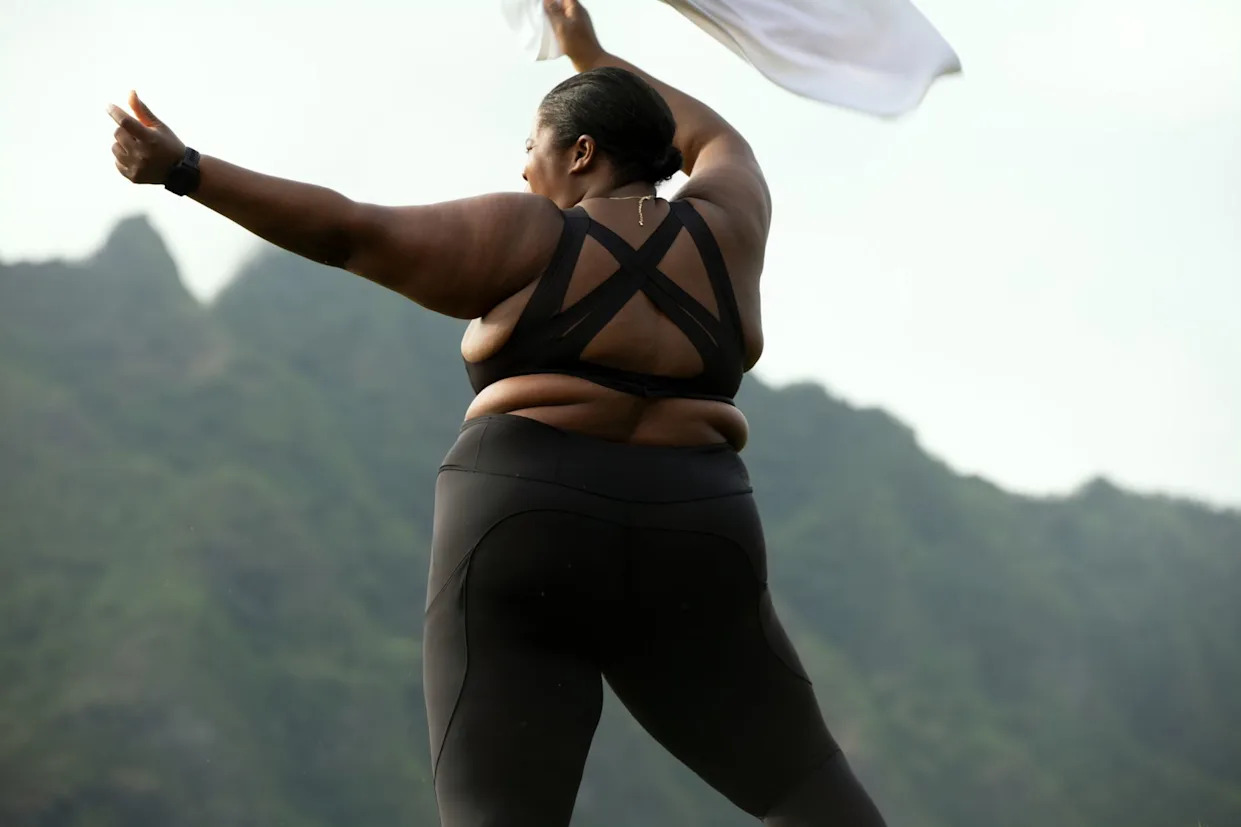
The advocacy that pushed both brands into their current plus-size positioning was done largely by plus-size athletes, fitness instructors, and run-club organizers who spent years arguing that fat bodies move, train, and compete. Mirna Valerio, the Black plus-size runner named a National Geographic Adventurer of the Year in 2018, wrote about that territory in A Beautiful Work in Progress, published in October 2017. Jessamyn Stanley, the Black plus-size yoga teacher, wrote Every Body Yoga, published in April 2017, and built a teaching career on the premise that yoga is not a sample-size practice. Latoya Shauntay Snell, the Black plus-size endurance runner, has been a Hoka Global Athlete Ambassador since January 2019. If you want the argument in full, those books and those platforms are where to find it rather than a summary of it here.
The visibility question matters because brand campaigns featuring plus-size athletes have genuinely changed which bodies the running, training, and yoga subcultures treat as legitimate. The 2017 Nike Plus launch put plus-size bodies into Nike’s photography in a way that mattered to any woman who had spent her training years not seeing herself in a catalog. The 2022 Adidas expansion to 4X did the same, on a smaller scale, for women at the top of the plus range. The visibility is real. The gap between the visibility and the engineering is also real. Both are true at once, and an honest review has to hold both.
The verdict and the alternative (Athleta Plus, Senita, Superfit Hero)
The verdict on Adidas Plus: the Optime Studio Hi-Rise tight is worth buying, the training and yoga basics are functional through a 3X, the 4X is theater on the higher-impact lines, and the sports bras are not engineered for a larger chest. Buy the leggings, skip the bras. Pricing at the time of writing sat at $55 to $70 for the leggings, $35 to $50 for the entry-level sports bras, $40 to $80 for tops, and $90 to $140 for jackets and outerwear.
The verdict on Nike Plus: the Nike One Mid-Rise is functional for low-impact use but is built on the cut that rolls on most plus-size bodies, the sports bra range is the weakest of any major brand at the H cup tier, and the capsule cycle means the SKU that works today will be gone in nine months. Pricing at the time of writing sat at $60 to $70 for the leggings, $35 to $55 for the entry sports bras, $40 to $90 for tops, and $100 to $170 for jackets. Both brands sit in the same mid-premium tier on price. Check current pricing before you buy, because these numbers move.
The alternatives that earn a spot in the rotation are three brands the giants have not displaced. Athleta Plus at $89 to $109 for the Salutation Stash Pocket II Tight is the closest plus-size legging to the engineering quality of the Adidas Optime, with a wider waistband, a true high rise, and broader color availability than either Nike or Adidas. Its sports bra range tops out at a 1X to 3X with band-and-cup hybrid sizing that fits a DDD better than either giant manages. Senita Athletics at $34 to $54 for the Lola Plus high-waisted legging is the budget play that does not feel like one. The fabric is lighter than the Athleta and Adidas options, the price is around half, and the brand carries through a 4X without the capsule cycle nonsense. Superfit Hero , which sizes from large through 7X, is the brand built for plus-size bodies first rather than as a capsule extension. The Power Move Capri at $88 carries the engineering the giants still have not delivered at the 4X tier: real flat-locked seams, a four-inch waistband, opacity-tested fabric, and band-and-cup sports bra sizing that includes a 5X.
The frame worth keeping on this whole category is that activewear is a tool. It is not a referendum on whether your body deserves to move. The brand that fits today might not fit tomorrow, and the SKU that works might disappear in six months. The work is to keep moving in the gear that works, name the gear that does not, support the brands that built for your body first, and refuse the idea that you have to wait for Nike to fix the sports bra before you go for the walk.

Here is a thing to try before your next plus-size activewear purchase. Walk into whatever Nike store is closest to you and find the women’s section. Count the linear feet of shelf space given to straight-size leggings. Then find the plus-size rack, if there is one at all, and count the linear feet there. Look at the signage. Look at the model photography on the wall above each section. Look at whether the plus rack sits at the back of the women’s section, around a corner, or behind a column. Look at whether the size 4X is on the floor or whether it is “available online only.” Look at the ratio.
Then do the same count in the nearest Adidas store. Compare the ratios. Compare the model photography. Compare what each brand is actually telling you about who it thinks its customer is. The marketing campaigns will tell you what the brands want you to believe. The shelf-space ratio will tell you what the brands have decided. That ratio is the data point to walk into your next purchase with, and it is the one that should decide where your money goes.