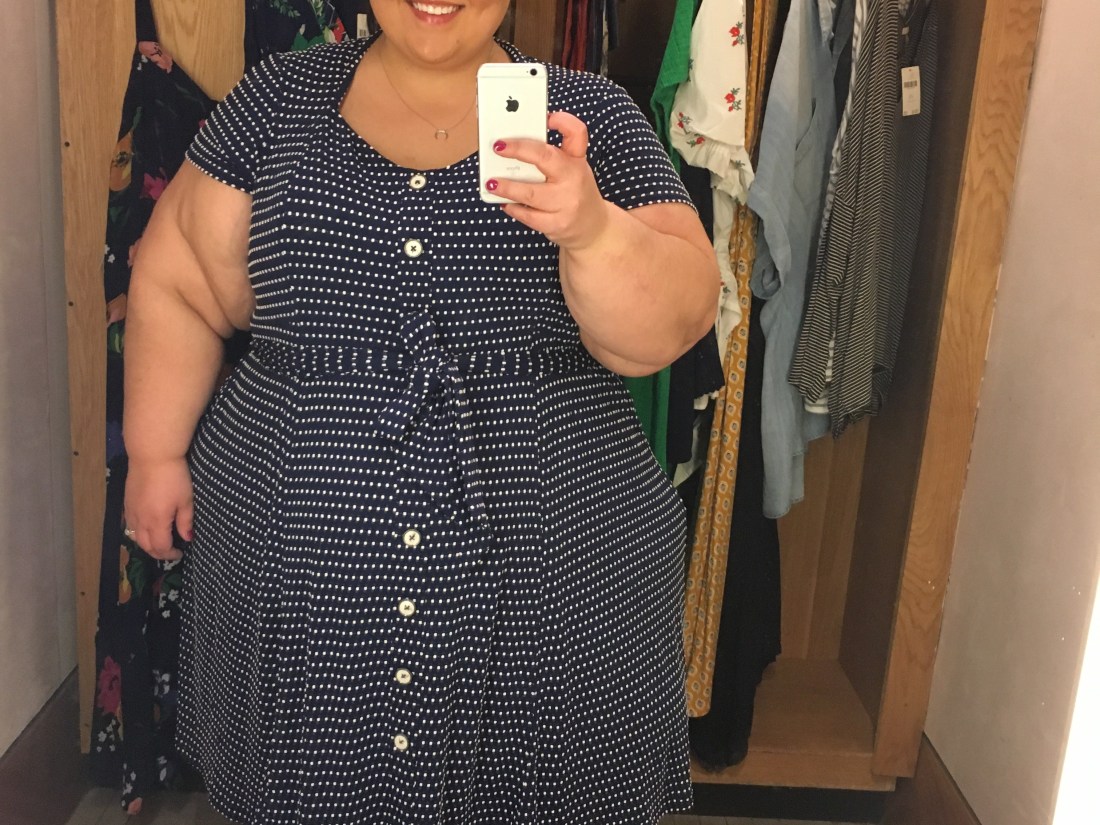
Anthropologie is one of the few contemporary retailers whose whole aesthetic translates well to a plus-size body. The smocked bodice, the tiered cotton maxi, the puff sleeve, the painted floral, the prairie hem: none of that depends on being small, and when the brand grades it properly the result reads as the brand’s editorial photography rather than a watered-down version of it. The catch is that a dress in the extended size run costs the same as the same dress in a straight size, and the extended catalog is narrower, stocked less deeply, and far less likely to be hanging on a rack you can actually walk up to. That gap between the aesthetic and the retail commitment is the thing worth understanding before you spend money here.
This is a guide to which Anthropologie lines are worth your attention at a size 18 and above, which silhouettes carry real risk at larger sizes and why, and how to run the price math before you commit.
How the Anthropologie plus program is actually structured
Anthropologie launched its plus-size program, called APlus, sized 16W through 26W in most categories and 18 through 26 in some, in 2019, after years of public requests from the curvy fashion community. The launch got coverage in Vogue, Refinery29 and The Cut, and rolled out across the website and a set of retail locations with an initial collection in the low hundreds of pieces. URBN, the parent company, framed plus as a long-running brand commitment rather than a test, and the brand expanded it into a meaningful share of its US store base over the following couple of years. The aesthetic landed for a category that had been served mostly by Lane Bryant office wear and Torrid going-out cuts.
The practical thing to know now is that the online catalog and the store floor are two different shopping experiences. Do not assume your local Anthropologie carries the extended size run in any depth, or at all. The plus assortment on a given store floor varies enormously by location, and the online catalog is consistently the deeper of the two. If you want to try before you buy, call the store and ask what they actually have on the floor in your size before you drive there, or order online for store pickup, which pulls from back-of-house rather than floor inventory.
Maeve: the line most people come here for
Maeve is the in-house Anthropologie label that carries the largest share of the brand’s plus dress catalog, and it is the line whose aesthetic identity most plus shoppers come to Anthropologie for in the first place. When Maeve plus is executed well, you get a dress with none of the size-tax design language: no boxy modesty, no defensive extra coverage at the upper arm, no sense that someone resized a straight-size sample at the shoulder and called it done. When it is executed badly, three things go wrong, and they are the three things to check on any Maeve plus dress before you buy.
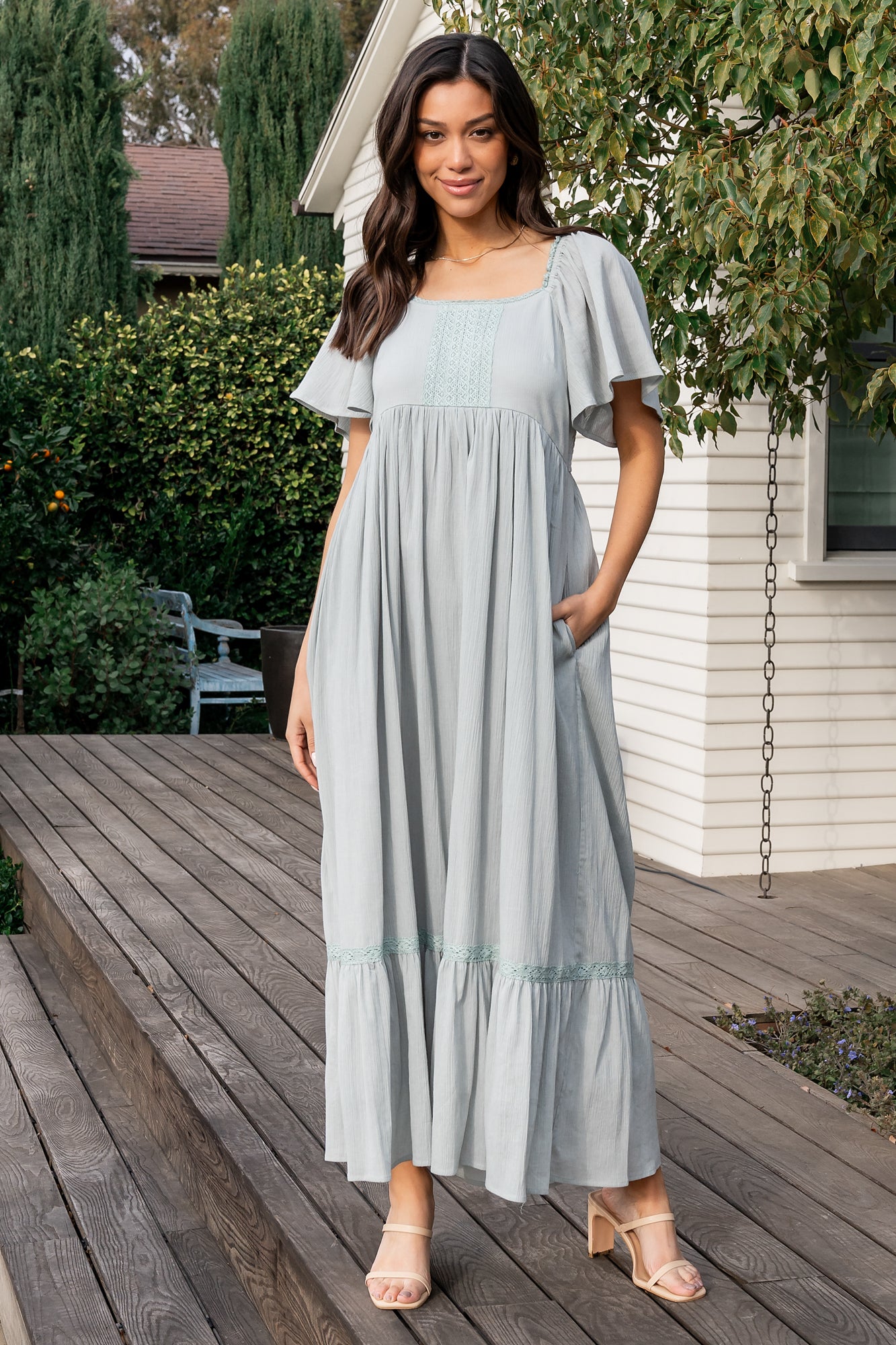
The tiered maxi, typically around the $200 mark at full price as of writing, is the strongest thing in the Maeve plus catalog, and the reason is proportion. On a well-graded tiered maxi the seams between tiers land at hip, mid-thigh and mid-calf, which means the horizontal lines pass through the body rather than stopping at its widest point. The versions in a 100 percent rayon plain weave with a smocked back bodice are the ones to look for: the smocking gives across the rib cage instead of compressing it, and a rayon plain weave takes a painted-floral print with real color separation rather than the muddy dye-sublimated look a lot of plus-size maxis come back from production with. Rayon at this weight wrinkles, which is part of the aesthetic rather than a defect, so do not expect it to behave like a poly blend.
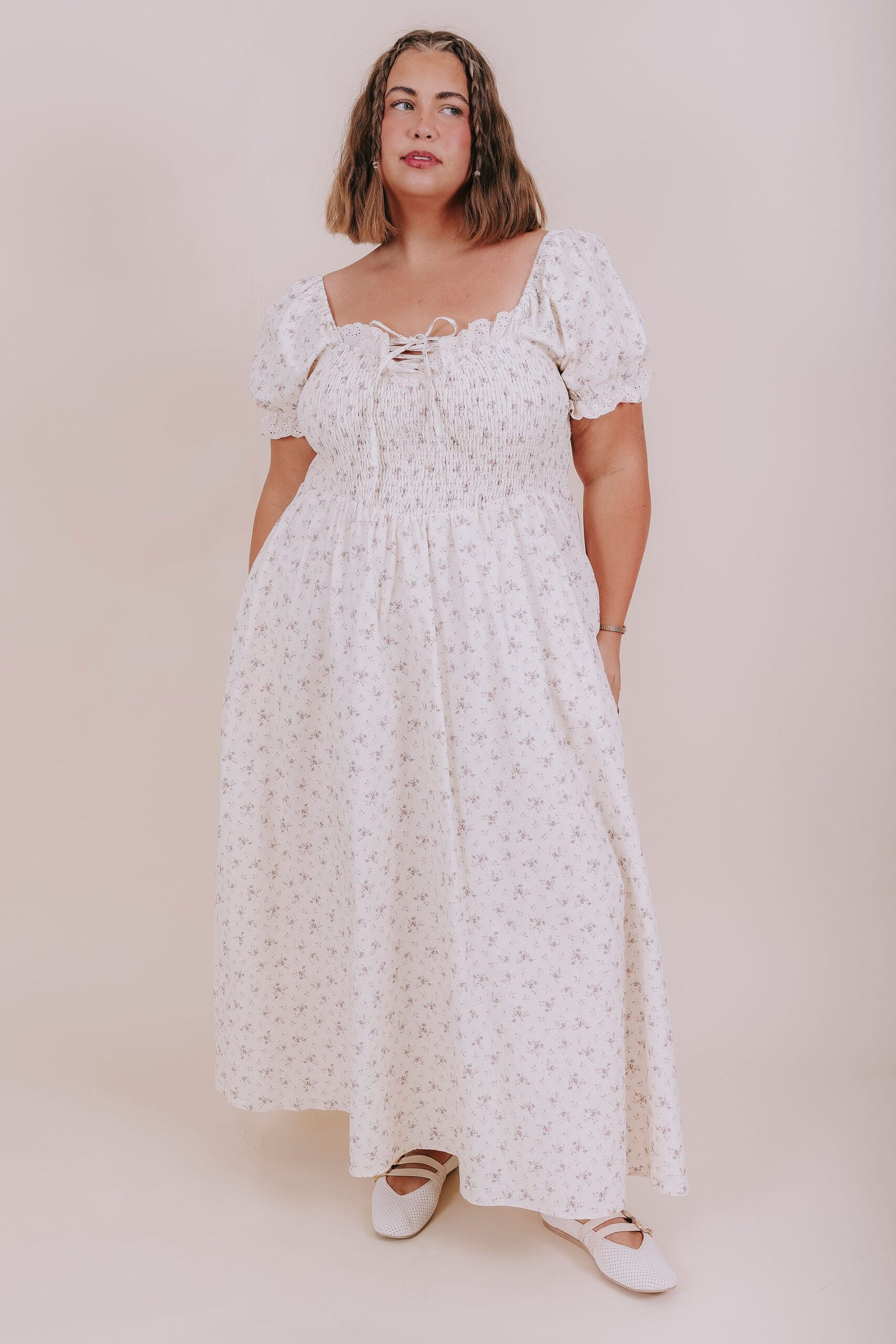
The puff-sleeve fit-and-flare, usually in the high $170s, is the second one worth pulling, with one caveat. The test any plus-size fit-and-flare has to pass is whether the waist seam lands at your actual waist rather than somewhere above it, because a waist seam riding high is what makes these dresses read as maternity. Check the puff sleeve too: a real sleeve cap holds its shape, a gathered cuff hoping for volume collapses by lunchtime. The compromise on these is usually fabric, because the polyester-rayon-spandex blends have a slight sheen that reads differently in person than in the brand’s editorial photography, and they recover less well than a pure rayon. This is the cut to buy on markdown rather than at full price.
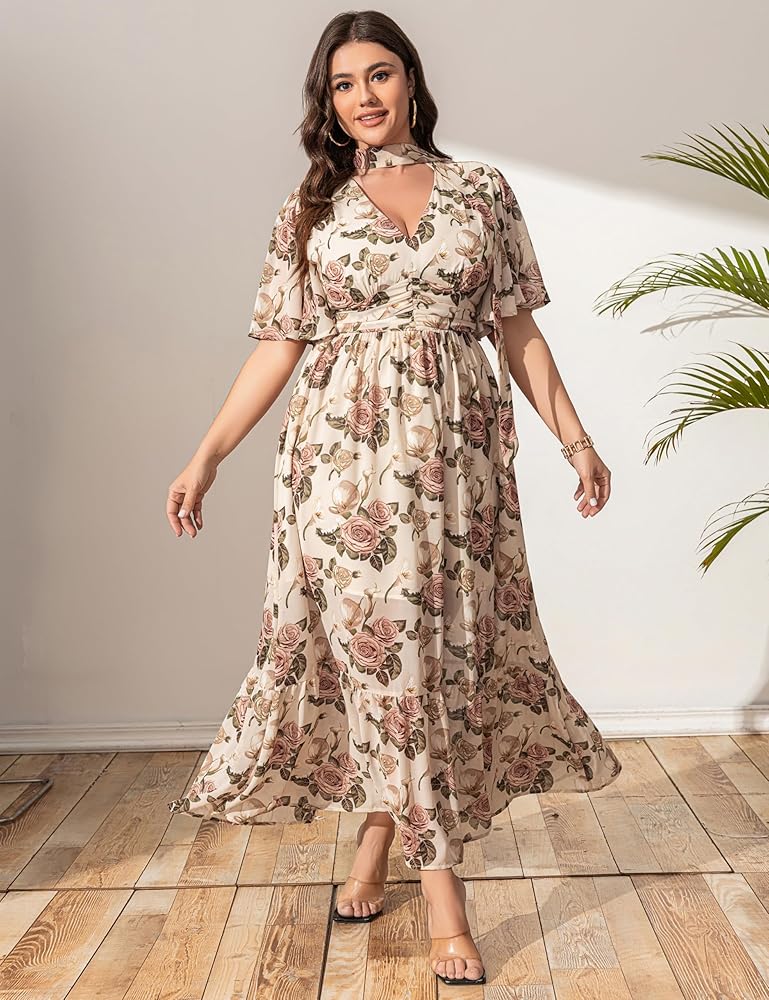
The square-neckline two-tier midi, usually in the high $180s in a viscose blend, is the easiest one to recommend to a curvy shopper new to the brand. The square neckline opens the chest without exposing a bra band, which is a genuinely hard thing to get right. The two-tier midi length stops at the calf, where a lot of plus midis stop at the widest part of the leg instead. Viscose holds its drape through repeated washing better than most blends at this price, so it stays looking like the dress you bought.
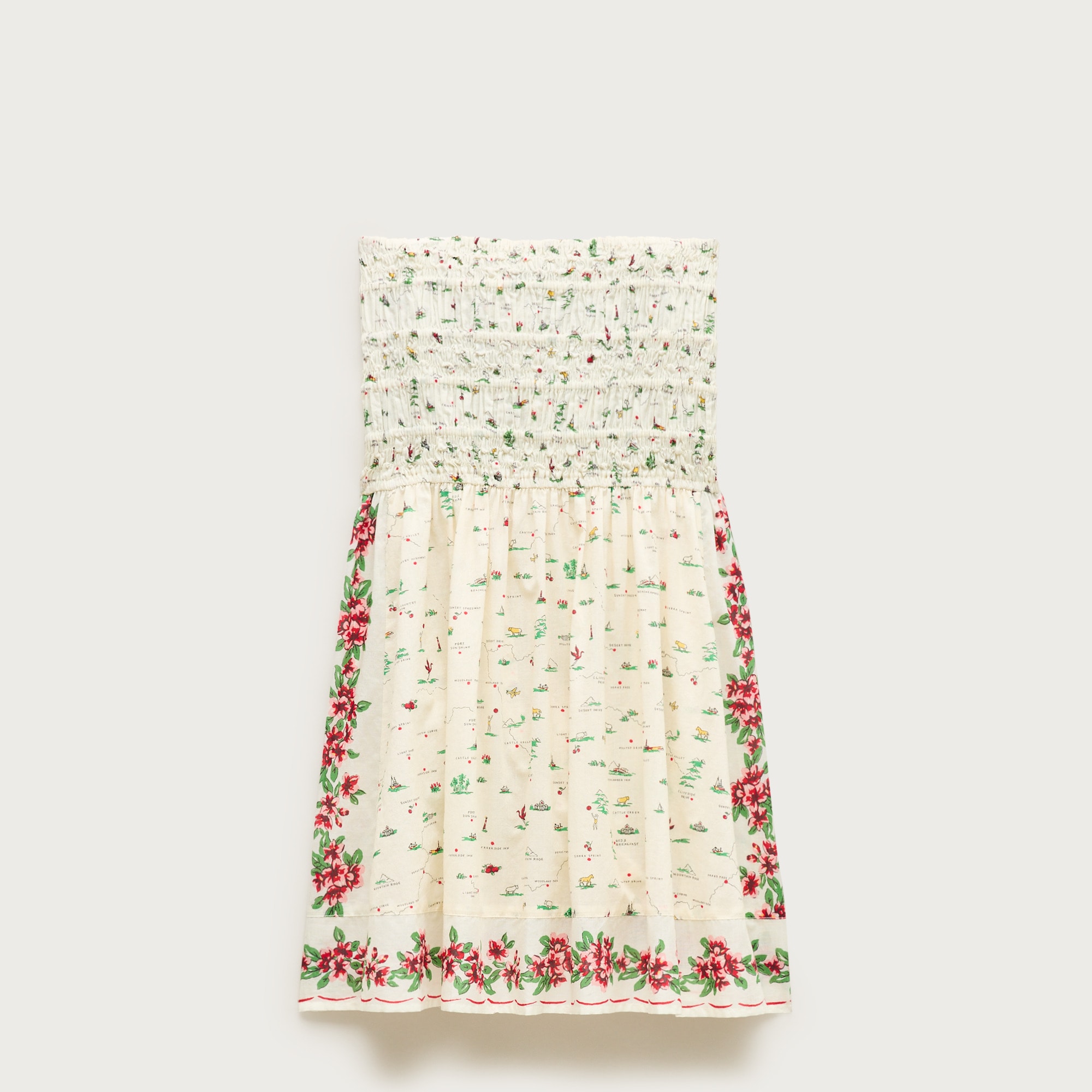
The one to approach with real caution is the smocked-tier mini in printed cotton voile, usually around $148. Three problems compound at larger sizes. Smocking at the bodice can pucker visibly under the bust in a way the brand’s photography on a smaller body will not telegraph. On a mini, the tier seams have fewer places to land, so they tend to hit at hip and lower thigh rather than passing through the widest point. And cotton voile is thin enough to need a slip, which the brand does not include and does not reliably stock in extended sizes. If you want this one, treat it as a try-on-first purchase rather than an online gamble.
The general rule on Maeve plus: check the product page measurements against your own before ordering, and look for reviews from plus-size shoppers rather than relying on the editorial images. Plus-size review sites like TheCurvyFashionista are worth a search before you commit to a dress at this price.
Pilcro denim: where the pattern work runs out
Pilcro is the in-house denim and casual-bottoms label. It carries plus in a more limited catalog than Maeve does, and the plus denim dresses in particular are the pieces most likely to be available online and absent from the physical store. The one worth naming is the denim maxi, usually around $168, a non-stretch cotton denim sleeveless A-line with a button-front placket and a high collar, sold in a plus run of roughly 18W through 24W.
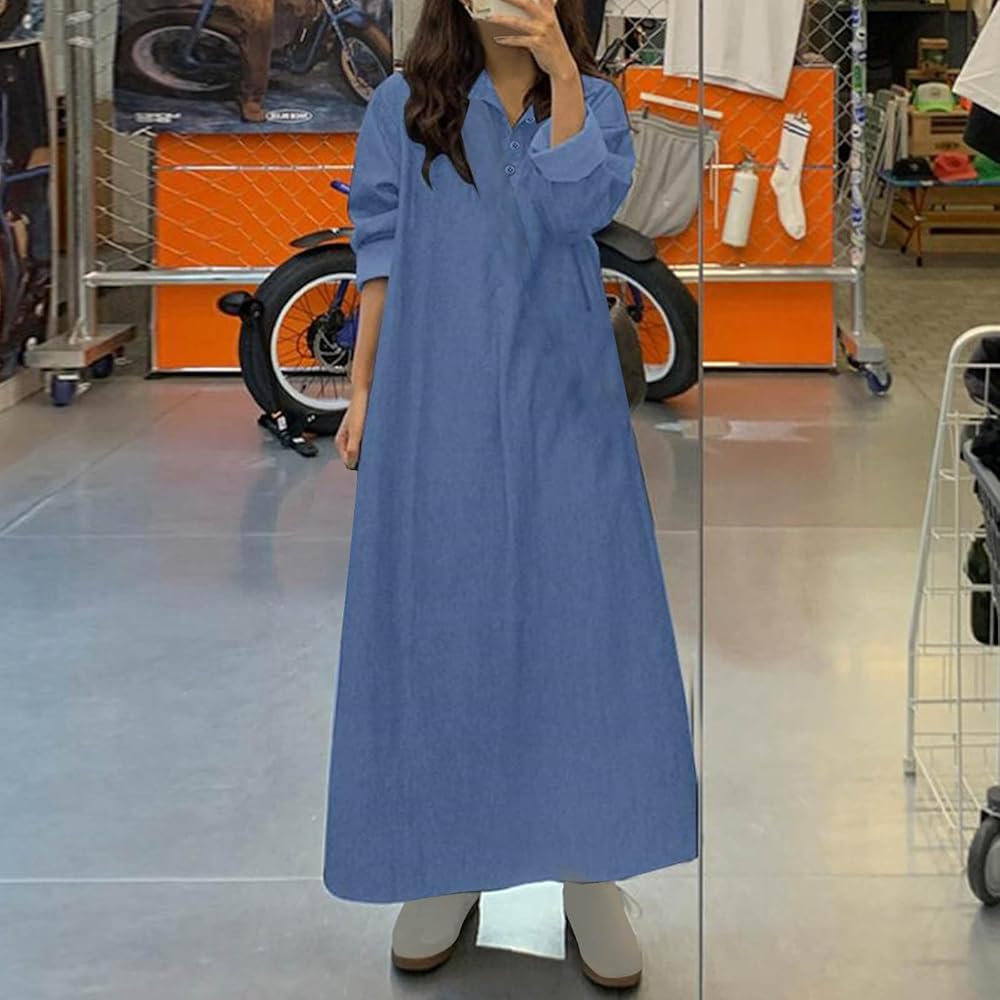
The good news is the placket. A button front on a dress this fitted through the upper chest is where most plus-size denim dresses fail, and this one is cut to hold flat through the bust without gapping. The problem is further up. The Pilcro plus pattern appears to carry the same shoulder slope as the brand’s straight-size denim, which is a narrower shoulder than the curvy size run actually calls for, so the strap-to-armhole transition can pull across the back. Sizing up fixes the shoulder but buys you ease at the waist you probably do not want.
The honest read on Pilcro plus denim dresses is that the brand has not done the pattern engineering work here that it has done on Maeve. These read as graded-up straight-size patterns with the bust and hip adjusted but the shoulder, armhole and rise carried forward unchanged. On some bodies that math works and on others it does not, which is unpredictable from a product page. If you want the denim maxi, order two sizes at once, accept that one is going back, and keep the receipt.
Daily Practice: the relaxed-fit sweet spot
Daily Practice by Anthropologie is the activewear-meets-loungewear sub-line the brand launched in 2020. It carries an extended size range that goes deeper than the rest of the catalog on some pieces, specifically the slip skirts, the cropped shirt dresses and the matching tee-and-skirt sets.
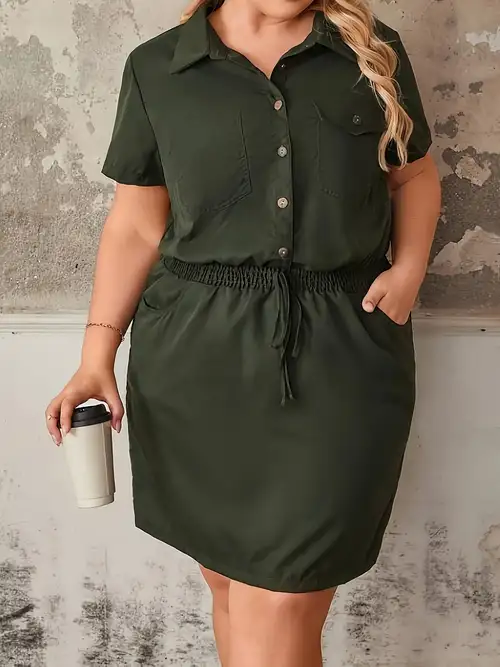
The cropped shirt dress, in the low $130s, is the piece to start with. It is a cotton-linen blend with a relaxed boxy fit and a tie at the waist, and it clears the shoulder cleanly in the larger sizes precisely because it was engineered as a relaxed boxy cut from the start. That is the underlying lesson for the whole sub-line: a boxy cut is simply easier to execute well at a size 22 than a fitted cut is, because there is less pattern engineering riding on getting the curve exactly right. The cotton-linen wrinkles, which is the aesthetic. The tie at the waist is what keeps the boxy silhouette from hanging like a sack, so do not skip it. This is a dress that works as a swim cover, a brunch dress, or layered over a tank and trousers for transitional weather.
The slip skirts and matching sets are worth pulling too. The plus run on some of these goes to a 26, which is deeper than most of the Anthropologie catalog, and the price points sit below the Maeve range, roughly $98 to $148 for most pieces as of writing. If you came to Anthropologie for Maeve and bounced off the price, Daily Practice is where you find the brand’s sensibility at a lower cost per wear. The aesthetic is more pared back and less prairie-floral, so it is a different mood rather than a cheaper version of the same one.
The pleated midi, and why pleats are a risk at larger sizes
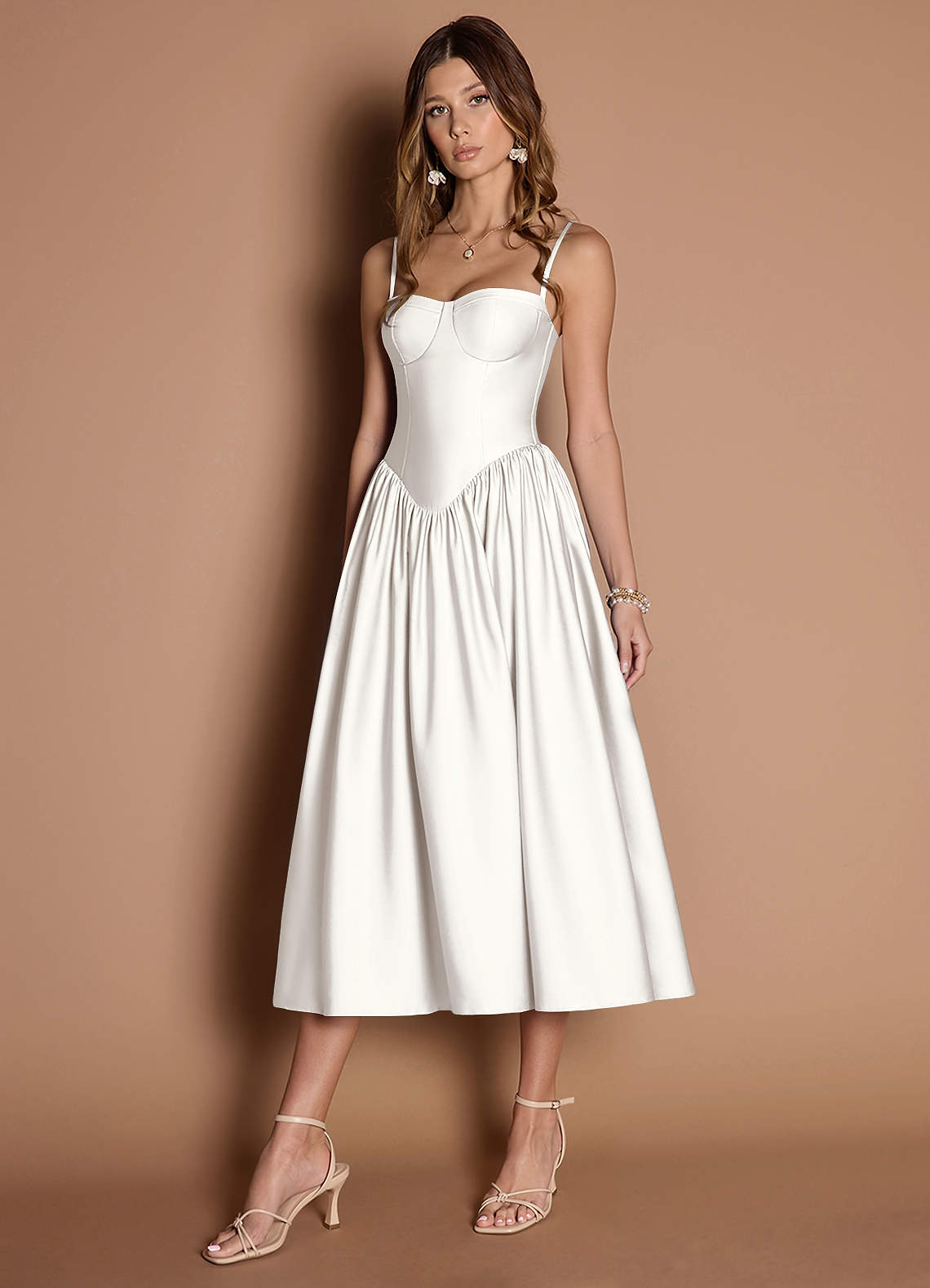
The Pilcro pleated midi, around $158, gets recommended constantly in plus-size shopping forums and deserves a paragraph of pushback. The construction issue is structural rather than a matter of taste: a fitted waistband with pleats opening outward from it distributes volume across the hip, which means the silhouette adds visual width at the largest part of the body. The same dress on a size 4 frame in the brand’s photography is doing something genuinely different. The fabric is a polyester-blend permanent-press pleat, which is structurally correct for holding pleats and poor at breathing much above the mid seventies in Fahrenheit. If you love the look, buy it on a deep markdown for a specific event rather than as a wardrobe rotation piece.
The third-party catalog: Sunday in Brooklyn, Hutch and En Saison
Anthropologie’s third-party brand catalog has historically been where the plus shopper finds the most aesthetic range outside the in-house Maeve line.
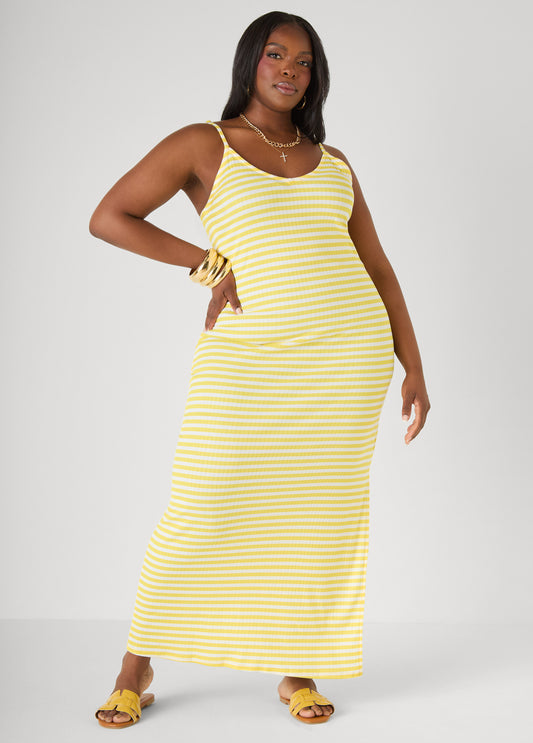
Sunday in Brooklyn offers extended sizing in roughly the $178 to $248 range and brings a softer, less prairie-leaning aesthetic. The cotton voile maxis and tiered midi cuts are the ones to pull. Fit generally tracks the Anthropologie plus size chart, with the bust running slightly narrow and the hip running true. These pieces come in on smaller initial buys and do not move through the same markdown cycle as the in-house lines, which cuts both ways: your size is more likely to still be there, and it is less likely to ever go on sale. If you find one in your size and the cut works, buy it, because these collabs generally do not get restocked.
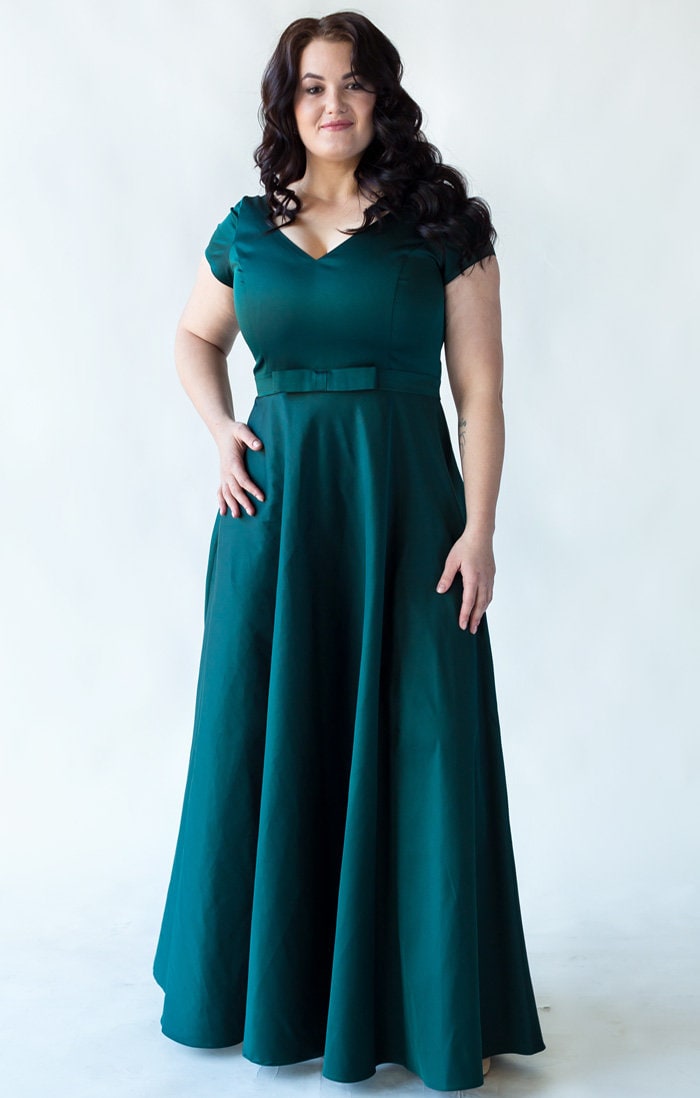
Hutch is the going-out and occasion arm of the third-party catalog in extended sizing. Prices sit in roughly the $228 to $298 range, the cuts run more fitted and the fabrics carry more sheen than the Maeve cotton voile aesthetic. The jewel-tone maxi cuts are the ones to look at for a wedding or a holiday occasion. Hutch tends to run slightly snug through the bust and true through the hip, which is the opposite of the Pilcro problem, so size up if you are between sizes through the chest.
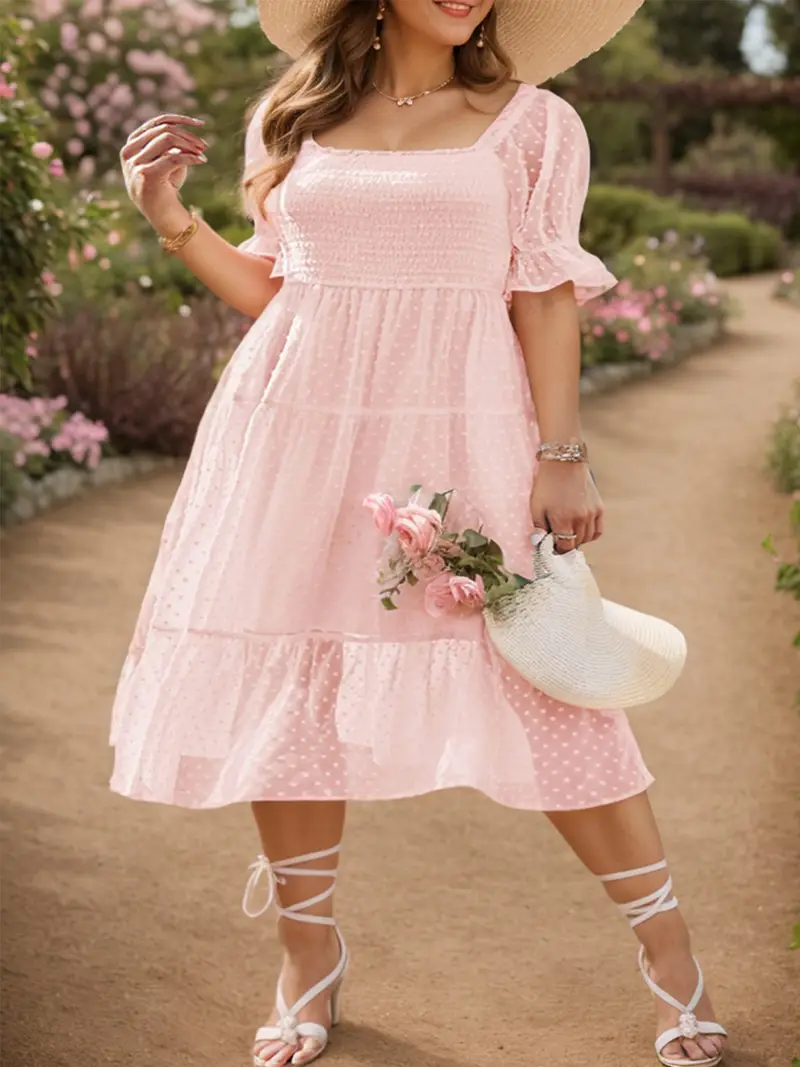
En Saison sits at the lower end of the third-party price range, roughly $128 to $168, and is the closest the brand gets to a contemporary-casual occasion dress in extended sizing. The cuts run flowy, the puff sleeves are constructed cleanly, and the fabrics are polyester blends that hold their shape at the cost of breathability. This is the sensible starting point if you are new to Anthropologie plus and want to test how the brand’s sizing works on your body before committing to a $200 Maeve.
Plenty by Tracy Reese, and why it matters in this catalog
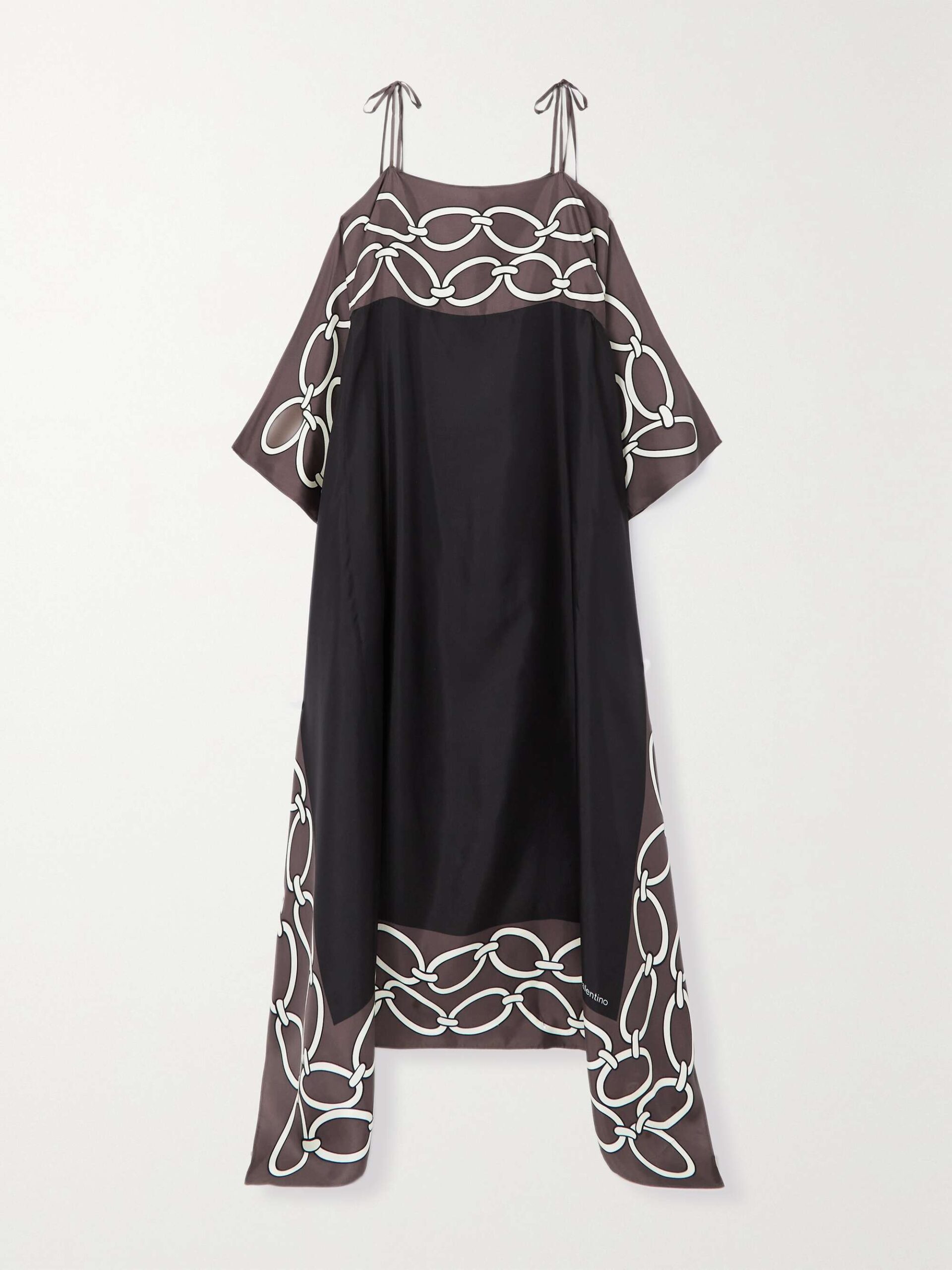
The most consequential designer collaboration in the Anthropologie plus catalog is Plenty by Tracy Reese. Reese is a working American designer whose career spans more than three decades, and who dressed Michelle Obama in a custom rose-and-gold dress for her 2012 Democratic National Convention speech. The Plenty label at Anthropologie runs as an extended-size sub-line carrying prints, silk blends and a silhouette range that the in-house Maeve label does not attempt.
What that gives you is the option to buy a designer plus-size dress at Anthropologie that is not the in-house aesthetic, with a distinct Black-designer point of view behind it. Plenty pieces sit at the upper end of the catalog’s price range, and they are the ones to look at if the cultural specificity matters to you as much as the cut. Hutch and Sunday in Brooklyn are competent third-party lines, but they are not designer collaborations in the same sense.
Visibility is not the same as stocking depth
One thing Anthropologie genuinely does well is photography. The product pages for the plus dresses show them on plus-size models, shot in the same lighting and styling as the straight-size models on the same pages, and that was a real shift when the program launched. Seeing the dress on a body shaped like yours is not a small thing, and it is the reason a lot of shoppers trusted the brand enough to walk in.
But visibility and stocking depth are different promises. The images are everywhere; the dress in your size, on a rack you can reach, is much harder to find. Keep the two apart in your head when you are deciding how much to spend here, because the marketing is ahead of the retail reality and it is worth knowing that going in rather than discovering it in a fitting room.
Running the price math before you buy
Full-retail prices across the Anthropologie plus dress catalog mostly sit between about $130 and $300 as of writing, and that range is wide enough that “is this expensive” is the wrong question. The useful question is cost per wear. Take the full retail price and divide it by the number of times you will realistically wear the dress in the next eighteen months.
Run that honestly and the picture inverts. A $200 tiered maxi you genuinely rotate through eighteen wears costs you about eleven dollars a wear, which is the same territory as a cheap fast-fashion maxi you wear four times and abandon. A $298 occasion dress you wear three times costs you close to a hundred dollars a wear, no matter how beautiful it is. The rotation pieces here, the tiered maxi, the square-neck two-tier midi, the Daily Practice cropped shirt dress, are the ones where the price tag holds up. The occasion pieces and the aspirational marketing pieces mostly do not, and that is fine as long as you know which one you are buying.
The other thing the math exposes is the floor the brand has built. A size 22 shopper who wants the Anthropologie aesthetic pays the same $130 to $300 that a size 6 shopper pays for it. But she is shopping a catalog that is narrower, because fewer styles are offered in extended sizing at all, and shallower, because stock per style thins out at the top of the size run. The price is the same. The product offer is not. Knowing that does not stop you buying the dress, but it should stop you feeling grateful for the privilege.
Where to actually find these dresses
Treat the website as the primary source. Anthropologie.com runs the full extended-size buy and its size filters work consistently. Stock depth at a 22 and above thins faster than at 18W and 20W, which means the style you want is more likely to be sold out in your size if you wait a couple of weeks into a season’s buy. If you see it and it fits your criteria, that is the moment to decide.
For stores, call ahead. Ask specifically what is on the floor in your size rather than whether the store “carries plus,” because the answer to the second question is often technically yes and practically no. Ordering online for store pickup is usually the better move: it routes the dress through back-of-house inventory instead of depending on what the floor happens to be holding, and you still get to try it on before the return window starts ticking.
Markdowns are the last piece. The in-house lines go on meaningful markdown a few times a year, usually around the seasonal changeovers, so the puff-sleeve fit-and-flare and the pleated midi are worth waiting on. The Hutch and Sunday in Brooklyn collabs rarely get the same treatment and are more likely to disappear at full price. Daily Practice runs promotions often enough that joining the email list pays for itself. And AnthroPerks members get a birthday discount, which is quietly significant on a dress at this price point.
The verdict, and three alternatives
Anthropologie plus still delivers for the shopper who comes for the brand’s specific aesthetic and is willing to shop primarily online, accept that the in-store experience is unreliable, and run the cost-per-wear math piece by piece. The tiered maxi, the square-neck two-tier midi and the Daily Practice cropped shirt dress are the strongest rotation buys. The Pilcro denim maxi is worth it with size-up insurance. Hutch and Sunday in Brooklyn are the occasion pieces when the cut works. The pleated midi and the smocked cotton-voile minis are the ones to skip or buy deeply discounted.
If the pricing or the thin catalog walls you out, three alternatives are worth naming. Reformation’s plus-size program sits in roughly the $148 to $248 range with a similar editorial aesthetic and a deeper story on fabric content. Sezane, the French contemporary brand, has expanded its extended-size catalog and carries the prairie-and-puff-sleeve language at roughly $135 to $225 with sturdier fabrics. And for the editorial range without the contemporary-retail price floor, Eloquii runs roughly $89 to $158 on most dresses, carries 14 through 28, and has done the pattern-engineering work on fitted cuts that Anthropologie has never bothered to translate into its Pilcro plus run.
The thing worth holding onto is this: an aesthetic a brand spent years marketing as inclusive can still be priced and sized into a shape that quietly walls out the size 22 woman who loves it. You can buy the dress. It fits when it fits, and when it fits it is genuinely good. Just go in knowing you are paying a straight-size price for a narrower, shallower offer, and let that shape how much you spend rather than how you feel about your body.