If you have ever ordered and returned a stack of plus-size blazers, you know the specific failure modes: the shoulder seam that lands halfway down your arm, the sleeve that stops short of your wristbone, the hip vent that splits open the second you sit. A blazer that gets all three right on the first wear is rare at any price, and rarer still above a size 20.
That gap is the whole Universal Standard pitch. The brand sells sizes 00 through 40 at the same price point, with no plus-size upcharge. This piece is a guide to the brand’s workwear: what the founders built, what the catalog does well, where it is overpriced or underwhelming, and which five core pieces are worth your attention first.
The founders, briefly, because the origin matters
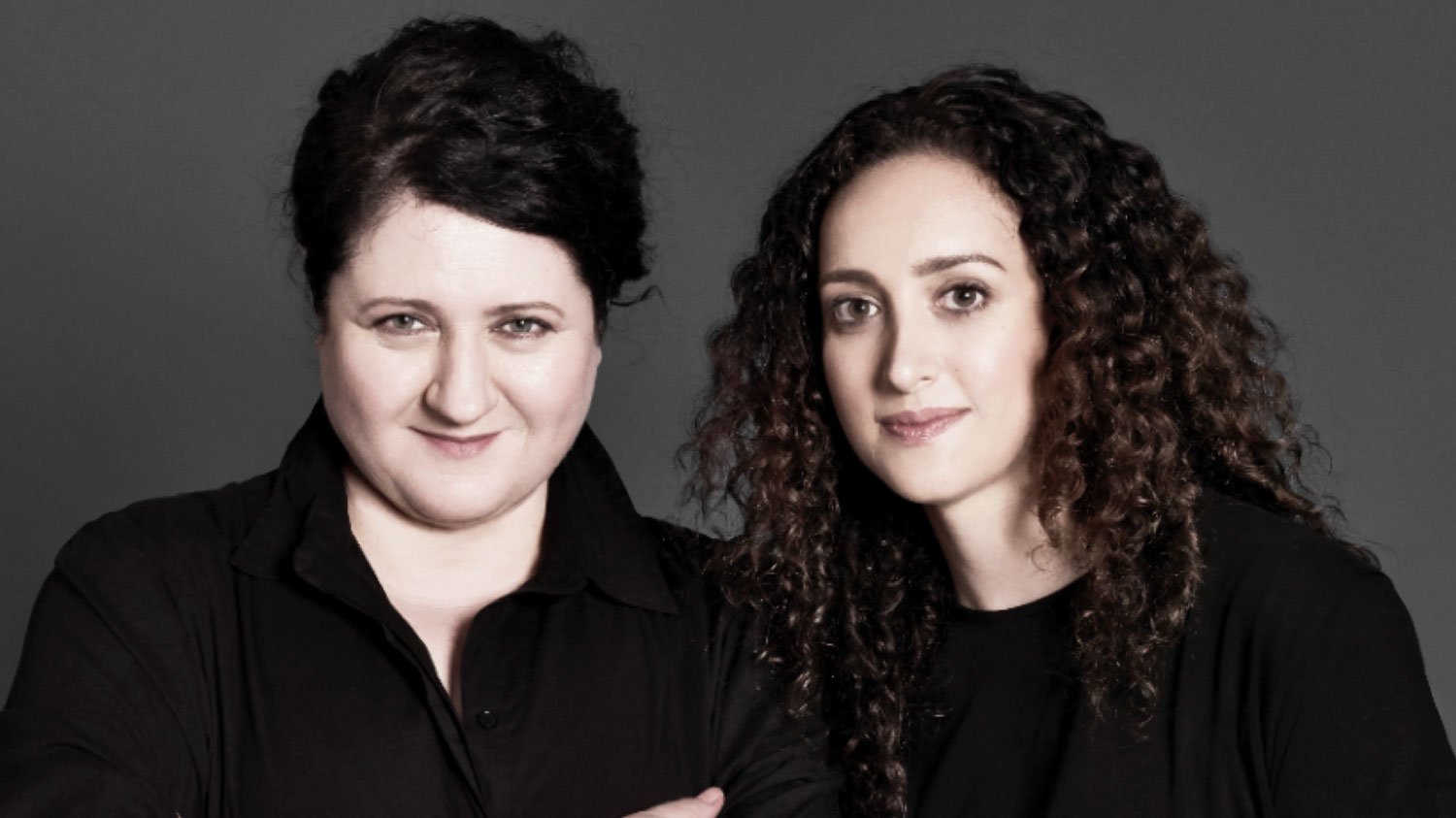
Universal Standard launched in 2015 out of a single shopping trip. Polina Veksler and Alexandra Waldman were friends in New York, one a former private-equity associate, the other a writer and creative, and they could not find modern, well-made clothing that both of them could buy in the same store at the same time. According to the Business of Fashion BoF 500 profile and a 2024 Fashion Dive sit-down with Veksler, the co-founders put $150,000 in each, hired a small pattern team, and launched with eight styles. The first drop sold out in six days.
The brand grew off one structural decision that the rest of the industry resisted for another five years. Universal Standard would carry every style in sizes 00 through 40, at the same retail price, with no plus-size markup, no separate “extended” sub-line, and no scaled-up patterns built off a sample size 4. The fit was engineered from the body outward across the full range. That choice is why a Universal Standard blazer in a size 22 is drafted for a size 22, while the equivalent piece from a brand that scales up from straight sizes is not.
Alexandra Waldman, the creative co-founder, died of cancer in September 2023 at age 57. The brand’s editorial point of view, the photography of plus-size and straight-size bodies side by side, the refusal to use the word “extended” anywhere on the site, came from her. Polina Veksler continues as CEO. In her 2024 Fashion Dive interview she said, “I think we pioneered the size inclusivity movement,” and then named the caveat in the same breath: “there are pendulum swings, and unfortunately, I think we’re currently swinging in the wrong direction.” The brand still matters because the rest of the category is quietly walking back the inclusion it promised in 2021.
What Universal Standard workwear actually is
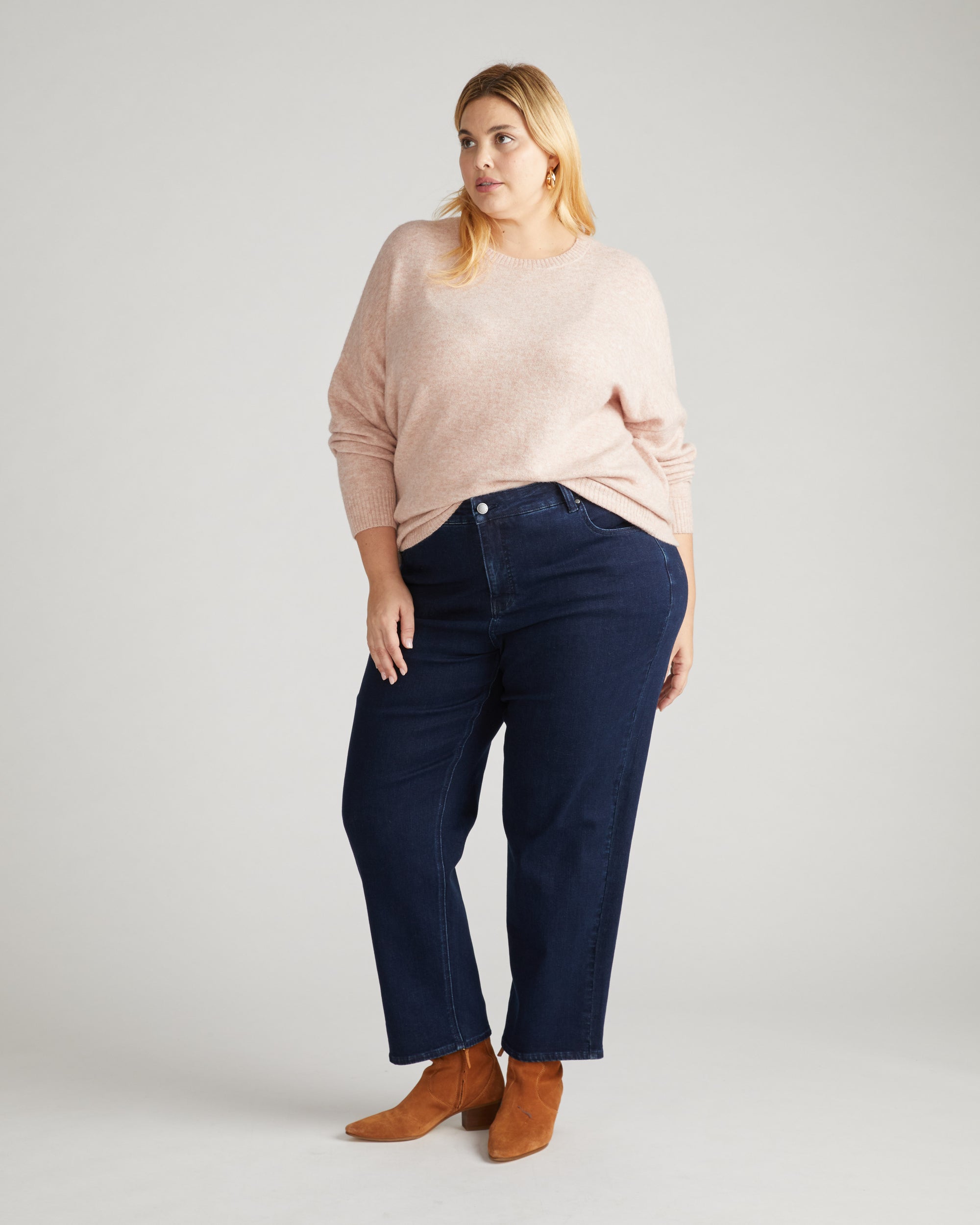
The catalog covers around 750 styles across denim, knits, dresses, outerwear, and the workwear core. The pieces the brand itself flags as bestsellers are the Geneva blazer at $198, the Seine high-rise ankle pant in the $98 to $138 range depending on fabric, the Chrissy tee at $40 to $50, the Stephanie shirt at $90 to $110, and the Toni dress at $120 to $148. Those are prices at the time of writing. Universal Standard runs real markdowns three to four times a year, not the phony 40% off everything cycle that retailers like Lane Bryant lean on.
The size range is 00 through 40 on every workwear style. Universal Standard also runs the Fit Liberty program: if your size changes within a year of purchase on eligible items, they swap your piece for a new size free. That is a buyer benefit no other plus-size brand at this price tier offers, and it means you can buy a core piece now without betting a year of your body on it. Distribution is direct through universalstandard.com. Returns are 30 days, free on the first return per order, $7 on subsequent returns. Compared to Eloquii , Lane Bryant, and ASOS Curve, the return policy is fair but not as generous as Nordstrom’s open-ended window.
The five workwear pieces to look at first
The workwear catalog is wide, but five styles carry it. If you are building a capsule, start here and add the rest later.
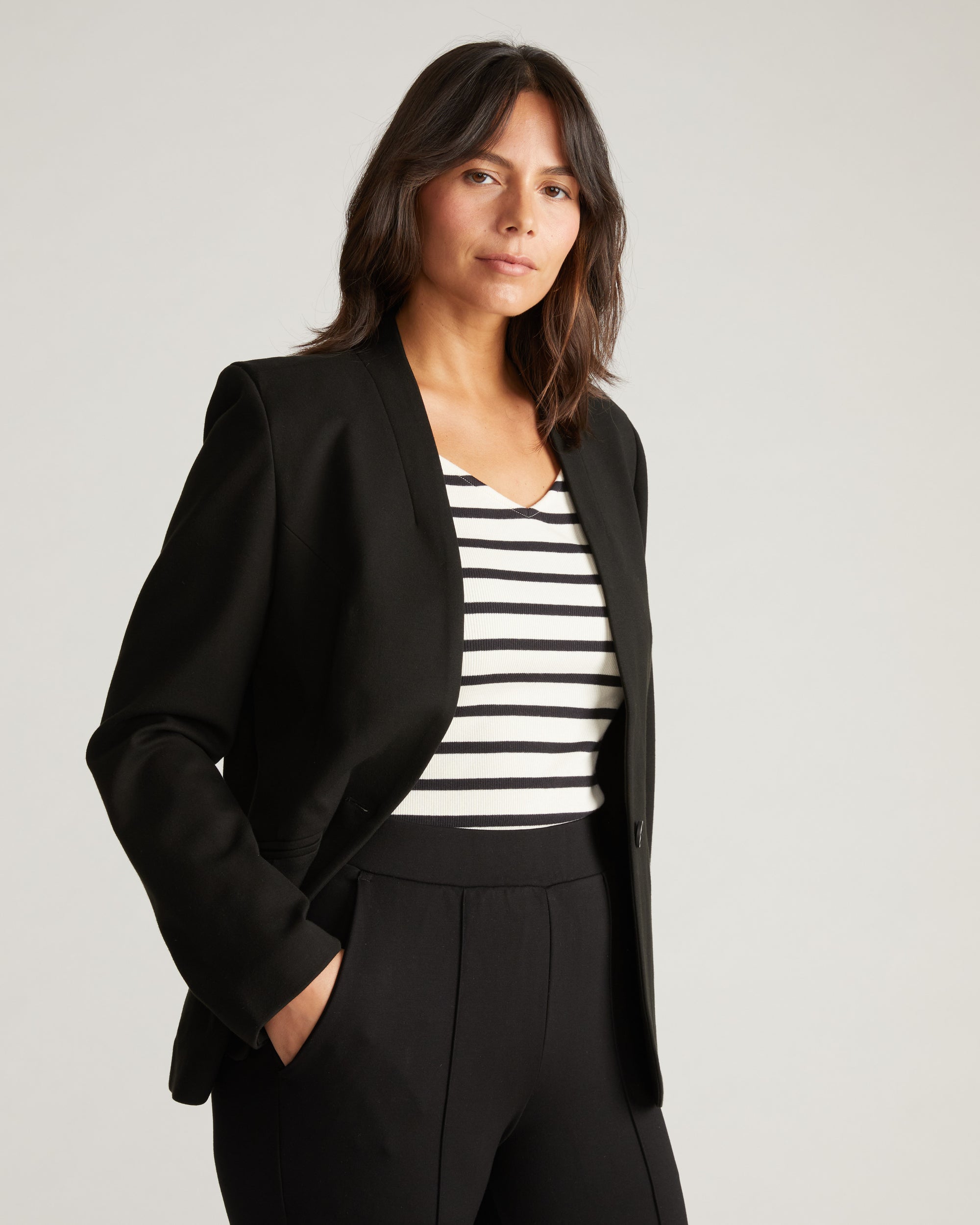
The Geneva blazer at $198 is the piece that justifies the brand’s existence for plus-size workwear shoppers. It is cut in a stretch ponte at 71% rayon, 25% nylon, 4% spandex, and the shoulder seam is drafted at each size rather than extrapolated from a size 4. When it arrives, check the three things that usually fail on a plus-size blazer: where the shoulder seam sits, whether the single-button closure pulls at the bust, and whether the hip vent stays closed when you sit. Charcoal, black, and ink navy are the colours to buy on the first round. Skip the season’s beige and putty offerings if you wear colour closer to your face. A comparable Nordstrom plus-size blazer under $250 is more likely to be a scaled-up straight-size pattern.
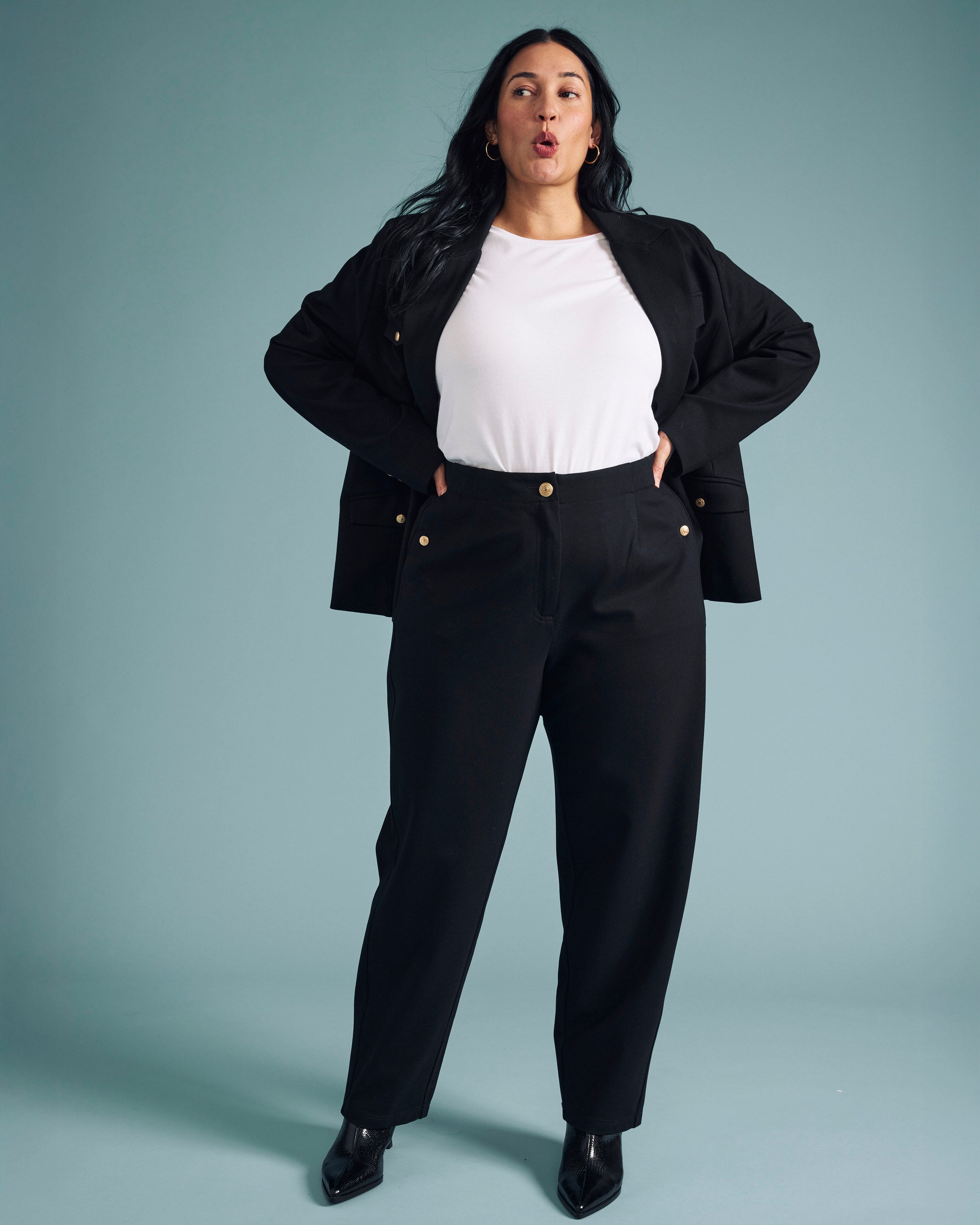
The Seine high-rise ankle pant at $118 is the trouser worth anchoring the capsule on. The fit is high-rise, slim through the thigh and ankle, and ankle-grazing on a 5’5″ frame, so expect it to read as a full-length trouser if you are shorter. The waistband is wide and finished, which is what keeps it from gapping at the back. Fabric content varies by colourway, and this is the detail to pay attention to: the rigid cotton version holds its shape far longer, while stretch versions of a trouser like this tend to bag at the knee first. Buy the rigid first, then add the stretch once you have confirmed the fit.
The Chrissy tee at $40 to $50 is the layering piece that goes under every Geneva blazer outfit. It is a pima-cotton-blend knit with enough body that it does not cling at the midsection and enough drape that it does not look stiff. Crewneck or scoop, both work, and it is cut true to size. If you want the layered-tee-under-blazer office look without the Old Navy thinness or the Eileen Fisher price tag, this is the piece. White, black, deep red, and ivory cover most outfits.
The Stephanie shirt at $90 to $110 is the white button-down at a price tier where good ones are scarce. Cotton-poplin with stretch, real shirting structure at the collar and placket, and a curved hem that stays tucked. The bust button is the failure point on almost every poplin shirt, including Target’s plus-size line , Old Navy’s, and the J.Crew No. 2 Pencil in its extended range, so that is the first thing to check. Order true to size. The cut is not boxy but not aggressively fitted either.
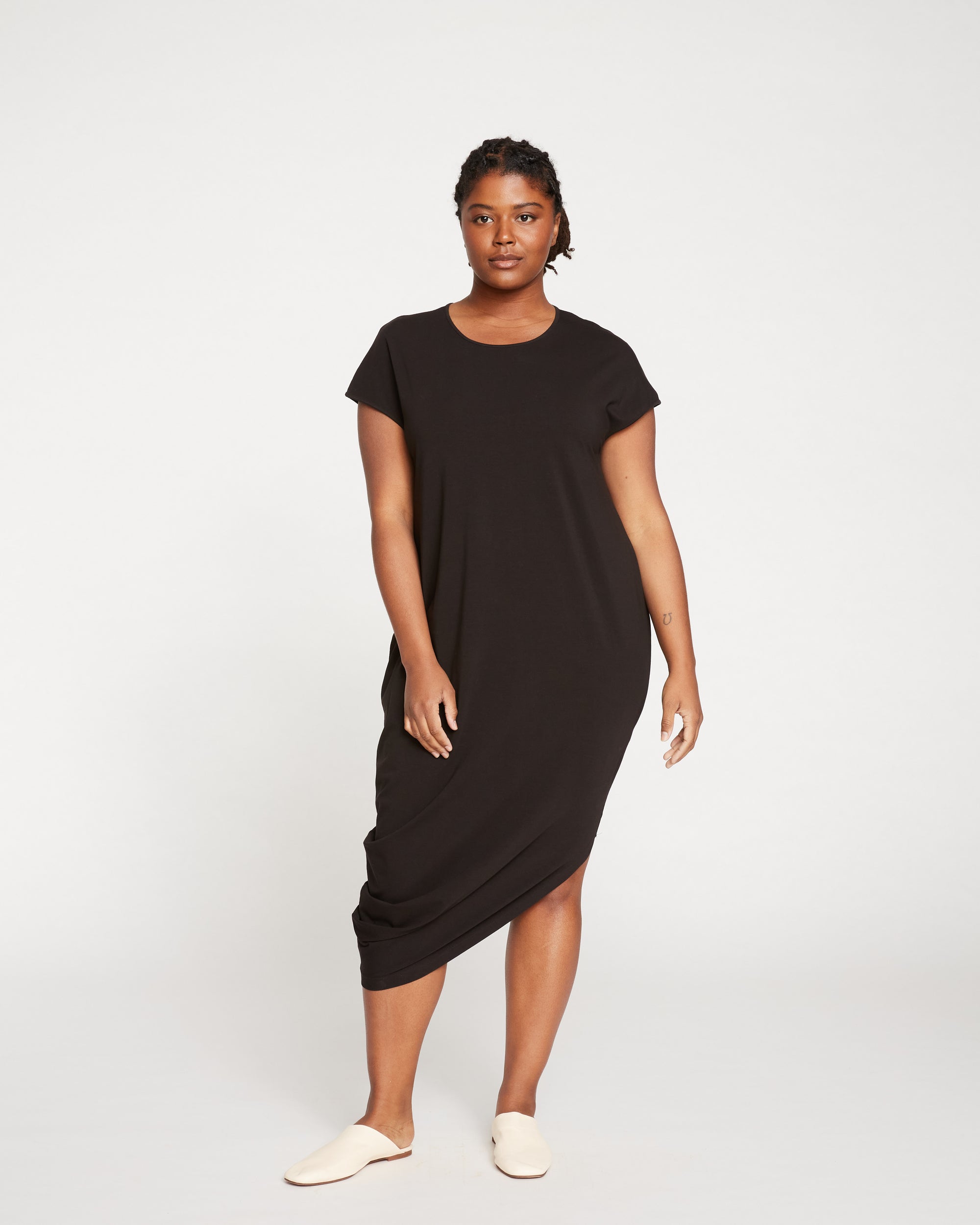
The Toni dress at $120 to $148 is the ponte sheath that solves the “I have nothing for this client lunch” panic. Sleeveless, knee-grazing, high crew neck, with princess seams that give shape without compression. Ponte is the right fabric choice for summer humidity, which is where most rayon-jersey work dresses go limp. Pair it with the Geneva blazer in the same charcoal and you have a two-piece that reads as more expensive than the roughly $346 it costs.
Where Universal Standard actually earns the premium
Three things justify the price step up from a brand like ASOS Curve or Lane Bryant.
Fit consistency across sizes is the first one. Most plus-size brands grade up from a sample size 4 or 6, and the result is a size 22 piece with the proportions of a size 4 stretched 18 sizes larger. Armhole in the wrong place, hip-to-waist ratio wrong, neckline pulling because it was designed for a 33-inch chest, not a 50-inch one. Universal Standard’s pattern team grades within the size range rather than extrapolating outside it, and that is the rarest thing in plus-size apparel: a piece drafted for the body it is sized for, without aggressive tailoring after the fact.
Fabric content is the second. The Geneva ponte is heavier and more recovery-elastic than the Eloquii Kady blazer at the same price tier. The rigid Seine is a denser cotton with less polyester than the Lane Bryant Lena trouser. The Chrissy tee uses a pima blend rather than the rayon-spandex thinness that costs Old Navy and Target their longevity after a dozen or so washes. None of this is dramatic on the hanger. It shows up at the year mark, when one piece still looks new and the cheaper equivalent looks worn.
Fit Liberty is the third, and the most interesting from a retail-economics angle. Swap-for-free if your size changes is brutal on a brand’s inventory math. Universal Standard does it anyway because the bet is on customer lifetime value over individual-transaction margin. For you as the buyer, it is the policy that takes the anxiety out of a $198 blazer, and it changes the cost-per-wear math on every premium-priced item in the catalog.
Where the brand still underwhelms
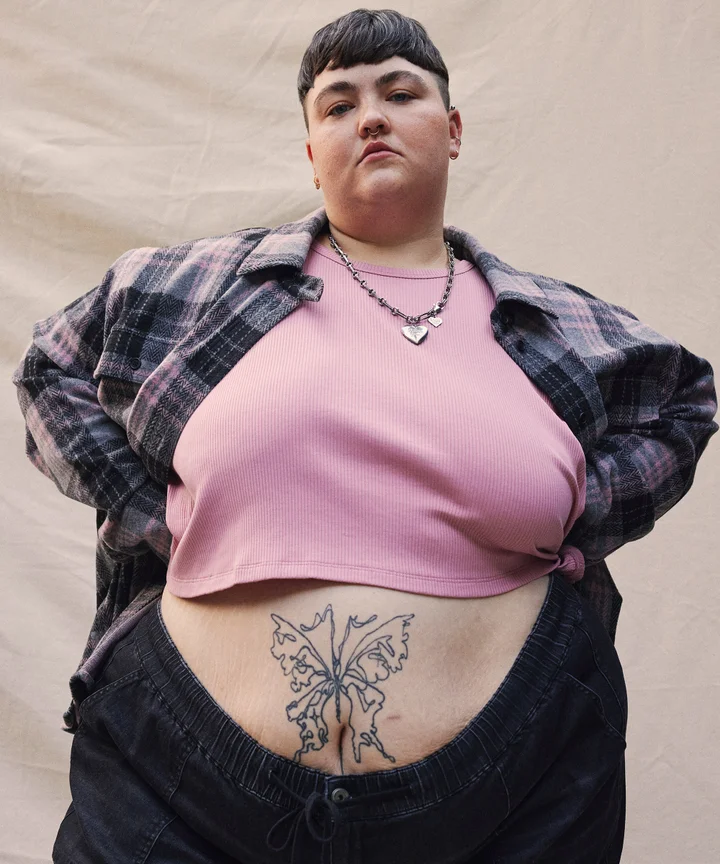
Honest section, because none of this is a brand with no weak points.
The colour palette is boring. Charcoal, black, ivory, putty, navy, occasional dusty rose. The brand leans hard on its editorial neutrals, and the result is a catalog that photographs as expensive minimalism but shops as monotonous. Eloquii ran a 2025 capsule with a real cobalt, a real saffron, and a real terracotta at the same price tier. Universal Standard’s boldest recent moves have been a muted rust and a forest green, both of which sold out fast, which suggests the appetite is there. The brand has the customer base to take more colour risk and is not taking it.
Sleeves are the weak point in the fit. The sleeveless Toni is the safe buy. On the cap-sleeve and short-sleeve variants, check the bicep circumference carefully, because sleeve grading is where a brand that drafts the body well often still works off a straight-size template. If the upper arm feels tight in the store or on arrival, size the sleeve problem rather than the dress: buy the sleeveless version and layer a tee or a blazer over it.
Stock-outs at the top of the size range are worth planning around. Restocks across the industry tend to favour the middle of the size range, which is the math any inventory team would do, and the consequence is that a size 26 shopper looking for the Seine ankle pant in black rigid will hit the “Notify Me” button more often than a size 18 shopper will. If a core piece is in stock in your size and colour, that is the moment to buy it. Eloquii tends to have fewer gaps at the top of its range, because the brand was built plus-size first.
Pricing is fair but not cheap. The Geneva blazer at $198 is mid-premium. The Toni dress at $148 is mid-premium. Rebuilding a workwear closet from scratch means roughly $800 to $1,200 for the five pieces above before sale. Universal Standard runs real sales at 20 to 30 percent off two to three times a year, and a patient shopper can knock that total down significantly. But the brand is not Lane Bryant’s $69 trouser tier and it does not want to be.
How it compares to the rest of the plus-size workwear category
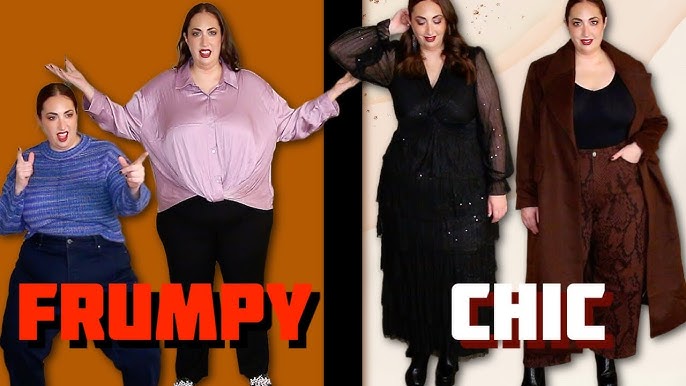
Three peer brands worth knowing if you are deciding where to put your workwear dollars.
Eloquii sits at a similar price tier and runs sizes 14 through 28. The brand goes harder on colour, prints, and on-trend silhouettes. The Kady fit-and-flare blazer is the Geneva comparable, lists around $189, and is cut for a more dramatic hourglass than Universal Standard’s straighter shoulder line. Eloquii runs sales more aggressively, so the actual price is often 30 to 50 percent off list. The trade-off is that fit at size 26 and up is less consistent than Universal Standard’s.
Lane Bryant is the volume play. Sizes 10 through 38, lower prices, broader distribution. The Lena trouser at $69 is the budget tier to the Seine at $118. More polyester, less tailored through the thigh, less precise hem finishing. For a sub-$500 closet, Lane Bryant is real value. For pieces that still read as expensive at year two, Universal Standard wins the cost-per-wear math.
ASOS Curve runs sizes 14 through 30, lower prices still, and is the fast-fashion option. Blazers under $90, trousers under $50, and fit that is genuinely hit-or-miss, including the occasional crooked seam. Fine for one-time event dressing on a tight budget. The math does not work for a closet you want to wear three years.
Who should buy Universal Standard and who should skip
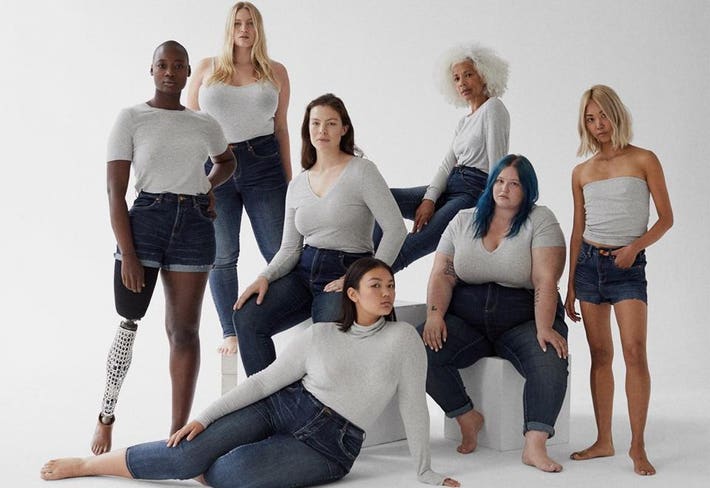
Buy Universal Standard workwear if you are building a multi-year office wardrobe with $600 to $1,200 to spend, you want pieces that fit on the first wear without tailoring, and you value fit consistency across the size range you actually wear. Especially if you are a size 22 through 32 and have been burned by scale-up-from-a-4 fit failures at department-store plus-size lines.
Skip it if your workwear budget is under $500 and you need volume, if you want bold colour and print as your default mode, or if you wear primarily 14 through 18 and have already found brands at that range that fit well. The brand is real but it is not the only answer at smaller plus sizes.
The honest bottom line
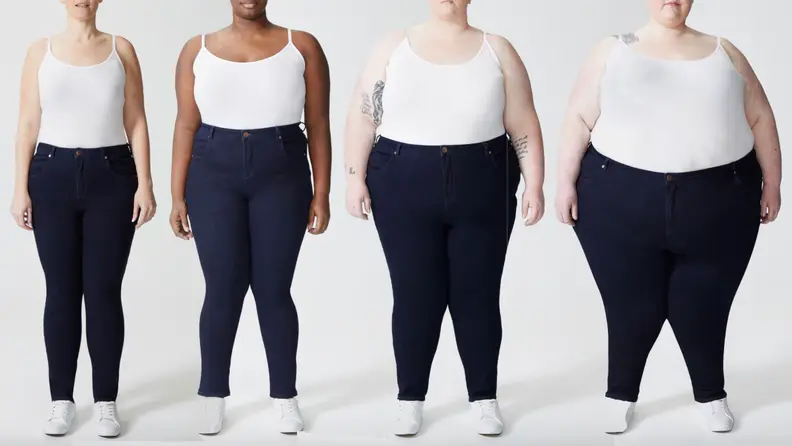
Universal Standard is the easiest brand to point someone toward when they ask where to buy plus-size workwear that does not look like a 1995 corporate department store dressed them. The Geneva, Seine, Chrissy, Stephanie, and Toni are the five pieces that carry a capsule. Mid-premium, not cheap, and the colour palette will bore anyone who shops for joy rather than function.
The bigger story is that the brand kept the 00-through-40 promise across a decade while the rest of the category quietly trimmed extended sizes, raised plus-size prices above straight-size equivalents, or rebranded inclusion as a “limited” capsule. Veksler’s 2024 pendulum line was not marketing. It is what the receipts say. Universal Standard is one of the few in plus-size apparel still operating on the premise that a size 22 body deserves the same garment quality, same price, and same fit attention as a size 6.
Verdict on the five pieces: Worth it.
Geneva at $198, Seine at $118, Chrissy at $45, Stephanie at $100, Toni at $138, all at the time of writing. Wait for the 20 percent off sale if you can. Buy the rigid Seine before the stretch. Choose the sleeveless Toni over the cap-sleeve version, and layer instead.
A note on health information. This article is general information and not medical advice. It is not written by a clinician and it cannot account for your own history, medications or circumstances. Please speak to a qualified healthcare professional before starting, stopping or changing any treatment, medication or supplement, and seek professional support if something here raises a concern about your own health.