


The Frankfurt gate desk that taught me the six-month rule
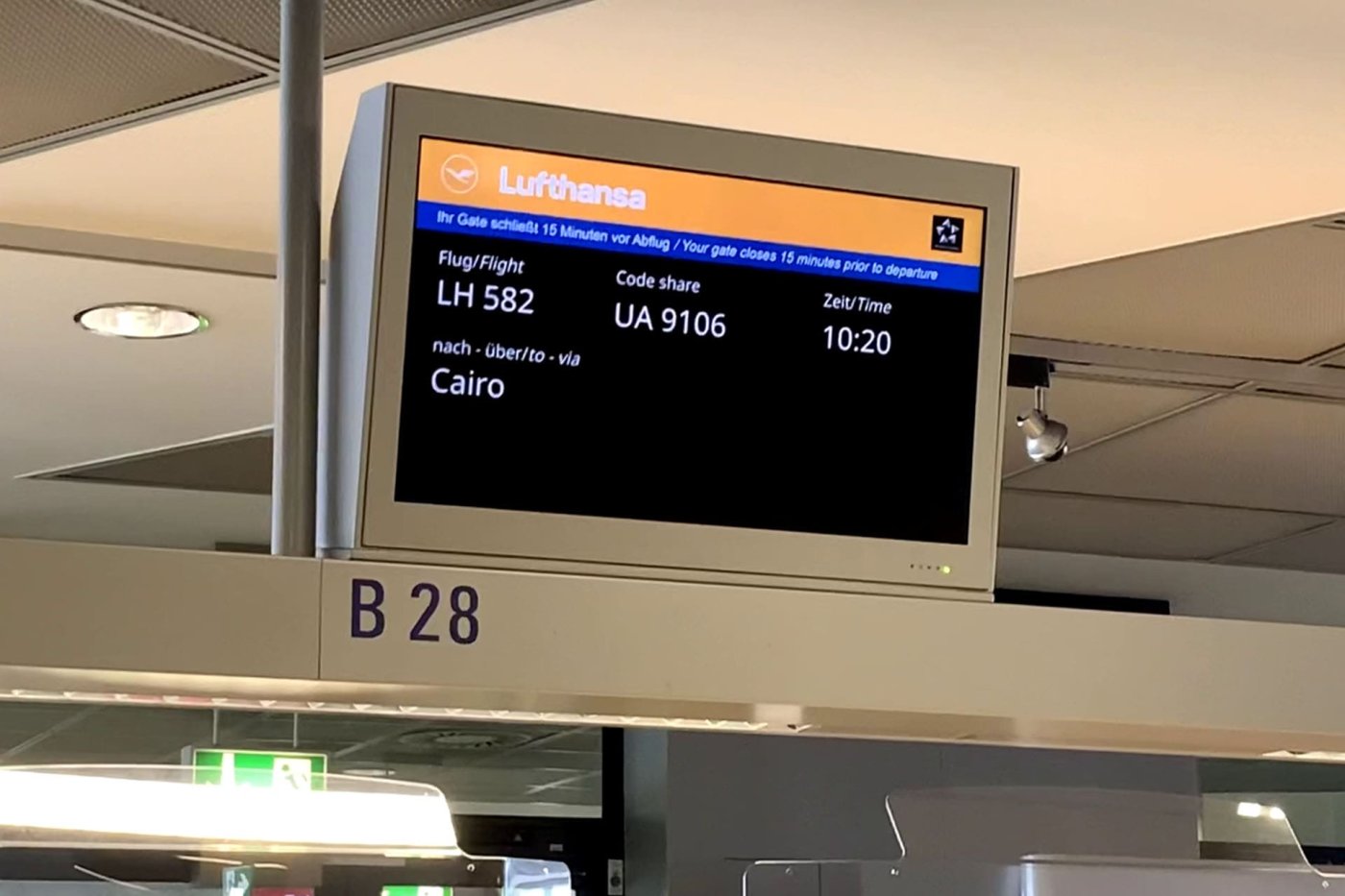
The gate agent at Frankfurt slid my passport back across the counter and said, in the politest possible voice, that I would not be flying to Cairo that afternoon. My passport expired in four months and twenty-one days. Egypt requires six months of validity from the date of entry. I had four months and twenty-one days, which would have been plenty had I been going home, but I was not going home. I was going to Cairo for ten nights with a friend who was already in the air from JFK. I was standing in Terminal 1 with a boarding pass that no longer worked and a refund clock that did not care.
I have been to forty-one countries and had never had a passport problem until that morning. The fix was a regional US embassy appointment, a $185 emergency replacement fee, and a redirected flight that cost me another $410. The trip got salvaged. The lesson got expensive. This is the article I wish I had read the week I booked Cairo, because travel documentation in 2026 is not just the sticker prices on the State Department site. It is the timing, the renewal rhythm, the panic-tax on expedited service, and the specific places where a $95 credit card pays you back $200. I pulled three years of receipts and cross-referenced State Department, CBP, and AAA pricing as of this writing.
The US passport: book, card, first-time, renewal
The number to anchor against is the first-time US passport book. In 2026, the all-in price is $165: $130 in fees to the State Department plus $35 in execution fees paid to whoever takes your application (post office, clerk of court, participating library). Photos are extra, $14 to $17 at most CVS or Walgreens. AAA members get them free at most branch offices. Total walk-out on a first-time book is $179 to $182 without AAA, $165 with it.
Renewals are cheaper. If your existing passport was issued within the last fifteen years, after you turned sixteen, and is in your current name, you can renew by mail or online for $130 flat. No execution fee. No appointment. The online portal opened nationally in 2024 and processes in four to six weeks at standard speed.
The passport card is a separate document, valid only for land and sea entry to Canada, Mexico, Bermuda, and the Caribbean. It costs $30 added to a book application, $65 standalone. I have one and have used it twice. If you live in a border state or cruise out of Florida regularly, it pays for itself. If you fly internationally, it does not.
Expedited and same-day: the panic-tax pricing

The cheapest passport is the one you renewed last year while you were not planning a trip. Every dollar above the $130 base is a panic tax, and the curve gets steep fast.
Standard processing in 2026 runs four to six weeks. Expedited service costs an extra $60 on top of base fees and brings the timeline to two to three weeks. Add $20.32 for two-way priority mail. The mid-tier expedite is the right call if your trip is six to eight weeks out. Total: $215 to $235 for a first-time book, $190 for a renewal.
Inside the two-week window, you can book in person at one of the 26 regional passport agencies (NYC, Atlanta, Miami, Houston, Chicago, LA, San Francisco, and others). Appointments are technically free but only available with proof of international travel within fourteen days. You walk out same day. All-in cost lands around $185 to $215. Slots release at 8 a.m. local time, three weeks ahead, and get taken by 8:02. Set a calendar reminder.
Inside the seven-day window, you are in private-courier territory. RushMyPassport, ItsEasy, and Travel Visa Pro run your application through a regional agency for you. The 2026 pricing is brutal: $499 for five-business-day service, $699 for 48 hours, and $1,200 for a true same-day rush. That is on top of the standard $130 base fee. Total walk-out for a same-day rush is $1,330 to $1,400. I have paid this once, the Frankfurt-Cairo aftermath, and what made the bill bearable was the alternative of eating a $4,200 non-refundable trip. Build the buffer before you need it.
Global Entry and TSA PreCheck
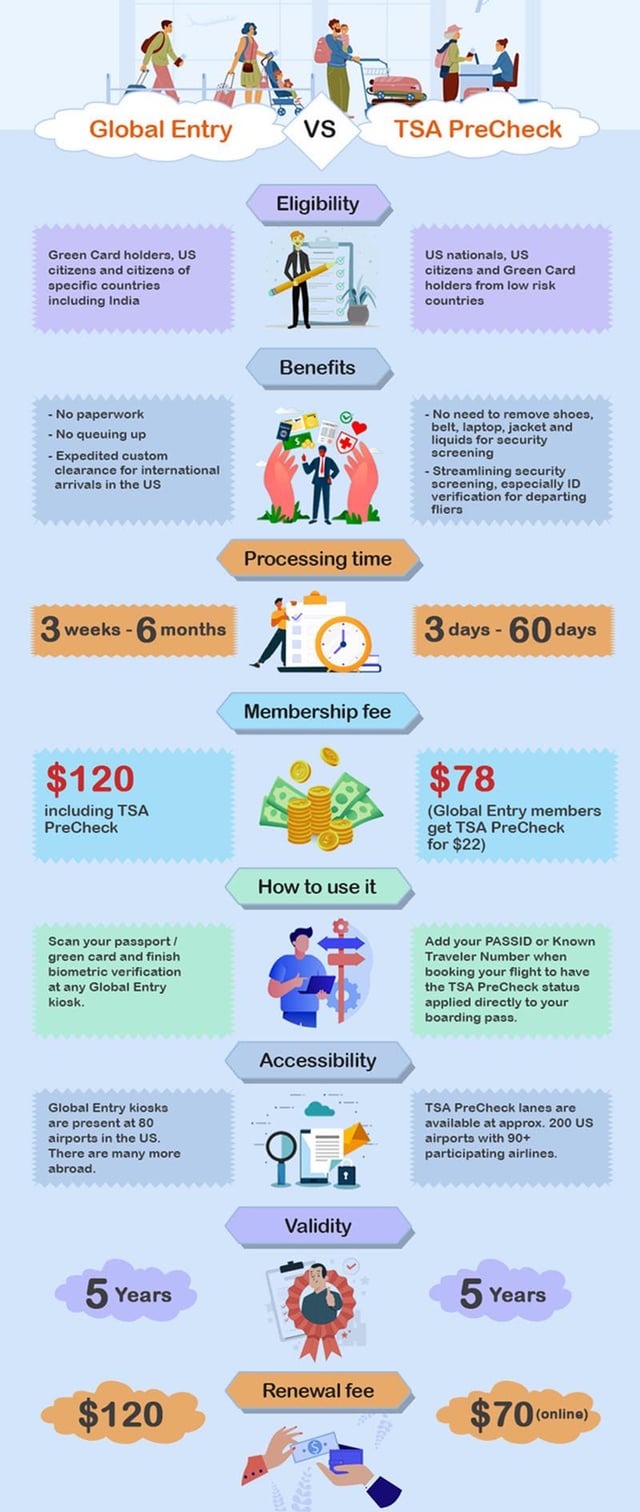
If you fly more than three round trips a year, Global Entry is the single best paperwork investment you can make. The 2026 fee is $120, paid once, valid for five years. That works out to $24 a year for a service that pulls you out of every customs and immigration line at every major US airport, and bundles TSA PreCheck for domestic flights at no extra cost. PreCheck on its own is $78 for five years. Most travelers should buy Global Entry instead. The math is not close.
The catch is the interview. Conditional approval after the online application takes four to eight weeks. The in-person interview used to be the bottleneck, but the program now offers Enrollment on Arrival, where you complete the interview at the customs desk when you re-enter the US from any international trip. It adds about ten minutes and saves you the trip to JFK at 6 a.m. on a Tuesday.
The other programs are niche. NEXUS is $50 every five years, only worth it if you cross into Canada regularly. SENTRI is $122.25, for southern border crossings. CLEAR is a private biometric line at major airports for $189 a year, and the math only works if you fly out of a CLEAR hub more than twice a month. For most travelers, Global Entry alone is the right buy.
Real ID and the international driving permit
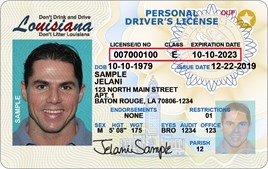
Real ID enforcement at domestic TSA checkpoints took full effect on May 7, 2025. As of mid-2026, you cannot board a domestic flight with a non-Real ID driver’s license. If your license has a gold or black star in the upper corner, you are set. If it does not, you need to upgrade at your state DMV, and the cost is wildly state-dependent.
Fees in 2026 land between $30 and $60 in most states. Texas charges $33, California $45, Florida $48, New York $30, Illinois $30, Georgia $35. The variance comes from whether the state charges a Real ID surcharge or bundles it in. This is a one-time line item at your next renewal. If your passport book is current you can technically skip Real ID, but a license fits in a wallet and a passport book in a jacket pocket gets forgotten the one morning you need it.
The international driving permit is the most overlooked $20 in travel paperwork. AAA is one of two federally authorized issuers. The IDP costs $20, takes ten minutes with two passport photos and your current US license, and is valid for one year. You need it if you plan to drive in Italy, Greece, Croatia, Costa Rica, Japan, South Korea, Spain, or most of Eastern Europe. The traffic stop is where the absence matters. I have been pulled over twice in Italy in seven years and the IDP turned a potentially expensive afternoon into a thirty-second exchange both times.
Visa fees by region, the wild variance
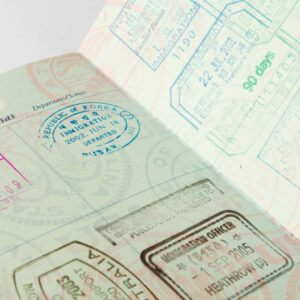
Visas are the line item that will surprise you most. Prices vary from twenty dollars to two hundred depending on country, visa type, and whether you applied online or on arrival. Some countries cost US passport holders nothing. Some charge more for Americans as a reciprocity measure. Here is the 2026 lay of the land for the regions I get asked about most.
Europe : Schengen-area visas for US passport holders are free for tourism under ninety days. ETIAS authorization is scheduled to begin in late 2026 (Q4 launch, with a transition period before it becomes mandatory in 2027) at roughly 20 euros per traveler, valid for three years. UK ETA is around $13 (10 pounds). Both are online forms, processed in days, not weeks. Confirm the current launch date on the official EU travel-europe.europa.eu site before you book.
West Africa : Senegal is visa-free for Americans for ninety days. Ghana requires a single-entry e-visa at $60 to $150 depending on processing speed. Nigeria is $160 for the visa-on-arrival e-pass, with another $30 in airport processing.
East and Southern Africa : Kenya is now e-visa only at $30, processed online in three to seven days. Tanzania is $100 multi-entry. South Africa is visa-free for ninety days for US passport holders. Morocco is visa-free for ninety days.
Asia : Vietnam e-visa is $25 for thirty days, $50 for ninety. Cambodia visa on arrival is $30. Thailand is visa-free for sixty days. India e-visa is $40 for thirty days, $80 for one year, $100 for five years. Japan is visa-free for ninety days. South Korea requires K-ETA at $7, valid three years.
South America : Brazil reinstated e-visas for US passport holders at $80.90 for ten-year multi-entry. Argentina, Chile, Peru, and Colombia are all visa-free. Bolivia is the regional standout at $160 visa on arrival, in crisp US bills, which the embassy site does not mention loudly enough.
Middle East : UAE is visa-free for thirty days. Jordan is $56 on arrival, free if you book through the Jordan Pass at $70 which bundles entry to Petra. Egypt is $25 on arrival, payable in cash at the airport bank window before you reach immigration.
The pattern: most online e-visa applications run $20 to $80, most visa-on-arrival programs run $25 to $100, and a handful of reciprocity countries (Bolivia, Nigeria, Chad, Eritrea) push past $150. Build a $100 visa line into any trip outside Europe and you will be right more often than wrong.
Travel insurance: when to buy, what to pay

Travel insurance is the line item travelers under-budget most. A single-trip policy runs $50 to $150 for a one-to-two-week international trip, scaling with age, trip cost, and coverage limits. For a $3,000 trip to Portugal, the right policy through World Nomads, Allianz, or Travel Guard runs $90 to $120 and covers cancellation, medical evacuation, and lost luggage.
The honest test: would losing the cost of this trip ruin your year? If yes, buy. If the trip is $400 in points and a free hotel, skip. For longer or multi-country itineraries, an annual multi-trip policy runs $300 to $500 and pays for itself at three or more trips a year. I have an annual policy through Allianz at $380 a year that has paid out twice (a delayed flight, a stolen camera). Net positive.
Your credit card matters here. The Chase Sapphire Preferred and Reserve both include trip cancellation, delay, lost luggage, and rental car coverage when you book on the card. The Reserve adds emergency medical evacuation. For most trips, the card coverage is enough. Where it is not: medical evacuation in remote regions, adventure activities (all policies exclude scuba past thirty feet, motorcycling, and rope sports), and trips over $10,000 non-refundable.
The yearly total for an active traveler
Here is the math for someone taking three to four international trips a year. Passport renewal at $130 every ten years amortizes to $13 a year. Global Entry at $120 every five years is $24. Real ID one-time at $40 amortizes to $5. The IDP at $20 for travelers who drive abroad. Visas average $150 a year for two or three e-visa countries. Travel insurance at $50 to $150 per trip, or $380 a year for an annual policy. Realistic yearly documentation spend lands at $200 to $400, with $250 to $300 the median case.
That is less than most travelers spend on baggage fees in a year, and less than the price of one nice dinner per international trip. The whole infrastructure of being able to leave the country runs you about a dollar a day.
The honest cost-saving moves that actually work
Three moves materially shift the math. The first and largest is the travel credit card statement credit. The [LINK:#affiliate] Chase Sapphire Preferred [/LINK] at $95 a year reimburses your Global Entry, TSA PreCheck, or NEXUS fee once every four years as a credit of up to $120 after the June 2026 refresh. The [LINK:#affiliate] Chase Sapphire Reserve [/LINK] at $795 a year does the same plus $300 a year in travel credit and a stack of other lifestyle credits. The [LINK:#affiliate] American Express Platinum [/LINK] at $895 a year includes the same reimbursement plus airline incidental credits. Apply for the card in the same quarter you renew Global Entry and the $120 fee posts to the card, the statement credit posts within a billing cycle, and you have effectively paid zero. I have done this twice in a decade. Both times the credit posted within forty-five days.
The second move is AAA membership. At $69 to $89 a year, AAA pays for itself the first time you use it for free passport photos ($14 to $17 saved), the IDP ($20), and one roadside tow. I joined at twenty-three for a tow and it has paid for itself every year since on documentation alone.
The third move is the public library. Some county and city libraries are designated passport acceptance agents and process applications during regular hours, no appointment needed. The execution fee is the same $35 the post office charges, but the line is shorter and a handful of branch libraries waive the execution fee entirely as a public service. Search “passport acceptance facility” on the State Department site for your zip code. I have processed two renewals this way and the second branch waived the fee.
The single smartest move I made last year

The smartest documentation move I made in the last twelve months was applying for the Chase Sapphire Preferred in February, three weeks before my Global Entry came up for renewal. I paid the $120 fee on the new card. The statement credit (up to $120 after the June 2026 refresh) hit my account on the next billing cycle. The sign-up bonus, earned after I put normal rent and groceries on the card for three months, landed in May. I used those points in October to book a $740 round-trip flight to Lisbon for $0 out of pocket.
One card, one application, one fee paid in the right month: the Global Entry renewal became free, the flight to Lisbon became free, and the $95 annual fee on the card was a rounding error against the value. Total cost of that year’s travel paperwork after the credit landed was meaningfully negative. The system was doing the work while I was packing the carry-on.