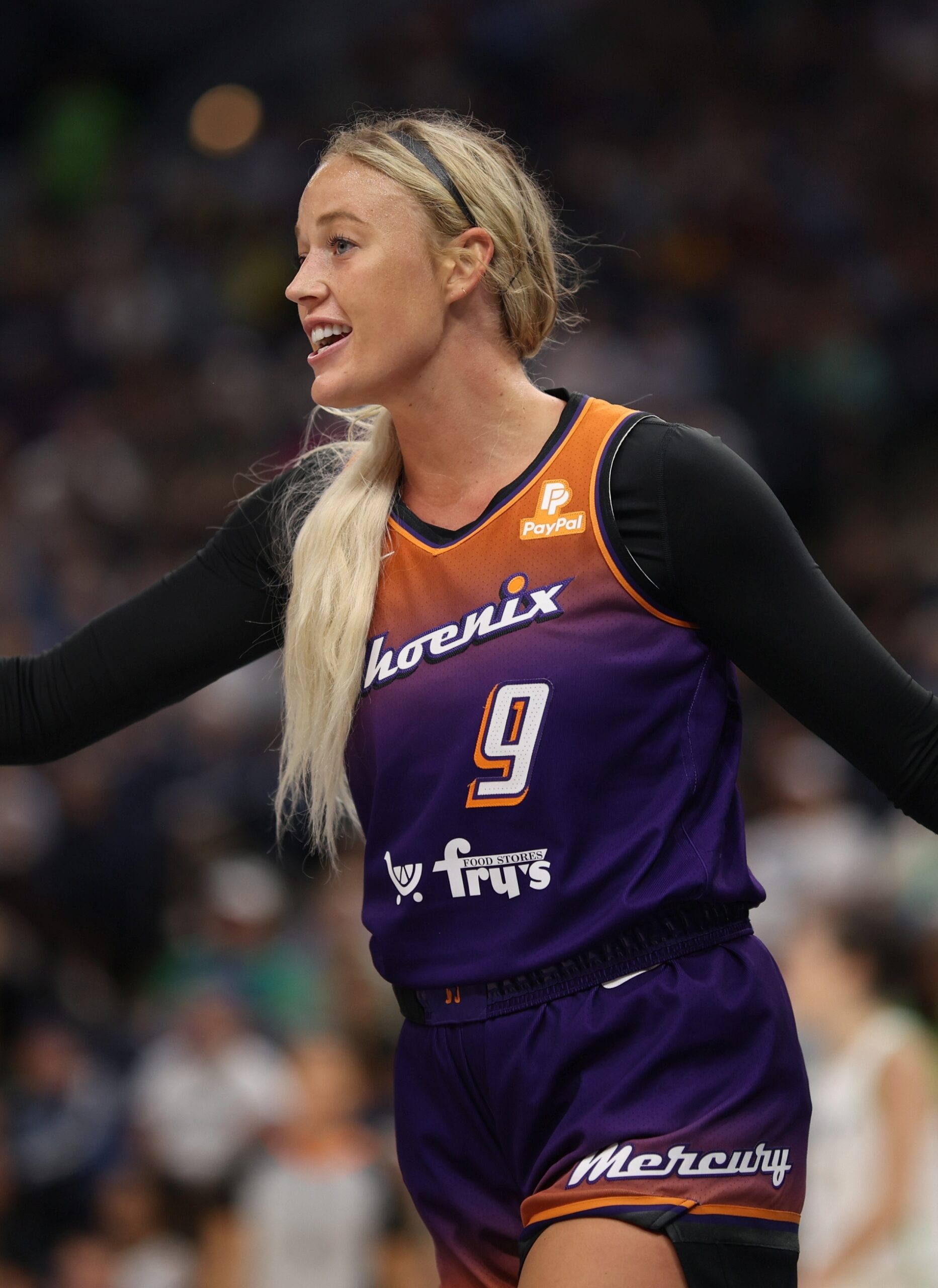

Twenty-two seconds is not a long time. It is barely the length of a held breath, a song’s bridge, the gap between a free throw and the next play. But when a Phoenix arena camera locked onto a Fever guard standing dead still, finger raised, gaze fixed across the court at a former teammate, those twenty-two seconds turned into one of the most replayed moments of the 2025 WNBA season. The internet did what the internet does. The clip looped, captions multiplied, and a player already known for her edge became, almost overnight, a meme that millions of people recognized on sight.
The woman at the center of all that noise is Sophie Cunningham, and the more interesting story is not the staredown itself. It is what she has done with the attention since: turned a reputation for fearlessness on the court into a broader, louder conversation about presence, self-expression, and what it looks like when a woman in sport decides she has nothing to shrink for.
The staredown, aimed at her former Phoenix teammate DeWanna Bonner, was not even the first time Cunningham had become a viral character that season. By the time the clip spread, she had already been crowned an unlikely folk hero by a swelling fan base, the kind of player whose name trends for reasons that have little to do with a stat line. That is a strange and telling thing to happen to a role player. It usually happens to scorers and superstars. It happened to her because of who she is, not what she averages, and the distinction is the whole point of her story.
A Black Belt at Six and a Football Helmet by Sixteen
Cunningham was born in Columbia, Missouri, in August 1996, into a family that took athletics seriously enough that both her parents had been student athletes at the University of Missouri. The competitiveness was not a phase she grew into. It was the water she swam in from the start.
The detail that captures her best comes from childhood. By the age of six, she had earned a black belt in taekwondo, trained by her own parents, who reportedly first gave her lessons as something of a joke. The joke did not last. By high school at Rock Bridge in Columbia, she was starring in basketball and volleyball, and when the football team lost its kicker to a torn ACL, she pulled on a helmet and went two for four on field goal attempts. A girl kicking field goals for the boys’ varsity squad in the mid-2010s was not a stunt. It was simply Cunningham seeing a gap and stepping into it.
That instinct, the willingness to occupy a space nobody had reserved for her, is the throughline of everything that came later. It is also why “confidence” is the wrong word for what she has. Confidence implies a performance, a posture you put on. What Cunningham seems to carry is something steadier and older, the assumption that she belongs wherever she stands.
From Missouri’s All-Time Scorer to the League’s Most Talked-About Role Player
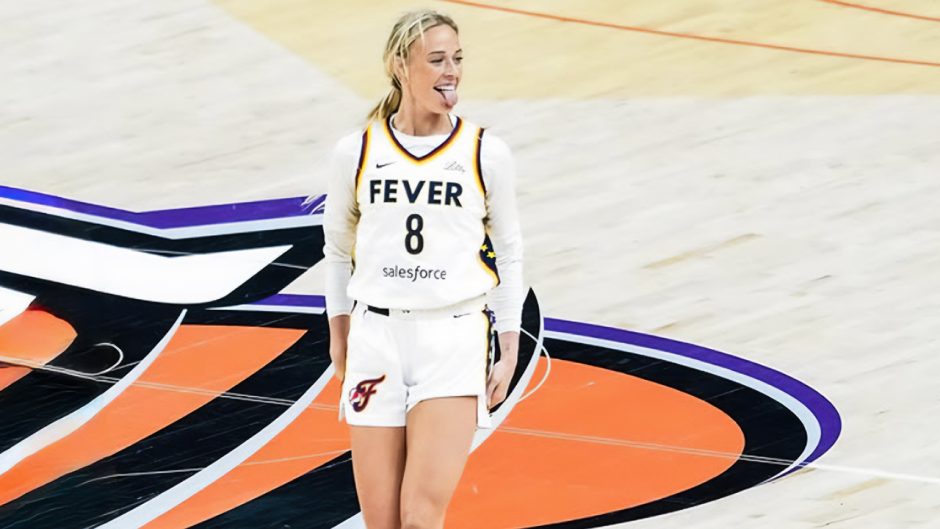
The numbers from her college years are not small. Across 129 career starts for the Missouri Tigers, Cunningham averaged 17.0 points, 5.4 rebounds, and 3.0 assists a game, finishing as a cornerstone of the program and a three-time first-team All-SEC selection. When the 2019 WNBA Draft arrived, the Phoenix Mercury selected her with the 13th overall pick, the first choice of the second round, making her the highest-drafted player in Missouri program history at the time.
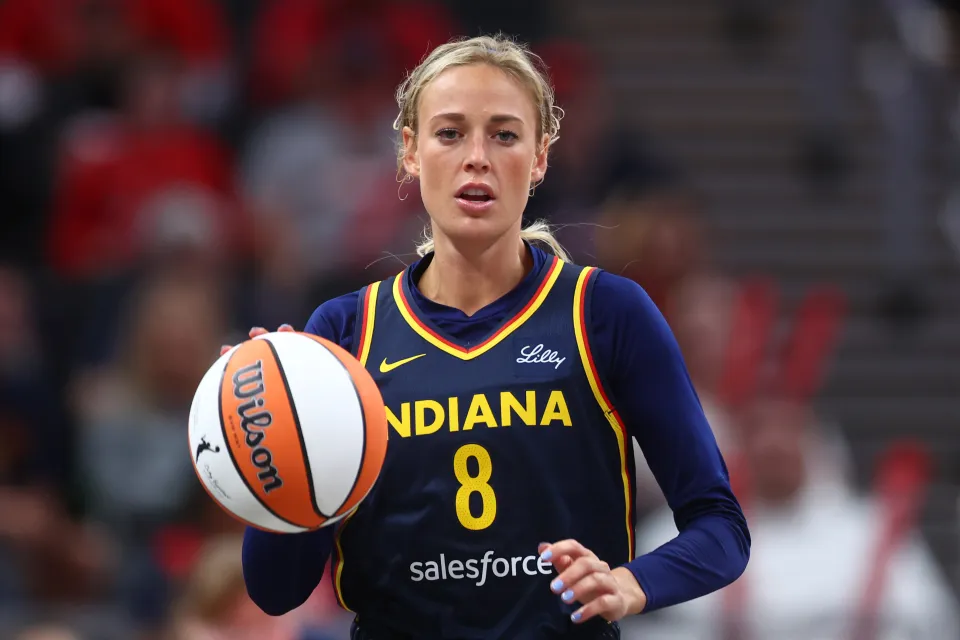
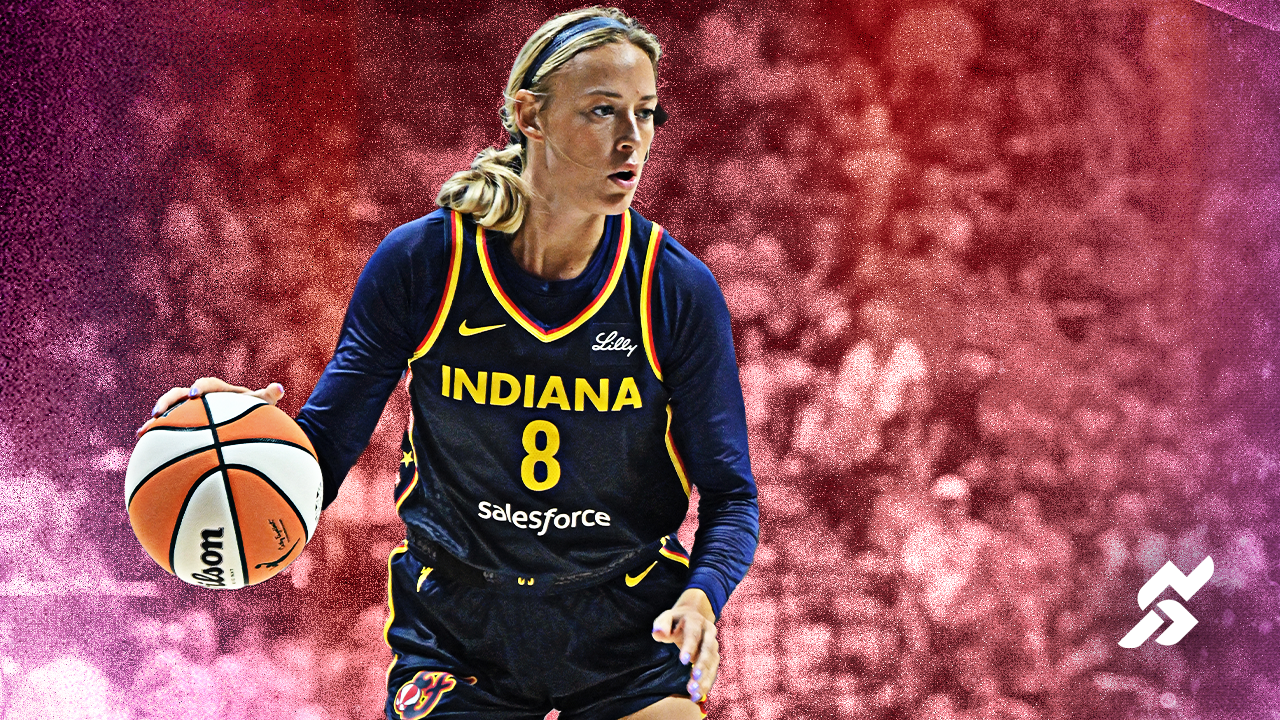
For six seasons in Phoenix, she built a reputation as a tough, capable guard with a reliable outside shot and a refusal to back down from anyone. Her best statistical year came in 2022, when she averaged 12.6 points across 28 games. Then, on the last day of January 2025, a four-team trade sent her to the Indiana Fever, the franchise that had become the center of gravity for the entire league. Landing in Indiana put her on the brightest stage women’s basketball had to offer, alongside a young roster the whole country was suddenly watching, and she did not waste the spotlight by playing small.
Her first season in Indiana was, by the raw numbers, a solid supporting role. Through 30 regular-season games she averaged 8.6 points, 3.5 rebounds, and a steal a night while shooting better than 43 percent from three-point range. The season ended early and painfully. In mid-August, a tangle in the paint left her with a torn MCL in her right knee, and the Fever ruled her out for the rest of the campaign. She confirmed the injury herself, on her own podcast, with the flat honesty that has become her signature. The Fever still captured the 2025 Commissioner’s Cup, and in April 2026 the franchise re-signed her, a vote of confidence in a player whose value to the locker room had outgrown her box score.
Why “Enforcer” Became a Compliment
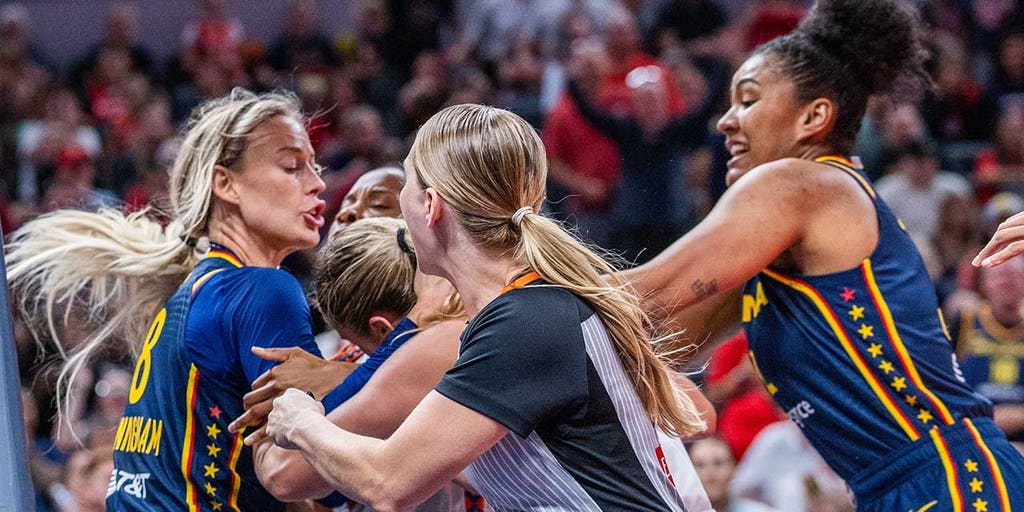
The label that follows Cunningham now is “enforcer,” and it stuck for a reason. During a June 2025 game against the Connecticut Sun, she was ejected after grabbing an opposing player and pulling her to the ground, retaliation for a poke to the eye that her teammate Caitlin Clark had absorbed earlier in the game. The clip went everywhere. To one set of fans, she was a hothead. To a far larger set, she was the teammate everyone wants, the one who notices when you are being targeted and decides, without a meeting or a memo, to do something about it.
She has been candid about the frustration underneath it, arguing publicly that officials do too little to protect star players from rough treatment. You can debate the on-court ethics of how she expresses that. What is harder to argue with is the conviction. She is not performing toughness for a camera. She is reacting, in real time, to a sense of fairness she clearly takes personally.
For a body-positive lens, the enforcer reputation matters more than it might seem. Women in sport are constantly managed into smallness, told to be gracious, to absorb, to not make a scene. Cunningham makes scenes. She takes up room, physically and emotionally, and the audience that has rallied around her is responding to permission as much as to basketball. Watching a woman refuse to be diminished, and watching the world reward her for it instead of punishing her, is its own quiet form of liberation.
And the world did reward her. In the weeks after the viral incidents, her following climbed, her name attached itself to brand deals, and her podcast became a destination rather than a side project. There is something worth sitting with there. A woman was loudest and most unapologetic, took up the most space and gave the least ground, and the result was not exile but expansion. The market that so often tells women to soften themselves looked at Cunningham doing the opposite and leaned in. That feedback loop, where boldness is met with belonging rather than backlash, is exactly the kind of shift body-positive culture has been arguing for, playing out in real time on a very public court.
The Same Athlete in a Swimsuit Spread and a Broadcast Booth
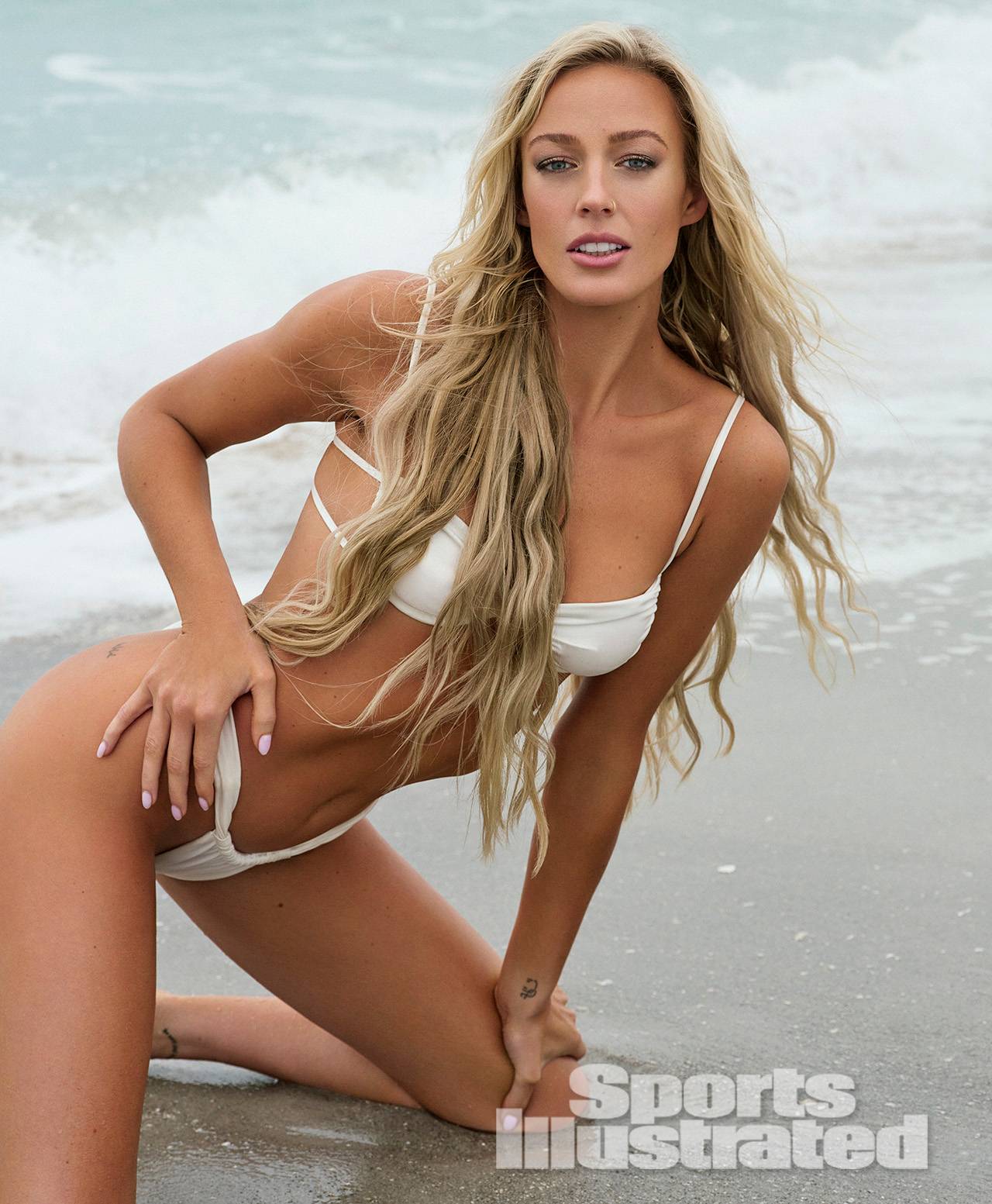
Here is where Cunningham’s story gets genuinely useful for anyone thinking about self-image. The woman who throws her body into a scrum to protect a teammate is the same woman who, in 2026, made her Sports Illustrated Swimsuit debut, photographed at a Florida resort as one of a small group of athletes featured that year. She announced the shoot, by her own account, on the same day she revealed she was stepping into a WNBA broadcasting role.
Think about how much that single day carried. A swimsuit feature, long coded as the most traditionally objectifying corner of sports media, and a broadcasting job, which is about authority and voice, announced together by the same person without apology or contradiction. Cunningham did not present one as the “real” her and the other as a compromise. She let both be true at once.
That refusal to split herself is the body-positive heart of the whole thing. The old script said a woman athlete had to choose a single legible identity. Be the serious competitor or be the glamour figure. Be respected or be desired. Cunningham, with a 6-foot-1 frame built for boxing out under the rim and a comfort in front of a camera that comes from years of analyst work, simply declines the choice. Her body is a tool on the court, a canvas in a photo shoot, and a non-issue in the booth, and she treats all three contexts as equally hers to occupy.
What keeps this from reading as mere brand management is the consistency of the person underneath. The same woman who credits her steadiness to her faith, who earned a black belt before she could spell taekwondo, who kicked field goals because the team needed a kicker, is the one stepping in front of a swimsuit camera. There is no rebrand, no reinvention, no careful repositioning. It is one continuous self, comfortable in a sports bra under the rim and comfortable in front of a lens, because the comfort was never about the outfit. It was about a relationship with her own body that she appears to have settled a long time ago.
What the WNBA’s Boom Is Really Selling
None of this is happening in a vacuum. The league around Cunningham has been on a tear. The 2025 WNBA season was the most-viewed full season ever on ESPN networks, averaging 1.2 million viewers, while attendance jumped roughly 34 percent year over year to more than three million fans. Those numbers are not just about wins and losses. They reflect a cultural shift in what audiences want from women’s sports, which is to say, more of the whole person.
For decades, the visibility problem for women’s basketball was framed as a marketing failure. The newer, truer read is that the league was being asked to apologize for the very things that make it compelling. Players have bodies that do extraordinary things and personalities that do not fit neatly into a highlight package. The current boom has coincided, not accidentally, with athletes being allowed to be loud, stylish, funny, opinionated, and physically imposing all at once.
Cunningham is a near-perfect case study because she is not the league’s leading scorer or its biggest name. She is a role player who became a phenomenon through sheer force of personality, more than 1.5 million Instagram followers, a co-hosted podcast called “Show Me Something,” endorsement deals, and a willingness to be fully visible. The lesson for any reader who has ever been told to tone it down is hard to miss. You do not have to be the best in the room to be the most yourself in it, and being the most yourself is frequently what people remember.
What Watching Her Actually Teaches the Rest of Us
Strip away the memes and the swimsuit headlines, and what is left is a fairly radical model of self-acceptance, demonstrated rather than preached. Cunningham, who is openly Christian and has credited her on-court confidence to her faith, does not talk in the polished language of a body-positivity campaign. She just lives in a way that quietly dismantles the rules so many women absorb without ever agreeing to them.
The rules say: make yourself smaller so others feel comfortable. She makes herself bigger when a teammate needs protecting. The rules say: pick a lane, athlete or beauty, serious or fun. She drives down the middle of all of them. The rules say: a woman’s body in a competitive sport should be efficient and invisible, while a woman’s body in a magazine should be decorative and silent. She lets her body be powerful in one frame and celebrated in the next and refuses to rank the two.
What women’s basketball is teaching, through players like her, is that confidence in a body is not a feeling you wait to arrive. It is a set of choices you make about how much space to take, how loudly to speak, and how many versions of yourself you are willing to show on the same afternoon. Cunningham keeps choosing the bolder option, and a growing audience keeps choosing to watch. The next time you catch yourself shrinking out of habit, picture twenty-two seconds, a raised finger, and a woman who decided the moment was hers. Then borrow a little of that, and stand exactly where you are.