There’s a post that keeps getting rewritten on the bra-fitting forums, and the details barely change from year to year. A woman measures a 36GG. She’s autistic, or she has sensory sensitivities she’s never bothered to put a name on, and the physical facts are the same either way: underwire feels like a splint against her ribs, lace registers as sandpaper, and the seam that crosses the middle of almost every full-bust cup is a low-grade alarm that never shuts off. She’s done the professional fittings. The fitters keep handing her the same engineered underwire styles, because at her size, they tell her, the wire isn’t optional. The comment section fills up with women describing the identical dead end. Everything soft can’t hold them. Everything that can hold them hurts. And somewhere in the thread, someone always says the thing she’s already heard from her mother, her fitter, and at least one ex: you just get used to it.
You don’t have to get used to it. I want to be precise about why this problem exists, because once you understand what an underwire actually does, you can spot the handful of brands that replaced it with real engineering instead of just deleting it and calling the result a bralette. That distinction, wire removed versus wire replaced, is the entire article.
Why Wire-Free Usually Means Support-Free
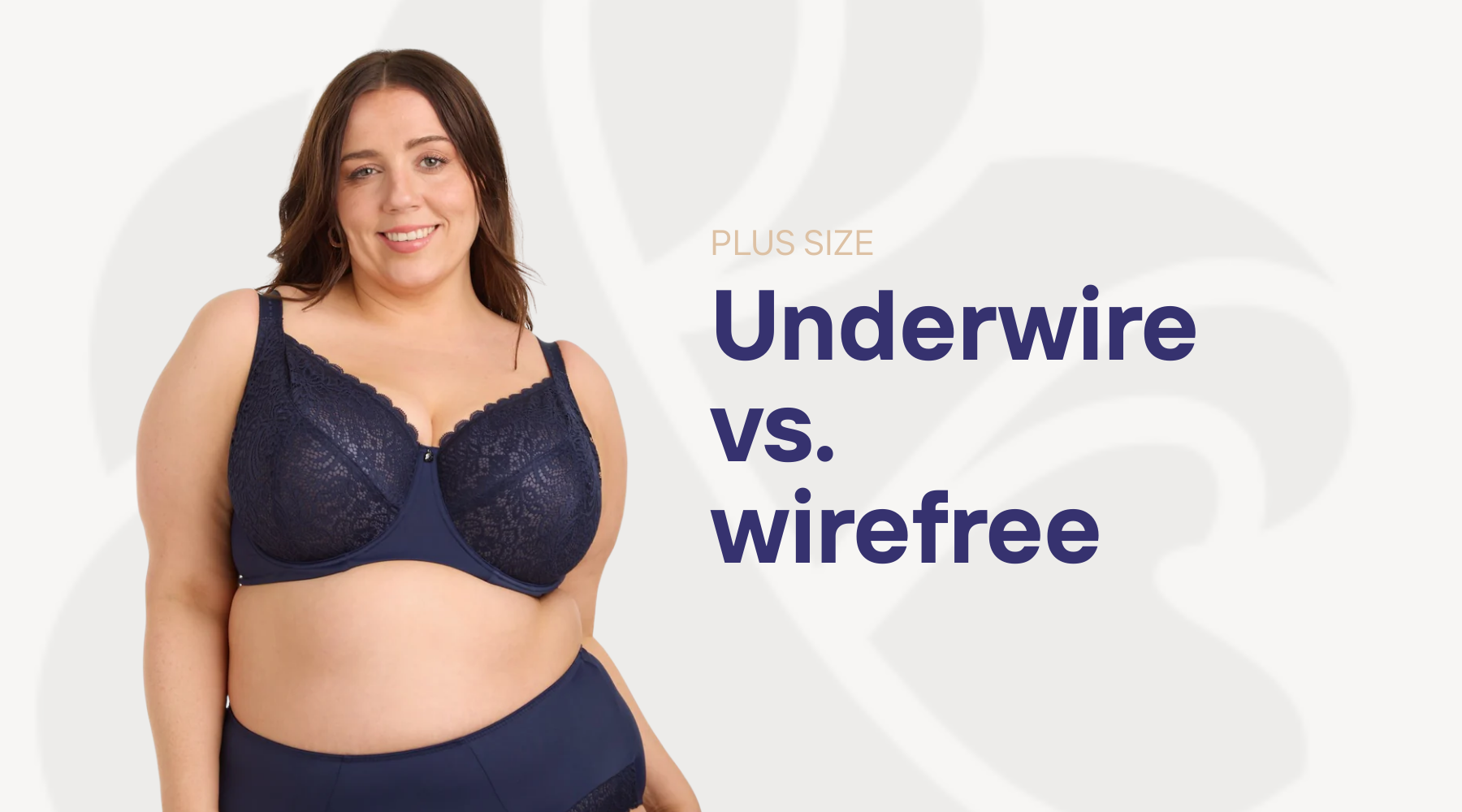
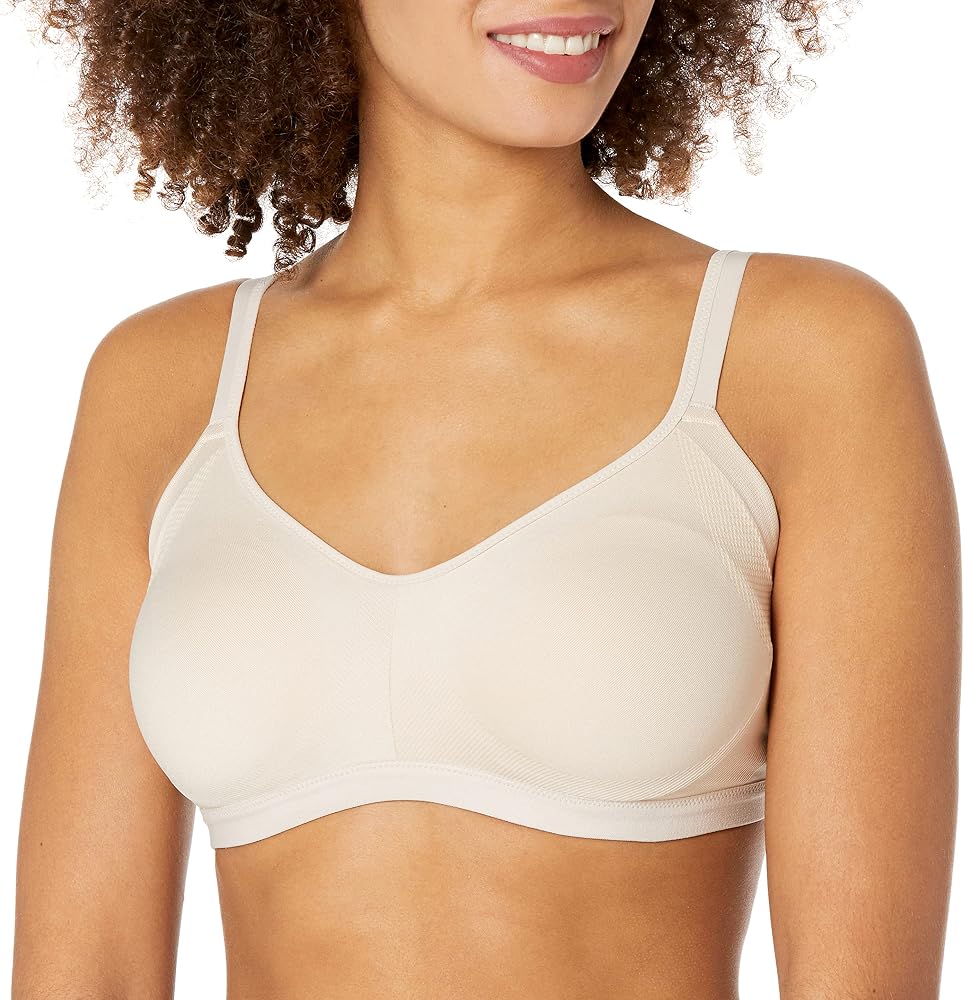
An underwire does one job: it’s a rigid frame that anchors the bottom of the cup to the band, so the weight of the breast transfers into the band and around your torso instead of hanging off your shoulders. Roughly eighty percent of a bra’s support is supposed to come from the band. The wire is what makes that possible at heavier cup volumes, because soft fabric alone deforms under load. Pull the wire out of a standard pattern and the cup collapses downward, the band rides up in back, and the straps take over the work, which is how you end up with trench marks in your shoulders by lunch.
So when a brand deletes the wire without redesigning the architecture, you get the classic seamless bralette: fine at a B cup, decorative at anything past a DD. That’s the entire wire-free market most women have met, and it’s why the fitters keep saying the wire is mandatory. It isn’t. It’s just the cheapest way to solve the physics.
The brands that solved it without the wire all use some version of the same three tricks. One: an internal sling or crisscross panel inside the cup, a second layer of fabric that cradles the breast from below and shunts the load sideways into the band. Two: a taller, wider, denser band, usually a powernet or a heavy-gauge knit with a high elastane content, so there’s enough fabric tension to actually carry weight. Three: wide, cushioned, non-stretch straps that stabilize without digging, because stretchy spaghetti straps under real load are a shoulder injury on layaway. When you’re evaluating any wireless bra above a DD, flip it inside out and look for those three things. If they’re not there, the product page is lying to you.
What Sensory-Friendly Actually Means, in Construction Terms
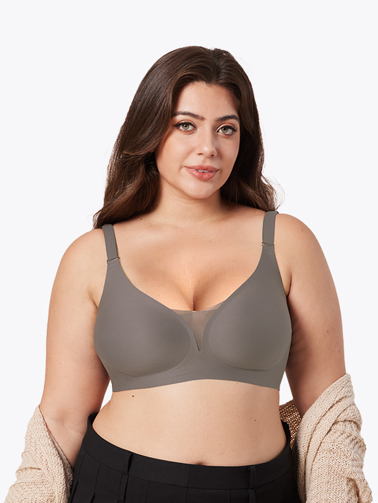
The sensory half of this brief is its own spec sheet, and it’s worth being blunt about it, because most lingerie copy treats comfort as a mood instead of a set of measurable decisions. If textures genuinely hurt, and for a lot of neurodivergent women they genuinely do, this is what you’re checking for. No wire, obviously. No lace anywhere it touches skin, and ideally not on the garment at all, because lace migrates. Flat or bonded seams instead of raised sewn ridges, especially across the apex of the cup. Covered elastic, meaning the stretchy bits are sandwiched inside fabric rather than sitting bare against your ribcage. Printed care labels instead of sewn-in tags, or tags positioned where you can remove them without opening a seam. And a closure you can live with, which splits people two ways: some want a smooth pullover with no hardware at all, others need a hook-and-eye because pulling a tight band over their head is its own sensory event. Both camps are represented below.
One honesty note before the list, because I don’t write fake try-on content. I haven’t wear-tested nine bras across a size range I don’t personally wear. What I’ve done is read the construction of each of these the way I read fit samples for six years, pulled the verified size charts from the brands themselves, and cross-checked all of it against what heavy-volume buyer reviews and the fitting communities consistently report. Where a brand has a flaw, I’ll name it. Two of these picks have lace on them, and I’ll tell you exactly where it sits so you can decide, not the brand.
The Bras, Compared
| Bra | Why it works for sensory needs | Size range | Where to buy |
|---|---|---|---|
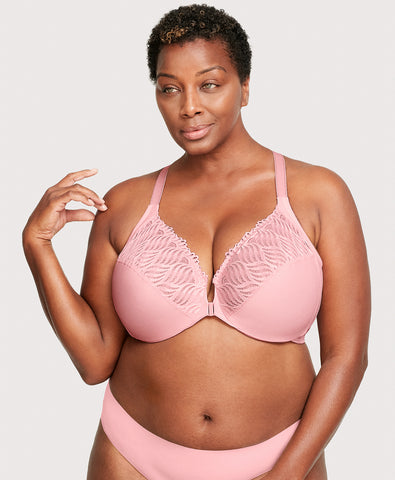
| Sugar Candy Fuller Bust Everyday Bra | Fully seamless knitted body, heat-molded cups, internal U-sling does the wire’s job, pullover with no hardware, no lace anywhere | XS-XXL, covering roughly 30-34 F-HH, 36-38 F-H, 40 F-GG, 42 F-G | Amazon, specialty bra retailers |
| Glamorise MagicLift Cotton Support Bra (1001) | Wire-free crisscross inner-bust band replaces the wire, cotton-blend cups, wide cushioned straps; lace overlay on upper cup (see caveat in text) | 36B-56J | Amazon, Glamorise, JCPenney |
| Glamorise MagicLift Seamless Wirefree (1006) | The lace-free MagicLift: seamless knit body, same under-and-over support banding, no wire, no trims | Full-figure bands into the 50s, cups vary by colorway | Amazon |
| Soma Embraceable Wireless Unlined Full Coverage | Single smooth knit layer, no lace, no lining seams, hidden sling inside the cup, U-back spreads the pull, wide soft straps | 32A-44H (includes DDD and G) | Soma |
| Cacique Cotton Unlined No-Wire Bra | Double-layer stretch cotton cups with no padding or lace, wide bottom band, wide adjustable straps, hook-and-eye closure | 36B-50H | Lane Bryant, Amazon resellers |
| Curvy Couture Cotton Luxe Unlined Wireless | Breathable cotton against the skin, cushioned bottom band, wide smooth wings; narrow stretch-lace edge at the neckline (see caveat) | 36C-46H | Amazon, Target |
| Knix Revolution Busty Bra | Bonded construction instead of sewn seams, smooth matte fabric, no lace, engineered side wings; the Busty version adds cup depth the standard cut lacks | Part of Knix’s 99-size wireless range, bands to 48, cups to H | Nordstrom, Knix |
| Playtex 18 Hour Ultimate Lift Wirefree (4745) | No wire, cushioned straps, hook rows that scale with size; sewn cup seams are present, so apex-sensitive buyers should pass | 36B-46DDD | Walmart, JCPenney, Kohl’s |
| Warner’s Easy Does It Wirefree | Seamless stretch knit, dig-free covered band, light lining, no lace, no tags that bite | Alpha sizing XS-2XL (some styles to 3XL); realistically tops out near DD equivalence | Walmart, Kohl’s, Macy’s |
The Direct Answer for the G-and-Up Cup: Sugar Candy

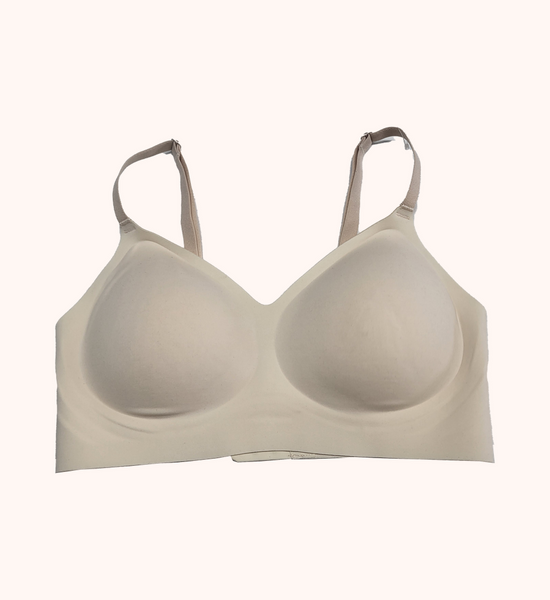
If the woman in that forum post asked me for one order to place tonight, it’s this one. Sugar Candy is the fuller-bust line from Cake, an Australian maternity brand that spent years solving exactly this equation for pregnant and nursing bodies, which are the most seam-intolerant, wire-intolerant bodies in the market. The Everyday bra is a fully seamless knit tube with heat-molded cups and an internal sling, their U-Sling, that mimics what a wire frame does from the inside. No hardware, no lace, no sewn ridge across the apex, nothing to unpick. You pull it over your head and it’s done.
The construction detail I respect most: the support comes from knitted rib panels of varying density, so the “structure” is engineered into the fabric itself rather than sewn onto it. That’s expensive to do, which is why the price sits around $74 and why almost nobody else does it. The sizing runs alpha, XS through XXL, and it’s built exclusively for F cups and up, so unlike every other alpha-sized bra alive, the fuller bust isn’t an afterthought stretched to fit. A UK 36GG lands inside the range. The honest limits: the silhouette is rounded and casual rather than lifted and separated, and at the largest bands the cup ceiling drops. For lounging, work-from-home, and any day the skin says no, this is the category winner.
The Size-Range Monster: Glamorise, With One Caveat You Deserve to Hear
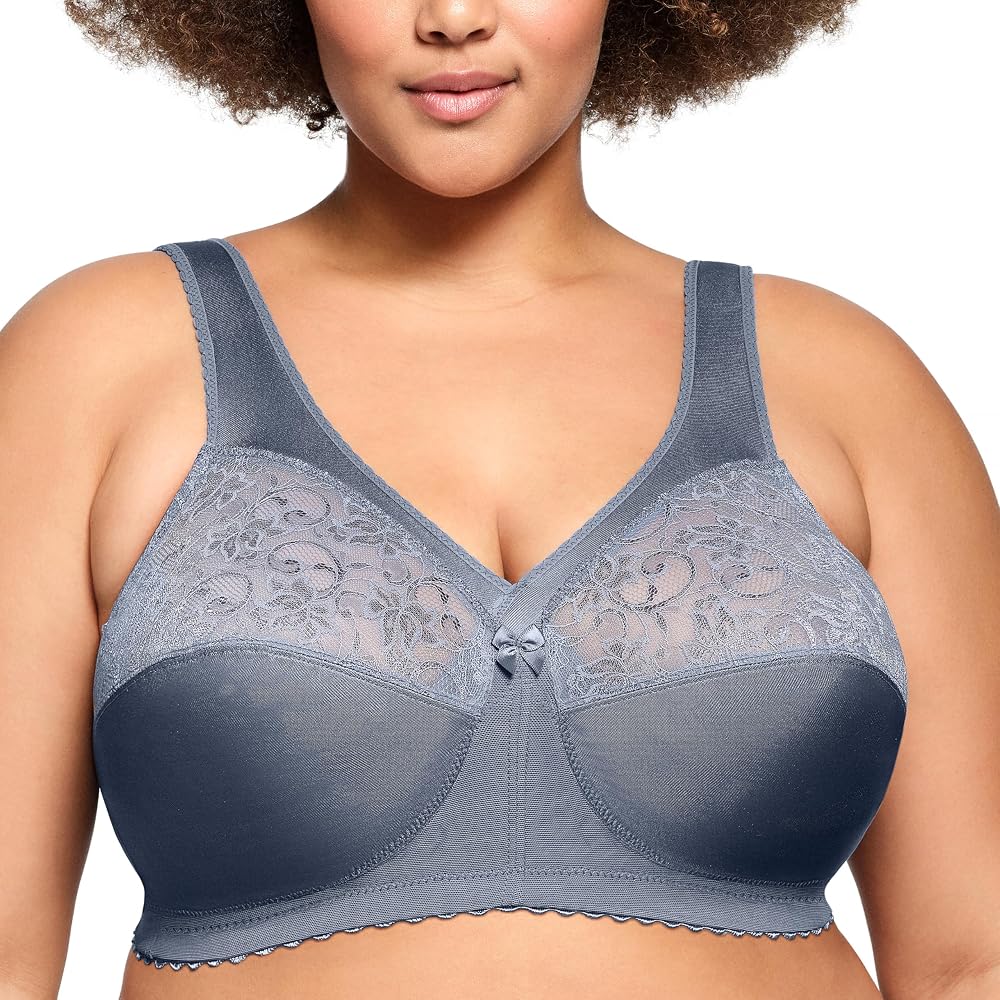
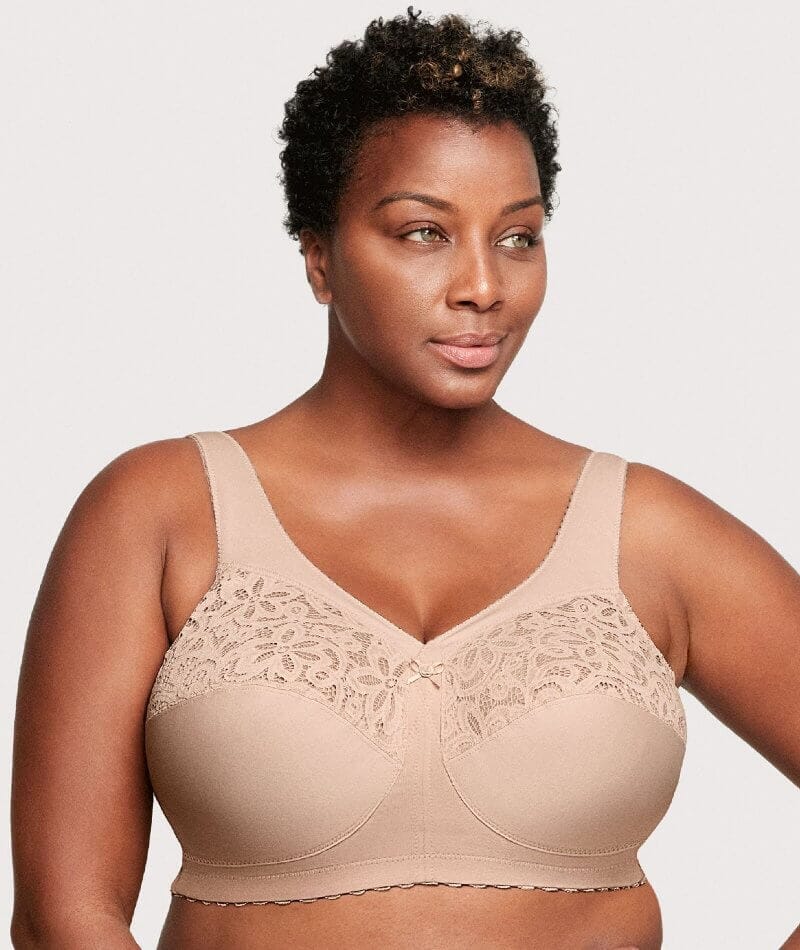
Glamorise has been building wire-free support bras since before wireless was a marketing word, and nobody, and I mean nobody, touches their size architecture. The MagicLift Cotton Support Bra runs from a 36B to a 56J, and the brand’s wider wireless catalog pushes past even that, into K cups. Read that again if you’ve been told your size doesn’t exist without a wire. The mechanism is a cushioned band that crisscrosses under and over the bust, a fabric suspension bridge doing the wire’s load-bearing job, plus wide padded straps and a hook-and-eye that adds rows as the sizes climb. Buyer data backs the engineering: verified reviewers in J cups on large bands describe it as the rare bra that actually positions them forward instead of to the sides.
Now the caveat, because the product photos hide it in plain sight: most classic MagicLift styles, including the cotton one, carry a lace overlay on the upper cup. It sits over a lined cup rather than raw against the nipple, and plenty of sensory-sensitive buyers tolerate it fine, but one recent verified reviewer called the material scratchy out of the box, and Glamorise’s own response was that it softens after a couple of washes. If any lace on the garment is disqualifying, and for a lot of you it rightly is, redirect to the MagicLift Seamless Wirefree, style 1006, which delivers the same under-and-over banding in a knit body with no lace and no trims. List price on the cotton style is $60, and Glamorise runs sales so constant that paying full price is basically a rounding error.
The Smooth Operator: Soma Embraceable
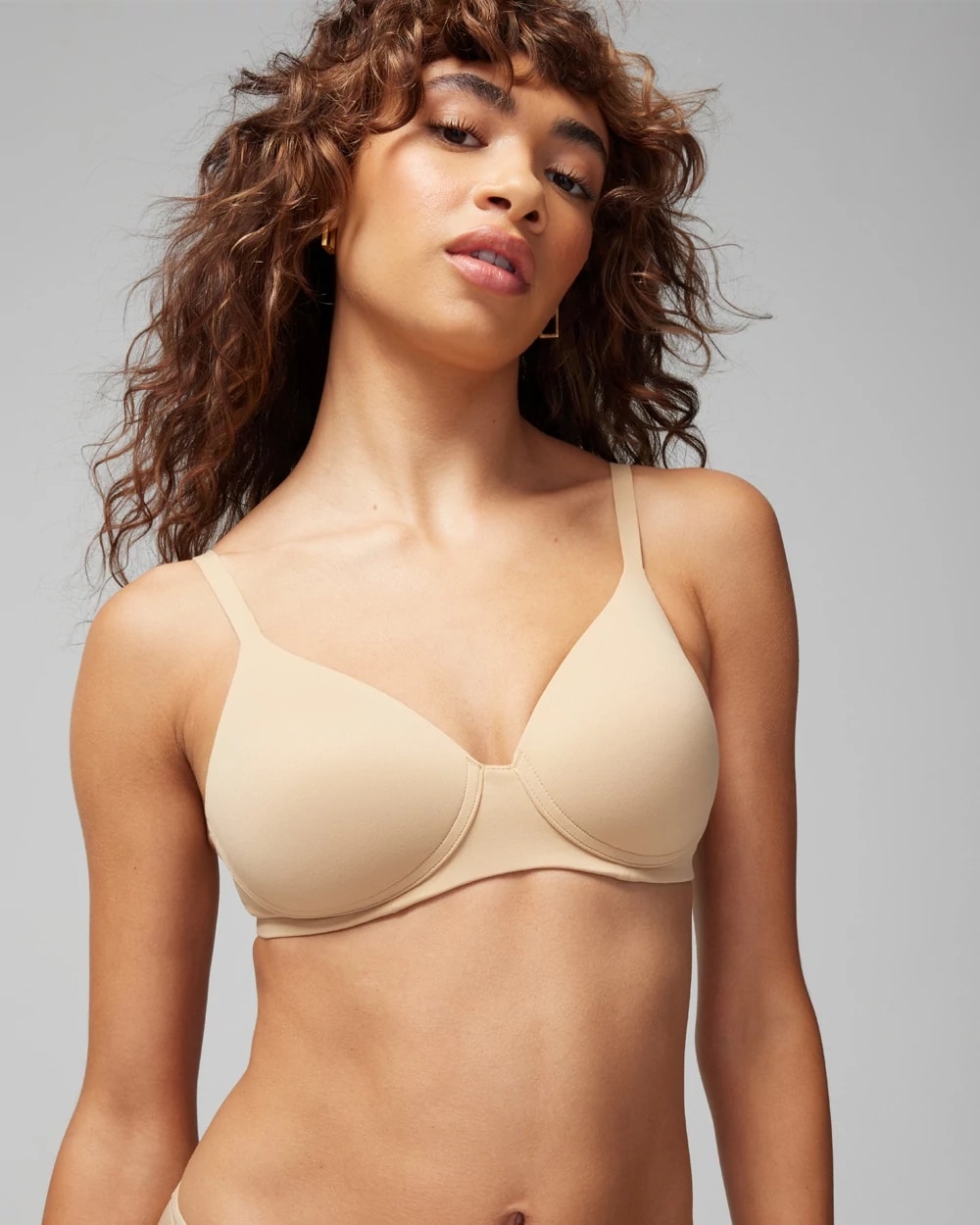
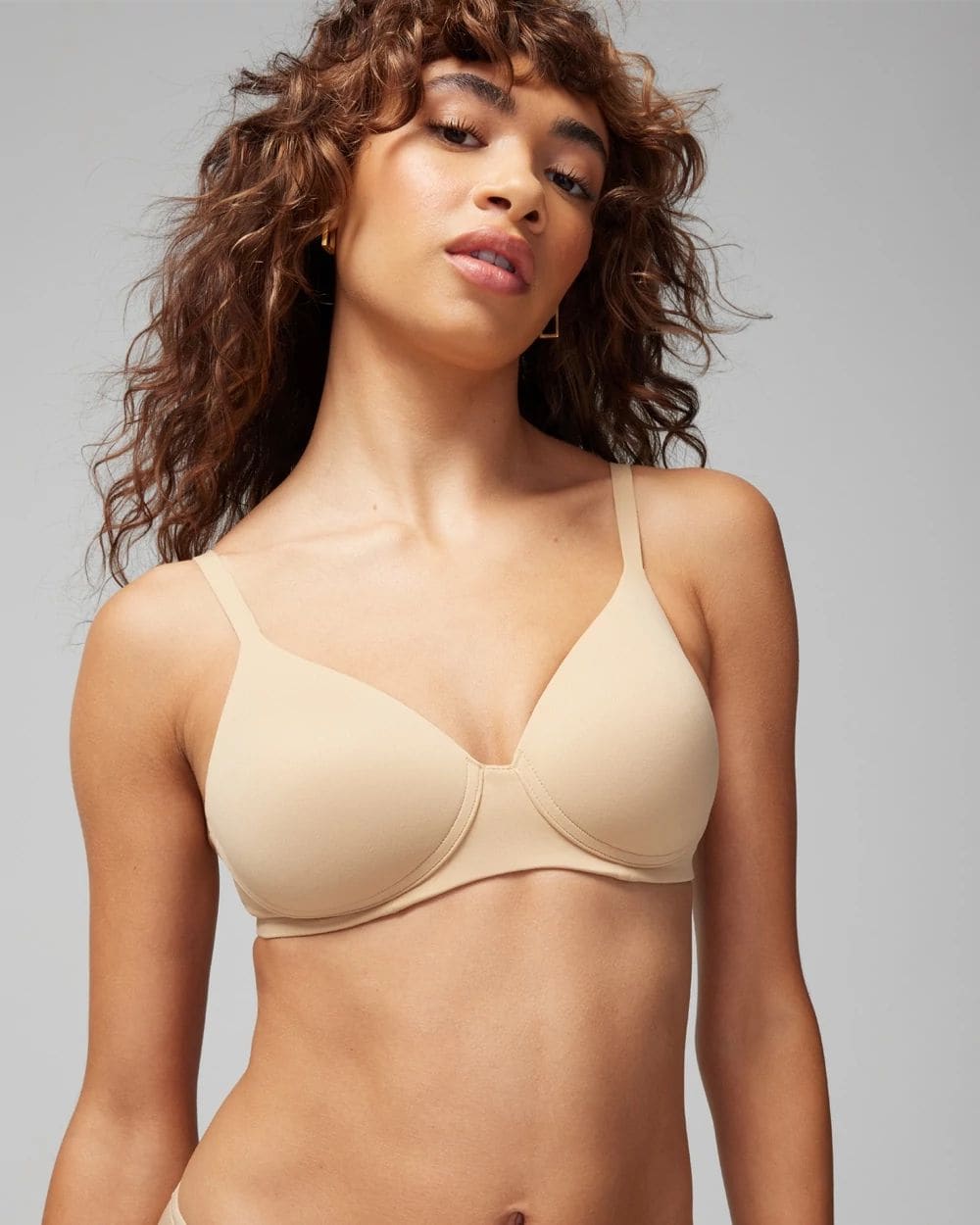
Soma’s Embraceable Wireless Unlined Full Coverage is the bra the gap evidence kept surfacing by name, and having read the spec sheet, I get it. The fabric is a dense nylon-elastane knit, the kind of hand-feel Soma built its whole brand on, with no lace, no padding, and no sewn seam ridges on the body of the cup. The support plumbing is discreet: an added sling inside each cup, a U-shaped back that balances the pull between neckline and band, and wide soft straps that stay put. It reads like a pretty everyday bra, not adaptive equipment, which matters more than the industry admits.
The catch is reach. Bands stop at 44 and cups at a US H, so this is the pick for the sensory-sensitive DD-through-H woman on a small-to-mid band, not for the far end of the Glamorise range. At $52, with frequent two-for promos, it’s the one I’d send a friend to try in a mall first, because Soma boutiques will fit you without pushing you back onto a wire.
The Cotton School: Cacique and Curvy Couture
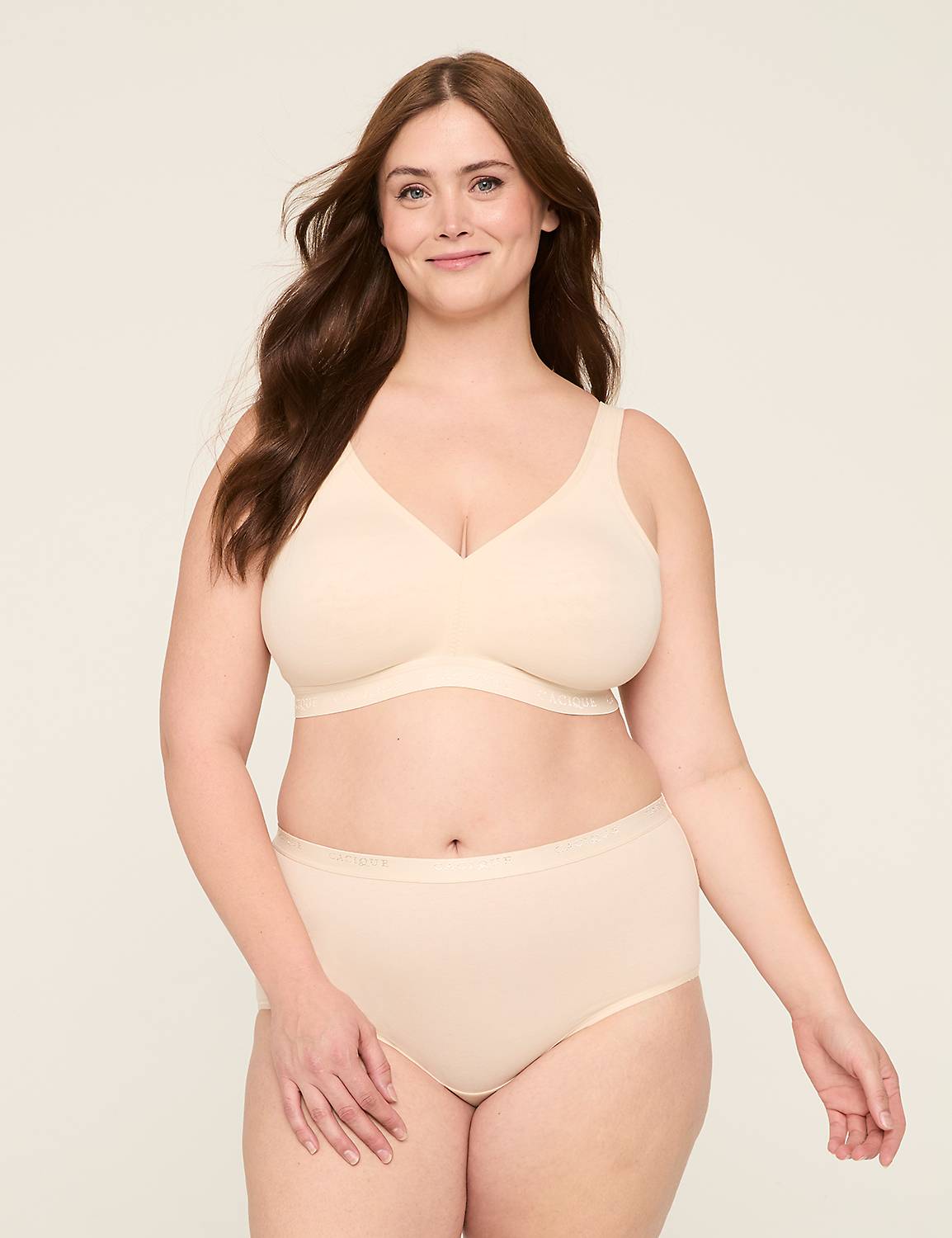
Some skins want cotton and nothing else, and synthetic microfiber, however smooth, feels like a plastic bag. Two builds serve that brief with real cup depth. Cacique’s Cotton Unlined No-Wire is Lane Bryant’s quiet workhorse: double-layer stretch cotton cups with no padding and no lace, a wide bottom band doing the support work, and wide adjustable straps. It runs 36B to 50H, which makes it one of the very few cotton wireless options that follows plus bands into the upper range. The double-layer cup is the trick worth noting, since two light layers contain and smooth without a seam ridge or a foam insert.
Curvy Couture’s Cotton Luxe Unlined Wireless is the same philosophy with more tailoring: cotton against the skin, a cushioned bottom band, and wide smooth wings across the back, in C through H cups for $49. My one flag, and it’s the same honesty rule as the Glamorise: there’s a narrow band of stretch lace finishing the neckline. It’s the flat, soft variety, not the crunchy scalloped kind, but if your rule is zero lace contact, stay with the Cacique.
The Bonded-Seam School: Knix
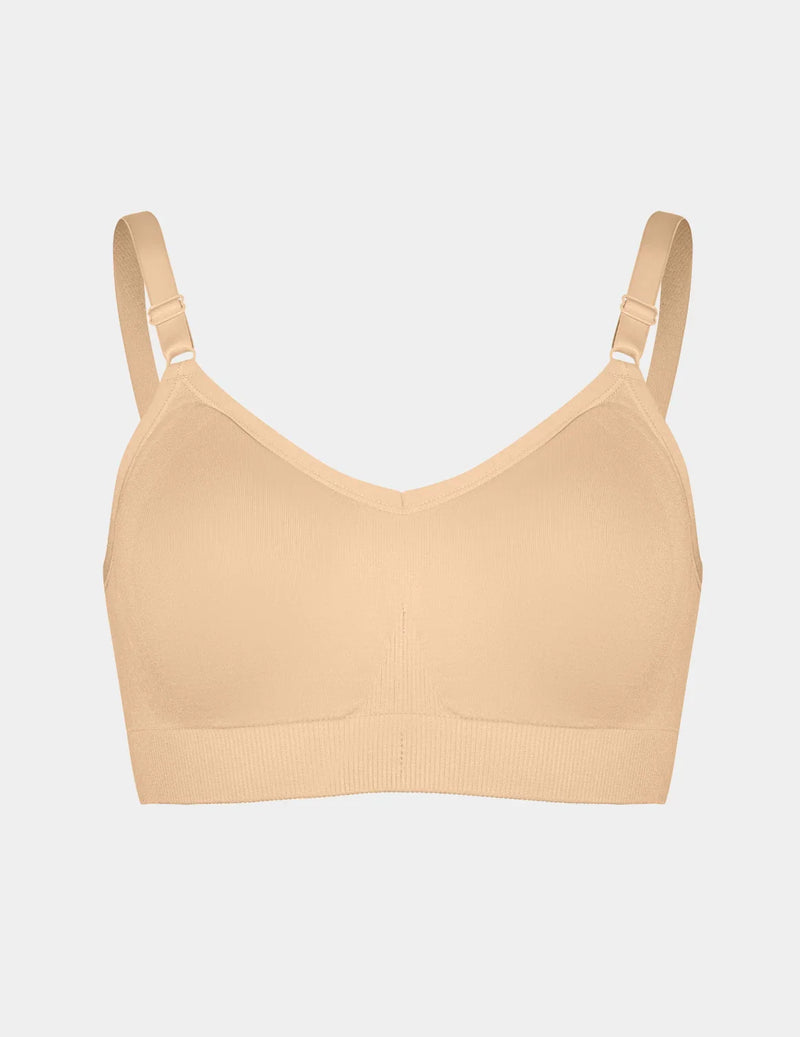
Knix approaches the seam problem the way an athleisure engineer would: don’t sew it, weld it. Their Revolution line uses bonded construction, edges fused flat rather than stitched into ridges, on a smooth matte fabric with zero lace. A few years ago that would’ve been irrelevant to this article because the cups stopped shallow, but Knix pushed its wireless range to ninety-nine sizes, with bands to 48 and cups to a US H, and built a dedicated Busty version of the Revolution with the extra cup depth fuller busts actually need. The fitting communities rate the support as real but medium: excellent containment, modest lift, happiest under a 40 band. Pricing sits in the premium tier north of the cotton picks, so treat it as the upgrade buy once you know bonded seams are your texture.
The Budget Shelf, With Honest Ceilings
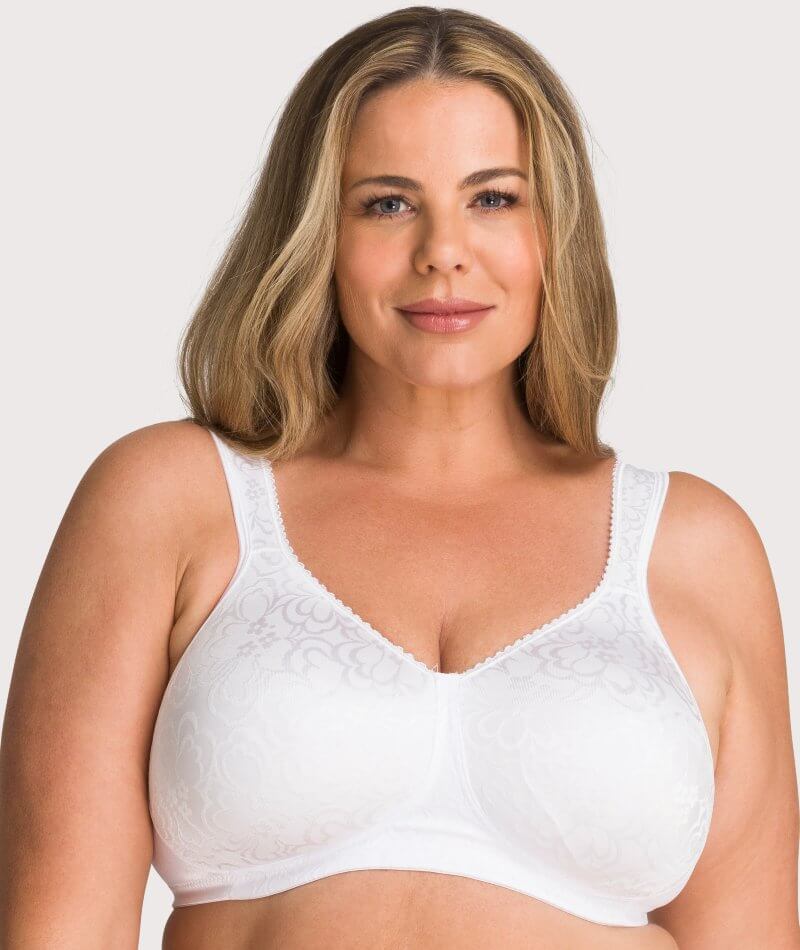
Three names come up constantly in these threads, and each earns a qualified place. The Playtex 18 Hour Ultimate Lift Wirefree is the accessible-anywhere option, on the rack at Walmart deep into the plus bands and up to a DDD cup, with cushioned straps and closure rows that scale up with the size. Its compromise is the very thing some of you can’t have: traditional sewn cup seams, including across the apex. If seams read as neutral to you and lace is the enemy, it’s a fine cheap answer. If seams are the trigger, skip it entirely.
Warner’s Easy Does It is the opposite trade. It’s genuinely seamless, with a covered dig-free band and a soft stretch knit, but it’s alpha-sized to a 2XL and honestly built for the DD-and-under bust, so it belongs to the reader with a bigger band and a moderate cup rather than the GG crowd. And Coobie, the perennial forum suggestion, deserves its reputation for softness and its reality check on support: even the Full Size version officially fits up to a 42DD, and at G volumes it functions as a sleep and lounge layer, not a bra. Recommend it for the days nothing else is tolerable, not for the workday.
How to Vet Any Bra Before It Touches Your Skin
Whatever you order, run the same inspection I’d run on a fit sample. Turn it inside out first thing, because the inside is the surface you live in, and map every seam with your fingertips before your torso has to. Check the fiber content tag while you’re there: high cotton content for breathability, or a dense nylon-elastane knit for smoothness, and be suspicious of anything crunchy that claims to be soft. Look inside the cup for the sling or second layer, because if the cup is a single ply of stretch fabric, it will not hold a G, full stop. Wash it once before the first wear, since sizing chemicals on new fabric are their own texture problem, and that stiff-out-of-the-box feel often halves after one cycle. And buy from somewhere with free returns, then actually use them. Sensory fit can’t be predicted from a product photo, and the brands above all know it, which is why most of them run generous return windows.
Where the 36GG Clicks Buy
Back to the woman from the post, because she deserves a straight answer instead of a comment section. Order the Sugar Candy Everyday first, in the alpha size that matches her band and bust measurements, for the days the skin outranks the silhouette. Order the Glamorise MagicLift Cotton second, in a 36J to test against her GG-and-shifting measurements, for the days she needs actual lift under real clothes, with the seamless 1006 as the swap if the lace overlay fails inspection. That’s two bras, two different jobs, and neither one requires getting used to anything. The links are above.