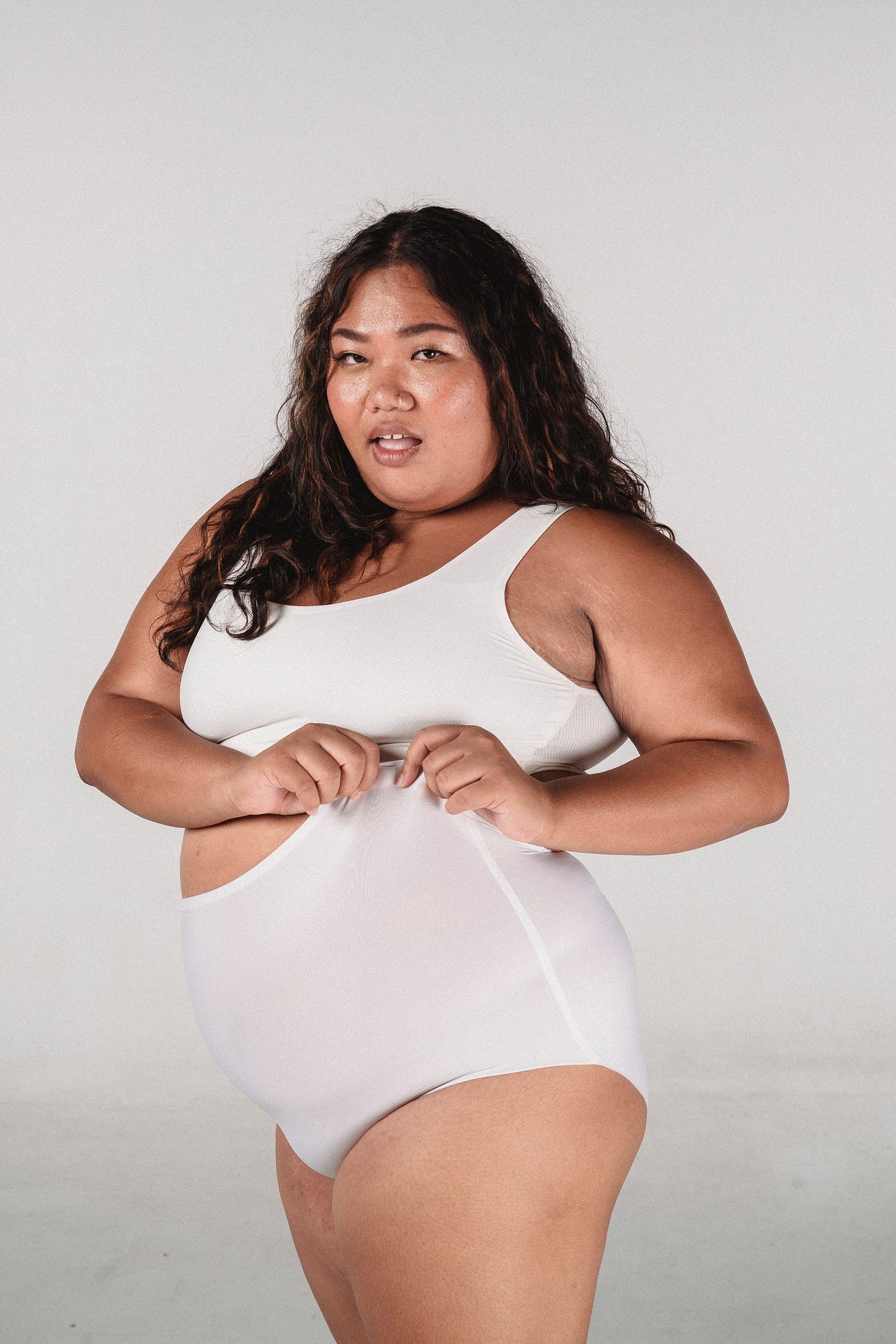
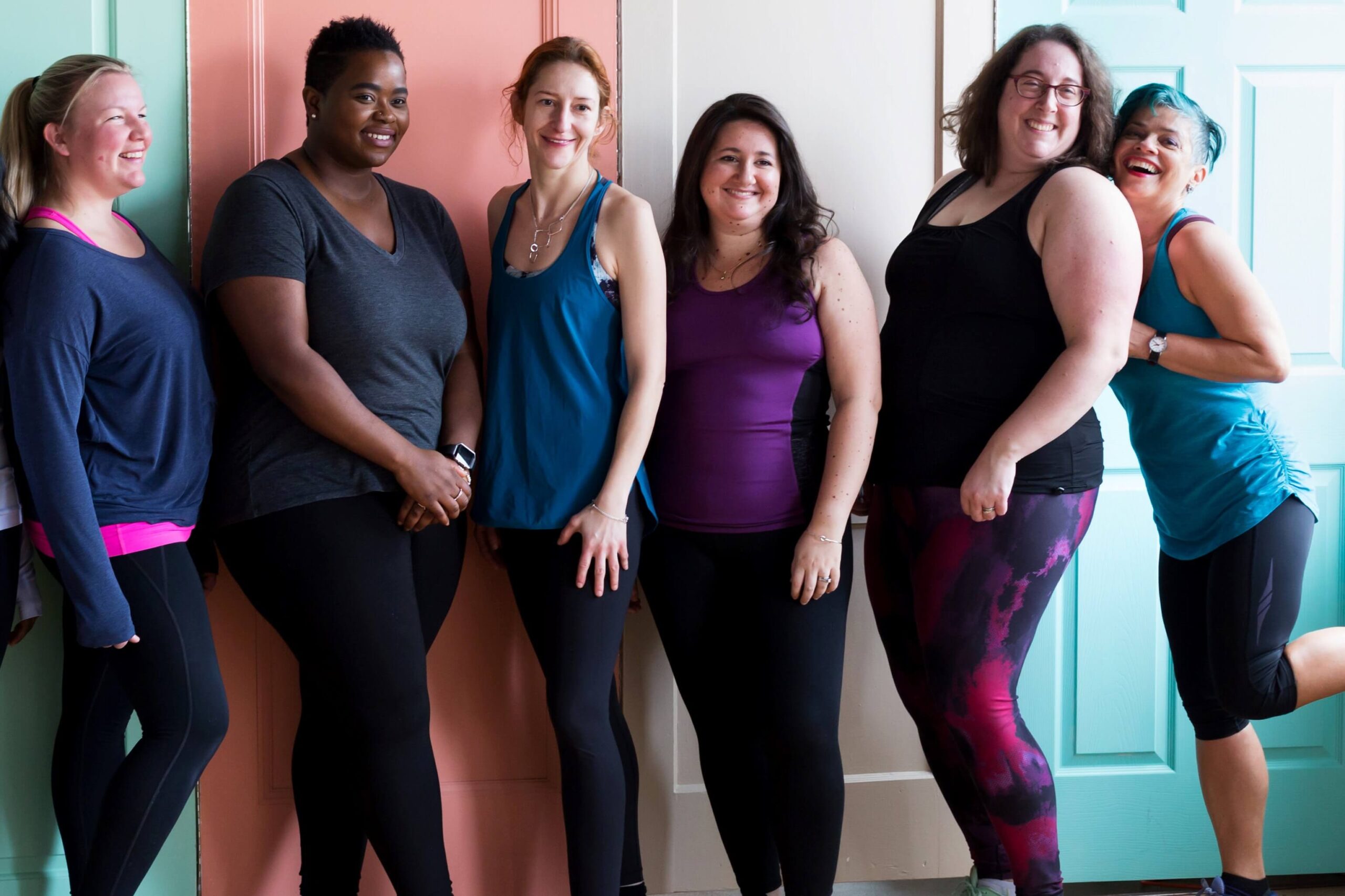
Plus-size yoga is not just yoga in a bigger size. It is yoga with a specific set of garment-failure modes that thin yoga writers never have to think about, and that the brands themselves often do not test for at the high end of their size ranges. You find this out about twenty minutes into your first studio class, usually in child’s pose, when you realise the inner-thigh seam of your leggings has rolled, the waistband has folded down on itself, your cotton tank has travelled up your back, and you are supposed to be resting.
That is the moment yoga clothing stops being a vanity question and becomes an infrastructure question. This guide covers what actually fails, why it fails, and what to buy instead, so you can spend your attention on your breath rather than on your waistband.
The 5 Yoga-Specific Plus Wardrobe Failure Modes
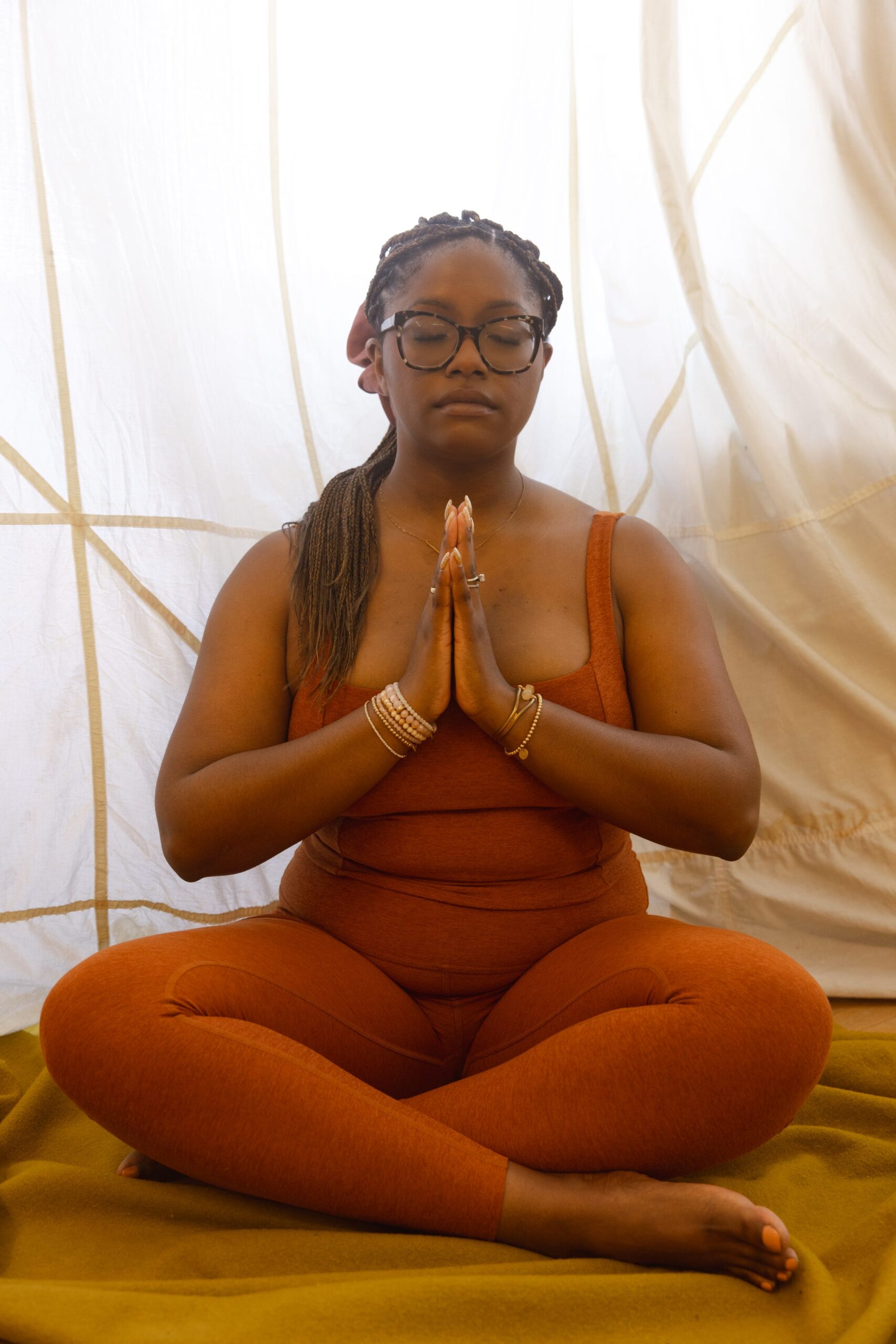
Start with the failures, because if you do not know what you are looking for, every legging looks the same on the website. These five come up again and again in plus-size practice.
Seam migration. The inner-thigh seam on most leggings is sewn straight along the centerline of the inner leg. When a plus-size body folds forward, in forward fold, child’s pose, pigeon or any seated wide-leg posture, the soft inner-thigh tissue compresses against itself and the seam rolls inward. By the end of a long class the seam has worked its way into the inner thigh and left a red welt. Brands that use a gusset, meaning a triangular fabric panel at the crotch, or a flatlock seam reduce this dramatically. Most fast-fashion plus leggings do neither.
Top ride-up. Cotton tanks, modal tanks, anything with a relaxed hemline will travel up your back when you go into downward dog, and you will not notice for several breaths. The fix is either tucking, longer-line cuts, or fitted compression tops.
Bra spillage. Plus-size sports bras at low impact, which is what yoga needs, often skimp on the band. The band rides up the rib cage in any inversion or supine posture and the cup shifts with it. This is where Glamorise, Cuup and Spanx earn their keep, and where most discount brands fall down.
Ankle gathering. Full-length leggings on shorter plus-size bodies gather at the ankle in a thick fabric pool. In any seated posture where your ankle presses into the mat, that pool becomes a pressure point. 7/8 lengths and crop lengths solve it. Not every plus brand offers 7/8 in the extended run, so it is worth checking.
Mat-grip socks. Optional, but if you sweat into your mat your feet will slide in down dog. Plus-size grip socks exist, though the calf opening is often too tight for fuller calves. Cut the sock at the top of the foot if you need to and treat them as toe-grip only.
These five failures are what every garment below is graded against. Not aesthetics, and not what the model looks like in the product photo. Whether the seam holds in child’s pose, whether the waistband stays put in pigeon, whether the bra cup stays in place in a twist.
Why Plus-Size Yoga Wardrobe Has Lagged So Far Behind
Credit where it is owed. The reason there is now a real conversation about plus-size yoga clothing, and why brands like Beyond Yoga, Universal Standard and Athleta have built actual plus lines instead of token extended sizing, is because of teachers who refused to disappear from the practice.
Jessamyn Stanley, whose 2017 book Every Body Yoga was the first mainstream plus-positive yoga manual most of us had seen, and who founded Underbelly Yoga as a digital practice space, has been consistently blunt about the wardrobe problem. Dianne Bondy, the Canadian teacher behind the 2019 book Yoga for Everyone, has taught for years on accessible practice and has been vocal that accessibility includes what you can actually find in your size. Anna Guest-Jelley founded Curvy Yoga and wrote Curvy Yoga: Love Yourself and Your Body a Little More Each Day, built around a curriculum for larger bodies. If you want to go deeper than this guide, those three are where to start.
The underlying point all of that work makes is worth stating plainly: the wardrobe matters because the wardrobe affects the asana. If your waistband digs into the soft tissue at your hip crease, your forward fold will be shallower. If your bra band rides up, you will brace your shoulders in inversions. The clothing is not separate from the practice. It shapes the practice. And the gap between what plus-size students need and what the industry offers is not an accident, it is a market failure, which means you have to shop around it deliberately.
Bottoms: The High-Waist vs. Crossover-Waist Question
Bottoms first, because bottoms are where most plus-size yoga wardrobes live or die.
At the upper end of the plus range you have two real waistband options: high-waist, meaning a straight rise that sits at or above the natural waist with usually 4 to 5 inches of waistband, or crossover-waist, meaning a v-cut or wrap-cut band that sits below the navel in front and angles up at the sides. Each has a real argument.
The high-waist argument is structural. A high waistband that sits above the soft belly tissue holds the leggings in place through inversions, twists and forward folds. It does not dig into the navel because there is no waistband at the navel; the band is anchored higher, at the natural waist where the rib cage flares. For most plus bodies that is more comfortable in dynamic flow. Beyond Yoga’s Spacedye Caught in the Midi Legging (Plus) and the High-Waisted Practice Pant (Plus) are both built on this principle, with a wide, soft, double-layered band rising to roughly the bottom rib.
The crossover-waist argument is comfort. A v-cut band that dips down in front does not press into an apron belly. Where belly soft tissue sits over the front of the leggings, a flat high waistband can fold down on itself, which is the single most common legging failure in plus practice. A crossover waist gives the belly somewhere to sit without folding the fabric. The trade-off is that crossover waists slide more in inversions and need a hand-check between postures.
The practical answer for most plus-size practitioners: high-waist for vinyasa, gentle flow and any class with inversions; crossover for restorative, yin and anything mostly seated or supine. If you can only buy one, buy high-waist. It is more versatile.
The other variable is length. Full-length leggings on plus bodies under about 5’6″ will pool at the ankle. 7/8 lengths and crops solve that. Both expose more of the calf, which some practitioners are not comfortable with, and that is a personal call rather than a yoga-asana call. The yoga itself does not care about your calf. How covered you want to feel in a public studio is its own separate and entirely legitimate consideration.
Four Leggings Built to Survive Child’s Pose
What follows is the child’s-pose standard: the inner-thigh seam should not migrate, the waistband should not roll, the ankle should not gather aggressively, and the fabric should not go sheer when stretched over the seat in a forward fold. Four leggings are engineered to meet it.
Beyond Yoga Spacedye Caught in the Midi Legging (Plus). Spacedye is the brand’s signature heathered fabric, a soft poly-spandex blend that feels like a thick t-shirt against the skin. The Plus line runs up to 4X, roughly a size 26 to 28. The midi length hits at the bottom of the calf on most bodies, which avoids ankle pooling. The waistband is around 4.5 inches of double-layer fabric and the inseam is flatlocked, which is the specific construction detail that keeps the inner seam from migrating in a long class. Around $99 at the time of writing, which is real money, but these are built to last rather than to be replaced each season.
Universal Standard Movement Form Legging. Universal Standard has arguably the most honest plus engineering on the market. The Movement Form Legging spans their custom 4XS to 4XL sizing, which is more granular than industry standard. The fabric is a recycled nylon-spandex blend that is firm without being tight, and the inseam carries a small triangular gusset that all but eliminates seam migration. The waistband is around 5 inches and stays flat. Roughly $79 as of writing. The one weakness: in a really hot room, the nylon does not breathe as well as Beyond Yoga’s poly blend.
Athleta Salutation Stash Pocket II Plus. The Salutation Stash is the workhorse legging of the plus-fitness world for a reason. Powervita is thicker than most competitors, which is what stops it going sheer under stretch and solves the forward-fold see-through problem. It has side pockets, a smooth band of around 4 inches, and Athleta’s plus sizing runs to 3X with a generous cut. Around $99. The Stash Pocket II is the updated version with a flatter waistband than the original Salutation, and that update specifically matters for plus bodies, so check which version you are buying.
Spanx Booty Boost Active 7/8 Plus. Spanx is not a yoga brand in the way the other three are, but the Booty Boost Active 7/8 in plus sizing, up to 3X, is one of the most popular plus-size yoga leggings going, for one reason: the compression. This is the highest, firmest, smoothest waistband on the list, and because it is engineered like shapewear it is the one least likely to let your belly fold the fabric over. The trade-off is that this much compression is a genuine matter of preference. Some practitioners find it grounding and some find it restrictive. Buy one pair before you commit to two.
Leggings that tend to fall short of that standard, with honest notes: Old Navy Plus PowerSoft 7/8 (great price, decent fabric, but the waistband rolls); Aerie Real Me Plus (soft and comfortable, but can go sheer in a forward fold depending on your shape); Lululemon Align Plus (its own conversation, below); Athleta Elation Plus (lighter weight than Salutation, genuinely good for hot yoga, but less structured for vinyasa).
The Lululemon Align Plus Reality
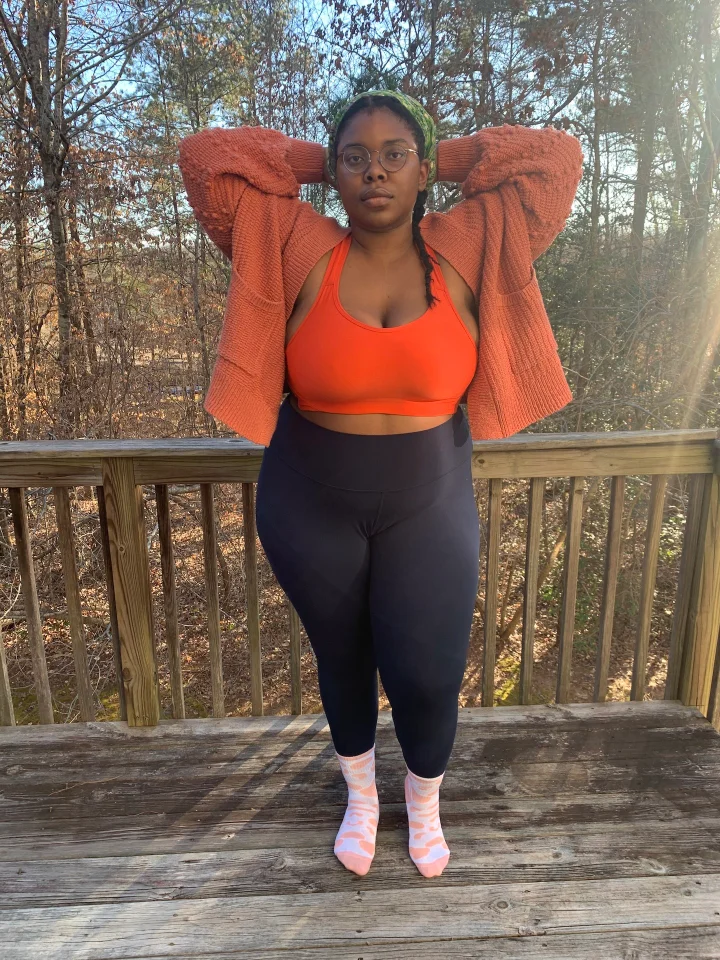
The Align comes up in every plus-size yoga conversation, and the answer is more complicated than yes or no.
It is the most-recommended yoga legging on the internet. It is buttery soft, it has a high waistband, and it is what most non-plus yoga teachers are wearing in their videos. Lululemon did extend the Align into a larger size run, and credit where it is owed for that.
The honest caveat is that it suits a specific plus body: practitioners at the lower end of the plus range, without a significant belly soft-tissue distribution, who can wear it without the waistband folding down on itself. For those bodies the Align is genuinely as good as the internet says. Higher up the size run, Lululemon’s extended sizing has historically capped lower than Beyond Yoga, Universal Standard and Athleta, all of which reach at least 3X or a size 26, so check the current size run before you get attached.
That is the honest reality. The Align is a good product with a hard ceiling, and the ceiling is the thing that matters when we talk about plus-size yoga clothing as a category. If it comes in your size and you can afford it, try it. If it does not, you are not missing out on something the other brands cannot match.
Tops: Bralette-Only vs. The Long-Line Tank
Tops are the second-most-discussed wardrobe topic in plus-size yoga, and the debate splits along a clear line.
Camp one says practise in just your sports bra, no top at all. Plenty of body-positive teachers model exactly this. The argument is that the top is the most common source of ride-up, fabric distraction and overheating. Just wear the bra. Your skin is fine. The other students do not care, and if they do, that is their problem.
Camp two says a long-line tank or fitted top adds psychological comfort, sun protection in outdoor classes, and a layer between your body and the mat in supine postures. That argument is not about modesty, it is about practical layering. A fitted top tucked into the legging waistband holds the lower belly in a way some practitioners find grounding, and the second layer cuts the friction of mat against bare back skin in seated forward folds.
Both camps are correct and the choice is personal. The practical split: in a long vinyasa, bralette-only is logistically simpler. In gentle yoga or restorative, the long-line tank is usually more comfortable, because you spend more time supine and that fabric layer handles the back-skin-on-mat sweat issue.
If you do wear a top, the long-line tank is the form factor that works for plus bodies. The standard cropped yoga tank is functionally hostile to plus practice. It rides up, it exposes the belly band of your leggings, and it creates an awkward middle layer that draws the eye to exactly the part of the body most plus practitioners are least comfortable having framed. The long-line tank, which extends past the natural waist and hits at hip-bone level, lies flat under the legging waistband and stays there.
Brands that do the long-line tank well: Beyond Yoga (the Spacedye Lift Your Spirits long tank), Athleta (the Movement Tank Plus), Old Navy Plus (Active Powersoft Long Tank, the budget option that holds up), and Universal Standard (the Tee Rex in Plus, technically a t-shirt but it functions as a long-line layer).
Sports Bras for Yoga (Low-Impact, Easy to Remove)
The sports bra conversation for yoga is different from the one for running, and most plus-size students do not realise it. Yoga is low impact. You are not bouncing and you are not landing, so the requirement changes. What you need is a bra that holds breast tissue in place during inversions and twists, does not ride up, does not dig into the rib cage in supine postures, and that you can actually get off your body in a heated studio without dislocating a shoulder.
Four worth knowing for plus-size yoga specifically.
Glamorise No-Bounce Cami Sport. Glamorise is the unsung brand of plus-size fitness. They make bras in band sizes 34 to 50 and cups B to I, which is to say they make bras for actual plus bodies rather than stopping at an extended 38DD. The No-Bounce Cami Sport is wireless with a wide adjustable band and holds through inversions. The cami-style straps are wider than standard, which distributes weight better for a fuller bust. Around $59 as of writing.
Cuup Mesh Long Line. Cuup makes bras up to a 38H. This is technically a bralette rather than a sports bra, but for low-impact yoga that is the right level of support. The long-line band extends several inches below the cup, so the band stays put through inversions and the underside of the bust is not exposed when you stretch overhead. Around $58.
Beyond Yoga Lift Your Spirits Bra. Beyond Yoga’s plus bra goes to 3X in the brand’s Spacedye fabric, with a wide-band wireless construction. The band sits flat against the rib cage rather than riding. Straps are wide, cups are unpadded but supportive, and it pulls on overhead with no clasp, which matters because a clasp presses into your back in supine postures. Around $76.
Spanx EcoCare Wireless. A wireless bra in sizes up to 3X that works for yoga better than you would expect. The construction is closer to a supportive bralette than a sports bra, which is exactly the level yoga asks for, and the recycled nylon is breathable. Around $68.
The bra to avoid for yoga, however comfortable it is elsewhere: the racerback compression sports bra with a thick band. Racerbacks are great for running. For yoga, the racerback design pulls your shoulders forward in exactly the postures where you need to open the chest, including camel, wheel and even simple cobra, and the thick compression band runners need is overkill here and becomes a pressure point in any supine posture.
Universal Standard Movement vs. Beyond Yoga Spacedye
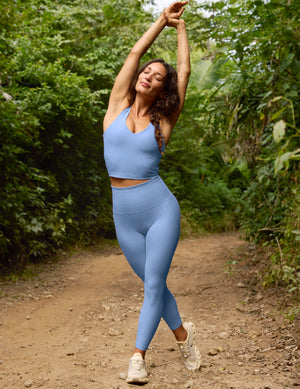
If you only learn two brands, learn these. They are different companies with different philosophies, and the comparison is genuinely useful.
Universal Standard is size-inclusive from the ground up. Every product is offered in every size they carry, from a custom 4XS to a custom 4XL. The Movement collection is engineered for plus bodies because plus bodies are part of the core design brief rather than an afterthought: reinforced seams, gussets present, wide waistbands, firm fabric. The aesthetic is utilitarian and the palette is mostly black, navy, grey and seasonal neutrals.
Beyond Yoga started as a yoga brand and added plus sizing in 2020 when the founder committed publicly to inclusive sizing. Spacedye is the brand’s identity, a soft heathered poly-spandex that drapes and stretches in a way that feels more like activewear than performance wear. The aesthetic is softer and more studio-chic, with more colours, prints and seasonal capsules.
The practical difference is feel. Universal Standard fits like compression; Beyond Yoga fits like a second skin. One holds your body in, the other disappears against it. Some practitioners want the holding-in feeling and some want the disappearing feeling, and neither is the correct answer. Try both if you can.
If you can only afford one and this is your first real pair of plus yoga leggings, start with Universal Standard: slightly cheaper, slightly more durable, slightly more versatile across class styles. Beyond Yoga is the upgrade when you are ready for a second pair.
The Shorts Question (and Inner-Thigh Chafing)
Shorts are the most-asked-about and least-recommended garment in plus-size yoga, and it is worth being honest about why.
For many plus-size practitioners the inner thighs are in contact standing, seated, and in any posture that brings the legs to centerline, which is most of a class. In shorts, that means inner-thigh skin in direct contact with itself, sweating, for the duration.
Sweat plus skin-on-skin contact creates friction, friction creates chafing, and inner-thigh chafing is one of the genuinely miserable post-class experiences in fitness. It also does not settle quickly, which means one uncomfortable class can cost you the next few.
This is why plus-size practitioners overwhelmingly wear leggings or capris rather than shorts. The fabric layer between the thighs prevents the friction entirely. And if the objection is that leggings are too hot, the fix is not shorts, it is lighter-weight leggings or a 7/8 length.
If you want shorts anyway, two things help. One: bike-short length rather than gym-short length, because an inseam of roughly 5 to 7 inches covers the contact zone. Two: anti-chafe balm. Body Glide and Megababe Thigh Rescue both go on like deodorant and buy you a class’s worth of protection.
Hot Yoga and Fabric Reality
Hot yoga is its own wardrobe conversation, because the fabric requirements change once the room is properly heated.
In a room-temperature studio, fabric weight is a comfort variable. In a hot studio it becomes a heat-dissipation variable. Heavy fabric traps heat against the skin; light, breathable, moisture-wicking fabric releases it. Athleta Salutation, Beyond Yoga Spacedye and Universal Standard Movement are all designed for room-temperature practice and are heavier than hot yoga wants. They will work, but you will overheat sooner than you need to.
For hot yoga specifically the plus options are narrower but they exist. Athleta Elation Plus is the brand’s lighter-weight legging and the strongest plus hot-yoga option going, noticeably lighter and more breathable than Salutation. Old Navy Plus PowerSoft 7/8 is the budget choice and performs better than the price suggests, though it will not last as long. Sweaty Betty’s Power Workout Legging comes in extended sizing that suits some practitioners for hot vinyasa, though their plus run tops out lower than the brands above.
For tops in hot yoga, most plus practitioners land on sports bra only. The heat tends to settle the question for you. If you want a top, use the lightest-weight long-line tank you own.
One more hot yoga reality: the towel matters as much as the clothing. A non-slip mat towel such as Yogitoes or Manduka eQua absorbs sweat and prevents the slipping that becomes genuinely unsafe in a heated room. Bring two rather than one, and swap mid-class if you need to.
The Mat-Grip Socks Question
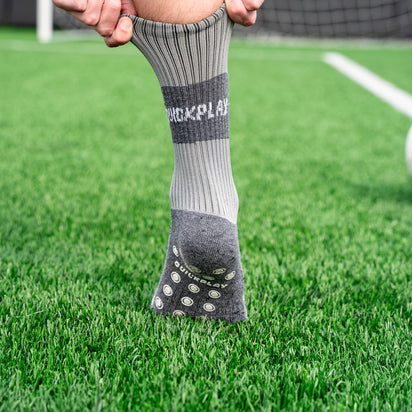
Grip socks are a small piece of the wardrobe and most practitioners do not need them, but they come up often enough to address.
Grip socks from ToeSox, Tucketts or Bombas have rubberised dots on the sole that stop you sliding. They are useful in two scenarios: you sweat heavily into your mat and your feet slide in down dog, or you are practising on a slick borrowed studio mat that does not grip.
For plus practitioners the sticking point is the calf opening, which on most grip socks is cut too narrow for fuller calves. ToeSox makes a Half Toe Grip Sock in a larger size run with a more forgiving opening, and Tucketts makes a ballerina cut with a low ankle that sidesteps the calf-fit problem entirely.
If grip socks pinch your calves, cut them at the top of the foot. You only need the grip; the sock part is not load-bearing. Or skip them altogether, because a good mat such as a Manduka PRO or PROlite, a JadeYoga Harmony or a Liforme largely eliminates the need.
The 4-Piece Yoga Capsule
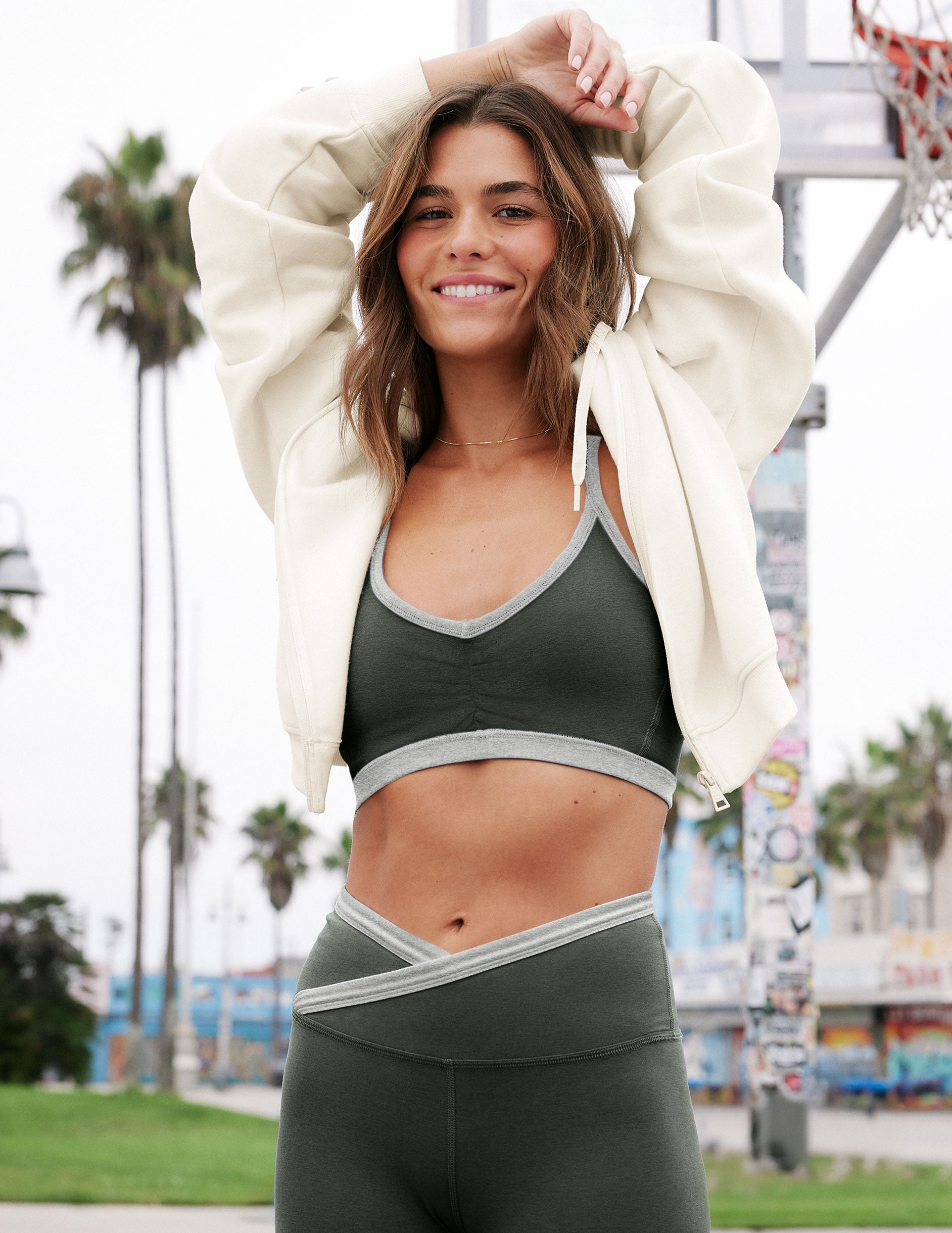
If you are starting from zero and want a plus-size yoga wardrobe that handles every class on the studio schedule, this is the capsule.
Piece 1: A pair of structured high-waist leggings for vinyasa. Universal Standard Movement Form Legging or Beyond Yoga Spacedye Caught in the Midi (Plus). Black or a dark neutral. This is your everyday legging.
Piece 2: A pair of lighter-weight leggings for hot yoga and summer. Athleta Elation Plus or Old Navy Plus PowerSoft 7/8. Black or charcoal.
Piece 3: A wireless wide-band sports bra. Glamorise No-Bounce Cami Sport for a fuller bust, Beyond Yoga Lift Your Spirits for mid-range, Cuup Mesh Long Line if you want bra and top in one piece.
Piece 4: A long-line tank. Beyond Yoga Spacedye Lift Your Spirits long tank or Athleta Movement Tank Plus. Black or studio-neutral.
That is all four. Expect somewhere in the region of $310 to $360 at full retail as of writing, and meaningfully less if you wait for end-of-season sales, because both Beyond Yoga and Athleta discount several times a year and Athleta runs member promotions worth watching for. Built this way, the capsule covers every yoga style on a normal studio schedule and should last you years of regular practice rather than a season.
What you do not need: more than two pairs of leggings to start. More than one sports bra to start. Any tank shorter than your hip bone. Grip socks, unless you have already identified a slipping problem. And yoga-specific underwear, because seamless or thong underwear in your normal size handles it and you do not need a dedicated product line for this.
What Nobody Tells You Before Your First Class
Here is the part the gear guide cannot buy you. The clothing will not be perfect and the practice does not require it to be. The student in the back row at her first vinyasa class is not being graded on the seam integrity of her leggings. The instructor is not noticing whether your waistband rolled. The other students are not watching your top ride up. They are in their own bodies, working on their own breath, navigating their own wardrobe failures.
The wardrobe project is real and worth doing, because the right clothing makes the practice physically more comfortable, and physical comfort lets you stay in the postures long enough to actually arrive in your body. That is the whole point. The clothing is infrastructure for the arrival. It is not the arrival.
So: build the four-piece capsule. Wear what fits. Replace pieces as they wear out. Skip the trends. Trust the brands that have done the engineering work for plus bodies, which on current evidence means Beyond Yoga, Universal Standard, Athleta, Glamorise, Cuup and Spanx. Be sceptical of brands that added plus sizing as a marketing line without rebuilding the patterns. Cut your grip socks if the calves are too tight. Tuck your tank. Practise anyway.
The Short List, If You Remember Nothing Else
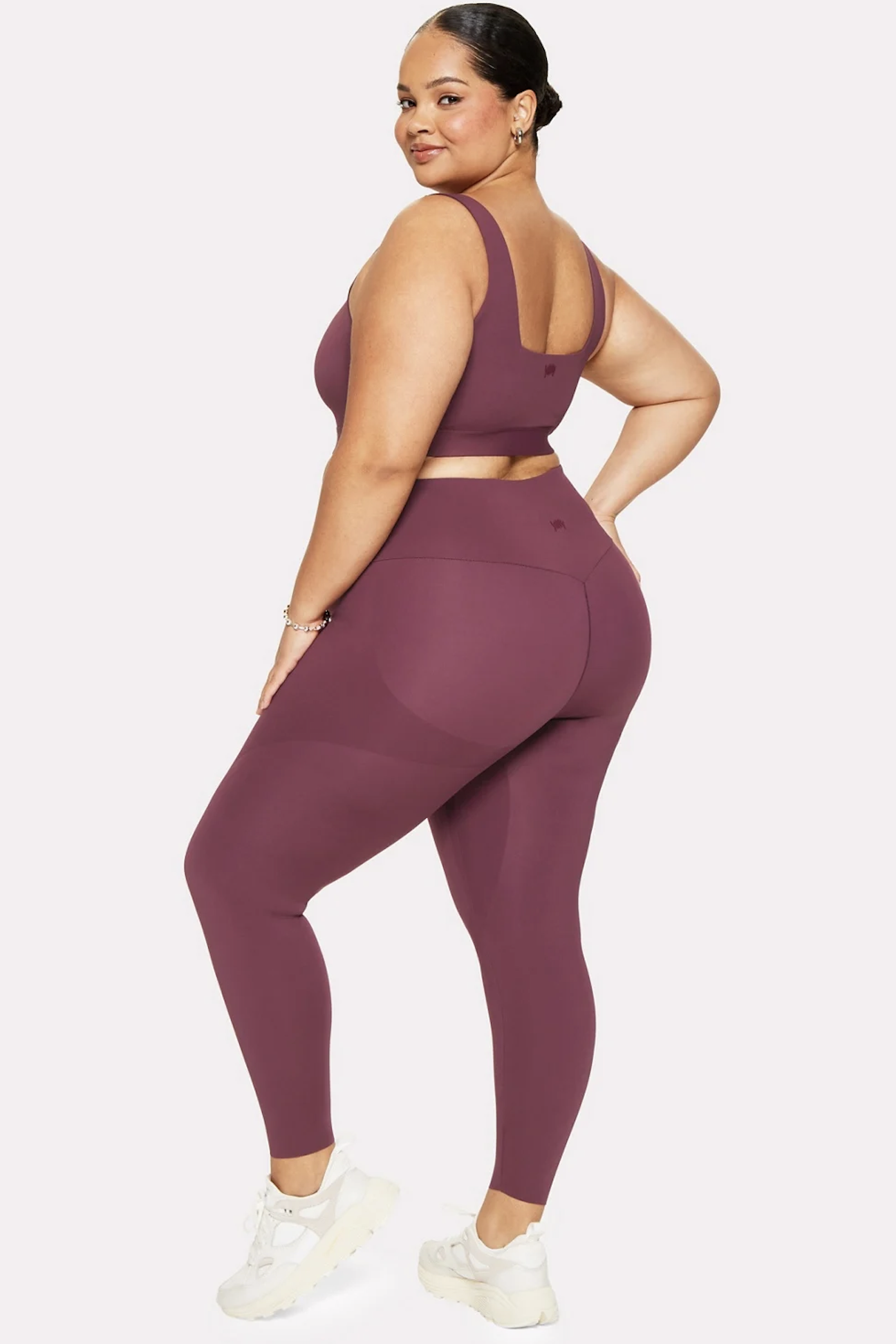
The infrastructure that genuinely works for plus yoga is narrower than the activewear aisle suggests. Spanx Booty Boost Active for compressive high-waist support. Universal Standard’s Next-to-Naked legging for a second-skin alternative. Beyond Yoga’s Spacedye Lift Your Spirits as a long-line bra that doubles as a top on lower-impact days. Glamorise No-Bounce for fuller-bust support. And a long-line tank from Beyond Yoga or Athleta Plus when studio practice calls for more coverage. Five pieces, all in production, all built from patterns that account for plus bodies in folded positions rather than scaled up from a size 6 fit model.
The cropped tank still gets pushed by every activewear marketing campaign and it still does not survive a down dog on a plus body. Skip it. Build the wardrobe around the long-line layer, the high-waist bottom and the supportive bra, and the garment-failure modes at the top of this guide quiet down enough that you can pay attention to your breath, which is the entire reason you came to the mat.
A note on money information. This article is general information and not financial advice. It is not written by a licensed adviser and it cannot account for your own circumstances. Consider speaking to a qualified financial professional before making decisions about debt, credit, investing or retirement.