

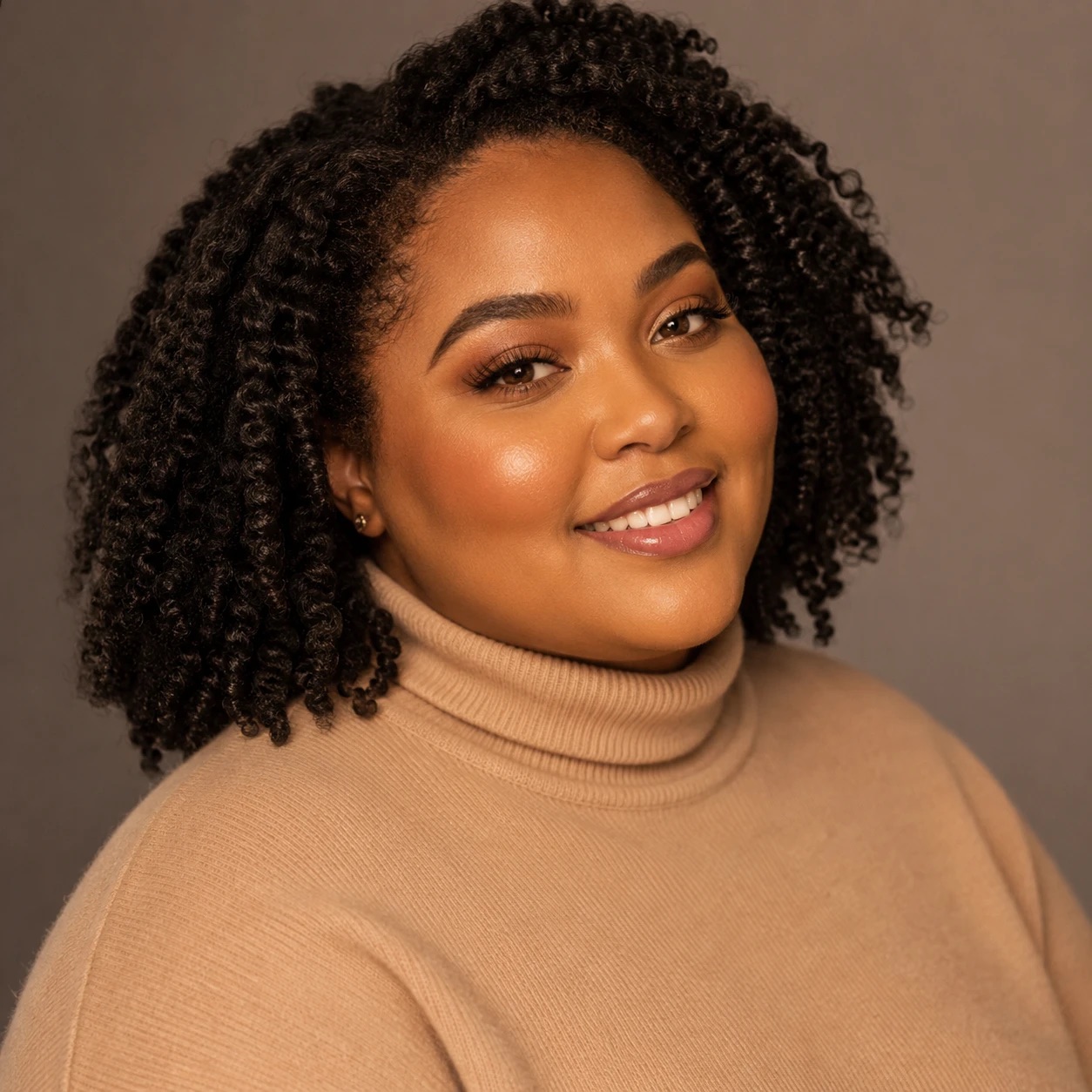
After five years of $58 BHA toners and $112 creams, the thing that finally cleared my forehead was a generic prescription that costs $22 a month. Here is the case for tretinoin, and exactly how to start.
By Brielle , Beauty & Hair Editor
It was January 2024, and I was standing in front of the bathroom mirror in my old Atlanta apartment. The light in that bathroom was unforgiving in a way I’d grown to respect. It was the same light that had told me, every morning since I moved in, that the small congested bumps along my hairline and the soft band of texture across my forehead were still there. I’d been checking for them with the pads of my fingers since college. It was a tic by then. A diagnostic sweep.
That morning, two months into a 0.025% tretinoin prescription, I did the sweep and felt nothing. I leaned closer to the mirror. Nothing. I tilted my head under the vanity bulb the way I used to so I could catch the bumps in shadow. There were no bumps to catch. My forehead, which I had been treating since 2019 with rotating $58 BHA toners and $112 La Roche-Posay Effaclar creams and at least three different niacinamide serums, was just smooth.
It wasn’t glamorous. I want to be clear about that. I was 26, I hadn’t slept enough, I had a coffee stain on the collar of my robe. The retinol-purge horror stories that had kept me from trying tretinoin for years hadn’t happened to me. There were no weeks of cystic flares. There was some flaking in week three. That was it. I’d spent years and probably $4,000 trying to fix something that one $22 prescription tube fixed in eight weeks.
This article is about that moment. More importantly, it’s about why I think tretinoin is the single most consequential ingredient in adult skincare, and why so many of us spent the 2010s and early 2020s stacking expensive serums instead of just asking a dermatologist for it.
Why tretinoin and not retinol
Let me get the science out of the way, because the science is the whole argument.
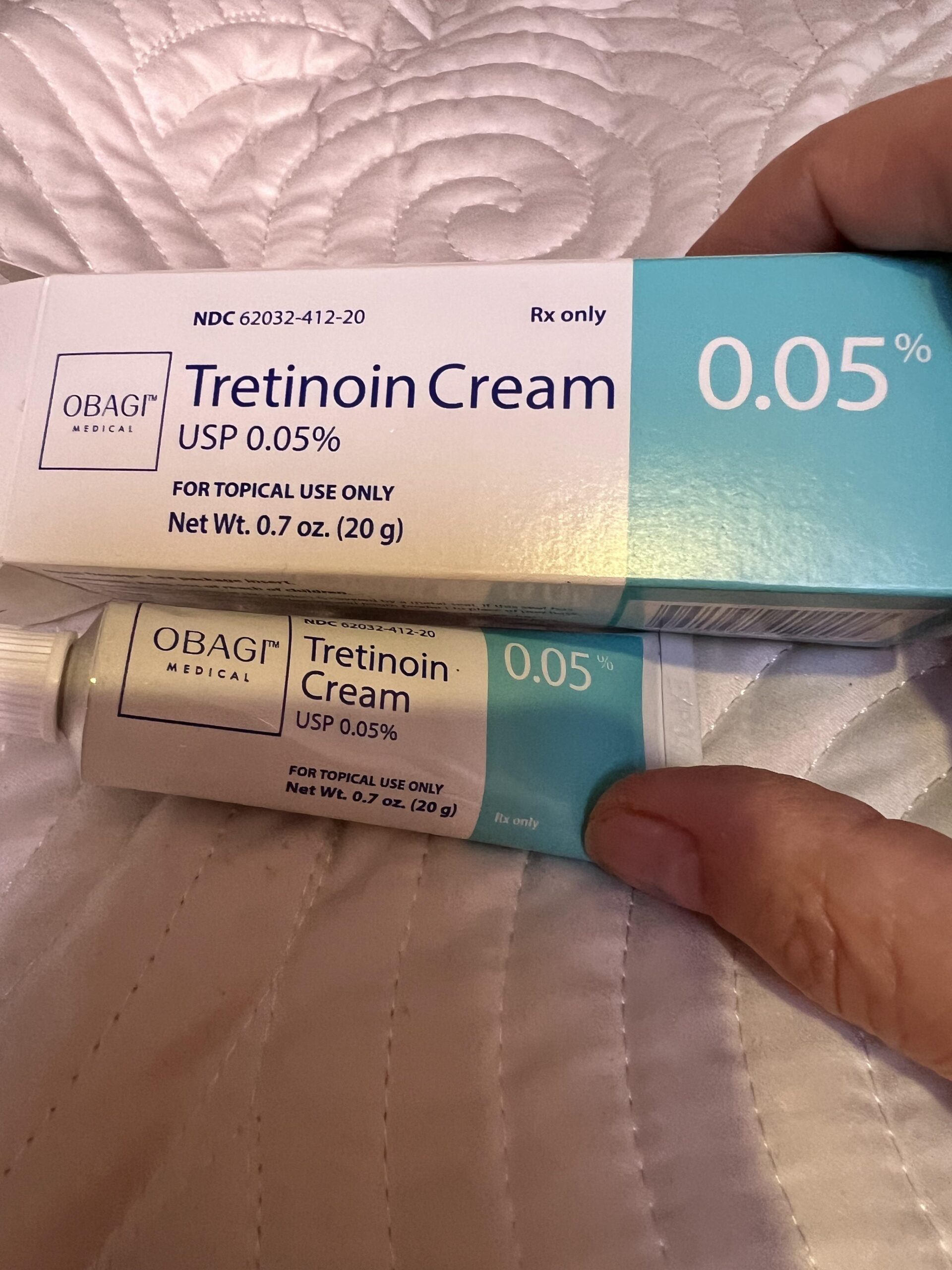
Tretinoin is a prescription-strength retinoid. It is the same molecule as retinoic acid, which is the active form that your skin actually uses. When you apply tretinoin, it goes to work immediately. There is no conversion step. No waiting. No middleman.
Retinol, the version you can buy at Sephora or in the skincare aisle at Target, is a precursor. Your skin has to convert it in two steps to become retinoic acid. Retinol becomes retinaldehyde, which then becomes retinoic acid. Each conversion loses potency. By the time the retinol you applied actually reaches the form your skin can use, you are working with a fraction of what you started with.
Here is the math people do not talk about enough. A 0.025% tretinoin prescription, the lowest strength most dermatologists will start you on, is roughly equivalent to a 1.0% retinol formulation. That formulation does not exist over the counter. It cannot exist over the counter. Retinol at concentrations above about 0.3% is too unstable to sit in a jar at the chemist for two years. It oxidizes. It loses efficacy. The highest stable retinol you can buy is usually around 0.5%, and even that requires careful packaging.
So when you are choosing between a $98 retinol serum and a $22 tube of tretinoin, you are not choosing between the same ingredient at different price points. You are choosing between a diluted precursor and the real thing.
The evidence base for tretinoin is also not new. The FDA approved it in 1971, originally for acne. In 1995, the New England Journal of Medicine published the landmark photoaging paper by Dr. Albert Kligman and colleagues, which showed measurable improvements in fine wrinkles, hyperpigmentation, and skin roughness in patients who used tretinoin daily over 24 weeks. That is fifty years of clinical evidence. Almost no other topical ingredient has that kind of paper trail.
For women with skin of color, there is an additional paper worth knowing about. In 2007, the Journal of Drugs in Dermatology published research specifically on tretinoin in Fitzpatrick V and VI skin, looking at post-inflammatory hyperpigmentation. The finding was nuanced and worth sitting with - tretinoin can both trigger PIH in the short term if you start too strong, and treat existing PIH in the long term if you use it correctly. We will come back to that.

How to actually start (and why $30 a month beats $200 a visit)
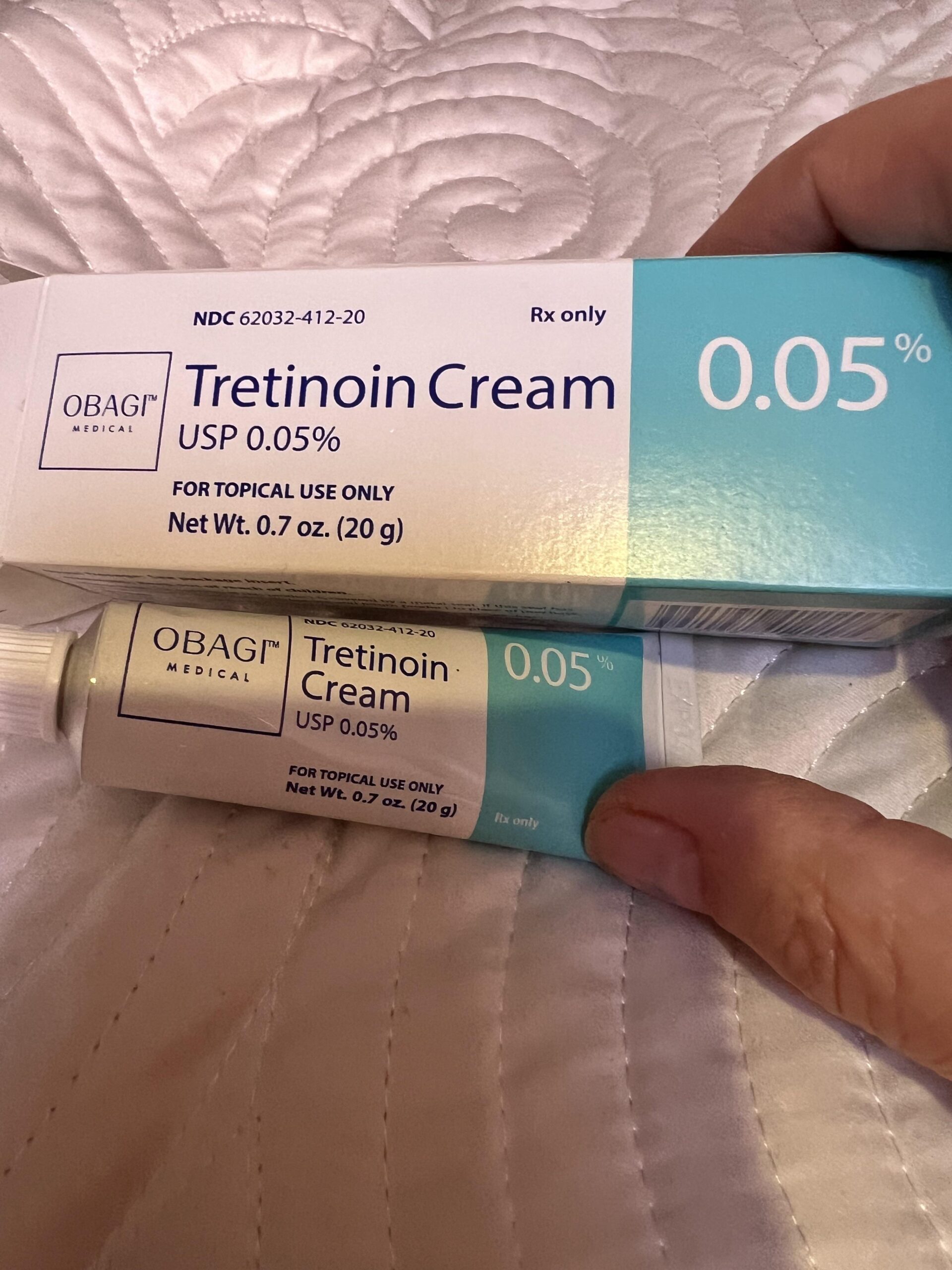
There are three reasonable paths to getting tretinoin in 2024. I have tried two of them. I will walk you through each.
Path one is an in-person dermatologist. If you have insurance that covers a dermatology visit, this is the gold standard. You will pay a copay (usually $30 to $75 depending on your plan) and the visit itself if you are uninsured can run $150 to $250. The dermatologist will look at your skin, ask about your goals, ask about your skin tone and any history of hyperpigmentation, and write you a prescription for generic tretinoin cream. The generic, with most insurance plans, runs $20 to $40 a month. Without insurance, GoodRx coupons can bring it under $50.
Path two is Curology. This is the route I took. Curology is a telehealth dermatology service that pairs you with a licensed provider, reviews photos of your skin, and ships you a custom-compounded prescription bottle. Mine had tretinoin plus niacinamide plus azelaic acid in one formula. It runs about $30 a month after the trial. The advantage is that the formula is built for your specific concerns. The disadvantage is that you do not get the same depth of in-person consultation you get with a derm.
Path three is Dermatica , which works similarly to Curology but is UK-based and now ships to the US for around $26 a month. The formulations are similar. Both services will start you low.
What dose to ask for - the answer for almost everyone reading this is 0.025% tretinoin cream. That is the standard starting strength. There is no medal for asking your dermatologist for 0.05% or 0.1% out of the gate. Higher strengths cause more irritation, more flaking, more peeling, and for women with darker skin tones, more risk of post-inflammatory hyperpigmentation. You can always step up after six months if you tolerate the 0.025% well. Most people do not need to. The 0.025% does the work.
Dr. Shereene Idriss, the New York dermatologist who runs Idriss Dermatology and is one of the most respected voices in retinoid education on the internet, talks often about this. Her line is essentially - the best retinoid is the one you will actually use. Starting low is how you stay consistent. Consistency is how you get results.
The first 8 weeks (and the purge question)
Let us talk about the purge, because it is the thing that scares most women off tretinoin.
The purge is real but it is not universal. Here is what is happening physiologically. Tretinoin speeds up cell turnover, which means microcomedones (the tiny clogs already forming deep in your pores that you do not see yet) come to the surface faster than they would have. So for some people, weeks two through six are rough. You may break out in places you never break out. You may flake. You may peel.
For me, the purge was a few patches of flaking in week three and one small whitehead near my jawline in week four. That was the whole event. Some friends I have written about this with had a worse experience. Some had no purge at all. There is no predicting it.
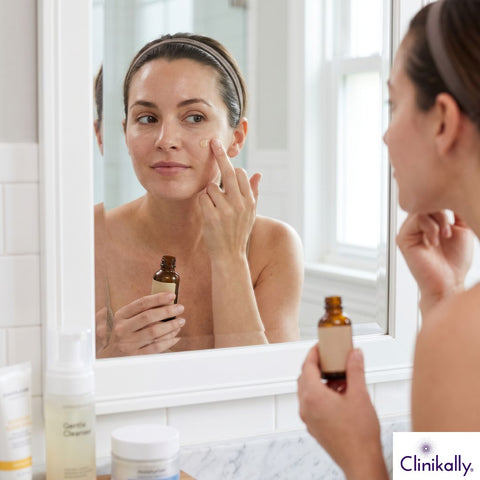
The protocol that minimizes the purge is the moisturizer sandwich. Cleanse with a gentle cleanser, wait for your skin to fully dry, apply a thin layer of moisturizer, wait two minutes, apply a pea-sized amount of tretinoin to your entire face (not just the spots you want to treat - the whole face), wait, then apply another layer of moisturizer on top. The sandwich buffers the irritation without significantly reducing the efficacy.
Three rules I would give anyone starting:
One, the cleanser is Cetaphil Gentle Skin Cleanser or CeraVe Hydrating Cleanser. That is it. Stop using your foaming acid cleanser. Stop using the one that tingles. You want the most boring, most basic, most ceramide-friendly cleanser you can find for the first six months.
Two, the moisturizer is also basic. CeraVe in the tub. Vanicream. La Roche-Posay Toleriane Double Repair. Pick one. Use it twice a day.
Three, sunscreen is non-negotiable. Tretinoin makes your skin more photosensitive. If you start tretinoin and you are not wearing SPF 30 minimum every single day, you are undoing the work. I use the EltaMD UV Clear (around $40) in the morning. There are cheaper options that work too. La Roche-Posay Anthelios Mineral SPF 50 is excellent. The point is daily, not which brand.

The routine, radically simplified
Once you are on tretinoin, your routine collapses. This is one of the things I did not expect, and it is one of the financial arguments that made me an evangelist.
Morning: gentle cleanser, moisturizer, sunscreen. Three products.
Evening: gentle cleanser, tretinoin, moisturizer. Three products. One of them overlaps with the morning routine.
That is four total products. Not eleven. Not the eight-step Korean skincare flowchart. Not the serum stack you have been told you need. Four products.
For a long time, the beauty industry’s selling point was complexity. The more steps, the more bottles, the more your bathroom shelf looked like a chemist’s counter, the more “into skincare” you were. Tretinoin breaks that economy. You do not need the toner. You do not need the essence. You do not need the dual serum stack. You need the prescription, two cheap drugstore basics, and a sunscreen you will actually reapply.
Hyram Yarbro, the skincare educator who built a massive audience on TikTok in 2020 and 2021 and now runs his own Selfless by Hyram brand, has talked at length about this same collapse. His ongoing framing is similar to mine - most women buying $400 of serums every quarter would get better results from a $22 prescription and a $14 moisturizer.
The skin-of-color question
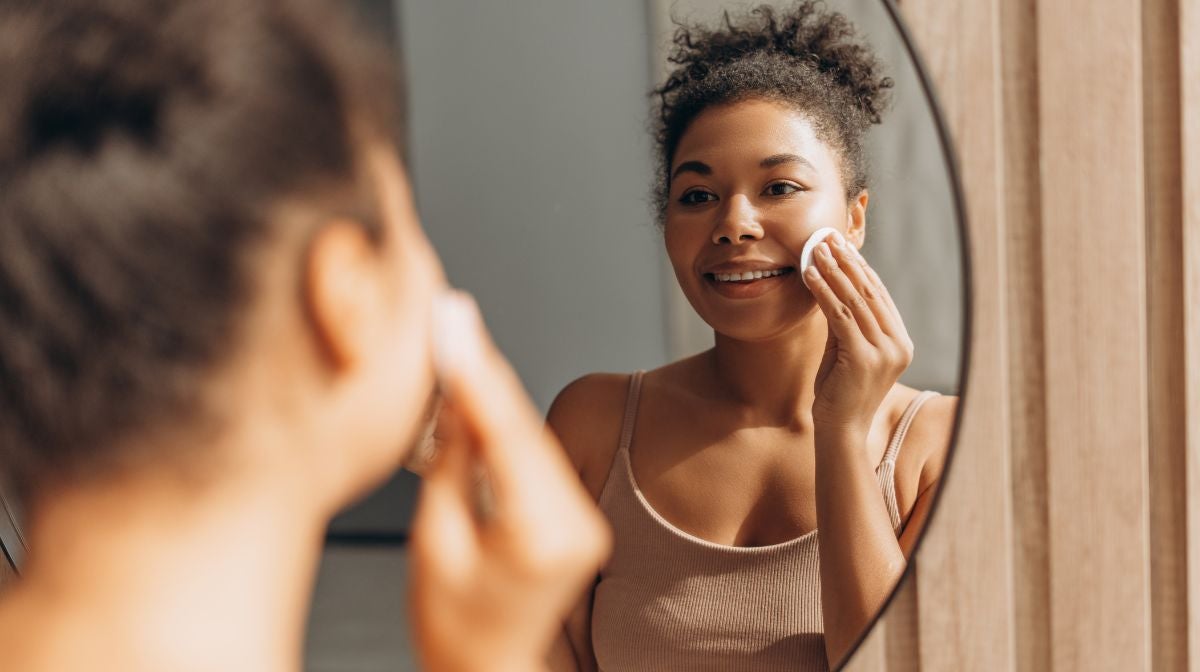
I need to spend real time on this because the conversation about tretinoin in skin of color is often either ignored or oversimplified.
The 2007 Journal of Drugs in Dermatology paper I mentioned earlier is the one I send to friends with Fitzpatrick IV, V, and VI skin who are nervous about starting. The finding, summarized - tretinoin can trigger post-inflammatory hyperpigmentation in melanin-rich skin if you start too strong or too fast. The same molecule, used correctly and consistently, is one of the most effective long-term treatments for existing hyperpigmentation in those same skin tones.
It is a paradox, but it makes sense once you understand the mechanism. PIH is triggered by inflammation. Tretinoin, applied too aggressively, causes inflammation. Tretinoin, applied at low strength and buffered with moisturizer, causes minimal inflammation while still increasing cell turnover, which fades existing PIH over months.
The rule for darker skin tones is simple. Start lower, go slower. That means:
Start at 0.025% (not 0.05%, not 0.1%). Use it twice a week for the first two weeks. Then three times a week for the next two. Then every other night for a month. Only after that should you consider nightly use. The whole ramp can take three months. That is okay. The ramp is what protects your skin from PIH.
Dr. Caroline Robinson, who runs Tone Dermatology in Chicago and specializes in skin of color, has been one of the loudest and most useful voices on this. She is on Instagram, she speaks plainly, and she has been particularly good on the difference between the ramp-up protocol for darker skin versus the more aggressive starts that work for lighter skin. If you are nervous, follow her. Read her posts. The information is free and it is excellent.
What to stop using when you start tretinoin
This is the part where you free up shelf space.
Pause your BHA. Salicylic acid is doing similar work to tretinoin (clearing pores, increasing turnover), and stacking them in the first six months is how you get irritation. You can layer them eventually. Not now.
Pause your AHA. Glycolic acid, lactic acid, mandelic acid. All paused. Same reason.
Pause your vitamin C serum. This is the one that surprises people. Vitamin C is great. It is also acidic, and pH-sensitive, and stacking it with tretinoin in the first six months is unnecessary chaos for your skin barrier. Once you are stable on tretinoin (six months in, no flaking, no redness), you can reintroduce it in the morning. Not before.
Pause physical exfoliants. The scrubs, the cleansing brushes, the muslin cloths. All of it. Your skin is turning over plenty fast on its own.
What can stay - hyaluronic acid serums (they are just hydration, no chemistry conflict), niacinamide (gentle, anti-inflammatory, actually helpful), and your sunscreen.

The cost math, written out
Let me do the numbers, because the numbers are how I finally convinced myself.
My pre-tretinoin routine, monthly, averaged out across the year:
La Roche-Posay Effaclar Duo, $40, lasted two months, so $20/month. Paula’s Choice 2% BHA, $35, lasted three months, so about $12/month. Skinceuticals CE Ferulic vitamin C, $182, lasted three months, so $61/month. The Ordinary Niacinamide, $7/month. A rotating $40 retinol serum, $20/month averaged. SkinMedica TNS Essential Serum that I bought once and used carefully, $295, stretched over six months, so $49/month. Sunscreen, $40/month.
Total - about $209 a month. Roughly $2,500 a year.
My current routine, monthly:
Curology custom formula with tretinoin, $30. Cetaphil cleanser, $5/month (a bottle lasts forever). CeraVe moisturizer, $10/month. EltaMD UV Clear sunscreen, $20/month averaged.
Total - $65 a month. Roughly $780 a year.
I am saving about $1,700 a year on skincare and getting better results. I do not say this often because it sounds like a hot take, but I will say it here - if you are spending more than $100 a month on skincare and you are not on a prescription retinoid, you are almost certainly being sold complexity instead of efficacy.
The three women whose skin you have envied
You know the women I am talking about. The friend of a friend at the dinner party who is 41 and has smooth forehead skin. The colleague who is 46 and whose pores around the nose have not enlarged the way everyone else’s have. The cousin who is 38 and whose cheekbones are even-toned and bright in a way that does not feel like makeup.
I am not going to name names because their skincare is their business. But I will tell you the markers, because they are remarkably consistent across the women I know who are on long-term tretinoin:
Smooth forehead skin past 38. The forehead is usually the first place where fine lines and texture show up. Long-term tretinoin users have foreheads that look ten years younger than their age.
No enlarged pores around the nose. Tretinoin keeps the pores from filling with the oxidized sebum and dead skin that makes them stretch and gape over time.
Even tone on the cheekbones. The sun damage that most of us are accumulating in our 30s and 40s shows up as uneven pigmentation on the cheekbones. Tretinoin treats it slowly and consistently.
If you’ve ever looked at a woman ten years older than you with great skin and assumed it was genetics, money, or a $400-a-month serum stack, I’d gently invite you to consider that it’s probably a $22 tube she’s been using for fifteen years.
## The argument, in one sentence
Tretinoin is the only topical ingredient with five decades of clinical evidence supporting it for both anti-aging and acne in adult women across all skin tones. It isn’t the only thing that works. It’s the only thing that’s been studied this thoroughly, for this long, in this many populations.
That’s the argument. That’s the whole article.
If you are reading this and thinking about starting, here is the question to ask a dermatologist (in person or through Curology or Dermatica) to get the ball rolling - “I would like to start a low-dose tretinoin for long-term skin health. Can we begin at 0.025% with a slow ramp-up protocol, and can you help me adjust if I see any post-inflammatory hyperpigmentation in the first three months?”
That sentence tells the provider that you have done your homework, you know what dose you want, you understand the timeline, and you are paying attention to your own skin’s response. It is the sentence that gets you the prescription with the least friction. Send it. See what happens in eight weeks.
Loved this story? Get more like it.
Join readers who get our weekly style and lifestyle recap - the stories worth your time, delivered every Saturday.
No spam. Unsubscribe anytime. By signing up you agree to our Privacy Policy.
More like this
All lifestyle →
How to Pee in Shapewear Without Getting Undressed: Every Method, Honestly Ranked
10 min read
Gut Health Red Flags Every Woman Should Know - Digestion, Food Safety, and When to See a Doctor
10 min read