
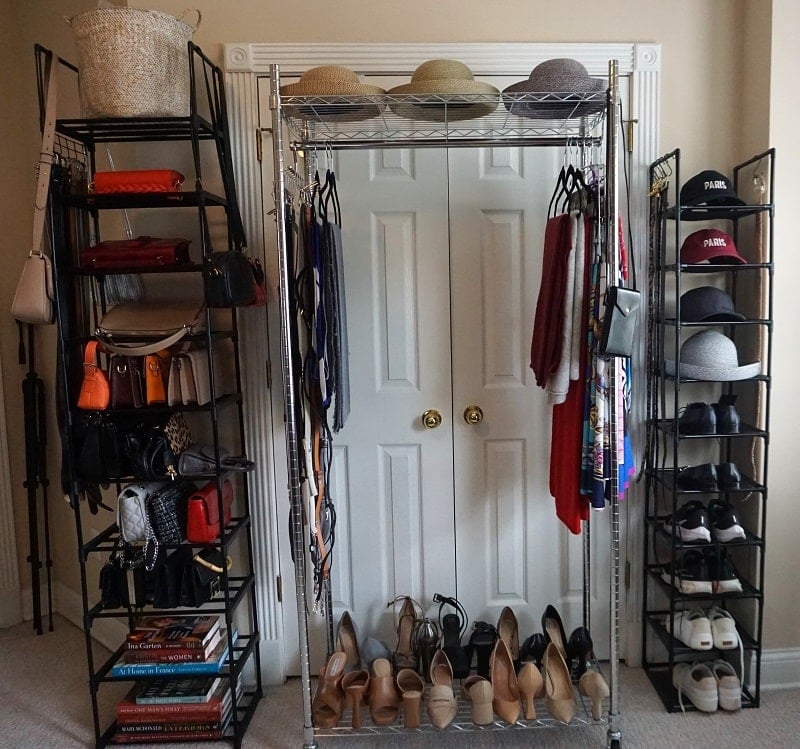
On a Friday in May 2024, I stood in my closet in Decatur and counted thirty-one black tops. I counted them twice because the first number felt wrong, but it was right. Thirty-one. A black scoop-neck from Target. Three nearly identical black tunics from Old Navy, bought across three separate Augusts. A black wrap top with sleeves long enough to cover the soft part above my elbow. A black peplum top, two black turtlenecks, a black mock-neck, a black v-neck with the tag still on it from 2022. I laid them on the bed in rows, the way you lay out evidence.
Then I started writing dates on a notepad. When I had bought each one. What had been happening in my life that month. I didn’t have to guess on most of them because I remembered. The peplum was August 2020, three weeks after a Zoom meeting where I caught my own face in the gallery view and turned the camera off for the rest of the year. The wrap top was January 2022, the week after my OBGYN said my weight in front of my then four-year-old. The turtlenecks were both purchased in November, different years, both after Thanksgiving photos. The mock-neck was bought the day I cancelled a beach trip with my college friends.
Not one of those thirty-one black tops had been purchased in joy. Not one of them had been bought because I saw it and thought, that’s pretty, I want to wear that. Every single one had been bought during what I can only call a shrinking moment. A moment of body shame so specific I could date it. That night I pulled a Rubbermaid bin from under the bed, dumped every black top inside, slid it back, and gave myself thirty days.
The 31 black tops
I am a size 18. I have been a size 18 for most of the last six years, and a size 16 before that, and a size 14 before that, and so on backward through my twenties. The numbers matter less than the trajectory, and the trajectory is up. I’m thirty-four, I’m a mother of two, and I’ve spent roughly twenty years buying clothes that I hoped would let me move through the world without comment.
What I noticed when I laid the thirty-one black tops on the bed was not the quantity. The quantity was embarrassing but it wasn’t the revelation. The revelation was that every single one was a slightly different attempt at the same trick. Long enough to hide the hip dip. Loose enough to skim the stomach. High enough at the neck to draw the eye up. Sleeves long enough to cover the part of my upper arm I called, in my private vocabulary, the bad part. Thirty-one variations on one assignment: make her smaller, make her quieter, make her less.
I had been telling myself for years that I just preferred black. That it was sophisticated. That it was easy. That it went with everything. Aubrey Gordon, who writes and podcasts about fat liberation and whose book You Just Need to Lose Weight I had been chewing on for months, has a line about how the stories we tell about our bodies are often stories about other people’s comfort. I had been telling myself a style story when I was actually telling myself a survival story.
The decision
The rule I gave myself was simple and a little stupid, which is how most useful rules start. For thirty days, no black tops. Black pants were fine. Black shoes, black bags, black sweaters in a pinch. But anything that touched the upper half of my body and pulled my eye toward concealment was off limits. The bin went under the bed. The closet, when I slid the hangers around, suddenly looked like it belonged to someone else. There was a coral linen shirt I had bought in 2023 and never worn. There was a cobalt blue blouse from a swap with my sister. There was the emerald green wrap dress my mother had given me for my birthday and that I had thanked her for and never put on.
I didn’t tell Marcus, my husband, for the first five days. I am still a little annoyed with myself about that, because Marcus is the kind of husband who notices when I am doing something hard, and he would have made it easier. But I think I didn’t tell him because I knew the first sentence I would have to say out loud was, I have thirty-one black tops and I bought every one of them because I hate my body. And I wasn’t ready to say that on a Friday night, with Jada and Marcus Jr still up watching cartoons, in the kitchen of a house I love.
Week 1: The body-image inventory
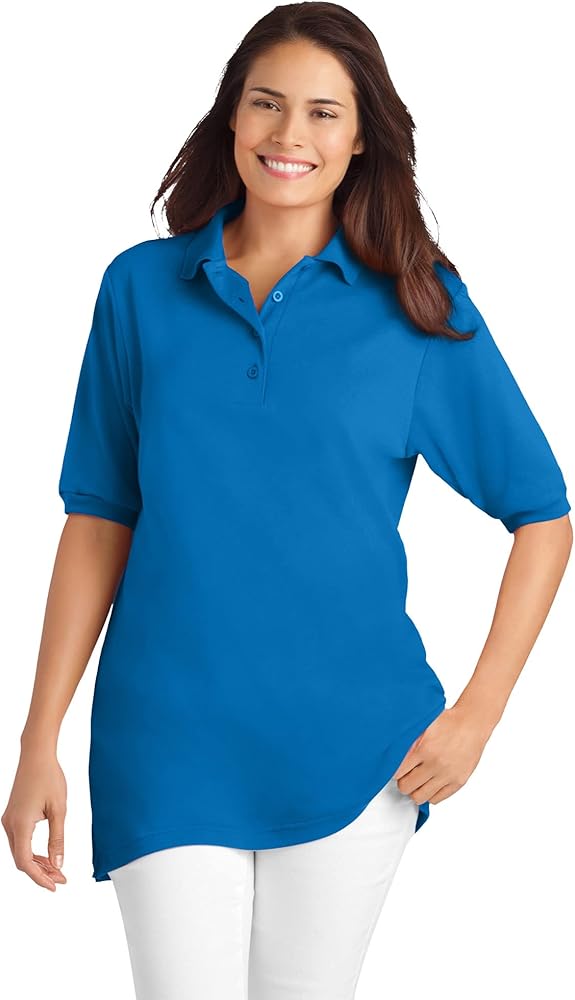
The first morning I reached for the cobalt blue blouse and felt my chest tighten. I want to be honest about this. It was not freeing. It was not liberating. It felt like I was walking out of the house with my underwear showing. I drove the kids to school in cobalt blue and gripped the steering wheel hard enough that my hands ached at the first light. I thought, every person at drop-off is going to look at me. I thought, every person at drop-off is going to think she should not be wearing that color at her size.
What actually happened was that one of the other moms, Yolanda, whom I have known for three years and who has never once commented on my clothes, walked over and said, that color is beautiful on you. And I said thank you and walked to my car and sat in it for a minute before I drove away. Dr. Renee Engeln, the Northwestern psychologist who wrote Beauty Sick , has a body of research on what she calls beauty sickness, the cognitive load women carry around how they look. Her argument, more or less, is that the brain real estate we spend worrying about being seen is brain real estate we are not spending on anything else. I had not understood that line viscerally until I sat in my car in the parking lot at Coralwood and realized I had used up an entire morning’s worth of mental energy on a blouse.
Day four was the vermilion top. It was a top I had bought on clearance in 2021, kept the tag on, and never worn. It was the kind of red that does not apologize. I wore it to run errands. I was in the Trader Joe’s parking lot, loading groceries into the back of the car, when I caught my reflection in the window and did not recognize myself for half a second. There was a woman in a vermilion top putting frozen pad thai into a reusable bag. She looked, and I am picking this word carefully, present. She looked like she was in her life. I had not seen myself look like that in a long time. I sat in the driver’s seat and cried for a minute, and then I went home and made dinner.
Week 2: What other women said
The second week is when other people started talking. My friend Denise, who I have known since college and who notices everything, called me on a Tuesday and asked, are you okay. Not in a worried way. In a curious way. She said, you look different, you have looked different the last three times I have seen you, did something happen. I told her about the bin. She was quiet for a long moment. Then she said, Kira, I have a bin too. She did not elaborate. She did not have to.
A colleague at work asked which brand the emerald green dress was, and where I had bought it. I told her my mother had given it to me two years ago and I had never worn it. The look on her face was complicated. She said, that’s a long time to wait. I think she meant the dress. I think she also meant something else. I have thought about her face a lot since then.
On Saturday I drove to a boutique on the square in Decatur, one I had walked past for years without going in because I assumed they did not carry my size. The saleswoman, a Black woman around my mother’s age named Cheryl, watched me drift through the racks for about ninety seconds before she walked over and started pulling things off hangers. She pulled a marigold blouse. She pulled a fuchsia wrap top. She pulled a rust-colored kimono and a poppy red shirt dress. She held them all up against me without asking, and she said, you have been hiding from these colors, and they have been waiting for you. I tried on every single one. I bought three. I left the shop in the marigold blouse with my bin of returnees in a paper bag and sat in my car again and thought about how many years I had walked past that store.
Mariel Buque, the psychologist who wrote Break the Cycle , writes about how intergenerational shame around bodies, especially in Black women, gets passed down through small daily rituals. The clothes our mothers told us to wear so we would not draw attention. The way we were taught to enter rooms. The colors that were considered safe. I am not putting my mother in the dock for the bin under my bed. My mother, in fact, is the one who bought me the emerald green dress. But somewhere along the way I picked up the lesson that visibility was dangerous, and I had been dressing accordingly for two decades.
Week 3: The bigger thing
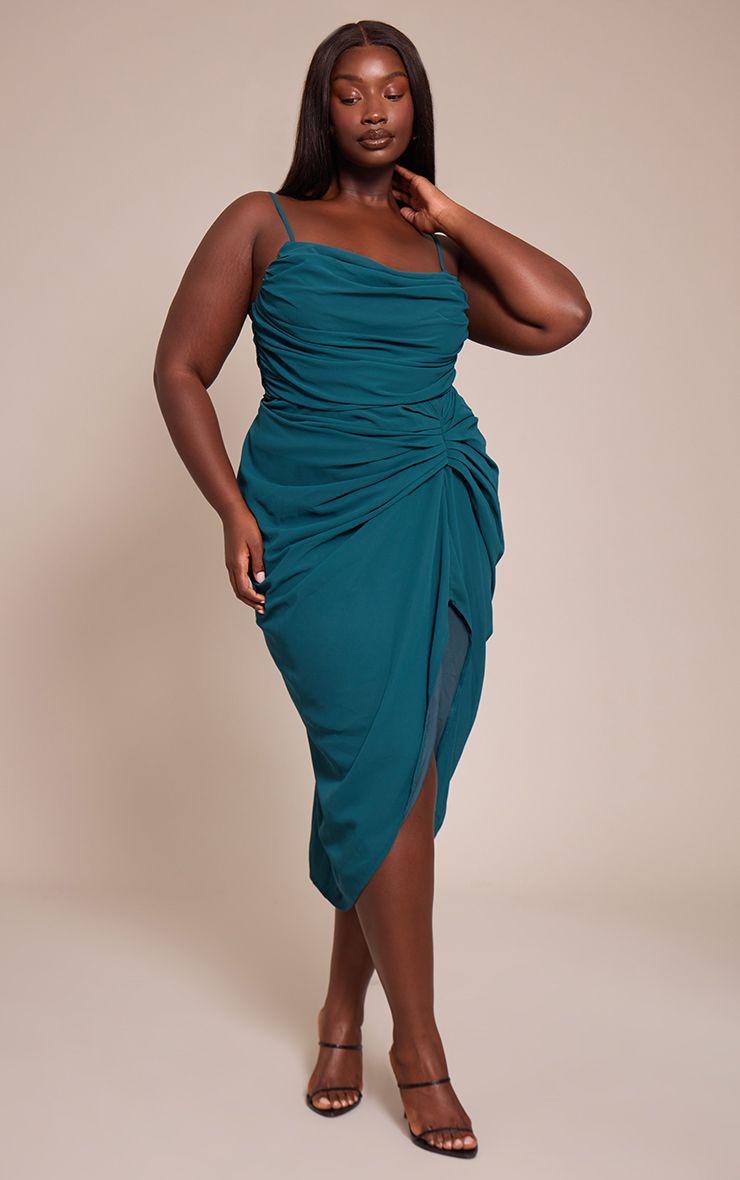
By the third week the wardrobe had stopped being the subject. The wardrobe was the symptom. The thing the wardrobe had been managing was something else, and I had to look at it whether I wanted to or not.
I have a habit, when I walk into a room of people I do not know, of finding the corner. I get a drink. I check my phone. I make myself useful by helping the host. I have called this introversion for years, and some of it is. But some of it, I had to admit by week three, was the same daily small permission I had been writing on every black top: permission to be smaller, permission to take up less air, permission to not be looked at. Tara Mohr, in Playing Big , talks about the inner critic that tells women to keep their hands down in the meeting, to not apply for the job, to defer to the louder voice in the room. The voice in my closet was the same voice in those rooms. It had just been wearing different clothes.
The thirty days had not been about color. The thirty days had been a diagnostic. The wardrobe was showing me, in a way I could count and weigh, how often I had agreed to be less. Thirty-one times in four years, just in the form of one specific category of garment. That was not the full count. That was a fraction of the count. The full count, if I let myself look at it, included the parties I left early, the conversations I exited, the photos I deleted, the meals I rearranged on my plate, the times I had said no to things I wanted because saying yes would have meant being seen wanting them.
What came back to the rotation

On day thirty-one I pulled the Rubbermaid bin out from under the bed and sat on the floor and went through every black top one at a time. Not all of them were going. Some of them were going to stay. The question I asked each one was the question I am still asking my closet now: did I buy this because I wanted it, or because I wanted to disappear.
Four stayed. A black silk blouse my sister gave me for my thirty-fifth birthday, which I had bought nothing to match because I had been afraid of the silk. A black turtleneck I genuinely love in winter under a camel coat. A black sleeveless top that fits me beautifully and that I bought after trying on six other things that did not. A black cardigan with pearl buttons that belonged to my grandmother. Those four had passed the test. Those four had earned the rotation.
The other twenty-seven went to ThredUp. I priced them honestly, I sent them in the bag, and a few weeks later I had a credit of $340. I want to be very clear that I did not spend the $340 on a celebratory shopping spree, because the entire point of the experiment was that I no longer trust shopping sprees to fix anything. I spent $180 of it on two pieces from Cheryl’s shop in Decatur, a rust silk camisole and a deep teal blouse, both of which I have worn many times. I put the other $160 toward my first real therapy session with a new therapist whose practice focuses on body image work in Black women. That felt right. The money had been earned by my old hiding. It went toward not hiding anymore.
What the 30 days didn’t fix
This is the part I want to be most careful about, because the easy version of this essay is the one where the woman in the bin story walks out the other side fixed, and I am not. I want to tell you that putting the black tops away made me love my body, and it did not. I want to tell you that I no longer feel a stab when I see a photo of myself, and that would also not be true. The wardrobe had been a symptom. Putting the symptom in a Rubbermaid bin under the bed did not cure the underlying thing. It just made the underlying thing visible enough that I could not pretend anymore.
The therapist I started seeing pointed out, very kindly, on our second session, that the wardrobe experiment had been brilliant for one reason and dangerous for another. The brilliant part was that it had given me an external evidence trail. I could not gaslight myself about the thirty-one tops. They existed. I could count them. The dangerous part was that focusing on the wardrobe could become its own form of avoidance, a way of doing surface work and calling it deep work. The closet had been the symptom. The therapy was where the cause lived. I am still going. I will probably be going for a while.
There are days, I will tell you, when I still reach for one of the four black tops that stayed in the rotation. There are days when I want the quiet. There are days when I am tired or when something hard is happening and I want one less thing to manage, and I put on the black silk blouse and I move through the day. The difference, and I think this is the only honest difference, is that now I know what I am doing. Now I am choosing the quiet on purpose. Now it is not the only option in the closet.
The final scene
It is a Friday in late May 2025 as I write this, a year almost exactly from the Friday I counted the thirty-one black tops. I am sitting at the kitchen table in Decatur in a marigold blouse, the same one Cheryl pulled off the rack and held up against me, and I just walked past my open closet on the way to get coffee. There is a rust silk camisole on a hanger. There is the emerald green wrap dress my mother gave me. There is the cobalt blue blouse from my sister. There is a fuchsia wrap top, a coral linen shirt, a poppy red shirt dress, and the four black tops that earned their place. The Rubbermaid bin is gone. I gave it to my neighbor for storing her kids’ winter hats.
The question I ask every garment now, before it comes home with me, is the question I should have been asking for twenty years. Am I buying this because I want it, or because I want to disappear. Most of the time, now, the answer is the first one. Sometimes it is still the second one, and on those days I put the garment back. The closet is not the work. The closet is just the place where I can see the work, hung up in rows where I can count it.