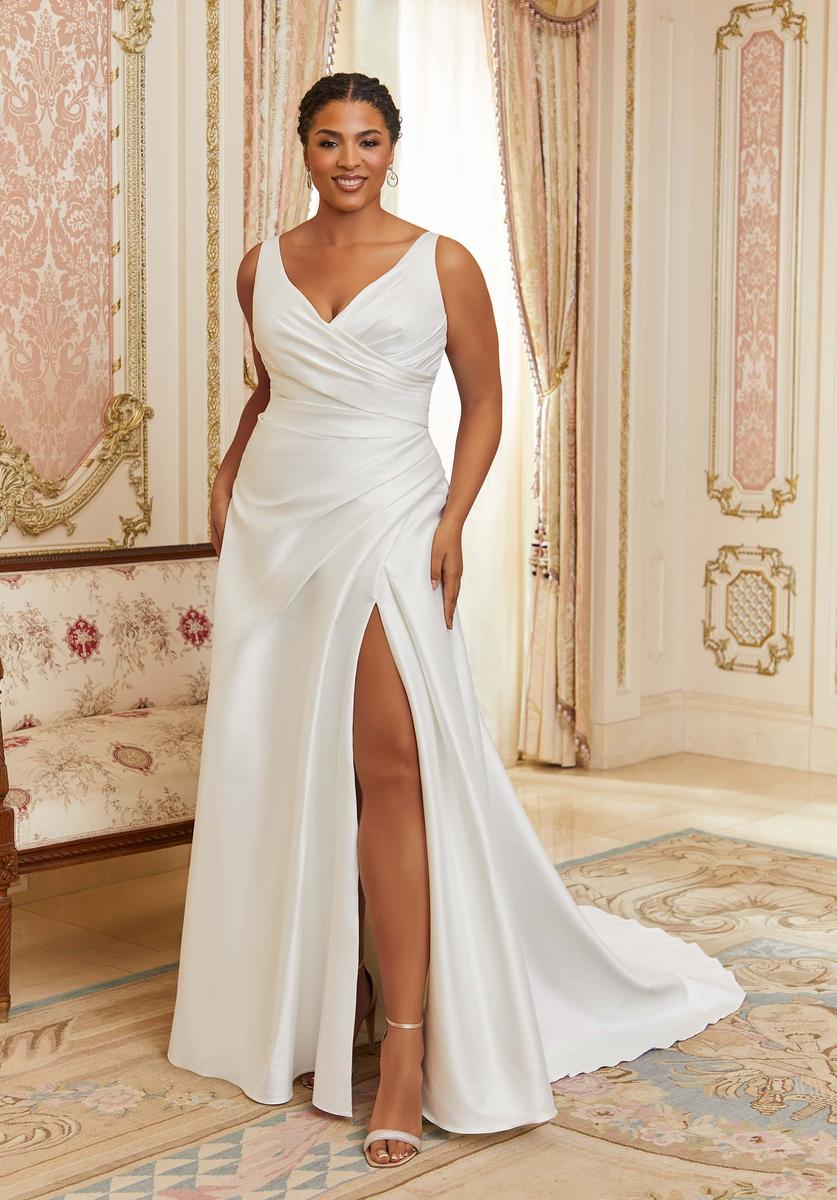
The quote at the bridal salon was $400 for a hem, a bustle, and “minor bust adjustments” on a sample-sale gown a friend bought in a size 24. The quote at the independent tailor two blocks away, on the same dress, for the same work, was $185. Same fabric. Same hand-stitched bustle. The $215 gap was the bridal-salon markup, paid by every bride who assumes the salon that sold the dress is the only place qualified to alter it. I’ve watched four friends pay a version of that markup because nobody told them they had options. The alteration line is where the most money quietly leaves a plus-size wedding budget, and the easiest place to claw it back.
Every dollar figure below comes from quotes I gathered across six markets in the last twelve months, cross-referenced against David’s Bridal’s published alterations menu and the cost guides the big wedding platforms put out each year.
The honest service-by-service cost breakdown
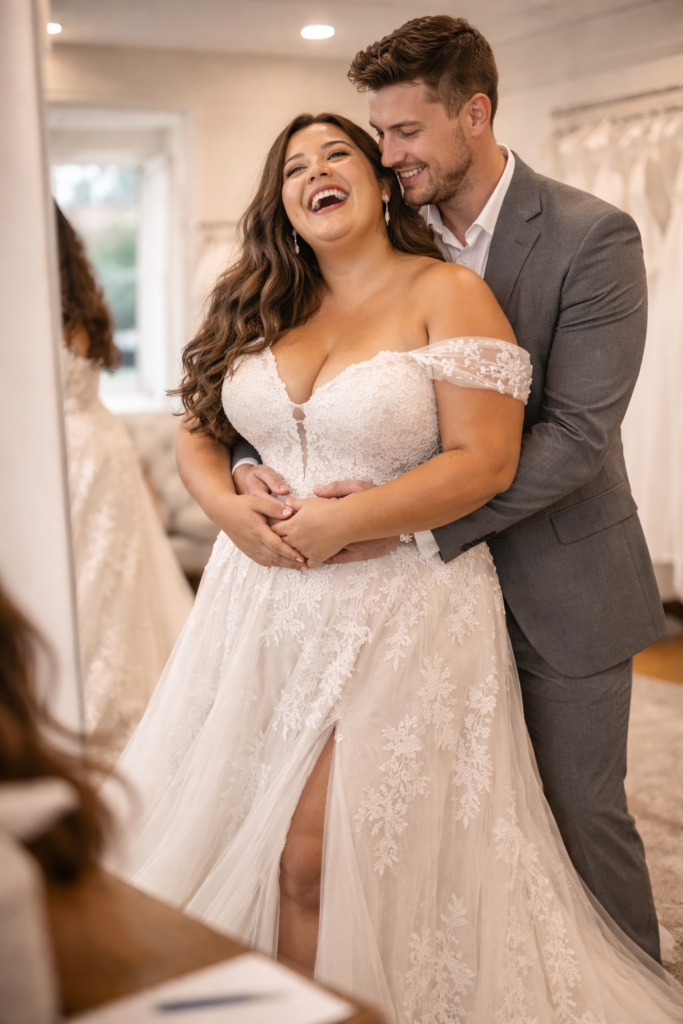
Most shops won’t publish prices because labor is sized to the garment, fabric, and size run. A flat estimate before they see the dress is rough; a service-by-service range is reasonable, and any tailor who refuses to give one is signaling inexperience or a markup they don’t want quoted. Ranges below are what I’ve seen from independent tailors and bridal-specialty seamstresses across a $200 guest dress and a $1,400 wedding gown.
Hem (floor-length, no horsehair): $60 to $120. The simplest service. A straight hem on a single-layer skirt sits at the low end; a lined skirt clocks higher.
Hem with horsehair braid or beaded edge: $120 to $250. The horsehair adds two pass-throughs and stiffer fabric. A beaded hem requires hand-resetting beads to the new length.
Bust adjustment (taking in or letting out): $80 to $150. The most common alteration on a plus gown ordered to upper measurement. Most bridal patterns oversize the bust by a half to a full cup, and bringing it to a clean line is two hours of seamstress time.
Bustle (American, French, or ballroom): $50 to $120. American (over-bustle, visible loops) sits at the low end. French (under-bustle, hidden loops, the prettier finish) runs middle. Ballroom lands at the high end. Add $20 to $40 per extra bustle point on a long cathedral train.
Taking in the waist: $80 to $150. Cost climbs with seam count. A four-seam princess-cut gown costs more than a two-seam A-line.
Adding cups (sewn-in bra cups or padding): $30 to $60. The cheapest meaningful alteration on the list. A good tailor adds foam, push-up, or contoured cups to almost any lined bodice in under an hour.
Side panels (full restructure): $100 to $200. The labor when the gown doesn’t close at the back. Some shops include the fabric, some don’t. Ask.
Strap or sleeve addition: $40 to $90. Adding spaghetti, off-shoulder, or modesty sleeves. The simplest is a single shoulder strap; the most involved is converting strapless to a full sleeve with matching fabric.
Steam and press: $40 to $90. Almost every gown needs it. Build the line in.
The math: a guest dress package (hem, bust, optional cups) runs $170 to $330. A plus wedding-party gown package (hem, bust, bustle, waist take-in, steam) runs $310 to $630. A wedding gown with side panels or restructure runs $400 to $900 all-in. Above $900 usually means heavy beadwork being hand-reset after every seam change or a full bodice rebuild. The $200-$500 range is real for guest dresses; $400-$900 is the target for wedding-party gowns at independent or bridal-specialty tailors, well below the $700 to $1,400 the bridal salon will quote on the same work.
The four tiers of where to alter
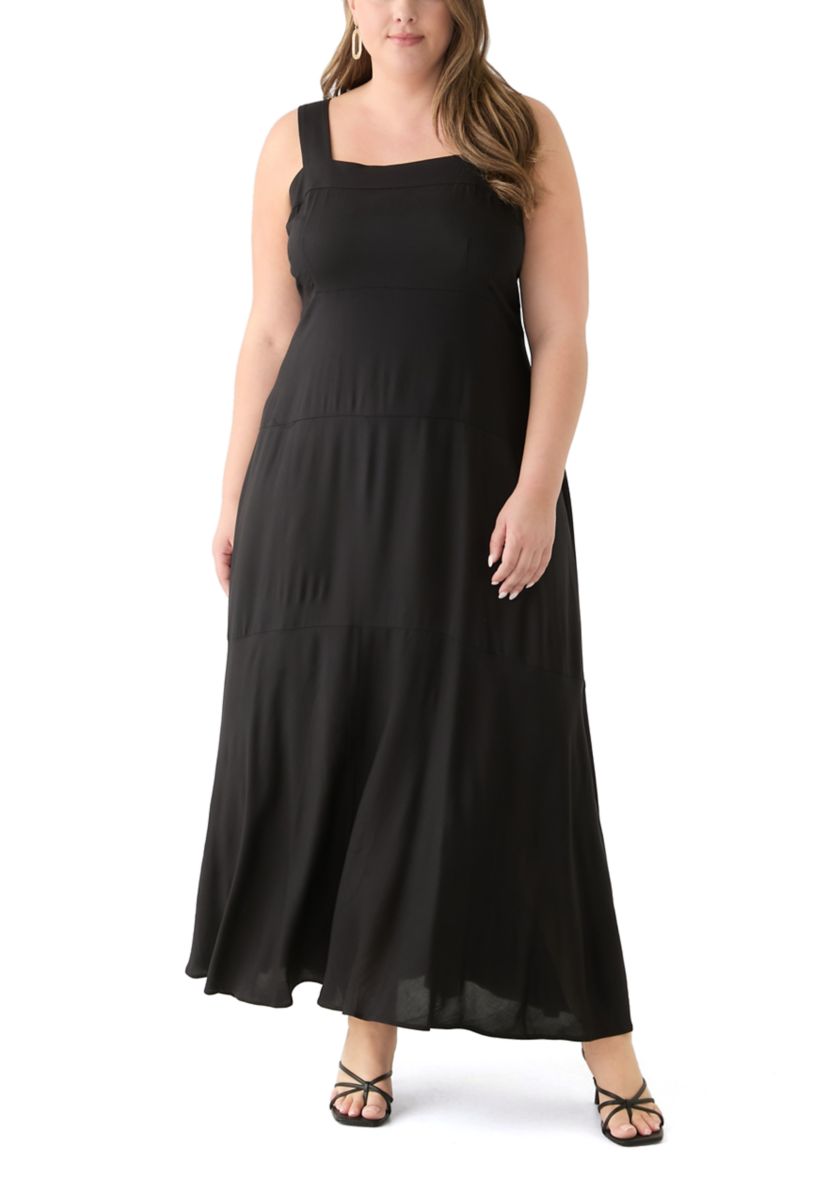
The salon that sold you the dress is the most expensive place to alter it, and it’s the default because the salon quotes alterations at checkout when you’re emotionally committed. The markup runs two to three times the same work at an independent tailor.
Tier 1, independent tailors ($). The local shop that does suits, hems, and household tailoring. A wedding gown package runs $150 to $400 for everything short of beaded restructure. The risk is fluency: not every neighborhood tailor has handled satin, charmeuse, beaded mesh, or boned bodices. The screening question is “how many wedding gowns have you altered in the last twelve months?” Under ten is a pass for a structured gown (fine for a guest dress or simple bridesmaid). Over thirty puts the tailor in the experienced tier at independent pricing. Ask for before-and-after photos on similar fabric.
Tier 2, David’s Bridal in-house alterations ($$). The middle tier that gets unfairly dismissed. David’s Bridal alterations run a published menu, the seamstresses see plus gowns every day because the brand grades to a 30W, and a full package sits in the $300 to $600 range. Work is consistent because the same team has altered the same silhouettes thousands of times. Drawback: turnaround can stretch to four weeks at peak. Book early. If you bought the dress at David’s, this is almost always the right call.
Tier 3, bridal-specialty seamstresses ($$$). Independents who only work on bridal. Cost runs $400 to $900 for a full package, higher on heavily beaded gowns. The value is the consult and the interior finishing (canvas, hidden boning, custom bustle loops). This is the tier for a $1,500-and-up gown, especially heavily beaded or fully boned silhouettes where alterations are the difference between a gown that photographs like $3,000 and one that photographs like $800.
Tier 4, the bridal salon that sold you the dress ($$$$). Almost always the most expensive. The salon’s in-house team is often a contracted bridal seamstress (Tier 3) marked up another forty to eighty percent for overhead. Reliable, consultation built in, salon takes responsibility if something goes wrong - real value at $4,000-plus gown prices. Below that band the markup rarely pencils out. “Preserving your warranty” or “the only people qualified” is usually marketing.
The plus-specific fit issues that genuinely take longer
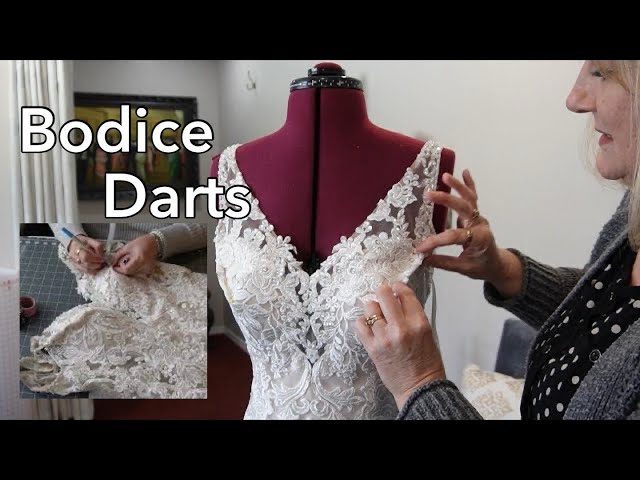
Plus-size bodies have more fabric to work with, and that is mostly good news. More margin to take in, more seam allowance to let out, more room to correct through structural changes rather than full pattern rebuilds. The places where plus-specific work genuinely takes longer are narrower than the bridal salon will tell you.
Cup sizing on bridal patterns runs small. The single most consistent fit issue I’ve seen across plus brides. A gown ordered to upper measurement almost always arrives with a bust cup fitting a B or C, regardless of actual cup size. Scaling up to a DD or larger runs $100 to $150 and is the line item I wouldn’t skip. Sample-shopping the cup volume over a structured longline bra in your size, before you order, saves the alteration on the lucky bodies. For everyone else, plan for the line.
Back-panel work at size 24-plus takes longer. Most bridal patterns assume a narrower upper back than the plus body presents at the same hip measurement, and the back-panel fit is what makes a gown read tailored versus borrowed. Clean back-panel work at 24-and-above runs three to five hours, against one to two at size 18. Don’t let a tailor quote back-panel work in the same band as a hem.
Side panels and letting-out is faster than the salon will quote if the gown has standard seam allowance, slower if it’s fully boned and the channels need to be re-sewn. The answer to “how much seam allowance do I have on this gown” tells you whether the work is in the $80 band or the $200 band.
The labor band that does not change much with size: hem, bustle, and steam. A floor-length hem on a size 28 gown takes the same time as a size 14 gown if the construction is comparable, because the labor is the circumference and fabric weight, not the bodice measurement. A tailor upcharging the hem because the gown is “extended size” is using fabric-as-an-excuse the way clothing brands do.
The bring-with checklist for every fitting

Half the alteration mistakes I’ve watched friends make come from showing up without the right inputs. The tailor pins to what they see. Wrong undergarments, wrong shoes, no reference image, and the alteration is calibrated to a body that won’t show up on the wedding day.
The shoes you will actually wear. The hem is set to heel height. A one-inch difference between fitting heels and wedding-day heels is the difference between a clean floor break and a hem that drags or floats.
The undergarments you will wear. The bodice is pinned to the body in the bra. Switching bras between fitting and wedding day shifts the bust line by half an inch in either direction; shapewear changes the waist by one to two inches. Decide the undergarment plan before fitting one and bring the same pieces every time.
A slip if you plan to wear one. The slip changes how the skirt drapes and whether the hem behaves on real fabric.
A photo of the look you want. The reference gives the tailor a silhouette target and tells you whether the gown can get there with the alterations on the table. A tailor seeing the photo for the first time at the final fitting can’t redirect the work.
A snack and water. The third fitting can run ninety minutes, and a low-blood-sugar bride pinned into a heavy gown is the situation nobody warns you about.
The three-fitting rule
The standard schedule for a plus-size wedding gown alteration is three fittings across six to eight weeks. The gown’s fit will shift between fittings even if the body doesn’t, and the tailor needs to see the gown on you at each stage to dial in the next.
Fitting one (eight weeks out): The diagnostic. The tailor pins the major alterations, talks through the plan, gives the final quote, and takes the gown for the first round of work.
Fitting two (four to five weeks out): The intermediate. Major alterations are done, the gown is on you with real undergarments and shoes, and the tailor catches anything that didn’t land in fitting one. Most of the bustle work happens here.
Fitting three (one to two weeks out): The final. The gown is finished, you wear it for thirty minutes minimum to check fit under movement, and the tailor steams and presses. You take the gown home.
A fourth fitting becomes necessary if the body changes two inches or more at bust, waist, or hip in either direction. Wedding stress moves bodies both ways, and a fourth fitting in the last week is normal for plus brides who lost or gained measurable size during planning. Add $40 to $80 for the labor. The tailor won’t be surprised.
DIY mods that work versus the ones that ruin gowns
Some alterations are genuinely DIY-able on guest dresses and simple wedding gowns. Others are where inexperienced DIY ends careers and gowns. The line is structural.
What works for the day-of when a tailor isn’t on call: snap-on bra cups, fashion tape, and double-stick body tape. Snap-on silicone bra cups at around $18 add a half-cup to a full-cup volume in a strapless gown without a sewn alteration; they survive a full reception applied to clean skin. Hollywood Fashion Tape at around $9 holds a sweetheart neckline against a larger bust or a wrap closure against movement. Double-stick body tape at around $11 secures a backless gown and is the only fix for a low-cut wedding-party gown that wants to drift off the shoulder. All three are reversible and non-destructive.
What I would never attempt on a wedding gown: hemming heavy satin or charmeuse yourself, taking in seams on a boned bodice, adding sleeves to a strapless gown, modifying a beaded edge, or bustling a long train without professional setup. Satin and charmeuse slip under a sewing-machine foot in ways that produce a wavy hem you can’t correct without re-cutting. Boned bodices have interior structure home equipment can’t navigate. Sleeve additions require fabric matching from the gown’s interior seam allowance, which a tailor knows how to harvest. Bead edges have to be hand-reset stitch by stitch. A self-set bustle drags or rips at the first dance.
The rule: anything that removes structural fabric or adds it belongs to a tailor. Anything that adds a removable element (snap-on cups, tape, a sash, a brooch) is fair game.
The realistic alteration budget
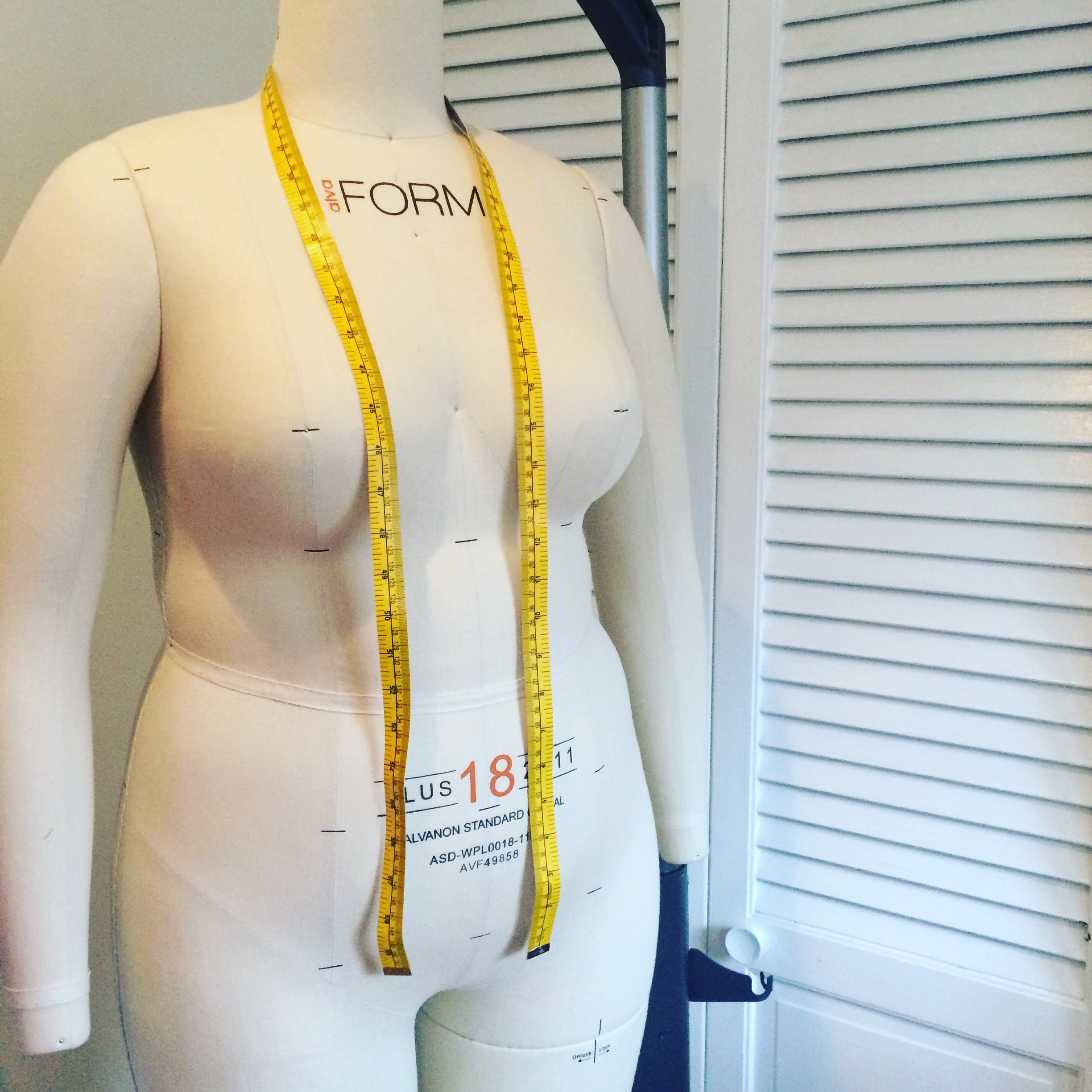
The short version: $200 to $500 for a guest dress, $400 to $700 for a wedding-party gown, and $400 to $900 for a wedding gown at an independent or bridal-specialty seamstress, against $700 to $1,400 for the same work through the salon. Above those bands, you’re either paying for beadwork and boning or paying the markup.
The single move that saves the most money is asking, before fitting one, “what would this alteration package cost at an independent tailor or at David’s.” The salon’s answer tells you whether the markup is in line or whether you’re paying the bridal-tax version. The independent tailor’s quote on the same work, gathered in a thirty-minute consultation with a photo of the gown, is the number to anchor against. The bride who shops the alteration line the way she shopped the gown saves $200 to $700 without losing a single stitch of quality. The alteration ticket isn’t where the budget should hide.