

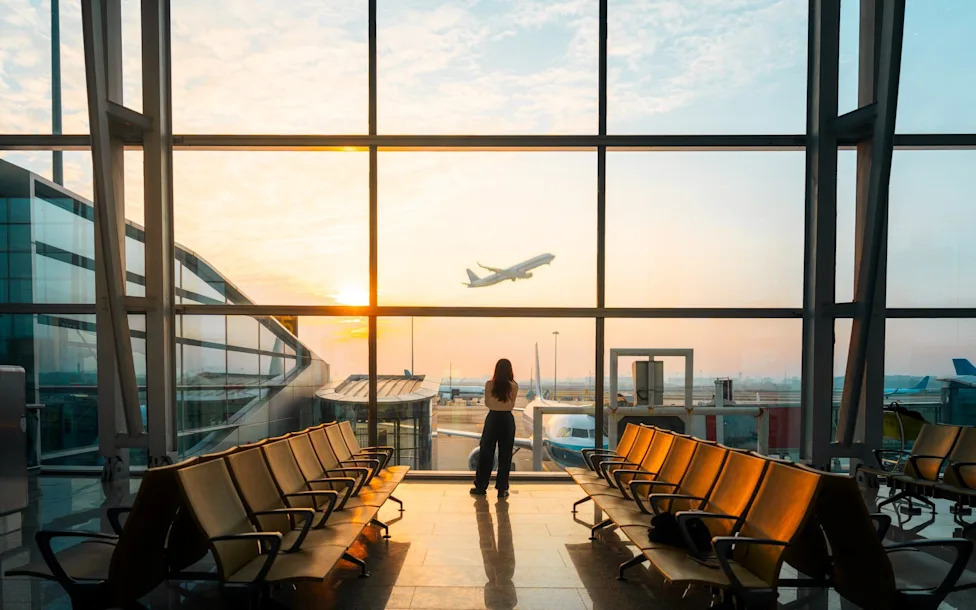
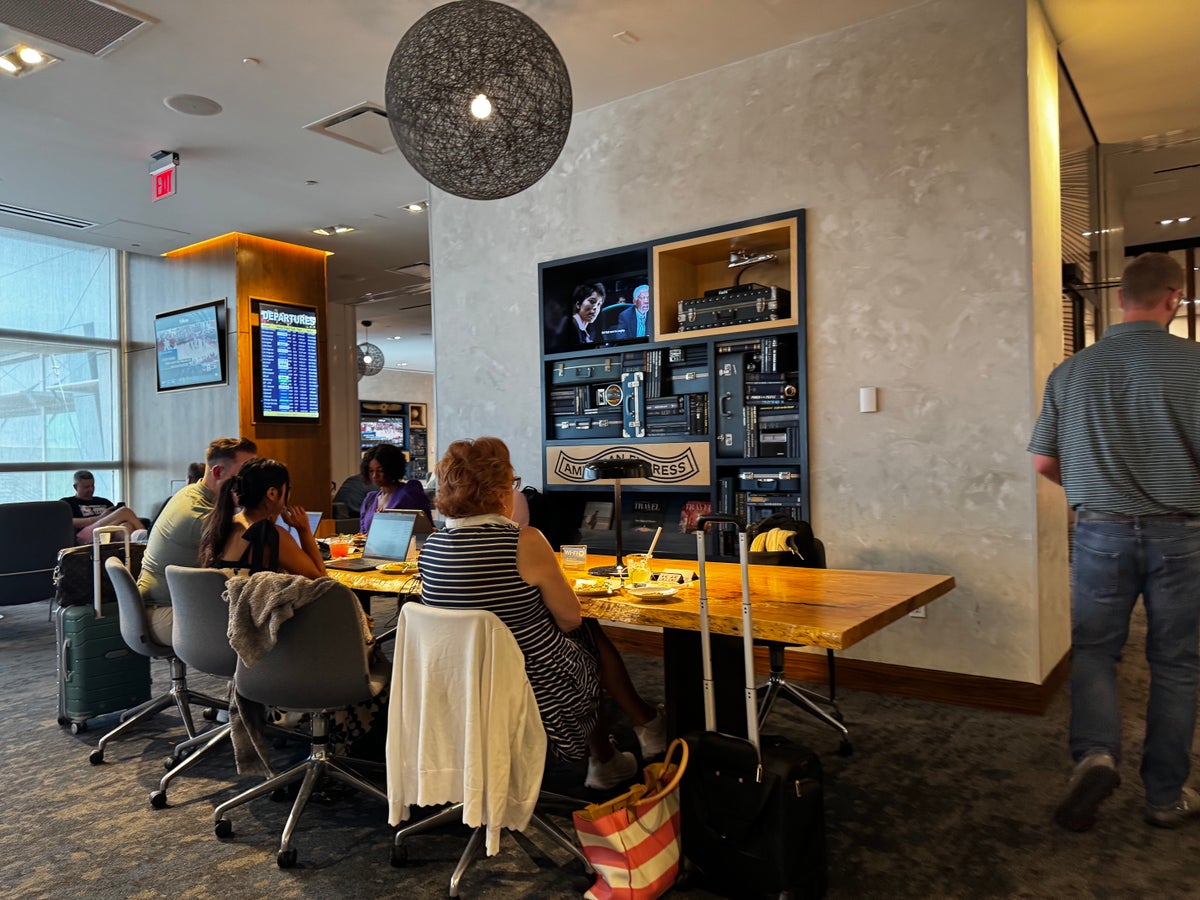
It is 7:43 AM on a Tuesday in October 2024, and I am sitting in one of the navy leather club chairs in the Delta Sky Club at LAX Terminal 5, watching the sun come up over the tarmac through a window that does not open. I have a four and a half hour layover. My flight to Detroit was rerouted because of weather, and the gate agent gave me a Sky Club pass as an apology, which I accepted with the kind of gratitude reserved for people who know that lounge access is something you usually have to engineer rather than receive. The chair arm is pressing into my left hip the way it does in a body that was not part of the spec sheet when somebody at Delta’s design firm decided that 19 inches of seat width was sufficient.
My Quince cashmere wrap, the one that actually fits a size 4X, is draped behind me on the back of the chair, partly because I want it accessible and partly because it covers the seam where my hip meets the armrest. The buffet has croissants in a glass case with no labeled allergens, scrambled eggs in a chafing dish with a serving spoon that requires me to lean across the table to reach, and a yogurt parfait station with a sneeze guard about the height of my collarbone. The bathroom door, when I went in twenty minutes ago, was visibly narrower than the gate-area bathroom door I used right before walking in. I measured it later. Eight inches narrower.
This is the chapter the airline glossy never publishes. Lounges are sold as a premium experience, an upgrade, a sanctuary, and for a lot of travelers they are exactly that. For a plus-size traveler, a lounge is also a series of design decisions that you have to navigate, and the only way to navigate them well is to know which lounges have been built or renovated with bodies like ours in mind, which have not, and how to get into the ones worth getting into without spending your annual travel budget on day passes.
How to Actually Get Lounge Access
Let me save you the marketing fog and walk you through the four real paths into a lounge in 2026, because the answer to “should I get lounge access” is almost always yes if you fly more than four times a year, and the answer to “how” depends on your spending pattern more than your fare class.
Priority Pass is the entry point most travelers consider first. The standalone membership runs $99 a year for the Standard tier, $329 for Standard Plus, and $469 for Prestige, which gets you unlimited visits with no per-visit fee. According to Priority Pass’s own 2024 published figures, the average walk-in day pass at a participating lounge runs about $35 USD, which means the Prestige membership pays for itself at roughly 14 visits a year. If you are flying once a month and using a lounge each time, Prestige is cheaper than paying at the door, and you get access to over 1,500 lounges globally. The catch is that Priority Pass lounges in the US have been quietly disappearing. American Express pulled most of its US Centurion Lounges out of the network years ago, and a number of Delta Sky Clubs no longer accept Priority Pass at peak hours. The network in Europe, Asia, and South America is still strong.
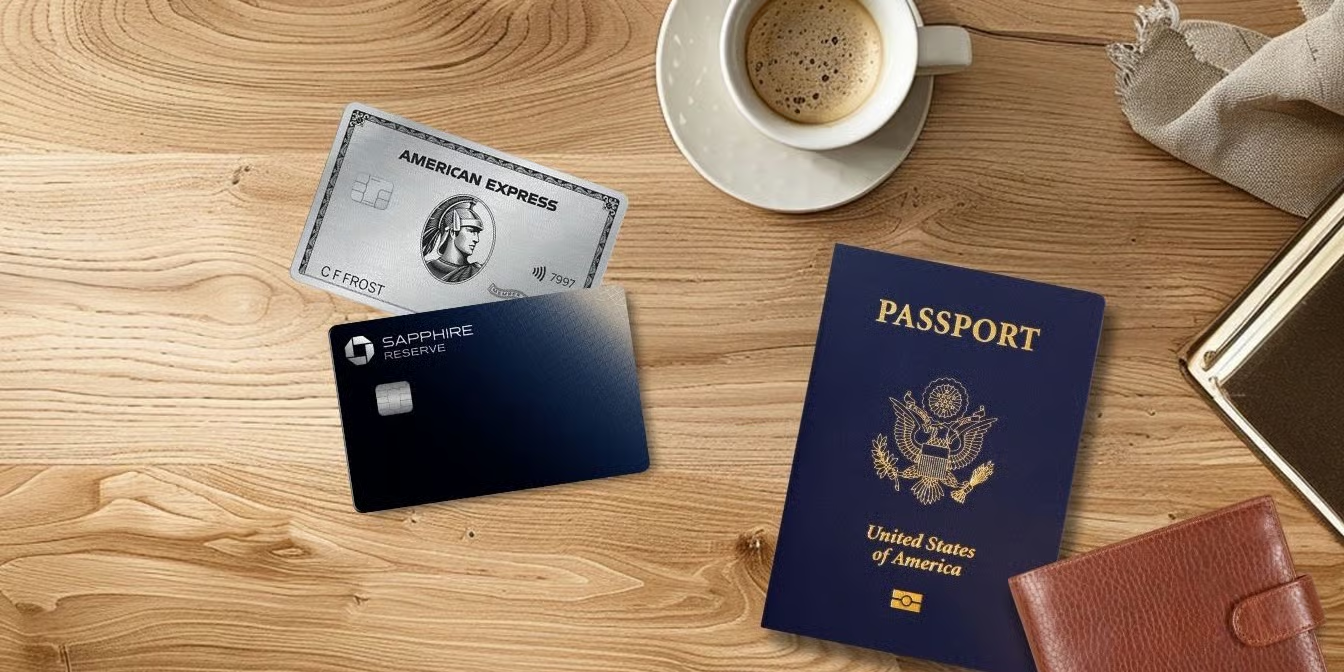
The credit-card route is what most frequent travelers actually use, and the math here matters. The American Express Platinum carries an $895 annual fee in 2026 (up from $695 after Amex’s January 2026 refresh) and gives you access to the Centurion Lounge network, Delta Sky Clubs when flying Delta same-day, Priority Pass Select (lounges only, no restaurants), Plaza Premium, Escape, and a handful of Lufthansa lounges in some configurations. Capital One Venture X runs $395 a year and gets you into Capital One Lounges plus Priority Pass with unlimited guests, which is the part that matters if you travel with a partner. Chase Sapphire Reserve, now at $795 a year after its mid-2025 overhaul, also includes Priority Pass Select and the growing Chase Sapphire Lounge by The Club network.
The stack a lot of travel writers still recommend is Amex Platinum plus Capital One Venture X. The two cards together cost about $1,290 a year after the 2026 Platinum fee hike, and they get you into virtually every premium lounge worth visiting in the US plus unlimited Priority Pass access globally, with the Venture X covering your guest. If you fly with a partner, the Venture X’s unlimited guest policy alone justifies its fee. Whether the combined $1,290 still pencils out at the new Platinum price depends on how much you actually use the Centurion network and Amex’s stack of category credits.
The day-pass purchase math is worth running too. Most US lounges sell day passes at the door for $50 to $79. The Delta Sky Club walk-up rate is $50 if you have a same-day Delta boarding pass. The Amex Centurion Lounges do not sell day passes at all, which is a deliberate choice to control crowding. If you fly twice a year and only want occasional access, paying at the door is fine. If you fly six or more times a year, a card is cheaper within one year.
Status-based access is the final route, and it is the hardest to engineer if you do not already fly enough to earn it. Delta Diamond Medallion, United Premier 1K, and American Executive Platinum all include some lounge access, but generally only on international itineraries or specific routes. Star Alliance Gold gives you access to most Star Alliance member lounges globally. Oneworld Emerald is the equivalent. If you are not already in one of these programs, this is not the path for you, and that is fine.
What to Test for as a Plus-Size Traveler
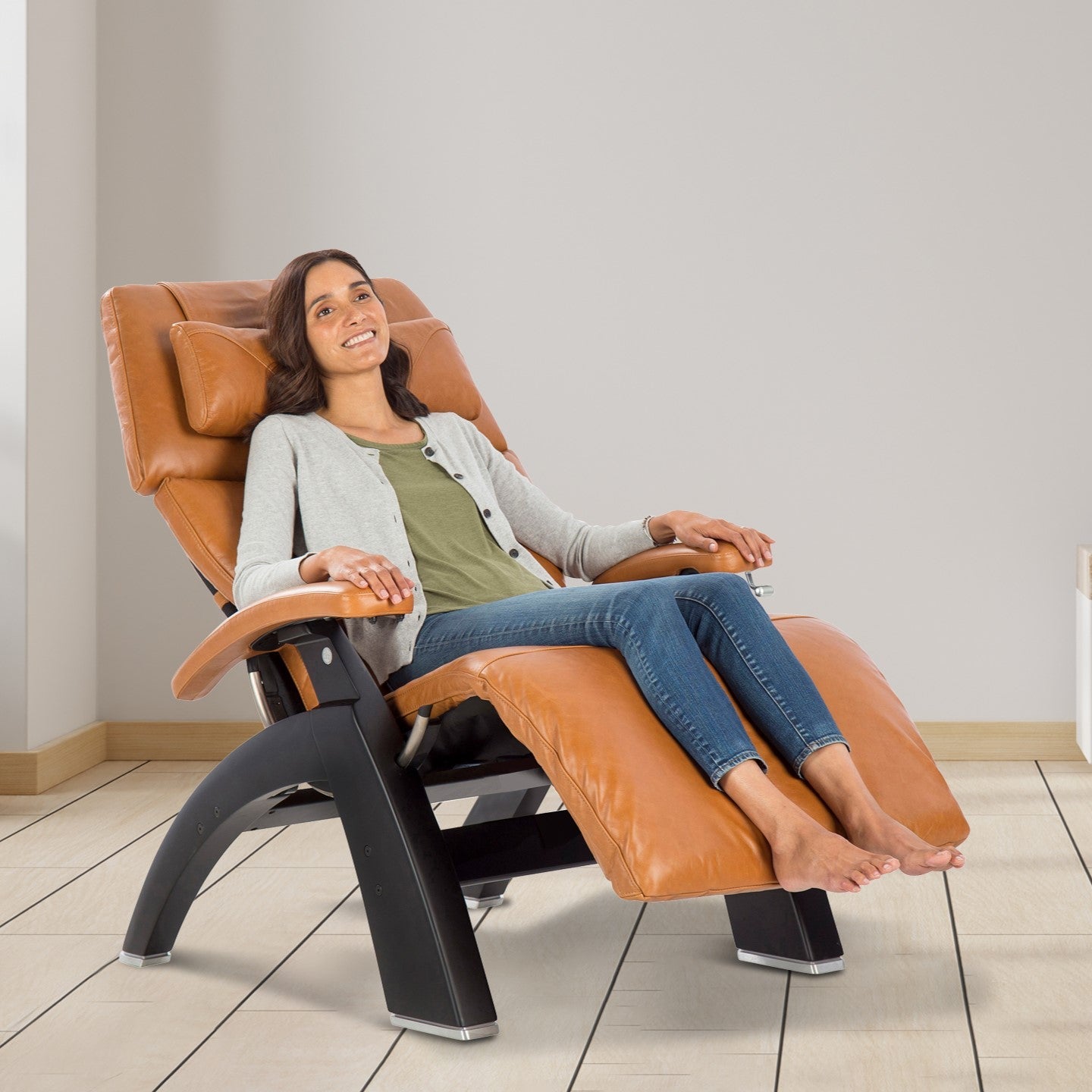
The first thing I check when I walk into any new lounge is the chair situation. Specifically, I look for chairs without arms, or with arms wide enough that the seat itself is at least 21 inches wide. The standard “club chair” in most US lounges has a seat width of 18 to 20 inches between the arms, which is workable if you are around a size 18 or smaller and brutal above that. The good news is that most lounges have a mix of furniture, and the chairs along the windows or in the dining area are often armless benches or banquette-style seating. Walk the lounge once before you settle in. If the only available chair is the navy leather club chair, ask the host if there is a quiet zone with different seating. The Centurion network usually does, the Capital One lounges definitely do, and the Sky Clubs are hit or miss.
The bathroom door width is the test that nobody publishes and that matters more than the food. American lounges, post-2018 renovation, are generally ADA compliant, which means at least 32 inches of clear door width. European lounges, especially the older Lufthansa and British Airways spaces, are often not, and the doors can be as narrow as 26 inches. If you are turning sideways to get into a bathroom stall, you already know what I am talking about. The workaround is to use the accessible stall, which is almost always wider, and to do this without apology even if there is a line. Tigress Osborn, executive director of the National Association to Advance Fat Acceptance, has been a public voice for fat travelers’ right to use accessible facilities when the standard ones do not actually fit. The accessible stall is not just for wheelchair users.
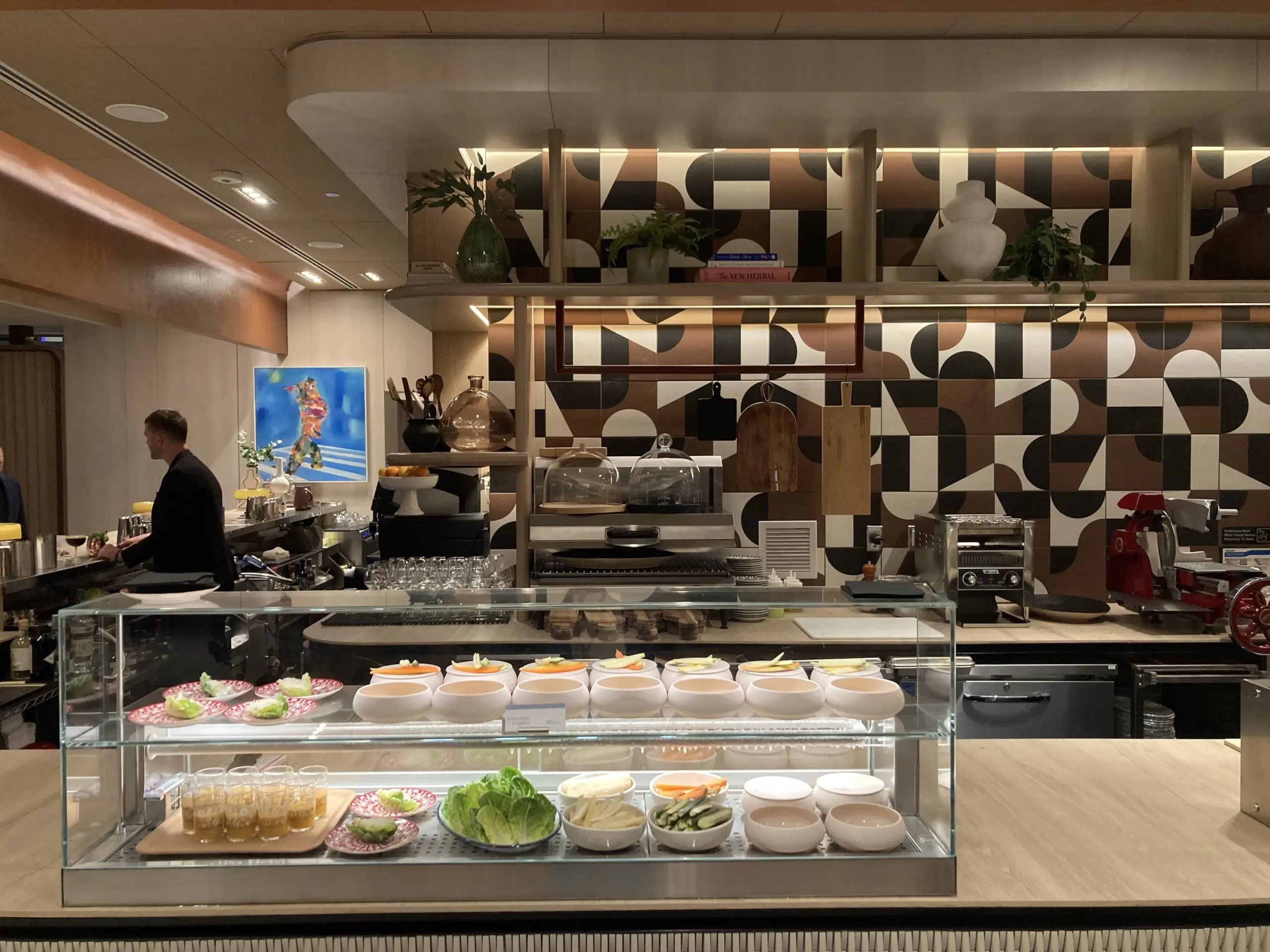
The buffet table reach is the next thing I assess. Most lounge buffets are set up so that you reach across a serving counter that is 30 to 36 inches deep. If you are in a larger body, that reach across is the difference between a clean grab and getting yogurt on your shirt. Look for the lounges that have buffet attendants who will plate for you. The Centurion Lounges do this. The Polaris Lounges do this. The standard Sky Club generally does not. If you are at a self-serve buffet and the reach is awkward, ask for a tray and load it one plate at a time.
For premium lounges, the shower stall dimensions become relevant. The Polaris Lounge at Newark has shower suites that are roughly 5 feet by 5 feet, which is genuinely spacious. The Centurion Lounge showers are smaller, around 3 feet by 4 feet, functional but tight. Plus-size travel writer Stephanie Yeboah, who has documented airline and accommodation accessibility for outlets including Refinery29, has been clear that shower stall dimensions are one of the most underreported pieces of accessibility data in the travel space. She is right.
Six Specific Lounges Audited
The Centurion Lounge at Las Vegas Harry Reid is, in my experience, the best US lounge for a plus-size traveler. The space is large, the seating includes a long banquette along the window with no arms, the dining area uses chairs with 22-inch seat widths, and the buffet is staffed so you do not have to reach across. The bathroom doors are wide. The shower suites are tight but usable. The crowd management is generally good. I have spent three layovers there and never felt squeezed.
The Capital One Lounge at Washington Dulles is the other lounge I recommend without reservation. It opened in 2022 with a clear focus on accessibility and comfort. The seating is varied, the work pods have generous interior dimensions, the wellness room has a meditation chair that comfortably fits a larger body, and the food hall concept means no buffet line. You order at a station and food comes to you. It is what a lounge built in this decade should look like.
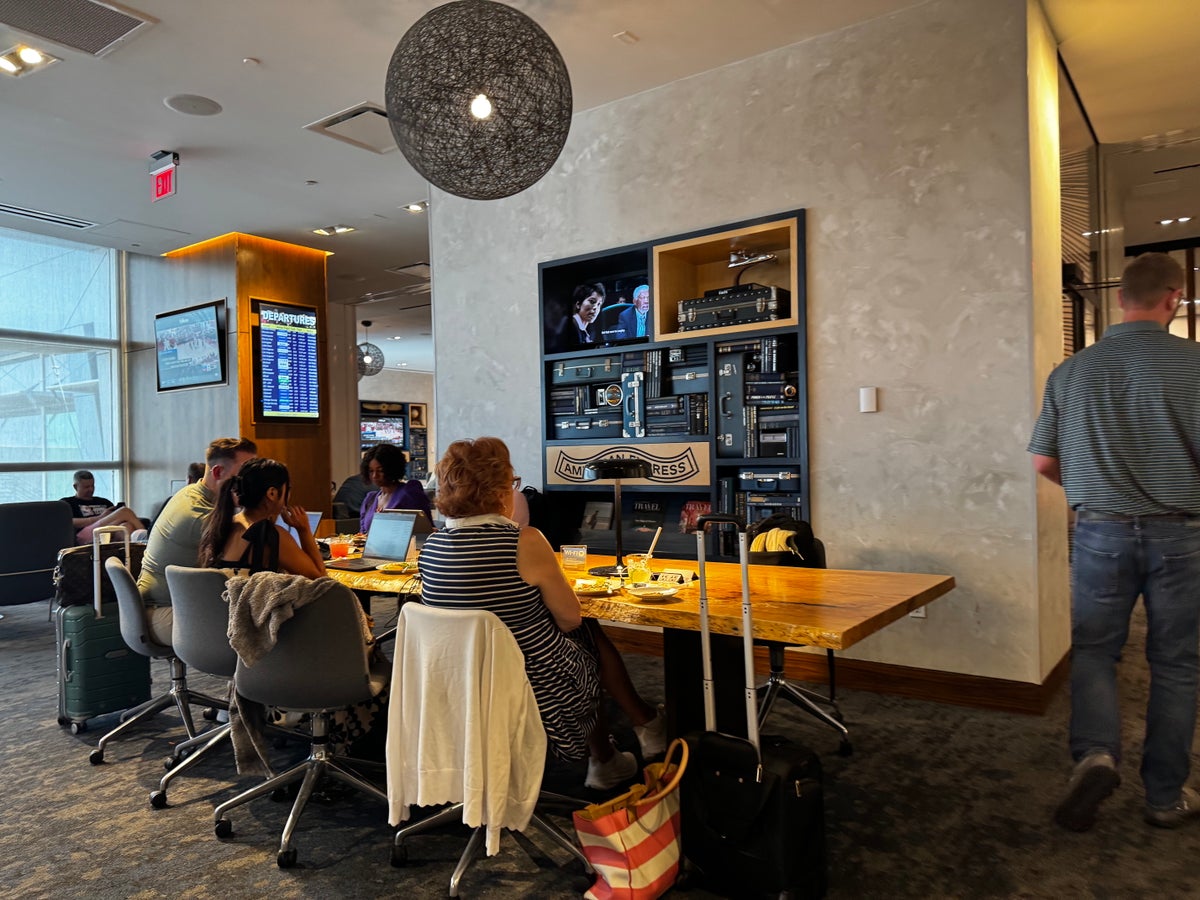
The Delta Sky Club at LAX Terminal 5, where I am sitting as I write this, is fine. It is not designed for me. The club chairs are standard 19-inch seat width with leather arms that do not give. The buffet is self-serve with a counter you have to reach across. The bathroom door is, as noted, eight inches narrower than the gate-area bathroom. The view is excellent. The coffee is good. If you have access, use it. Just do not expect comfort.
The United Polaris Lounge at Newark Liberty is one of the most spacious lounges in the US system, but it is gated behind a Polaris international business class ticket, which is not a casual purchase. If you are flying Polaris, the lounge is genuinely worth the time. The dining room serves restaurant-style table service, which solves the buffet problem entirely. The shower suites are 5 feet by 5 feet. The day suites have a lie-flat bed. The seating mix is good.
The Plaza Premium at Toronto Pearson Terminal 1 is the Priority Pass lounge I recommend for international transits. The chairs are mostly armless or generously armed, the buffet is staffed during peak hours, and the shower facilities are bookable. Brett Snyder at Cranky Flier has reviewed the Plaza Premium network multiple times and called the Toronto lounges some of the most consistent in the system, which matches my experience.
Singapore Airlines flies out of JFK Terminal 4 but does not run a dedicated SilverKris lounge there. Eligible passengers are routed to partner spaces including the Air India Maharaja Lounge, the Virgin Atlantic Clubhouse for Suites and Solitaire PPS members, and the Capital One Lounge. If you are flying Singapore in a premium cabin out of JFK, ask at check-in which partner lounge your fare class accesses, because the experience varies sharply between them.
The Bathroom Problem at Every European Lounge
I want to be specific about this because nobody else seems willing to be. The European lounges I have used, including Lufthansa Senator at Frankfurt, British Airways Galleries at Heathrow Terminal 5, Air France at Paris Charles de Gaulle, and KLM Crown at Amsterdam Schiphol, all have bathroom doors and stalls that are noticeably narrower than US lounges. The Heathrow T5 lounge bathroom stalls measured at 24 inches of interior width when I traveled through last year, which is several inches less than the US standard. The shower facilities in European lounges are often partitioned into very narrow stalls with little room to turn around.
The workaround for plus-size travelers transiting Europe is to use the gate-area family restrooms or the airport’s main bathrooms before entering the lounge, and to time your needs accordingly. This is not a perfect solution. It is the solution that exists right now. The longer-term fix is for European carriers to renovate, and there is no indication that they intend to.
What to Pack for a Long Lounge Layover
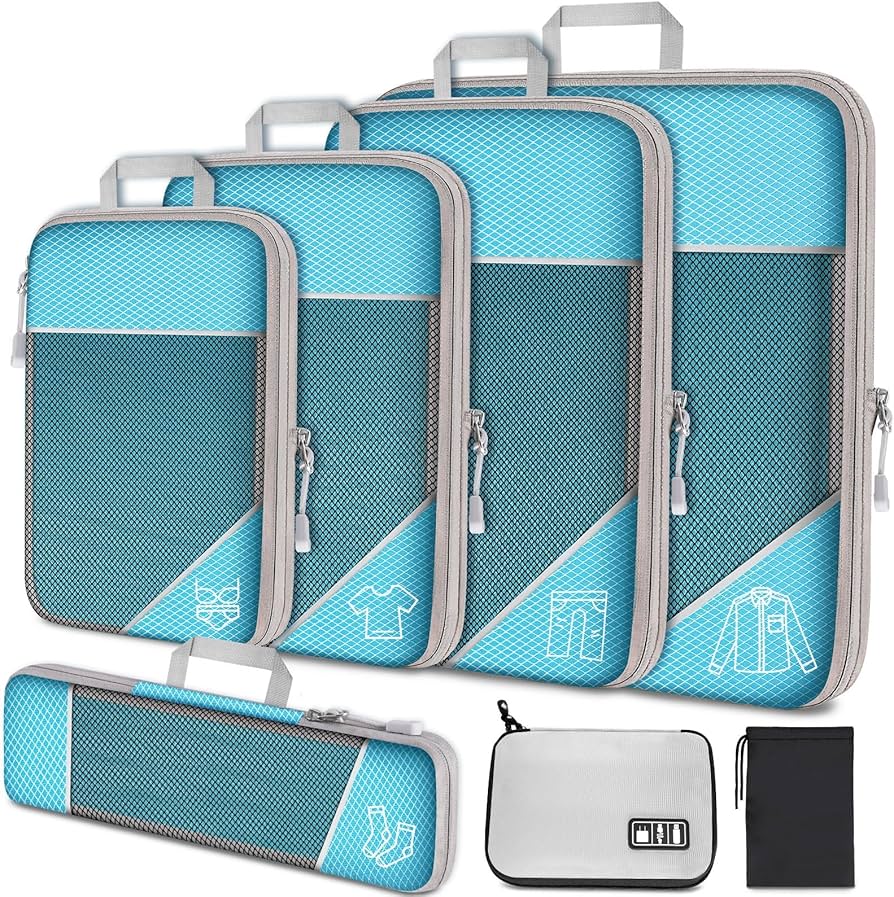
A compression refresh kit lives in my carry-on for any layover longer than three hours. This is a clean pair of compression leggings or shorts, depending on what I am wearing, and a small bottle of body powder. If you are larger and you have been sitting on a plane for five hours, changing your compression layer in the lounge bathroom before your next flight is the difference between getting off the second plane feeling human and getting off feeling broken.
A change of underwear, always. Long-haul travel is sweaty work, and lounges are one of the few places where you can change in privacy.
The snack situation is worth planning for. Lounge buffets, especially the smaller Priority Pass lounges, often run out of food or have limited options if you have any food restrictions. I pack a few protein bars and a bag of mixed nuts as backup. The Bureau of Transportation Statistics reported that around 20 percent of US domestic flights experienced a departure delay in 2024, and if you are stuck in a lounge for longer than expected, having your own food matters.
Charging cables that work with European outlets are essential if you transit Europe regularly. Most premium lounges in dual-voltage configurations now have USB-C ports built into the seating, but I still pack a Type C to Type G adapter and a Type C to Type F adapter, plus my regular USB-C cable. The lounges in Schengen-zone airports tend to have Type F outlets. The UK uses Type G. Knowing this in advance saves you from having to ask the lounge agent for an adapter, which they may or may not have.
The Etiquette of Being a Visibly Fat Traveler in a Quiet Lounge
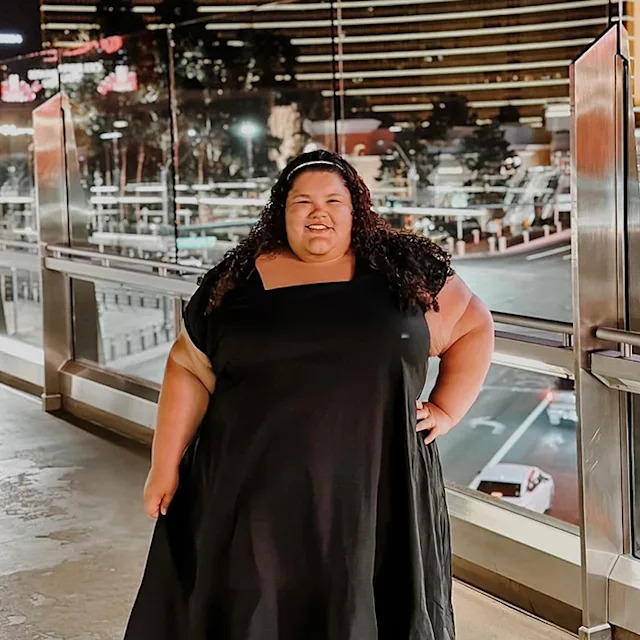
I am going to say this with the kindness it requires. There is no etiquette obligation specific to fat travelers in lounges. We are allowed to take up space. We are allowed to use the chairs that fit, even if that means asking to move from the first chair the host points us to. We are allowed to use the accessible stall when the standard stalls do not work for our bodies. We are allowed to ask for a tray at the buffet. We are allowed to be there.
What I have learned over the years is that asking quietly and confidently for what I need almost always gets me what I need. The hosts at premium lounges are trained in hospitality. They will move you to a different seat. They will plate your food. They will tell you which bathroom is more accessible. If you ask without apology, they will respond without judgment. The exceptions exist. They are rare.
The harder part is the other travelers, the ones who look at you the way some people look at any visibly fat body in a premium space. I have learned to make eye contact, smile, sit down, and proceed with my day. The lounge is a paid or earned amenity. You are there because you have access. That is the only credential that matters.
What an Actually Plus-Size-Friendly Lounge Looks Like
The argument I want to leave you with is this. Airport lounges were built for the body of a business traveler that the airlines assumed in 1985, and the lounge experience for a size 24 traveler in 2026 is a series of accommodations the airlines have not made. The 19-inch club chair, the narrow bathroom door, the buffet reach, the cramped shower stall, these are not accidents. They are the residue of design decisions that did not consider us. The work of being a fat traveler in a premium space is, in part, the work of compensating for that residue.
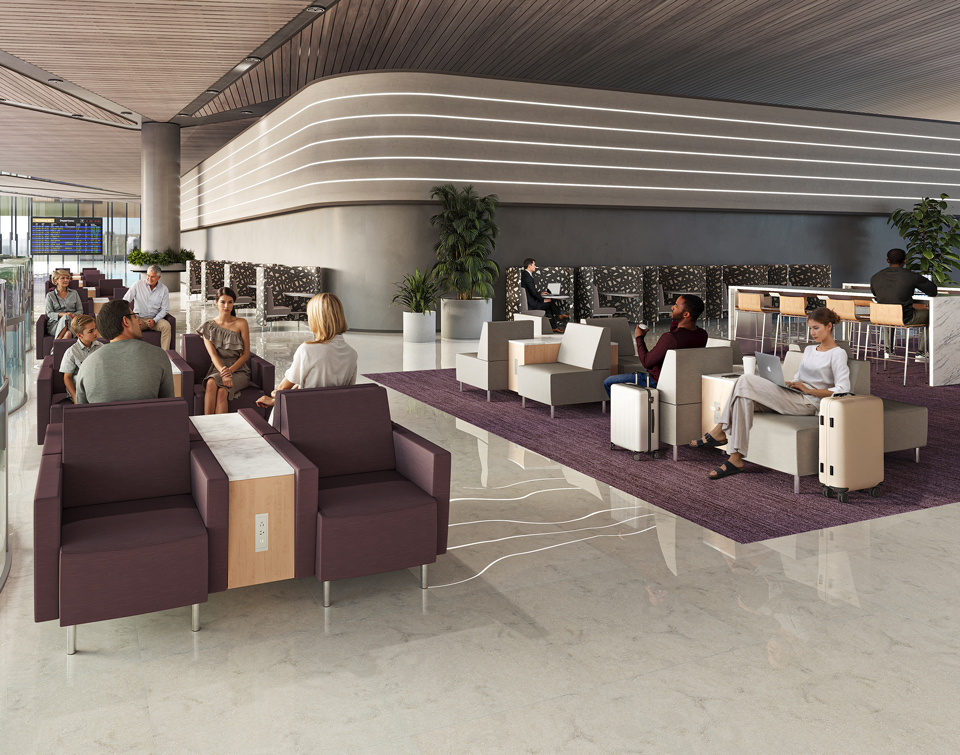
An actually plus-size-friendly lounge would have a published seating mix with at least 30 percent armless or wide-arm seating, bathroom doors and stalls at 36 inches of clear width, attended buffets or food-hall service models, shower stalls with at least 5 feet of interior dimension, and dining tables with chair clearance generous enough that you can pull your seat in without scraping your hip on the table edge. It would have a host trained to ask, not assume, what kind of seating each guest prefers. It would have a wellness room with a chair that fits a larger body. It would have published specifications, the way some hotels have started to publish accessibility specs for their rooms.
The two American lounges that come closest to this are the Centurion Lounge at Las Vegas Harry Reid and the Capital One Lounge at Washington Dulles. They are not perfect. The Centurion bathroom doors are 32 inches, not 36. The Capital One showers are smaller than the Polaris suites. But the seating mix in both lounges, the staffed food service, and the overall design awareness make them the two spaces in the US where I have walked in and not had to plan around my body. That is what a good lounge feels like. I want more of them.