
It was 5:47 pm on a Sunday in late September when I admitted that my Monday morning was not a personality flaw, it was a system failure. My one-bedroom in Crown Heights had the kind of closet you get for $2,400 a month in 2026 Brooklyn, which is to say it was a reach-in with a single rod, a top shelf, and a floor that was supposed to hold shoes but was holding a heap of dry-cleaning bags I had not gotten around to processing. Six days earlier, on the previous Monday at 7:51 am, I had been late to a 9 am editorial meeting at our SoHo office because I had pulled a pair of wide-leg trousers from a hamper, dragged a steamer over them for ninety seconds, and zipped them anyway. The shoes I wore - a pair of taupe block heels - had a black scuff on the right toe from a subway grate two Fridays prior that I had told myself I would buff out and had not. My bag was the wrong bag for the outfit, a slouchy hobo I had grabbed because the structured satchel was still packed with last Friday’s gym clothes. I sat down at my desk at 9:14 am, took a sip of cold brew, and felt the specific kind of low-grade shame that comes from looking like a person who does not respect her own time. I am a fashion editor. I dress people for a living. The trousers were rumpled.
That Sunday at 5:47 pm, with the trousers still in the hamper from six days earlier and the shoes still scuffed and the dry-cleaning bags still on the floor, I set a kitchen timer on my phone for forty-seven minutes and I built the protocol. Five phases. Each one timed. No phase longer than twelve minutes. Total budget under fifty minutes because anything longer than fifty minutes is something I will skip on a Sunday in February when the daylight is gone and the couch is calling. The protocol ended the Monday chaos. It has run every Sunday since, including the Sunday after Thanksgiving, the Sunday of a head cold, the Sunday I came back from a press trip to Lisbon at 4 pm jetlagged, and the Sunday before my sister’s wedding. Forty-seven minutes. The trousers have not been rumpled since.
What I want to give you in this article is not a lifestyle ideal. It is a tested, timed, plus-size-specific protocol that respects the actual physics of a size 18 to 24 wardrobe - the weight of a wool blazer, the sag a beaded gown puts on a hanger, the way a heavier knit creases when it is hung wrong. The Sunday reset content that already exists online almost entirely assumes a straight-size closet, where a cotton blouse weighs four ounces and a pair of jeans weighs fourteen and a hanger choice is aesthetic, not structural. At size 22, the wool coat weighs four and a half pounds. The hanger choice is structural. The protocol below accounts for that, and for the specific time math of a Sunday night in a small apartment with a real job on Monday and a real life on Tuesday.
Why “Sunday reset” content does not account for plus-size garment weight and storage
If you have spent any time on closet-organization TikTok or in the back half of Pinterest, you know the genre. A pastel-lit walk-in. A row of identical white velvet hangers. A wicker basket of rolled bralettes. The voiceover talks about “energy” and “ritual” and the camera lingers on a candle. The system being demonstrated is, almost without exception, a straight-size system applied to straight-size garments in a straight-size quantity. The garment count is forty pieces. The hanger budget is one hundred dollars. The drawer dividers are decorative because the drawer is half empty. None of this is wrong for the person it was built for. It is wrong for a plus-size closet, and the wrongness becomes structural the moment you try to apply it to a size 18 to 24 wardrobe.
Here is what changes at plus. A standard polyester blouse in size 6 weighs roughly five ounces. The same blouse in size 22 weighs roughly nine to eleven ounces because there is genuinely almost twice as much fabric in it. A wool-blend blazer in size 8 weighs about a pound and a quarter. In size 22, it weighs three and a half to four pounds. A pair of full-length wide-leg trousers in size 10 weighs about fourteen ounces. In size 24, with a heavier crepe and a longer inseam adjustment, it weighs nearly two pounds. The cumulative effect on storage hardware is real. A standard thin plastic tubular hanger rated for two pounds will start to bow under a size 22 wool coat within a week. The bow translates to a shoulder distortion that gets baked into the fabric and is visible the moment you put the coat on. A size 8 silk slip dress can hang on a wire hanger from the dry cleaner indefinitely. A size 22 beaded gown will pull the wire hanger into a V within four months and leave a permanent crease at the bust seam.
Allison Bornstein, the New York stylist whose book Wear It Well built the now-famous Three-Word Method, has written that the foundation of getting dressed quickly is editing your wardrobe down to pieces that share an aesthetic vocabulary. Her Three-Word Method asks you to name your style in three adjectives and then audit every item in the closet against those words. The method is sound. What the method does not address, because Bornstein is generally working with straight-size clients whose wardrobe inventory is more flexible, is the storage layer underneath. You can edit a plus-size closet down to a perfect twenty-four pieces and still have a Monday morning disaster if those twenty-four pieces are hanging on hardware that cannot hold them.
Tan France, whose Queer Eye styling philosophy and ongoing style work (including his MasterClass on capsule wardrobes) have become a baseline reference for weekly closet practices, has talked publicly about laying out the week’s outfits on Sunday evening. France’s version is essentially a hanger-rack lineup with five hangers labeled Monday through Friday. It works beautifully for him and for the size-medium clients he features. For a plus-size wardrobe, the same lineup needs reinforced hangers, more space between each hanger on the rod (because the shoulder structure on a size 22 blazer is wider than a size medium and they will physically crush each other if you crowd them), and a separate storage solution for the heavier knits because hanging a chunky merino sweater wrecks the shoulders within forty-eight hours.
Shira Gill, the Bay Area organizer whose books Minimalista and Organized Living have become the practical alternative to the Marie Kondo era, makes a more useful point for plus closets. Gill’s principle is that an organized closet is a closet with breathing room - she recommends visible space between hanging items and full visibility of every shelf. The principle scales beautifully to plus, but it requires honesty about what plus garments actually need. A capsule of twenty-five pieces in a size 22 takes roughly the same linear rod inches as a capsule of forty pieces in a size 6. The math of the closet is not piece-count, it is fabric volume, and any system that does not start from fabric volume will fail by Wednesday.
The protocol below is the version that accounts for all of this. Forty-seven minutes total. Five phases. Plus-size hardware assumptions baked in. Specific products named where the product matters.
Phase 1: the 5-day rewind (8 min) - what got worn, what failed, what needs cleaning
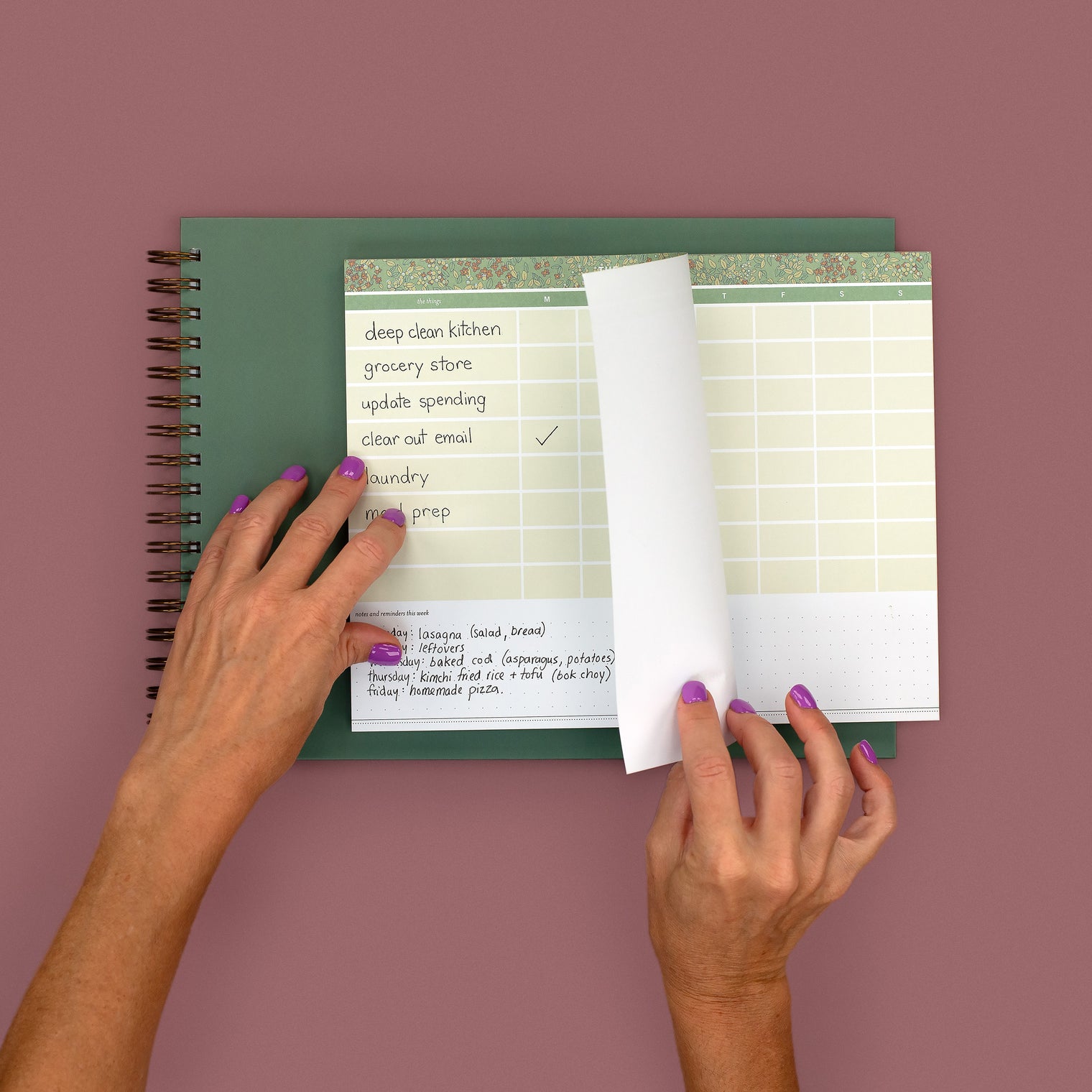
The first phase is diagnostic. You cannot plan the week ahead until you understand what happened in the week behind. The eight-minute budget for this phase is generous. Most weeks it takes five. Set a timer.
Walk into the bedroom with a small notebook and a pen. I use a pocket Field Notes Memo because it fits in the back pocket of my Sunday leggings, but any notebook works. Draw a five-column grid for Monday through Friday. Under each day, write three lines: top, bottom, shoes. If you wore a dress, write dress and skip the bottom line. If you worked from home, write WFH and the outfit anyway. The point is the inventory, not the judgment.
For each piece, mark one of three codes next to it. C for clean and ready to re-hang. L for needs laundry. S for needs spot-treat or steam or a button or a stitch. The most common mistake here is to skip the S code and just throw everything in the L bucket, which routes garments through the wash cycle they do not need and shortens their useful life. A wool blazer with a coffee splash on the lapel needs a spot-treat with a Tide To-Go pen and a damp microfiber, not a full dry-clean cycle. A pair of trousers that got rained on but not soiled needs a steam and an air, not a wash. The S code is where plus-size garment longevity is won or lost, because plus pieces are more expensive per unit (and harder to replace), so over-washing them is a meaningful financial drag.
Once the grid is filled in, you should see patterns. Mine usually look like this: two pieces in the L bucket, three pieces in the S bucket, four pieces clean enough to re-hang directly. The trousers from the Monday I described at the top of this article were in the L bucket on the previous Sunday and did not get processed, which is how they ended up rumpled in a hamper six days later. The diagnostic only works if you act on it in Phase 2.
The other thing to capture in the rewind is what failed. If you had an outfit that did not work - a fit issue, a wrong-fabric-for-the-weather issue, a meeting that demanded a different vibe than you had planned for - write a single line at the bottom of the grid. “Tuesday: black knit dress with denim jacket read too casual for the lunch.” “Thursday: sleeveless top was wrong for office AC.” This is the data that informs Phase 3. You are not planning next week in a vacuum. You are planning it with the receipts of the week you just lived.
Phase 2: laundry stage (12 min) - the cycle, the air-dry, the spot-treat
Twelve minutes is the longest phase, and it is the one most people underbudget. The reason it is longer is that you are doing three different things in sequence: starting a wash, setting up air-dry stations, and spot-treating the S-bucket pieces.
Start with the wash. Pull the L-bucket pieces from the hamper. Sort by color and by weight. Plus-size knits and woven tops go together on a delicate cold cycle with a mesh laundry bag (I use the L-Brand Sak-it brand mesh bags, ten dollars for a three-pack on Amazon, and they have lasted me four years). Heavier pieces - jeans, denim jackets, structured cottons - go together on a normal warm cycle. Anything labeled dry-clean-only goes into a separate pile by the door for the dry-cleaner drop-off, which you will do on the way to work Monday or Tuesday. Do not throw dry-clean-only pieces in the washer because the internet told you that everything is washable. At plus sizes, dry-clean-only fabrics tend to be heavier and more structured, and the structure does not survive a home wash.
While the wash is running - if you have a washer in your unit, which not every Brooklyn renter does, and if you do not, your Phase 2 substitutes a folded pile for the laundromat run on Monday after work and adjusts accordingly - set up air-dry stations. I use a Honey-Can-Do four-tier mesh sweater drying rack, which folds flat and stores behind the bedroom door, and a single shower-rod air-dry bar in the bathroom for the slip-dryable pieces. The rule is that anything with stretch (a ponte dress, a midi skirt with elastane, a knit top with a high spandex content) lays flat to dry, because hanging it wet pulls the fibers out of shape and the heavier the garment the worse the pull. At size 22, a wet ponte midi dress weighs nearly three pounds. Hang it wet on a hanger and the shoulder seams will be visibly distorted by morning.
While the dryer is doing its thing - or while the rack is set up if you are line-drying - move to the spot-treat. Lay the S-bucket pieces on the bed. Get out the Tide To-Go pen, a small bowl of cool water, a couple of microfiber cloths, a steamer if you own one (I have a Conair Turbo Extreme Steam at $54 and it has earned out the cost in dry-cleaning savings within two months), and a small lint roller (Walgreens has a five-pack of fifty-sheet rollers for $7.99 and that is the best price-per-sheet I have found that is not Costco). Treat each spot. Steam each rumple. Lint-roll each piece. Twelve minutes is enough time for five to seven S-bucket items if you do not get on your phone.
The plus-size note on Phase 2 is about fabric weight in the wash. A regular load of straight-size laundry runs about ten to twelve pounds. A regular load of plus-size laundry, the same number of garments, runs sixteen to twenty pounds. You will overload a standard-capacity washer faster than you expect, and an overloaded washer does not actually clean the clothes, it just sloshes them. Run two smaller loads, not one large one, even if it feels less efficient. The clothes will come out cleaner and will keep their shape longer.
Phase 3: the 5-outfit lineup (12 min) - Monday-Friday by day’s calendar
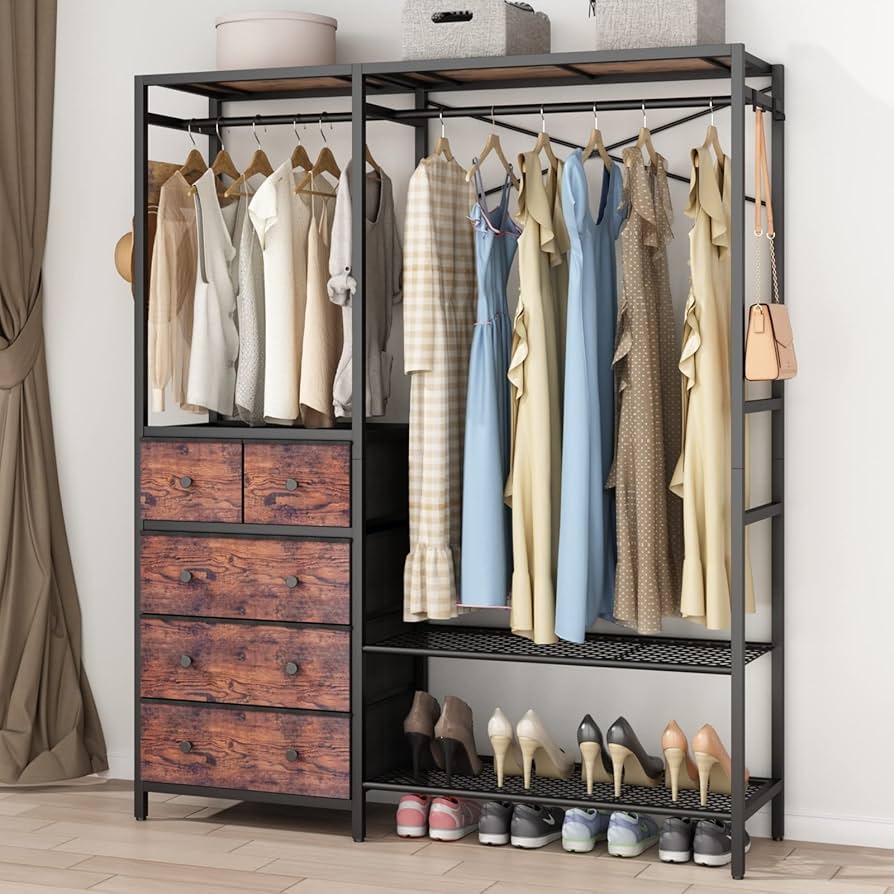
Phase 3 is the heart of the protocol, and it is the phase that most directly answers the Monday morning question. The deliverable is five complete outfits hanging in a row, in calendar order, each one mapped to the actual obligations of that day. Twelve minutes.
Pull up your calendar on your phone. Read Monday through Friday in sequence. For each day, write a single descriptor at the top of an index card or a sticky note: Monday “editorial meeting + lunch with publicist.” Tuesday “WFH + 3 pm video call.” Wednesday “office + drinks after work.” Thursday “fashion week prep day, on feet all day.” Friday “travel day to LA, 2 pm flight.” The descriptor sets the dress code, the comfort requirement, the layering need, and the bag size for the day.
Now walk into the closet. For each day, pull a complete look. Top, bottom, shoes, layer, bag. If you want to use Bornstein’s Three-Word Method as the editing filter - I do, mine is “polished, textured, terracotta” - run each piece through the words and confirm it earns the spot. If a piece does not, it does not get on the rack for the week. Hang each look on a single hanger, in calendar order, on a dedicated lineup rod or on the left side of your closet if you do not have a second rod. Pin a small index-card tag to each hanger with the day of the week and the descriptor.
The hanger choice matters enormously at plus. The Honey-Can-Do velvet hangers (forty hangers for thirty-six dollars on Amazon) are my baseline because the velvet grip holds heavier garments without slipping and the slim profile saves about four inches of rod space across five outfits, which is the difference between cramped and breathing in a Brooklyn closet. The forty-pack is enough for a full Phase 3 lineup plus the rest of the closet inventory for a curated plus wardrobe. For the heaviest pieces - the wool coat, the beaded gown, the leather jacket - I use Container Store wide wooden hangers ($4 each) because the wider shoulder distributes the weight across more inches of fabric and prevents the dimple-shoulder distortion that velvet hangers can leave on the heaviest knits. A forty-pack of velvet and ten wooden hangers covers a thirty-five-piece working plus wardrobe.
The general capsule rule for the lineup is that each outfit should be ready to walk out the door, which means accessories and underpinnings are pre-staged with the outfit. For plus dressing, the underpinning question is more involved. A wrap dress that needs a specific shapewear short. A silk blouse that needs a smoothing camisole. A pair of high-waisted trousers that read best with a specific bralette. Pin the underpinning note to the index card so you do not stand in front of the open dresser drawer at 7:23 am on a Tuesday rifling through three shapewear options. The note says “Tuesday: smoothing tank, beige, top drawer left.” Done.
Allison Bornstein’s broader argument in Wear It Well is that decision fatigue is the silent killer of getting dressed, and that pre-deciding is the work of style. The Phase 3 lineup is pre-deciding made physical. By Sunday at 6:14 pm, the next five mornings are decided. Monday morning Tanya does not have to think. She has to put on what Sunday Tanya hung up.
Phase 4: footwear + accessories (8 min) - de-scuff, polish, jewelry set
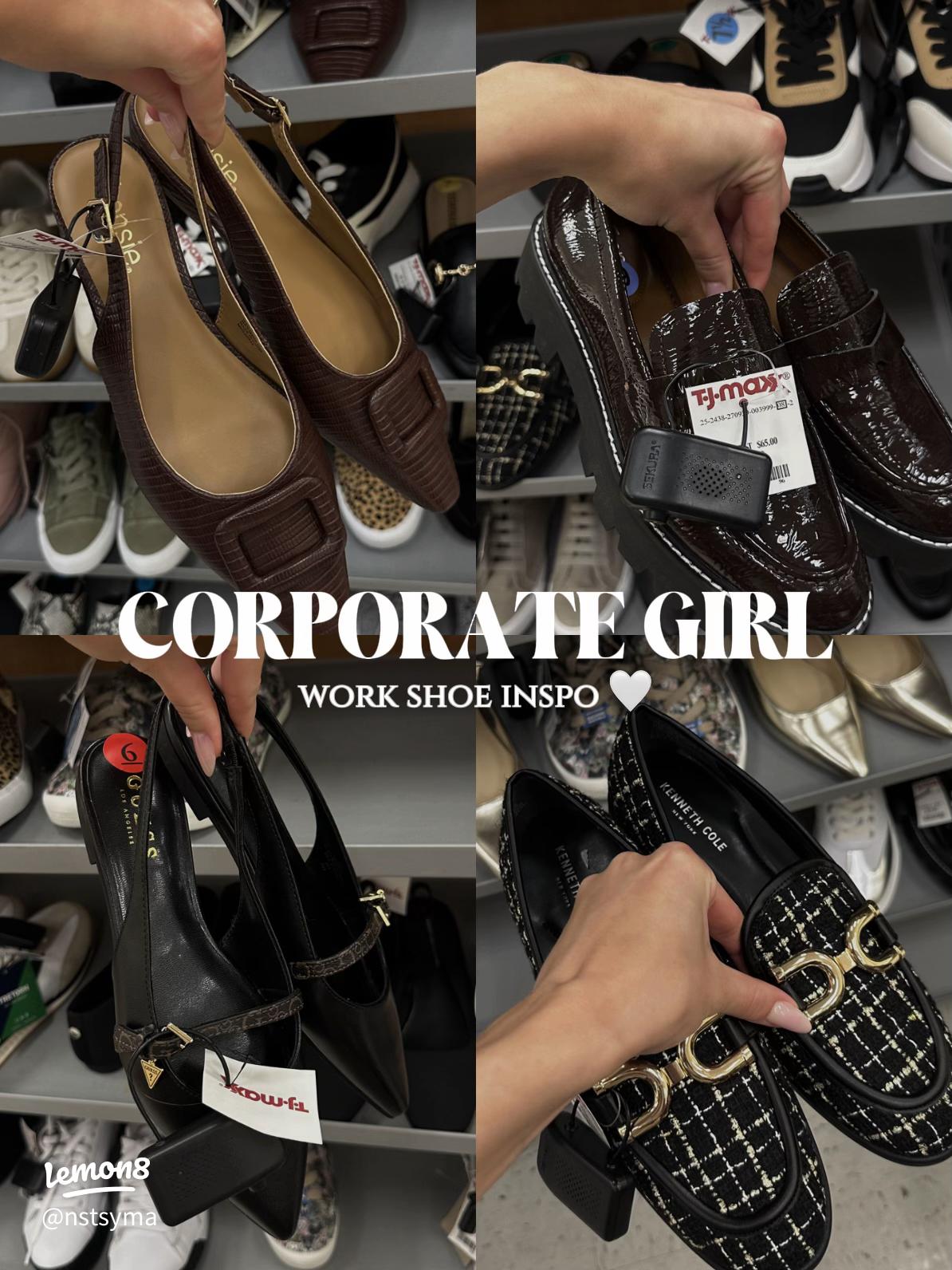
Eight minutes. Five pairs of shoes. The jewelry pulls for each outfit. The bag check.
Pull each of the five pairs of shoes you assigned to the Phase 3 lineup. Line them up on a towel on the bedroom floor or on a small dresser surface. Run through them one at a time. The scuffed taupe heels from the Monday at the top of this article get a Meltonian shoe cream rub with a soft brush, ninety seconds. The white sneakers get a Magic Eraser on the rubber soles and a damp cloth on the canvas, sixty seconds. The black ankle boots get a quick edge-dressing touch-up if the heel edge has gone gray, sixty seconds. The brown loafers get a horsehair brush and a leather conditioner if the leather looks dry, ninety seconds. The navy slingbacks get a once-over with a lint roller because suede picks up everything, thirty seconds. Total shoe time, six minutes.
Plus-size note on shoes: foot edema is more common at higher body weights, especially after long workdays on feet, and shoes that fit on Sunday at 5 pm may not fit on Wednesday at 4 pm. Build the week’s footwear with that in mind. If Wednesday is an on-feet day, the lineup shoe for Wednesday is the most generous-fit pair you own, not the most flattering. A pair of Vionic Karmelle loafers ($150) or Allbirds Tree Runners ($98) is a better Wednesday pick than a pair of pointed-toe heels even if the trousers were chosen with the heels in mind. Pre-decide for foot reality.
The remaining two minutes go to jewelry and the bag check. Pull the earrings, necklaces, and rings for each outfit and stage them in a small leather tray on the dresser. I use a Cuyana tray that I bought at the Hudson Yards store in 2024 for $45, but a small ceramic dish or a leftover Le Creuset ramekin works. The point is that you are not opening a tangled jewelry box at 7:18 am on Wednesday hunting for a single gold hoop. The hoops are in the tray with the Wednesday outfit’s tag.
Bag check is one minute. Pick up the bag you assigned to Monday. Open it. Empty it onto the bed. Sort: keys, wallet, lip balm, transit card, AirPods, sunglasses, charger, mini-umbrella, Tide To-Go pen, a few tampons or pads. Anything not on this list goes in a small ziplock that lives in a basket on the closet shelf and gets re-deployed when a different bag is in rotation. Reload Monday’s bag with the core. Pre-deciding the bag contents is the move that prevents the “wrong bag for the outfit” failure I had on the Monday at the top of this article.
Phase 5: the bag prep + Monday-morning hand-off (7 min)
The final phase is the hand-off. Seven minutes. The deliverable is a Monday morning where you do not have to make a single decision until you are on the train.
Position the Yamazaki Tower valet stand (mine is the white one at $90 from Yamazaki Home, and it is the single best apartment-organization purchase I have made in five years) at the foot of the bed or in the bedroom corner. The valet stand holds: Monday’s outfit on its dedicated hanger, the bag underneath, the shoes at the base, and the index card tag visible on the hanger. The whole look is on one piece of furniture, vertical, waiting.
Walk the look. Stand in front of the valet stand, hold the look up, and check it as if you were dressing a client. Does the bag color work with the shoes? Does the necklace land on the right neckline? Does the jacket layer work with the bag strap? Is the weather check done? Pull up the weather app and read Monday’s forecast. If rain is in the forecast, swap the loafers for boots and write the swap on the index card. If a cold front is coming through, add a layer to the look and re-pin the tag. This is the one phase where you might catch a Sunday error before it becomes a Monday problem.
While you are doing the walk, put together the Monday bag. The keys go in. The wallet goes in. The AirPods get a quick charge if they are below thirty percent. The phone charger is in the side pocket. If you are bringing a laptop, the laptop is in the laptop sleeve and the laptop sleeve is at the door. If you are bringing lunch, write “pack lunch” at the top of the Monday index card so you see it when you walk into the kitchen at 6:45 am.
The final move of Phase 5 is the closet door. Close it. The phases are done. The Monday is decided. The notebook from Phase 1 goes back in the drawer. The timer reads forty-six minutes and change. You are under budget. You can pour a glass of wine and watch Industry .
Plus-size storage notes: heavier knit support, dust-cover blazer, foundation garment rotation
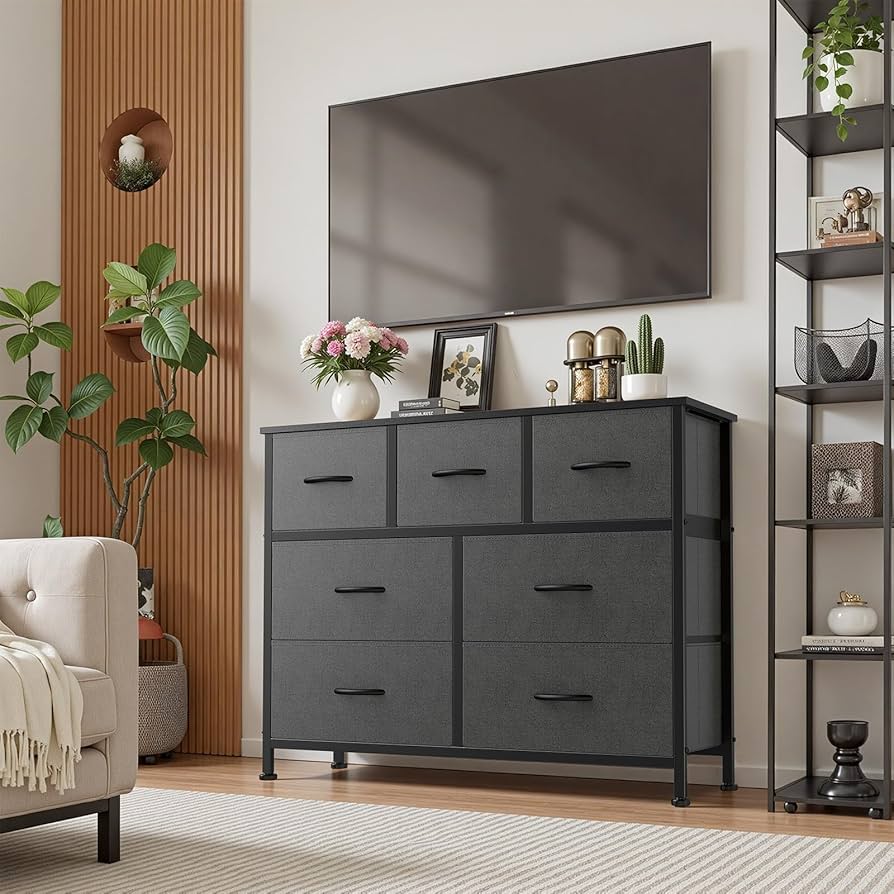
This section is the one you will not find in a straight-size closet-reset article. The storage rules for plus garments are different because the physics are different, and ignoring the physics is what turns a beautifully organized closet on Sunday at 7 pm into a stretched-out, dust-covered disappointment by Sunday at 7 pm three months later.
Rule one: heavier knits fold, they do not hang. A chunky merino sweater, a cashmere cardigan over a certain weight, a cable-knit pullover - all of these belong in a drawer, folded, never on a hanger. The reason is gravity. A heavy knit hung on any hanger will sag at the shoulders within two to four wears, and the sag does not press back out. The original Marie Kondo principle of vertical-fold knits in a drawer, refined into more practical terms by Shira Gill, is the right move for plus knit storage. I use Iris Drawer Dividers (a four-pack of clear acrylic dividers, $26 on Amazon) to partition a single dresser drawer into four zones, one zone per color family. Each zone holds six to eight folded sweaters standing on their edges, file-fold style, visible at a glance.
Rule two: structured blazers and tailored jackets need wide wooden hangers and a dust cover for non-rotation pieces. The blazer I wore last Tuesday and that is back in rotation this week stays on its wide hanger uncovered. The wool coat I will not wear until November stays on a wide hanger inside a breathable cotton garment bag (the Container Store sells natural cotton garment bags at $13 each, and they breathe in a way the plastic dry-cleaner bags do not). Plastic dry-cleaner bags trap moisture, which on a plus garment held over a long off-season produces the kind of musty smell that requires a professional re-cleaning to fully remove. Pull the plastic the day the garment comes home from the cleaners. Hang it in cotton.
Rule three: foundation garments need their own dedicated rotation system because they wear out faster at plus and because the bra and shapewear inventory is too expensive to manage casually. I keep my full shapewear and bra inventory in a single drawer, sorted by function: smoothing for under-knits, structured for under-tailored, sport for activewear days. Each function-zone gets a labeled fabric box (I use Open Spaces small boxes at $24 for two, but any rectangular fabric bin works). When I pull a shapewear piece for the Phase 3 lineup, I make a small mental note of which one I used. If I find myself reaching for the same piece three weeks in a row, it is time to either rotate in another piece I own or budget for a replacement. Plus shapewear ages out faster than straight-size shapewear because the elastic fibers are working harder against more body, and the compression goes south within twelve to eighteen months of regular wear. The rotation system catches the wear-out before it shows up as a bad fit under Monday’s outfit.
Rule four: shoes need a closed storage system because plus-size foot edema means swelling and sweat, and an open shoe rack at the bottom of a closet absorbs odor faster than you think. I use clear stackable plastic shoe boxes (The Container Store’s drop-front shoe boxes at $8 each, or the cheaper IRIS USA ones at $4 each on Amazon, six-pack). Each shoe gets a box. Each box gets a small silica gel packet, replaced every six months. The shoes stay dry, the closet does not smell, the lineup pulls in Phase 4 take ninety seconds instead of five minutes of hunting on the closet floor.
Rule five: dress storage for occasion pieces. A beaded gown, a heavy silk slip, a structured cocktail dress - these belong in a separate part of the closet on the strongest hangers you own, with a breathable cotton cover, and they do not enter the weekly Phase 3 rotation unless an occasion is on the calendar. Treating an occasion piece as part of the weekly rotation accelerates its wear and you will be sad about it the next time you reach for it for an actual event.
The mid-week refresh: the Wednesday 10-minute touch-up
The Sunday protocol does the heavy lift. The Wednesday touch-up keeps it intact. Ten minutes, midweek, ideally Wednesday evening between dinner and television.
The Wednesday refresh has three moves. First, walk the Phase 3 rod and check the remaining outfits. If Tuesday’s outfit was the one with a fit issue (the blazer was too warm, the trousers crept up, the shoes gave a blister), pull the Wednesday-through-Friday looks and audit them against what you learned. The Tuesday data should change the Thursday choice if the same fit issue is going to apply. Second, do a small-load laundry run if the L bucket has grown - which it usually has, because Tuesday added at least a top and Wednesday added a sports bra and an athleisure set. A small Wednesday wash keeps the Saturday and Sunday laundry from becoming three full loads. Third, do a five-minute closet floor sweep. Pick up anything that has fallen, return things to their boxes, reset the shoe lineup, dust the valet stand surface with a microfiber cloth, and pull anything that needs to go to the dry cleaner before the weekend.
The Wednesday refresh is the difference between a Sunday protocol that lasts a week and a Sunday protocol that lasts forever. The closet entropy that builds between Sunday and the following Sunday is real, and ten minutes of midweek attention slows the entropy by a significant margin. Skip Wednesday three weeks in a row and the next Sunday protocol takes seventy minutes instead of forty-seven because you are doing two weeks of work at once.
The seasonal pivot Sunday: twice a year, the deeper reset
The forty-seven-minute protocol is the weekly maintenance layer. Twice a year - once in late April or early May for the spring-to-summer pivot, once in late September or early October for the fall-to-winter pivot - the protocol expands into a longer seasonal reset. Budget three hours. Pour a coffee. Put on a long album.
The seasonal pivot has five additional moves on top of the regular forty-seven minutes. First, pull every off-season piece from active rotation and store it in cotton garment bags in the back of the closet or in under-bed storage. Second, pull every in-season piece from the back of the closet or from under-bed storage and re-hang it in active rotation. Third, run the Bornstein Three-Word Method on every active-rotation piece. If it does not earn the spot in the new season’s lineup, it goes to the donation bag, the consignment bag, or the resale-listing pile. Fourth, audit the foundation garment inventory and budget for any replacements that are aging out. Fifth, audit the shoe inventory and either repair or replace anything that did not survive the previous season.
The seasonal pivot is also when I do the slow conversation with myself about gaps. The summer of 2025 I realized I had no clean white linen blazer and I had been faking it with a too-warm cotton one. The fall of 2025 I realized my brown leather tote was beginning to crack and would not make it through another winter. The pivot is the time to write down the gaps, set a budget, and commission the purchases over the following four to six weeks rather than panic-buying the week of an event.
Shira Gill makes the related point that a minimal wardrobe is built season by season, not all at once, and that the seasonal pivot is the rhythm at which a wardrobe earns its name. For a plus closet, this rhythm matters even more because plus pieces are harder to find and more expensive per piece, and impulse purchasing at plus rarely produces lasting wardrobe value. The seasonal-pivot list is the document that turns a closet from a collection into a wardrobe.
The 47-minute Sunday protocol summary, and your challenge for this Sunday

Here is the full forty-seven-minute protocol, phase by phase, with the timer math on the right. Read it once. Save it. Run it this Sunday.
Phase 1: the 5-day rewind (8 minutes). Open a notebook. Draw a five-column grid. Inventory what you wore Monday through Friday. Mark each piece C for clean, L for laundry, S for spot-treat. Write one line on what failed and why. This phase tells you what to do in Phase 2 and what to consider in Phase 3.
Phase 2: laundry stage (12 minutes). Pull the L bucket. Sort by color and weight. Start a delicate cold cycle and a normal warm cycle. Set up air-dry stations. Spot-treat the S bucket with Tide To-Go, steam, and a lint roller. Move dry-clean-only pieces to the door for drop-off. Two smaller loads, not one large one, because plus laundry weighs more per garment than the washer’s published capacity assumes.
Phase 3: the 5-outfit lineup (12 minutes). Read Monday through Friday on your calendar. Write a one-line descriptor for each day. Pull a complete look for each day - top, bottom, shoes, layer, bag - and hang each on a single Honey-Can-Do velvet hanger or, for heavier pieces, a wide wooden hanger. Pin an index-card tag with the day, the descriptor, and any underpinning notes. Run each piece through your Bornstein Three-Word Method filter to confirm it earns the spot. Leave breathing space between hangers.
Phase 4: footwear and accessories (8 minutes). Line up the five pairs of shoes assigned in Phase 3. De-scuff with Meltonian shoe cream, Magic Eraser, horsehair brush, edge dressing, and lint roller as needed. Stage jewelry for each outfit in a small leather tray. Pre-decide for foot reality - generous-fit shoes for on-feet days. Empty your everyday bag onto the bed, sort the contents, and reload Monday’s bag with the core kit (keys, wallet, transit card, AirPods, sunglasses, charger, Tide To-Go pen, mini-umbrella).
Phase 5: bag prep and Monday hand-off (7 minutes). Position the Yamazaki valet stand. Hang Monday’s outfit on it. Place the bag underneath, the shoes at the base, the index card visible. Walk the look as if you were dressing a client. Check the weather and swap any piece that does not match the forecast. Pack the laptop and any add-ons. Close the closet door. Pour a glass of wine.
Now here is the challenge, which is the whole point of you reading this article all the way down to this paragraph. This Sunday, between 5 pm and 7 pm, set a kitchen timer for forty-seven minutes and run the protocol once. Not twice. Not a perfect version. The first version. Pour the wine before you start if it helps. Put on the Sade album if Sade is your Sunday music. Use whatever hangers you currently own. The Yamazaki valet stand can come later. The Honey-Can-Do velvet hangers can come later. The point on Sunday one is to run the five phases at the published time budget and see what happens on Monday morning when you walk into the closet at 6:45 am and the trousers are not rumpled, the shoes are not scuffed, the bag is correct, and the decision is already made. The Monday morning you have after the first Sunday protocol is the proof. Every Sunday after the first one is easier because the system exists. The hardest version of this protocol is the one you run before you have ever run it. The chairs in my apartment that used to be draped with rejected outfits at 7:45 am on Mondays are now just chairs. The hamper does not hold rumpled trousers six days later. The shoes do not have scuffs that I told myself I would buff out. Forty-seven minutes, this Sunday. Set the timer. Begin.