

There are moments when your head feels so full that you cannot think straight. When emotions pile on top of each other until you cannot tell whether you are angry or sad or scared or all three at once. When you know something is bothering you but you cannot quite name it, and it just sits there in your chest like a weight you cannot put down.
These are the moments when mental health journal prompts can genuinely change things. Not because writing in a journal is magic - it is not - but because the act of putting your inner world into words forces your brain to slow down, organize, and make sense of what it is experiencing. It takes the swirling chaos of feelings and pins them to the page, where you can look at them clearly and figure out what they actually mean.
If you have tried journaling before and found yourself staring at a blank page with no idea where to start, these prompts are for you. If you have never journaled and are curious about it, these prompts are for you too. And if you journal regularly but feel like you have been stuck in surface-level territory, these mental health journal prompts will take you deeper in the best possible way.

Why Journaling Is One of the Best Things You Can Do for Your Mental Health
Before we dive into the prompts, let us talk about why journaling is so effective for mental health. Because understanding the “why” will help you stick with the practice even on days when you do not feel like writing.
Research consistently shows that expressive writing - the kind where you write honestly about your thoughts and feelings - has measurable benefits for both mental and physical health. A landmark study by psychologist James Pennebaker found that people who wrote about emotionally significant events for just 15 to 20 minutes a day showed improvements in immune function, reduced blood pressure, fewer doctor visits, and better emotional wellbeing. Those results have been replicated dozens of times across different populations.
Here is what happens in your brain when you journal. Writing about emotions engages your prefrontal cortex, the rational, planning part of your brain. This naturally reduces activity in your amygdala, the fear and emotion center. In other words, the simple act of writing about your feelings helps your brain shift from reactive mode to reflective mode. You move from “I am drowning in this feeling” to “I am looking at this feeling and trying to understand it.”
Journaling also creates what psychologists call “cognitive defusion” - the ability to see your thoughts as thoughts rather than as absolute truths. When you write “I feel like I am not good enough,” you start to notice that it is a feeling, not a fact. That tiny shift in perspective can be enormously freeing.
For women navigating body image challenges, societal pressures, relationship stress, career uncertainty, or any of the countless things that weigh on us, journaling offers a private, judgment-free space to be completely honest. You do not have to filter yourself. You do not have to worry about someone else’s reaction. You can just be real.
And that is exactly what these mental health journal prompts are designed to help you do. A good guided mental health journal with prompts already included can make getting started even easier.
How to Use These Mental Health Journal Prompts
You do not need to work through all 30 prompts in order. In fact, I would encourage you not to. Instead, browse through the list and pick the one that speaks to you in this moment. The one that makes your stomach tighten a little or your eyes widen or your heart say “yes, that one.” That is your prompt for today.
Setting Up Your Journaling Space

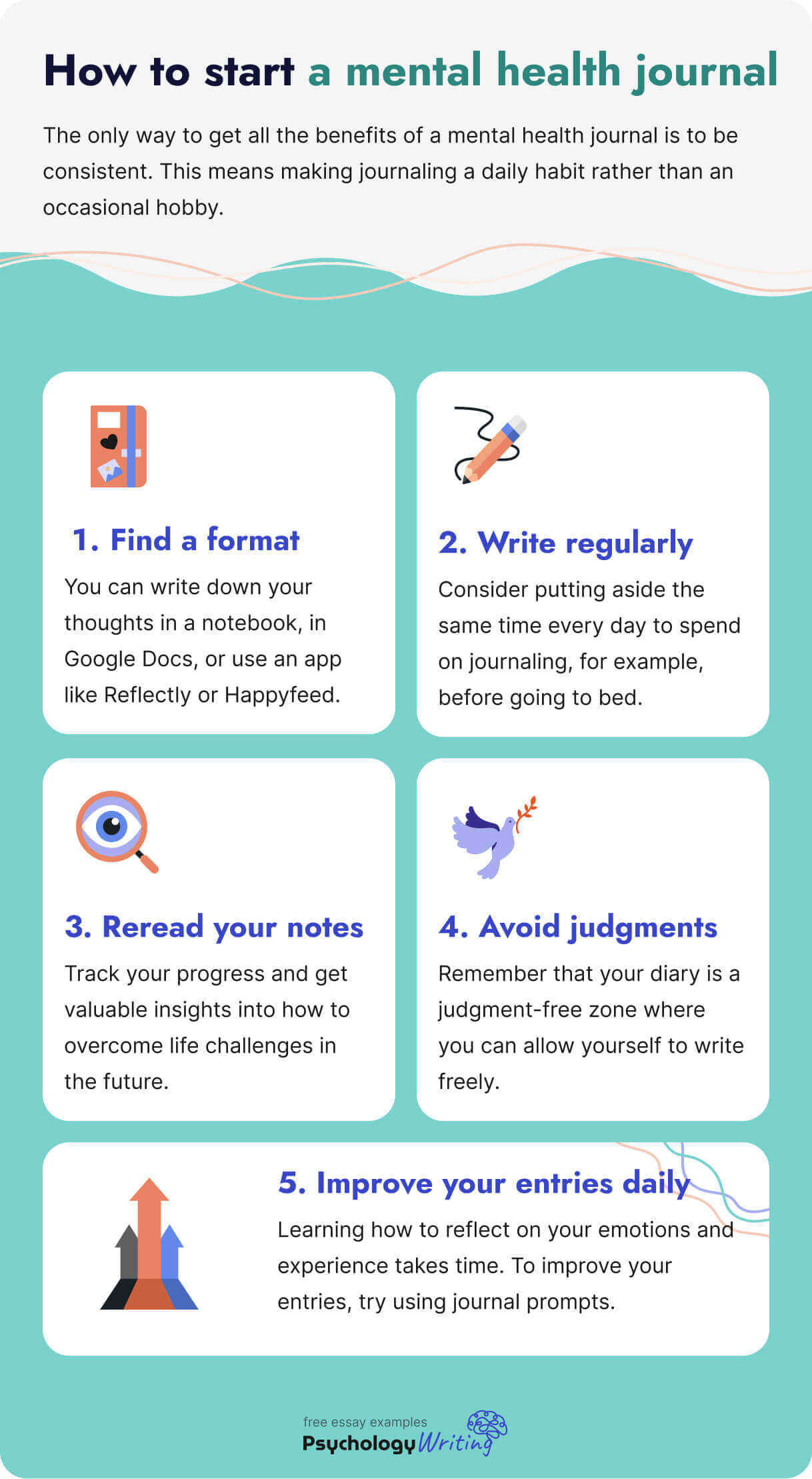
You do not need anything fancy to journal. A notebook and a pen will do. But if creating a cozy, inviting space helps you show up to the practice, go for it. Light a candle. Make a cup of tea. Put on soft music. Wrap yourself in something comfortable. Creating a small ritual around journaling signals to your brain that this is a special, sacred time for you.
Some people prefer typing on a laptop or phone, and that is perfectly fine. The benefits come from the process of expressing yourself in words, regardless of the medium. However, research does suggest that handwriting may engage slightly different brain processes and can feel more therapeutic for some people. Experiment and see what works for you.
Ground Rules for Your Journal

There are no wrong answers. Seriously. This is not a test. Write in full sentences or fragments. Write neatly or in a complete mess. Write three lines or three pages. The only “rule” is honesty. Be as honest with yourself as you can. No one else will read this unless you choose to share it.
If a prompt brings up big emotions, that is actually a sign that it is working. Let yourself feel. Cry if you need to. Put the journal down and take a break if you need to. Then come back when you are ready. You are in control of this process.
Try to write for at least 10 to 15 minutes per prompt. Give yourself time to get past the surface-level answers and into the deeper stuff. The most important insights often come after the first wave of obvious responses, when you push yourself to keep going and see what else is there.
Prompts for Processing Difficult Emotions (1 through 10)
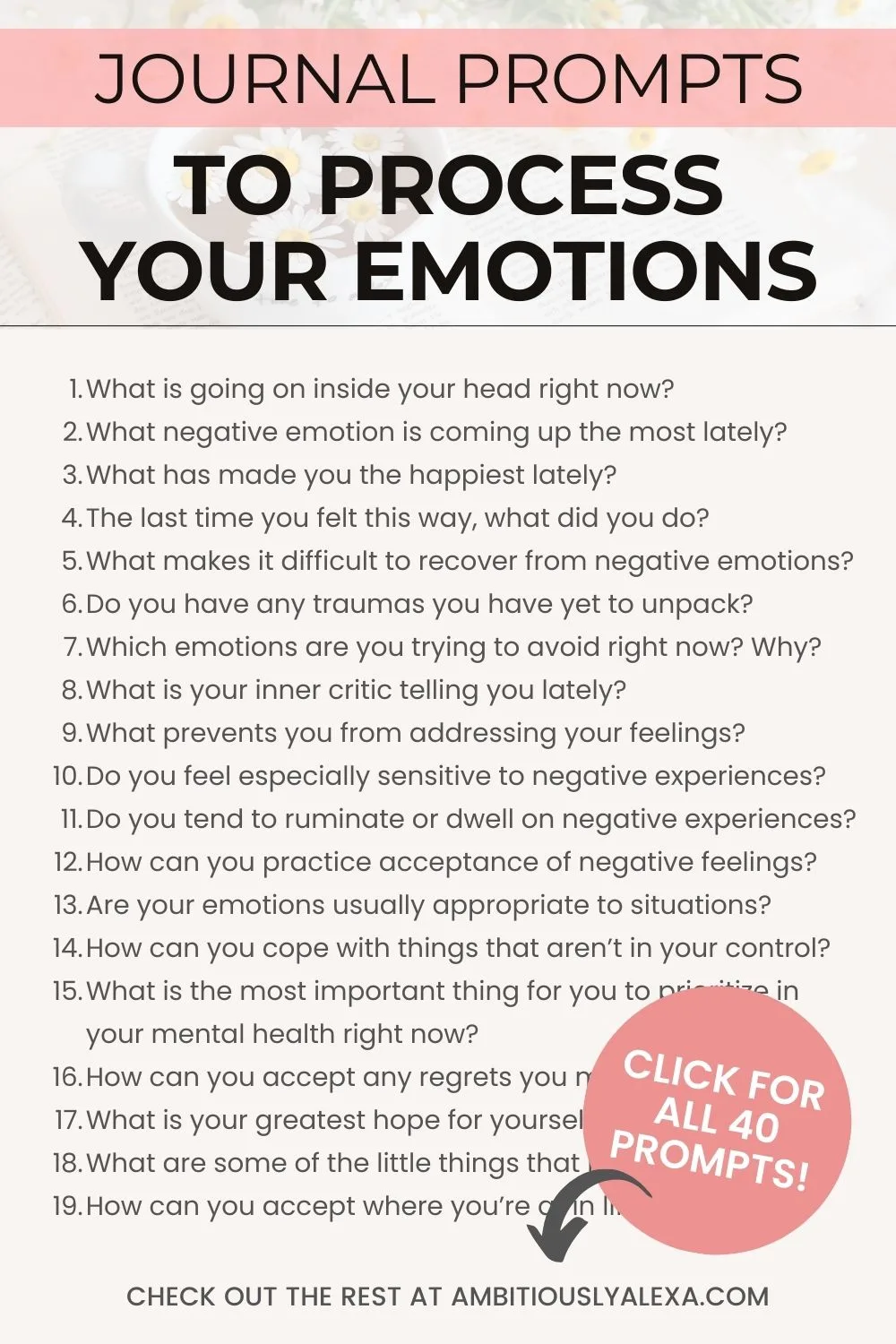
These mental health journal prompts are designed to help you sit with and process the emotions that are hardest to face. They are not about fixing anything - they are about understanding and being with what is.
Prompt 1 - What emotion have I been avoiding lately, and what might happen if I let myself feel it fully?
We all have emotions we try to push away - anger, grief, jealousy, fear. This prompt invites you to name the one you have been sidestepping and explore what it might be trying to tell you. Often, the emotions we avoid the most carry the most important messages. Anger might be telling you that a boundary has been crossed. Grief might be telling you that something mattered deeply. Give yourself permission to go there.
Prompt 2 - Write about a time recently when you felt truly hurt. What happened, and what did you need in that moment that you did not get?
This prompt helps you identify unmet needs - one of the most important skills for emotional health. When we are hurt, we often focus on what the other person did wrong. But underneath the hurt is always a need that was not met - a need for respect, for safety, for understanding, for love. Naming that need is the first step toward being able to ask for it or give it to yourself.
Prompt 3 - If my body could talk right now, what would it say to me?
Our bodies hold emotions that our minds have not processed yet. Tension in your shoulders, a knot in your stomach, heaviness in your chest - these are all your body’s way of communicating. This prompt invites you to listen. And for those of us with complicated body relationships, it can be a powerful way to start seeing your body as an ally rather than an adversary.
Prompt 4 - What am I most ashamed of right now, and what would I say to a friend who was carrying this same shame?
Shame thrives in secrecy and silence. Writing about it - even just for your own eyes - breaks that cycle. And the second part of this prompt, where you imagine offering compassion to a friend with the same shame, helps you access kindness for yourself that might otherwise feel out of reach.
Prompt 5 - Write a letter to the version of yourself who was going through the hardest time in your life. What does she need to hear?
This prompt can be deeply emotional, so approach it with care. Writing to your past self from the safety of the present allows you to process old pain with the wisdom and compassion you have now. You can acknowledge what was hard, validate the feelings, and offer the comfort that nobody else provided at the time.
Prompt 6 - What is one thing I am angry about that I have not allowed myself to express?
Women are often socialized to suppress anger, to be “nice” and “agreeable.” But unexpressed anger does not disappear - it turns inward and becomes depression, anxiety, or physical symptoms. Give your anger a voice on the page. You do not have to act on it. You just need to let it exist.
Prompt 7 - What story am I telling myself about my current situation, and is it the whole truth?
We all construct narratives about our lives, and those narratives shape how we feel. “I am stuck.” “Nothing ever works out for me.” “I always mess things up.” This prompt invites you to examine your current narrative and ask whether it is a fact or a story. What evidence supports it? What evidence contradicts it? Is there a more complete, more compassionate story available?
Prompt 8 - What loss am I still grieving, even if it happened a long time ago?
Grief does not follow a timeline. You might still be mourning a relationship, a dream, a version of yourself, or a life you thought you would have. This prompt gives you permission to grieve on your own schedule, without judgment. There is no expiration date on loss.
Prompt 9 - Write about something you feel guilty about. Then write about what you would need to forgive yourself.
Guilt can be useful when it motivates us to repair harm. But chronic guilt - the kind that just loops and loops without resolution - is corrosive. This prompt helps you distinguish between guilt that has served its purpose and guilt that has overstayed its welcome. And it begins the process of self-forgiveness, which is one of the most healing things you can do.
Prompt 10 - How am I really doing right now? Not the version I tell other people, but the real answer.
Sometimes the most powerful journal prompt is the simplest one. Most of us have a rehearsed answer for “how are you?” This prompt asks you to drop the script and tell the truth, even if the truth is messy or contradictory or hard to put into words. Let yourself be seen, even if you are the only one watching.
Prompts for Reducing Anxiety and Finding Calm (11 through 20)

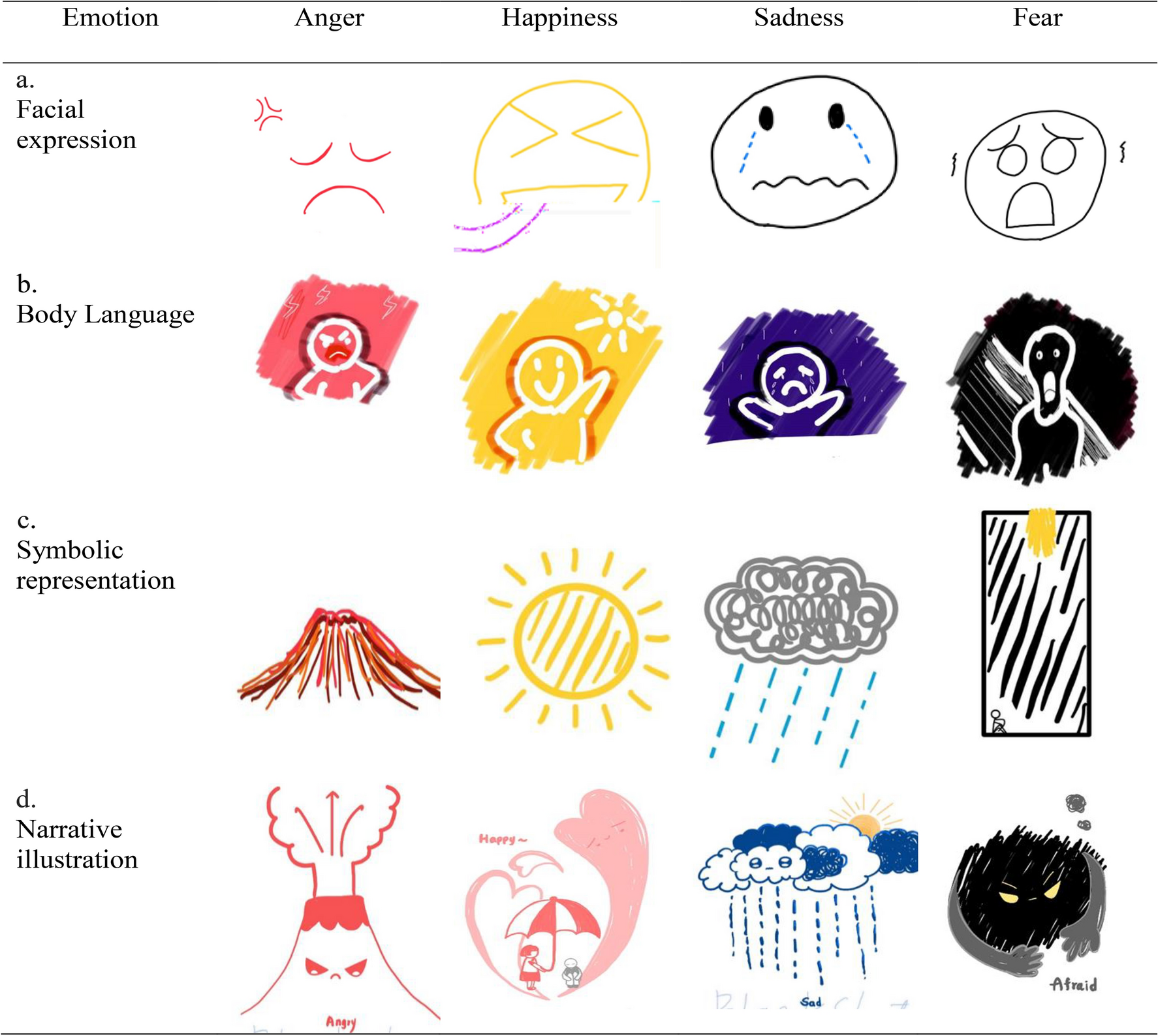
These mental health journal prompts specifically target anxiety - the racing thoughts, the what-ifs, the constant feeling that something bad is about to happen. Writing is one of the most effective tools for anxiety because it forces your spinning mind to slow down and deal with one thought at a time.
Prompt 11 - List everything that is currently worrying you, no matter how small or irrational it seems.
A brain dump. Get it all out. Every worry, every concern, every nagging thought. When anxious thoughts are swirling in your head, they feel infinite and unmanageable. When they are on paper, you can actually see that there are a finite number of them - and some of them are probably not as big as they felt when they were competing for space in your mind.
Prompt 12 - For each worry on your list, write down whether it is something you can control, something you can influence, or something that is completely outside your control.
This follow-up to Prompt 11 is incredibly clarifying. When you sort your worries into these three categories, you quickly see where your energy is best spent - and where you are burning energy on things you cannot change. For the things outside your control, practice the mantra: “I release what I cannot control.”
Prompt 13 - What is the worst case scenario I am afraid of, and what would I actually do if it happened?
Anxiety often keeps us stuck in vague, formless dread. This prompt forces you to get specific. And here is what usually happens: when you actually think through the worst case scenario, you realize that you would survive it. You would cope. It would be hard, but you would find a way. That realization is incredibly calming.
Prompt 14 - Write about a time when you were anxious about something that turned out fine.
Your brain has a negativity bias - it remembers the times things went wrong and forgets the countless times your anxiety was unfounded. This prompt pushes back against that bias. Remind yourself of your track record. How many times has the thing you worried about never actually happened? Probably more times than you can count.
Prompt 15 - What would today look like if I were not anxious? Describe it in detail.
This prompt is a gentle visualization exercise. Imagine your day without the weight of anxiety. What would you do differently? How would you move through the world? What would you try? What would you enjoy? This is not about wishing your anxiety away - it is about connecting with the life that exists underneath it, the life that is still possible and waiting for you.
Prompt 16 - What am I really afraid of underneath this anxiety?
Anxiety is often a surface emotion that is masking something deeper - fear of rejection, fear of failure, fear of not being enough, fear of being seen. This prompt asks you to dig beneath the anxiety and see what is really driving it. When you name the core fear, it loses some of its power.
Prompt 17 - List five things I can see, four things I can touch, three things I can hear, two things I can smell, and one thing I can taste right now.
This is the classic 5-4-3-2-1 grounding technique, adapted for journaling. Writing it down instead of just thinking it adds an extra layer of grounding because you are engaging your motor system and your visual processing. Use this prompt when anxiety is spiking and you need to come back to the present moment quickly.
Prompt 18 - What is one kind thing I can do for myself in the next hour?
When anxiety feels overwhelming, the idea of feeling better eventually can seem impossible. But the next hour? You can do something about the next hour. Maybe it is making a cup of tea, stepping outside for five minutes, putting on your favorite playlist, or changing into comfortable clothes. This prompt brings your focus from the terrifying future to the manageable present. Changing into something cozy like a super soft lounge jogger set can genuinely help shift your nervous system.
Prompt 19 - Write about someone who makes you feel safe. What is it about them that creates that feeling?
Thinking about safety when you are anxious might seem counterintuitive, but it actually activates your attachment system, which is the body’s natural antidote to the threat system. Write in detail about this person - how they look at you, how they speak to you, what they do that makes you feel held. You can carry this image with you as an internal resource for anxious moments.
Prompt 20 - What would I tell my anxious thoughts if they were a scared child?
This reframe is beautiful and effective. Your anxious thoughts are not your enemy - they are a part of you that is trying to protect you, just doing it in a way that is not helpful anymore. If those thoughts were a scared child, you would not yell at them or try to silence them. You would get down on their level, acknowledge their fear, and gently reassure them. Try that approach in your journal.
Prompts for Building Self-Awareness and Clarity (21 through 30)
These mental health journal prompts are about understanding yourself better - your patterns, your values, your dreams, and your needs. They are less about processing pain and more about building a clear, honest relationship with who you are.
Prompt 21 - What does my ideal ordinary day look like, from morning to night?
Not your dream vacation or your fantasy life - your ideal regular Tuesday. What time do you wake up? What do you eat? How do you spend your time? Who are you with? This prompt reveals what you actually value, not what you think you should value. And it can show you which parts of your current routine are aligned with your true self and which parts are not.
Prompt 22 - What am I tolerating in my life that I should not be?
We all have things we put up with - the friend who drains our energy, the cluttered space we walk past every day, the job that does not value us, the clothes that do not fit right. This prompt asks you to get honest about what you are tolerating and consider what it would take to change it. Sometimes just naming a toleration is the first step to eliminating it.
Prompt 23 - When do I feel most like myself? What am I doing, and who am I with?
This prompt helps you identify the conditions under which you thrive. When you know what makes you feel most alive and authentic, you can deliberately create more of those conditions in your life. It is like reverse-engineering happiness.
Prompt 24 - What is a belief I held five years ago that I no longer believe? What changed?
This prompt is a powerful reminder that you are always growing and evolving. The beliefs that feel so solid and permanent right now may shift dramatically in the next few years. This awareness can make you hold your current beliefs a little more lightly and be more open to change.
Prompt 25 - What boundary do I need to set that I have been avoiding?
Boundaries are one of the most important tools for mental health, and they are also one of the hardest things to implement. This prompt gives you space to identify a needed boundary and explore what is stopping you from setting it. Is it fear of conflict? Fear of rejection? People-pleasing? Understanding the obstacle is the first step to overcoming it.
Prompt 26 - Write about a compliment you received that you had trouble accepting. Why was it hard to believe?
The compliments we deflect often reveal our deepest insecurities. If someone said you were beautiful and you immediately thought “they are just being nice,” that tells you something about what you believe about your appearance. This prompt invites you to explore why certain positive messages do not land and what it would take to let them in.
Prompt 27 - What would change in my life if I truly believed I was enough, exactly as I am right now?
This is a big one. Really sit with it. If the voice that says “not good enough, not thin enough, not smart enough, not successful enough” went completely quiet - what would be different? What would you stop doing? What would you start doing? How would you walk through the world? This prompt gives you a glimpse of the freedom that is possible when you release the need for external validation.
Prompt 28 - List three things you are proud of that have nothing to do with how you look or what you have accomplished.
We are so conditioned to measure our worth by appearance and achievement that we forget all the other things that make us valuable. Your kindness. Your ability to make people laugh. Your resilience. Your curiosity. The way you love. This prompt reconnects you with the parts of yourself that have nothing to do with productivity or beauty standards.
Prompt 29 - What does my inner critic sound like, and whose voice is it really?
Your inner critic did not come out of nowhere. It is usually a composite of critical voices from your past - a parent, a teacher, a bully, a culture. When you identify whose voice your inner critic is actually using, you realize that it is not your truth. It is someone else’s judgment that you internalized. And that means you have the power to give it back.
Prompt 30 - Write a letter to your future self, one year from now. What do you hope she knows, feels, and believes?
This final prompt is about hope and intention. It is a way to set a compass heading for your inner life. What emotional growth do you hope for? What beliefs do you hope to have released? What relationship do you hope to have with yourself? Write it as a love letter to the woman you are becoming. And then put it somewhere safe and read it in a year.

Tips for Making Journaling a Sustainable Habit

Having 30 beautiful mental health journal prompts is wonderful, but they only work if you actually use them. Here are some tips for making journaling a lasting part of your self-care routine.
Choose a Consistent Time

Journaling works best when it becomes a habit, and habits need consistency. Pick a time that works for your life - first thing in the morning, during your lunch break, or before bed are all popular choices. Morning journaling can set a positive tone for the day. Evening journaling can help you process what happened and release the day before sleep. There is no best time - just the time that you will actually do it.
Lower the Bar

If writing for 15 minutes feels like too much, write for five. If five minutes feels like too much, write for two. If opening your journal feels like too much, just set it on the table and look at it. Seriously. The hardest part is starting. Once you begin, you will usually write more than you planned. But even on the days when you write one sentence, you showed up. That counts.
Invest in Tools You Love
You are more likely to journal if you enjoy the physical experience of it. A beautiful leather journal that feels good in your hands, a pen that writes smoothly, a cozy spot that feels like yours - these things matter more than you might think. They transform journaling from a chore into a ritual.
Do Not Reread Right Away

Some journal entries are for processing, not for rereading. If you wrote something raw and emotional, let it sit. You can come back to it in a week or a month with fresh eyes and new perspective. Or you can never read it again. The healing happened in the writing itself.
Mix It Up
You do not have to answer a deep mental health journal prompt every single day. Some days, a simple gratitude list is perfect. Some days, doodling is what you need. Some days, writing an angry rant is the right medicine. Let your journal be a flexible, living thing that adapts to what you need in the moment.
Consider a Digital Option Too

If you travel a lot or want your journal always accessible, consider keeping a digital journal on your phone or tablet alongside a physical one. Apps designed for therapeutic journaling can offer additional features like mood tracking and pattern recognition that add another layer to your practice. A tablet with a stylus can give you the handwriting experience digitally.
There is also something powerful about looking back at old journal entries months or years later. You see patterns you could not see in the moment. You see growth you did not realize was happening. You see that the things that felt like the end of the world were actually the beginning of something new. Your journal becomes a record of your resilience, and that is an incredibly valuable thing to have.
Whatever prompt you choose today, remember this: there is no wrong way to journal. Messy is fine. Repetitive is fine. Contradictory is fine. Your journal is a mirror of your inner world, and inner worlds are complex, beautiful, and always changing. Give yourself permission to put it all on the page - the light stuff and the heavy stuff, the clarity and the confusion, the hope and the fear. It all belongs there. And so do you.
Key Takeaways
- Journaling activates your prefrontal cortex and reduces amygdala activity, helping your brain shift from reactive to reflective mode - making it one of the most effective tools for mental health.
- You do not need to answer all 30 prompts in order - pick the one that resonates with you right now and write for at least 10 to 15 minutes to get past surface-level answers.
- The prompts are organized into three categories: processing difficult emotions, reducing anxiety, and building self-awareness - so you can choose based on what you need most.
- Making journaling sustainable is about lowering the bar, choosing a consistent time, and investing in tools you actually enjoy using.
- There is no wrong way to journal - messy, repetitive, and contradictory entries are all part of the process and equally valuable for your mental health.
Frequently Asked Questions
How often should I use mental health journal prompts?
There is no strict rule, but research suggests that journaling three to four times per week provides significant mental health benefits. Daily journaling can be wonderful if it works for your schedule, but even once or twice a week is valuable. The most important thing is consistency over time rather than frequency. A shorter, regular practice is more beneficial than long, sporadic sessions. Listen to your needs and adjust accordingly.
What if journaling brings up really intense emotions that feel overwhelming?
It is completely normal for deep journal prompts to bring up strong emotions. If you feel overwhelmed, put down the pen and use a grounding technique - focus on your senses, take slow deep breaths, or step outside for fresh air. You can always come back to the prompt later. If journaling consistently triggers intense distress, consider working with a therapist who can help you process these emotions in a supported environment. Journaling can complement therapy beautifully but is not a replacement for professional support when needed.
Should I keep my journal private or share it with someone?
Your journal should be private by default. The power of journaling comes from the freedom to be completely honest without filtering yourself for an audience. When you know no one else will read it, you give yourself permission to write things you might not say out loud. That said, you might occasionally choose to share a specific entry with a therapist, partner, or trusted friend if it helps you communicate something important. The key is that sharing should always be your choice, never an obligation.
Can journaling replace therapy for mental health?

Journaling is a wonderful self-care tool, but it is not a substitute for professional mental health treatment when that is needed. Think of journaling as one tool in your mental health toolkit - it works beautifully alongside therapy, medication, social support, and other interventions. If you are experiencing persistent anxiety, depression, trauma symptoms, or any mental health concern that is interfering with your daily life, please reach out to a mental health professional. Journaling can enhance your therapeutic work, but it should not be your only resource during serious mental health challenges.