
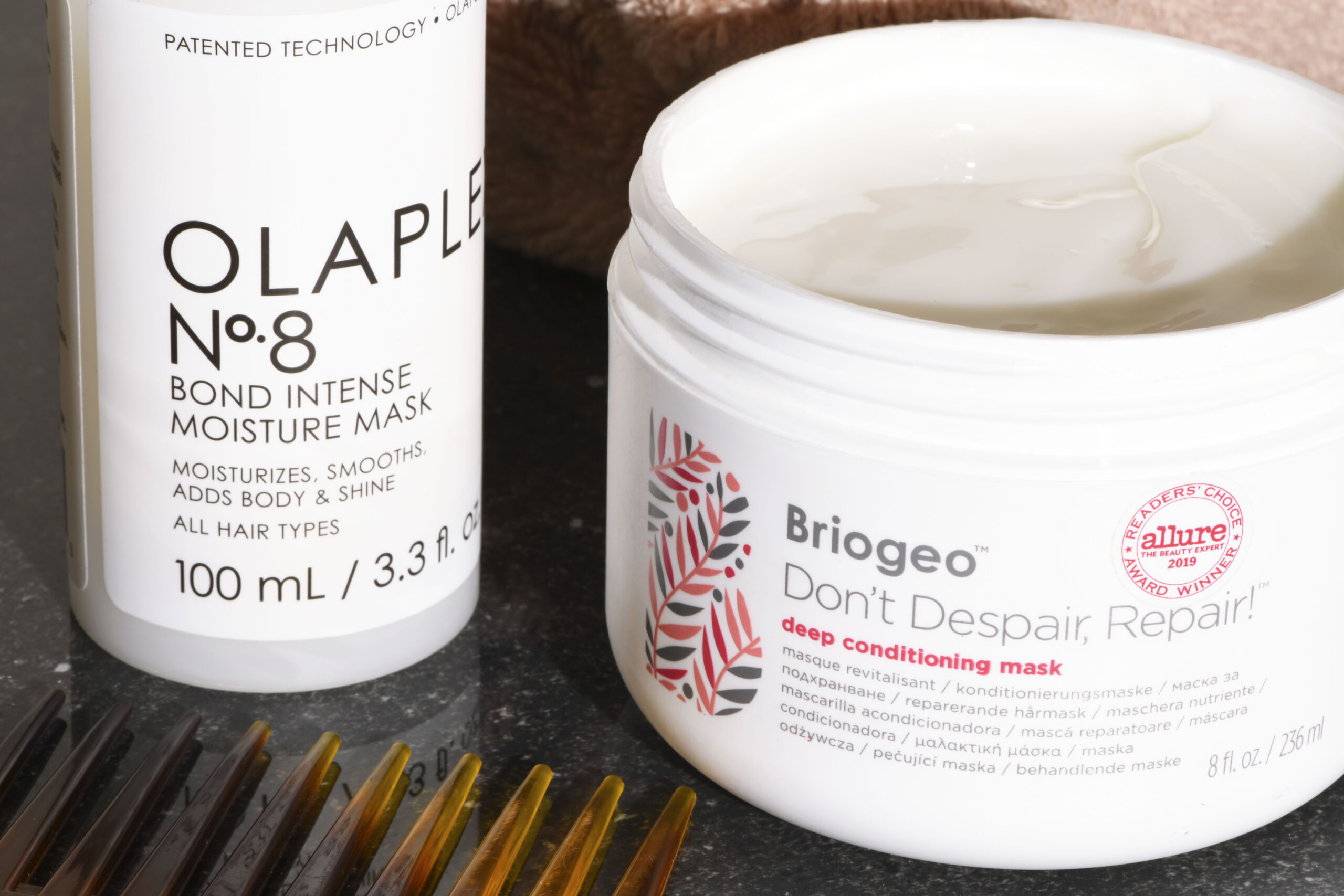
Bond-repair hair care became a $1 billion category on the strength of one brand’s patent and one viral hashtag, but the textured-hair conversation has been quietly arguing the case for a different formulation philosophy for years. Olaplex spent the last decade selling a single proprietary molecule (bis-aminopropyl diglycol dimaleate) as the only real fix for damaged bonds, while Briogeo built a cabinet of plant-derived masks and proteins that promise the same surface-level result with a softer ingredient list. Both brands sit on a lot of curly-haired readers’ shelves at some point. Both get recommended by the same hairstylists. And both are routinely misused on the wrong hair type, which is how you end up with low-porosity 4A coils that feel coated, gummy, or weirdly stiff a week after the treatment that was supposed to save them. The category deserves a real comparison, not another five-star praise piece, so here is the side-by-side that addresses what these two brands actually do on natural, low-porosity hair.
Quick verdict
For most low-porosity Type 3-4 hair, Briogeo Don’t Despair Repair is the better weekly mask - softer slip, better moisture, no protein-overload risk when used twice a month. Olaplex No. 3 is the better targeted treatment after a color appointment, a flat iron session, or a heavy protective-style takedown, used once every two to three weeks. Most readers buying one of these for general maintenance should start with Briogeo. Most readers who color, heat-style, or chemically process should keep a small bottle of Olaplex No. 3 in the cabinet alongside it. Full reasoning below.
What they are and where they came from
Olaplex launched in 2014 around a single patented active. The original three-step system was sold to salons first (No. 1 and No. 2 are professional-only), with No. 3 Hair Perfector as the at-home version. The brand built itself on the bond-repair claim, meaning the molecule supposedly relinks broken disulfide bonds in the cortex of the hair shaft. Since 2014 the range has expanded into shampoos, conditioners, leave-ins, and the No. 8 mask and No. 9 serum, but the core pitch is still the same molecule doing the same job. Olaplex is sold direct, at Sephora, Ulta, and Amazon, and the No. 3 sits at around $30 for 3.3 oz.
Briogeo launched the same year, founded by Nancy Twine, with a positioning closer to clean beauty than to lab science. The line built around plant proteins, B vitamins, biotin, rosehip oil, and algae extract rather than around one signature molecule. Don’t Despair Repair is the flagship mask in the strengthening range; Scalp Revival is the second pillar of the brand and a separate product category entirely. Briogeo sits at Sephora and Sephora-adjacent retailers, with Don’t Despair Repair at around $39 for 8 oz. The brand was acquired by Wella in 2022, which has not visibly changed the formulations as of this year.
Side-by-side comparison
| Feature | Olaplex No. 3 Hair Perfector | Briogeo Don’t Despair Repair |
|---|---|---|
| Price | Around $30 for 3.3 oz | Around $39 for 8 oz |
| Format | Pre-shampoo cream treatment | Post-shampoo deep conditioning mask |
| Core active | Bis-aminopropyl diglycol dimaleate (patented bond builder) | Rosehip oil, algae extract, biotin, vitamin B5, almond oil |
| Recommended frequency | Once a week max, sit 10-90 minutes | Once a week, sit 10-30 minutes |
| Protein load | Bond-focused, low traditional protein | Light protein from plant sources |
| Best use case | Post-color, post-heat, post-bleach repair | Weekly moisture and slip for textured hair |
| Return window | 60 days at Sephora, 60 days at Ulta | 60 days at Sephora, 60 days at Ulta |
Olaplex No. 3 on low-porosity 4A hair
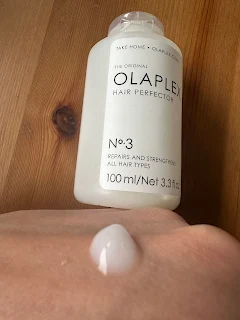
I have used Olaplex No. 3 across three different stretches of my hair journey - once during the year I was bleaching out brassiness, once after a flat-iron season where I was straightening monthly, and once as a general weekly add to my routine when I wanted to see what it did on otherwise undamaged hair. The verdict changes a lot depending on which version of my hair was using it.
What works: when there is actual damage to address, this product earns its reputation. After the bleach year I would apply No. 3 on dry hair, in sections, sit with it for 45 minutes under a plastic cap, then shampoo and condition normally. The next-day curl pattern was visibly bouncier and the strand felt less like a dry rope. The post-flat-iron application gave me less heat-frizz on the next wash day and a curl pattern that snapped back faster than it had been. For a deep-conditioning step after real cuticle stress, the No. 3 does what it says.
What does not work: on undamaged low-porosity 4A hair, I felt nothing for the first three uses, and after the fourth weekly application I felt my strands going stiff and stretched-out, the classic protein-overload feeling. Low-porosity hair already resists product penetration, so a strengthening treatment on a strand that does not need strengthening tips you toward stiffness fast. The smell is also clinical, almost chemistry-set, and the consistency is a thin cream that runs if you do not stay in sections. The bottle is also small for the price - 3.3 oz disappears in two applications if you have shoulder-length thick 4A hair.
One real critique: the marketing pitches No. 3 as universally helpful, but the application instructions and the actual chemistry suggest it is meant as a targeted repair, not a maintenance step. If your hair is not chemically processed, heat-stressed, or otherwise structurally compromised, you are not the customer for this product even though the brand sells it like you are. Buy Olaplex No. 3 at Sephora if you want the easiest return path and the bundle pricing on the rest of the system.
Briogeo Don’t Despair Repair on low-porosity 4A hair
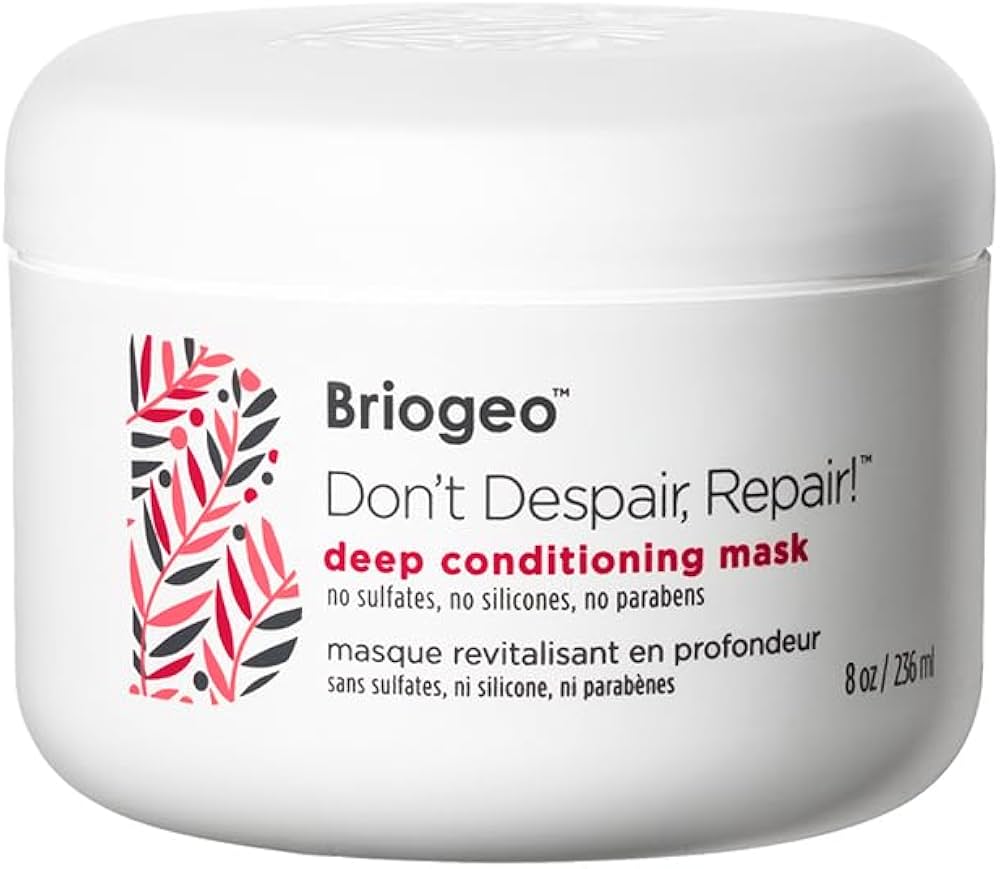
Briogeo Don’t Despair Repair has been in my weekly rotation, on and off, for about three years. It is the mask I reach for when my hair feels dry and dull but is not actively damaged - the in-between stretch most natural hair lives in for months at a time. The texture is a thick, creamy mask with real slip, the kind that lets a wide-tooth comb glide through a tangle on the first pass instead of yanking.
What works: the moisture delivery. I apply it after shampoo on damp hair, work it through in four sections from root to tip, sit with it under a plastic cap for 20 minutes (sometimes with low heat from a steamer if I am being thorough), then rinse. The next-day curls are softer, more defined, and less thirsty-looking than they are without it. The slip is what sold me originally - detangling 4A coils with this mask in is the closest I get to a relaxing wash day. The 8 oz jar lasts me about ten weekly uses, which puts it at a better per-use cost than the No. 3 despite the higher sticker price.
What does not work: the protein content is light but real, and if you stack this with other protein-heavy products in the same week (a hard protein treatment, a heavy gelatin or rice-water rinse), you can still overdo it on low-porosity hair. The packaging is the second issue - the jar opening collects product around the rim and gets sticky after a few uses, which is a small but real annoyance. And the smell, which Briogeo describes as a clean herbal, reads as a bit medicinal to me. Not bad, just not the comforting almond-and-honey smell of a Camille Rose Algae Renew mask, which is the closest direct competitor I would point a reader to.
The real critique: it is a maintenance mask, not a damage repair, and the brand is honest about that in the product copy. If you have just colored, bleached, or heat-trained your hair, this mask alone is not going to undo the structural stress. Buy Briogeo Don’t Despair Repair at Sephora for the Beauty Insider points and the 60-day return window if it does not work for your texture.
Where they overlap and where they differ
Both brands sell a once-a-week deep treatment with a strengthening claim, both are widely stocked at Sephora and Ulta, both run in the $30 to $40 range, both are commonly recommended by stylists for textured hair, and both will leave most users with softer, more defined curls the day after use. That is the overlap, and it is enough to confuse a first-time buyer into thinking the choice does not matter.
The differences are bigger than they look. Olaplex No. 3 is a pre-shampoo treatment, meaning you apply it to dry hair before you wash. Briogeo Don’t Despair Repair is a post-shampoo mask, applied on damp hair after cleansing. Olaplex is built around a single patented bond-repair molecule and is most useful after structural damage. Briogeo is built around plant proteins, oils, and vitamins and is most useful for ongoing moisture and slip. Olaplex is a small bottle that disappears fast. Briogeo is a larger jar with more cost-per-use efficiency. Olaplex smells like a chemistry product. Briogeo smells like a salon product. Both have generous 60-day return windows at Sephora and Ulta, which is the same window across the two retailers, but Ulta is faster to refund on a card and Sephora is more generous on partially-used product when you have Rouge status.
The deciding question for most readers is whether your hair needs structural repair or weekly moisture, because these two products are aimed at different problems even though the marketing makes them sound like alternatives.
Which one for which person
If you have low-porosity Type 3-4 hair that is not chemically colored, not regularly heat-styled, and not coming out of a long protective-style takedown, buy Briogeo Don’t Despair Repair first. It addresses the dry, dull, hard-to-detangle problem that most natural hair runs into between wash days, and it does so without the protein-overload risk that low-porosity textures hit fast. Use it once a week, sit 20 to 30 minutes under a cap, rinse.
If you color your hair regularly (highlights, full color, bleach), heat-style with a flat iron or blow dryer weekly, or have just taken down a four-week protective style that involved tension on the cuticle, buy Olaplex No. 3 . Use it every two to three weeks as a targeted treatment, not weekly. Apply on dry hair, sit 30 to 45 minutes, then shampoo and condition. Skip the weekly application schedule the bottle recommends if your hair is otherwise healthy.
If you have high-porosity hair (color-treated, heat-damaged, or naturally porous), the calculus shifts slightly. Olaplex penetrates faster and gives more visible results on high-porosity hair than on low-porosity, so weekly use becomes more reasonable. Briogeo still earns the maintenance slot, but Olaplex earns more of the rotation.
If you have the budget for both, the smart move is to rotate. Briogeo three weeks of the month for moisture and slip. Olaplex once a month, the week after a color appointment or after a heavy heat session. That is the pattern most textured-hair stylists I know quietly recommend when no one is filming.
Frequently asked questions
Can I use Olaplex and Briogeo in the same wash day?
You can, but for most low-porosity 4A hair I would not. Stacking a pre-shampoo bond treatment with a post-shampoo deep conditioner in the same wash loads a lot of strengthening ingredients onto the strand at once, and low-porosity hair gets stiff fast with that combination. Pick one per wash day and alternate by week.
Is Olaplex worth it if I do not color my hair?
Mostly no. If your hair is virgin and you do not heat style, the No. 3 is a treatment your hair does not have a use for, and you will likely feel either nothing or the protein-stiff feeling after a few uses. The Briogeo mask is the better starting point for undamaged textured hair.
Does Briogeo replace a protein treatment?
No. Briogeo Don’t Despair Repair has plant proteins but is not a hard protein treatment. If your strands have lost elasticity and snap when stretched wet, you need a true protein treatment like Aphogee Two-Step or an at-home gelatin rinse, not the Briogeo mask. The mask is a moisture-and-slip product with a strengthening assist, not a structural fix.
How long does each one last on the shelf?
Both have a 12-month period-after-opening symbol. The Briogeo jar holds up well across that window if you scoop with a clean spatula instead of dipping fingers. The Olaplex bottle, because of the smaller size and the pump-cap design, usually empties within four to six months of regular use, so shelf life is rarely the deciding factor.
Final pick
For the average low-porosity Type 3-4 reader buying one product, Briogeo Don’t Despair Repair is the better starting point. Softer slip, better weekly moisture, larger jar, lower protein-overload risk. For readers with color-treated or heat-stressed hair, Olaplex No. 3 earns its spot in the cabinet alongside the Briogeo, used once every two to three weeks as a targeted repair instead of weekly maintenance. Save your money on the No. 3 if your hair is not damaged, and spend it on the Don’t Despair Repair plus a good leave-in like Pattern Beauty’s. Buy Briogeo Don’t Despair Repair at Sephora first, add the Olaplex No. 3 at Ulta later if your hair needs structural repair. Layering order on a Briogeo wash day: cleanse, mask 20 minutes, rinse, leave-in, curl cream, gel, air dry or diffuse.