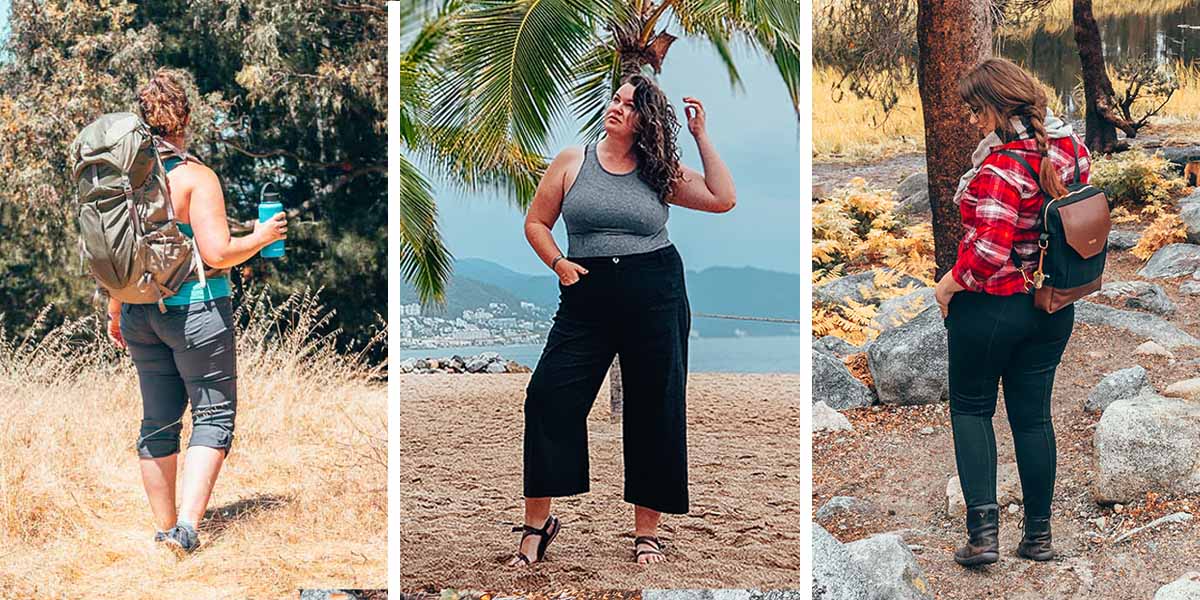

The Sintra-Cascais coastal walk outside Lisbon does not look hard on the map. You leave the Cabo da Roca lighthouse early enough to catch the Atlantic still gray and unwarmed, you point your shoes south along the dirt track that hugs the cliff edge, and you tell yourself the eighteen kilometers between you and the Praia do Guincho beach bar will dissolve into a long October afternoon of wildflowers and gull noise. That was the plan in 2025. The reality, by hour three, was that I’d stopped twice already to peel a pair of straight-size hiking shorts away from the inner-thigh seam that was sawing a quarter-sized raw patch into the left side of my body with every step, and I was doing the math on whether a Portuguese pharmacy would carry Body Glide or whether I was about to finish this walk smearing a granola bar wrapper between my legs as a barrier. The shorts had been an experiment. I’d bought them in the largest size the brand carried and had a Brooklyn alterations woman let out the waist by an inch and a half, because I’m a size 22 in pants and a 20-22 on top, and that was as close to a true plus hiking short as the brand offered. The alteration had been clean. The inseam hadn’t been altered. The inseam was the problem.
That is the shape of plus-size hiking in 2026. My hiking wardrobe is a Frankenstein of straight-size gear with the waists let out, a small rotation of true plus pieces from the three or four brands that actually carry above an 18, and a handful of items I bought in the men’s department because the cut handles my frame more honestly than the women’s “extended” run. I have walked or hiked trails in eight of the thirty-eight countries I have visited as a travel correspondent for this publication, and the through-line in every single one of those experiences is that the gear is not designed for me. It is designed for a 5’7″ woman in a size 8 and then graded up with the assumption that a body four sizes larger does not also have a longer inseam, a wider sit-bone spacing, more inner-thigh contact, and a chest that lives in a different geometric relationship to the shoulder seam than a fit model’s does. The grading does not handle any of that. The chafing math does. What follows is the field guide I wish someone had handed me before that Sintra walk, written for the woman who is size 18 and up, who walks or hikes for pleasure or fitness or both, and who would like to stop bleeding through her shorts on hour three of a perfectly normal Portuguese afternoon.

Plus-size hiking gear gap (where the industry stops)
The outdoor industry has a well-documented size cutoff problem. Most major brands stop their women’s run at XL or 16, a smaller subset extends to XXL or 18, and a much smaller subset, fewer than ten brands operating at any meaningful retail scale in 2026, carries through 3X or size 26. Outside Magazine has covered the gap across multiple pieces in recent years. The reporting documents that even brands marketing themselves as inclusive often cap their technical hiking gear, the pants, the rain shells, the base layers, at sizes well below where their casual or yoga-adjacent lines extend. The pattern is blunt. The outdoor industry has decided, repeatedly, that plus bodies are welcome in studios and welcome in promotional photography and not welcome on the actual trail.
The women doing the work to push against this gap are not industry insiders. They are athletes and they are visible. Mirna Valerio, the ultrarunner and trail athlete whose 2017 memoir “A Beautiful Work in Progress” remains the most-circulated single text in the plus-trail conversation, has been logging long-distance trail miles at size 22 and above for over a decade. Her sponsorship history with Merrell and her ongoing speaking work have done more to legitimize the plus body on a trail than any brand campaign. Latoya Shauntay Snell, the ultramarathoner and founder of Running Fat Chef, has run over two hundred races including multiple ultramarathons at a body size that the running industry has spent decades pretending does not exist. Snell has written and spoken publicly about the gear hunt as a separate athletic event from the running itself. When two women at the very top of the plus endurance world have to spend hours per gear cycle hacking together functional kits from a market that does not want to sell to them, the gap is not a niche complaint. It is the industry’s default state.

The brands that actually serve plus hikers in 2026 are a short list. REI Co-op extends its in-house brand through 3X across most of the technical line, and the extension has held through multiple seasonal drops, which is the durability test that separates a real commitment from a press-release commitment. Columbia carries through 3X across most of its hiking line, including the pants, which is the category most brands cut first. Patagonia carries through XS-3X on most hiking-relevant pieces, with the Torrentshell rain shell topping at XXL. prAna sizes through 3X across most of its hiking pants and tops with a brand-level commitment to the extended run that predates the 2020 inclusivity wave. Athleta carries through 3X across most of its outdoor-adjacent line, with the caveat that the brand’s hiking-specific technical pieces are thinner on the ground than its yoga or running offerings. That’s essentially the bench. A handful of brands. The rest of the market either stops at XL or pretends to extend without actually grading the technical pieces.
Base layers (top and bottom) for cold/hot
The base layer is the most-skipped piece in a plus hiker’s kit and the piece that pays back the fastest. The function of a base layer is moisture management. It pulls sweat off the skin, moves it into the next layer, and dries fast enough that the wet fabric does not chill you when you stop moving. In a plus body, this matters more than in a straight-size body, because the body produces more heat under load, sweats more across more surface area, and has more skin-on-skin contact where wet fabric becomes a chafing event rather than just a temperature event. A cotton t-shirt under a hiking shirt is the single most common gear error I see on plus beginners on a trail, and it is the one that ruins more walks than any other.
The fabric to know is merino wool. Merino is naturally moisture-wicking, antimicrobial enough that it doesn’t smell after a multi-day hike the way synthetic fabrics do, and warm-when-wet in a way that no other fiber matches. The weight is the variable. Merino base layers are sold by gram weight per square meter, and the meaningful range for hiking is roughly 150 grams per square meter for warm-weather and shoulder-season use, 200 grams per square meter for cold-weather use, and 250 grams per square meter for genuinely cold conditions. Smartwool’s Classic Thermal Merino crew runs at 250 grams and sizes through 3X at around $130 as of 2026. Their Classic All-Season Merino crew runs at 150 grams and sizes through 3X at around $110. I own both. The 250-weight has earned its place on every shoulder-season trail day I’ve done since 2023. The 150-weight is the one I pack for summer alpine starts, where the dawn temperature is in the forties and the afternoon temperature is in the seventies and the layer has to handle both ends.
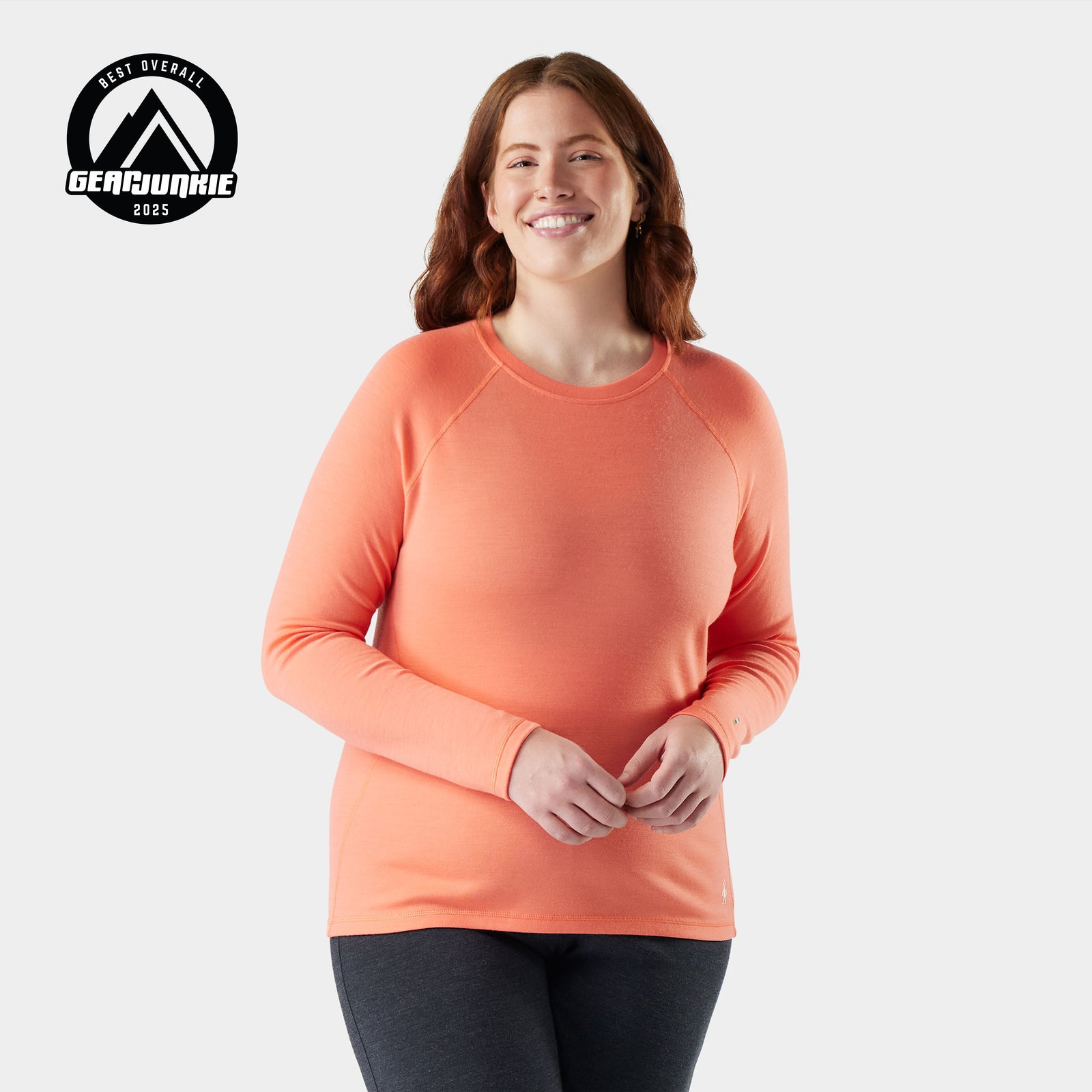
The base layer bottom is the piece almost no plus hiker owns and the piece that closes the kit. A merino bottom under a hiking pant in cold weather extends the temperature range of the pant by roughly fifteen degrees Fahrenheit and adds essentially no weight in your pack. Smartwool’s Classic Thermal Merino bottom in 250 weight sizes through 3X at around $115 and is the piece I’d buy first if I were rebuilding the kit. The fit is high-rise, the inseam is generous in the plus grading, and the gusset construction doesn’t pull at the inner thigh the way many bottoms do. The lower-priced alternative is REI Co-op’s Merino base layer bottom (the 185-gram weight in current production) through 3X. The fabric is lighter than the Smartwool 250, the construction is slightly less refined at the waistband, but the piece is competent and durable and is the entry-point version of this category.
The synthetic alternative to merino is polyester or polypropylene, both of which dry faster than wool, weigh less, and cost roughly half as much. The trade is smell. Synthetic base layers retain odor after one day of use in a way that merino doesn’t, which matters on a multi-day hike where you can’t wash. For day hiking, a synthetic base layer is perfectly functional. The Patagonia Capilene Cool Daily Long-Sleeve Shirt at around $49 through XXL is the workhorse synthetic top in the category. Patagonia carries this piece in plus, which most synthetic-base-layer brands don’t, and the fabric has held up through three years of weekly wear in my rotation.
Hiking pants vs. shorts vs. skort at size 22 (chafing math)
This is the section that the Sintra failure prompted. The choice between pants, shorts, and skort on a plus body is not an aesthetic question. It is a physics question about how much inner-thigh contact your specific body has, how much moisture sits between those surfaces under load, and how the fabric of each option handles the friction generated by that contact across the duration of a walk. The chafing math is unforgiving and personal. A pair of shorts that work for one plus hiker will saw a raw patch into the next plus hiker’s thigh, because the geometry of where the inseam sits and the surface area of skin contact varies meaningfully even between two women at the same dress size.
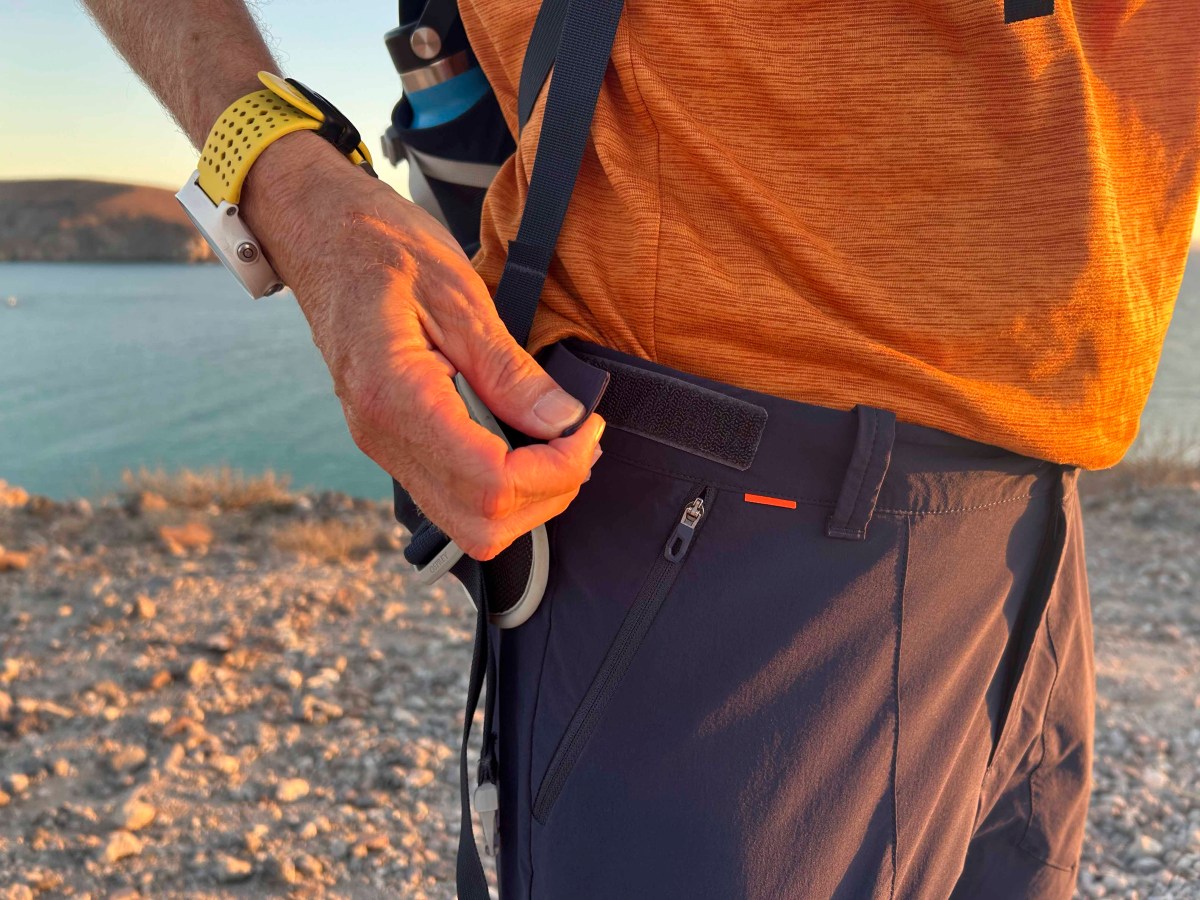
Hiking pants are the safest default for plus bodies and the option I reach for first on any walk longer than ten kilometers. The function is straightforward. The fabric covers the skin-on-skin contact zone entirely, removes the chafing variable, and lets the pant material rather than your skin handle the friction. The category leader for plus hikers in 2026 is the prAna Halle Straight Pant in the plus grading through 3X at around $99. The fabric is a nylon-spandex stretch-woven with a water-repellent finish and a roll-up tab at the calf for warm conditions. The construction includes a gusseted inseam, the single most important feature in a plus hiking pant. The gusset is a diamond-shaped panel of fabric inset at the crotch that distributes the strain across multiple seams rather than concentrating it on one. Without a gusset, a plus hiking pant tears at the inseam within a season of regular use. With one, the pant lasts years. The Halle has it. Most plus pants don’t.
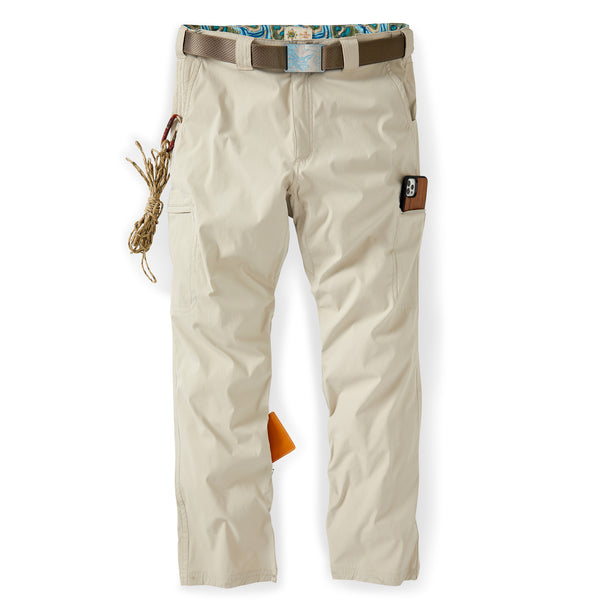
The REI Co-op Sahara Convertible Pant at around $80 through 3X is the lower-priced alternative and the pant I’ve logged the most miles in. The fabric is a nylon ripstop with a UPF 50 finish, and the convertible feature zips off the lower leg at the knee to convert the pant into a short. The piece isn’t as polished as the prAna in fit, the waistband is a flat elastic rather than a structured band, and the cargo pockets are oversized in a way that catches branches on overgrown trails. None of that has stopped the pant from being durable through roughly two hundred miles of trail use. The conversion zipper is real and functional, and on a long day where the morning is cold and the afternoon is hot, the ability to drop the legs at lunch is the feature that pays for the pant.
Hiking shorts are the option I now wear only on flat trails of under ten kilometers and only with a chafing prevention layer underneath. The prAna Halle Short at $69 through 3X is the short I trust, with the same gusseted construction as the pant, a five-inch inseam in the plus grading (which is roughly an inch longer than the straight-size version, a correct grading choice), and the same nylon-spandex fabric. The short alone is not the failure mode. The short with no anti-chafing layer underneath is. The fix is a pair of bike shorts or a chafing-prevention short worn beneath the hiking short. The Undersummers Shortlette in their plus sizes through 5X at $26 is the slip short most plus hikers I know wear under everything from dresses to hiking shorts. The fabric is a 92 percent nylon, 8 percent spandex blend with a wide flat band at the leg opening that does not roll up under friction. The combination of a hiking short and an Undersummers slip is the kit that lets a plus body wear shorts on a hike. The hiking short alone is not.
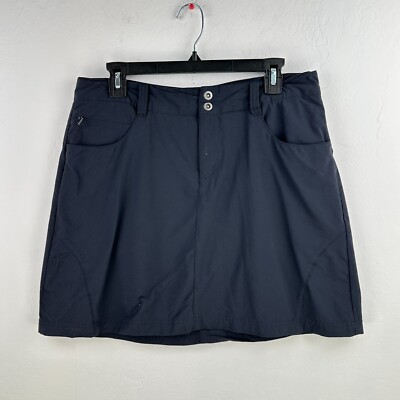
The hiking skort is the option I came around to slowly. The function is a built-in short under a skirt panel, which removes the chafing concern entirely while keeping the fabric coverage of a pant on the underside. The Title Nine Clamber Skort goes to 18 and does not work for me as drafted. The Athleta Trekkie North Skort at $89 through 3X does work. The fabric is a 92 percent nylon, 8 percent spandex stretch-woven, the inner short has a six-inch inseam in plus, and the skirt panel sits at the knee without bunching at the back. The skort has become my default summer hiking piece in hot and humid conditions, where the additional ventilation between the skirt and short layer is meaningful, and where the shape of the piece reads as deliberate rather than apologetic on the trail.
Tops: cooling tech-tee reality
The hiking tee category is the place where plus options have improved the most over the last three years and where the marketing language is still the most inflated. Every major brand sells a “cooling” tech tee. Most of them are simply a polyester knit with a moisture-wicking finish that wears off after roughly thirty wash cycles. The pieces that actually deliver the cooling claim are the ones with either a meaningfully higher percentage of mechanical-cooling yarn, the ones with a structural mesh ventilation panel under the arm or across the back, or the ones using a phase-change material that responds to body heat. Most of the market does none of these things and charges a premium for the marketing copy.
The Columbia Silver Ridge Tech Tee at $40 through 3X is the workhorse in the category. The fabric is a 100 percent polyester with the brand’s Omni-Wick and Omni-Shade finishes, UPF 50 rated, and the construction includes a back yoke vent panel that is a real ventilation feature rather than a styling line. I own this tee in four colors. I wear them on rotation through the summer season. The fabric handles two hundred miles of use without pilling at the underarm, which is the failure point on cheaper tech tees, and the UPF rating is the feature I would not give up. On a fully exposed ridge walk at altitude, a UPF 50 fabric on the back and shoulders is the difference between a sunburn and a finished hike.
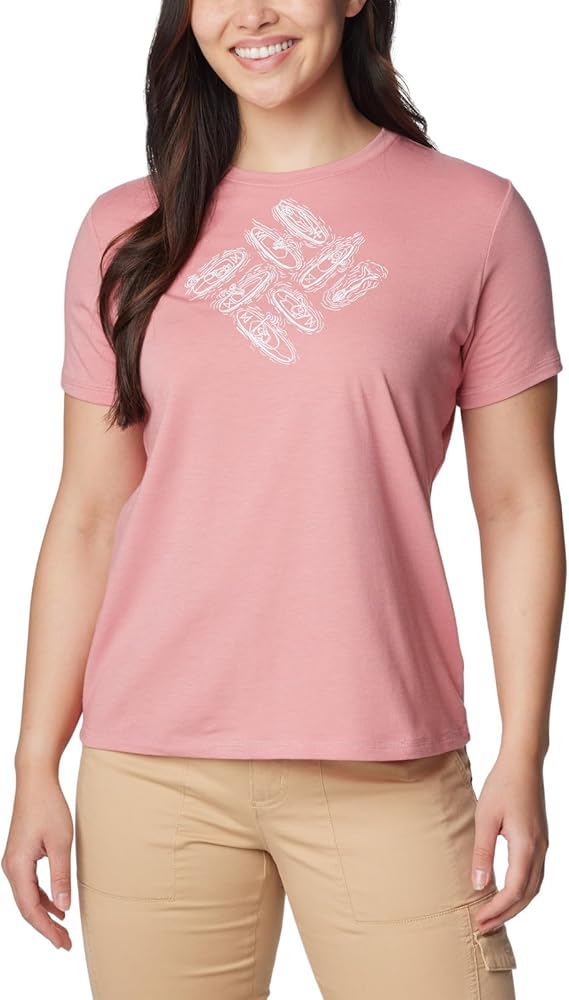
An Athleta-style tech tee at around $44 through 3X is the third workhorse in this category, with a nylon-elastane blend that dries faster than the Columbia polyester and feels less plasticky against the skin. Athleta cycles their core tech tee names every season; whatever the current SKU is, the construction stays roughly consistent.
The upgrade once you’ve logged enough miles to justify it is the Patagonia Capilene Cool Trail Shirt at around $59 through XXL. The fabric is a recycled polyester knit with a structured shoulder seam, dropped to sit off the actual shoulder rather than on top of it, which means the strap of a pack doesn’t run a friction line directly on the seam. This is a construction detail most tee designers don’t think about and one that matters enormously when you’re carrying any kind of pack on a multi-hour walk. The Patagonia version costs more than the Columbia. The shoulder seam alone pays back the difference.
Lightweight jacket: rain vs. wind layer
The lightweight jacket category is two separate categories that brands often blur. The rain shell is a fully waterproof piece, typically with a Gore-Tex or proprietary equivalent membrane laminated to the face fabric, that handles sustained precipitation. The wind layer is a lighter, often non-waterproof piece designed to cut wind and shed light moisture without the bulk or breathability cost of a full rain shell. A complete plus hiking kit needs both. Most plus shoppers own only one, usually the rain shell, and end up wearing it as a wind layer because the brand sold the rain shell as a “do-everything” piece. It is not. The breathability cost of a waterproof membrane is real, and wearing a rain shell as a windbreaker on a moderate-effort hike will leave you wet from the inside out within an hour.
The rain shell in the plus category that actually delivers in 2026 is the REI Co-op Rainier Rain Jacket at around $130 through 3X. The fabric is a 2.5-layer proprietary waterproof-breathable membrane, seam-sealed at every construction line, with pit zips that open under the arm to dump heat when the rain is light but you’re working hard. The pit zips are the feature. A rain shell without pit zips is functionally a sauna on a moderate climb. The Rainier has them. The Patagonia Torrentshell 3L at around $179 through XXL is the higher-end alternative, with a true 3-layer membrane that breathes meaningfully better than 2.5-layer constructions at the cost of bulk and weight. Columbia’s OutDry Extreme line is the technical alternative, with a Columbia-proprietary membrane that performs at a similar level at a slightly lower weight.
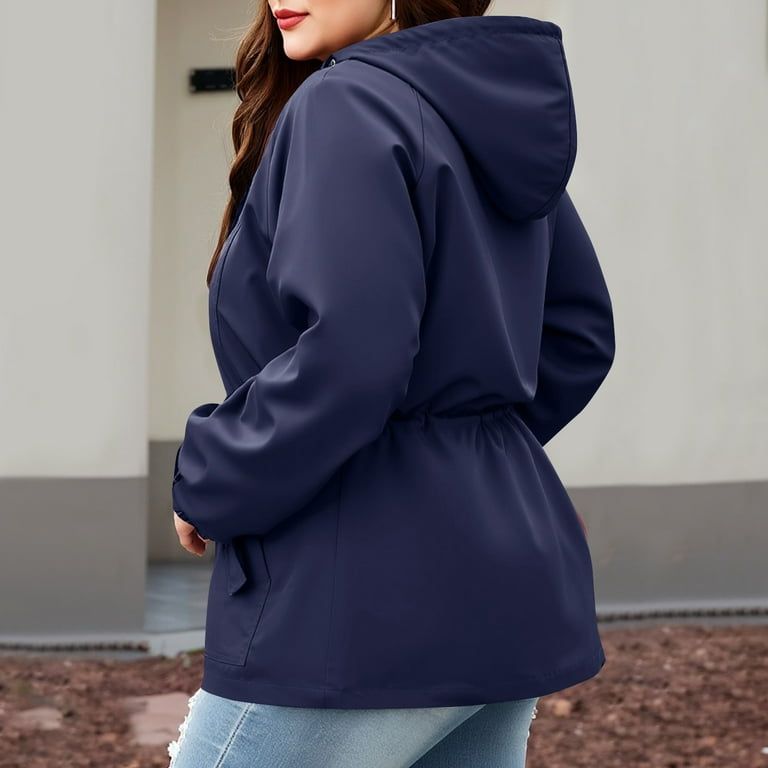
The wind layer is the piece most plus hikers skip. The function is a sub-six-ounce shell that packs into its own pocket, lives in the bottom of a daypack, and comes out the moment a ridge wind starts cutting heat off your core. The Patagonia Houdini Air Jacket at $129 through XXL is the canonical piece in this category. The fabric is a 0.7-ounce per square yard recycled nylon ripstop with a durable water repellent finish, not waterproof but water-resistant to a meaningful degree, and the piece weighs roughly three ounces in a 1X. The Houdini Air is one of two or three pieces in my entire kit that has earned its weight every single trip. It is the piece I forget I am carrying until the moment I need it, and then it is the piece that saves a hike from becoming a death-march of cold misery.
The pattern most experienced trail writers flag is that hikers buy the visible piece, the rain shell, because the rain is the visible threat. The wind is the invisible one, and the one that takes more hikers off the trail. The wind layer is a base purchase, not an optional one - I’ve internalized this after enough cold ridge experiences to know it’s correct.
Socks: the merino case (Smartwool, Darn Tough)
The sock is the smallest and most-overlooked piece of the kit and the piece that controls more of your hiking comfort than any other item except the shoe. A cotton athletic sock on a hike will produce a blister within ten kilometers in most conditions, because cotton absorbs sweat, holds it against the skin, and softens the foot tissue until friction tears it. A merino sock at the correct weight does the opposite. It moves sweat away from the foot, dries fast, regulates temperature across a range of conditions, and resists odor across multi-day use.
The two brands that matter in this category are Smartwool and Darn Tough. Both make merino socks at the weights and constructions that hiking actually requires. The crucial detail for plus hikers is the sizing. Plus women often have larger feet, in the range of US 10 to 13, and many sock brands stop their sizing at a women’s 10 or 11. Smartwool sizes its women’s socks through size 11.5 in most styles, with men’s options that go meaningfully larger and that fit a wider foot honestly. Darn Tough sizes its women’s socks through 11.5 and offers a wide-calf option in select styles that fits plus calves without rolling at the cuff, which is a fit issue most sock brands ignore entirely.
Smartwool’s Hike Classic Edition Full Cushion Crew Sock at around $26 through size 11.5 is my baseline hiking sock. The fabric is a merino wool, recycled nylon, and elastane blend, with cushioning across the heel and ball and a flat seam at the toe. The sock has lasted me roughly four hundred miles of use without a hole, which is the wear-life that justifies the price. The Darn Tough Hiker Boot Sock Full Cushion at around $25 through size 11.5 is the alternative I rotate with. The Darn Tough construction is heavier, the cushioning more pronounced, and the brand offers a lifetime warranty they actually honor (mail in a worn sock, receive a replacement, no proof of purchase required).
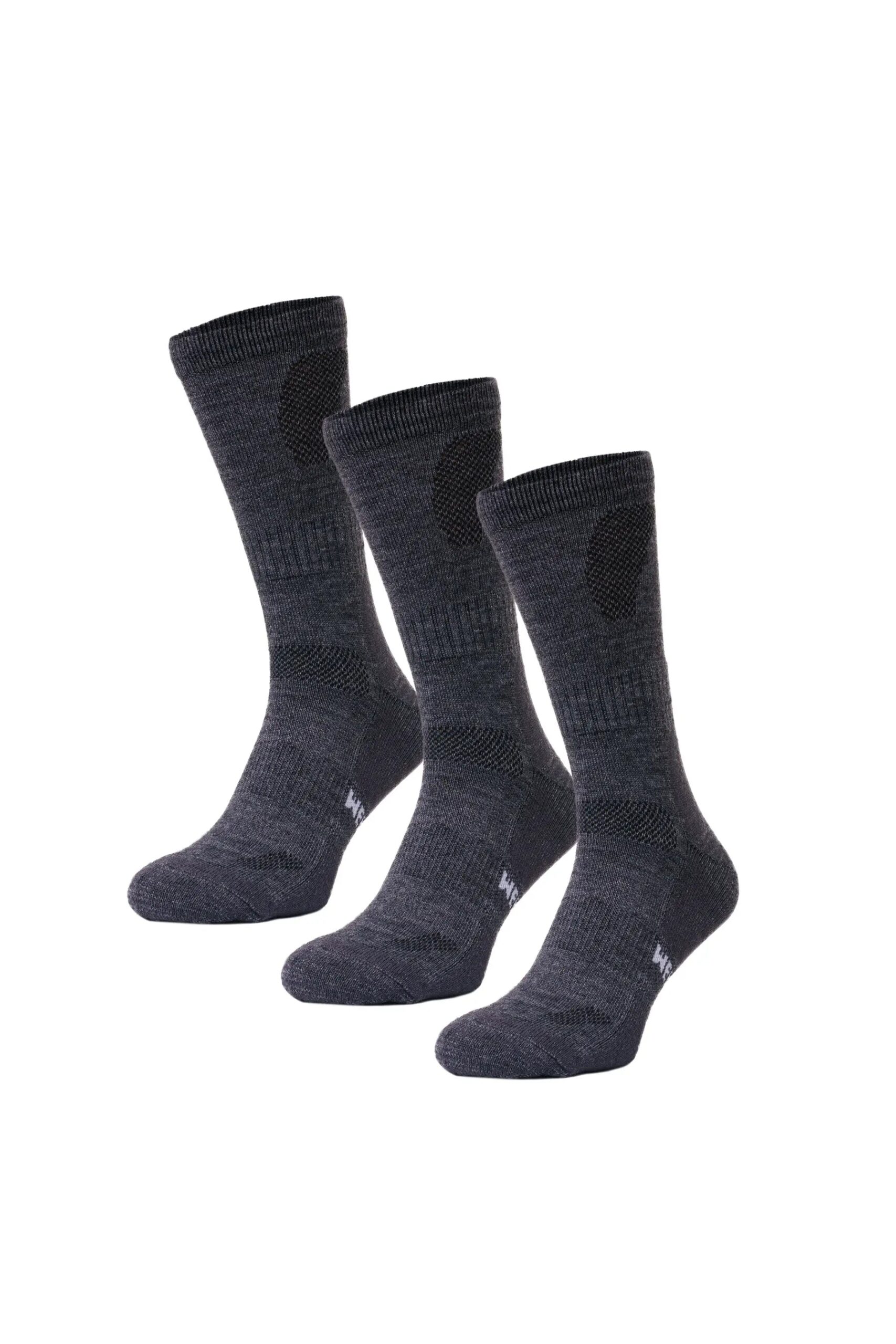
The sock detail that most beginners miss is to buy two pairs and rotate them across a multi-day hike, washing one in a stream or sink while wearing the other. A merino sock dries overnight in most conditions. The rotation extends the wear-life of both pairs and keeps a clean dry sock on the foot every morning, which is the single largest blister-prevention move you can make.
Hiking shoes for wide feet (Hoka, Altra, Oboz)
The shoe is the most expensive single piece in the kit, the most personal, and the piece where the plus-body fit conversation overlaps with the wide-foot fit conversation in a way the industry has been slow to acknowledge. Plus women often have wider feet, both because heavier bodies spread the metatarsal arch over time and because the population of plus women includes a meaningful number of women whose feet were always wider than the standard women’s last accommodates. The default women’s hiking shoe is built on a B-width last, which is narrower than the D-width that fits most plus feet honestly. The fix is to buy in wide widths, and the brands that offer wide widths in their hiking shoes are the brands that earn the plus market.
The Hoka Speedgoat 6 in the wide width at around $155 is the shoe I’ve logged the most plus-trail miles in over the last two years. The Speedgoat is a trail running shoe rather than a hiking boot, with the maximalist cushioning that has defined Hoka since the brand launched in 2009. The wide width accommodates a foot up to a D-width comfortably. The cushioning matters in a plus body. The impact load on every step in a heavier body is higher, and the maximalist stack height on the Speedgoat absorbs more of that load than a traditional low-stack hiking boot does. The shoe is the most-recommended trail shoe in plus running and hiking communities for a reason. The fit is generous, the cushioning is genuine, and the wide width is meaningfully wider than the regular width rather than a token half-step.
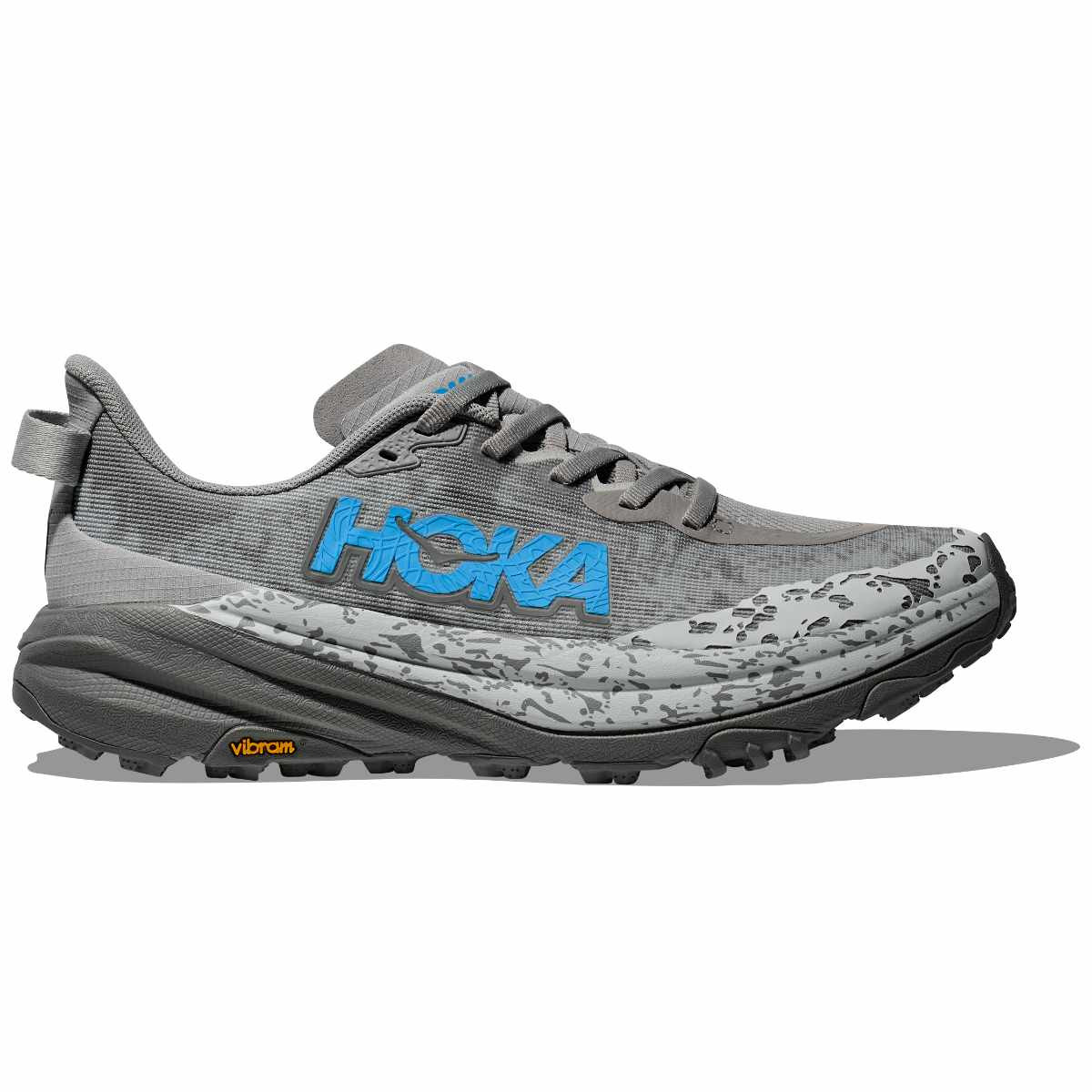
The Altra Lone Peak 9 in the wide width at $150 is the alternative for hikers who prefer a zero-drop construction. Altra’s design philosophy is foot-shaped (a wider toe box than the industry standard) and zero-drop (no heel-to-toe height difference), which suits hikers with wide feet and a forefoot-strike gait. The Lone Peak is not for everyone. The zero-drop construction takes weeks to adapt to if you are coming from a traditional heel-elevated shoe, and the lower stack height transmits more trail feel through the foot in a way that some hikers find tiring on longer days. For the hikers it does suit, it is the shoe that earns long-term loyalty.
The Oboz Bridger Mid Waterproof in wide widths at $190 is the boot rather than the trail-runner in this category. Oboz has been making honest wide-width hiking boots since the brand’s founding and is one of the few outdoor brands to offer wide as a genuine fit option rather than a marketing label. The Bridger Mid is a full-grain leather upper, a Vibram outsole, and a B-Dry waterproof membrane, with a structured ankle support that the trail-runners do not provide. The boot weighs more than a trail-runner (roughly thirty-three ounces per pair in a women’s 10 wide), and the trade is honest. You get ankle support, you get waterproofing that holds up across years, and you get a sole stiffness that handles loose scree and uneven terrain better than a trail-runner does. For multi-day backpacking with a heavier pack, the boot is the correct call. For day hiking on established trails, the trail-runner is. I own both. They serve different days.
The education resources at REI Co-op, including the brand’s long-running expert classes and online gear guides, have been the most reliable single source I have found for matching a plus body and a wide foot to the correct shoe. REI’s free expert advice service is staffed by people who actually walk the gear they recommend, and the advice I have received across multiple in-store fittings has been markedly more useful than what most online quizzes produce.
The 50-mile gear durability check
The gear-durability problem in plus hiking is meaningfully different from the gear-durability problem in straight-size hiking. The same physical wear factors that cause early failure in plus clothing (more friction at the inseam, more stress at the seat seam, heavier load on the shoulder strap of a pack) apply to hiking gear, and the brands that grade their plus pieces honestly versus the brands that just resize them shows up around mile fifty of regular use. Mile fifty is the rule of thumb I have arrived at after roughly five years of buying and burning through plus hiking gear. If a piece is going to fail in the inseam, the seat, the underarm, or the cuff, it fails by mile fifty. If it makes it past fifty miles of regular use, it usually lasts the season.
The test is simple. Buy the piece. Wear it on roughly five to ten hikes ranging from five to ten kilometers each. At the fifty-mile mark, inspect the high-stress zones. Look at the inseam stitching for any pulling, any thinning, any visible thread separation. Look at the seat seam for the same. Look at the underarm for pilling on a synthetic top or felting on a merino base layer. Look at the cuff and hem for any rolling, fraying, or stretching out of shape. The pieces that pass the fifty-mile check are the pieces worth investing in. The pieces that fail it are the pieces to return inside the brand’s return window if possible and to flag in your own notes as a one-season piece rather than a long-term investment.
The pieces that have passed the fifty-mile check in my own rotation include the prAna Halle Pant (currently at roughly four hundred miles with no failure), the REI Co-op Sahara Convertible Pant (roughly two hundred miles, one minor pulling at the conversion zipper that has not progressed), the Smartwool Hike Classic Full Cushion Crew Sock (multiple pairs at four-hundred-plus miles each), the Patagonia Houdini Air Jacket (three years of use, no failure), and the Hoka Speedgoat 6 (replaced at roughly five hundred miles, which is the expected wear-life of a maximalist running shoe). The pieces that have failed inside fifty miles in my own testing include three different pairs of straight-size hiking shorts that were altered to fit (all failed at the inseam where the alteration did not extend to), a Title Nine hiking dress that pilled across the chest and back by mile thirty, and a budget-tier rain shell I will not name that delaminated at the underarm seam at roughly mile forty-five.
What to skip from straight-size hiking advice
The bulk of available hiking advice on the internet is written for straight-size bodies by writers who have never had to think about plus-specific gear failure. Most of it is still useful. Some of it is actively wrong for a plus hiker and worth flagging.
Skip the advice to size up in everything. The default plus-shopper move when buying hiking gear, after years of being underserved by sizing, is to add a size to anything that comes close to a fit. This is wrong in hiking specifically. A pant that is too large at the waist will sag under the weight of a hip belt and will chafe at the inner thigh because the fabric drapes into the contact zone rather than sitting clean above it. A top that is too large at the shoulder will catch under a pack strap and will work itself into a friction point across a long day. Buy your true size in technical hiking gear, even if the number on the tag is uncomfortable to look at. The piece is engineered to fit in the size it is labeled, and sizing up degrades the engineering.
Skip the advice to wear cotton in hot weather. This is a piece of advice that circulates in casual walking communities and is wrong for any hike longer than two kilometers in a plus body. Cotton holds sweat, softens skin, and accelerates chafing. The right move in hot weather is a lighter-weight synthetic or merino layer, not a cotton one. The “cotton breathes” claim is true in still air and a flat sit-down setting. It is not true under load with any kind of friction, and a plus hiker has more friction than a straight-size hiker by default.
Skip the advice to break in hiking boots over weeks before a trip. Modern hiking shoes, particularly trail-runners like the Hoka Speedgoat or the Altra Lone Peak, do not require break-in in the way leather boots from two decades ago did. The right move with modern trail shoes is to walk a few short distances in them to confirm fit and then take them on the trail. Excessive break-in walking in shoes that do not need it accelerates the wear on the cushioning and shortens the in-trail wear-life. Boots like the Oboz Bridger Mid do still benefit from a few weeks of break-in, because the full-grain leather upper genuinely softens with wear. The distinction matters and the blanket “always break in your boots” advice does not preserve it.
Skip the advice to invest in expensive trekking poles before you’ve logged enough miles to know you need them. Trekking poles are a meaningful upgrade for some hikers in some terrain. The honest answer is that poles help on steep descents (where they take impact load off the knees) and on long sustained climbs (where they distribute effort to the upper body). They don’t help meaningfully on flat or rolling terrain and add weight and pack-management complexity. Buy a pair only after you’ve done enough hiking to identify your own terrain preferences. Then buy them once. Black Diamond Trail Ergo Cork at around $130 is the pole most experienced hikers I trust recommend.
Skip the advice that you need to lose weight before you can hike. This is the most damaging piece of advice in the entire conversation and the one Mirna Valerio and Latoya Shauntay Snell have spent careers refuting. The hike is the practice. The body that arrives at the trailhead is the body that does the hike. The gear conversation in this article exists precisely because the trail is for the body you have, not for the body the industry wishes you had.
The 7-piece starter kit with named brands
Here is the kit. If you are buying from zero in 2026 and you want a complete plus-size walking and hiking starter setup that will handle three-season conditions in most temperate environments, this is what to buy. Seven pieces. Seven brands. The specific items I would put on a friend’s list if she texted me from her phone in the REI parking lot asking what to walk in with.
Base layer top. Smartwool Classic All-Season Merino Base Layer Long-Sleeve Crew at $110 in your true size through 3X. The 150-gram weight handles cold mornings and warm afternoons across a shoulder-season range. This is the piece that lives in your pack on warm days and comes out at the trailhead on cold ones.
Base layer bottom. Smartwool Classic Thermal Merino Bottom in 250 weight at $115 through 3X. The 250 weight is the warmer option and the one I would buy first if you are choosing only one bottom. The high-rise cut and the generous inseam in the plus grading are the construction details that earn the price.
Hiking pants. prAna Halle Straight Pant at $99 through 3X. The gusseted inseam is the construction feature you cannot skip. The roll-up tab handles warm afternoons. The water-repellent finish handles light rain without requiring the rain shell to come out. This is the workhorse pant of the kit.
Fast-dry tee. Columbia Silver Ridge Tech Tee at $40 through 3X. The UPF 50 finish and the structural back yoke vent are the features that justify the price over a generic athletic tee. Buy two or three in colors you will actually wear.
Lightweight jacket. Patagonia Houdini Air Jacket at $129 through XXL. The wind layer is the piece most plus hikers skip and the piece that most often saves a hike from becoming a cold-misery event. The three-ounce weight and the pocket-stuffable construction mean the jacket lives in your pack without consequence until you need it.
Sock pair. Darn Tough Hiker Boot Sock Full Cushion at $25 in your true size through 11.5. Buy two pairs from the start. The lifetime warranty matters and the rotation across multi-day use matters more.
Shoe. Hoka Speedgoat 6 in the wide width at $155. The cushioning handles plus-body impact load honestly. The wide width fits a wider foot without crowding the toe box. The trail-runner construction handles most non-technical terrain that most day hikers actually walk.
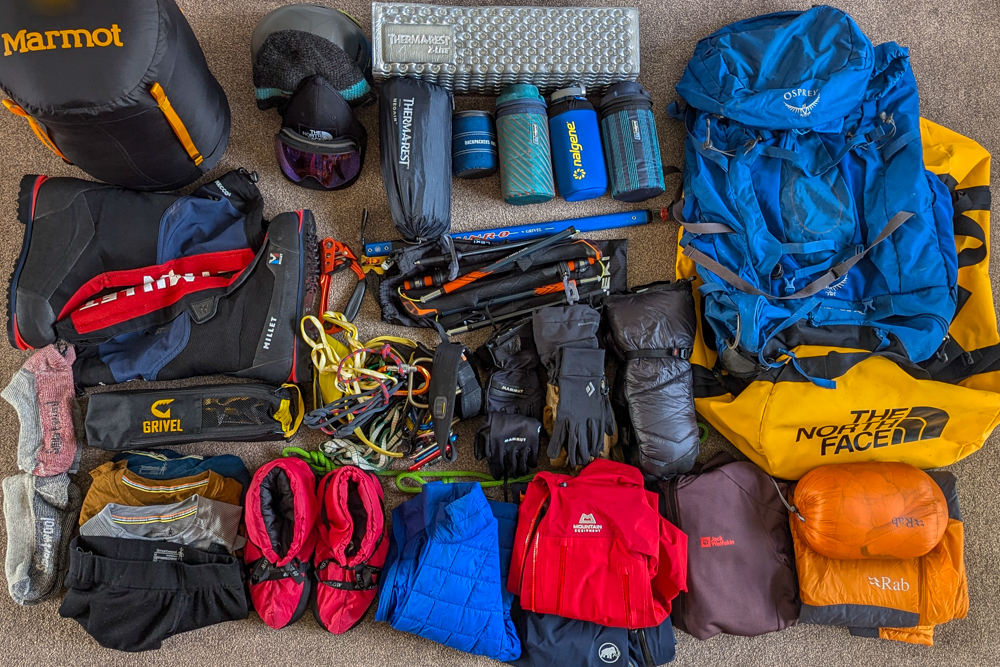
That kit, bought at full retail, lands at roughly $683 before tax. Roughly half of that ($284) is the shoe and the rain jacket equivalent (we left out the rain shell because the wind layer is the piece I would buy first and the rain shell is the piece I would add second once you have hiked enough to know which climate range you most often walk in). The kit will handle most three-season day hiking in most temperate climates. It will not handle alpine winter conditions, multi-day backpacking with a heavy pack, or extreme heat above one hundred degrees Fahrenheit. Those are different kits and different conversations.
The challenge I want to leave you with is this. Pick one piece off this list. Not all seven. One. Buy it this week. Wear it on the next walk you take, whether that is a five-kilometer loop in your neighborhood park or an eighteen-kilometer coastal walk outside Lisbon. The kit is not the goal. The walk is the goal. The kit is what makes the walk something you finish without bleeding through your shorts at hour three. If the piece you pick is the prAna Halle Pant, you will know on the second walk that the gusseted inseam is real and the alteration-tax is gone. If it is the Smartwool sock, you will know on the first walk that the blister you got the last time was not your fault, it was the sock. If it is the Hoka Speedgoat, you will know on the first descent that the cushioning is the difference between a sore knee at the end of the day and a finished hike. Pick the piece. Walk in it. The next piece becomes obvious from there. The trail is waiting and it has been waiting and the body that arrives at it is the right body. Start with one piece. Start this week.