
In November 2024 I was in Sayulita, Mexico, for a four-day surf trip with two friends. The rental shop on the cobblestone street that runs down to the main beach was the one our hotel recommended. I had been on a board exactly twice before. The young instructor walked me to the wall of wetsuits, pulled the biggest one off the rack, and held it up. It was a women’s 12. I am a size 18. The zipper closed maybe two thirds of the way up my back. There was a five-inch gap of bare skin from my lower back to my shoulder blades, and the neoprene was so tight across my chest I could feel my own heartbeat through it. He looked at me, smiled with what I think was genuine sympathy, and said, “we’ll make it work.” He zipped it as far as it would go. Three minutes into paddling out, I felt the seam tear along my left shoulder blade with a sound I heard underwater. By the time I made it back to the beach, the tear was the length of my hand. The shop charged me $40 for the damage. The instructor apologized. I sat on the sand and cried in a way that was not really about the wetsuit.
That afternoon in Sayulita is where this article starts, because it is where the lesson started for me. The water sports industry, for almost the entire fifteen years I have been traveling with intention, has built its gear, its imagery, and its rental inventory for an active woman who is a size 8 with visible abs. The rest of us have been told, kindly or unkindly, to make it work. In 2026, that is finally beginning to change. Real brands are now cutting wetsuits in real sizes. Plus-size-specific surf schools exist. Rash guard ranges that go to 4X are no longer one-off marketing experiments. This guide is the audit I wish someone had handed me before I paid for that ripped seam.
Why standard wetsuits fail plus-size bodies
A wetsuit is not loose fabric you slip into. It is a layer of neoprene foam, between 3mm and 5mm thick, that is supposed to compress against your skin and trap a thin sheet of water that your body heats and then keeps warm. The compression is the entire point. Too loose, and cold water flushes through with every movement and you freeze in twenty minutes. Too tight, and it cuts off your range of motion, restricts your breathing, and tears at the seams.
The math on a 5mm wetsuit is unforgiving. Every cubic centimeter of body it covers is being squeezed by foam that was engineered to flex around a body shape the company designed the suit for. When a women’s straight-size suit tops out at a 12 or 14, the company’s design team almost never tested the suit on a 16, 18, 20, or 22 body. They graded the pattern up, which means they scaled the numbers and hoped. Wetsuit grading does not scale gracefully. Chests get wider, but armholes and shoulders do not get proportionally taller. Hips get fuller, but inseams stay short. The result is a suit that pinches at the armpit, gaps at the lower back, and binds at the upper thigh, all at the same time.
The three failure points to watch for are the back zip, the leg cuffs, and the chest panel. The back zip is the most visible because it is where my Sayulita suit failed - on a body the suit was not graded for, the zipper either will not close at all or it closes under so much tension that the seam either side of the zip tears the first time you twist your torso. The leg cuffs are next. On a plus-size body, the upper thigh circumference often exceeds what the cuff was designed to slide over, so you either cannot get the suit on past your knees, or the cuff cinches so tight on your calf that it cuts off circulation. The chest panel is the quietest failure. It will not tear, but it will compress your rib cage enough that taking a deep breath underwater feels like work. That is the suit that ruins your dive without ever announcing why.
What to actually look for on the spec sheet
The spec sheet is where the work is. Almost no brand will tell you “this fits a size 18” on the product page. You have to read the construction details and reverse-engineer it.
Start with thickness. A 4/3mm wetsuit means 4mm panels on the torso and 3mm on the arms and legs. A 5/4/3mm means 5mm on the core, 4mm on the upper legs, 3mm on the lower arms and legs. For most plus-size beginners surfing in water above 60 degrees Fahrenheit, a 4/3 is the right starting point. Five-millimeter suits are warmer but compress harder, and the harder the compression, the less forgiving the fit. If you are diving in cooler water and you need the 5mm, prioritize a front-zip design and seek out brands that explicitly cut for fuller figures.
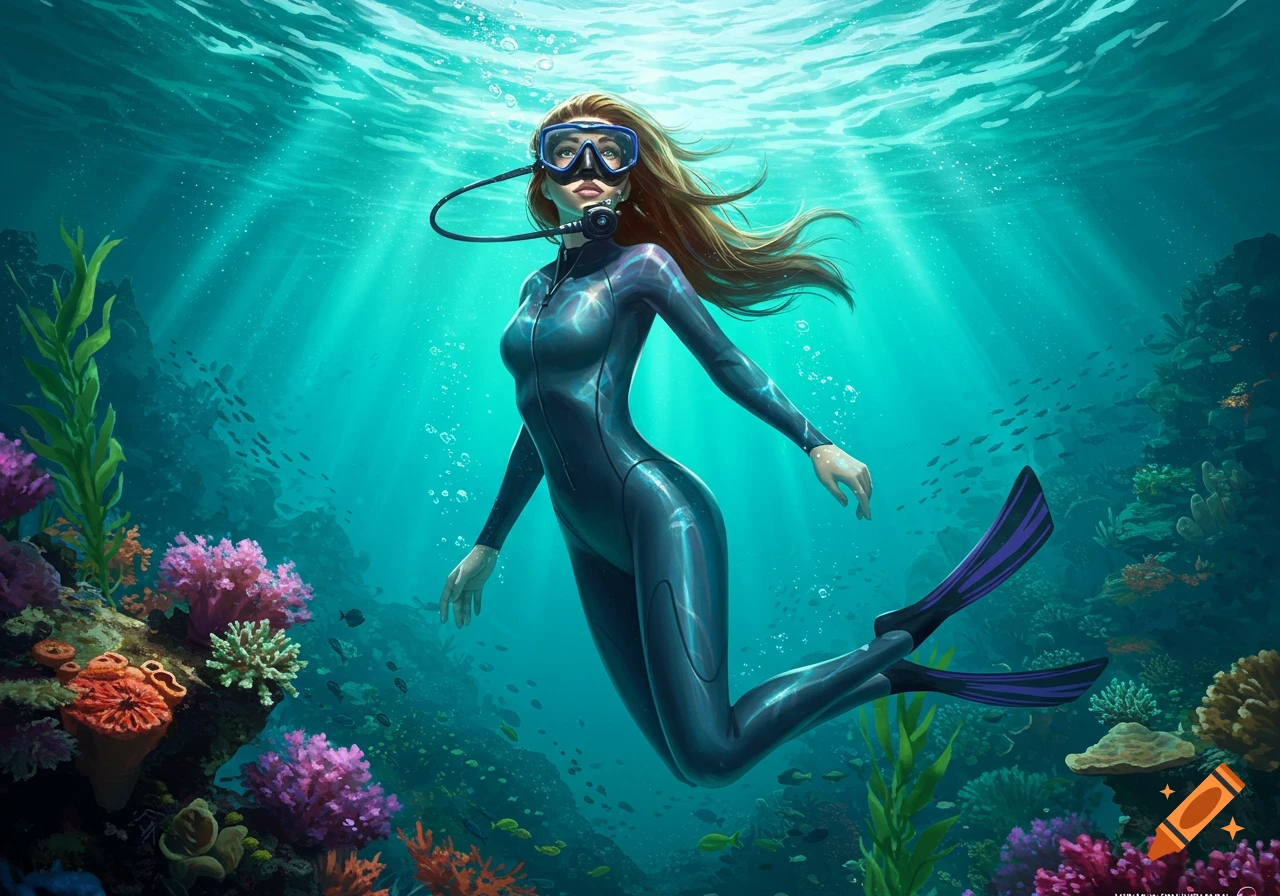
Next, seams. There are three main constructions. Flatlock seams are stitched flat against the skin, are the cheapest, and let cold water leak through. They are fine for warm water and beginner suits. Glued and blind-stitched seams use glue first, then a needle that does not pierce all the way through the neoprene, which keeps almost all water out. Sealed or taped seams add a strip of tape over the inside of the seam for maximum waterproofing and durability. For plus-size bodies, sealed seams are worth paying for because the seams are the failure point under stretch. A taped seam can survive what a flatlock cannot.
Finally, the zipper. Back-zip suits are easier to put on alone, which matters when you are getting ready by yourself on a rental beach. They are also where most plus-size fit failures happen because the zip has to clear your entire torso under tension. Front-zip and chest-zip suits are harder to get into, but the closure sits on the upper chest where the body is more uniform in width and the tension load is lower. If you have the choice, choose chest-zip. If the brand only offers back-zip in your size, ask if they offer a “back-zip extender” - some do.
The brand audit, label by label
Six brands are doing the work in 2026. I have either worn each of these or dressed friends in them on real trips, and I am ranking them by how honestly they cut for plus bodies, not by marketing.
XCEL Drylock. XCEL’s Drylock line extends through 3X in women’s, which in their grading runs roughly to a US 22-24. The 4/3 Drylock has glued and blind-stitched seams, a chest-zip closure, and a generous chest panel that does not compress the rib cage the way most straight-size suits do. This is the suit I now own. It is not cheap (the women’s 4/3 runs around $400) but it is the closest thing to a real plus-size surf wetsuit on the US market, and it has lasted eighteen months of regular use without a seam giving way.
Need Essentials. Australian brand, direct-to-consumer, no middleman markup. Their women’s range now goes to a size 18 in the 3/2 and 4/3, and the cut is more generous than the size label suggests because the Australian grading runs about one size larger than US. Their seams are glued and blind-stitched at a price point ($230-270 USD) that undercuts XCEL meaningfully. The catch is shipping from Australia. Order four to six weeks before your trip. Their customer service is the most responsive of any brand on this list - they will measure-fit you over email.
O’Neill Bahia 4/3 women’s. O’Neill’s Bahia line extends through women’s size 18 in the 4/3, which is the highest mass-market size on a major brand’s straight wetsuit range. The seams are glued, not taped, and the back-zip design has its known issues for plus bodies, but at $220 it is the most affordable way into a real branded wetsuit that will actually close. If you are between sizes, size up. The Bahia runs small even by O’Neill’s standards.
Rip Curl Dawn Patrol. Rip Curl’s Dawn Patrol women’s range goes up to XL in the 4/3, which in their grading is roughly a US 14-16. It is the lightest commitment of the major brands - their plus extension is real but modest. I am including it because the rental shops in Costa Rica, Portugal, and Australia stock Dawn Patrol heavily, and if you are a 14 or 16 you have a real shot at finding one that fits on the rack. Below that size range, the Dawn Patrol works. Above it, look elsewhere.
Cressi diving wetsuits. Cressi is an Italian dive brand and their plus-size range is the most honest on the diving side. Their Lui & Lei 5mm two-piece (the women’s “Lei” cut) goes through a 3X and the two-piece construction is itself a plus-size win - a separate jacket and pants means each piece is sized independently, which solves the “my chest fits but my hips do not” problem in one design move. For warm-water snorkel and shallow dive trips in the Caribbean, this is the suit I recommend.
ScubaPro Definition. ScubaPro’s Definition Steamer extends through 4X in women’s in the 5mm and 6.5mm, which is the largest size range available on any major dive wetsuit in 2026. The cut is engineered specifically for fuller chests and wider hips with stretch panels at the lower back and inner thighs. The price is steep ($550-700) but for serious divers, this is the suit. It is also the only mass-market dive suit I know of that comes in a “tall” cut as a separate option, which matters if you are over 5’8″.
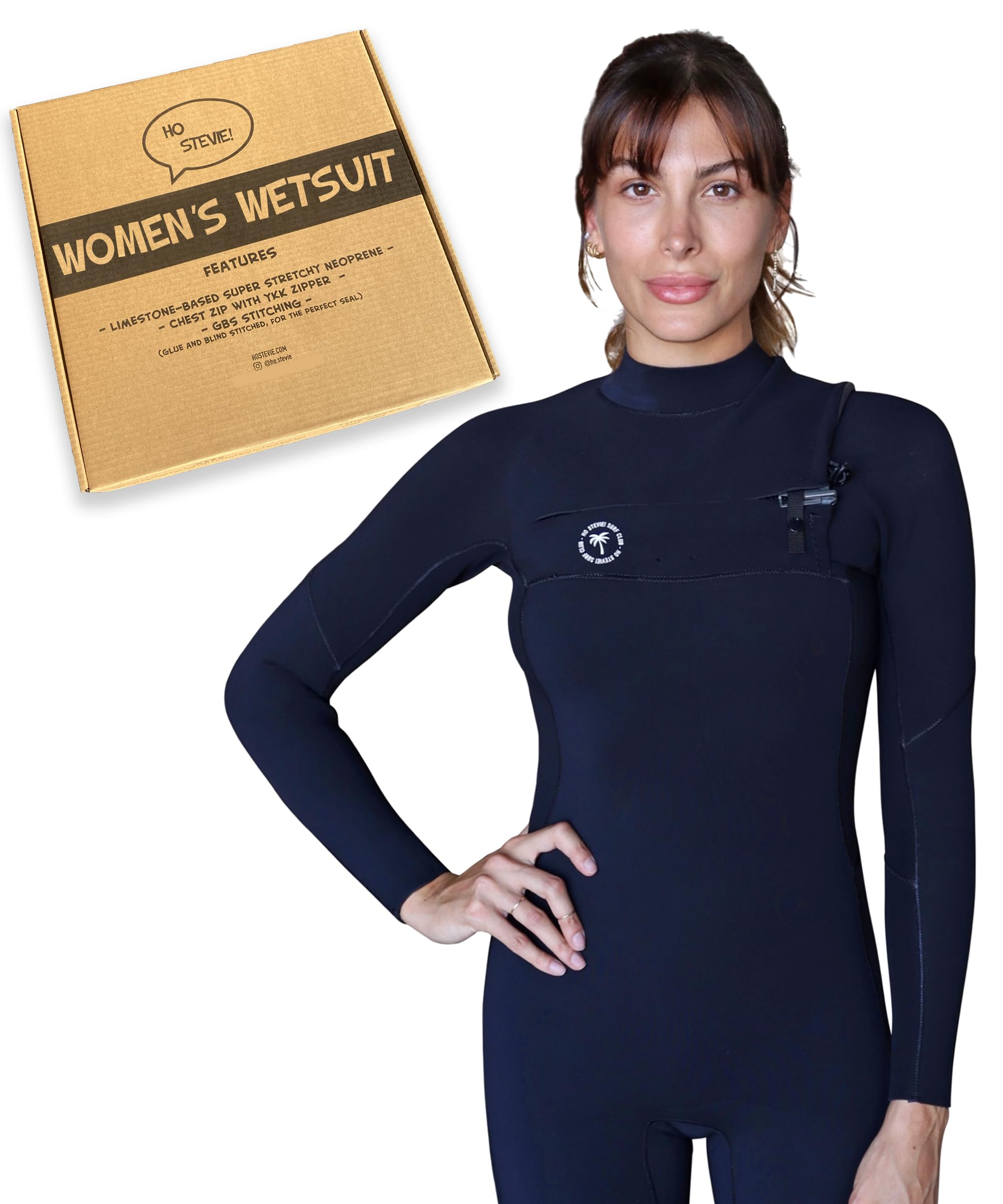
Rash guards, water leggings, and the layer that prevents the worst part
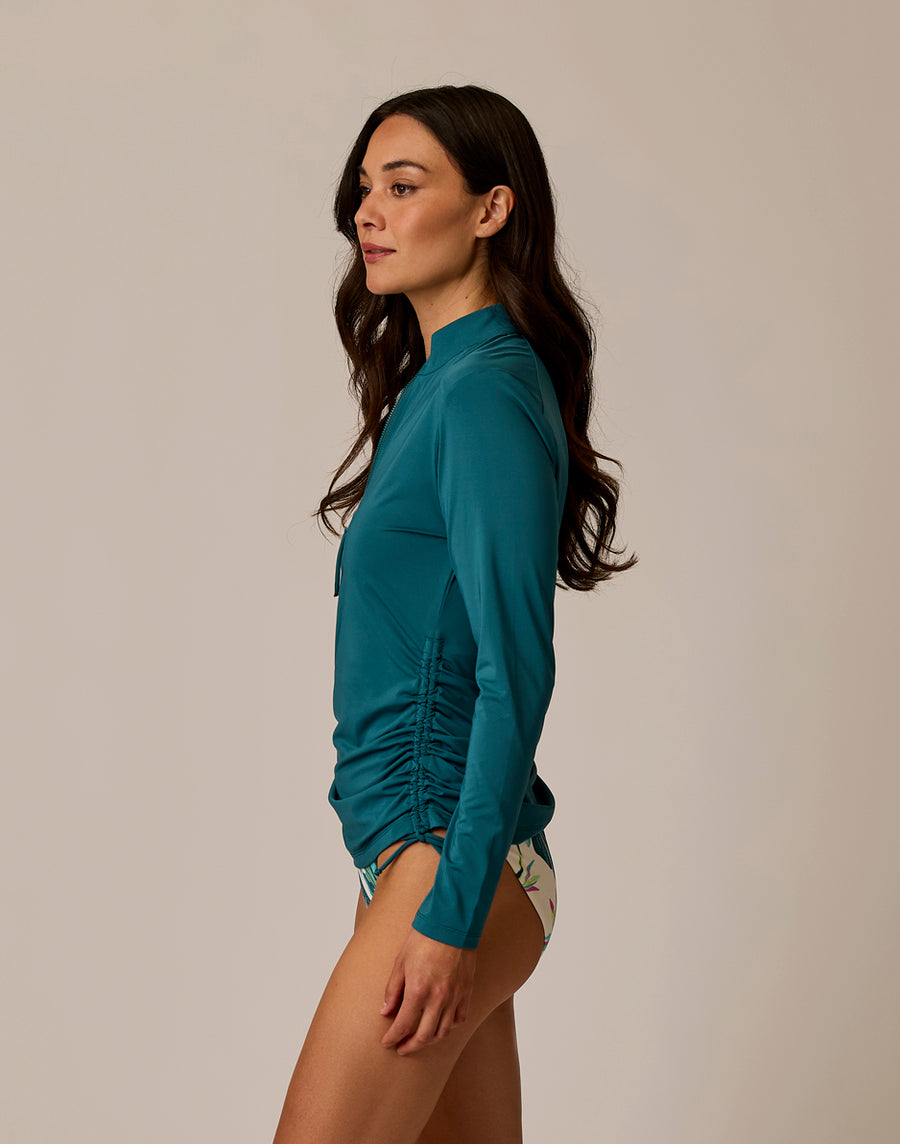
A rash guard is the layer that decides whether you finish the day with skin or without it. Salt water plus board wax plus repeated friction on the inner thighs, the underbust, and the lower back is a recipe for raw skin within about ninety minutes. For plus-size bodies, the rash guard problem is the same as the wetsuit problem: most are graded to a size 12 and stop. The brands that have extended their ranges are the ones to know.
Carve Designs has been the quiet leader here for the better part of a decade. Their women’s rash guards go to 3X, the long-sleeve fit is generous through the bust and the arms, and the fabric is a UPF 50+ four-way stretch that holds its shape through repeated salt water exposure. Their water leggings, which are the lower-body equivalent of a rash guard, go to a 3X waist and a length that actually reaches the ankle on women over 5’6″. A Carve rash guard and a pair of their water leggings is what I wear under a thinner wetsuit in warm water, and over my swimsuit when I am snorkeling in the Caribbean and want sun coverage. The fabric does not pill, does not fade after a season, and dries in about twenty minutes on a beach towel.
prAna Mahala is the second name to know. Their Mahala swim collection includes a rash guard that goes to 3X and a pair of swim shorts that reach mid-thigh, both in a recycled nylon that holds up. The cut is slightly more relaxed than Carve, which I prefer for a snorkel day where I am not paddling hard. The Mahala line also comes in patterns and colors that look like beachwear, not athletic wear, which matters more than it should when you are getting on and off a boat in front of people.
Athleta Kata Bralette and the Athleta water swim leggings line are the third pillar. Athleta’s plus-size extension goes through a 3X, and the Kata bralette is the only built-in-bra rash guard alternative I have found that actually supports a DDD-and-up chest in the water. For surf days where I am taking the rash guard on and off, the Kata layered under a regular long-sleeve rash top is the combination I trust. The water leggings are cut shorter than Carve’s, which works better in warmer water but is less protective from sun on a long day.
Board shorts again, briefly
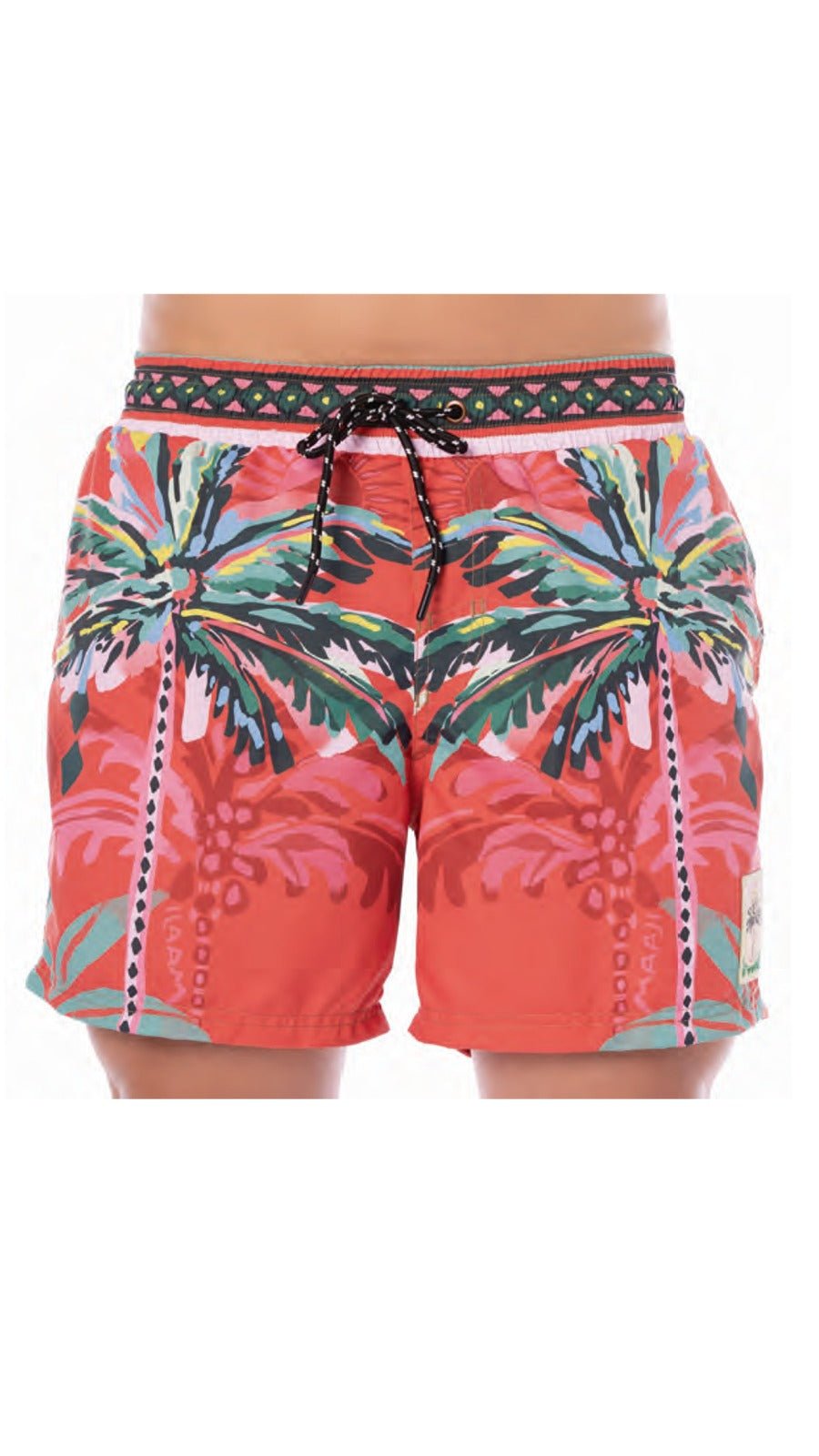
Board shorts are the underrated piece of the kit. For surf days where the water is warm enough to skip the wetsuit, board shorts plus a rash guard plus a swimsuit is the standard layering. The plus-size board short market in 2026 is still thin compared to rash guards, but two brands have done real work. Maaji’s plus-size swim collection includes board shorts that go to 3X, sit at the natural waist (which matters - low-rise board shorts on a plus body roll down the second you paddle), and have a real drawstring that holds. Swimsuits For All has a board short under their Curve label that goes through a 22/24 and runs about $40, which makes it the most affordable plus board short on the market. The fabric is heavier than Maaji and dries slower, but it survives chlorine and salt water both.
If you are between sizes on board shorts, size up and trust the drawstring. The wrong move is to squeeze into a smaller pair “because I will lose weight before the trip.” You will not. You will sit in the parking lot of the surf shop trying to button them and then either cry or skip the lesson. I have done both.
Snorkel masks, fin sizing, and the gear nobody talks about
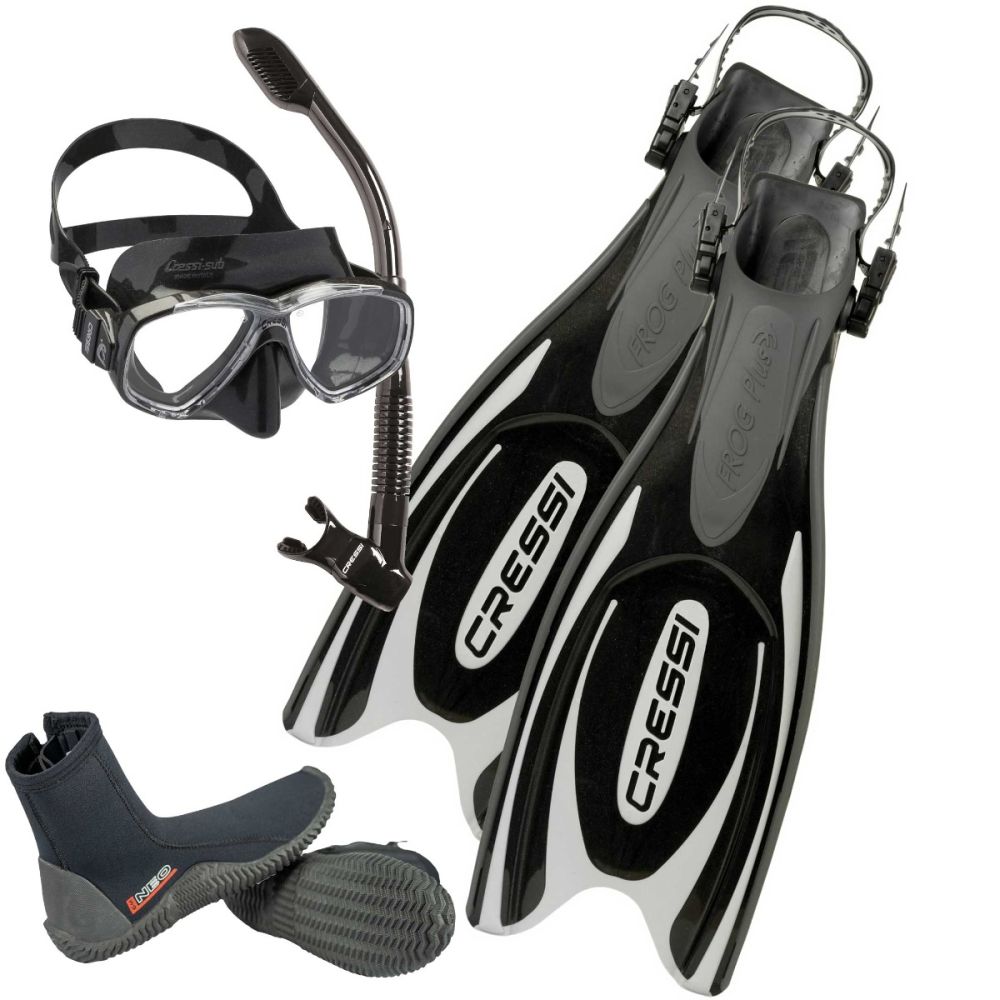
The pieces of water sports gear that are not the wetsuit get less attention but cause as many problems. Snorkel masks are sized to face width, not body size, but fuller faces and rounder cheekbones genuinely do not seal well to a standard mask. Cressi’s F1 Frameless and the ScubaPro Synergy 2 both come in a wider face cut that fits cheekbones the regular mask leaks around. If you have spent a snorkel trip with water trickling into your mask every thirty seconds, the mask is the problem, not your face. Ask the dive shop for a wide-face option specifically.
Fins are the other quiet issue. Fin sizing scales to foot length, which is fine, but the foot pocket on a closed-heel fin is also cut for a particular foot width and ankle circumference. Plus-size bodies often have slightly wider feet and proportionally fuller calves, and a fin that fits the length will sometimes cut into the top of the foot or the lower calf. Open-heel fins with adjustable straps and a separate dive bootie are the workaround. The bootie pads the foot, the strap adjusts to your actual ankle, and the fin does its job without leaving bruises. ScubaPro Seawing Nova and Cressi Reaction Pro both come with open-heel construction in sizes that match a women’s foot up to about size 12 US.
The kayak and SUP gap that still has not closed
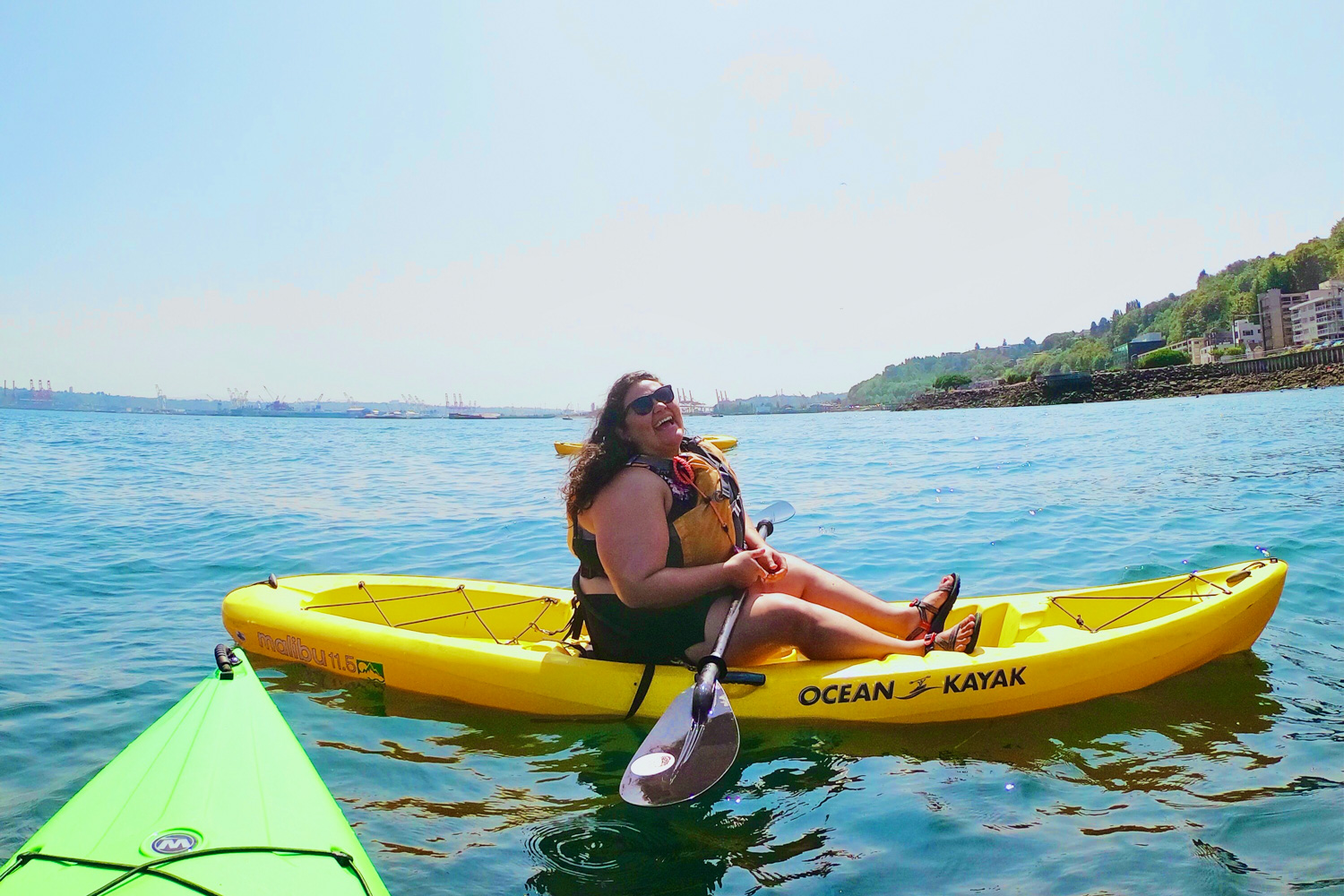
Kayak and stand-up paddleboard gear is where the size range still falls off a cliff. Personal flotation devices, which are required by law in most jurisdictions for paddle sports, are graded to chest circumference. Standard women’s PFDs top out around a 40-inch chest. A plus-size woman with a 44-inch or 48-inch chest will often have to default to a men’s PFD, which sits higher on the torso, rides up under the chin, and chafes the underbust within an hour. NRS makes a Shenook women’s PFD that extends to a 48-inch chest and is cut to sit lower at the bust line, and Stohlquist’s BetSea goes to a 46. Beyond that, the market disappears. If you are looking at a kayak rental trip in 2026 and you are above a 48-inch chest, call the rental shop two weeks ahead and ask specifically what PFD sizes they stock. Bring your own if you can. The “we’ll have something for you” answer usually means a men’s universal.
SUP shorts and SUP leggings follow the same pattern as surf gear, which is to say Carve and Athleta cover the lower end of plus sizing and very few brands extend past a 3X. The board itself is not a fit issue - SUP boards are sized by rider weight and a heavier rider just needs a longer, wider board, which any honest rental shop will have. Ask for a board rated to your weight plus 30 pounds for stability margin. A 240-pound rider should be on a board rated for at least 270 pounds. The shop that hands you a smaller board “because it will be fine” is not the shop you want to learn from.
What to expect from rental shops in 2026

Rental shop stocking is the bottleneck. Even the best plus-size wetsuits in 2026 mostly live in customers’ garages, not on rental walls. The shops that have caught up are the ones that have a plus-size customer base loud enough to demand it, and those are concentrated in a handful of places.
Hayley Gordon, the Australian surfer who founded Salt Gypsy, has been one of the few industry voices openly arguing that the surf rental supply chain needs to stock through XL and XXL as standard inventory. Salt Gypsy itself focuses on rash guards and surf leggings, but Gordon’s writing and her interviews have done the cultural work of naming the problem. When you see a rental shop in Australia or California that stocks larger wetsuits, you are seeing the downstream effect of that pressure. The shops in Pacific Beach, San Diego, in Encinitas, and in Byron Bay are noticeably better stocked than shops in places where the conversation has not yet happened.
Curves Surf School in Costa Rica is the second name to know. They run plus-size-only surf retreats out of Playa Guiones, which means every wetsuit on the wall is graded for a fuller body, every board is rated for a heavier rider, and every instructor has trained to teach people who have been told their whole lives that they cannot do this. A week with Curves is the closest thing to a guaranteed-fit surf trip I know of. The cost is higher than a generic surf camp, but you do not pay a torn-suit fee on day one.
Outside of those concentrated pockets, the rule for 2026 is: call the shop, ask the size question by name, and bring your own gear if you are above a US 16. Email is better than calling because it gives them time to actually check the rack instead of guessing, and it gives you a written answer you can hold them to.
Learning to advocate for your own size before you book
The advocacy work is the part nobody teaches. When you book a surf trip, a dive trip, or a paddle trip in 2026, the question “do you have gear in my size” needs to be asked before the deposit, not after. The script that has worked for me, every time, is this: “I am a US women’s size 18 and I am looking to book a [lesson / rental / charter]. Can you confirm you have a women’s wetsuit / PFD / rash guard that fits a chest measurement of X and a hip measurement of Y? If not, I am happy to bring my own, but I want to confirm before I book.” Send that in email. Save the reply. If the shop hedges or sends a marketing brochure instead of an answer, that is the answer.
Patagonia’s 2024 inclusivity report named the rental-shop inventory gap directly and committed to expanding their own wetsuit grading through 2026. Patagonia is not yet at the top of this list because their plus-size cuts are still arriving in waves, but the report itself is one of the few public documents from a major outdoor brand that acknowledges the gear gap honestly. Quoting it back to a rental shop when you are pushing them to stock larger sizes is genuinely useful.
Frequently asked questions
What size wetsuit should I order if I am between two sizes? Size up. The compression of neoprene against a body that is already at the limit of the suit’s grading is what causes seam tears. A slightly looser suit that closes flat is always a better surf or dive than a tight suit that you have to wrestle on.
Are men’s wetsuits a workaround for plus-size women? Sometimes, with caveats. Men’s wetsuits are cut straighter through the torso, shorter in the inseam relative to height, and have no built-in chest accommodation. For a woman with a smaller chest and a fuller waist, a men’s 4/3 in XL or XXL can fit better than a women’s plus straight suit. For most plus-size women, the lack of a chest panel makes the fit worse, not better. Try one in a store before committing to one online.
How much should I expect to spend on a plus-size wetsuit that actually fits? Plan for $220 to $450 on a 4/3 surf suit, and $400 to $700 on a 5mm or thicker dive suit. The cheap end of the market does not extend through plus sizes yet. The gear that fits is the gear that is being made for a smaller customer base, and the price reflects that.
Can I learn to surf or dive if I cannot find rental gear in my size? Yes. The answer is to buy your own gear before the trip, or to book through one of the plus-size-specific schools like Curves. Do not let a rental shop’s shortage become your reason for skipping a sport you want to learn. The gear gap is the industry’s problem, not yours.
What about wetsuit alterations? Most surf shops in coastal cities know a wetsuit tailor. The most useful alteration is adding a back-zip extender panel, which can give a borderline-fit suit another inch or two of closure. Cost is usually $40 to $80. For a suit that is closing but cutting at the upper thigh, a cuff trim is also a real option.
The argument I want to leave you with
For fifteen years, the water sports industry has done a very specific thing. It has put “active women” on its brochures, its catalogs, its rental shop walls, and its marketing campaigns, and the woman in the picture has been, almost without exception, a size 8 with visible abs, a tan, and her hair already wet. The implicit message of every one of those images, repeated across magazines and Instagram and trade shows and travel agency posters, is that this is what an active woman looks like, and if you do not look like this, you do not get to do this. The Sayulita instructor who said “we’ll make it work” was not the villain of that story. He was downstream of fifteen years of an industry deciding that bodies like mine did not need to be designed for.
The brands that are getting it right in 2024, 2025, and now 2026 are the ones I named in this article. XCEL Drylock through 3X. Need Essentials cutting honest sizes from Australia. O’Neill extending the Bahia to a real women’s 18. Rip Curl moving the Dawn Patrol up. Cressi making a two-piece dive suit that finally solves the chest-versus-hip problem. ScubaPro Definition cutting through 4X for serious divers. Carve Designs and prAna and Athleta and Salt Gypsy putting rash guards on bodies the rest of the market pretended did not exist. NRS and Stohlquist making PFDs that close around a real woman’s chest. Curves Surf School in Costa Rica building a whole school out of the assumption that plus-size women would learn to surf if anyone bothered to make space for them.
The women who held off from learning to surf, from getting certified to dive, from kayaking the coast they grew up on, from trying SUP on a calm lake at sunrise - the women who held off because the gear was not made for them - those women are about to be the most paying customers in those sports. Every brand that has extended its size range in the last two years is going to find that out by 2027. Every brand that has not is going to wonder where its growth went. The argument is no longer that plus-size inclusion is a moral question. It is a business one. And the brands doing the work are the ones I am putting my money behind.