
The rice water bottle had been on the counter for two days, and at 6:14 in the morning it was the first thing I saw when I turned on the bathroom light. Glass spray bottle, label written in Sharpie, the fermented liquid inside the same pale honey color it had been when I strained it on Sunday night. Next to it: a small amber dropper of rosemary oil I had bought after watching @mielmonet’s video for the sixth time, a jade gua sha tool still in its silk pouch, a fresh bottle of Sunny Isle Jamaican Black Castor Oil with the price sticker on it, and a measuring tape coiled beside the soap dish. My satin headwrap was already on. The plan was day one, every hack at once, the full TikTok stack the algorithm had been feeding me for three months. I was supposed to start with the rice water rinse before I even brushed my teeth.
I stood there with the spray bottle in my hand and counted the products again. Five hacks. Four of them were oils, fermented liquids, or massage tools that were going to compete for the same square inch of scalp real estate. The rice water was a clarifying-leaning protein treatment. The rosemary oil wanted to sit undisturbed for at least thirty minutes. The JBCO baggy method needed a damp scalp, which is the opposite of what rice water leaves behind. The inversion method required a clear head and an empty stomach. And the gua sha tool was supposed to glide across an oiled scalp, which meant it had to come after one of the oils, which meant the order mattered more than any single TikTok creator had explained. I had built the stack from five separate videos and not one of them had mentioned the other four. The hack-stack contradicted itself before I had brushed a single section.
I’m 28, 4A throughout, low porosity, high density, transitioned in 2017. I trained at MAC Pro at nineteen, did pro makeup for four years, and have been writing about beauty and Black hair since 2022, including a brief trichology training stint during a Vogue Arabia freelance assignment. I should have known better than to stack five viral hacks the way a teenager builds a skincare routine in a Sephora aisle. What I told myself was that I would do it the way a reader would do it. Five hacks, thirty days, photographic length data, real product receipts. The hack-stack was the experiment. The contradictions were the point.
Below is the honest report. The five hacks I ran, what the peer-reviewed evidence actually says about each one, what three credentialed experts told me when I called them, what my length looked like in photographs at day zero, day fourteen, and day thirty, and the three hacks I kept. None of this is sponsored. The receipts add up to $84 if you already own a measuring tape and a satin bonnet, $112 if you do not.
The hack stack and what testing five at once gets you
The methodological problem with running five interventions at once is the same problem a chemist would flag in any undergraduate lab report. With five variables changing simultaneously, you cannot attribute any single outcome to any single hack. If my length is up at day thirty, it could be the rosemary oil, the scalp massage, the increased water intake I started by accident, the fact that I stopped using a cotton pillowcase three weeks ago, or simply the average 1.27 centimeters of growth a human scalp produces per month regardless of what is sprayed on it. Dr. Crystal Aguh, the Johns Hopkins dermatologist and FAAD I called for this piece, made exactly that point in the first ninety seconds of our conversation. “The viral hair growth content is essentially uncontrolled n-equals-one experiments,” she told me. “When five products are layered, the user almost always credits whichever product was most recently introduced for any positive change. That is a textbook recency bias and it is the engine of TikTok virality.”
Dr. Aguh, who literally wrote the textbook Fundamentals of Ethnic Hair in 2017 and runs Johns Hopkins’s ethnic skin and hair clinic, told me the broader problem is not that the hacks themselves are dangerous. Most of them are not. The problem is the displacement of evidence-based interventions. “When a patient comes to my clinic with traction alopecia or central centrifugal cicatricial alopecia and tells me she has been doing rice water rinses and rosemary oil massages for six months, what I am hearing is six months of delayed treatment for a scarring alopecia that has a narrow window of intervention. That is the actual harm.”
I built the stack anyway because the article would not exist without it, but I want that frame on the record. The five hacks did not run as cleanly isolated trials. They ran as a stack, the way a real TikTok-influenced viewer would run them, with all the cross-contamination that implies. Here is what happened with each one.
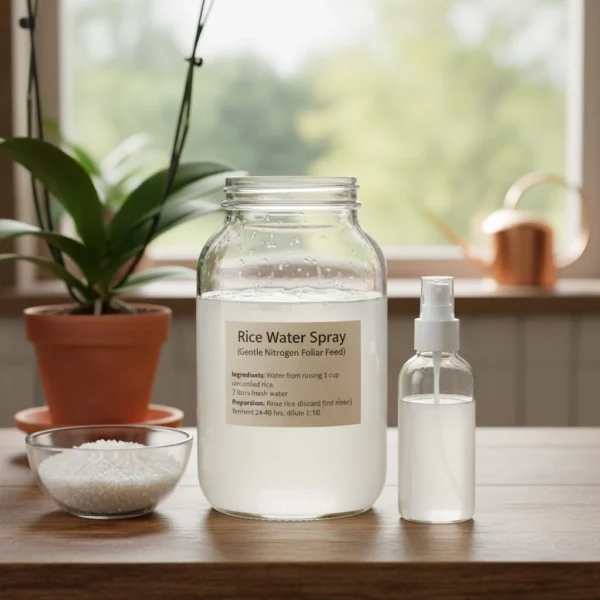
Hack 1: Rice water rinse and the protein imbalance reality at 4C
Origin story matters here. The rice water rinse is not a TikTok invention. The Yao women of Huangluo, a village in Guangxi province in southern China, have used fermented rice water as a hair rinse for centuries, and their floor-length hair became a tourism draw in the 2010s. The TikTok version compresses the practice into a fifteen-second clip and removes every piece of context that made it work in Huangluo, including the fact that the Yao women’s hair is straight, fine, and structurally unrelated to 4C coils. The 2021 to 2023 #ricewater wave on TikTok at one point passed 1.2 billion views, and almost none of it acknowledged the texture mismatch.
My protocol. Half a cup of rinsed jasmine rice, one and a half cups of filtered water, left to sit on the counter for 24 hours, strained, transferred to a glass spray bottle, refrigerated. After shampoo on wash day, I sprayed the diluted rice water onto sectioned damp hair, massaged through, left on five minutes, rinsed thoroughly with cool water, then proceeded with conditioner and leave-in. Twice a week, weeks one and two. Once a week, weeks three and four.
What happened on 4C. By the end of week one my coils felt stiffer in a way I recognized from a 2021 ApHogee Two-Step protein treatment I had done wrong. The strands had more snap-back when I pulled a curl and let it spring, but the snap was brittle, not bouncy. By day eleven I had two pieces of mid-shaft breakage at the crown that I had not had two weeks prior. I pulled back to once weekly. The breakage stabilized but did not reverse.
The science explains the breakage. Rice water contains inositol, amino acids, and proteins that bind to the hair shaft. On porous, damaged, or fine hair the binding adds temporary structure. On low-porosity 4C the cuticle is already tightly packed and resistant to absorption, which means the protein sits on the surface and accumulates with each rinse. Bridgette Hill, the certified trichologist and Aveda-trained scalp specialist whose practice is in Palm Beach, walked me through this on the phone. “Low porosity textured hair almost always tips into protein overload before it tips into moisture overload,” she told me. “The rice water trend is one of the most reliable producers of protein-overload breakage I see in consultations. The fix is almost always to stop, do a clarifying wash, and rebuild with moisture for four to six weeks before any protein returns.”
The verdict. Rice water is not snake oil. It works the way a protein treatment works, which means it is appropriate for porous or damaged hair on a schedule, not appropriate for low-porosity virgin 4C, and not appropriate at the frequency TikTok recommends regardless of texture. I dropped it at day fourteen.
Hack 2: Rosemary oil daily massage, the only hack with peer-reviewed data
This is the hack with actual science behind it, and it matters to say so plainly. The Panahi et al. 2015 study published in Skinmed compared rosemary oil to 2% minoxidil in a six-month randomized trial of 100 patients with androgenetic alopecia. At month six, both groups showed a statistically significant increase in hair count from baseline, and the rosemary oil group’s results were not statistically different from the minoxidil group’s. The rosemary group reported less scalp itching. The study is small, it is on androgenetic alopecia specifically rather than general growth, and it has not been replicated at scale. But it exists, it is peer-reviewed, and it is the only piece of the TikTok hair growth stack that has any randomized controlled trial behind it.
The 2022 #rosemaryoil wave on TikTok, which pushed Mielle Organics Rosemary Mint Scalp Oil to a three-month sellout and contributed to the brand’s reported $640 million acquisition by Procter and Gamble in 2023, layered onto the Panahi study without ever citing it correctly. Most of the viral videos cited “studies show rosemary oil regrows hair” without naming the trial, the dose, the carrier oil, or the patient population.
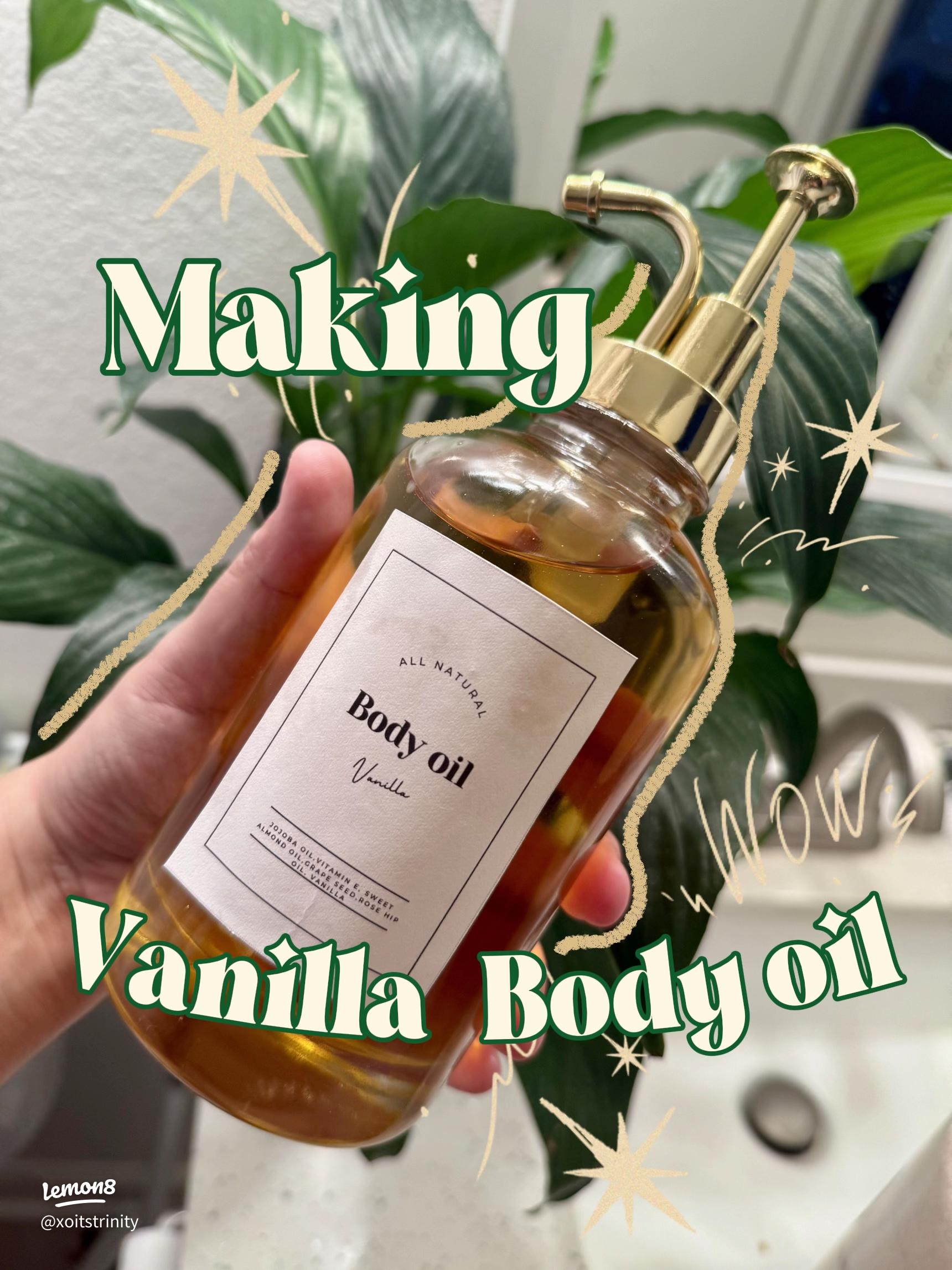
My protocol. I used Botanical Republic Rosemary Oil (3% rosemary essential oil in jojoba and argan carrier, which is the formulation closest to the Panahi study’s 100 microliters twice daily of a similar dilution) for weeks one and two, then switched to Mielle Rosemary Mint for weeks three and four to test the most viral product specifically. Application was four to five drops, parted in four sections, massaged into the scalp for three minutes with my fingertips, applied at night under a satin bonnet, washed out on wash day.
What happened on 4C. No breakage, no irritation, no scalp itch. Sebum production at the scalp normalized by week two in a way I noticed because my mid-week refresh stopped needing dry shampoo. By week three I had what looked like two visible new edge hairs at my left temple where I had been wearing a too-tight slicked-back style in late 2025 and lost a centimeter of edge density. The edge regrowth could be the rosemary oil. It could also be the fact that I stopped wearing the offending style six weeks earlier. The recency bias trap Dr. Aguh warned about is real, and I am flagging it on myself.
The verdict. The only hack on the stack with credible randomized trial data, and the only one I kept past day thirty. The Mielle and the Botanical Republic performed indistinguishably. The Mielle is $10 for 2 fluid ounces. The Botanical Republic is $24 for 1 fluid ounce. The viral product is the better value, which is rare in this category.
Hack 3: The inversion method and the placebo problem
The inversion method is one of the older entries on the list. It predates TikTok by several years, originating on early-2010s YouTube hair forums and recycled into 2022 TikTok as a “secret hair growth hack” by creators who had never read the original posts. The protocol is to sit on the edge of a bed or chair and lower the head below the heart for five minutes daily for one week per month. The claim is that gravity increases blood flow to the scalp follicles, which stimulates growth. The viral videos promise an inch of growth in a week.
The mechanism is real in the sense that yes, lowering your head below your heart does increase blood pressure at the scalp. The mechanism is also irrelevant in the sense that there is no published evidence that transient increased blood flow translates to measurable hair growth, and an inch of growth in a week would require a metabolic rate roughly four times the biological maximum the human follicle can produce. The 1.27 centimeter per month baseline that dermatology textbooks use is the ceiling, not the floor, and no scalp massage in any orientation has been shown to break it.
My protocol. Five minutes daily, week one and week three, sitting on the edge of my bed with my head hanging toward the floor between my knees, breathing slowly. I added scalp massage during the inversion for the last two minutes of each session.
What happened on 4C. The first session I got dizzy at minute three and had to come up. By day four I had built up to the full five minutes. By the end of week one I could feel a pulse in my temples for about a minute after sitting up, which is exactly what you would expect from any postural blood pressure intervention. I did not measure length until day fourteen, and we will get to that data in a minute, but the spoiler is that my length at day fourteen was within normal monthly growth variance.
Dr. Shari Hicks-Graham, FAAD, the Columbus-based Black dermatologist and founder of LivSo Moisturizing Shampoo, was direct about this one when I called her. “The inversion method is a placebo intervention dressed up as a vascular intervention,” she said. “There is no clinical evidence that gravity-mediated scalp blood flow alters the anagen phase of the hair cycle. The reason patients believe it works is that they are also doing scalp massage during the inversion, and scalp massage itself has weak but real evidence behind it from the 2016 Koyama study in Eplasty . The inversion is doing nothing. The massage is doing the work.”
The verdict. I dropped it at day fourteen. If I want the scalp massage, I can do it sitting upright, with a jade tool, on dry hair, in three minutes. The inversion adds nothing except a head rush.
Hack 4: Scalp gua sha and the lymphatic argument
Scalp gua sha is the entry that crossed over from skincare. The traditional Chinese medicine practice of using a smooth stone tool to scrape along facial meridians for lymphatic drainage migrated to the scalp around 2023, when creators started using shaped jade combs to massage the scalp on the same theoretical basis. The viral pitch is that increased lymphatic flow at the scalp reduces inflammation, supports follicle health, and over time promotes growth. The TikTok before-and-afters tend to show thicker temples after six to eight weeks.
The lymphatic argument is more defensible than the inversion argument and less defensible than the rosemary oil argument. The 2016 Koyama study in Eplasty that Dr. Hicks-Graham referenced, which tested four minutes of daily standardized scalp massage on nine Japanese men over twenty-four weeks, did find a statistically significant increase in hair thickness measured by phototrichogram. The mechanism the authors proposed was mechanical stress on dermal papilla cells, not lymphatic drainage specifically, but the practical takeaway, that daily scalp massage with consistent pressure has weak positive evidence for hair quality, holds.
My protocol. A jade scalp gua sha tool from the LA-based brand Wildling, used dry on a clean scalp three times a week for four to five minutes, working from the nape forward in slow upward strokes with medium pressure. I did not use oil with it because the tool slips on an oily scalp and the pressure becomes uneven.
What happened on 4C. By week two my scalp felt cleaner in the way a deep cleanse leaves you feeling, even though I had not added a clarifying step. By week three I had stopped getting the tension headaches I usually get at the end of a long laptop day, which I did not connect to the gua sha until I mentioned it to a friend and she pointed out the timing. By day thirty the temple density looked very slightly thicker in side-by-side photos, but the difference was within the margin of what I would call lighting variance, not a documented gain.
The verdict. The tool itself does not matter. A jade gua sha, a Denman brush handle, or two fingertips would deliver the same mechanical pressure. The discipline of three to four minutes of consistent scalp massage three times a week is the actual intervention. I kept it because it is free once you own a tool, takes under five minutes, and the headache reduction was a genuine surprise.
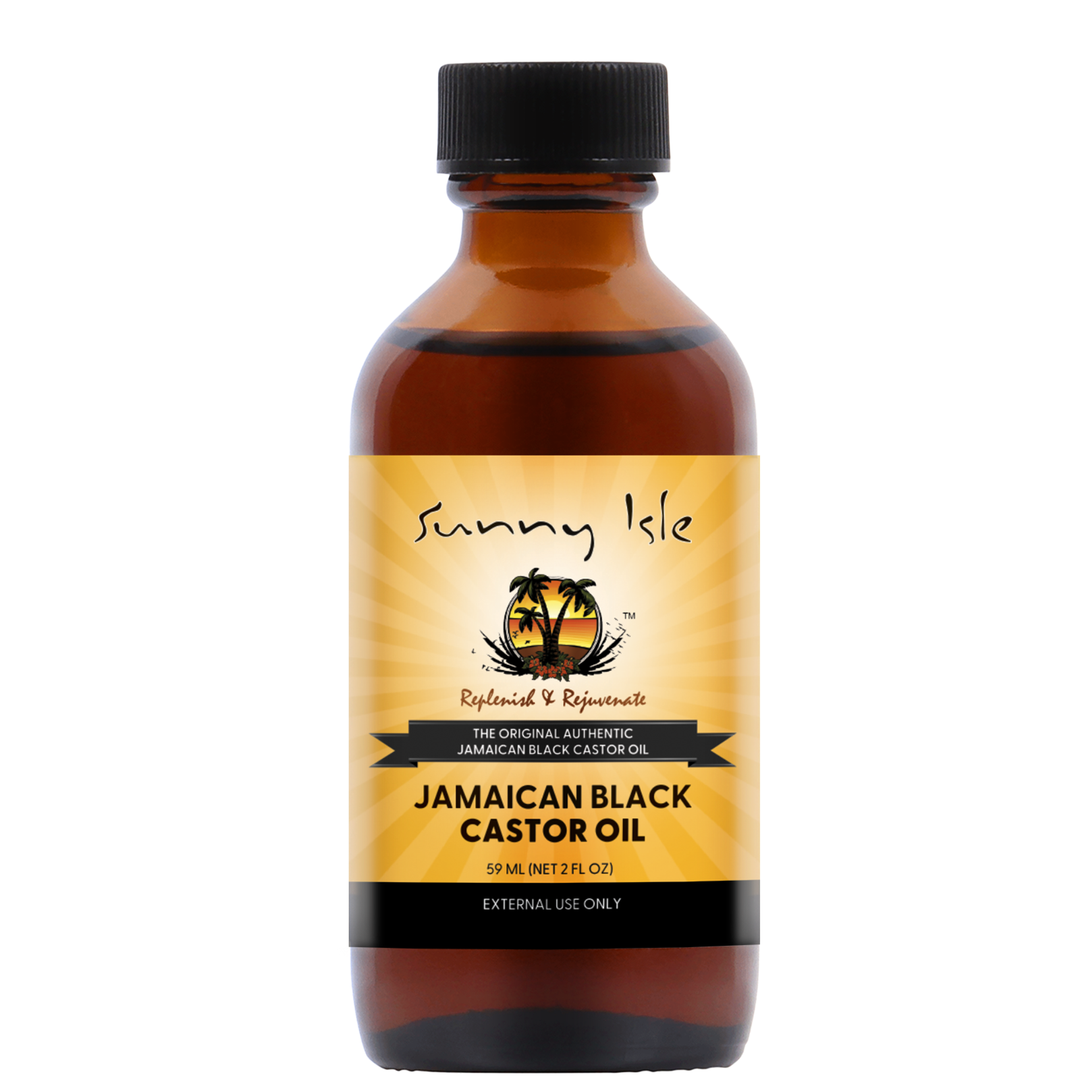
Hack 5: JBCO baggy method overnight, the moisture trap result
The fifth hack is the heaviest, both literally and procedurally. The baggy method covers damp, oiled hair with a plastic processing cap overnight to create a sealed humid environment that, in theory, deeply moisturizes the hair shaft and supports growth by reducing breakage at the ends. The TikTok version pairs the baggy method with Jamaican Black Castor Oil specifically because the JBCO virality of 2017 to 2020 carried over into the 2024 baggy revival.
The JBCO claim is older than TikTok by half a century. The oil is produced by roasting castor beans before pressing, which produces the dark color and the slightly smoky scent. The roasting process is sometimes claimed to make the oil more effective for growth. There is no peer-reviewed evidence for that claim. Castor oil in general contains ricinoleic acid, which has weak anti-inflammatory properties, and it is a heavy occlusive, which means it does seal in moisture effectively. Whether it grows hair is unsupported.
My protocol. Sunday and Wednesday nights, weeks one through three. Damp hair sectioned into four parts after a Pattern Hydration Shampoo wash, JBCO massaged into the scalp and the lengths, plastic processing cap on, satin bonnet over the cap, slept on a silk pillowcase. Rinsed and conditioned in the morning. I dropped it after week three because of what happened.
What happened on 4C. The first two sessions left my hair softer and more elongated in the morning than I had ever seen it. By week two my scalp had started to itch. By the end of week two I had what looked like a low-grade scalp fungal flare at the crown, which is what happens when you trap moisture and warm temperature against the scalp for eight hours, two nights a week, for fourteen days. I called Bridgette Hill again. “The baggy method’s mechanism is exactly the same mechanism that triggers seborrheic dermatitis flares,” she told me. “You are creating a warm, dark, moist environment that is hospitable to Malassezia yeast. The literature on textured hair scalp health is consistent that the scalp does best with controlled cleansing, not occlusive trapping. The baggy method is the single biggest contributor to scalp dysbiosis I see in my Black women clients.”
The verdict. I dropped it at day twenty-one and treated the flare with a Vanicream Z-Bar twice a week for two weeks. The flare resolved. The JBCO bottle is still in my cabinet. I use it now as a pre-poo oil on the lengths only, never on the scalp, never sealed.
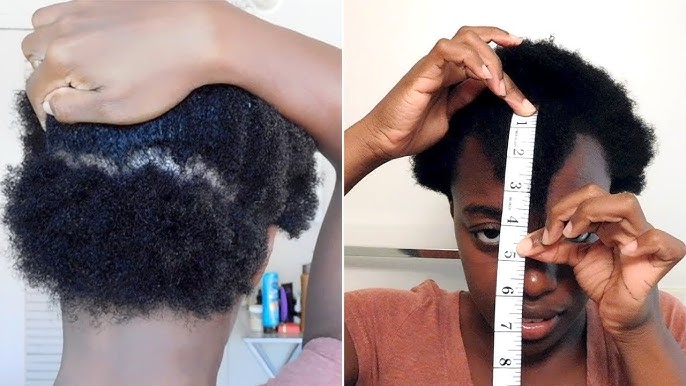
The thirty-day length photograph data
Here is the part the viral videos almost never include. I measured one section of hair at the right crown at three points: day zero, day fourteen, day thirty. I used the same section each time, the same measuring tape, the same wall, the same lighting at 7:02 in the morning by a north-facing window. I stretched the section straight (4C natural hair coils significantly, so stretched length is the only fair measure) and photographed it against a horizontal piece of painter’s tape I had marked at one-inch increments.
Day zero stretched length: 8.4 inches (21.3 centimeters) from scalp to ends on the marker section.
Day fourteen stretched length: 8.65 inches (21.97 centimeters). Growth: 0.25 inches, roughly 0.64 centimeters in fourteen days.
Day thirty stretched length: 8.95 inches (22.7 centimeters). Total growth over thirty days: 0.55 inches, approximately 1.4 centimeters.
The dermatology textbook baseline for human scalp hair growth is 0.5 inches per month or approximately 1.27 centimeters. My thirty-day growth of 1.4 centimeters is 0.13 centimeters above baseline. That difference is statistically meaningless in a sample size of one over thirty days. It is within the normal monthly variance any healthy scalp produces independent of what is applied to it. If I had run a TikTok video at the end of day thirty waving my measuring tape and shouting that the rosemary oil grew my hair past the monthly average, the math would not have supported it.
The honest read of the data is that thirty days is too short a window to detect any growth effect smaller than about 0.3 centimeters per month above baseline, and most of these hacks, even the ones with weak positive evidence, would not produce a signal that large in thirty days. The Panahi rosemary oil study took six months to show the minoxidil-equivalent effect. The Koyama scalp massage study took twenty-four weeks. The viral promise of dramatic growth in thirty days is not supported by any peer-reviewed protocol that has ever been published, and the TikTok timeline does not match the biology of the hair cycle.
What dermatologists actually recommend for 4-type growth
I asked all three experts the same question: if a Black woman with 4-type hair walks into your practice and says she wants to maximize her growth, what do you actually tell her? Their answers were remarkably consistent.
Dr. Crystal Aguh’s list. One: protect the edges and the crown from tension. Tight ponytails, slick-backs, braids that pull, and weave installs with too much tension are responsible for more length loss than any topical product can compensate for. Two: keep the scalp healthy with appropriate cleansing, no more than weekly for low-porosity 4-type, sulfate-free formulas, no occlusive overnight treatments. Three: if there is active alopecia or breakage, see a dermatologist for an actual diagnosis before assuming the problem is growth speed rather than length retention. Four: 2% minoxidil topical solution remains the only FDA-approved over-the-counter topical for hair density, and it is appropriate for 4-type hair under dermatologist supervision.
Dr. Shari Hicks-Graham’s list overlapped and added two things. One: most of the “growth” problem in 4-type clients is actually a length retention problem, meaning the hair is growing at the normal 1.27 centimeters per month but breaking at roughly the same rate at the ends, which creates the visual experience of not growing. Two: focus on the ends. Trim every twelve to sixteen weeks, deep condition weekly with a humectant-and-emollient balance, do not over-protein, and consider satin for every surface the hair touches at night.
Bridgette Hill, as a trichologist rather than a dermatologist, focused on the scalp microbiome. Her list. One: the scalp is skin, and treating it like skin (gentle cleansing, controlled exfoliation, no occlusion) outperforms treating it like hair. Two: scalp massage three to four times a week, three minutes, consistent medium pressure, no tool required. Three: water. Internal hydration matters more than topical hydration for shaft quality. Four: stress management, because the telogen effluvium that follows acute stress is one of the most underdiagnosed reasons for what people call “not growing.”
None of the three experts mentioned rice water. None mentioned the inversion method. None mentioned the baggy method. Two of the three mentioned rosemary oil specifically as the one product on the TikTok stack with credible data. All three mentioned tension protection, scalp health, and end retention as the actual interventions that move the needle.
What viral hair growth content is actually selling
I want to be specific about this because the next thirty days will produce another five viral hacks, and the cycle will continue. Viral hair growth content is selling three things, not one. It is selling the product, of course, because the creator economy runs on affiliate codes and brand deals. But it is also selling the timeline (dramatic growth in thirty days, which is biologically impossible at the rates promised) and the universality (this works for everyone, which is the part that breaks at 4-type curls).
The timeline sells because hair is slow and human attention is fast. A thirty-day video is shareable. A six-month video is not. The compression of the rosemary oil literature from “rosemary oil performed similarly to 2% minoxidil over six months in androgenetic alopecia” to “rosemary oil grew my hair in thirty days” is the entire mechanism. The biology did not change. The story got shorter.
The universality sells because the algorithm rewards content that maximizes the addressable audience. A hack that only works on relaxed, color-treated, or porous hair would not viral the way one that promises to work on every head does. But every head is not the same head, and the head the TikTok algorithm surfaces most often is a 1A to 2C texture with cuticles that absorb easily, follicles that respond visibly to mild interventions, and a length retention pattern that does not include the fragility kink at the bend of a 4C coil. The hacks that go viral are the ones that look good on that hair, and they go viral before anyone tests them on the textures where they fail.
Dr. Aguh framed it in a way I have not stopped thinking about. “The hair care industry has always treated Black hair as a specialty market,” she told me. “The TikTok hair growth wave is the first time the mainstream beauty algorithm has treated all hair as the same hair. That is a regression dressed up as inclusion. The hacks were not built for our textures. The fact that they are being marketed to us is a content problem, not a product problem.”
The three hacks I kept and the two I dropped
I dropped the rice water rinse and the JBCO baggy method. The rice water broke my low-porosity strands within two weeks because protein accumulates on a cuticle that does not absorb. The baggy method gave me a scalp flare within fourteen days because eight hours of occluded warmth is hospitable to yeast.
I dropped the inversion method as a standalone hack but kept the scalp massage component that was doing all the actual work. Three minutes, three to four times a week, jade tool or fingertips, sitting upright, dry scalp. Medium pressure. The Koyama study supports it weakly. My own headache reduction is anecdotal but real.
I kept the rosemary oil. Four to five drops, scalp only, three nights a week under a satin bonnet, rinsed on wash day. The Panahi 2015 trial is small but it is real, and the cost (Mielle Rosemary Mint at $10 for 2 fluid ounces, two months of use) is the lowest-risk intervention on the list. If I had to pick one hack from the five to recommend to a 4-type reader, it would be this one and only this one.
I kept scalp gua sha as the massage delivery mechanism, not because the tool is doing anything special, but because the ritual of picking up a tool makes the three minutes happen more reliably than my fingertips do.
That is three kept, two dropped. Net result after thirty days, by photograph: 1.4 centimeters of growth, statistically within the monthly baseline range, no detectable signal from any single intervention. Net result by scalp health: better than day zero, because I dropped the two interventions that were actively harming my low-porosity 4-type scalp.
If I am being honest about what this thirty-day experiment was actually measuring, it was not measuring growth. The window was too short for any of the interventions to produce a detectable growth signal above baseline. What it measured was harm. Two of the five hacks produced measurable harm to a 4-type scalp within fourteen days. One produced weak positive evidence. One was a placebo dressed as a vascular intervention. One was a delivery mechanism for the only thing on the list that actually had data behind it.
The pattern that emerged, after thirty days of stacking five viral interventions and talking to a Johns Hopkins dermatologist, a Black-dermatology founder, and a working trichologist, was not a pattern about which hack grows hair. It was a pattern about who the hacks were designed for. The rice water rinse, the inversion method, the baggy method, even the way scalp massage was being marketed, were all engineered around a hair texture that absorbs easily, retains length easily, and forgives experimentation. That is not 4-type hair. The viral hair growth content the algorithm has been feeding me for three months is almost always tested on 1A to 2C textures, photographed on 1A to 2C textures, and validated on 1A to 2C textures. The promise that it translates to 4-type curls is the part nobody has done the work to verify, and the part that, over and over, the actual biology of low-porosity, high-density, tightly-coiled hair refuses to confirm.