


Most people start tracking their spending because of something small. A receipt for a coffee and a pastry turns up folded inside a library book three weeks later, and you cannot remember buying it. Not being in the shop, not the morning it happened, nothing. The amount is not the point. The point is that you have no idea how many other mornings like it you paid for and forgot, and your checking balance is lower than it should be with nothing in particular to blame.
Worth saying upfront: tracking is not only for people who are short. It is arguably more revealing for people who are comfortable enough to be careless without feeling it straight away. When your card never declines, you stop watching. When you stop watching, the small amounts do slow damage that surfaces as the 11pm question on the last day of the month, which is always some version of, wait, where did it go. Here is what the exercise actually does to you over about three months, and what tends to turn up.
The question that is actually under the question

You think you are tracking spending. You are not. You are tracking the gap between the person you think you are and the person your debit card thinks you are. The person you think you are cooks at home four nights a week, books beauty appointments on a schedule, gives thoughtful gifts budgeted for in advance, and treats online shopping as somewhere you go when you need a specific thing.
The person your card knows orders delivery when the workday has already taken everything, books appointments reactively whenever a Sunday looks bleak, attends weddings without ever once setting money aside for the dress, and uses a shopping app to feel a flicker of control on a stressful Wednesday. Neither of those women is fake. They are both you. Tracking forces you to look at the gap, which is harder than it sounds. A lot of money advice assumes the problem is information. The problem is rarely information. It is the small set of emotional patterns that information eventually reveals.
The methodology, briefly, because people will ask
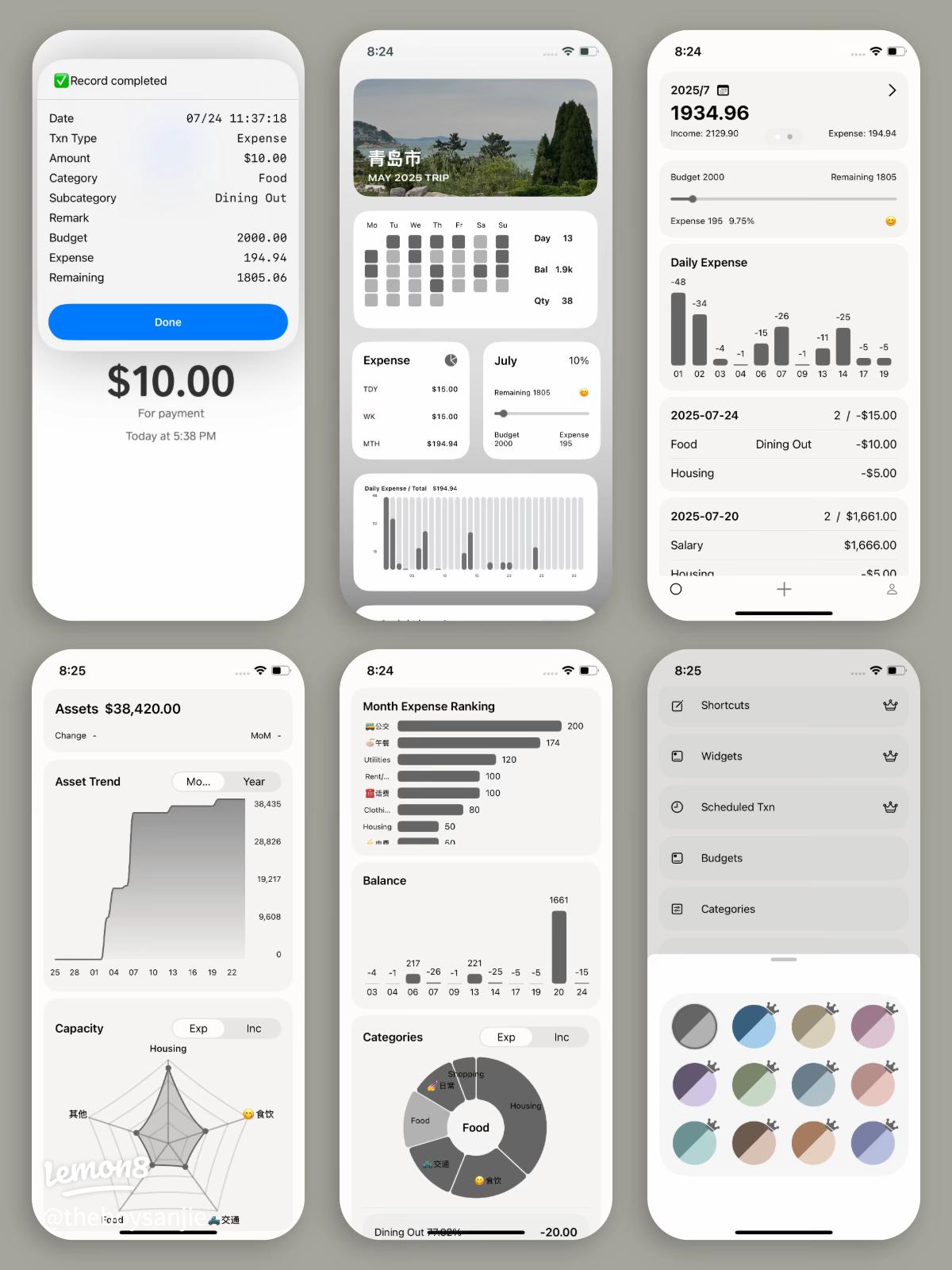
There are three broad routes and you will probably bounce off at least one. YNAB is the one most personal-finance creators swear by. The philosophy is strong, which is that every dollar gets a job before you spend it. The onboarding is brutal. You can lose a Sunday afternoon at the kitchen table assigning a paycheck to categories you have never named, and somewhere around annual expenses true cost averaging a lot of people close the laptop and make a sandwich. It works if you stick with it. Plenty of people do not.
A spreadsheet template is the free route, and it only works if you genuinely like opening spreadsheets. If you do not, you will break a formula in the dining-out column in the first week and quietly stop. The third route is a connected app that imports and auto-categorizes for you, such as Copilot Money , with Monarch the other name that comes up. Expect a subscription in roughly the ten to fifteen dollars a month band at the time of writing, and expect to spend the first fortnight correcting categories it guessed wrong. The upside is that it will surface accounts you had half forgotten about, which is often where the first real discovery is.
Whatever you use, the methodology that matters is this. Every charge gets a category. Not shopping. Not miscellaneous. The names have to be specific enough to feel like a confession. Delivery on stressful nights. Wedding-adjacent guilt purchases. Micro-impulses under twenty dollars. Beauty appointments I did not budget for. Categories named like that do not let you look away. If your categories sound like a tax form, your tracking will perform like a tax form: technically complete, emotionally useless.
The five buckets nobody sees coming

Nearly everyone goes in expecting the exercise to confirm they spend too much eating out. It usually does, but not in the way they expected. These are the five buckets that tend to be genuinely uncomfortable to look at, and what each one is actually telling you.
Food delivery. The total is rarely the surprise. The pattern is. Cluster your delivery orders by day of the week and you will probably find them stacking up midweek, after a workday that included at least one draining meeting. That is not a story about being bad at cooking. It is a story about outsourcing dinner when your brain is full, which is a different problem with a different solution. Treating it as the first problem is why previous attempts to cut delivery collapsed in week two.
Beauty appointments that were never budgeted for. Pedicures, a colour touch-up, brow waxes, a lash lift. Individually defensible, collectively invisible, because none of them appear in any monthly plan. Watch the booking pattern rather than the cost. Booked from the couch, booked within a day of the appointment, booked while rewatching something you have already seen. That is the tell, and it is worth more to you than the number.
I need this for a wedding. A dress, then a second dress, then shoes that did not work, a small clutch, a makeup stop on the Friday before the rehearsal dinner. Every one of those purchases feels urgent in the moment and reads, on the ledger, as an entire bucket you never named. Weddings and christenings and milestone birthdays are a category in your life. They are usually not a category in your budget. That gap is the whole problem.
Micro-impulses. Nothing over twenty dollars, most of it in the single digits to low teens. A silicone spatula. A book you have not opened. Three brands of dry shampoo. Travel-size detergent. Hair elastics. A face oil a friend mentioned once. The small-order range is the real killer, because no individual order feels like an event, and an order every few days is not shopping, it is a habit.
Transit, gifts, parking, life admin. A parking garage on the day of an appointment. A baby gift for a coworker’s shower. A car home one night you did not want to wait for the bus. A birthday candle for your mother. A toll you paid twice because you did not know there was an app for it. None of these are wrong to spend money on. Totalled, they are a category almost nobody has ever named.
Why the weekly view is the one that works

The monthly total is too big to feel. The daily ledger is too small to mean anything. The weekly view is where the patterns actually live, and it is the screen worth returning to. Most people find their week has a shape: danger days midweek, reactive-booking days at the weekend, a dinner out they had already planned for and feel no guilt about, a grocery day, and one genuinely boring day, which is what a boring day is for. The useful move is to read the running total on your own danger day, before the choice rather than after it. Looking is a small intervention, and small interventions compound.
The changes that tend to stick are the structural ones rather than the willpower ones. An automatic transfer into a separate savings account at a different bank, timed to land the day after payday, so the money leaves before you can get used to seeing it. If you cannot see that balance in your everyday banking app, so much the better. Friction is a feature here, not a bug. Money you want to keep has to be harder to reach than money you want to spend.
An overnight rule on carts does a surprising amount of work. Anything you add sits there until the next day, and a large share of it you simply do not want by morning. Turning off one-click ordering helps more than it sounds like it should, because the whole business model of one-click is the removal of the pause you are trying to reinstate. And give events their own line. A standing monthly amount for weddings and life events builds quietly across the year, so that when the invitation lands and you need a dress, the money already exists. That is what people mean by a sinking fund, a term you can hear forty times and never act on until you have seen the wedding bucket written down.
What does not work is deleting a category you actually rely on. Cut the stressful-night delivery entirely and the usual outcome is three weeks of sad sandwiches, being shorter with everyone you text, and ordering the food anyway. The alternative is to give it a name and an honest ceiling, set at roughly what you are already spending rather than what you wish you spent. The category gets a boundary, the boundary is realistic, and the shame goes. A budget that reflects the actual shape of your week will survive. A budget that judges the shape of your week will not.
Loose ends, useful reading, and the honest caveat
Around week six, tracking tends to surface the shared-money loose ends you have been ignoring for years. A utility autopay still routing through an old joint account. A card you share with someone you no longer live with. A balance you owe a friend from a trip two years ago. A roommate split that has quietly gone lopsided. None of it is urgent, which is exactly why it has survived this long. Clean it up while you are already paying attention, because tracking is the rare stretch when your visibility and your motivation are both high at the same time, and those conversations are easier than you think once there is a ledger in front of you instead of a vague feeling.
On tools: a connected app such as Copilot Money is the path of least resistance if you will pay for one, and a free spreadsheet template is genuinely fine if you will actually open it. For the framework, Ramit Sethi’s I Will Teach You to Be Rich is largely about automating money so willpower is not in the loop, and the separate account, the auto-transfers and the sinking funds all sit inside what he calls a conscious spending plan. Buy it used or borrow it from the library. For the emotional side, which is the side that actually decides whether any of this holds, Bari Tessler’s The Art of Money gives you language for the shame piece. Tessler works as a money therapist, which is a real job, and it is the book for people who are good at spreadsheets and bad at feelings.
A caveat, because money writing has a way of sounding like someone who fixed her life explaining how you should fix yours. Tracking does not fix anything by itself. It shows you where the money is going. The changes you make off the back of it take months to show up in the balance, and a tracking stretch can easily end with no visible improvement at all while the structure underneath it is working. Personal finance is boring on purpose, and the boring part is the part that works. It is also worth naming that there is a difference between asking where is my money going and asking whether there is enough money. A delivery habit only exists as a category if outsourcing dinner is an option in the first place. That is circumstance, not willpower, and anyone writing about this owes you that distinction.
What to tell a friend who is thinking about it

Do it, and go in knowing the hard part is emotional rather than mathematical. The first fortnight is interesting. The middle weeks are uncomfortable. The pattern you least want to see is the one that is going to show up, and you will recognise it immediately when it does. Pick one app and do not switch. Name your categories like confessions. Read the weekly view, not the monthly one. Deal with the shared-money loose ends around week six. And keep in mind that the goal is not to spend less. The goal is to know what you are spending on, so that you can choose the spending that actually buys you a life you like.
Some of what you find, you will keep doing on purpose, and that is a legitimate outcome rather than a failure of discipline. The structures are what carry over: the separate account, the overnight rule on carts, the line for events, the standing appointment with your own numbers on a Sunday night. And at some point you will forget another receipt in another library book, find it weeks later, and remember exactly why you started.
A note on health information. This article is general information and not medical advice. It is not written by a clinician and it cannot account for your own history, medications or circumstances. Please speak to a qualified healthcare professional before starting, stopping or changing any treatment, medication or supplement, and seek professional support if something here raises a concern about your own health.