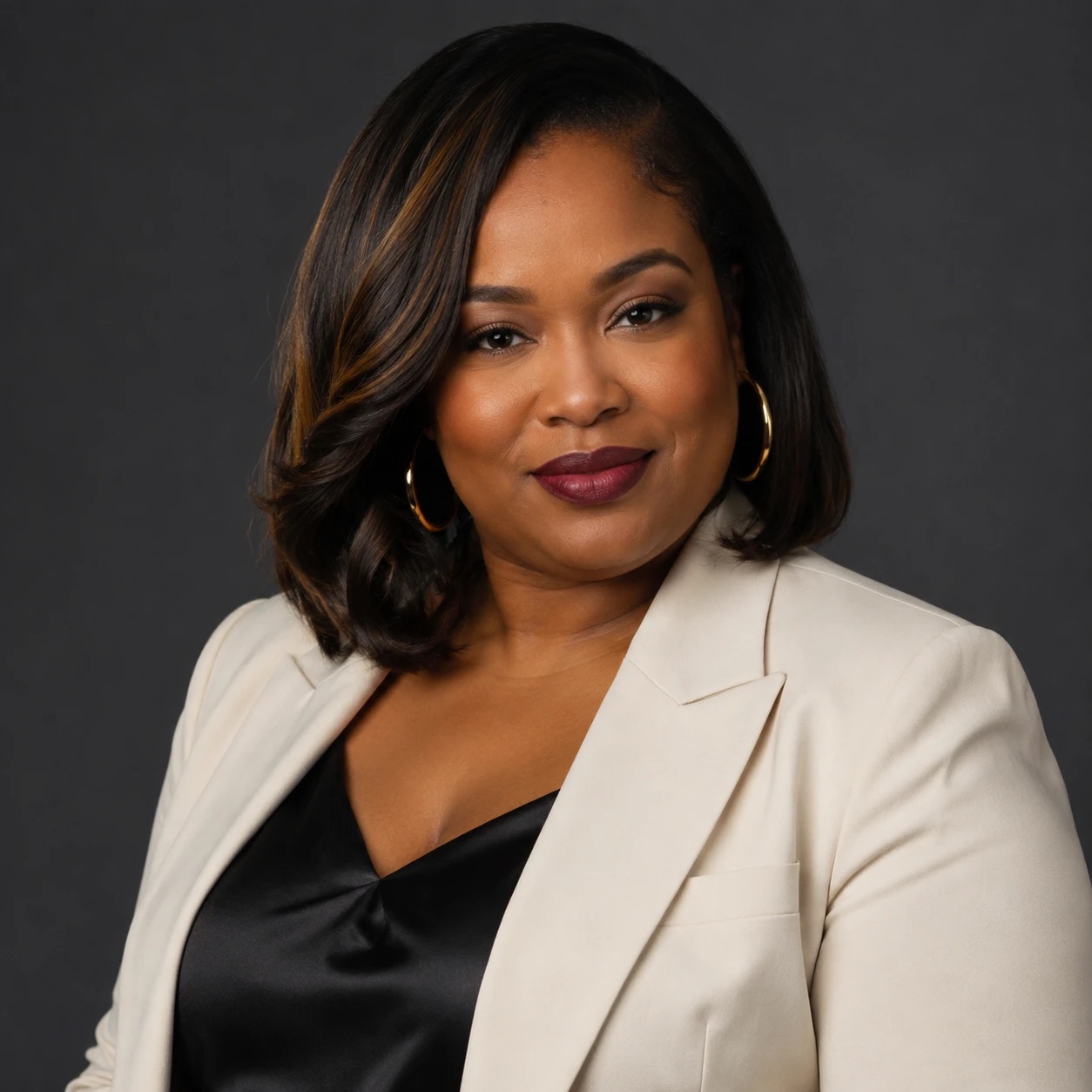
Renée Hill was pinning a navy one-piece on a size 16 mannequin in her Brooklyn studio when she said the sentence I came in hoping she would say. It was a Tuesday in April 2026, the kind of New York morning where the radiators were still hissing even though the magnolias on her block had started to open. Renée has been patterning swimwear for fourteen years - Land’s End, then a stretch at a boutique label out of Los Angeles, then Andie Swim, and now a consulting roster that includes Andie and Summersalt and a handful of smaller labels she would not let me name. She had been talking through the back seam of the suit she was pinning when she stopped, held the pin between her teeth, and said it through her teeth: “The suit you reach for is not the suit your body needs. It’s the suit the marketing told you you should want.”
The pin she put in next is this article. She moved it three quarters of an inch toward the side seam, which dropped the leg opening and lengthened the line from hip to ankle by almost two inches of visual length on the mannequin. It was a small adjustment that completely changed how the suit read. That, she told me, is what flattering actually means in a pattern room. It is not about hiding anything. It is about where the structural lines of a garment meet the structural lines of a body, and whether those two sets of lines are arguing with each other or working together. I spent the next three hours watching her demonstrate this on suit after suit, and what follows is the framework she uses to talk about swim with the women who fit her samples. None of it sounds like the language you will find on a brand’s website. All of it is more useful.
The Designer Perspective: Renée’s Three Structural Rules
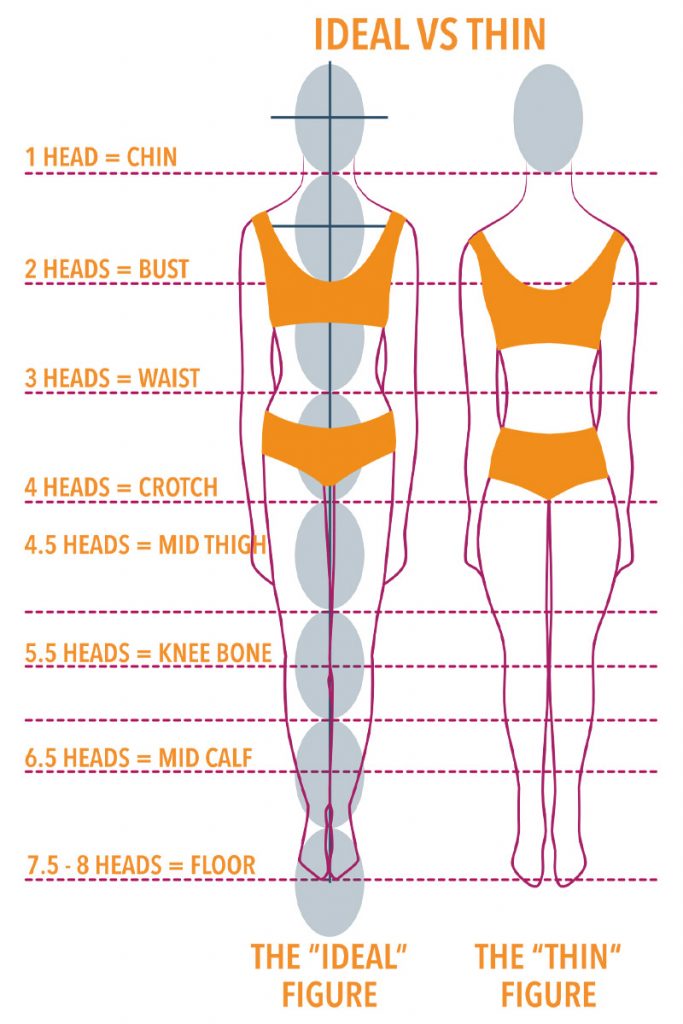
Renée works in rules rather than recommendations because she has fit more than a thousand bodies in her career and she has noticed that the same three principles do almost all of the work. The first rule is the one most women have heard in some watered-down form. A vertical line on a garment lengthens the body it sits on. A horizontal line shortens it. This is why a deep V-neck reads as elongating and a bandeau reads as compressing, but Renée is careful to point out that neither effect is inherently desirable. A short-torso body sometimes wants a horizontal line at the bust to break up a long vertical run. A long-torso body sometimes wants a horizontal color block at the hip to interrupt the same. Vertical and horizontal are tools, not virtues.
The second rule is about the leg. A high-leg cut, where the leg opening rises toward the hip bone, visually elongates the leg by extending the line of the thigh upward into the torso. A boy-short cut, where the leg opening sits flat across the upper thigh, visually shortens it by cutting the leg horizontally at its widest point. Renée said this is the rule that most surprises women in her fittings, because the marketing of boy-shorts has historically been built around the idea that they “cover more” and are therefore safer. They cover more, she said, but they almost always shorten the line. If you have short legs and you love the coverage of a boy-short, the answer is to find a boy-short with a leg opening that sits high on the thigh rather than flat across it. The seam line is doing more work than the fabric.
The third rule is the one Renée said she rarely sees written down anywhere. The surface tension of the fabric across your widest point either reveals or obscures, and both can be flattering depending on what you actually want. A textured rib that sits flat against the body reveals the shape underneath it. A draped knit that floats over the body obscures it. Neither is more flattering than the other in the abstract. The question is whether you are dressing to show your shape or to suggest it. Renée said the version of this conversation that the swim industry usually has is dishonest because it presents the obscuring choice as automatically better, as if revealing the actual shape of your body were a problem that needed solving. It is not. It is a choice. And the women in her fittings who learn to make it as a choice rather than a default end up loving their suits more.
Forget Pear and Apple: The Language a Designer Actually Uses
The fruit metaphors get on Renée’s nerves, and they get on mine too. She does not think of bodies as pears or apples or hourglasses because that vocabulary is descriptive of an outline rather than a structure, and you cannot fit a structure to an outline. What she thinks about instead are a handful of structural variables that change which cuts will work. Is your bust high on the rib cage or low on it. Is your hip bone wide and high or narrow and low. Is your torso long from underarm to hip bone, or short. Are your shoulders broad relative to your hips, or narrow. Where does your natural waist actually fall, high or low on your torso. The same dress size can produce wildly different combinations of those variables, which is why two women who both wear a size 12 can have completely different luck with the same suit.
Once you know your own combination, the choices stop being a guessing game. Renée walked me through each of the major pairings she sees most often in her fittings, and she gave me the cuts that tend to work for each one and the cuts that tend to fight them. I have organized them the way she organized them on her sketch pad, with the body-type pairing in the heading and the suit-shape logic underneath. None of these are rules in the sense of laws. They are starting points, and the only way to confirm them is to try the suit on and see whether the structural lines are arguing with you or working with you.
The High-Bust, Low-Hip Body
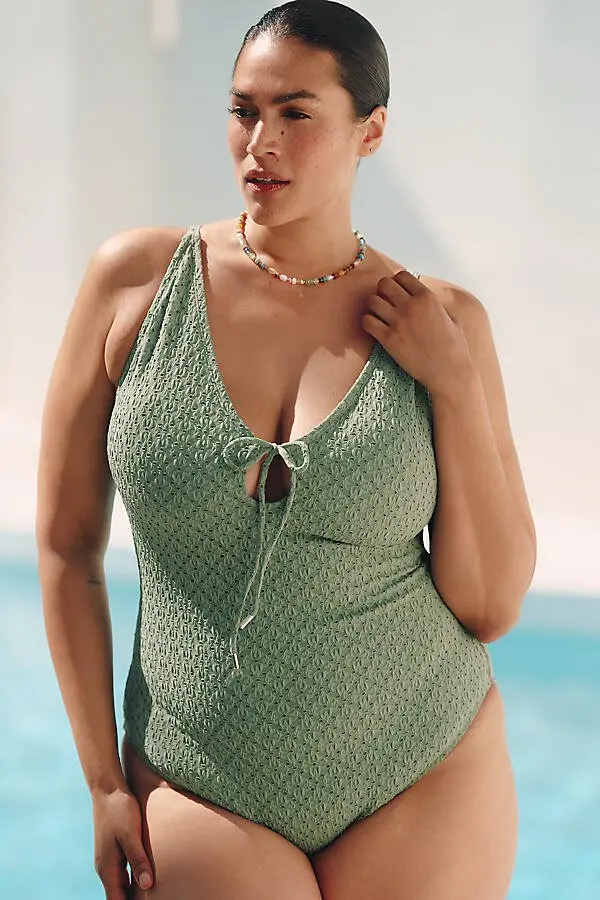
This is the combination where the bust sits relatively high on the rib cage and the widest point of the hip sits low, closer to the upper thigh than to the hip bone. Renée said this body almost always wants a one-piece with a V-neck top to draw the eye vertically through the high-bust, and a high-leg cut to visually pull the low-hip mass upward into the torso. A square neckline can also work because it creates a horizontal shoulder line that balances against the lower hip. The bandeau, she said, is almost always a mistake without serious internal support, because it removes the vertical line at the top of the suit precisely where the body could use one.
What she will not tell you to do is default to ruching at the waist, which is the suggestion every magazine has been recycling for twenty years. Ruching is a texture choice, not a structural one, and it does very little to actually rebalance the proportion of high-bust to low-hip. What rebalances that proportion is the leg line and the neckline working together. If you have this body and you have been buying ruched waist one-pieces because someone told you they would balance you, Renée said, you can stop. Look at the leg cut and the neckline instead.
The Low-Bust, High-Hip Body
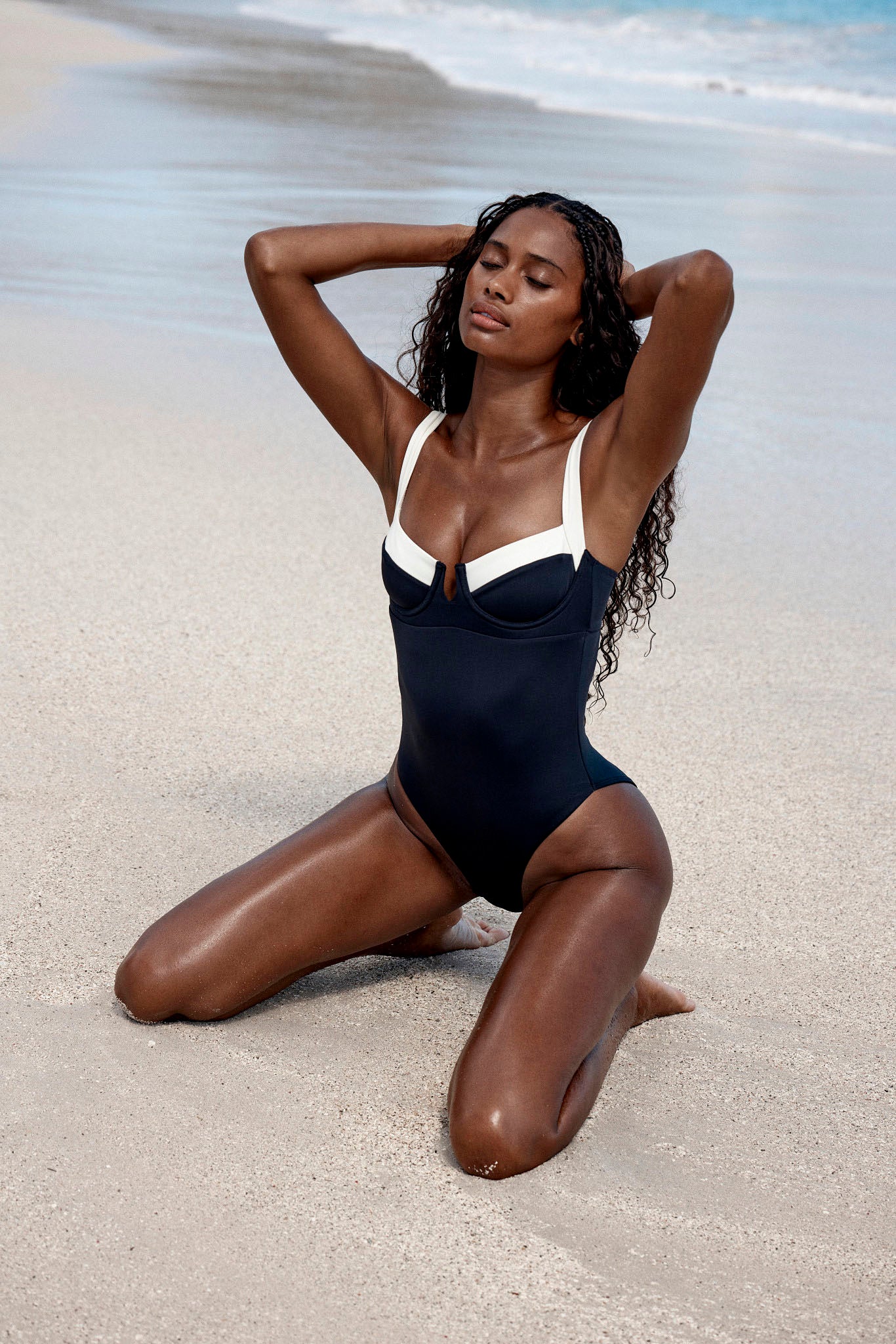
The reverse combination, where the bust sits lower on the rib cage and the widest point of the hip sits higher, calls for almost the opposite set of structural choices. Renée said this body almost always benefits from underwire support to lift the bust line back up toward its anatomical neutral position, and from a halter or a wide-strap top that creates a strong shoulder line. The wide strap is doing two jobs at once. It is carrying the weight of the bust without digging in, and it is creating a vertical line from the shoulder down through the bust that lengthens the entire upper half of the suit.
For the bottom, mid-rise is the move. A mid-rise bottom hits at the natural waist rather than below it, which respects the high-hip line instead of trying to flatten it. Bottoms that sit below the waist on a high-hip body create a horizontal line right at the widest point, which is exactly the situation Renée’s first rule warns against. A deep scoop back also tends to work well on this combination because it draws the eye to a vertical line on the back of the body, which is a quieter version of the elongating logic the front of the suit is already doing.
The Long Torso
A long torso is the distance from underarm to hip bone, measured against the leg, and a long-torso body is one where that distance is proportionally greater than the leg length. Renée said the structural goal here is to break up the vertical run of the torso with a horizontal element so the suit does not read as one long stretch of fabric from chest to crotch. A high-waist bottom with a structured top is her favorite combination because it creates a clear horizontal break at the natural waist, which visually shortens the torso and lengthens the leg below it.
Color-blocking that horizontally segments the suit can do the same work as a high-waist bottom. A one-piece with a contrasting band at the waist, or a tankini that visually splits the torso at the natural waist line, both create the horizontal break the long torso wants. What she would tell you to avoid is super-low-rise bottoms, which extend the torso visually even further by pulling the waistline down toward the hip. The long-torso body is the one combination where Renée said she would actively push back against the high-leg cut as a default, because it can extend the leg in a way that exaggerates the torso-to-leg ratio rather than balancing it.
The Short Torso
A short torso wants the opposite set of choices, and Renée said this is the body type that most often suffers from generic styling advice because so much of the standard guidance assumes a longer torso as the baseline. Vertical seaming on a one-piece is her first recommendation because it lengthens the torso without adding a horizontal break. A V-neck or a deep scoop neckline does the same work at the chest. The goal is to give the eye a long vertical line to travel before it hits any horizontal interruption.

For the bottom, low-rise with a leg-elongating cut is the move. Low-rise here does not mean sitting on the hip bones, which is rarely flattering on any body. It means sitting just below the natural waist rather than above it, which preserves the visual length of the torso. Paired with a high-leg cut, the bottom extends the leg upward and gives the suit a long, continuous vertical run from the chest down through the thigh. Renée said the short-torso body is the one where she will almost always recommend a two-piece over a one-piece, because the natural break between top and bottom is easier to manage in two pieces than to engineer into one.
The Broad-Shoulder Body
Broad shoulders relative to the hips create a top-heavy structural line that most swim designs are not built to balance, because the industry has historically designed for an hourglass default. Renée said the halter is the broad-shoulder body’s best friend because the halter strap converges the shoulder line toward the center of the chest, which narrows the visual width of the shoulder. A racer-back works for the same reason. Both pull the structural line of the strap inward, away from the outer edge of the shoulder.
An off-shoulder neckline can also work, but only if it is balanced by some volume at the bottom. A ruffle on the hip, a skirted bottom, or a high-waist bottom with a slightly relaxed cut can all create the lower-body visual weight that lets the off-shoulder top read as deliberate rather than top-heavy. What Renée said to avoid is a wide-set strap with no visual relief at the bottom, because that combination amplifies the broad-shoulder line instead of balancing it.
The Narrow-Shoulder Body
Narrow shoulders want the opposite. The goal is to widen the visual shoulder line so the upper body reads in proportion with the hip. A statement strap, a ruffle cap sleeve, a square neckline, or a gentle horizontal line at the neckline all do this work. The square neckline is Renée’s favorite because it is the cleanest of the four and it creates a horizontal shoulder line without adding any fussy detailing. A ruffle cap sleeve adds the same width with a softer, more romantic visual texture.
The narrow-shoulder body is also one where Renée said the bandeau can actually work, despite the warning she gave on the high-bust body. Without the high-bust complication, a bandeau on a narrow-shoulder body creates exactly the horizontal line at the top that the body wants. The bandeau is not inherently bad. It just has a narrow application, and the marketing has oversold it for everyone.
The Plus-Size Design Conversation
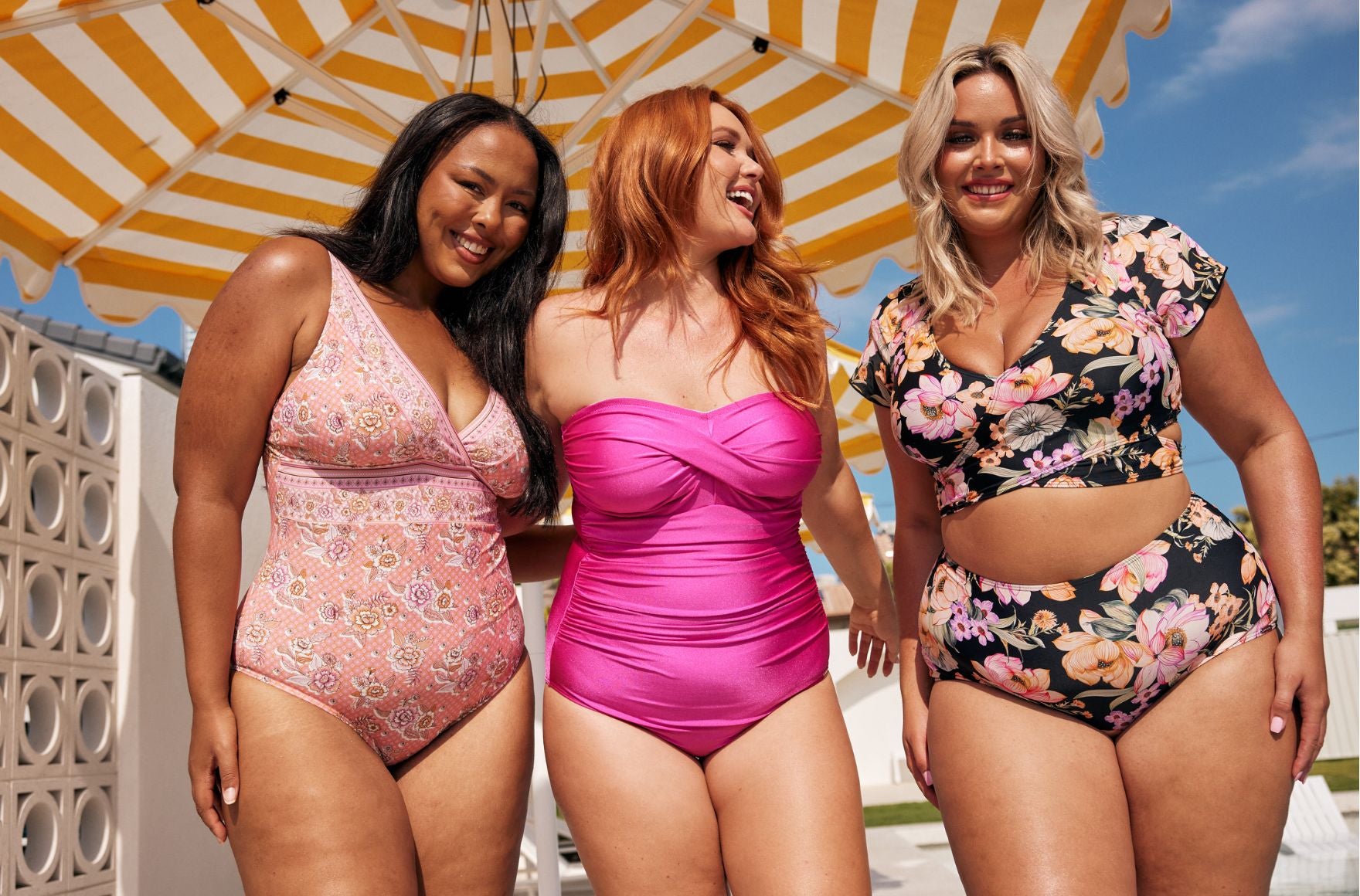
I asked Renée about plus-size design specifically because the language around it has historically been the worst offender of the entire industry, and she has spent the last decade consulting with brands that are trying to do it better. She was emphatic on a few points. Underwire is non-negotiable for D-cup and above, and any brand selling a wireless suit above a D cup as adequate support is selling marketing copy rather than engineering. Power mesh inside the lining adds compression without the shaping panels that the industry euphemistically calls “tummy control,” which she said is just a smaller and more polite way of saying “make your body smaller.” Power mesh holds the fabric in place against the body so the suit lies smooth. It does not change the shape of the body underneath it, and it does not need to.
On boy-short cuts, she had a specific caveat that surprised me. Boy-shorts can work for plus-size bodies with short legs, but only when the leg opening sits high on the thigh rather than flat across it. The leg opening is doing more work than the silhouette of the shorts. Universal Standard’s swim line and Eloquii’s swim line, she said, are two of the labels currently doing this engineering right (Universal Standard’s swim range now reaches a 4X equivalent in most styles, and Eloquii grades through size 28). Andie’s plus extension also handles it well in their newer styles. The brands that still default to a flat boy-short leg opening at the upper thigh are not designing for plus-size bodies as a primary user. They are scaling up a smaller pattern, which is a different and lesser thing.
Five Suits Renée Would Pull for Five Different Bodies in 2026
I asked Renée to name actual suits from actual brands, on the record, for the women reading this who would rather skip the theory and just be told what to buy. She thought about it for a long minute. The first was the Andie Sicily for a high-bust, low-hip body. The Sicily is a V-neck one-piece with a high-leg cut and a clean torso line, which is the exact combination she had been describing twenty minutes earlier. Andie, which was founded by Melanie Travis in 2017 and built on the premise that suits should be designed for swimming and not for posing, has been one of Renée’s most consistent collaborators precisely because they take fit seriously enough to grade across the size range.
The second was the Summersalt Sidestroke for a long-torso body. The Sidestroke has a high neck and a structured upper that breaks the torso line at the chest, which gives the long torso the horizontal interruption it wants. Summersalt was founded by Lori Coulter in 2017 and built on the premise that compression and support could be designed into the construction rather than added as an afterthought. The third was Cuup’s The Plunge bikini for a low-bust, high-hip body. Cuup’s swim line, an extension of the bra brand that took its fit philosophy seriously, is one of the few labels building plunge tops with the underwire engineering of a proper bra. The Plunge gives the low-bust body the lift and the wide strap it needs without the wide strap reading as utilitarian.
The fourth was a Universal Standard one-piece with vertical seaming for a short-torso body. Universal Standard, co-founded by Polina Veksler and the late Alexandra Waldman in 2015, has built a swim range that treats size as a starting variable rather than an afterthought, and the vertical seaming with a low-rise bottom gives the short torso the elongating line it wants. The fifth was an Eloquii halter one-piece for a broad-shoulder plus-size body. Eloquii’s swim line, which the brand expanded significantly after their 2018 acquisition by Walmart, has been quietly refining its halter and racer-back constructions for years, and the halter cut in particular gets the shoulder convergence right without sacrificing support.
The Question to Ask Before You Buy
Renée said the single best filter she could give anyone shopping for swim in 2026 is this. Does the brand show this suit on a body shaped like mine in their photography. Not just a body in my size, but a body in my shape. If a brand only shows their suits on a tall, narrow-shoulder, long-torso body and you are a short-torso, broad-shoulder body, the suit was almost certainly fit on a body different from yours, and the cut may not translate. The size-inclusive market data from 2024, which Renée pulled up on her laptop while we were talking, showed that the brands grading across a real size range have been the ones investing in shape variety in their photography as well. The two go together. Brands that ignore the second are usually ignoring the first too.
She also pointed me to the work of Bridget Foley, the former Women’s Wear Daily editor who spent years interviewing pattern-makers and writing about the craft of fit. Foley’s interviews are some of the only journalism that takes pattern-making seriously as a discipline rather than treating it as the invisible plumbing of fashion, and they are the closest thing this industry has to a public record of how the work actually gets done. If you want to understand swim from the inside, Renée said, read Foley first and then read anyone else.
The Universal Lie
Here is the argument Renée came back to at the end of our three hours together, the one I had been building toward since she said it the first time. The swim industry sells the word “flattering” as a code for “make yourself look smaller.” A designer who has patterned a thousand bodies sells “flattering” as a code for something else entirely. She sells it as a code for “the suit’s structural lines work with your gravitational lines.” Those are different sentences. The first sentence is about hiding. The second sentence is about fit. A suit that fits your shape, that places its vertical and horizontal lines in conversation with your vertical and horizontal lines, will read as flattering whether you are a size 4 or a size 24, whether your bust is high or low, whether your torso is long or short. A suit that has been engineered to make you look smaller will read as flattering only by the industry’s narrowest and most dishonest definition.
Renée’s three structural rules are the whole shape of the argument. The vertical line lengthens, the horizontal line shortens, and which one you want depends on your body. The high-leg cut elongates the leg, the boy-short cut shortens it, and which one serves you depends on your leg. The surface tension of the fabric across your widest point reveals or obscures, and both are flattering depending on whether you are dressing to show your shape or to suggest it. That is the entire framework. There is no single suit that is the most flattering for everyone, and any brand that tells you otherwise is selling you the marketing instead of the suit. Find the cut that argues with you the least. Wear it. Swim in it. That is what flattering means in a pattern room, and the pattern room is the only place that gets to decide.