
Sunday brunch in Brooklyn, late April 2026, a café off Bedford that does the cardamom buns everyone has been arguing about online. I sat down with a coffee at 11:30 and within ten minutes I had counted four nap dresses at four different tables. One was the original Hill House Ellie in the cream-and-blue floral that has been in production since 2019. One was a Doen knockoff with the wrong shade of sage, the kind that looked right from across the room and wrong from two feet away. One was a Mango Sky Dress in dusty pink, $89.99 retail, photographed to death on TikTok last summer. The fourth, the one that surprised me, was the Target Universal Thread version in white eyelet. Forty-two dollars. The woman wearing it had paired it with cowboy boots and a vintage Coach saddle bag and looked, frankly, better than the woman two tables over in the $375 original.
Four iterations of the same silhouette, four price tiers, one café, one morning. When that happens, the trend is no longer a trend. It has become an item of clothing.
I have been a skeptic about most things this decade has tried to sell women. Cottagecore felt like a Pinterest board pretending to be a movement. Coastal grandmother was a marketing department’s idea of a personality. Quiet luxury was just expensive beige. But the nap dress, against my own initial verdict in 2020, has done something none of those other moments managed to do. It has survived two recessions, a pandemic, a TikTok backlash, the rise and fall of three or four competing aesthetics, and the arrival of dupes at every price point under $50. That is not a trend cycle. That is a garment finding its place in the lexicon.
The Timeline: From May 2019 to Everywhere
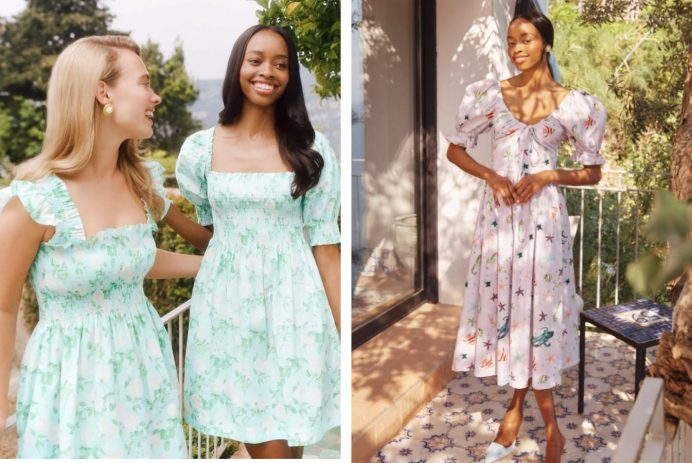
Hill House Home launched the Ellie nap dress in June 2019. The brand was founded by Nell Diamond, a former hedge fund analyst who had started Hill House in 2016 selling monogrammed bedding to women her age who wanted their grown-up apartments to look intentional. The dress was, in her own telling, almost an accidental product. She wanted something she could wear around the house that was comfortable enough to nap in but presentable enough to answer the door in. Smocked bodice, puff sleeves, tiered skirt that hit mid-calf, a print called Ellie that referenced English bedding florals. It retailed for $125.
The first batch sold out in days. The waitlist hit five figures within a year. By the time the pandemic arrived in March 2020, the nap dress had already become the unofficial uniform of a certain kind of woman in her late twenties and thirties living in Brooklyn or Los Angeles or Austin, and within six weeks of lockdown it was the unofficial uniform of every woman trying to feel human while working from her kitchen table. Hill House raised over $20 million in a Series B in September 2022, per WWD’s reporting that fall. The brand’s sizing on the Ellie still tops out at XXL, which industry reviewers note fits up to roughly a US 22; plus-size shoppers above that range are pushed to the dupe market or to size-extended competitors.
The dupes started arriving in earnest in 2021. Pink Lily, Amazon’s racks of identical smocked-bodice tiered-skirt knockoffs, the ASOS in-house version that became one of their best sellers two years running. Old Navy launched a $39.99 cotton version in spring 2022 that has been on rotation ever since. Mango introduced the Sky Dress in 2025, $89.99, and it is now in its third color way. Target’s Universal Thread line started doing recognizable nap dress dupes in spring 2024 at $39.99 to $44.99 depending on the fabric. By 2026, the nap dress is not a Hill House product. It is a silhouette. It is in every fast-fashion catalogue I can think of, sold in cuts and fabrics that didn’t exist five years ago, in colors Hill House has never made.
That is the timeline of an item, not the timeline of a trend. Trends do not get knocked off at five price points and keep selling at the original price point. They get knocked off, the originator loses pricing power, and the silhouette either disappears or becomes a permanent cheap thing on Shein. The nap dress is one of the very few garments in the last decade that has been democratized down the price ladder without losing its position at the top of it. Hill House still sells out Ellie restocks. The drops still get camped. The brand is reportedly profitable.
Why It Spread: The Four-Quadrant Fit
I have a theory about why the nap dress survived when so many of its contemporaries didn’t, and it has nothing to do with cottagecore or pandemic loungewear or the Reformation-adjacent aesthetic that fashion press kept trying to attach to it. The nap dress survived because it fits into four life moments that women have historically had to buy four different dresses for.
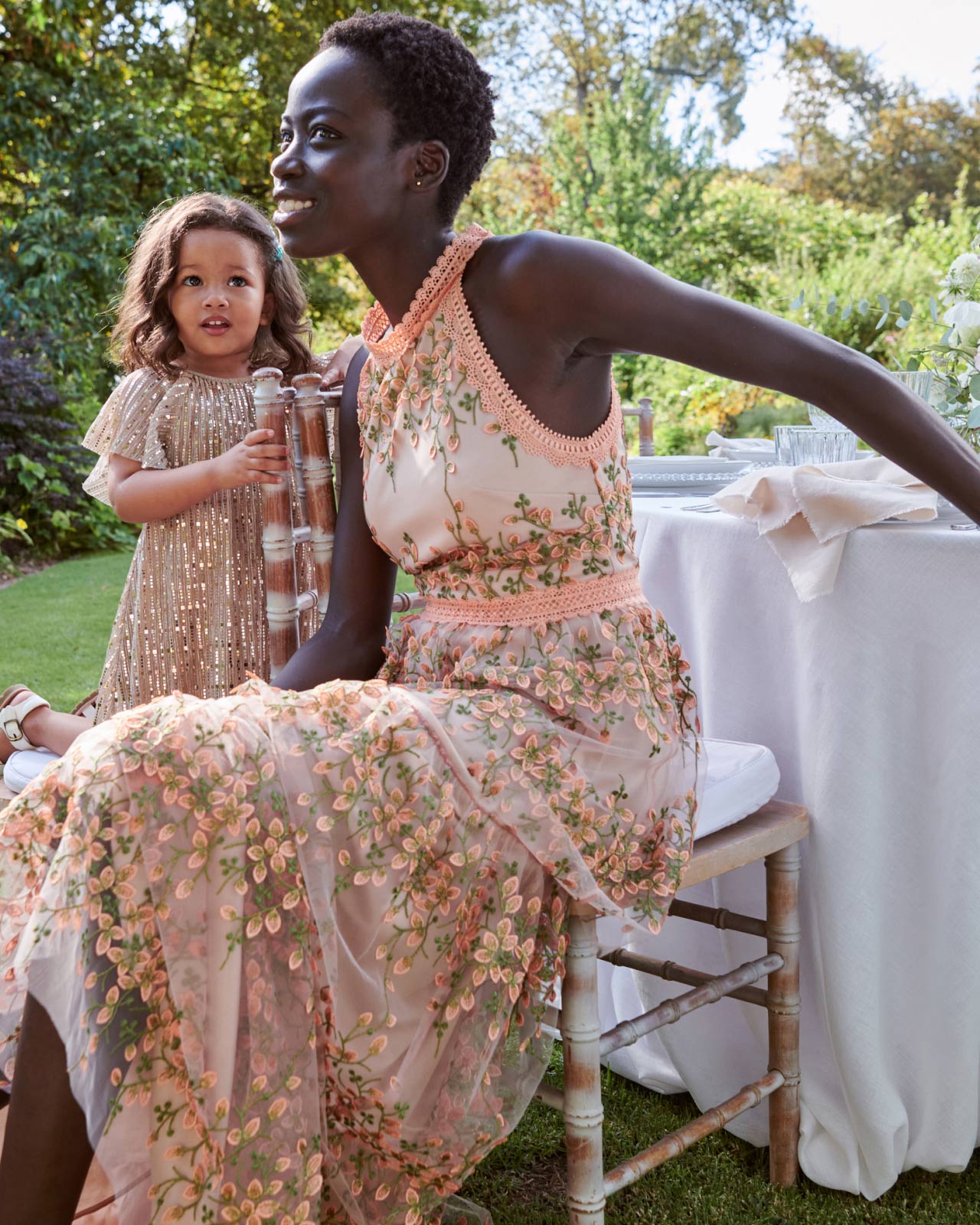
Quadrant one: bridal. Specifically, the bridesmaid market and the bridal shower / rehearsal dinner market. Hill House started doing all-white nap dresses around 2021, and they’ve become a default for the kind of bride who wants to look pretty but not “bridal” at her own pre-wedding events. The smocked bodice photographs well, the tiered skirt moves well, the cotton breathes well in August. There’s now a bridal section on the Hill House site, and Doen and Christy Dawn have followed with white pieces of their own.
Quadrant two: brunch. The obvious one. The silhouette reads as effort without requiring effort. You can wear it with sneakers, with sandals, with cowboy boots. It survived the brunch dress wars of 2020 to 2023 and emerged as the default.
Quadrant three: postpartum. This is the quadrant the fashion press has consistently underweighted because most of the people writing about the nap dress have not been postpartum. The smocked bodice expands. The empire waist sits above the part of the body that is doing the most changing in the first six months after birth. The fabric is washable. It accommodates a nursing bra. There is a reason the nap dress shows up in baby shower photos and in the photos women post of themselves at six weeks postpartum, looking presentable for the first time, and it is not that those women all happen to have the same taste. It is that the dress works for that body, in that moment, in a way that almost no other dress on the market does.
Quadrant four: hot girl summer. This is the one that surprised me. The nap dress is, by any reasonable measure, the opposite of hot girl summer. It covers. It is not tight. It does not show cleavage in the conventional sense. And yet by 2022 it had become a hot girl summer staple, worn unbuttoned a little further than its makers intended, paired with gold hoops and a high ponytail and a bare leg, and it worked. Because the silhouette is flattering, and because the puff sleeves do something interesting to the shoulder line, and because a tiered skirt over a long bare leg is, it turns out, a look.
Four life moments. One dress. That is the math, and the math is the reason it survived.
The Plus-Size Question
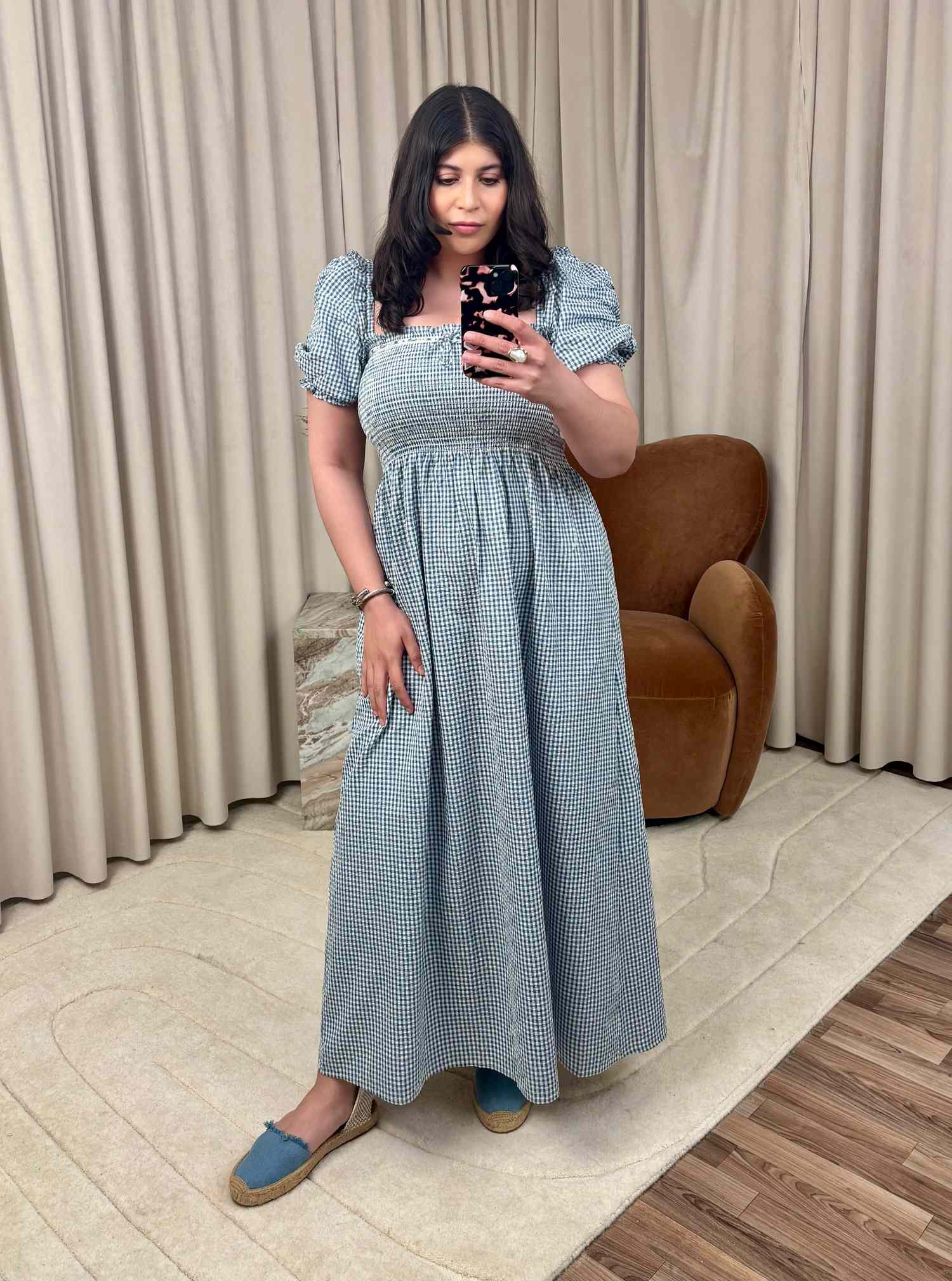
Hill House’s own sizing on the Ellie still runs XXS to XXL, which most reviewers translate to roughly a US 22 ceiling. That sizing has been a recurring complaint from the plus-size readership the dress has otherwise won over. The brand has flirted with extended cuts on a handful of capsule pieces, but the core Ellie is not the inclusive object the marketing language implies. The bigger story has been Selkie at the wider end (0 through 6X across some styles) and Christy Dawn’s extended line capping at 3X, both of which have moved into the silhouette territory Hill House did not stretch to fill.
The plus-size verdict on the nap dress, from someone who has put a lot of bodies into a lot of nap dresses for editorial pulls over the past four years, is this. The smocked bodice plus tiered skirt combination is one of the most forgiving silhouette structures available for hourglass and pear shapes. The smocking holds the bust without compressing it. The empire waist marks the narrowest part of the torso. The tiered skirt skims the hip without clinging. For an apple shape, the verdict is more complicated. The empire waist can ride up when there is more torso volume than bust volume, which makes the dress look like it is sitting wrong. A drop-waist tiered dress, or a fit-and-flare with the waist at the natural waist, will often work better on an apple shape than a true empire-waist nap dress.
The cup-size note matters more than the size-on-the-tag note. Most nap dresses, including Hill House’s, have no built-in support. The smocked bodice is stretchy cotton, not structured cup-supportive fabric. For 36DD and up, a bralette layered underneath - the kind with wide bands and a little structure but no underwire - is the difference between the dress looking good and looking like it is being held up by hope. Bare Necessities and Cosabella both make cotton bralettes that work under the smocking without showing through. This is not a flaw in the dress; it is the trade-off of a dress that fits across four sizes of the same garment. The trade-off is that you bring the support yourself.
The Under-$80 Alternatives
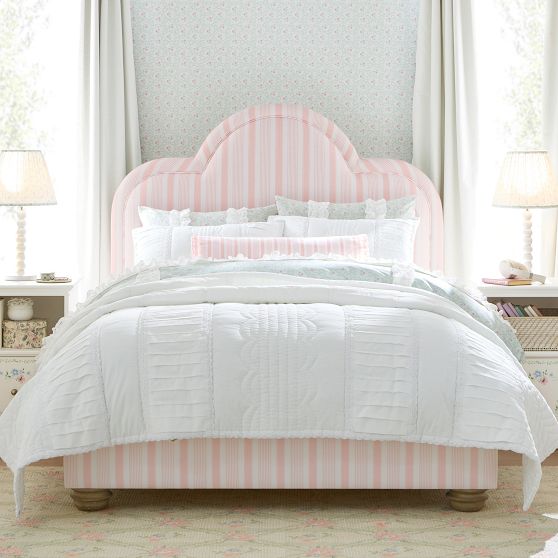
You do not need to spend $125 to $195 on the original Hill House to get the silhouette. You probably know that already. But the under-$80 market is wide enough now that it is worth being specific about what is actually good.
Pink Lily has the largest catalogue of nap-dress-adjacent options at the $50 to $70 range, and the quality has improved noticeably since 2023. The fabric is lighter than Hill House, so it reads more “vacation dress” than “everyday dress,” but for the price the construction is consistent. Old Navy’s smocked tiered dresses at $39.99 to $49.99 are the workhorse pick. They wash well, they hold their shape, they come in real cottons rather than the slippery polyester that defines the cheaper end of the dupe market.
The Mango Sky Dress at $89.99 is the closest dupe to Hill House in fit and fabric weight. The silhouette is genuinely identical from across a room and not far off up close, and the dress comes in colors Hill House has never released. Target Universal Thread at $39.99 is the surprise of the category. The 2024 launch was, by my eye, too thin in the fabric. The 2025 reformulation is significantly better, and the white eyelet version is the one I keep recommending to women who want to test the silhouette before committing to a $175 version. ASOS Design’s smocked midi at around $65 rotates in and out of stock but is consistently one of the best-fitting dupes in the under-$80 range, particularly for taller bodies because the length runs longer than most.
The Over-$200 Originals
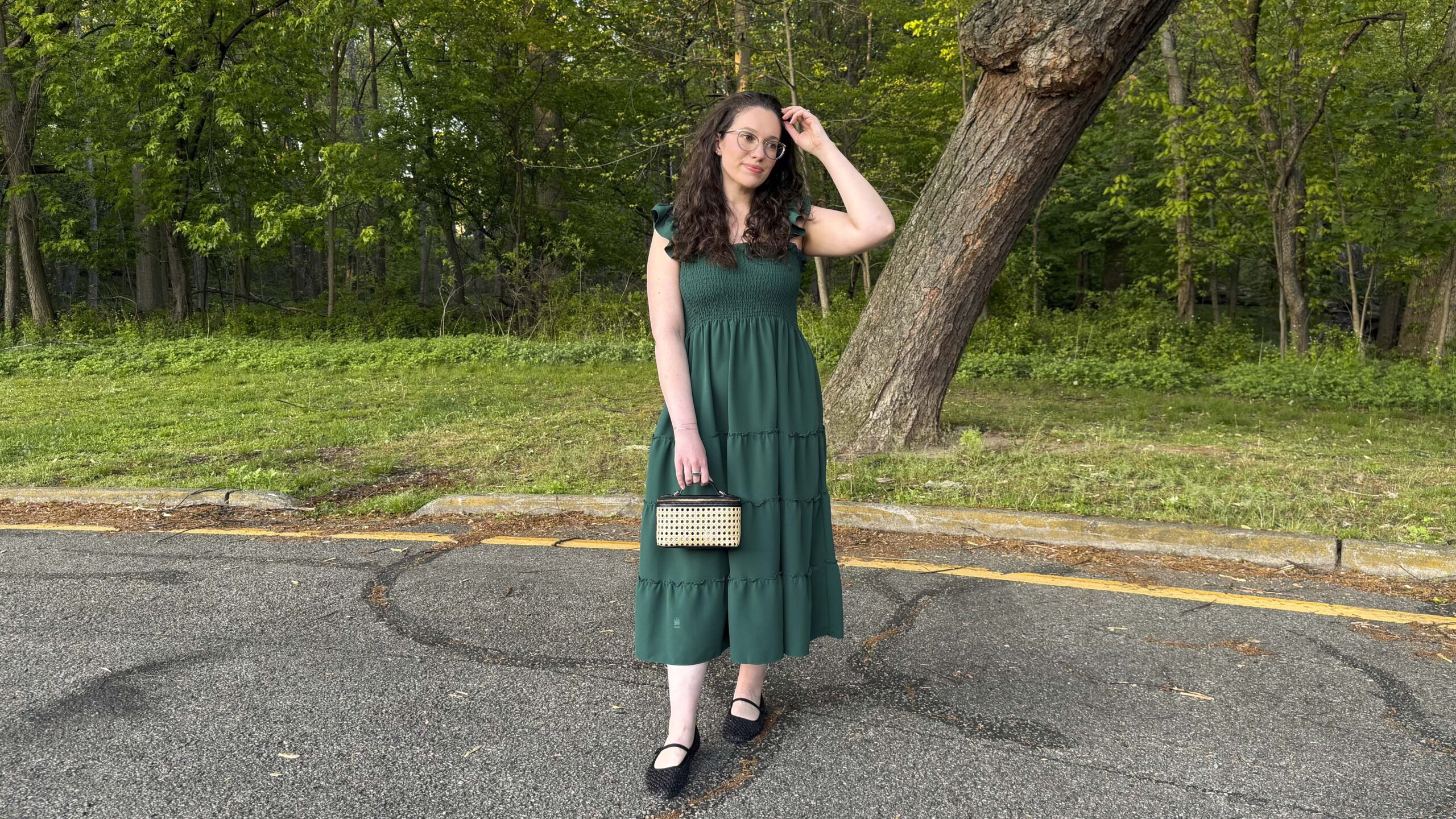
If you are going to spend over $200 on a dress in this silhouette, you should know what you are buying. The over-$200 market is not really competing with Hill House on the same product. They are competing on a different version of the same idea.
Doen’s catalogue, which includes the Adrienne and Solena, runs in the “vintage prairie” silhouette that pre-dates the nap-dress label by several years. The brand has been quietly producing variations on this cut since its 2016 launch. The fabric is heavier than Hill House, the construction is more substantial, and the cut runs more European than American - longer, leaner, less smocking, more drape. Most Doen maxis retail between $278 and $428 depending on fabric, and the dresses are made in smaller batches and sell out quickly when they restock.
Christy Dawn is the other serious option in the over-$200 category. The brand makes its dresses from deadstock and regenerative cotton, the price reflects the supply chain, and the silhouettes are closer in spirit to 1970s Laura Ashley than to a smocked Hill House. The Dawn dress, the brand’s signature, runs around $258, and the extended-sizing line caps at 3X. Saloni, the British label, makes nap-dress-adjacent silhouettes in printed silks and embroidered cottons at the $400 to $700 range. That’s wedding-guest territory rather than brunch territory, and the dresses are constructed to hold up at events rather than to nap in.
The honest comparison is this. Hill House at $125 to $195 is the everyday version. Doen and Christy Dawn at $250 to $328 are the heirloom version. The over-$200 dresses will last longer, photograph better, and look noticeably more expensive in person. Whether that is worth the gap is a function of how often you will wear the dress and whether you care about the difference between a cotton that looks cheap-good and a cotton that looks expensive-good. Both are valid answers.
How To Style It Past Brunch
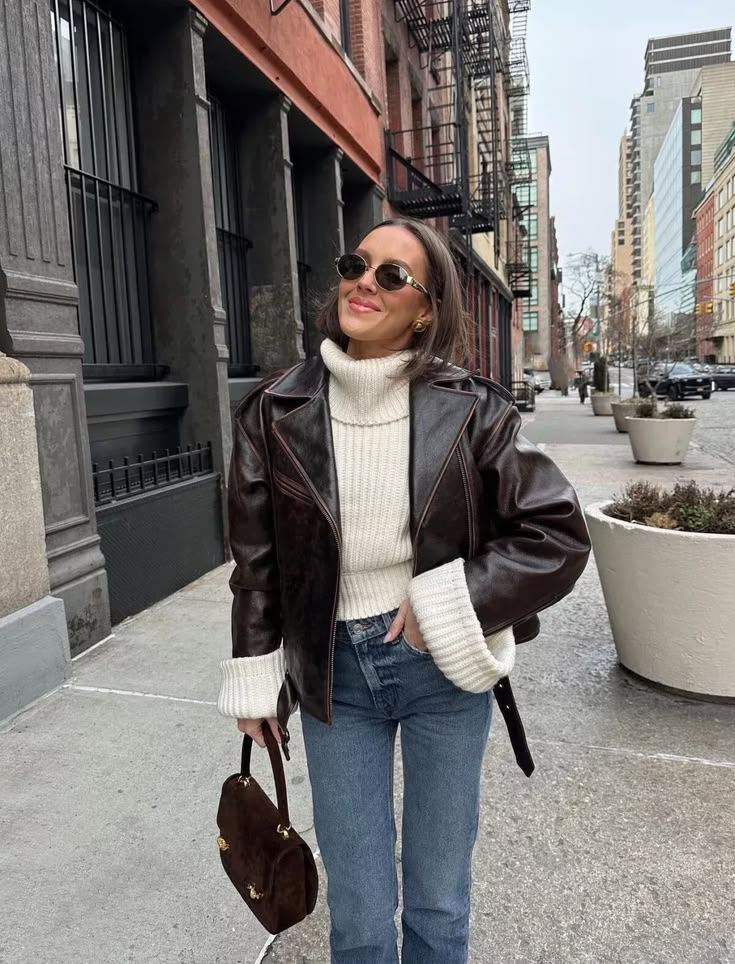
The reason I keep coming back to the nap dress as an item rather than a trend is that I have, over the past four years, worn one to a work meeting, a flight, a wedding, a funeral, a baby shower, a first date, and a Tuesday at the grocery store. The styling does the work.
For a work meeting, the formula is jacket plus boots. A structured blazer in navy, camel, or black, the kind with a real lapel and a real shoulder, transforms the nap dress from soft to deliberate. Ankle boots in leather, not suede, finish the silhouette. A slim belt over the blazer, optional, pulls the waist in further. This is the styling I have used for editorial meetings and pitch meetings, and nobody has ever read the dress as casual.
For travel, loafers plus a structured bag. The nap dress is the closest thing to pajamas you can wear on a plane without looking like you wore pajamas on a plane. Penny loafers, oxblood or black, with a real leather tote that holds its shape, and the dress reads as European rather than rumpled. Add a cashmere cardigan and you have an outfit that survives a six-hour flight and a hotel check-in without changing.
For a wedding as a guest, sandals plus heirloom jewelry. The dress already does the romantic work, so the jewelry should do the gravitas. Pearl studs, a thin gold chain that belonged to someone, a vintage cocktail ring. Strappy sandals in a metallic or a nude. The nap dress in a printed silk or a white eyelet is one of the few garments that works at a wedding without competing with the bride or looking like you tried too hard.
What The Dress Actually Says
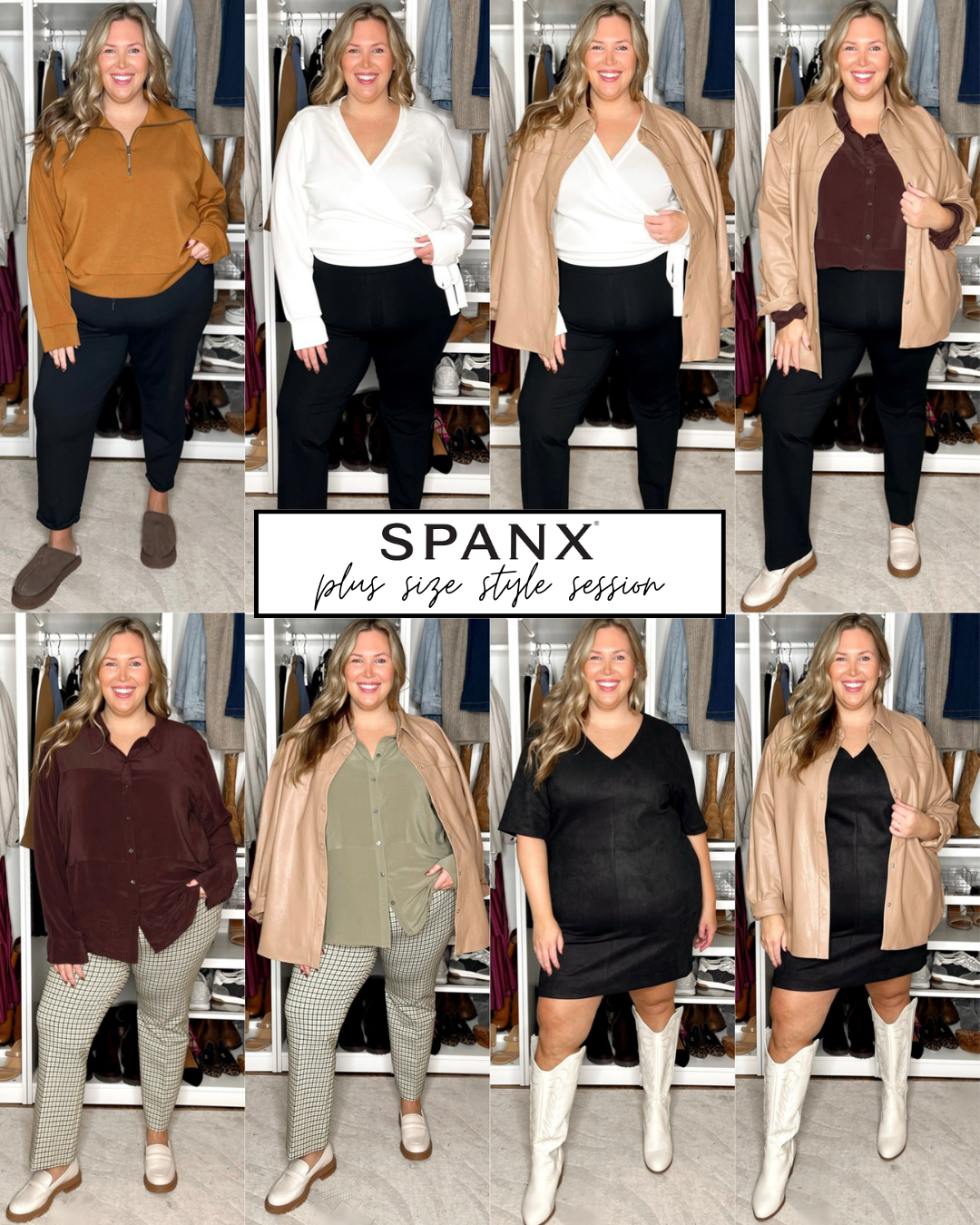
The thing I keep coming back to, the reason I think this silhouette earned its closet space rather than rented it, is that the nap dress solved a problem the industry didn’t acknowledge. It is a dress that requires nothing of the body underneath it. No shapewear. No Spanx. No constructed bra. No thigh-gap calculation. No sucking in. The smocked bodice expands and contracts with breath and food and the slow weekly fluctuations of a body that is not, and has never been, a static object.
Womenswear spent most of the 2010s building dresses that needed infrastructure underneath them to function. Bodycon needed Spanx. Slip dresses needed bralettes that disappeared and breasts that defied gravity unaided. Cocktail dresses needed strapless bras that worked. The implicit deal was that the dress would look good if the body underneath did the engineering. The nap dress reversed that deal. It said, the dress will do the engineering. You bring the body, in whatever state it happens to be in this week, and the dress will accommodate it.
That is a small thing and a large thing at the same time. It is small in the sense that it is one silhouette, one cotton, one set of design choices made by one woman at one brand in 2019. It is large in the sense that it told the rest of the industry something the industry had refused to hear. Which is that there is a substantial market for clothing that does not punish the body wearing it. That women will pay $125, or $195, or $325, for a dress that lets them eat lunch without thinking about it. That comfort is not the opposite of style; it is, for a meaningful percentage of the buying public, a precondition for it.
The dress is not going away because the problem it solved is not going away. The body keeps changing. The week keeps having Sundays. The wedding invitations keep arriving and the babies keep being born and the brunch keeps happening at 11:30 in cafés in Brooklyn and Austin and Lagos and London, and women keep needing one dress they can put on without thinking. The nap dress is the one. It earned that position over seven years, against considerable skepticism including mine, and the four-tables-four-dresses morning is the proof.
Where womenswear goes next is, I think, the question of whether the rest of the category will learn from what this dress figured out. Whether pants, blazers, jeans, and structured workwear will start designing for the body that exists rather than the body that has been edited into shape underneath. The early signs are there. Elastic-waist trousers at Toteme. Soft tailoring at The Row. Bras with no underwire from CUUP. The nap dress was not the cause of any of that, but it was the loudest early signal that the deal had changed. That women had stopped agreeing to be the structure their clothes refused to provide. Seven years in, the deal looks like it is sticking.